Zoe FitzGerald Carter

The poignant irony of Dr. Kevorkian’s death

The assisted suicide advocate's natural end shows the emotional complexity of planning for your own demise

  • more
    • All Share Services

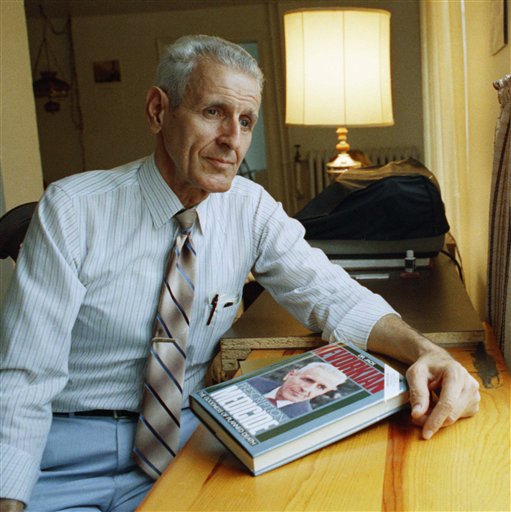
The poignant irony of Dr. Kevorkian's deathFILE In this Aug. 10, 1991 photo, Dr. Jack Kevorkian, inventor of the controversial suicide machine, sits with his just release book, Prescription: Medicide, in Royal Oak, Mich. A lawyer and friend of Kevorkian says the assisted suicide advocate has died at a Detroit-area hospital at the age of 83. Mayer Morganroth tells The Associated Press that Kevorkian died Friday, June 3, 2011 at William Beaumont Hospital in Royal Oak, where he had been hospitalized. Kevorkian had been hospitalized since last month with pneumonia and kidney problems. (AP Photo/Lennox McLendon)(Credit: AP)

After championing the rights of the sick and suffering to get help ending their lives — and providing that “help” to scores of terminally ill patients — Dr. Jack Kevorkian died of natural causes on Friday at the age of 83.

According to Geoffrey Fieger, the lawyer who represented Kevorkian in several of his trials in the 1990s, Kevorkian was too weak to take advantage of the option he had offered others and had long wished for himself. “If he had enough strength to do something about it,” Fieger told a news conference in Southfield, Michigan, “he would have.”

If that is true, there is something almost epically tragic about the fact that a man who fought so long and hard for patients’ right to die on their own terms, wasn’t able to take advantage of this option in the end. But then who is to say “Dr. Death” didn’t simply change his mind? He’d apparently been suffering from kidney failure and pneumonia for over a month, long enough to plan his own death if he’d wanted to. He was a doctor and entirely familiar with how to end a life quickly and painlessly. And given his well-known penchant for drama and attention, you’d think he’d want to make himself exhibit A for what he believed in. (At the start of his third trial, he showed up in court wearing Colonial-era clothing to show how antiquated he thought the charges were and, after videotaping himself helping to kill a patient, he voluntarily handed the tape over to “60 Minutes.”)

The fact that Kevorkian didn’t end his own life is, to me, a potent reminder that our political beliefs are not always in the driver’s seat when it comes to death. Just as one can imagine even the staunchest anti-assisted suicide crusader wavering in the face of extreme pain and disability, I have found that certain pro-assisted suicide people seem to believe that killing oneself is actually a better option than dying naturally. Often, when I mention that I wrote a book about my mother’s decision to end her life after a long illness, people say, “Oh, well I definitely plan to do that. I’ve already made it clear that that the minute I get a disease, I want someone to take me out back and shoot me!”

I get the humor but there is a glib — even fashionable — assumption that suicide, assisted or not, is a good way to go. I want to ask: How would your kids feel if you do that? Your spouse? And how would you feel if it was them making that choice? I’m a big supporter of the Death with Dignity Laws in this country, but frankly, as long as I’m not in pain and have some quality of life, I’m planning to “go naturally,” just like Kevorkian did in the end.

The idea that ending your life is going to be easier and more straightforward than letting nature take its course is something of a happy illusion. Having witnessed both my parents dying in very different ways, I know that even the best laid plans for death can go awry. It reminds me of the “birth plan” I drafted when I was pregnant. Somehow, between planning the perfect play list and specifying that I didn’t want an episiotomy, I forgot to factor in throwing up, forgetting to breathe, and the uncontrollable urge to yell obscenities at the nurse. So much for my beautiful birthing experience.

It may be a cliche, but there really are some things we can’t control and even for strong-minded people like my mother, who was determined to plot the details of her “end,” you simply cannot know how you will feel when the day comes. In fact, my mother set and changed her “death dates” several times, discovering on the chosen day that she wasn’t quite ready to go after all.

In Bill Moyers’ PBS special on assisted suicide a few years ago (“On Our Own Terms: Moyers on Dying”), not one of the people Moyers followed actually ended up killing themselves. There was always one more event they wanted to stay alive for: a birthday, or a grandchild’s graduation. Every one of his subjects waited until it was too late and no longer had the physical capability to manage it. All, except for one woman who died from natural causes before she had a chance to take the pills she’d stockpiled. Pulling the plug turns out to not always be so easy.

Adding to the vagaries of the psyche is the unpredictability of the body. Unless you live in one of the three states where physician assisted suicide is legal (Oregon, Washington and Montana) and have access to a group like Compassion & Choices who will help make sure you are taking the right dose of drugs, chances are you will not know how to calibrate the means of death. In my mother’s case, stopping eating and drinking took far longer than she’d expected, and an attempted morphine overdose failed. Although she did ultimately manage to end her life, it was not the controlled, predictable event she’d hoped for.

I read recently that the issue of assisted suicide splits this country almost completely in half, making it an especially divisive and contentious issue. I would respectfully suggest that both sides may have lost sight of the fact that death can – and will — make a mockery of even the most carefully laid plans, the most passionately held beliefs.

And who knows, when it came down to it, maybe Jack Kevorkian simply wanted to stay alive and was hoping he might recover. Or maybe his lawyer is right and he wished someone had been there to help him speed things along. We will never know and that is as it should be. Because as politicized as it has become in this county, death is ultimately a private experience, fraught with unknowns. And Dr. Kevorkian, like all of us who support assisted suicide as a legal and moral principle, had the right to change his mind.

Zoe FitzGerald Carter is the author of “Imperfect Endings: A Daughter’s Story of Love, Loss, and Letting Go” (Simon & Schuster)


What assisted suicide really looks like

Having been through this experience, I know how harrowing it is -- and so does HBO's "How to Die in Oregon"

  • more
    • All Share Services

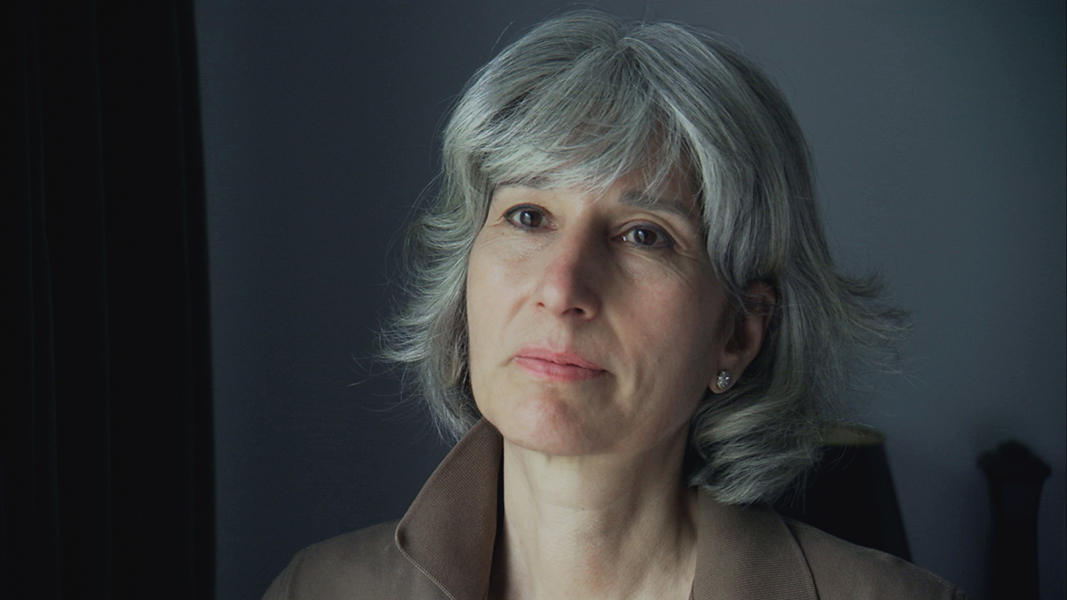
What assisted suicide really looks likeCody Curtis

The new documentary “How to Die in Oregon” opens with footage of Roger Sagner, an elderly man with advanced cancer, demanding that he be given a lethal dose of drugs. His impatience — and absolute lack of ambiguity — is startling. After swallowing a milky concoction of Seconal in one long gulp, Sagner thanks his family and the voters of Oregon “for allowing me the honor of doing myself in,” lies down on a bed under a large picture window, and begins to sing.

“I’s coming, I’s coming. Oh my head is hanging low. I hear the gentle voices calling … Old Black Joe.”

His final words? “It was easy, folks. It was easy.”

Watching this documentary (which airs on HBO this Thursday), however, was not. In fact, it took me three separate viewings to get through my advance copy. Given that my mother ended her life after struggling with Parkinson’s for many years, an experience I wrote about in my memoir, “Imperfect Endings,” I was perhaps especially predisposed to find it difficult viewing. But apparently even hardened HBO staffers couldn’t sit through the entire film, and the film’s publicity team at this year’s Sundance was astonished at the reluctance of the media to attend the screening.

This is unfortunate because, while the film does ask its viewers to be willing to be moved and, yes, saddened, “How to Die in Oregon” is a well-crafted, beautifully understated film about an important topic: whether people should have the legal right to end their lives. Without resorting to Michael Moore-type polemics, director Peter D. Richardson follows a half-dozen terminally ill people as they go about the business of planning the end of their lives under Oregon’s Death With Dignity Act. (Passed in 1994, the law makes it legal for physicians to provide “aid-in-dying” for their terminally ill patients.)

Although Richardson clearly supports individuals’ rights to end their own lives, he keeps the proselytizing — and the politics — to a minimum. Instead, he gives us a series of fly-on-the-wall scenes with patients, as well as interviews with oncologists, activists and volunteers. We see how planning for death can involve everything from the mundane (filling prescriptions, giving away one’s clothes and jewelry, even getting a final haircut), to the wrenching and the profound (tearful conversations between family members, and the final recording of a personal eulogy by an 84-year-old terminally ill broadcaster named Ray Carnay). And thankfully, we see people who, despite being in pain and close to the end, have maintained a sense of self — and even a sense of humor, although largely of the gallows variety.

But the warm, beating heart of “How to Die in Oregon” is Cody Curtis, a lovely, articulate 54-year-old wife and mother who has liver cancer. We see her taking walks with her daughter, meeting with her doctor, and joking with her husband all while stockpiling barbiturates and planning her own death. Although in good shape when the film opens, she has suffered the cruel effects of her disease and is determined not to repeat it. “I’m not going to die with the fluid oozing out of the pores in my legs,” she says in one of numerous interviews. “I’m not going to lose my hair again. I’m not going to weigh 200 pounds again. I’m not going to be humiliated with losing control of my bodily functions again.”

In short, she plans to get out while the getting is good, an attitude shared by my mother whose need for control made the Parkinson’s endgame intolerable. But unlike my family, in which my sisters and I debated about whether my mother was actually serious about ending her life, and tried to talk her out of it, the Curtis family is remarkably unified in their support. Her son, “T,” does express some trepidation about the death itself — something I could relate to — but none of them challenges her decision.

As death circles closer, Cody openly shares her shifting emotions, often moving from tears to laughter in the space of a sentence. By contrast, my mother never cried, never expressed any doubt, and never asked us how we felt about being there when she ended her life: She maintained a stoic, unsentimental attitude right to the end. And while I’ve always chalked this up to emotional reticence on her part, when Cody tells the filmmaker, “I want to model for my children a kind of grace and acceptance because I’m really scared of being a coward at the end,” I wondered if my mother was also protecting us from the burden of her ambivalence.

Of course, Cody is anything but a coward in the end and her last words — “This is so easy … I wish people knew how easy it was” – echoes Sagner’s in the beginning of the film. Although this bookending of sentiments may have been coincidental, it does highlight the film’s one-sidedness. With one notable exception, there are very few dissenting voices in “How to Die in Oregon.” That exception is Randy Stroup, a 53-year-old uninsured Oregonian with prostate cancer who was denied coverage for additional treatment by the state. In a letter to Stroup, they suggested he look into doctor-assisted suicide instead. Although the state reversed its decision after he went public, his understandable bitterness – “They’ll pay to kill me, but not to help me!” — provides a disturbing counterpoint to the rest of the film.

Having never understood the argument that laws like the one in Oregon might imperil the uninsured and disadvantaged, I found Stroup’s story eye-opening and I would have liked to hear more of a rebuttal or discussion. Also, given that assisted suicide is legal in only three states in this country and we have right-wing pundits shouting about “death panels” every time healthcare reform comes up, it would have been useful to get a better sense of the larger debate. As a strong supporter of the Death With Dignity laws, I am reluctant to give those who oppose them more of a platform, but I think the film would have benefited from their inclusion.

And yet, Richardson’s decision to eschew overt politics — both pro and con — in “How to Die in Oregon” allows him to do something more quietly radical: to show real people talking honestly with each other about their own impending deaths. In this death-phobic society where doctors offer sure-to-fail, last-ditch treatments instead of gently telling their patients to go home and prepare for death, Richardson’s film is a much-needed antidote.

Zoe FitzGerald Carter is a journalist and author of the memoir, “Imperfect Endings: A Daughter’s Tale of Love, Loss, and Letting Go” (Simon & Schuster). She can be reached at http://www.imperfectendings.com/

Continue Reading Close

What if Jack Kevorkian had helped my mom die?

Watching HBO's movie about Dr. Death, I couldn't stop thinking about my mother's own planned suicide

  • more
    • All Share Services

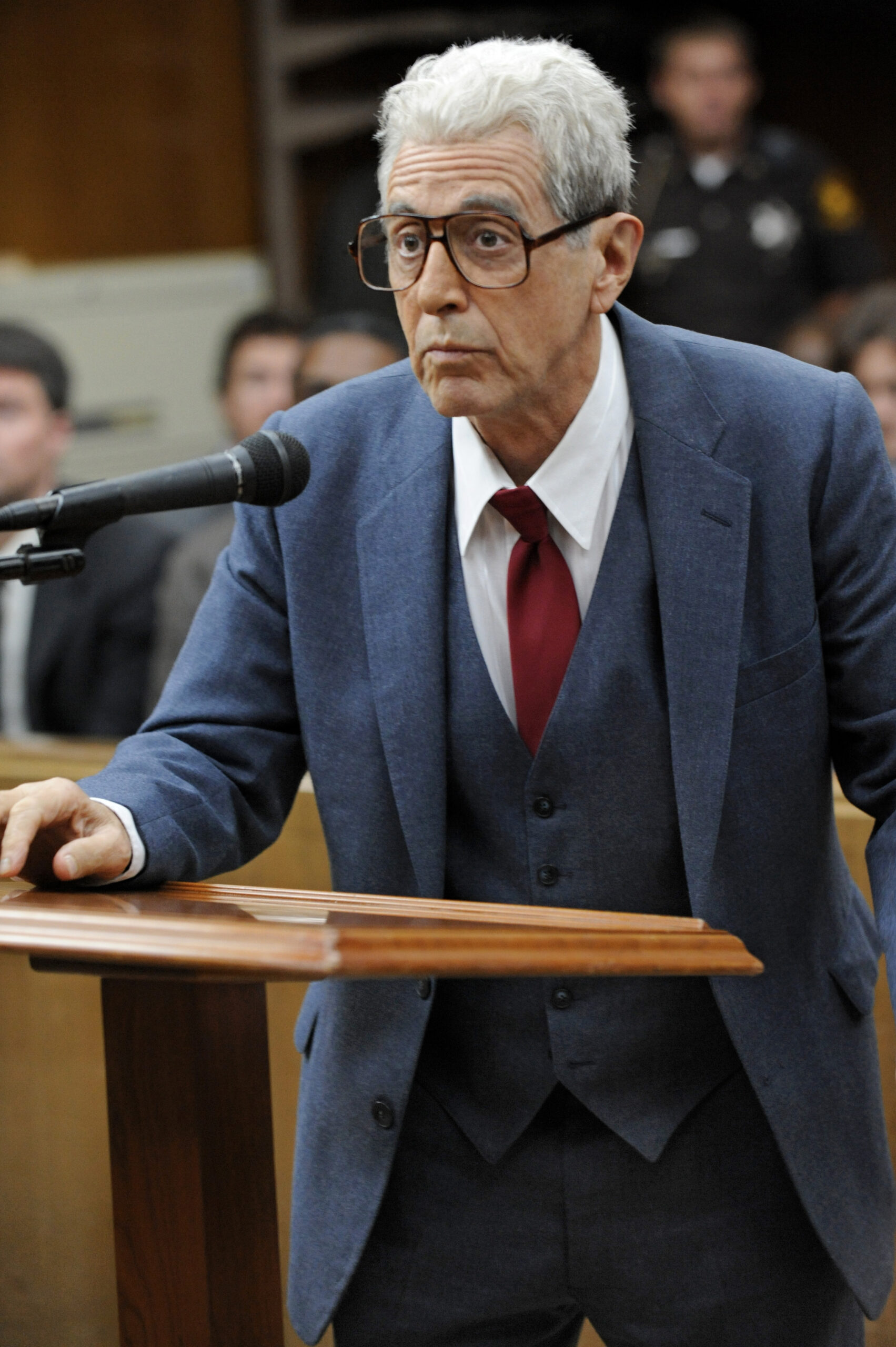
What if Jack Kevorkian had helped my mom die?Al Pacino as Dr. Jack Kevorkian in HBO's "You Don't Know Jack."

When my mother was planning how to end her life in 2001, she joined the Hemlock Society and arranged to have one of their “Caring Friends” come to her house. The meeting with Bud, an overweight man in a black suit and bolo tie, is one of the central scenes in my recently published memoir about my mother’s suicide, “Imperfect Endings.”

Like the Hemlock-friendly psychiatrist who had prescribed a lethal amount of Seconal for her several months earlier, Bud seemed to have no qualms about helping my mother to die. (My mother had suffered from Parkinson’s for many years but was nowhere near death.) But it was what Bud proposed that disturbed me the most.

My mother would need to be alone in the house with only one person there to let him in, he explained. On the designated night, he and another volunteer would arrive with a plastic bag, tubing and a canister of helium.

“Then,” he drawled, pulling out what looked like a dirty white headband, “your mother puts the plastic bag over her head, feeds the tubin’ up underneath it and puts this band around her neck to secure it. She then reaches down and releases the valve on the canister of helium. The helium will cause her to fall unconscious in just a few minutes. When she’s dead, we take the plastic bag, the helium and everythin’ and leave the house. You call the medical examiner’s office to certify that she’s dead, and we’re done.”

Much to my relief, my mother seemed to realize that Bud was not the last person she wanted to see on Earth and she did not, ultimately, choose this route. But after spending my Saturday night watching “You Don’t Know Jack” on HBO, I had to wonder: If Dr. Kevorkian had been available, would he have been the next person my mother turned to?

Fortunately, I never had to find out, as “Dr. Death” was languishing in a jail cell in 2001. Three years earlier, he’d made the rather bizarre decision to kill one of his patients (Thomas Youk) by injecting him with potassium chloride. Up until then, Kevorkian had helped patients kill themselves by flipping the switch on his “mercitron” (a kind of death machine) or inhaling gas — again activated by the patient’s own hand.

Compounding the situation, Kevorkian filmed Youk’s death and gave the footage to “60 Minutes.” Why did he do this? It seems that both he and his cause were fading from the limelight by then, and he couldn’t bear it. In other words, it was a media stunt, pure and simple, one that landed him in jail for eight and a half years. (He was released in June of 2007 at the age of 79.)

Besides being something of a media hound, Kevorkian (played by Al Pacino in the film) was also a full-on eccentric with a major social gene missing. “There’s nothing further to be gained from talking to you!” he shouts at Janet Good (Susan Sarandon), a Hemlock Society supporter who is clearly an ally, but isn’t willing to let him use her house as a site for one of his mercy killings. And he seems to have an almost pathological fear of food. 

“This is full of fat and sugar,” he grouses to his lawyer when he is handed a piece of pie. “Are you trying to kill me?”

 ”Just eat the fucking pie, Jack,” the lawyer shoots back, clearly tired of the skeletal Kevorkian’s ascetic eating habits. (In another scene, he growls, “Decaf is for cowards.”)

But while much of the humor in the movie comes from showing Kevorkian’s odd, antisocial behavior, there is clearly much to admire about the man — at least as he is portrayed by the screenwriters for HBO. In fact, the whole movie is something of an apologia, starting with the title, which is a fragment of a longer title: “Until You Know the Whole Story, You Don’t Know Jack.”

So, while we see many instances of Kevorkian’s self-aggrandizing behavior, we also see his compassion, even tenderness, when shepherding his patients through the last moments of their lives. “It’s not too late to stop now, my dear,” he tells Janet Adkins, the first woman he helps to die, who seems to hesitate before switching the valve on the lethal canister of gas at her side. “You wouldn’t offend me.” And then, when she determinedly pulls the switch, he strokes her hair as she dies, a moment that brought me to tears. 

And time and again, we see his deep commitment to ending his patients’ suffering: his deep belief that he is helping them fulfill a basic human right to choose death over suffering. When his sister objects to his helping Adkins because her early dementia makes her a difficult first “test case,” he demands: “But what about her? Who cares what people think. It’s what my patient feels.”

It’s also revealed that much of what motivated Kevorkian was guilt over having allowed his mother to suffer at the end of her life. “I failed her,” he tells Good in a rare moment of introspection. “She once said to me, ‘Imagine, Jack, the worst toothache in the world. Now imagine that toothache in every bone in your body.’”

This is one of the great strengths of the film: We see Kevorkian’s sense of mission and his compassion, but also his self-delusion and hubris. In the most brilliant scene in the movie, we see him confront defeat. Having insisted on representing himself against murder charges in the Youk case, he quickly finds himself in way over his head. Unlike previous court cases, he is not being accused of assisted suicide but of murder, and it’s almost as if Kevorkian cannot comprehend this. Pacino, who is fabulous throughout, with his flat Midwestern twang and awkward gait, is completely riveting as he leans over the defense table, taking on and off his glasses, his face a study of exhausted defeat.

So why, given all Kevorkian’s strengths, am I relieved that my own mother’s path to “self-deliverance” never led to Kevorkian’s door? Well, just as I hated the idea that “Bud” might have been the last person my mother saw on this earth, I feel the same way about Kevorkian.

This is largely due to one scene that was so disturbing, I only hope to forget it as soon as possible. It happens about halfway through the movie, when Kevorkian has switched from the “mercitron” to gas. In an attempt to save his meager supply of it, he builds a plastic box to intensify the effects of the gas. In this scene, he places the box over the head of an elderly man with emphysema and then reacts impatiently when the box grows unbearably hot and the poor man rips it off his head, shouting, “Take it off, take it off.” In the end, realizing that he is only coming back to the same hell, he agrees to place the box back over his head. His head soon drops forward against the plastic contraption as his wife cries out in horror.

Having talked to Derek Humphry about the plastic bag/helium option that he describes in the most recent edition of his assisted suicide manual “Final Exit,” I understand that it does not have to be so terrible. But what really bothered me in this scene was Kevorkian’s cold response, not only when the man was dying, but afterward when his friend, Neal Nicol (John Goodman), chastises him for trying to “cut corners.”

“These are my decisions to make, Neal,” he snarls. “Mine alone.”

Now, I understand that this is a movie, not a documentary, and I can only hope that Kevorkian’s impatience with the process didn’t override his usual compassion the way it was depicted in this scene. But this scene was so repulsive to me — perhaps because I can imagine a scenario where that was my mother under Kevorkian’s plastic hood — that for all of the movie’s careful efforts to show Kevorkian in a good (if imperfect) light, I was no longer buying it. I still believe in what he fought for — the legal right to have a physician help you end your life in a quick and compassionate manner — but in the most profound way, getting to “know” Jack was to find him pretty repellent.


Continue Reading Close