
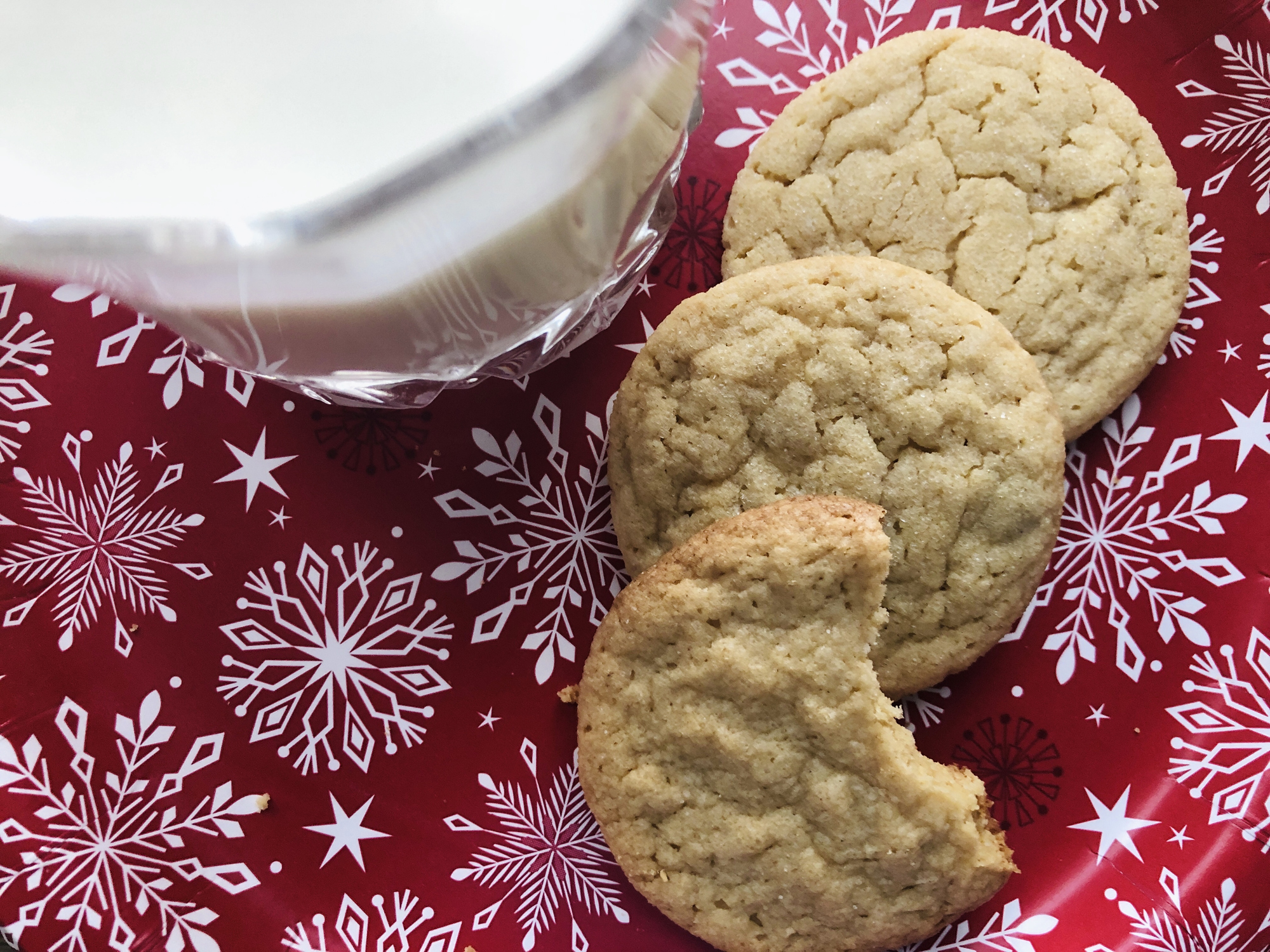

Recently, I’ve been on a roll with baking. That may not sound like a grand achievement to most, but it is to me, considering my shoebox New York City apartment has minimal (correction: abysmally minimal) kitchen counter space.
My first project was a trio of Thanksgiving pies made entirely from scratch: apple, pumpkin and pecan. A few days later, I made a decadent three-tiered espresso martini cake for my best friend’s 27th birthday, followed by a poached pear frangipane tart and a berry pavlova that I shared with my roommate. My next endeavor will be Christmas cookies, which feels necessary as the holidays draw near.
Although I love a classic recipe, I wanted baking inspiration that would make me rethink everything I knew about the ones I grew up cherishing. For instance, I take great pride in the way my family’s brown butter shortbread cookie recipe consistently yields the most melt-in-your-mouth delight known to man.
Eventually an online search brought me to a Reddit suggestion encouraging people to substitute soy sauce for salt when baking cookies, a trick the poster first came across on TikTok. Several users vouched for the hack in the comments, even calling it a happy mistake.
My knowledge of soy sauce was limited to its use in savory dishes and dips, so I told myself, “This sounds too good to be true.” Nevertheless, I couldn’t help being intrigued.
Adding soy sauce to desserts isn’t a new concept, but it’s slowly garnering more attention and popularity within the Western culinary scene. Pastry cook Stephanie Loo raved about soy sauce-infused brownies in a 2022 Bon Appétit article titled, “I Added Soy Sauce to My Brownies Out of Desperation—Now I’ll Never Bake a Batch Without It.” The New York Times Style Magazine touted the condiment’s versatility in a November headline, “You Can Put Soy Sauce on Everything—Even Dessert.”
When it comes to soy sauce in cookies, cookbook author and recipe developer Kat Lieu knows best. Her latest cookbook, “108 Asian Cookies: Not-Too-Sweet Treats from a Third-Culture Kitchen,” features a handful of cookie recipes that call for soy sauce, like her fudgy chocolate chip cookies, kimchi scones and pillowy whoopie pies. As she tells it, the special oomph that soy sauce adds to a bake is, in a word, umami.
Salt vs. Soy Sauce. What’s the difference?
Soy sauce is traditionally made by fermenting steamed soybeans and roasted wheat, which introduces a more complex flavor profile that salt can’t achieve on its own.
“Salt basically adds salinity, that salty pop of brackishness,” Lieu explains. “Other than that, it doesn’t really affect your texture in the batter. The only time it affects your texture is when you add sea salt flakes on top [of cookies] at the end of baking.”
She continues, “The whole point of adding salt is to balance the sweetness in a cookie. But when you’re moving into soy sauce, you have a lot more versatility. And now the fun begins . . . soy sauce has notes of not just saltiness, but umami. And depending on the soy sauce you use, if it’s a high-quality one, it also has other notes. There’s some sweetness. But most importantly, it adds umami. So that’s the difference.”
Want more great food writing and recipes? Sign up for Salon’s free food newsletter, The Bite.
Umami is what makes foods taste delicious, adding a layer of “flavor that just lingers in your mouth and makes you smack your lips,” Lieu says. Many of her recipes also call for Monosodium Glutamate (MSG) alongside soy sauce to help enhance the umami flavor.
How much is too much soy sauce in your cookie batter?
Lieu recommends using one tablespoon of soy sauce per cup of flour. “A lot of it just kind of evaporates when you’re baking,” she says. “And the flour just really absorbs the liquid.”
How much soy sauce to use also depends on its quality. Lower-end soy sauces tend to have a higher salt content, which can be overpowering in your sweet cookie batter. It’s important to taste the soy sauce first and familiarize yourself with its flavor and salt content before using it when baking, Lieu advises.
That doesn’t mean you shouldn’t use whatever soy sauce you already have in your pantry. Just be mindful of how much you’re adding to your batter. It’s even okay to add less than the recipe calls for.
“I don’t want people to go out and buy a different soy sauce because it’s just one tablespoon,” Lieu says. “If you’re really going into baking all the time with soy sauce, and you’re going to use it for your caramels and your frostings, then, yeah, invest in a good one.”
Lieu’s favorite tried-and-tested brands include HEYDOH’s Single-Origin Classic Soy Sauce, which is made with Taiwanese whole bean soybeans (the soy sauce is currently sold out for the season, but will restock during spring 2026) and Asamurasaki’s Oyster Soy Sauce, which is made from Hiroshima oyster extract.
What flavors pair well with soy sauce?
“Think what you would put soy sauce in with savory food, and then that could also apply to your sweets,” Lieu says.
Cookies that are heavy in caramel or butter are great recipes to elevate with soy sauce. It also pairs well with anything that adds brightness and acidity, namely lemony or citrus-centric sweets, like a lemon sugar cookie, lemon bars and yuzu bars. Additionally, soy sauce complements chocolate very well. Lieu’s recipe for fudgy soy sauce chocolate chip cookies calls for it to be mixed in with the eggs, creamed butter and sugar.
“Adding soy sauce to chocolate chip cookies may sound a bit out there. I mean, even my younger self would question this move,” Lieu writes in her book. “But hear me out: Soy sauce and MSG bring an incredible umami richness and balancing depth to the cookies. You have the familiar chocolatey goodness and sweetness, plus a pop of intriguing savoriness. The flavor doesn’t overpower; instead, it’ll tantalize your taste buds and may leave you wanting more.”
To that end, soy sauce can give several classic Christmas cookie recipes an extra boost.
“Peanut butter cookies — if you make peanut butter blossoms, those are really delicious,” Lieu suggests. “Any shortbread. Shortbread goes really good with soy sauce. If you’re making Linzer cookies and the jam or marmalade is a little sweet, you can mix a little soy sauce in.”
Lieu’s recipe for Surprising Peanut Butter Cookies is a must-try for the holidays. In addition to incorporating soy sauce and MSG, the cookies call for Asian curry powder, which is subtle in flavor once the cookies come out of the oven but develops more the following day.
“Whenever I make curry, I like to incorporate peanut butter, which adds creaminess and tempers the heat,” Lieu writes. “And soy sauce always brings a hint of umami and replaces salt for salinity. So, I figured, why not go the other way and curry-fy a peanut-forward treat?”
Ingredients
2 cups (240 g) all-purpose flour
1 1/4 teaspoons Asian curry powder (Lieu uses S+B Curry Powder), plus more for dusting the cookies
1 teaspoon baking soda
1/2 teaspoon baking powder
1/4 teaspoon MSG (optional)
1/2 cup | 1 stick (113 g) unsalted butter, softened
1/2 cup (113 g) shortening or lard
1 cup (258 g) conventional creamy peanut butter
1 cup (180 g) unpacked light brown sugar
1/2 cup (100 g) granulated sugar, plus more for rolling the cookies
2 large eggs
1 1/2 teaspoons light soy sauce
Directions
-
Whisk the flour, curry powder, baking soda, baking powder, and MSG, if using, together in a medium bowl. Set aside.
-
Using a stand mixer fitted with the paddle attachment (or in a large bowl with a hand mixer, whisk, or spatula), cream the butter, shortening or lard, peanut butter, and sugars together until light and fluffy. Scrape down the sides and bottom of the bowl. Mix in the eggs, one at a time, then the soy sauce until well incorporated. Add the flour mixture and mix on low speed just until a cookie dough forms. Cover the dough and refrigerate for 30 minutes to overnight.
-
About 25 minutes before baking, adjust two racks to the upper-and lower-middle positions of the oven. Preheat the oven to 325°F. Line two baking sheets with parchment paper. Add about 1/4 cup granulated sugar to a shallow bowl.
-
Scoop 1 tablespoon of dough, shape into a smooth ball, and roll in the bowl of sugar to coat. Repeat to make 36 balls, placing them 2 inches part on the prepared baking sheets. Use the tines of a fork to flatten and indent crisscross patterns over the tops of each cookie. Alternatively, use a meat mallet to flatten and add a pattern to the cookies. If you like, dust each cookie with a scant amount of curry powder.
-
Bake all the cookies, switching the sheets between top and bottom racks and rotating front to back once halfway through, until the cookies are set while the middles are still quite soft, and the edges are golden brown, about 15 minutes.
-
Let the cookies set directly on the baking sheets for a few minutes, then transfer to a wire rack to cool completely.
Cook’s Notes
-
If you use natural peanut butter with a layer of oil on top of the jar, be sure to stir it thoroughly first, and expect a crumblier cookie
-
Top each cookie with a chunk of dark chocolate or a mini Reese’s peanut butter cup before baking.
-
Store the cookies in an airtight container at room temperature for up to 5 days.
This recipe is excerpted from Kat Lieu’s “108 Asian Cookies: Not-To-Sweet Treats from a Third-Culture Kitchen.”
Read more
about Christmas cookies:
