

By the time I rolled into my friend’s late-summer block party, the DJ had lapsed into a trance – not the kind that happens when a turntablist is riding a groove but, rather, clamoring to escape one. The families dancing in the street were all grins and laughter; clearly, his skills weren’t the problem. Only much later did I find out what agonized him, when I approached his booth and asked if he was taking requests.
“Depends,” he replied, deflated. “Are you going to ask me to play something from ‘Kpop Demon Hunters’?”
Happily for him, I did not. But I understood his fatigue – by then, its climactic track “Golden” had taken over America. Between it and Taylor Swift’s onslaught, the second half of 2025 was a minefield for the pop music intolerant.
At the same time, the cultural conquest of the Kpop Demon Hunters’ soundtrack shows how potent the right musical match with TV and movie narratives can be. The best travel with us long after we’ve sat through a movie or TV episode’s end credits.
The six soundtracks featured here have been in heavy rotation on my stereo, sprucing up mundane daily life with memories of the fictional worlds they invited us to inhabit for a few hours, reminding us that we can visit any time simply by pressing play.
6) “Tron: Ares”
Since earning their first Oscar for scoring 2010’s “The Social Network,” Trent Reznor and Atticus Ross have ranked among the industry’s most sought-after and prolific composers, collaborating with filmmakers such as Ken Burns and Luca Guadagnino (including this year’s “After the Hunt”), or shaping the sonic spirit of 2019’s “Watchmen.”
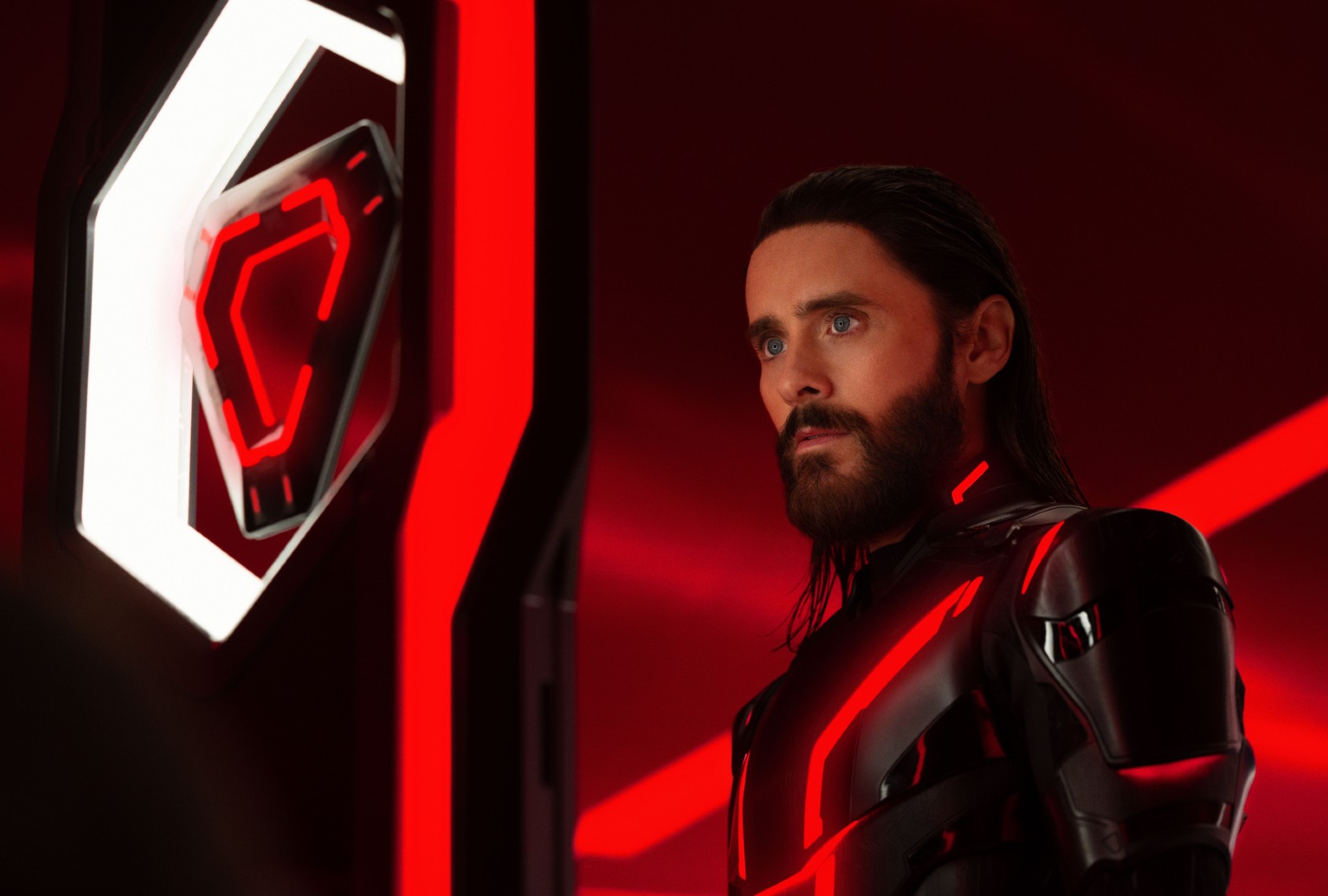
But the “Tron: Ares” soundtrack, composed under the moniker of Reznor and Ross’ band, Nine Inch Nails, achieves the unconventional feat of outdoing the movie instead of merely accompanying it.
Describing “Tron: Ares” as a box office flop is an understatement – more like, it crashed into the public’s disinterest and burst into thousands of tiny cubes. But where the movie fails as a “Tron” sequel, it soars as a visually satisfying background to Reznor and Ross’ first full-length album release since 2020’s “Ghosts V: Together” and “Ghosts VI: Locusts.”
Nine Inch Nails follows in the footsteps of Daft Punk (who provided the score for 2010’s “Tron: Legacy) in paying homage to “Tron” as a seminal cyberpunk work, although Ross’ moody bass thumps and Reznor’s scratchy, hungry vocals on tracks like “As Alive as You Need Me to Be” are grinding, gothic bliss better suited for dancefloors than movie theaters.
Other vocal-free tracks do a better job of capturing the movie’s supposed narrative of an artificial intelligence gaining sentience and a soul. NIN’s signature synth riffs capture the ethereal liminality between organic reality and dreamy simulation, especially in the juxtaposition between the piano-driven “Echoes” and its fluttering digital twin “Permanence.”
The movie itself is middling at best, but when enjoyed with the sound on mute and its music vibrating your home speakers or headphones, it’s a suitable backdrop to important household chores like, say, painting your ceiling black.
“Tron: Ares” is available to buy or rent on Prime Video, Fandango at Home, or Apple TV.

(Jessica Miglio/HBO Max) Jennifer Holland and John Cena in “Peacemaker”
5) “Peacemaker”
Not long ago, if you told me I’d be an enthusiastic advocate for the joys of hair metal, I’d have questioned your sanity. It may be well-nigh impossible to call yourself a Gen Xer without recognizing a chorus or two from, say, Poison’s greatest hits, but that was not by choice.
“Peacemaker” creator James Gunn is fully aware of the music’s association with stinky Spandex, spittle and sloppy beer drunks. That’s why writing his hero’s extreme passion for the music into his character profile is brilliant, because that alone would be enough for most people to write him off. Indeed, a nemesis dismisses John Cena’s namesake vigilante, whose real name is Chris Smith, as “a jingoistic garbage person with the musical taste of the next-door bully from ‘Toy Story.’”
But Peacemaker’s best friend Leota Adebayo (Danielle Brooks) knows that what holds true of Chris’ favorite bands also applies to him. The second season shows there’s a lot more to him and his music than what the cover images imply.
Want more from culture than just the latest trend? The Swell highlights art made to last.
Sign up here
Then again, the cover of the show itself – or rather, its opening title sequence – sells the genre better than anything else. Gunn’s favorite band Foxy Shazam provides the second season’s theme song, “Oh Lord,” a joyful cacophony of balls-to-the-wall distorted guitar, piano, trumpet blasts and Eric Nally’s energetic tenor vocals.
From there, Gunn’s curated playlist, featuring bands like Hardcore Superstar, Cruel Intentions and Ida Maria, musically narrates each installment’s operatic heroics and slapstick violence, or adds poignancy to Chris’ bouts of crushingly low self-esteem. I don’t necessarily agree with our hero’s opinion that new sleaze rock is what Mozart would be playing if he were alive today. But the show helped me develop an appreciation for it, especially when I need to blast away my seasonal funk.
“Peacemaker” is streaming on HBO Max.

(Apple TV+) Tramell Tillman and Britt Lower in “Severance.”
4) “Severance”
Lumon Industries’ severed workers have no memories of life outside of the office, including their outies’ individual music preferences. Instead, the company shapes their music tastes, and in very weird ways, tell them what they like.
Music is a reward for efficient work in “Severance,” whether it be a Defiant Jazz dance break or a rousing marching band performance by the Choreography and Merriment department.
The show’s music producer, George Drakoulias, is a master of the flawless diegetic needle drop, as when Mark S. finishes his seemingly endless project to the sound of The Alan Parsons Project’s banger “Sirius.”
However, the non-diegetic selections are just as evocative and, for the most part, uncommon. We’re as likely to hear a few bars of The Cult’s “Fire Woman” as Joe McPhee’s funky banger “Shakey Jake” or the easy listening blanket that is Mel Tormé’s “The Windmills of Your Mind.”
The wildly diverse pop music side of the playlist is balanced by Theodore Shapiro’s haunting electronic score expressing the eerie blankness of Lumon’s sanitized culture, minor-key wallpaper enveloping the minimalist environment in which Mark S., Helly R. and the rest of the Macrodata Refinement team go about their mysterious, important work.
“Severance” fanatics love those melodies as much as the deep cuts, if not more. Indeed, thanks to this stylish YouTube video, diehards can spend an entire workday listening to eight hours of remixes by the electronic duo ODESZA.
But whenever a familiar tune punches through that empty canvas, it reminds viewers that our hot-blooded humanity is impossible to suppress, inevitably emerging in a steady trickle or one violent burst.
“Severance” is streaming on Apple TV.
(Patrick Brown/FX) Sydney Chandler as Wendy and Alex Lawther as Hermit in “Alien: Earth”
3) “Alien: Earth”
Jerry Goldsmith’s diaphanous “Alien” score may not be instantly recognizable, but the dissonant orchestral sequences establish a mood that continues through the music featured in its sequels.
That made it something of a shock to hear the gnarled aggression of Black Sabbath, Tool, Metallica and other blazing rock anthems close out episodes of Noah Hawley’s blockbuster TV adaptation.
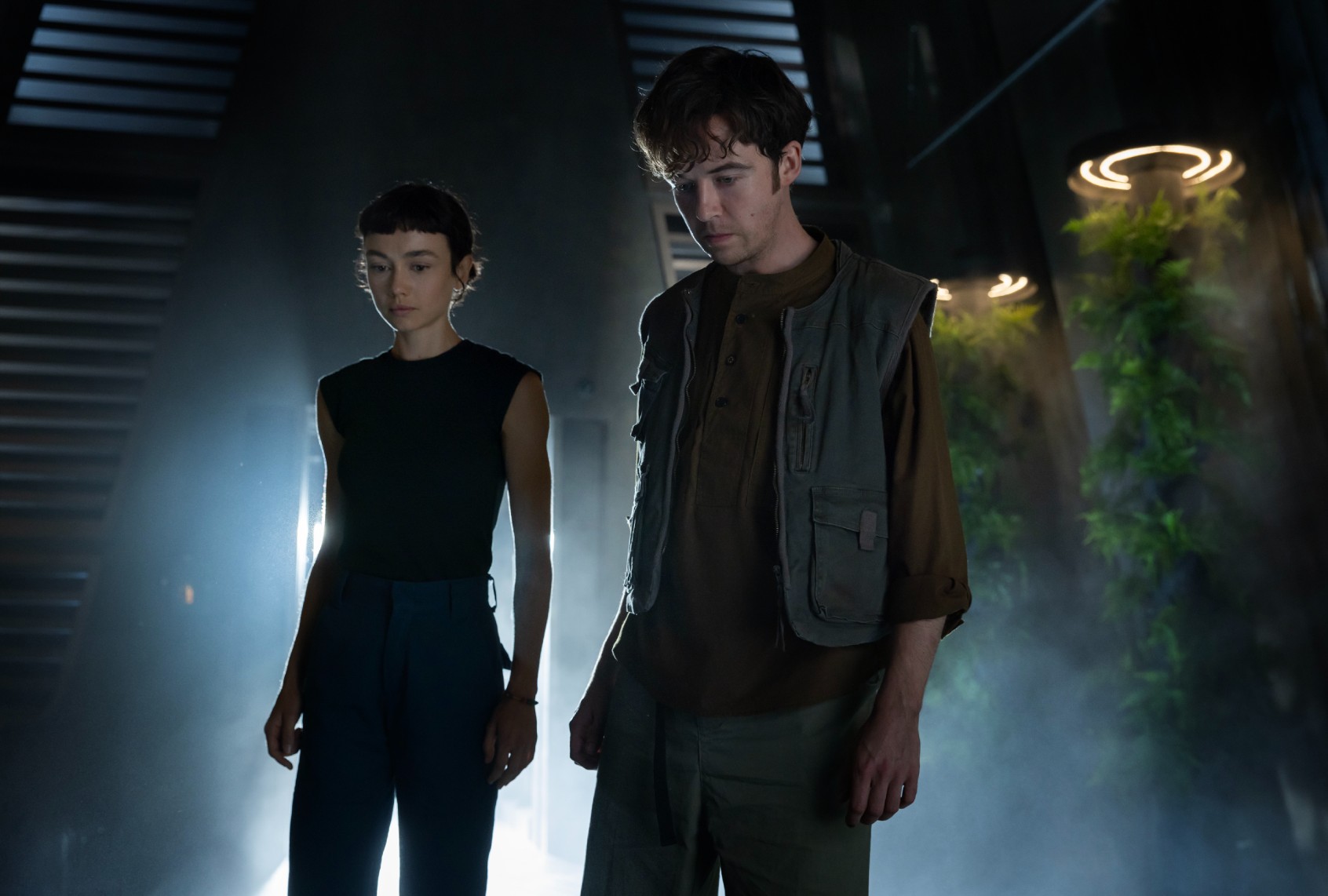
But then, Hawley always places his own signature on work inspired by other filmmakers. “Alien: Earth” follows a group of children whose consciousnesses are transferred into synthetic adult bodies. They’re faster, stronger and in some cases smarter than the average person, but childlike nevertheless, testing the extent of their agency.
That tension between omnipotence and powerlessness is captured in a word: adolescence. And for the people who grew up on a diet of “Alien” and its spinoffs, angsty alternative rock fits that spirit.
That was the idea “Alien: Earth” music supervisor Maggie Phillips captured in her episode selections, many of which Hawley also suggested. In a conversation we had while the season was running, Phillips said that these were the songs she listened to when she was younger, explaining that each tells a story relating to their respective hour’s emotional subtext.
Sometimes that summary nestles within internal stirrings, like the goosebumps produced by the opening chords of Jane’s Addiction’s “Ocean Size” when Sydney Chandler’s Wendy realizes she can speak to the xemomorphs.
But the best musical partners tell the story in their lyrics, such as the finale’s blaring of Pearl Jam’s “Animal,” a brilliant summary of a closing chapter in which the children take charge of an adult world turned monstrous.
“Alien: Earth” is streaming on Hulu and Disney +.
(Netflix) “Kpop Demon Hunters”: Huntr/x shows off their weapons
2) “KPop Demon Hunters”
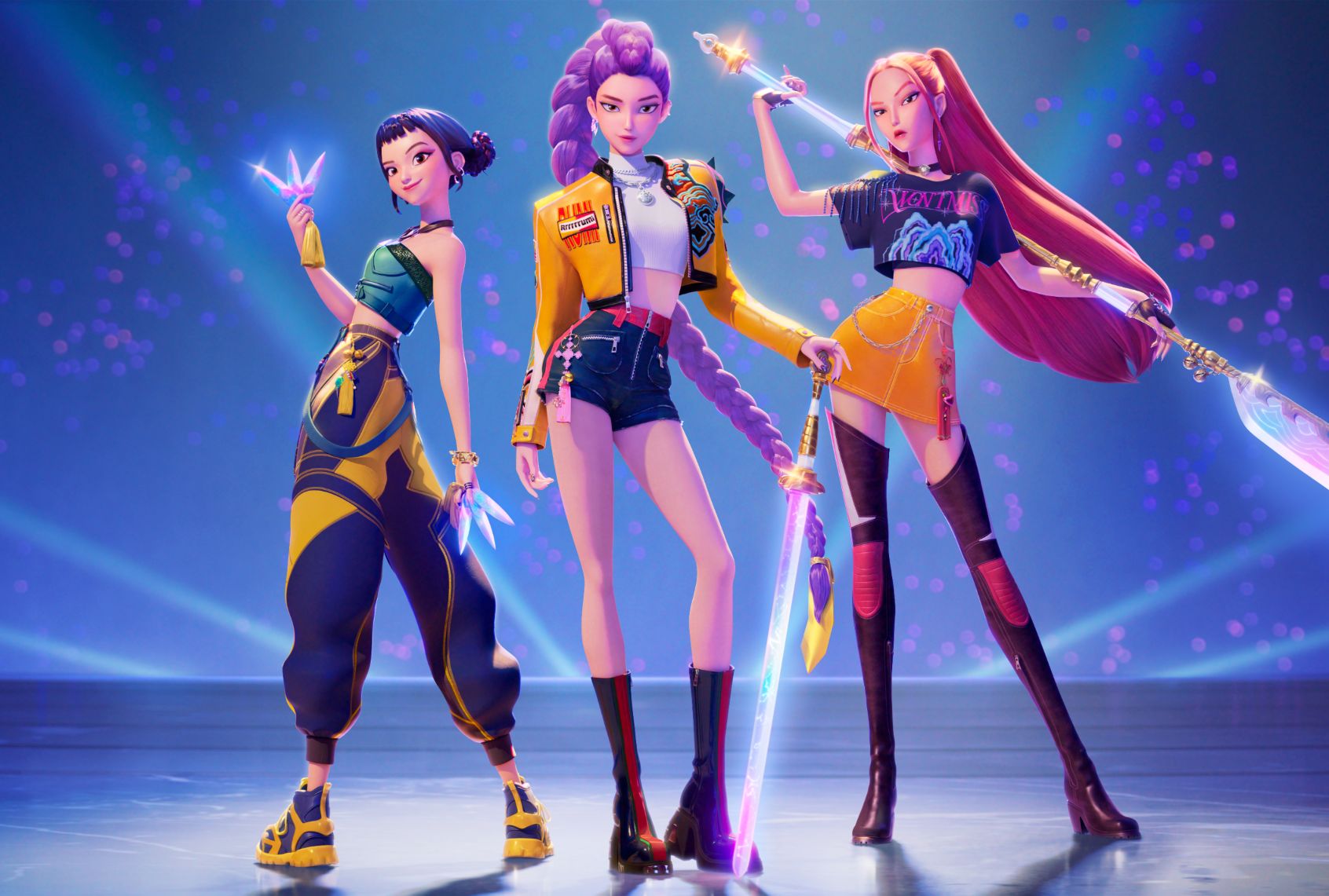
If you somehow managed to make it through 2025 without hearing “Golden,” congratulations for escaping your underground doomsday bunker, Lucy MacLean. Now that you’re here, join the rest of the world in helping HUNTR/X heal the honmoon by singing about believing in yourself.
Strictly speaking, the music of “Kpop Demon Hunters” is an homage to K-pop, and like the film itself, the talent behind tracks like “Golden” is American. But the full soundtrack showcases work from Korean musicians such as Twice and MeloMance, who have crossed over to a broader audience thanks to the movie’s runaway success.
Its fizzy positivity is but one reason this year’s most inescapable soundtrack is stubbornly popular. Tracks like the Saja Boys’ “Soda Pop” are legitimately catchy and universally danceable, and most of the lyrical messaging is empowering. Even when HUNTR/X is being unusually mean in “Takedown,” most would cut them some slack – they’re fighting apocalyptic evil! A demon with no feelings doesn’t deserve to live. It’s so obvious!
Plus, “Takedown” is an all-ages bop powered by bouncing trap beats and G-rated rhyming couplets, which, like the rest of the tracks, manage to convey a share of soulfulness to temper the electronic melodies’ neon glow.
Little of this may comfort parents subjected to the soundtrack on repeat since the film came out. If that describes you, just hang on for a bit longer. 2026 will no doubt bring the next attention-snagging sensation, pushing HUNTR/X to the cabinet or drawer lovingly housing your child’s past obsessions. Even so, when they rediscover their music sometime in the distant future, they’ll have nothing to be sheepish about. The music may not prove to be timeless, but what a time it’s had this year.
“Kpop Demon Hunters” is streaming on Netflix.
(Courtesy Warner Bros. Pictures) Miles Caton as Sammie Moore in “Sinners”
1) “Sinners”
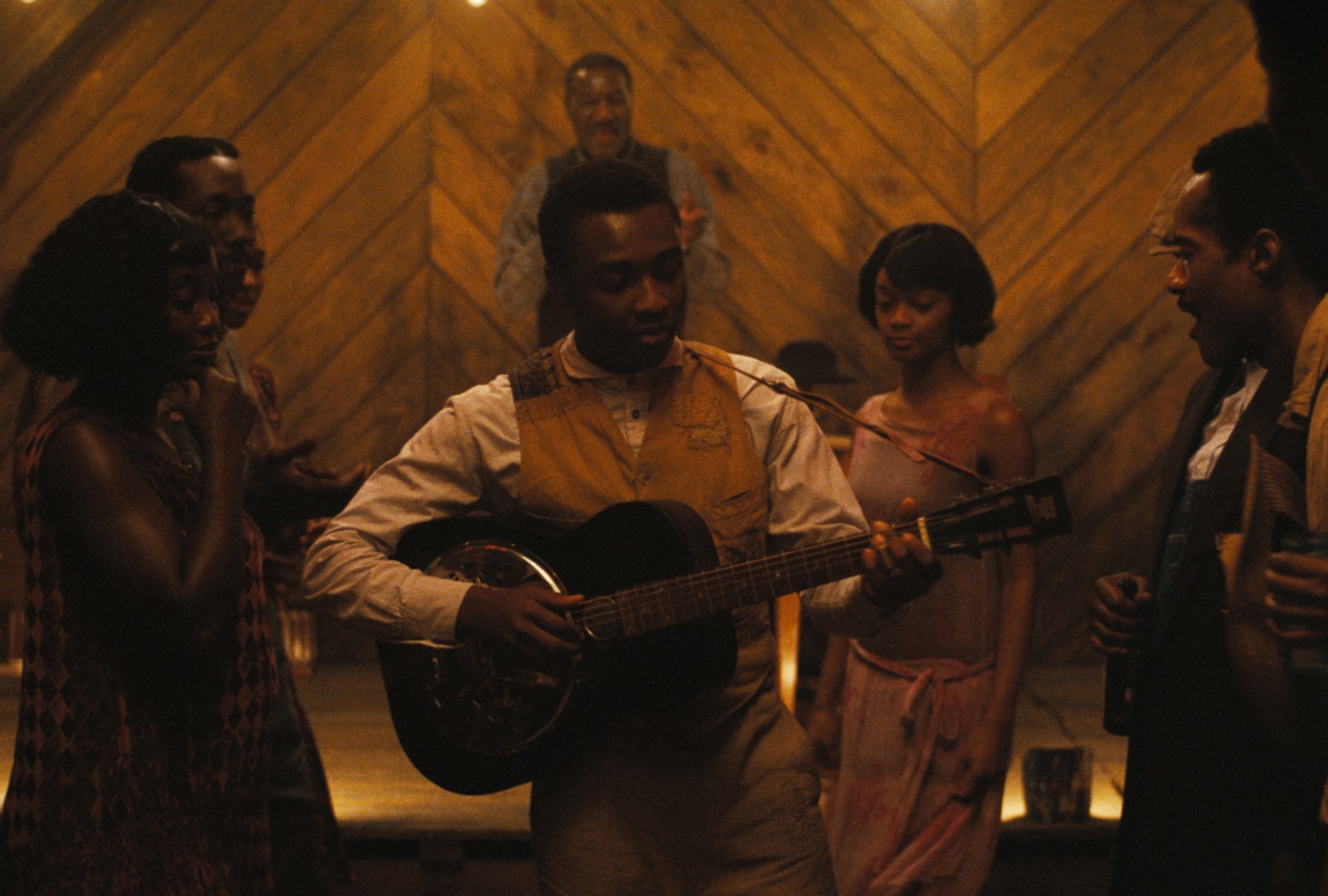
There are soundtracks and scores that establish the narrative tone of a show or movie, and then there is what Ludwig Göransson and Ryan Coogler achieve with the score and playlist for the director’s vampire opus. The music of “Sinners” is its soul and a gateway that transports the audience into some ethereal plane. If you’ve seen the movie, you know precisely what this refers to; if you haven’t, I’m envious that you get to experience the scene in question for the first time.
Göransson, Coogler’s longtime collaborator, infuses a born-and-bred love and appreciation for the Delta blues into his sweeping melodies. Though overwhelmingly orchestral, they nevertheless embrace the warm sun and tight community that defines the story’s setting in Clarksdale, Mississippi, circa 1932.
When those melodies swell in perfect time with Autumn Durald Arkapaw’s broad, sweeping shots of its heroes barreling down an open country road in their PG Automobile, it allows us to sense the definition of freedom.
That car, by the way, is part of the first line ever built and manufactured by Black folks. “Sinners” is full of such nods to history, but few are as accessible as the music. A Spotify playlist curated by Coogler and Göransson is musical scholarship engaging in the call and response to the cultural frustration percolating through this story of life in the Jim Crow South: “See, white folks, they like the blues just fine,” says Delroy Lindo’s bluesman Delta Slim. “They just don’t like the people who make it.”
Coogler and Göransson’s push back against that prejudice, tracing the early 20th century Delta sound that fuels the magic of Preacher Boy (Miles Caton) to grunge, metal, hip-hop (of course) and even traditional Irish standards. It proves the irrefutable fact that all popular music owes a debt to Black music while also suggesting, like the movie’s most transportive scene, that the best songs performed by the most skilled musicians transcend cultural barriers. Indeed, it can create the noblest magic known to all mankind.
“Sinners” is streaming on HBO Max.
Read more
about this topic
