

I could tell you a dozen stories about cooking on a budget. Some are triumphant—like the time I hosted my entire MFA cohort with a DIY baked potato bar and some donated champagne. Others are sadder: the week a breakup coincided with unexpected medical bills, when I stood at the self-checkout feeding $23 worth of quarters (my last money until payday, and yes, it takes exactly as long as you’re imagining) into the machine so I could buy chicken thighs, vegetables and rice. All I wanted then was to sink into a pot of chicken-and-rice stew and weep.
This story is different. This one is about quiet confidence — the sort that only comes from surviving enough $23-in-quarters days to know you’ll be okay.
It began innocently. I’d swapped handbags for the season — a slouchy straw tote with a teak handle traded for a forest-green suede pouch — and my wallet, apparently, hadn’t gotten the memo. Because of my deep and abiding distrust of fintech (a story for another day), I keep a little emergency cash tucked into my bags. Still, there I was in the supermarket, wallet-less, armed with $12, a dying phone and my transit card.
For a moment, I panicked. And then I didn’t. I realized I had everything I needed to get home and make a good dinner. What, exactly, was I pressed about?
I started in the produce aisle, as I often do, scanning the marked-down netted bags — imperfect, but still sturdy and fragrant. I grabbed one with a few shallots and a head of garlic, added a carton of cheap white mushrooms, then a ninety-nine-cent box of pasta, a small wedge of Parm from Murray’s “under $5” bin and a carton of six eggs.
Back home, after the train ride, I washed and dried the mushrooms and sent them sizzling into a pan with shallots, garlic, salt, pepper and an indecent amount of smoked paprika. They crisped and darkened, developing a savory depth that stood in happily for pork. Tossed with pasta, egg, cheese, and a little of the starchy cooking water, they became a mushroom carbonara—rich, smoky, and deeply satisfying.
It felt decadent. And there was enough for two.
Want more great food writing and recipes? Sign up for Salon’s free food newsletter, The Bite.
I keep thinking about that meal, especially because this year has been rough. Groceries cost more, time feels thinner and the idea that eating well — both pleasurable and nourishing — should be attainable on a modest budget can feel almost quaint. As we head into a new year, many of us are doing the same math over and over: trying to square taste with nutrition, care with constraint.
If this feels familiar —if you’re feeling tired, hungry and underpaid all at once—let me just say: you’re not imagining it. You’re not alone. I’ve teared up in grocery aisles myself, realizing the little treat I’d budgeted for (or some weeks, the extra bit of meat) wasn’t actually in the cards. I’ve experimented extensively with how far a pot of chicken-and-rice stew can stretch with just a little extra broth. I’ve taken two trains to pick up Too Good To Go leftovers from restaurants I couldn’t normally afford. I could tell you a dozen ways to use Bisquick to fill out a meal — and I’m fairly certain I could discover a dozen more.
We need your help to stay independent
But here’s the thing: good food doesn’t have to be expensive. We know this, even if it’s easy to forget. There is something elementally heavenly about the smell of alliums cooking in butter. Spoon it over a comforting bulk grain — pasta, rice, polenta, beans — top it with a single egg, and it will set you right almost every time. You can scale up if you like: some grated cheese, a scatter of fresh herbs, maybe crispy pork. But you don’t have to. Sometimes, that restraint is the nicest thing you can do for Future You.
What follows are a few principles I’ve learned for cooking this way. Not perfectly, but with steadiness, pleasure and budget in mind.
Nurture a rolodex of “rent week” recipes
There’s a special kind of comfort in having a short list of meals you know, with almost mathematical certainty, will land. In the culinary world, this is often called “rent week” cooking—a term popularized by Alex Delaney in his Bon Appétit column from 2016 to 2019. Delaney’s recipes had a magic trick: they were cheap, fast, and reliably delicious. Think “overdraft-protection polenta” or a “cheap chorizo tostada” — meals that somehow still felt cheffy, like a little wink at your former foodie ambitions.
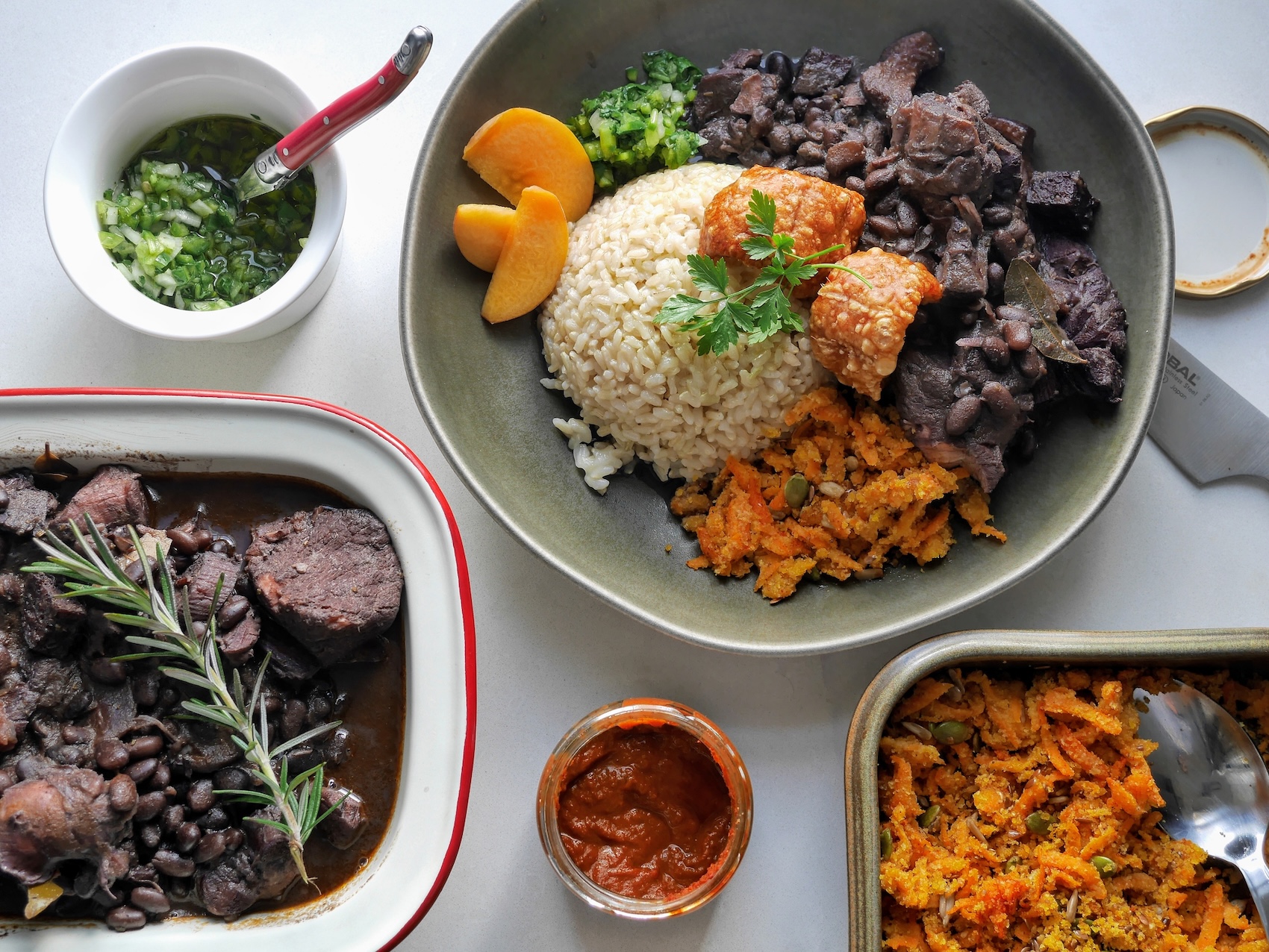
I discovered that column shortly after graduating, when my love of food far outstripped my paycheck in public media. It hit just at the right time. For me, my own rent-week roster looks like the mushroom carbonara I’ve told you about, a smoky chickpea curry, feta-eggs on rice with avocado slices, or a black bean stew that can stretch either with a bit of chorizo or a rotisserie chicken scavenged from the sale bin.
The point isn’t perfection—it’s predictability, pleasure, and the quiet relief of knowing that, even when the week is long and the budget short, dinner is still a thing you can get right.
Learn the rhythms of your grocery store
Every supermarket has a secret life, if you know how to watch. There’s a cadence to sales, a pattern to coupons, a small ecosystem of rewards programs and “oops” bins where imperfect or surplus food waits quietly for someone to notice. At my Mariano’s, there’s a section labeled “Oops! We baked too much,” which houses overstock bread and pastries. There’s also a section for imperfect produce, as well as a tiny corner of discounted meat, like a tiny treasure trove for those paying attention.
It’s not just about snagging a deal; it’s about knowing where the value is and when. Some stores have unbeatable per-unit prices on pantry staples, while others shine with proteins or prepared items. The Vietnamese grocery down my street, for example, always has the best Jasmine rice and canned coconut milk, though the protein prices are steeper. Knowing this allows me to plan trips that actually make sense: sometimes it’s worth a detour for a specialty ingredient, other times it’s smarter to stick to one store.
Think of it like learning the rhythm of your own kitchen, except bigger, louder, and fluorescent-lit: once you understand it, your budget stretches in ways that feel almost effortless.
Plan a little for Future You
I’ll admit it: I am a dork about pre-planning. I keep a household binder that I update quarterly, a habit that became strangely essential while recovering from lingering post-COVID brain fog. One section is devoted entirely to food, subdivided into tiny compartments of order: nutrition goals for the quarter, menus and budgets for holidays or birthdays, recipes I want to try (already printed and annotated with shopping lists), and finally, the pièce de résistance—my quarterly dinner queue.
The dinner queue is a concept I first encountered in Kendra Adachi’s “The Lazy Genius Kitchen.” It’s deceptively simple: a curated list of meals you intend to make for dinner. You might be thinking, “Isn’t the whole internet a list? Aren’t all my cookbooks lists?” Yes, but those lists are too big. Overwhelming. And overwhelm is the state in which I make most of my bad financial decisions. Adachi puts it beautifully: “A dinner queue can be ten meals you repeat, thirty meals you do for an entire month and repeat, or maybe even more than that if you’re not a fan of repetition.”
You don’t need a binder or a full-blown quarterly system to reap the benefits. Even a little pre-planning—whether for a week, a month, or a cooking “season”—lets you approach dinner with confidence, reduces stress, and keeps your budget in mind without having to reinvent every meal from scratch.
But stay flexible (and realistic)
Some nights, you come home late on a snowy evening and the last thing you want to do is make whatever dinner you had meticulously planned. That’s when a little self-compassion—and a small arsenal of freezer and pantry favorites—becomes your secret weapon. Trader Joe’s orange chicken. A bag of dumplings. Stouffer’s lasagna. White cheddar shells. Even a frozen pizza that’s not quite artisanal but somehow perfect.
These “easy wins” bridge the gap between exhaustion and sustenance without forcing you to spend $72 on a pair of sad burrito bowls from a takeout app. The trick is building a little wiggle room in your budget for them—so that a fallback meal feels like a relief, not a splurge. Flexibility isn’t about throwing plans out the window; it’s about giving Future You the kindness and tools needed to survive the week with dignity, warmth and, yes, occasional cheese.
Nerd out on technique
There’s a surprising joy to be found in coaxing the absolute most from humble ingredients—if you can be bothered to notice. Stewing a piece of meat until it transforms from leather into something tender and succulent. Turning the odds and ends of vegetables—peels, stems, bruised bits—into a fragrant stock that makes even weeknight soup feel luxurious. Toasting spices in oil until they bloom and scent the kitchen with something almost magical.
It’s not about impressing anyone. It’s about seeing potential in the ordinary, finding pleasure in the small transformations and discovering that even the simplest ingredients can carry a richness you’d almost forgotten was possible. Technique is not a chore. It’s a quiet way to honor your food, your time and Future You.
Give everything a second life
One of my favorite lessons came from a restaurant manager at a small, hip café: “Give everything a second life.” It sounds obvious, but it’s amazing how often we toss what could be treasure. Take carrots, for instance. Carrot peels became stock. Extra shredded carrots were saved for bread or pickled for a salad. Carrot tops were transformed into pesto. Nothing went to waste and everything found a purpose.
Carleigh Bodrug’s “Scrappy Cooking” and Tamar Adler’s “The Everlasting Meal Cookbook” are brilliant companions for this mindset, offering clever, unexpected ways to elevate what might otherwise be scraps. It turns the ordinary into something that feels thoughtful, deliberate, and yes—a little magical.
Build a solid pantry, bit by bit
I was lucky enough to grow up in a household where basics were taken for granted, which made adulthood a bit of a shock: decent toilet paper, a shower curtain that doesn’t disintegrate in the wash, a rug that actually fits under the bed — all these small necessities suddenly had a cost. But the real challenge, and the real joy, was building a pantry beyond salt, pepper and oil.
Here’s the honest truth: the difference between a budget meal that tastes like one and one that doesn’t is often just time (a soup simmered for 90 minutes instead of 15 will taste richer) and decent spices. It’s worth investing slowly. International markets often have the best deals on spices, but your local supermarket can surprise you too — especially during holiday or New Year sales. For nonperishables, picking up an extra can or two of beans, a jar of tomato paste, or a staple oil can quietly change the trajectory of your weeknight cooking. Even dedicating a small portion of your grocery budget — $20 a month, say — to new spices, vinegars or oils can steadily bolster your collection, making your pantry a toolkit for meals that feel abundant, not scrappy.
Master a few “fridge clean-out” meals
This is a different beast from your rent-week recipes, but just as essential. The idea is simple: have a few go-to templates for using up the bibs and bobs lurking in your kitchen, depending on your mood and what’s in the crisper.
Think frittatas or egg bakes, perfect for dispatching vegetable scraps, wilting herbs, bits of cheese or that lone slice of bacon that’s been begging for a job. Or a sturdy stew: a can of tomatoes, an errant link of sausage, a handful of chickpeas, all brightened with greens that need a home. Stir-fries, savory oats, rice bowls, flatbreads, paninis, pasta—whatever suits your style.
The joy of these meals is in their freedom: they’re forgiving, flexible, and somehow deeply satisfying. Fridge clean-out cooking turns potential waste into dinner that feels intentional, resourceful and, above all, comforting.
Read more
about this topic
