

If you happened to miss Sunday’s jumbled mess of a Golden Globes ceremony, the telecast can be best summed up by a scene from one of the night’s most nominated films. In Joachim Trier’s “Sentimental Value” — which won the supporting actor trophy for Stellan Skarsgård’s lovely performance as an emotionally stunted but artistically revered film director named Gustav Borg — Gustav blows up at a journalist during a press junket being held for him and his new muse, Rachel Kemp (Elle Fanning). After acquiring the film’s distribution rights on the star power of Kemp’s name alone, Netflix has organized the junket as a pre-production preview to tout its next big awards contender.
But Gustav’s hair raises when the journalist asks him whether the film will have a theatrical release, given Netflix’s disdain for the classic cinematic experience. A rep interjects to confirm that the details are still being ironed out, but it’s too late. Gustav’s feathers are ruffled. And when the journalist follows up with a question for Rachel about the tepid reception of her previous film, Gustav shuts down the interview. “What kind of question is that?” Gustav asks. “Rachel Kemp is the best actress of her generation. You’re lucky that she’s here. You should be grateful. Get out!” In a flash, the journalist is gone, leaving Gustav to grumble, “TikTok troll.”
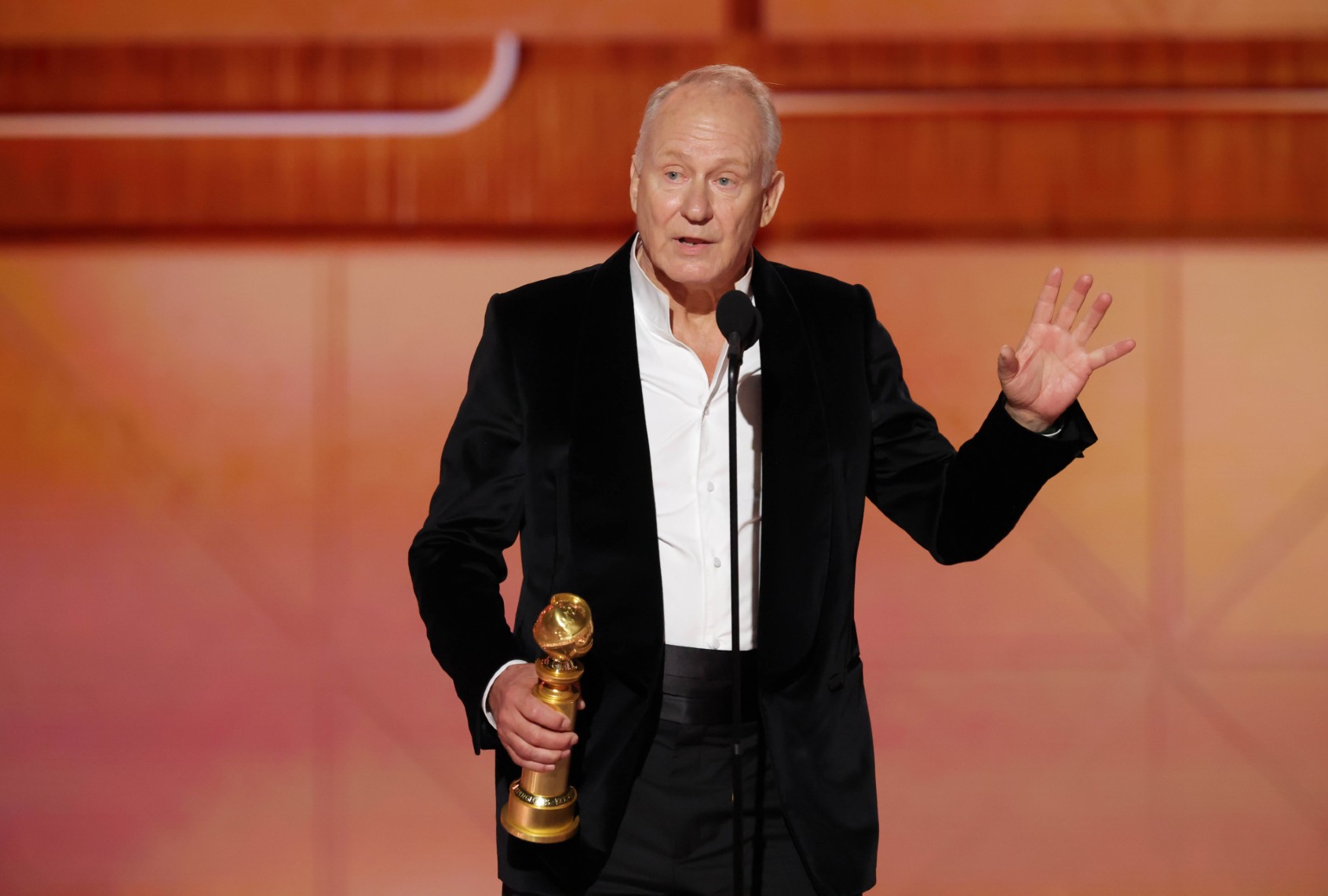
(Rich Polk/2026GG/Penske Media via Getty Images) Stellan Skarsgård at the 83rd Annual Golden Globes held at The Beverly Hilton on January 11, 2026 in Beverly Hills, California.
And just like his character in “Sentimental Value,” Skarsgård used the moment to champion his industry and cut through all of the Globes’ noise, both literal and figurative, providing a heartening reminder that the real value is in the art, and not the awards.
Watching the 83rd annual Golden Globes was like seeing this scene all over again, just stretched out into three and a half painful hours. Throughout the night, actors and filmmakers were left to advocate for themselves, their colleagues, and their art while the telecast prioritized lame cross-promotional spon-con for Paramount+ and gaudy awards forecasts from the ever-so-astute users of the prediction betting app, Polymarket. The walk-on and walk-off music was a perplexing mix of catchy but inapplicable pop hits, as though someone threw the Beverly Hilton’s sole aux cord at the first gay guy they saw and asked him to DJ. Even the nominees seemed largely unhappy to be there, with their palpable exhaustion reaching through the television screen.
Watching the show felt like thumbing through TikTok, assaulted by walls of sound, garish ads and the occasional familiar face. When Skarsgård took the stage to accept his award — to the tune of Usher’s “Yeah!,” for some reason — that scene from “Sentimental Value” was almost eerily prescient. And just like his character in the film, Skarsgård used the moment to champion his industry and cut through all of the Globes’ noise, both literal and figurative, providing a heartening reminder that the real value is in the art, and not the awards.
“I’m very happy for this [award], because this is a small Norwegian film with no money for advertising or anything, that gets to see the world in this way,” Skarsgård began. “And hopefully you’ll see it in a cinema. Because they’re an extinguished species now. In a cinema, where the lights go down, and eventually you share the pulse with some other people. That’s magic. Cinema should be seen in cinemas.”
There’s something so very poetic and moving about the way Skarsgård phrases the collective experience we’re lucky to have when we go to the movies. “You share the pulse with some other people” almost seems like an abstract way to put it, but at the same time, there’s no better way to talk about what it’s like to see a film with a crowd of strangers. As time marches on and technology finds new ways to isolate us, the theatrical experience only becomes more precious. There are so few places left where we can feel the physical and emotional phenomena that moviegoing allows us. For 90-some odd minutes, we’re bonded with people we’ve never met before, as we all submit ourselves to someone else’s vision. We react in tandem with everyone else; we laugh, cry, scream, jump and gasp at the same time. Our bodies all move together. There’s nothing else quite like it, and it’s fading away.
Want more from culture than just the latest trend? The Swell highlights art made to last.
Sign up here
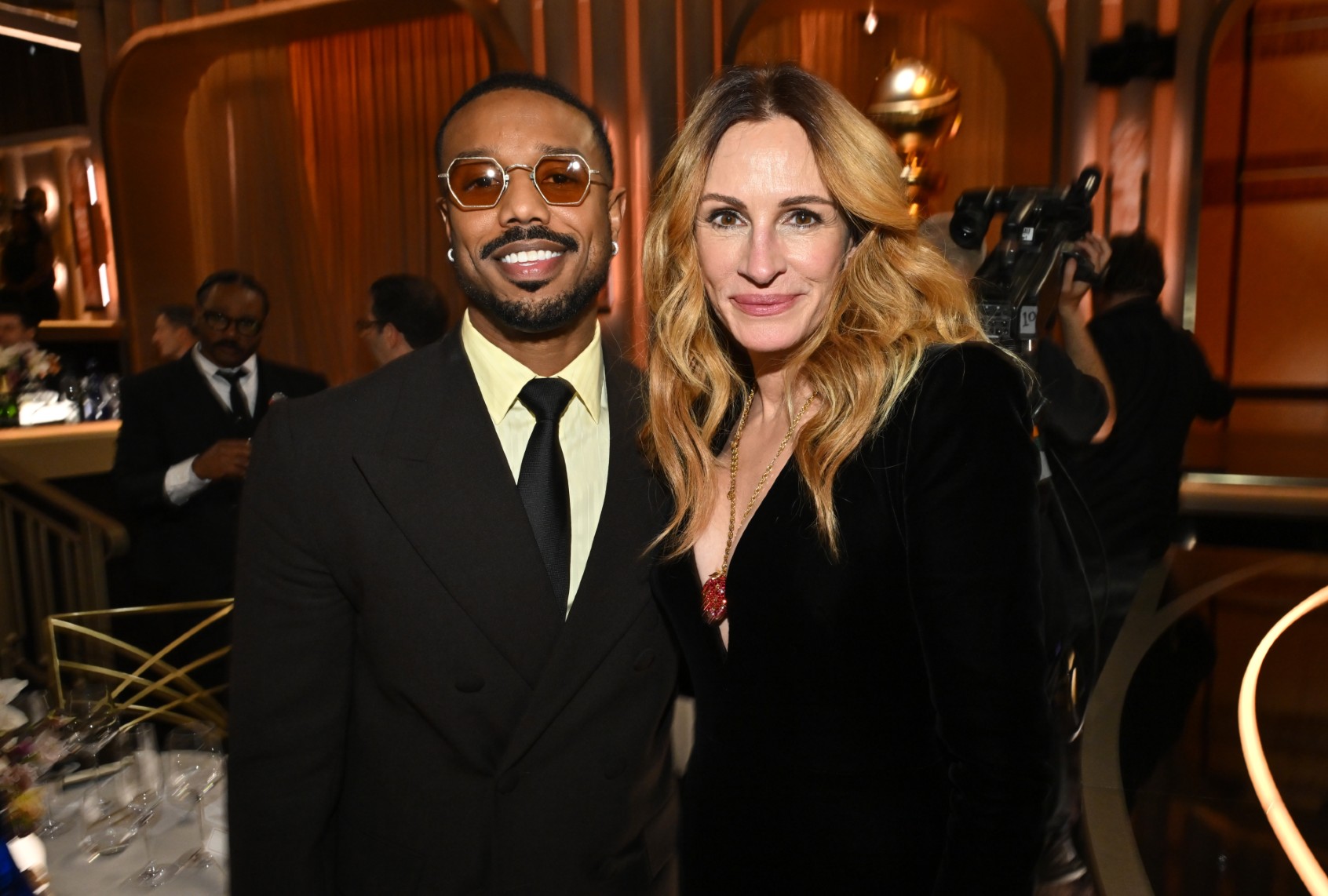
But not if the people who make the movies have anything to say about it. Moments after losing the award for best performance by a female actor in a drama for “After the Hunt,” Julia Roberts emerged to present the night’s next award. (To the tune of Kylie Minogue’s “Padam Padam,” for some reason). Maybe it was because the audience was in the presence of Hollywood royalty, or maybe it was a glimpse of Tinseltown’s most cheerful smile, but the atmosphere in the room noticeably improved. “What a beautiful night to be an artist,” Roberts said. After the nominations for best picture, musical or comedy, were read, Roberts paused to joke about losing in her category, but took the opportunity to do something unexpected, pointing out brilliant newcomer and first-time nominee Eva Victor, whose debut film, “Sorry, Baby,” was one of the finest films of 2025.
“I lost a minute ago,” Roberts said. “Me and Eva Victor, who is my hero. ‘Sorry, Baby,’ if you have not seen it, see it.” The cameras cut to Victor in the audience, welling up with tears. While one could read Roberts’ comment simply as a lovely gesture, the shoutout was much more significant than it initially seemed. Oscar voting opens this week, and awards voters keep their eyes on the Globes every year to see which films take home the gold. For a promising filmmaker like Victor — who wrote, directed and starred in “Sorry, Baby” and managed to score major nominations for their very first cinematic outing — an endorsement from Roberts could mean everything; not just Oscar glory, but more financing and trust in whatever project Victor produces next. Beyond that, it’s a verbal encouragement for viewers who might not know about Victor’s film to seek it out. With the film industry in flux, every little bit helps. What a beautiful night to be an artist, indeed. (And you can watch “Sorry, Baby” on HBO Max right now, just saying.)
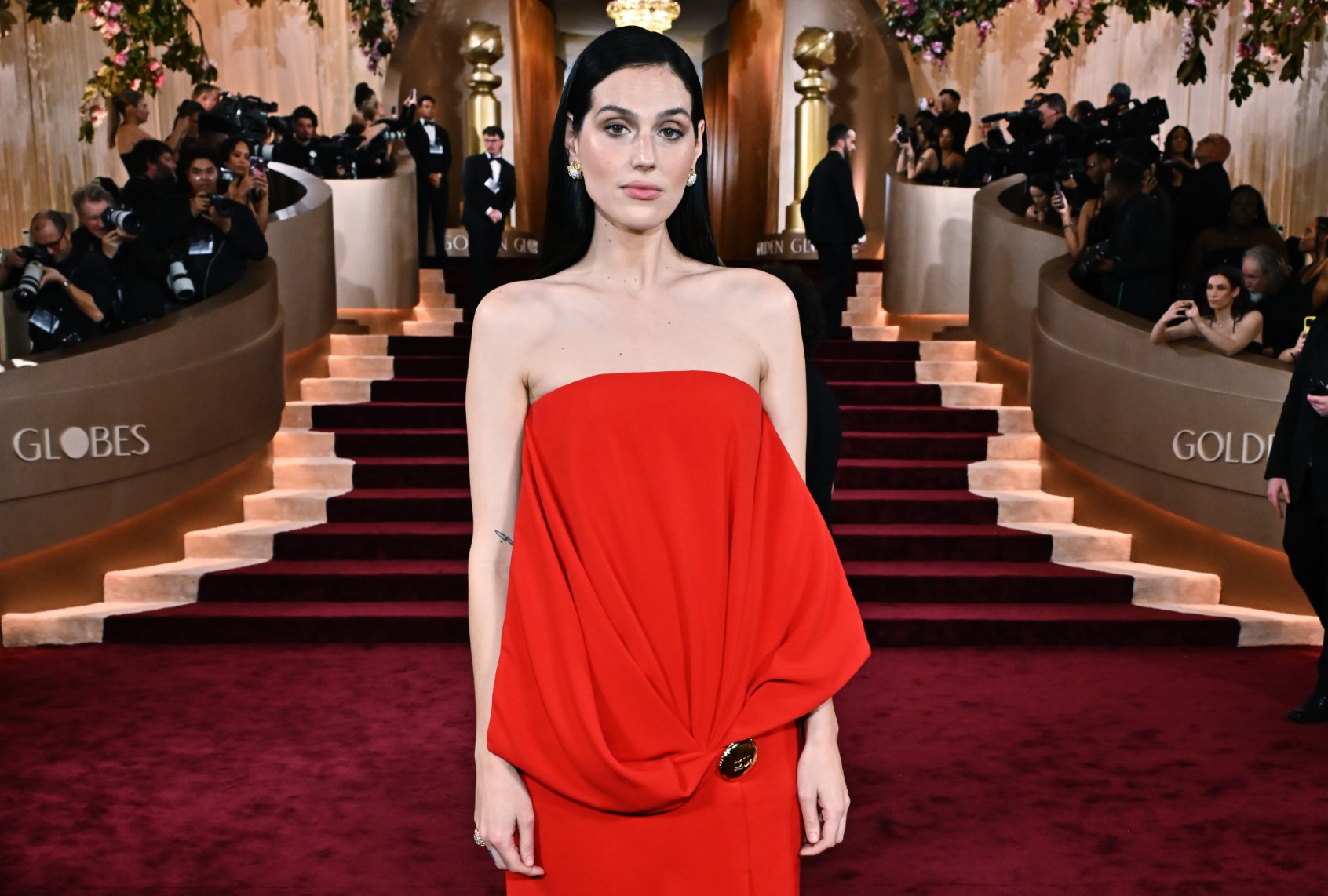
(Michael Buckner/2026GG/Penske Media via Getty Images) Eva Victor at the 83rd Annual Golden Globes held at The Beverly Hilton on January 11, 2026 in Beverly Hills, California.
For a promising filmmaker like Eva Victor — who wrote, directed and starred in “Sorry, Baby” and managed to score major nominations for their very first cinematic outing — an endorsement from Julia Roberts could mean everything; not just Oscar glory, but more financing and trust in whatever project Victor produces next.
Yet, as excited as those artists were to support their industry comrades, their efforts were repeatedly blunted by the Globes’ worst impulses. The constant Polymarket ads felt cheap and unsavory to say the least, reducing all of the stellar films nominated to fodder for basement-dwelling creeps to bet on. And when Hollywood trades posted on social media that the award for best original score was announced during a commercial break, the Globes felt all the more distasteful. It’s not uncommon for an awards show to announce some awards during the break or before the show. It is always disrespectful, though, especially since awards given during commercial breaks tend to be the awards for below-the-line craftspeople, whose work is just as important to a film as anyone else’s. But it felt pointed that viewers were forced to watch an unfunny bit of UFC spon-con simply because Paramount Skydance recently acquired the sport, and didn’t get to see Ludwig Göransson accept the award for his terrific “Sinners” score. Given that so much of the hype surrounding “Sinners” was because of its music, the choice wasn’t just disappointing; it was irresponsible to the artists the Globes claim to venerate.
We need your help to stay independent
As aggravating as these decisions were, they’re not entirely surprising for a show like the Globes, which is known for its boozy environment and general chaos. For so long, it was treated as the joke award show, a cause for laughter when film trailers would categorize an actor as a “Golden Globe nominee” after a string of Oscar winners were billed before them. However, just because the show has a mixed reputation doesn’t mean that the Golden Globes telecast doesn’t matter, or that it’s not taken seriously by the people in Hollywood with power and the hundreds of thousands of people watching at home. That’s why it was so heartening to see filmmakers, actors and artists openly rooting for their work, and fighting for the success of their industry.
A cynic might argue that celebrities don’t want film and moviegoing as we know them to die because they don’t want to lose their source of income, and maybe that’s true for some. Most of the nominees could never work again and spend the rest of their lives doing brand sponsorships. But that’s not what they want to do. Peddling products doesn’t enrich the soul — the Globes’ incessant in-show ads were proof of that — but art does. Films are poignant and important, no matter how much the institutions designed to award them have come to denigrate them. And even if that trend persists (and it’s looking like it will), we’re lucky that so many others in the industry haven’t lost sight of just how wonderful it can be to go to the movies and share a pulse with everyone else in the room.
Read more
about the latest in film
