

As a magazine obsessive growing up in the heyday of print media, I always associated the new year with a publishing-world contradiction: the January issue. The bulk of the glossies’ ad buys were earmarked for often obscenely hefty September and December issues. By contrast, January issues slunk onto the newsstands in a shopped-out post-holiday void — and, as if to compensate for their anemic page count, did so with a deranged perkiness summed up by a phrase that, over decades, was splashed across innumerable fashion-magazine covers: “New Year, New You!”
Magazines, of course, didn’t originate the longstanding trope of a new year as a site of reinvention, clean slates, new leaves. But “New Year, New You!” showed up reliably on the cover of Seventeen, the one magazine I had my very own subscription to; and, like a lot of newly adolescent girls, I wanted to believe its promises even as I recognized, on some level, that they were all versions of the same proposition: This is the year you’ll become prettier! More athletic! More confident! More popular! Buying in — the right lip gloss, the right sneakers, the right acne medication — was all that was required.
In the 1980s, animated Disney princesses were not the omnipresent texts of girlhood they became the following decade, but Cinderella stories were nevertheless everywhere you looked. And the idea that, for women and girls in particular, one little makeover could change the course of an entire life was tantalizingly pervasive. I read and reread the “Meg Goes to Vanity Fair” chapter of “Little Women,” in which the oldest March sister is invited to a friend’s estate and is so mortified at being treated like a threadbare charity case that she gives in to envy and allows her hosts to doll her up in what her disapproving young neighbor Laurie calls “feathers and fuss.” In another favorite book, “The Saturdays,” four New York City siblings pool their allowances each week so they can, in turn, embark on solo adventures; on oldest sister Mona’s first Saturday, she’s lured into a beauty salon where her hair is washed and curled and set and her fingernail lacquered bright red.
The idea that, for women and girls in particular, one little makeover could change the course of an entire life was tantalizingly pervasive.
Likewise, nearly every movie I loved featured a pivotal makeover scene: “Girls Just Want to Have Fun,” “Desperately Seeking Susan,” “The Legend of Billie Jean,” “Moonstruck,” “Married to the Mob,” “Earth Girls Are Easy” and, of course, both “Grease” movies. Even the ones that felt wrong in a way I didn’t have vocabulary for at the time — like Alison in “The Breakfast Club” and Iona in “Pretty In Pink” — were compelling. Not all makeovers were created equal: Some were in service to disappearing, others to fitting in; some were manic and others melancholy. But each was physical evidence of a larger transformation, a flag planted at the place where growth, possibility and autonomy converge.
Want more from culture than just the latest trend? The Swell highlights art made to last.
Sign up here
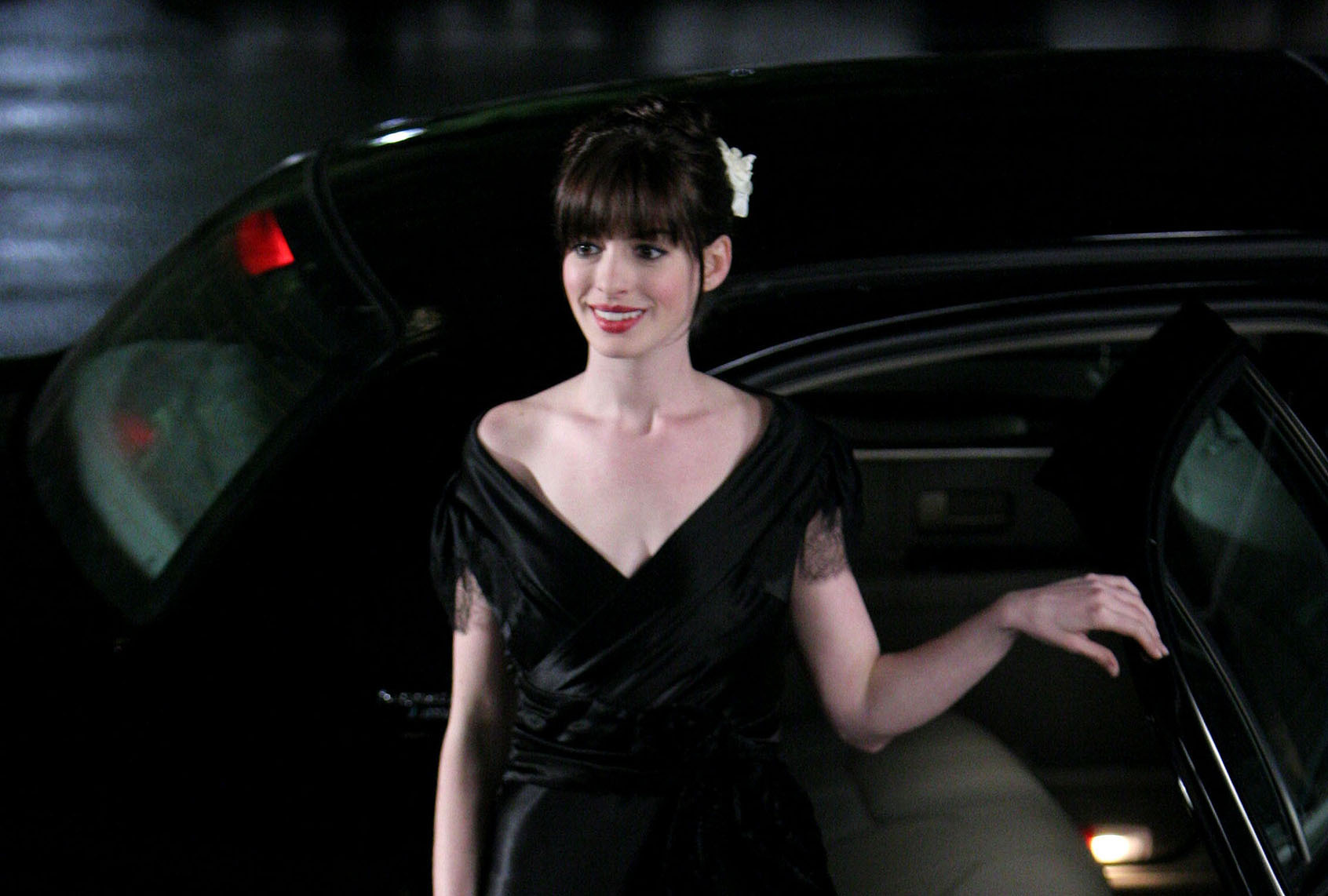
By 2006, when “The Devil Wears Prada” came out, I was practiced in filtering out the siren song of “New Year, New You,” realistic about the chances that I’d stick with annual resolutions to eat better and go to sleep earlier, and well aware of how fashion magazines could warp the self-images and priorities of girls and women. I wasn’t prepared for the movie’s makeover plot to resonate quite as much as it did. Anne Hathaway’s Andy Sachs lands a coveted job at the glossy Vogue stand-in Runway, where her future success in journalism depends on serving the whims of her mercurial, widely feared boss, Anna Wintour Miranda Priestly (Meryl Streep). Like the child hero of “The Emperor’s New Clothes,” Andy initially refuses to buy into the illusion that the work of a fashion magazine is important enough to justify the absurdity of Miranda’s expectations — that is, until she realizes that her future success depends on accepting her boss’ exacting standards. With the help of Runway art director Nigel (Stanley Tucci), and to the shock of fellow assistant Emily (Emily Blunt), Andy goes from knock-kneed frump to self-assured fashion plate in the course of an afternoon. The montage that follows, set to Madonna’s “Vogue,” finds her heading to work each morning in increasingly chic designer ensembles, polished and poised and finally seen by Miranda, though not treated appreciably better.
In the years since its release, “The Devil Wears Prada” has found audiences among new generations filtering pop culture of the past through contemporary perspectives and challenging prevailing norms. One popular counternarrative posits that the movie’s real villain isn’t the ruthlessly appearance-driven Miranda but the deceptively laid-back chef Nate (Adrien Grenier), with his jumped-up Jarlsberg sandwiches and his unwillingness to acknowledge, much less support, his girlfriend’s ambition and work ethic. Regardless, Andy’s career calculus was relatable at a time when millions of strivers in a fast-changing media industry were biting their tongues and joining whisper networks, jockeying for position and going along to get along.
The internet’s first-person industrial complex was on the rise, and young women who were recruited to write about their lowest moments and most questionable choices were paid all of $50 and then left to defend themselves in comment sections that resembled bloodsport. The trick was to be taken seriously as a professional without appearing to care about conforming to a standard and certainly without showing that one actually cared. I learned this way too late and all at once, after showing up to a photo shoot in grotty jeans and an unflattering ponytail; a few months later, the scene in which Nigel presses a pair of Christian Louboutin heels on a dismissive Andy (“I don’t think I need these. Miranda hired me. She knows what I look like.” “Do you?”) made me want to hide under my movie-theater seat.
“The Devil Wears Prada” continues to resonate, I think, because it identified the makeover narrative as a bait and switch — the physical metamorphosis of an individual becoming a site of collective moral reckoning — without denying or condemning the allure of the narrative itself. This was a crucial perspective given that pop culture of the 2000s went all in on makeovers, for better and worse. From “The Biggest Loser” and “Extreme Makeover” to “Queer Eye For the Straight Guy” and “What Not to Wear” to the leering tabloid juggernaut of Us Weekly and its imitators, the era was an insurgence of self-abasement in the guise of entertainment.
We need your help to stay independent
Reality TV contestants were encouraged to open their veins to home audiences, to recount lifelong battles with body image and admit to voids of self-esteem that left them vulnerable to bullying by family members and abuse by partners. At best, participants in these spectacles fielded snarky jibes about outdated fashion and unsightly grooming; at worst, they were vulnerable to manipulation and torment from the experts tasked with overseeing their transformations.
All this was in service to the “reveal” — the moment, after the screaming dies down and the surgery bruises fade, when a new, improved self is unveiled to friends, family and a viewing audience of millions. The change had to be dramatic (if it didn’t elicit gasps, was it truly a transformation?) but couldn’t be definitive; contestants often ended their time in the spotlight with an acknowledgment that new goals — a smaller body, a more symmetrical smile, a fuller head of hair — were out there, patiently waiting to be realized.
“The Devil Wears Prada” continues to resonate because it identified the makeover narrative as a bait and switch — the physical metamorphosis of an individual becoming a site of collective moral reckoning — without denying or condemning the allure of the narrative itself.
“The Devil Wears Prada’s” long-awaited sequel comes out this May, emerging into a world that would likely be unrecognizable to its foundational characters. Print magazines are an endangered species, media has been co-opted by tech billionaires and the idea that one middle-aged white lady has veto power over the sartorial choices of a nation now seems like a preposterous conceit. Decisive, unsparing judgments of what constitutes good taste and high style that were previously central to the fashion industry and the media that covered it are widely deemed verboten — sometimes by law but often by fiat, in accordance with the social-media dictate “Don’t yuck somebody else’s yum.”
Makeovers themselves are retroactively suspect, if not outright problematic, something evidenced by Amazon Prime’s recent reboot of “What Not to Wear,” which is now called “Wear Whatever the F You Want.” Clinton Kelly and Stacy London return as its hosts, older, wiser and atoning for the tough love and scathing real talk they once doled out to style-challenged guests. The premise of the new show is that Kelly and London spend time with their guests, find out how they want to dress and steer them toward the most flattering versions of that — it’s judgment, but less, you know, judgmental.
The promise of “New Year, New You,” meanwhile, is no longer dispensed annually but instead refreshed daily. Opportunities to transform, improve and optimize are rarely more than a click away. Each emergent media platform is a delivery system for fresh makeover narratives. At ever-younger ages, consumers learn that the physical self demands continual investment and constant vigilance. Tagged and shared photos and social-media reminders from years or even decades past have made life at any age a series of before-and-after images. We might not remember who we once were or wanted to be, but the internet does.
I’m no longer susceptible to the neon-bright coverlines or promises of reinvention that once transfixed me. But the anticipation of something new and transformative still arrives, right on schedule, to mark the new year — and I’m only a little embarrassed to say I’ll always welcome it.
Read more
about the jagged allure of the makeover
