
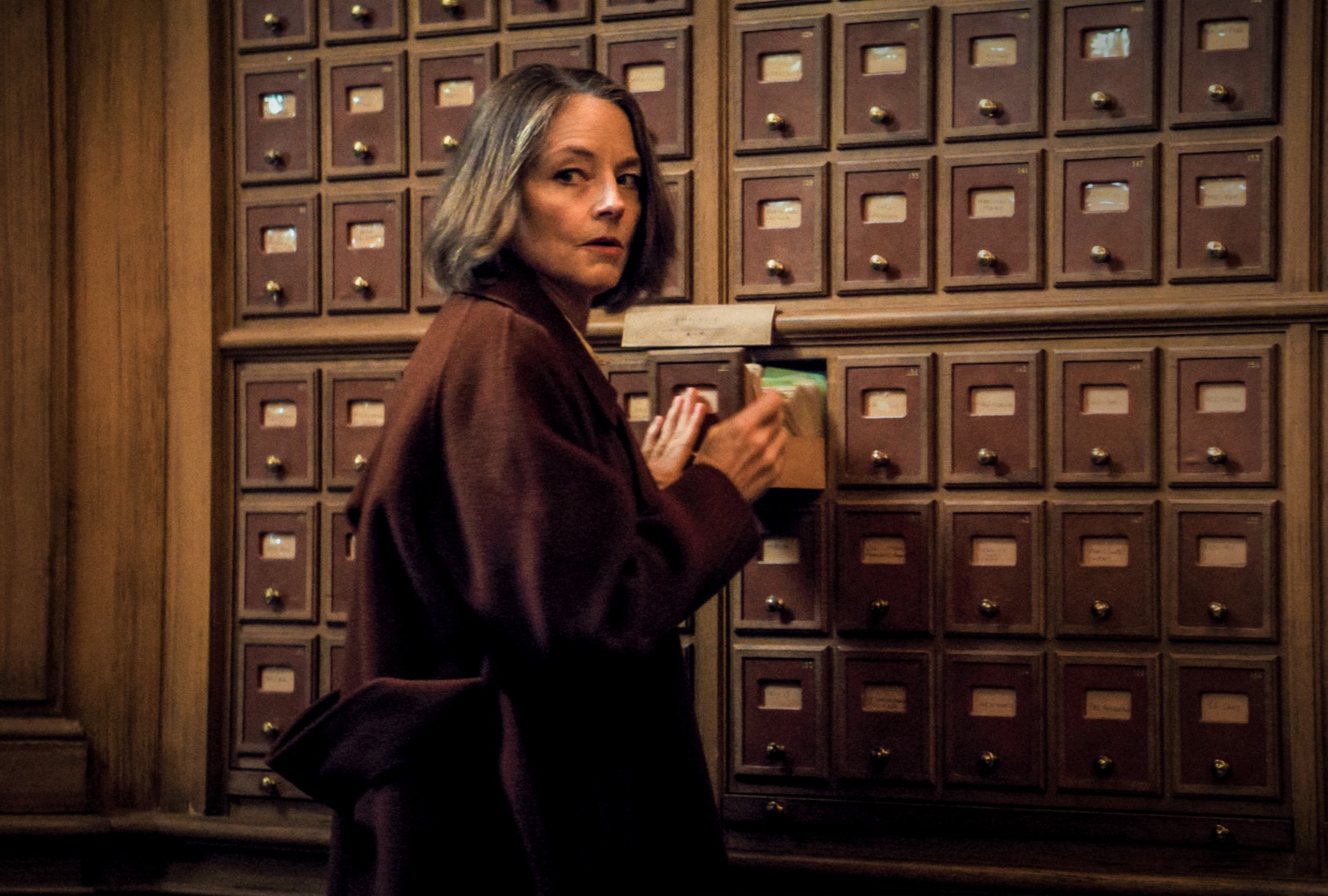

During an exhilarating moment of tension in Jodie Foster’s new film, “A Private Life,” Foster’s character, Lilian Steiner, an American psychoanalyst living in France who suspects foul play after the sudden and mysterious death of one of her longtime patients, breaks character — at least in a manner of speaking. Trying to reach a hypnotist who she believes has the missing piece of the puzzle she’s found herself caught up in, Lilian hits a dead end. The hypnotist refuses to talk. “It’s Friday,” the hypnotist tells Lilian. “I have a train to catch. Monday I’m busy, and then I’m going on vacation.” After being hung up on, Lilian grumbles. “‘Vacances.’ F**king French!”
Like the rest of Rebecca Zlotowski’s spellbinding film, this bit of character work in “A Private Life” — or, in its original French, “Vie Privée” — keenly marries French filmmaking with American sensibilities. Once one gets past the initial shock, awe and envy of seeing Foster in her first French-speaking leading role, it’s easy to be swept away by the veteran actor’s exquisite, fluent mastery of the language. In no time at all, Foster’s consummate commitment and Zlotowski’s fabulous directorial style turn the language aspect into an afterthought. When this scene with the hypnotist occurs about an hour into the film, the illusion is briefly suspended. The viewer snaps back to reality and remembers that, like Foster, Lilian is American, and her first language is English. But this brilliant bit of dialogue doesn’t break Zlotowski’s spell; it enhances its power. In no time, Foster transitions right back into French, and aside from a few more intentional character slips throughout the film, Foster’s speech is unerring. Her pronunciations are natural and unforced. Even her demeanor loosens along with the freely flowing language. It’s mesmerizing to witness.
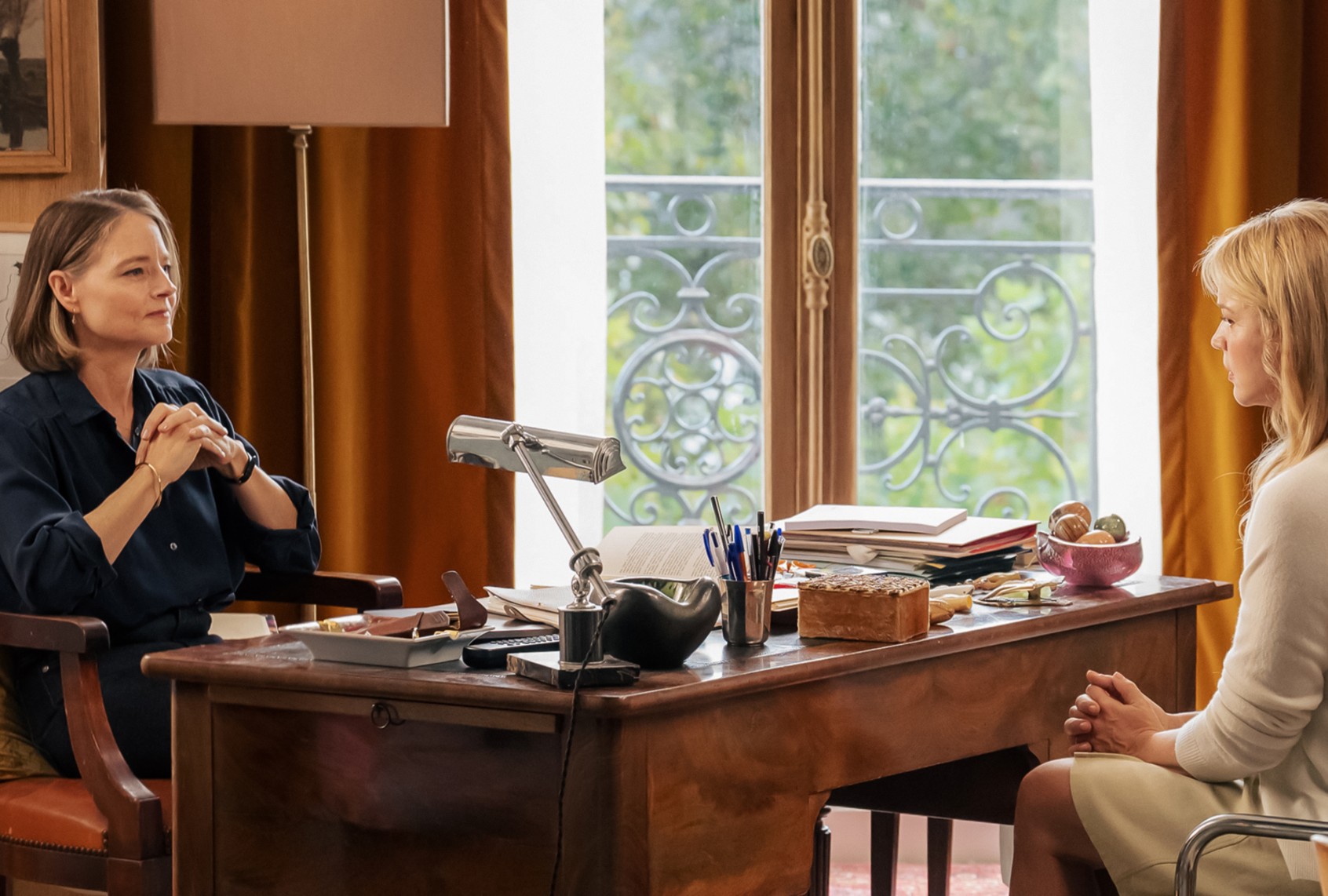
(Jérôme Prébois) Jodie Foster in “A Private Life”
Lilian is no average character in Foster’s extensive roster of roles. She’s a symbol of how gratifying it can be to expand your horizons, to use your brain and to make sense of life’s many enigmas, all wrapped up in one invariably chic package.
How strange that is. Watching an American actor speak fluently in another language shouldn’t be so astonishing. And yet, this phenomenon still makes jaws drop and eyes bug out of heads. Now and then, a press tour will take Bradley Cooper to Paris, where he often speaks French in interviews, delighting a local crowd of starstruck French viewers and unsuspecting international audiences alike. In 2019, a clip of Cooper speaking the language on the French talk show “Quotidien” received millions of views and thousands of likes online, with people hanging on every word. When you’re born and raised in the United States, American nationalism and English-language centrism are so deeply ingrained into the culture that watching an actor work in another tongue is dumbfounding. Meanwhile, there are plenty of international actors working in American films and speaking fluent English, while Anglo viewers — admittedly, myself included — rarely bat an eye at this impressive skill.
But it’s even more uncommon that an American actor can and will make this same transition into a different market. That Foster can do it so seamlessly is not just remarkable; it’s emboldening. Watching “A Private Life” is like seeing the world open up in real time. Zlotowski combines Foster’s fluency and Lilian’s rich personal life with a mystery so entertaining — and so very French — that the film functions almost as an advertisement for language and linguistic study. It makes learning and the pursuit of knowledge feel exciting and worthwhile. Lilian is no average character in Foster’s extensive roster of roles. She’s a symbol of how gratifying it can be to expand your horizons, to use your brain and to make sense of life’s many enigmas, all wrapped up in one invariably chic package.
For those simply seeking a great film, there are plenty of aspects beyond Foster’s language skills that make “A Private Life” so stunning. Fans of the classic, artfully made thrillers of Alfred Hitchcock and Brian De Palma will find themselves gripped by the film from the start. Zlotowski blends the posh, formal rigor of the former with the stylistic panache and sexy intrigue of the latter, but with a flair and distinct femininity that culminates in some truly breathtaking narrative detours. When Lilian meets with the therapist (Sophie Guillemin) for the first time — before she’s cursing the French people’s affinity for year-round vacations — Zlotowski leads the viewer into a lavish dreamworld that further tangles the relationship between Lilian and her deceased patient, Paula (Virginie Efira).
The sequence is one of the most dazzling, surprising things you’ll see on the silver screen all year, pleasant confirmation that Foster’s picker isn’t broken after she skillfully co-led what turned out to be a just-fine season of “True Detective” in 2024. Lulled by the hypnotist’s voice, Lilian wanders through a technicolor fantasia before finding herself in the pit of a French orchestra during World War II, in a theater that’s about to be raided by the German militia. There, lines cross and boundaries blur. Language comes second to feeling. Lilian sees her family and begins to understand that she’s experiencing a vision of a past life, one where she and Paula are inextricably linked.
Want more from culture than just the latest trend? The Swell highlights art made to last.
Sign up here
The scene is a marvel, but beyond all of its visual trappings, it’s what the moment represents for Lilian that really sticks. Earlier in the film, a client who inadvertently referred Lilian to the hypnotist tells her that, after his session, he felt “freed from something.” During her brief stint under the hypnotist’s control, Lilian is relieved of some similar, opaque burden that even a brilliant psychoanalyst can’t understand.
Notably, this trance is one of the few instances in the film when Lilian slips back into English. When Paula whispers something that Lilian can’t quite make out, just before the hypnotist brings her out of the spell, Lilian protests in English, “I need to hear her!” She exits her state without deciphering Paula’s words, yet feels an innate and moving satisfaction anyway, as if she could glean the meaning of what her former patient said without understanding every word.
I graduated high school with a decent proficiency in French — better at understanding and reading than speaking — and, soon after, dropped language altogether when it didn’t fit into my collegiate career. I’ve been kicking myself ever since.
The feeling isn’t dissimilar to trying to learn a new language, or even one that you were once semi-proficient in, that you haven’t studied with care in some time. Foster attended a French-language prep school in Los Angeles as a child, meaning she attained fluency with much more ease and access than many Americans are afforded. In the United States, there is still no national standard for learning a world language, which is vastly different from how second languages are taught in some other countries. Here, language education is impeded by implementation roadblocks and political agendas, meaning that each state and even different school districts have conflicting curriculum standards. Simply put, American children in the public education system have very little consistent access to world languages during a time in their lives when language study is its most effective.
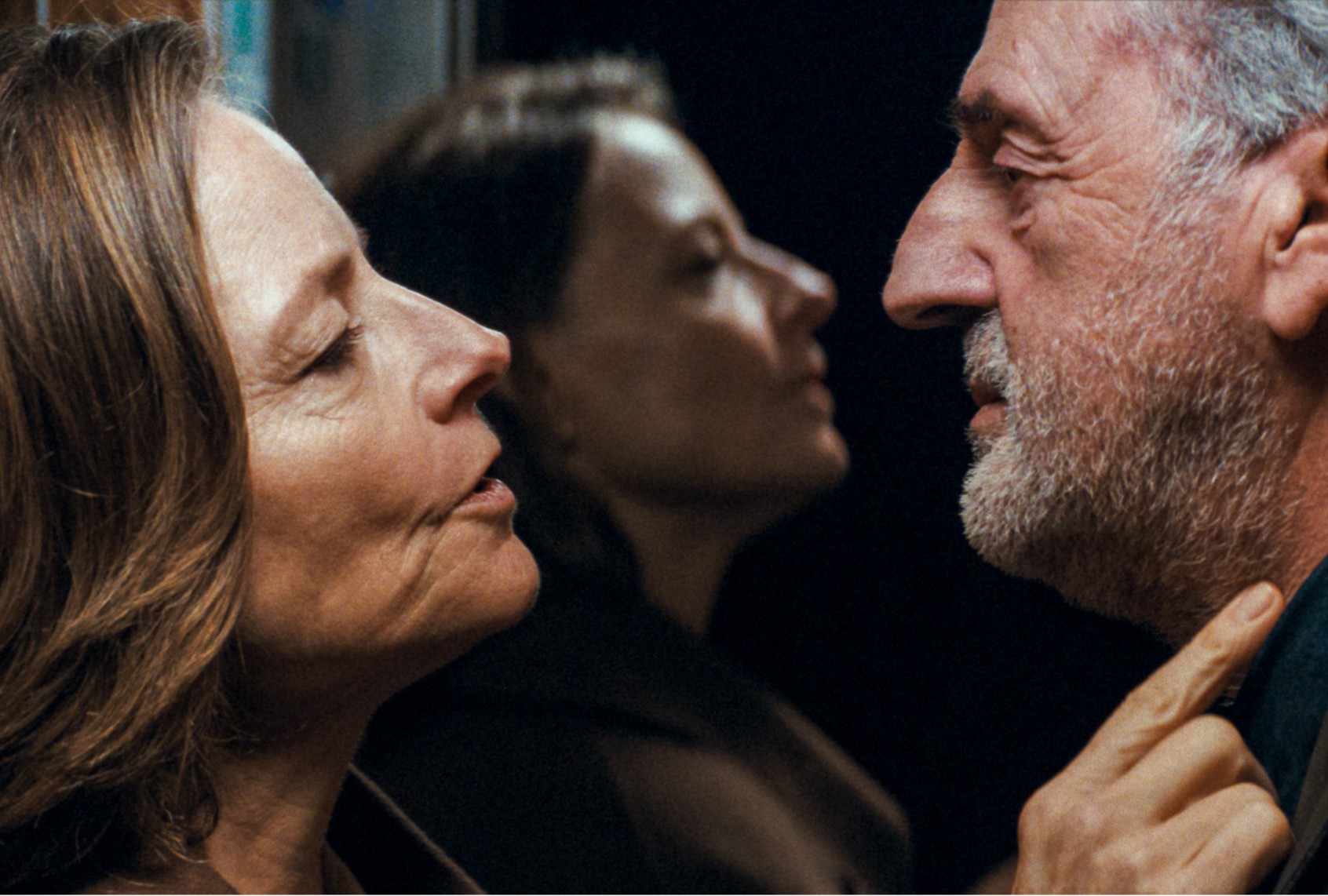
(George Lechaptois) “A Private Life”
Until high school, I didn’t speak a lick of any language other than English — save for some rudimentary Spanish counting and what little of Spanish and French that kids pick up through the media. I began my French education as a high school freshman, eager to learn. But through the years, I became disappointed with the disparities that come with pursuing a non-English language in America. Each of my higher education French classes had a different teacher, and despite their best efforts, they were inadequately prepared. For all four years of my French study, a new year’s curriculum began an entire semester behind where the previous year’s ended, meaning that a few months were inevitably spent repeating things we’d already learned and memorized. I graduated with a decent proficiency — better at understanding and reading than speaking — and, soon after, dropped language altogether when it didn’t fit into my collegiate career. I’ve been kicking myself ever since.
When language apps like Duolingo rose to prominence, my enthusiastic attempts to restart my French studies were quickly hindered by the app’s gamified experience. The learning is far from consistent, and if you falter during your lessons too often — even when mistakes are a completely necessary and integral part of learning any language — your chances to practice are cut off until the next day unless you buy your way back in.
French shifted to the back burner for years while I chased other dreams, until late last summer, when I happened to meet a handsome Quebecois man who, of course, had been learning English since he was a kid. His fluency in both French and English stunned me. It was more than just romantic; it was the push I needed to dive headfirst back into studying. Two months and some cursory learning later, I found myself visiting him in Montréal, deeply envious of all of the bilingual and French-proficient Canadians and American expats he introduced me to. Thrust out of my English-speaking bubble for the first extended time in my life (I know, I know), I was only briefly uneasy. Soon, my discomfort morphed into curiosity. I understood more of what people were saying. I traced their English asides into their French conversations and deciphered the meaning based on my knowledge of the two languages. I felt the uniquely wonderful and familiar sensation of using my brain in a different way. The opportunity to learn only made my burgeoning romantic love all the more powerful.
We need your help to stay independent
In “A Private Life,” Lilian records all her sessions on archaic mini discs, something her son, Julien (Vincent Lacoste), protests to. “They can get lost or damaged,” he tells Lilian while encouraging her to use something more modern. “Because I can lose them makes them precious,” Lilian replies.
This is an offhanded remark, perhaps with no subtext at all. But I’d argue that, in Zlotowski’s film, nothing is accidental. Even if the meaning is inferred, it’s effective. Lilian’s response to her son’s confusion is the perfect metaphor for studying a new language. Language is like a muscle, and the more it’s exercised and used, the more robust it becomes. But if it’s left to atrophy, it can disappear entirely. The skill becomes precious when we realize how much of the world will be closed off if we lose it.
For Lilian, the language is everything. It gave her a husband, Gabriel (Daniel Auteuil) — well, former husband, whom Lilian suddenly rekindles a romance with — a family and a thriving practice. Her life and existence as she knows it hinge on it. Even the mystery she’s trying to unravel depends on correctly parsing the meaning of syntax and conjugation. Language is an integral part of what makes this thriller so thrilling. French brings Lilian closer to the truth than she ever could’ve come without it, and magnifies the existing beauty of her own highly complicated life when she needs it the most. Language is a tool to communicate, yes, but it’s also an instrument that can help us sharpen our vision to find the experiences and people who make us laugh, love and excite us in new ways. You never know where knowledge might take you, or who it could bring you closer to.
Read more
about Jodie Foster’s recent career moves
