
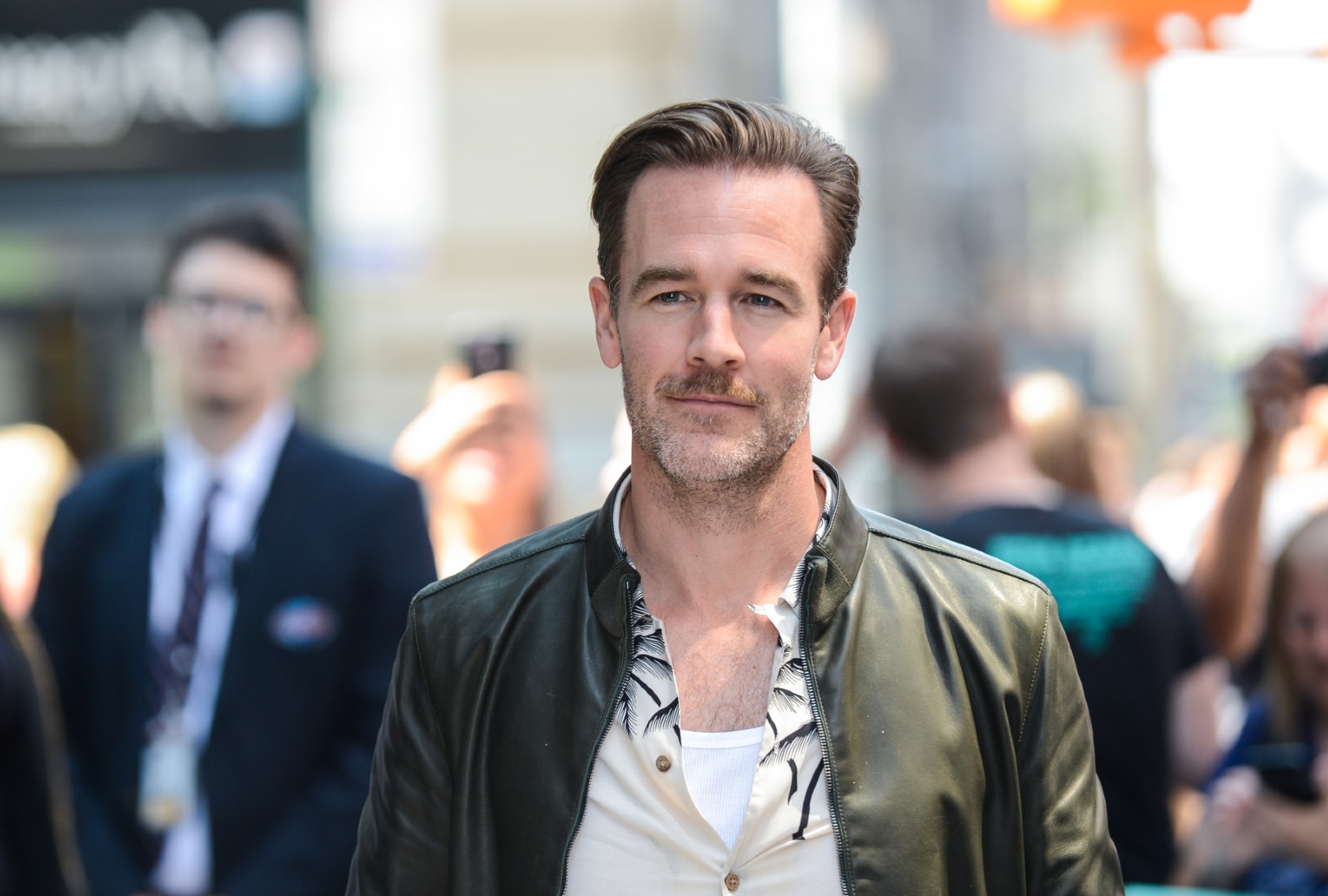

Music may be a vehicle for our individual memories, but few songs have the privilege of conjuring an entire generation’s collective warmth and sentimentality — and maybe even a bit of cheesy nostalgia — like Paula Cole’s “I Don’t Want to Wait.” As the theme for the massively popular teen soap opera “Dawson’s Creek,” Cole’s irresistible slice of adult-contemporary pop scored the highs, lows and woes of millions of adolescents and young adults, obsessed with the show’s relatable story arcs and contemplative characters. But despite soundtracking 128 episodes worth of hormonal melodrama, Cole’s song most immediately evokes one image: the devilishly handsome, All-American countenance of the show’s star, James Van Der Beek.
Van Der Beek, who died this week at the age of 48, had the kind of face that felt strangely familiar from the moment he first appeared on our television screens. It was malleable and oblong, perfectly complemented by a waft of boy-next-door blond locks and a brow that could convey emotion just as well as any histrionic soap dialogue. Whether he was laughing, brooding or crumpling into sobs to create one of the most well-known and widely circulated meme GIFs of all time, Van Der Beek’s expressive appeal propelled him to virtually overnight superstardom. “Dawson’s Creek” made Van Der Beek a heartthrob more impactful than any of his contemporaries — a character more open than Jared Leto’s icy Jordan Catalano, and more altruistic than Luke Perry’s Dylan McKay. It was easy to fall in love with Van Der Beek’s Dawson, and as such, it would’ve been just as simple for Van Der Beek to fall prey to every teenage celebrity’s nightmare: being typecast into oblivion.
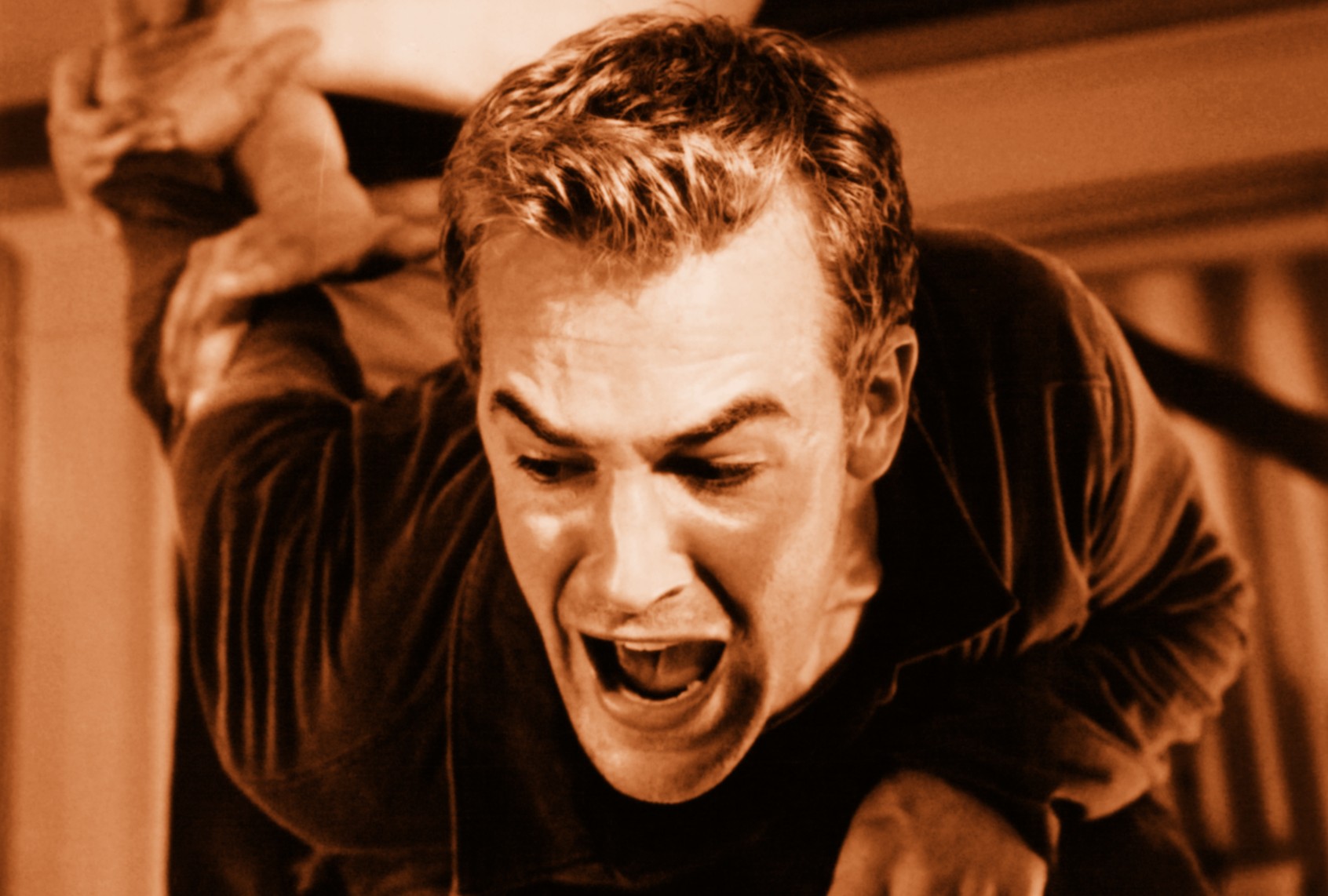
(Michael Ochs Archives/Getty Images) James Van Der Beek in a scene from “The Rules of Attraction”
With “The Rules of Attraction,” Van Der Beek keenly understood how to use the viewer’s predetermined notion of who he was as an actor to keep audiences on their toes, always reveling in the joy that accompanies the thrill of a good surprise.
But Van Der Beek’s wholesome good looks belied his creative ambitions. Before “Dawson’s Creek” finished its six-season run, its shining star and America’s best boy had already set his sights on something else — a role that could pervert his sweet smile into a loathsome, stomach-churning grin. What better way to show the world a new side of yourself than to play the equally wicked fictional brother of one of modern literature’s most notorious slashers?
In Roger Avary’s 2002 film adaptation of Bret Easton Ellis’ novel, “The Rules of Attraction,” Van Der Beek’s Sean Bateman — sibling to Ellis’ notorious “American Psycho” character, Patrick Bateman — boozes, uses, copulates, calculates, spurns and yearns. Sean is the definitive picture of the carefree collegiate rebellion, an example of free youth so vile and twisted that Van Der Beek becomes utterly and instantly unrecognizable from the role that made him famous. It would also be the blueprint for a career that consistently played against type. With “The Rules of Attraction,” Van Der Beek keenly understood how to use the viewer’s predetermined notion of who he was as an actor to keep audiences on their toes, always reveling in the joy that accompanies the thrill of a good surprise.
Any fan of “Dawson’s Creek” who went to see “The Rules of Attraction” during its original theatrical run was certainly in for a surprise, too. The film is about as disparate from the hit primetime soap as they come, with their overlap starting and ending with the fact that both are about teenagers. Those unfamiliar with Ellis’ writing and reputation who were simply seeking more of Van Der Beek’s charm were no doubt dumbfounded by the film opening with a scene of foul (though thankfully obscure) sexual violence at a college party. The boozy, drugged-up bash is one of the many ragers that provide narrative springboards for Sean and the two other students caught up in an inadvertent bisexual love triangle with the Bateman brother, who will never fully love them back, Paul Denton (Ian Somerhalder) and Lauren Hynde (Shannyn Sossamon).
Both progressive for its time and painfully dated, “The Rules of Attraction” dabbles in nonlinear storytelling, experimental editing and a whole host of not-so-feel-good plot points ripped from Easton’s novel and designed to dunk the viewer’s head in the toilet bowl for a nihilism swirly. The effect is as off-putting as it is intriguing, but neither feeling would be possible without Van Der Beek’s excellent Sean Bateman. (Though, it’s worth noting that Jessica Biel’s smaller, post-“7th Heaven” turn as a heartless, coke-fueled party girl is just as delightful and unexpected as her WB network peer’s.) Sean is a born liar, as addicted to the rush that comes from getting away with a fabrication as he is drugs and alcohol, which he pushes around the fictional Camden College campus to keep the students wrapped around his finger.
We need your help to stay independent
Van Der Beek wades through all of the screenplay’s cynicism in search of something deeper and more complicated — something human. This isn’t Van Der Beek playing evil just to distance himself from his hit TV show; it’s an actor who is excited to show his range in a way that he hadn’t yet been able to.
Avary’s depiction of the boho-chic aesthetics of early 2000s liberal arts schools goes a long way in entertaining the viewer, even when the screenplay’s unsavory antics can’t, and Van Der Beek knows exactly how to use his “Dawson’s” charm to usurp expectations. Fresh from the Creek, he often contorts that winning, familiar smile and distinct brow into something downright chilling, going so far as to mug at the camera with an extended Kubrick stare as Sean corners his next conquest. Elsewhere, he’ll tone down the terror and play back into the lovestruck puppy dog image that audiences fell head over heels for, reading love notes left in his school mailbox with such wistfulness that his heart might as well be cartoonishly beating out of his chest through his shirt.
For a novel like “The Rules of Attraction” to translate on screen, the viewer has to believe that its protagonist is not irredeemable. We have to believe that there is good somewhere deep inside of Sean, no matter how many times he tells us otherwise. Like the film itself, Van Der Beek darts between personalities at warp speed. But contrary to Avary’s movie, Sean’s mood swings feel authentic and earned. Van Der Beek communicates an unmistakable feeling that there is a good person somewhere inside his character, dying to break free of the tortured fate his monstrous doppelganger has created for him. Van Der Beek wades through all of the screenplay’s cynicism in search of something deeper and more complicated — something human. This isn’t Van Der Beek playing evil just to distance himself from his hit TV show; it’s an actor who is excited to show his range in a way that he hadn’t yet been able to.
Want more from culture than just the latest trend? The Swell highlights art made to last.
Sign up here
Though “The Rules of Attraction” failed to have a broader cultural impact, it became a minor commercial success and a brief staple of early millennium gay culture, achieving the cult status it was destined for. Moreover, it paved the way for Van Der Beek to continue playing with his image throughout the rest of his tragically short career. When actors become famous for one long-running role at an early age, there’s typically a period when they try as hard as possible to break free from the personality their fictional character cultivated. But Van Der Beek never shied away from his past. Instead, he embraced it, leveraging it through the years to awe viewers with that friendly face before playing with their expectations.
In “Don’t Trust the B**** in Apartment 23,” Van Der Beek found a sweet spot in a role that any instantly recognizable actor would dream of, one that would provide the artistic structure for his later work. In the criminally short-lived series, Van Der Beek played a version of himself that was far more asinine and haughty than the actor was known to be in real life. Throughout the show’s two seasons, this alternate James Van Der Beek used his fame to womanize and aggrandize. Though he has status galore, the show’s Van Der Beek is desperate to revive his acting career and prove that he’s so much more than Dawson Leery, resulting in high jinks that cleverly toy with his persona and the early social media age’s cruel, leering rebuke of those who can’t hold onto fame. It was the perfect middle ground between Sean Bateman, Dawson Leery and Van Der Beek himself, a meta character that only an actor with a massive reserve of humility could pull off.
Even in his most outrageous roles, Van Der Beek remained playful, never wanting to deny or destroy that beloved version of himself that viewers held in their hearts. He loved to poke fun at himself by playing an assh*le — as he did playing a parodic version of a world-famous DJ in the 2017 web series “What Would Diplo Do?” and the fratty finance bro in last year’s “Overcompensating” — before doing a complete 180-degree turn with a self-effacing, earnest film role or television guest appearance. Van Der Beek knew what he was good at and how to do it well. He knew how to comment on his own fame without ever getting swallowed up by it. And, most importantly, he knew how to be the familiar face that we were always happy to see, not just because you might’ve grown up with him, but because you never knew what he would bring.
Read more
about legends we lost too soon
