

During the early pandemic, a peculiar optimism bloomed among those hunkering into lockdown. This was it, we told ourselves. The chrysalis moment. We would emerge toned, bilingual, spiritually centered. We would stretch daily. We would roast more vegetables. We would become the kind of people who took Real Lunches.
To that end, my own ambition was, frankly, modest: I would eat a proper midday meal. Not a handful of almonds hoovered over the sink. Not yogurt eaten in a fugue state between Slack pings. A lunch with edges. A lunch that required a plate and, ideally, a chair.
The irony is that my life required absolutely no restructuring to accommodate this transformation. I was already working from home. Had been for years. My boss was lovely. No one was clocking my keystrokes. No one was peering over a cubicle wall. I was writing about food — professionally! — which would seem to position me as uniquely qualified to feed myself at 12:30 p.m.
And yet.
When I worked in an office, I ate lunch more reliably than I ever did at home. I would run down to a little Middle Eastern spot for lemony chicken and lentil stew, or duck into a jewel-box café where the barista would see me through the window and start pouring two cold brews — one for now, one for later — while I ordered a chilled scoop of something creamy and deli-ish to swipe up with a bagel I’d toast back at the newsroom. (The café, charming in nearly every respect, maintained a baffling “no toasting” policy; for a brief, golden period, a communal toaster appeared beside the sugar packets, only to vanish without explanation.)
It was ritual. A small walk. A small purchase. A small book cracked open at a corner table. The meal had a perimeter.
At home, somehow, that perimeter dissolved. The commute shrank to a dozen steps. The afternoon bled into itself. There was no reason I couldn’t close the laptop for forty minutes. No structural impediment. And yet I remained, daily, mysteriously incapable of doing so. Lockdown did not change this dynamic in the slightest. It merely intensified the lighting.
Want more great food writing and recipes? Sign up for Salon’s free food newsletter, The Bite.
This year, when I began to feel the sharper consequences of letting my blood sugar dip — the fog, the irritability, the faintly Victorian sense of personal decline — it became clear that discipline was not going to save me. I was not going to will myself into better boundaries. I was going to have to lure myself.
Which is how I fell, slightly obsessively, into the surprisingly vivid world of lunch cookbooks — and from there into an even more specific niche: studio cookbooks.
The kind that document the midday meals of artists and designers who stop work, deliberately, to eat something composed and beautiful. Books like “Lunch at the Shop,” In August Company’s “Studio Cookbook” and this offering from Hato Press.
While beautiful artifacts, these books are not glossy lifestyle manifestos. They are records of practice. In workshops and design studios — places where people use their brains and their hands in equal measure — lunch is positioned not as an interruption. It is maintenance. It is continuation. It is, quietly, policy. The meals are easily prepared (no one is laminating pastry at 12:15 p.m.) but they are unmistakably deliberate. Gochujang puttanesca. Japanese omelets folded over rice. Lentils dressed like they mean it. Tartines with architectural ambition.
We need your help to stay independent
What struck me most was the assumption beneath it all: that stopping to eat is not indulgent or inefficient, but necessary. That flavor matters. That nourishment matters. That the quality of the break shapes the quality of the work that follows.
Lunch, in this framing, is not a reward for productivity. It is a condition of it.
And so I began building lunches that were easy enough to make on a Tuesday but compelling enough to interrupt the day: salty-bright pastas, herb-laced grains, sheet-pan chickpeas bronzed at the edges and folded into something glossy. Meals designed not just to be eaten, but to be worth eating.
What I needed, it turned out, was not a stricter schedule. It was a lunch with gravitational pull.
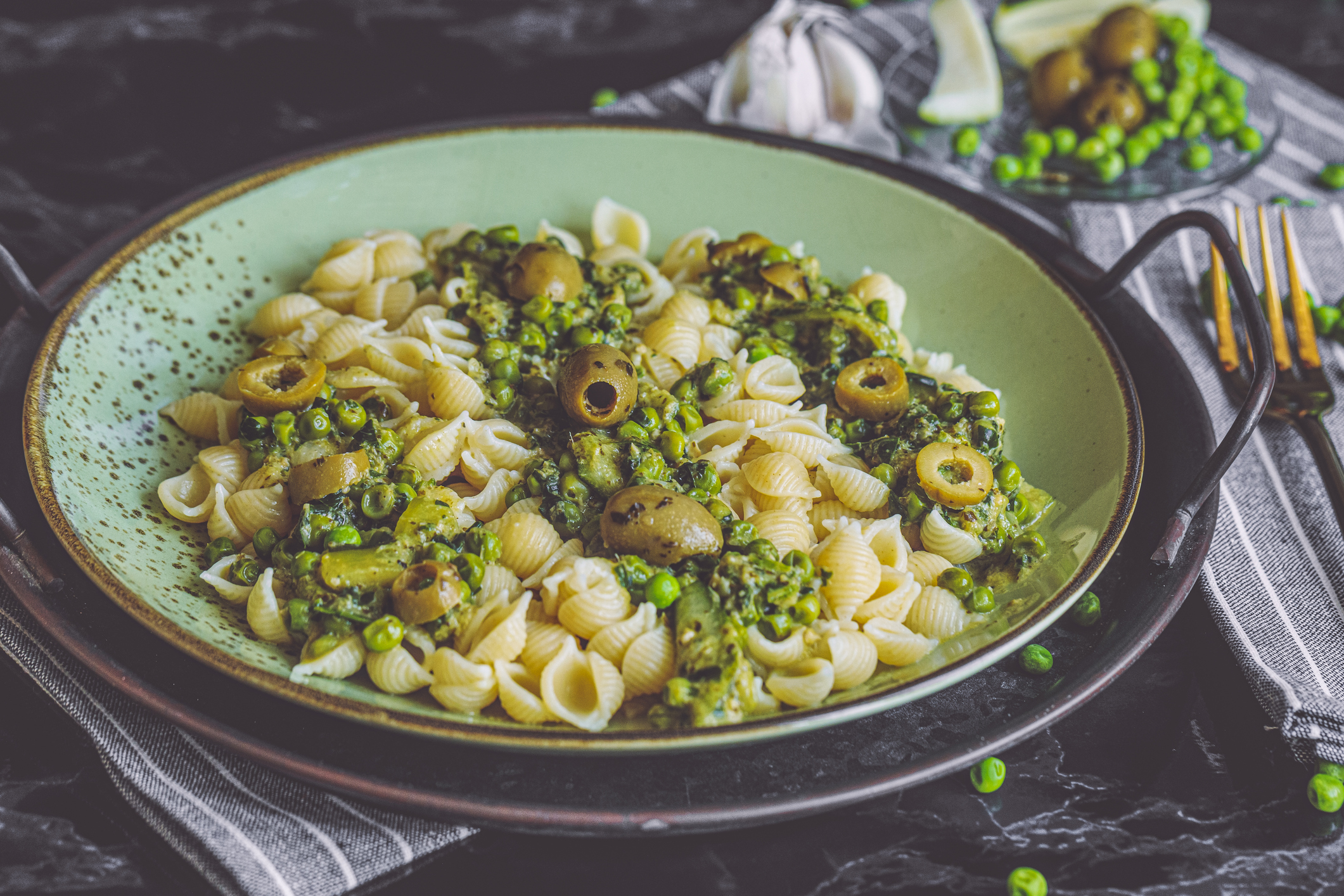
That intention — to make something worth stopping for — collided with a sudden, almost animalistic craving for brine and my enduring devotion to the mini sheet pan (the most romantic kitchen tool, in my opinion; small, efficient, unpretentious, incapable of excess). The result is a pasta I have begun making on repeat: olive-forward, lemon-lit, threaded with crisped chickpeas and slumped feta. It comes together in just over thirty minutes, which leaves you the radical luxury of eating it slowly.
Start by turning your oven up to 425°F and treating your mini sheet pan like a tiny stage: everything you put on it should have a job. Dry the chickpeas like you mean it—roll them in a towel, let them sit a minute, roll again—because moisture is the enemy of blistering.
What struck me most was the assumption beneath it all: that stopping to eat is not indulgent or inefficient, but necessary. That flavor matters. That nourishment matters. That the quality of the break shapes the quality of the work that follows.
Toss them on the pan with a small-diced shallot (small enough to caramelize, not so big it stays raw) and the simple, loud trio of lemon zest, oregano and red pepper flakes, plus oil, salt, and black pepper. Then add the feta as a single slab, not crumbles. A block roasts into something different: the edges bronze and go a little chewy; the center caters into creamy pockets you can smear through the pasta later. Slide the pan into the oven and roast until the chickpeas are crisping at the edges, the shallots have gone sweet and golden, and the feta looks glossy and a little collapsed — 20 to 25 minutes, depending on how wet your chickpeas were and how brave your oven runs.
While the sheet pan does its thing, put a pot of water on and salt it generously. Choose a short shape that catches little bits: orecchiette, gemelli, fusilli. Before you drain, save the pasta water — that cloudy starch is what turns chopped olives and warm oil into a sauce that clings instead of puddles.
Now make the briny engine: chop green olives very finely, almost relish-like, and do the same with artichoke hearts: small, but not paste. Warm olive oil just enough to bloom (you’re not frying; you’re waking it up), add lemon zest, oregano, and red pepper flakes, and let the olives and artichokes sit in that fragrant oil while the chickpeas crisp. When everything’s ready, build it in a big bowl: pasta first, then the olive-artichoke mixture (oil and all), then a splash of pasta water and a hard toss until it turns glossy and loose.
Break the roasted feta into big creamy crumbles, fold in the chickpeas and shallots, and keep adjusting — more pasta water for silk, more zest for lift, a crack of pepper for bite — until it tastes salty-bright and looks like something you’d actually step away from your laptop to eat.
Ingredients
For the sheet pan
- 1 (15-ounce) can chickpeas, drained, rinsed, very well dried
- 1 small shallot, diced super small
- 1 (6–8-ounce) block feta (preferably in brine), kept whole
- 2 tablespoons olive oil
- Zest of 1 lemon (save a pinch for finishing)
- ½ teaspoon dried oregano
- ¼–½ teaspoon red pepper flakes
- Pinch kosher salt + lots of black pepper
For the pasta and olives
- 12 ounces short pasta (orecchiette, gemelli, fusilli)
- ¾ cup finely chopped green olives (Castelvetrano if you want buttery; any good green olive works)
- ¾ cup finely chopped artichoke hearts, well drained (marinated or plain)
- 3 tablespoons olive oil
- Zest of ½ lemon
- ¼ teaspoon dried oregano
- Pinch red pepper flakes
- 1 garlic clove, lightly smashed (optional)
- ½–¾ cup reserved pasta water (you may use it all)
- Lemon juice, to taste
- Parsley or dill (optional), for finishing
Directions
- Heat the oven. Set the oven to 425°F. Place a rack in the upper-middle.
- Dry the chickpeas. Drain and rinse chickpeas, then dry them aggressively with a clean towel (or paper towels). The drier they are, the crispier they get.
- Build the sheet pan. On a mini sheet pan, toss chickpeas and diced shallot with olive oil, lemon zest, oregano, red pepper flakes, salt, and black pepper. Nestle the feta block on the pan and turn it once in the oil so the top gets a thin slick.
- Roast. Roast 20–25 minutes, until chickpeas are blistered and crisping at edges, shallots are caramelized, and the feta is golden and slumped. (If you want more browning on the feta, give it 2–3 minutes under the broiler—watch closely.)
- Boil the pasta. Meanwhile, bring a large pot of water to a boil and salt it well. Cook pasta until al dente. Before draining, reserve ¾ cup pasta water.
- Make the briny engine. Finely chop olives and artichokes (relish texture). Warm olive oil gently (microwave 15–20 seconds or low heat in a small pan). Add lemon zest, oregano, red pepper flakes, and smashed garlic (if using). Stir in olives and artichokes; let sit while everything finishes. Remove garlic before mixing.
- Assemble. Put drained pasta in a large bowl. Add the olive-artichoke mixture, oil and all. Add ¼–½ cup pasta water and toss vigorously until glossy. Break the roasted feta into big creamy crumbles and fold into pasta. Add chickpeas and shallots. Add more pasta water as needed to keep it loose and silky, not dry.
- Finish. Taste. Add lemon juice if it needs lift, more lemon zest if it needs perfume, and plenty of black pepper. Shower with herbs if you want (I tend to!).
Read more
about this topic
