

Hold onto your electrodes, because this may come as a surprise: “Frankenstein,” one of the most impactful and revered novels ever written, a crowning achievement in female authorship, has barely ever been adapted by another woman. The wacky 1994 film where Robert De Niro grunts his way through playing the Monster? Directed by Kenneth Branagh. The 1990 camp classic “Frankenhooker”? A guy. That obscure one you rented from a video store or found buried deep in a streaming library while really stoned? That was a man, too.
Granted, there are (literally) one or two outliers, like Zelda Williams’ perfectly fine 2023 film “Lisa Frankenstein.” But even that movie dilutes Mary Shelley’s 1818 novel to a fraction of its story, reducing all of the text’s thematic resonance to a footnote along with it. And that nuance is critically important. Shelley’s “Frankenstein; or, The Modern Prometheus” is a story of creation, birth, love, fear, exile and loneliness. A woman’s perspective is inextricable from its text. There’s a good reason why “Frankenstein” is favored in gothic literature curricula over Bram Stoker’s “Dracula”: Shelley’s novel has infinitely more to parse. “Frankenstein” is rich with subtext yet highly accessible. It’s not dense, it doesn’t blabber on and it certainly doesn’t reek of masculine self-obsession. Yet, the bulk of people — down to a fraction of a percent — who have been given the power and financial means to adapt “Frankenstein” have been men.
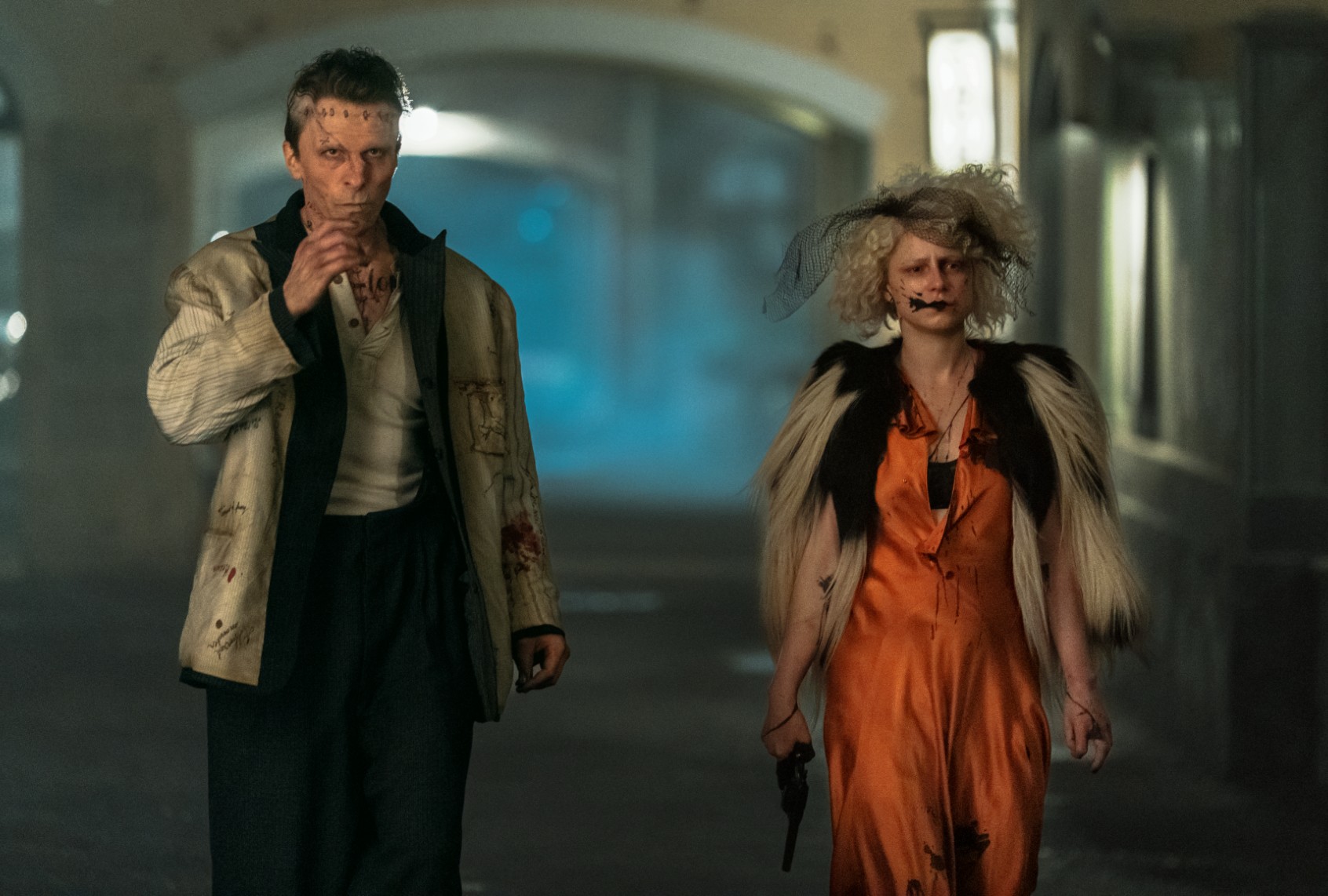
(Niko Tavernise/Warner Bros. Pictures) Christian Bale as Frank and Jessie Buckley as The Bride in “The Bride”
Through all of its muddled schlock, Gyllenhaal’s film never once loses its distinctly feminine ambition, and that makes “The Bride!” a far more faithful “Frankenstein” adaptation than any made by a man.
This reality alone makes the existence of Maggie Gyllenhaal’s sophomore feature “The Bride!” something of a marvel. Not only has Gyllenhaal taken the reins from cinema’s patriarchal collective, but she’s implemented a distinctly feminine gaze, as complex and fascinating as the social implications tucked away between the lines of Shelley’s original text. Gyllenhaal has flipped the focus from Frankenstein’s Monster to his female companion, who is destroyed in Shelley’s book before she’s ever given life. James Whale’s 1935 freakquel, “Bride of Frankenstein,” imagined the companion briefly alive, sporting a white-streaked, electric-shocked bouffant before being killed by the Monster moments after her genesis. The Bride didn’t speak. She never even got to clunk and thud her way through any farmhouses or laboratories like a bewigged bull in a china shop. She was a woman functioning as a titillating climactic spectacle, who died with little more than a scream.
We need your help to stay independent
Gyllenhaal’s reimagining is the other side of the coin, so ultra-obsessed with giving the Bride (Jessie Buckley) her agency that it frequently forgets there’s a narrative arc happening around her. Across two hours, Buckley’s Bride shoots, kicks, contorts, dances, scrapes, whizzes, licks and screams, all the while coming no closer to her true self than she was at the start of the film. She’s more caricature than character; an idea without a purpose. That’s also the point. “Frankenstein” is largely about the journey to self-actualization and the destruction left in the wake of this ceaseless human pursuit. Shelley’s story is so moving precisely because it’s tinged with firsthand knowledge of the despair that comes with being misunderstood and othered at no fault of one’s own. These facets are also what make her “Frankenstein” so sweepingly unforgettable, and with “The Bride!,” Gyllenhaal isn’t trying to adapt the text so much as she’s eager to replicate the energy of Shelley’s voice.
“The Bride!” is surprising and strange, perplexing and aggravating. At times, it’s downright bad. But through all of its muddled schlock, Gyllenhaal’s film never once loses its distinctly feminine ambition, and that makes “The Bride!” a far more faithful “Frankenstein” adaptation than any made by a man.
Then again, Gyllenhaal is perfectly forthright with her affinity for Shelley’s perspective, opening her film with a small revelation hidden from the trailers. Buckley plays both the Bride and the ghost of Mary Shelley. Shelley’s disembodied spirit is trapped in a beautifully rendered grayscale netherworld, where she harnesses the rage of unfulfilled potential to possess a young woman named Ida (pre-Bride Buckley) in hopes of continuing her tragic tale from beyond the grave. These vignettes are where Gyllenhaal’s directorial eye shines the brightest, and where “The Bride!” brims with promise — just before the first of the film’s several unexplained narrative shifts.
Where this story takes place — which metaphysical realm it’s actually set in — is skimmed over entirely. The viewer can’t understand whether “The Bride!” is set inside of the sequel novel Shelley is crafting in the film, whether Shelley’s ghost has somehow willed a new reality into being, or if we’re just supposed to go along with it and connect the dots ourselves with what little we’re given. It’s a near-catastrophic narrative oversight that, like a handful of other plot holes, reeks of studio meddling by Warner Bros. after early test screenings failed to meet expectations. It would appear that Gyllenhaal’s film has been ironically hacked up and reassembled, but the Frankenstein’d version of “The Bride!” that we’re left with works because it wills itself to. If you can suspend the frustration long enough to meet Christian Bale’s Monster, Frank — himself somehow a real scientific creation, survived from the 1800s, as well as a product of Shelley’s imagination — you’ll manage a decent enough experience with the film.
Want more from culture than just the latest trend? The Swell highlights art made to last.
Sign up here
That’s really what “The Bride!’ is best for: the experience. Not since “Cats” has there been a more misguided yet enterprising work of big-budget, intellectual property cinema. Gyllenhaal zips between tones and styles with a ferocious abandon. Even when her film is utterly befuddling, it’s a joy to behold. Few films of this caliber are allowed to take swings so big, and Gyllenhaal delights in raising her audience’s eyebrow before shooting them with a needle full of Botox to make the expression stay frozen in its puzzled place.
Shortly after a young Ida falls to her death — a symptom of her erratic possession by Shelley’s ghost — Frank arrives in 1930s Chicago in search of a companion. The good Dr. Euphronious (Annette Bening) agrees to help this poor, destitute soul. Before we know it, Ida has become the Bride: a walking, talking realization of the Monster’s companion, remixed from her 1935 cinematic progenitor and stricken with verbal outbursts in olde English every time Shelley’s ghost hits her with a “knock, knock.” Before long, Frank and the Bride are on the road and on the lam, invigorating the nation in their path. With a few cop killings under their belts and an increasing lack of shame over their atypical appearances, these lovers-on-the-run light a powder keg and ignite a country repressed by misogyny and corruption.
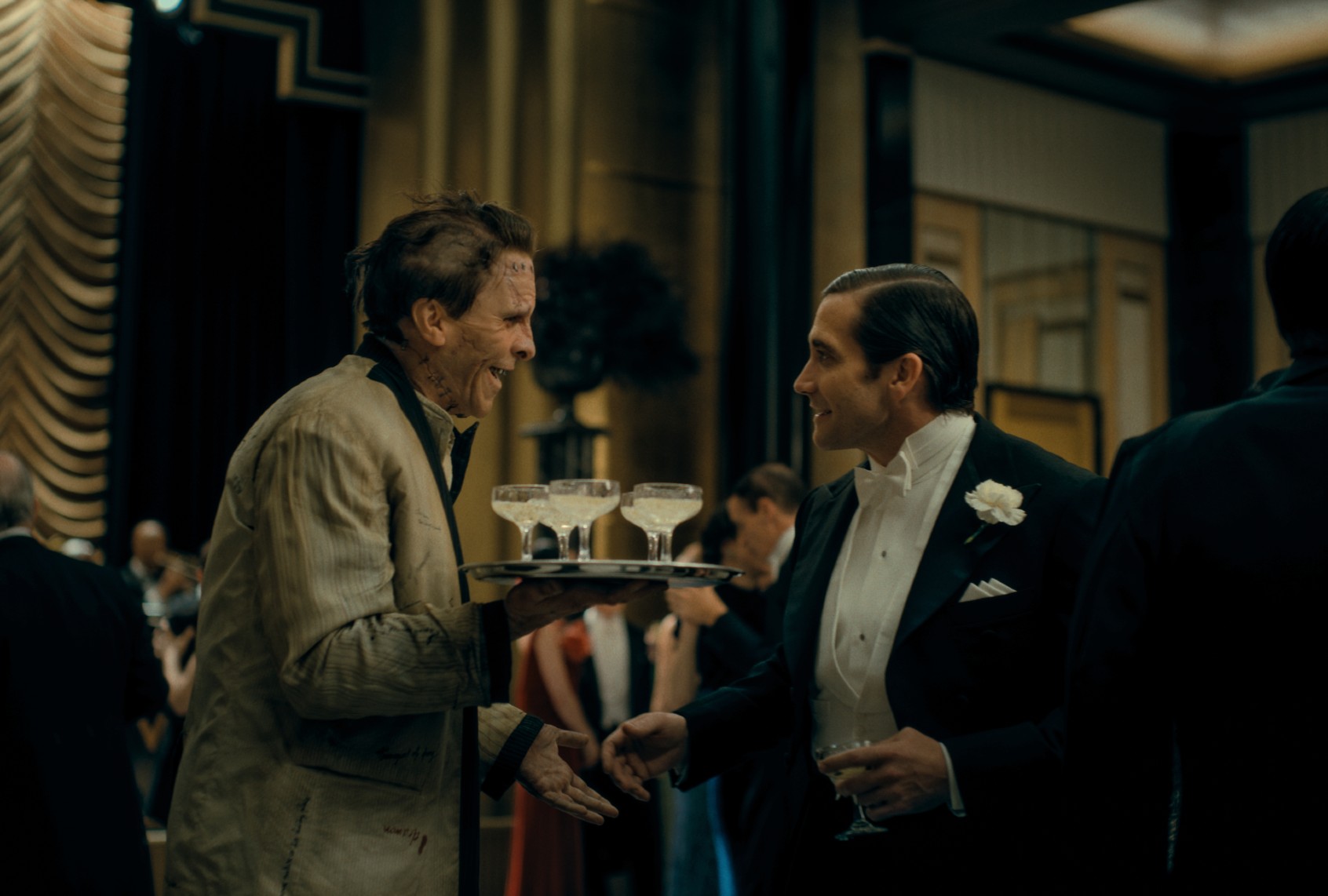
(Warner Bros. Pictures) Christian Bale as Frank and Jake Gyllenhaal as Ronnie Reed in “The Bride”
Not since “Cats” has there been a more misguided yet enterprising work of big-budget, intellectual property cinema. Gyllenhaal zips between tones and styles with a ferocious abandon. Even when her film is utterly befuddling, it’s a joy to behold.
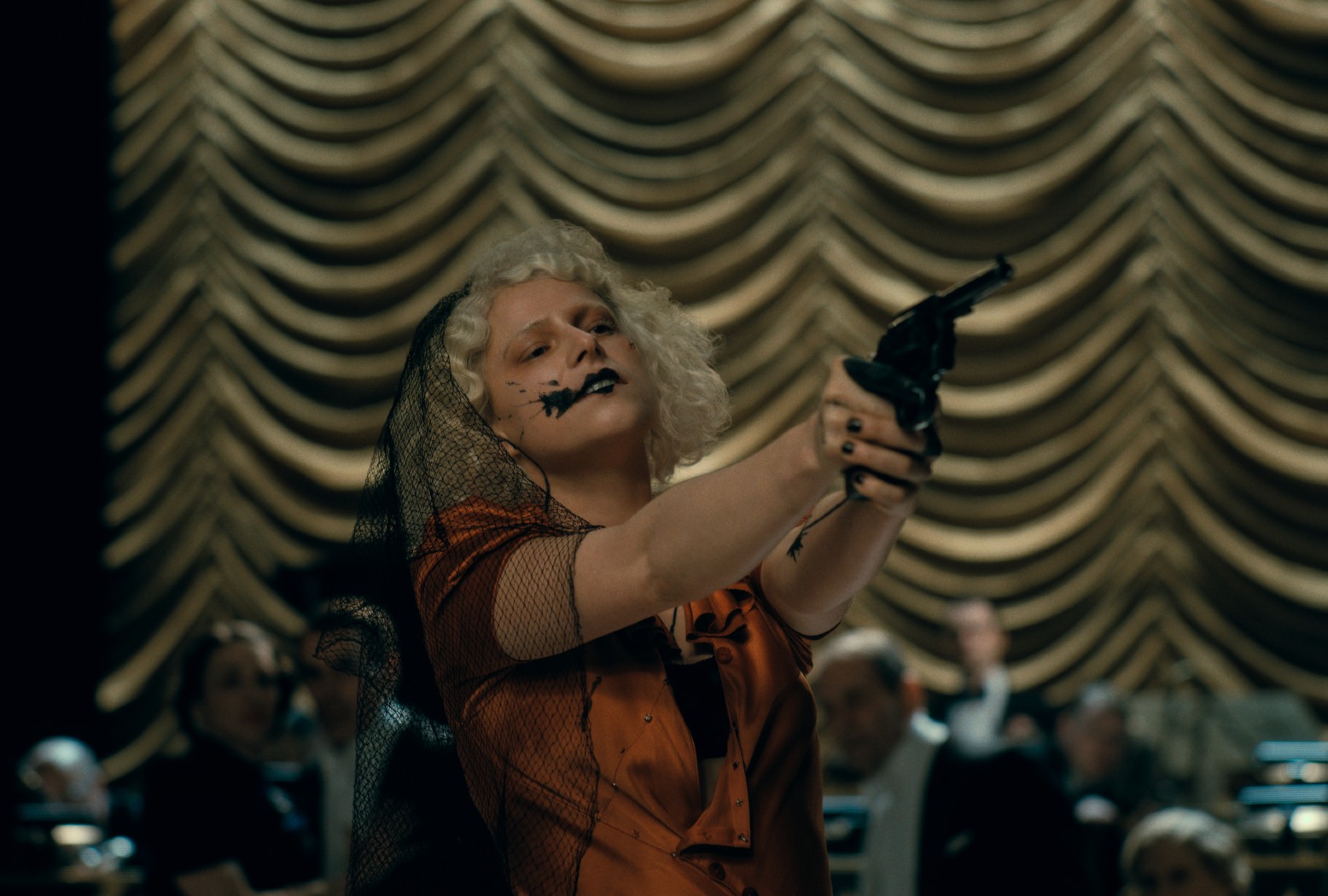
There is no shame in Gyllenhaal’s game, and her honest excitement to dabble with references and emotion is refreshing, even when these moments grate. An entire sequence pays homage to the Riot Grrrl movement, where women across America paint themselves up like the Bride and hold men at gunpoint, screaming, “This is a brain attack!” It’s beyond inane and so undercooked that it can’t manage to horseshoe its way back to brilliant, but there’s no other way I’d like it. In referencing punk culture, Gyllenhaal whiffs her mark, which is somehow even more punk. It’s impossible to watch “The Bride!” without thinking about the fact that Warner Bros. poured $80 million into such a bold vision, and that — at least seemingly — a good portion of it remains intact in the final film. Gyllenhaal leans into the bizarro world she’s crafting as it’s taking form. Eventually, the atonal structure becomes the film’s nature. It’s as if “The Bride!” is learning more about how to be a movie as it goes along, just as Frankenstein’s Monster understands the facets of his humanity as Shelley’s novel progresses.
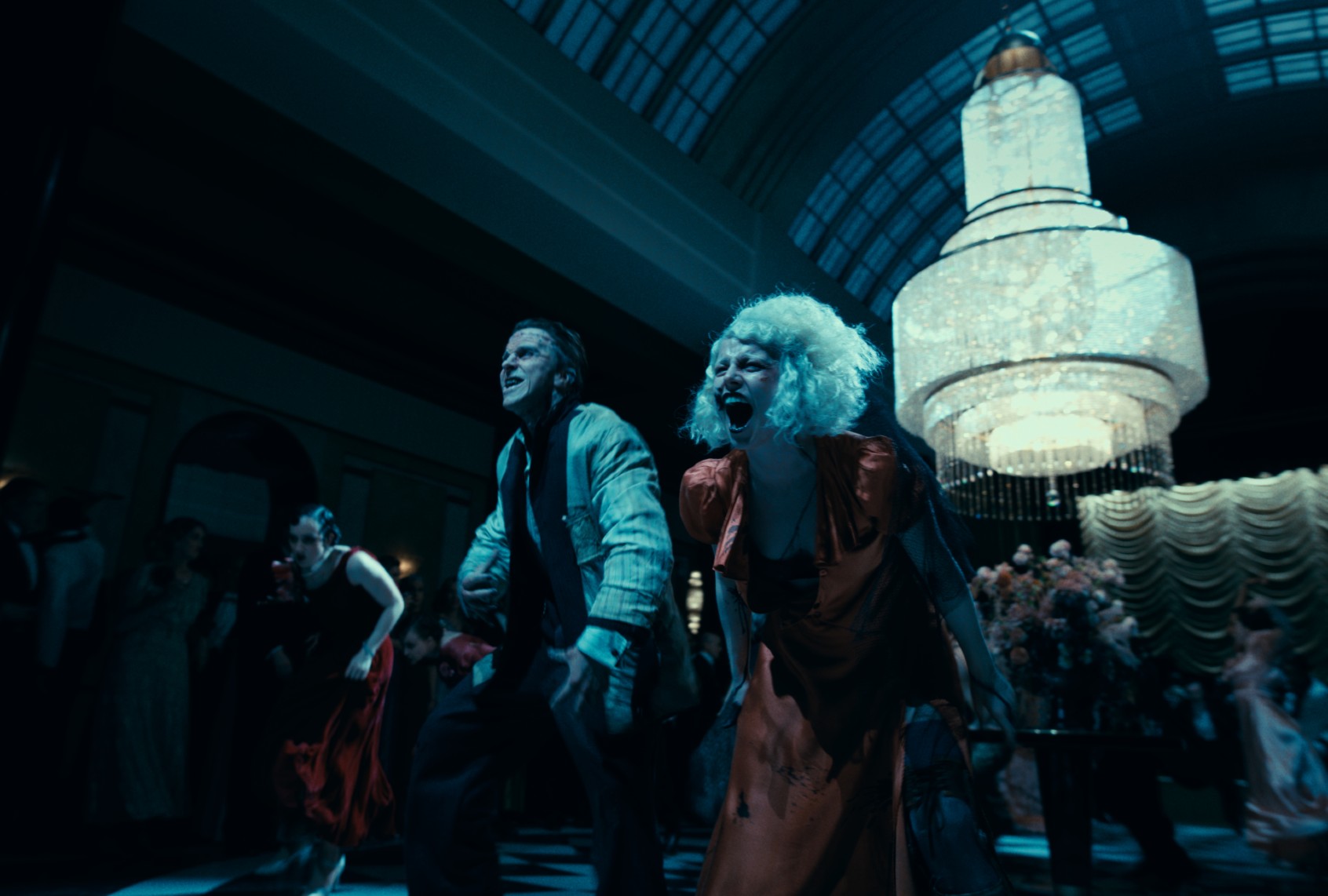
(Warner Bros. Pictures) Christian Bale as Frank and Jessie Buckley as The Bride in “The Bride”
Call that a stretch if you like, but I’d argue the film is more meta than its harshest critics will give it credit for. “The Bride!” is a film about being one thing when the world tells you to be another, and — as we’ve already seen with Guillermo Del Toro’s more faithful, Oscar-nominated adaptation — viewers take much kinder to the standard, thousandth retelling of “Frankenstein” than something like Gyllenhaal’s version, which is a truly fresh idea. She reimagines the Bride character with the same wild chaos and directorial scope that this movie swims in; the same initiative with which Shelley wrote her novel.
When “Frankenstein” was first published without Shelley’s name, and chatter about its author began to spread, an early commentary in the British Critic scorned the dissonance between Shelley’s womanhood and the novel’s monstrous narrative. “The writer of it is, we understand, a female,” the piece read. “This is an aggravation of that which is the prevailing fault of the novel; but if our authoress can forget the gentleness of her sex, it is no reason why we should, and we shall therefore dismiss the novel without further comment.”
While I don’t suspect “The Bride!” will be met with this same revisionist praise later in its life, there is something remarkable about the dual “aggravation” of expectations that Gyllenhaal and Shelley’s works share. They are a testament to making whatever you want to make, no matter how it turns out or is received; of swinging for the fences the second you get the chance, knowing that the opportunity is never promised; of smashing the square peg into the round hole until it breaks through the surface, creating something new altogether. “The Bride!” is a monster of its own making that isn’t trying to earn its exclamation point — it’s declaring it. And as off-putting as it may be, this rebellion from pleasant form is innately, delightfully feminine.
Read more
about Maggie Gyllenhaal behind and in front of the camera
