
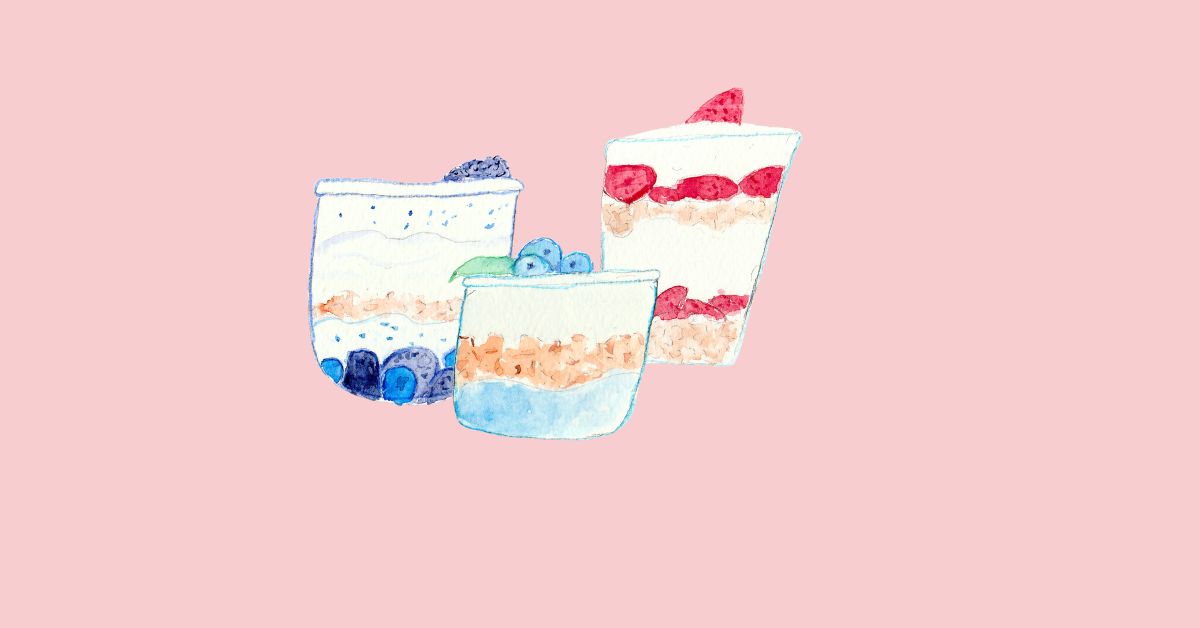

In my experience, the yogurt parfait is often more elegant in name than in execution. “Parfait” suggests precision: a glass vessel, a long spoon, something architectural and composed. It sounds like restraint. It sounds like Europe.
But conjure one in your mind’s eye and I suspect we’re seeing the same thing: slumped berries bleeding into pale yogurt. Yogurt that was too sweet to begin with and has since gone watery, pooling at the bottom like regret. Granola that’s either stale — thin-sliced cardstock masquerading as crunch — or so aggressively hard it feels like a dare to your dental work.
The promise is layered pleasure: creamy against crisp, bright against rich. The reality is often beige. Damp. One-note. A breakfast that feels more like penance than possibility.
And yet — the idea persists for a reason.
At its best, a parfait is a study in contrast. Cool and tangy yogurt, fruit that tastes unmistakably like itself, crunch that shatters and then yields. Sweetness balanced by salt. Softness interrupted by texture. It should feel deliberate. Alive.
There is, in other words, a better way.
Want more great food writing and recipes? Sign up for Salon’s free food newsletter, The Bite.
To make a good parfait is not to complicate it, but to clarify it — to insist that each element taste vividly of itself, and that each contrast be intentional. Structure, sweetness, salt: these are small decisions, but they accumulate. There are, in practice, four of them. Four modest interventions that transform the thing from damp obligation into something architectural and alive.
First, choose the right yogurt.
Choose the right yogurt — and then make it sing
Start with yogurt that has posture. You want something that sits up in the spoon, not something that sighs into a puddle. Low-fat and fat-free versions tend to skew either watery or weirdly sweet in that diet-adjacent way; save those for smoothies or dressings, where the yogurt is a supporting actor, not the star.
For dairy, I love Brown Cow Cream Top; it’s thick and faintly tangy, with that quiet luxury of actual cream. On the non-dairy front, the unsweetened plain cashew-coconut from Forager has been in heavy rotation in my fridge. It has body. It behaves.
Always unsweetened. Always. The whole pleasure of this project is that you get to decide where on the sugar dial the thing lands. From there: three small adjustments that feel almost cosmetic, but change everything — brightness, sweetness and warmth.
We need your help to stay independent
For brightness, I reach for zest. Lemon is classic; lime sharpens; grapefruit feels slightly adult; orange reads Sunday morning. A little zest rubbed directly into the yogurt gives it that sun-dappled brunch energy — not “airport kiosk at 6:12 a.m.”
For sweetness, I prefer liquid sweeteners for sheer silkiness. We’re after gloss, not grit. A thread of floral honey. Amber maple syrup. Agave if that’s your thing. The goal is integration. No sugar-sand dragging across your teeth.
Then warmth: a drop of vanilla, a whisper of cinnamon, a dusting of cardamom or ginger. Not enough to make it taste spiced — just enough to make it feel complete. Like the yogurt has finally been introduced to itself.
Turn on the oven
(Ashlie Stevens ) Fruit on a sheet pan
I started roasting fruit to make better smoothies — fruit that tasted like itself instead of diluted memory, lost in a blizzard of ice and almond milk. Heat is concentration. Heat is commitment. Low and slow in the oven, peaches slump. Grapes blister and collapse into themselves. Berries release their gloss. Everything gets a little jammy, a little darker, a little more certain of its purpose.
Because I contain multitudes (thank you, Whitman), I do like contrast in a parfait, so I split my fruit in half. One portion roasts down into a dense, jewel-toned ribbon to layer between the yogurt. The other stays raw — bright, fresh, slightly unruly.
Jammy and juicy. Concentrated and crisp. It’s a parfait that knows how to hold two ideas at once.
Store-bought is fine. Stove-top is better
If you’ve upgraded the yogurt and the fruit and you’re feeling satisfied, by all means — as Ina says, store-bought is fine. It absolutely is. (Especially with farmer’s market season upon us because, yes, granola purchased from a wind-swept stand somehow tastes superior to anything acquired under fluorescent supermarket lighting. Science cannot explain this.)
But if you want to make your own, and don’t feel like committing to a full sheet pan’s worth, stovetop granola is a revelation.
Inspired by Lauren Joseph’s method (itself adapted from “Great British Bake Off” winner John Whaite), the idea is simple: toast a smaller batch in a roomy skillet so the oats fry and brown instead of steaming into submission. Twenty minutes. Less commitment. As she says, a noble use for the dregs of the nut bowl.
The loose ratio both recommend is forgiving:
-
2 parts oats
-
½ part nuts
-
1 part seeds
-
1 part dried fruit
-
¼ part brown sugar
-
½ part butter
-
¼ part maple syrup
But you can go simpler. A few handfuls of oats, pistachios or pecans, butter, maple syrup. Let them toast until fragrant and golden. And then — this matters — a generous pinch of flaky salt once it’s off the heat. Salt makes granola taste like itself.
Don’t be afraid of a little savory
(Ashlie Stevens ) Salt
Many parfaits tip into the saccharine — all sweetness, no tension. But tension is flavor. Each component benefits from a tiny sweet-savory pull. I add a pinch of salt to the yogurt along with the zest and sweetener. Not enough to register as “salty,” just enough to make everything taste more vivid.
Roasted fruit welcomes herbs: rosemary with grapes, thyme with honeyed peaches, basil with strawberries. The effect is subtle but transformative. The fruit tastes more like fruit, and not dessert topping. A ribbon of tahini or nut butter is rarely a mistake (though I accept that some of you will write to debate whether we’re still in parfait territory at that point).
And yes — salt the granola. Again. Always.
Because a parfait, at its best, isn’t just sweet. It’s balanced. It’s awake. It knows what it’s doing.
Here’s one of my current favorite combinations:
Ingredients
For the roasted grapes
-
3 cups seedless red grapes, stems removed
-
1 tablespoon olive oil
-
1–2 teaspoons finely chopped fresh rosemary
-
Pinch flaky salt
For the fresh grape layer
-
1 cup seedless red grapes, thinly sliced
1–2 teaspoons fresh orange juice
For the yogurt
-
2 cups full-fat plain yogurt (or thick unsweetened non-dairy yogurt)
-
1–2 teaspoons finely grated orange zest
-
1–2 tablespoons honey or maple syrup (to taste)
-
½ teaspoon vanilla extract
-
Pinch fine salt
For the stovetop granola
(Using the 2 : ½ : 1 : 1 : ¼ : ½ : ¼ formula)
-
1 cup rolled oats (2 parts)
-
¼ cup chopped pistachios (½ part nuts)
-
½ cup pepitas (1 part seeds)
-
½ cup raisins (1 part dried fruit)
-
2 tablespoons brown sugar (¼ part)
-
¼ cup butter (½ part)
-
2 tablespoons maple syrup (¼ part)
Generous pinch flaky salt
Directions
- Roast the grapes. Heat the oven to 375°F. Toss the grapes with olive oil, rosemary, and a small pinch of salt. Spread on a parchment-lined sheet pan and roast for 20–25 minutes, until the grapes slump and release their juices but still hold their shape. They should look glossy and slightly wrinkled — jammy, not collapsed. Let cool completely
- Prep the fresh grapes. Toss the thinly sliced grapes with a small squeeze of fresh orange juice. You’re not dressing them so much as waking them up. Set aside.
- Whip the yogurt. In a bowl, combine the yogurt, orange zest, sweetener, vanilla, and a small pinch of fine salt. Whisk until smooth and lightly aerated — it should feel plush and spoonable, not stiff. Taste and adjust. You want brightness, a gentle sweetness, and just enough salt to make everything feel awake. Refrigerate until ready to assemble.
- Make the stovetop granola. In a wide skillet over medium heat, melt the butter. Stir in the oats, pistachios, pepitas, brown sugar, and maple syrup. Cook, stirring frequently, until the oats smell nutty and turn golden — about 8–10 minutes. They should toast, not steam.Remove from heat and fold in the raisins. Spread the mixture on a plate or sheet pan to cool completely. Sprinkle generously with flaky salt. The granola will crisp as it cools.
- Assemble: In a clear glass (because we are being architectural), layer as follows:
-
A generous spoonful of whipped yogurt
-
A ribbon of roasted rosemary grapes and their juices
-
More yogurt
-
A scatter of orange-kissed fresh grapes
-
A handful of granola
-
This story originally appeared in The Bite, my weekly food newsletter for Salon. If you enjoyed it and would like more essays, recipes, technique explainers and interviews sent straight to your inbox, subscribe here.
Read the
three most recent issues of “The Bite”
