

When I picture most coffee cakes, they seem to materialize in the same three places, as predictably as a non-player character in an open-world video game: office break rooms, church basements and conference center breakfast buffets. They arrive pre-sliced, pre-dulled, pre-forgiven. Beige. Bland. Dry. They are polite background noise — the culinary equivalent of a cubicle in a Schaumburg office park.
Coffee cake, as a category, has a reputation problem.
It is expected to be fine. Serviceable. Something you accept with a paper napkin under fluorescent lighting and a murmur of gratitude. It fills space. It does not demand attention.
And yet.
I have a soft spot for the cinnamon coffee cake from Starbucks — or rather, for what I remember it being like when I was 12.
There was a year in middle school when I was sick often enough that the doctor’s office felt a bit like a second address. Eventually we learned I had an immune condition; I also had mono, which felt cosmically unfair considering I had not yet been kissed and suspected I’d contracted it from the skating rink water fountain. After most appointments, my mom would pull her van into the Starbucks parking lot in the shopping center next door. She’d order a coffee. I’d get a hot chocolate. We’d split a slice of coffee cake.
I can still conjure it: the heated seat warming my back, the hot chocolate coating my throat, the cinnamon strudel giving way under my teeth. Whatever else was happening inside my body, that combination — warm spice, soft crumb, sugary crunch — felt like safety.
Want more great food writing and recipes? Sign up for Salon’s free food newsletter, The Bite.
Life moved on. I healed. The doctor’s visits stopped. I eventually kissed a boy and did not get mono. I stopped drinking hot chocolate after reading in a grocery-store tabloid that one shouldn’t drink their calories. I got my driver’s license and started frequenting independent coffee shops with exposed brick and pour-overs.
But the sensation stayed with me.
Years later, on a different kind of bad day — heartsick, this time — I tried to recreate it. Starbucks. Coffee cake. Hot chocolate. And it was fine. Perfectly fine. Which is to say: it was never going to taste as transcendent as it does in memory.
Because in memory, coffee cake is something else entirely. Warm with spice. Buttery. Tender in the middle. Shatteringly crisp on top. Sweet, but not cloying. A cake that earns its coffee.
So I decided to make the version that memory deserves.
The crumb
(Ashlie Stevens ) Ricotta
The ideal coffee cake lives in a narrow textural corridor.
Moist, but not wet. Tender, but cleanly sliceable. Soft enough to give under a fork, structured enough to hold its shape beside a mug of coffee. It should carry a thick streusel crown and a deep ribbon of cinnamon without collapsing under their weight. The crumb should feel plush, not pudding-like. Light, but not airy. Comforting, without being slack.
Flavor matters just as much. Tangy, but not sharp. Sweet, but never cloying. A morning cake that tastes awake.
Many good coffee cake recipes lean on sour cream, which lends a pleasing density and richness to the batter. But that same density can tip the cake toward heaviness — toward something that eats more like dessert than companion.
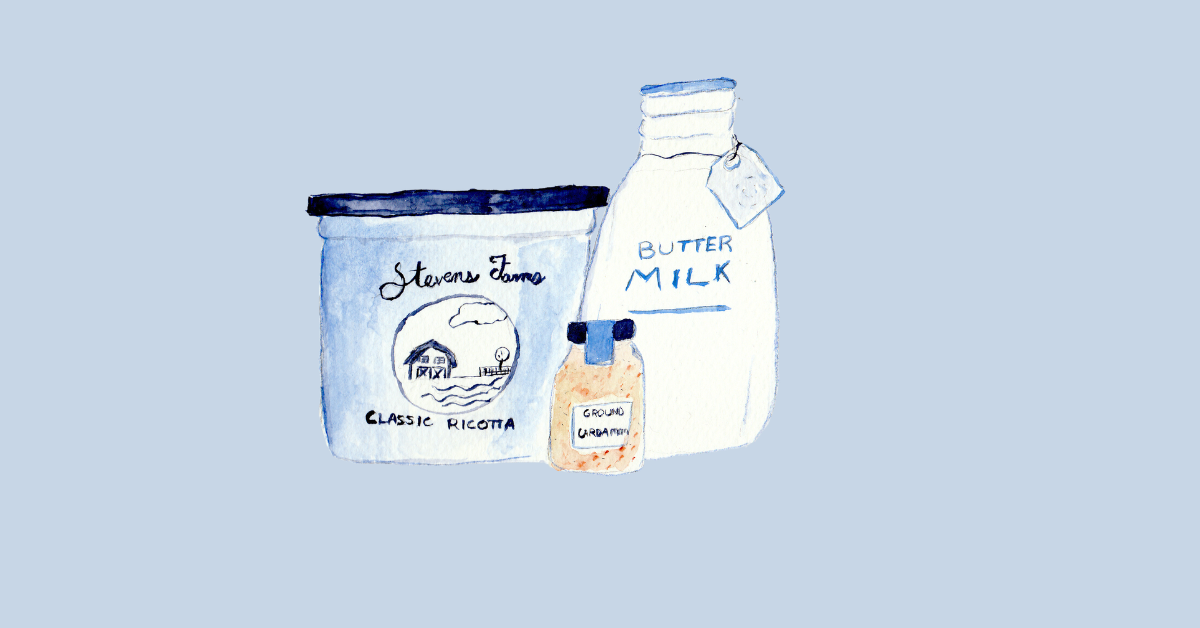
The upgrade here is a quiet one: ricotta and buttermilk.
Ricotta brings moisture without drag. It adds gentle richness and, crucially, a plush but defined crumb — one that feels almost cushioned, yet precise. Buttermilk contributes tang and lift, sharpening the sweetness and helping the cake rise with a lighter hand.
Together, they create a cake that feels balanced — substantial enough to anchor a streusel, light enough to warrant a second slice.
The heat
(Ashlie Stevens ) Cardamom
This is where the mood shifts.
For that spiced ribbon in the center of the cake, instead of reaching for the dusty cinnamon that has been idling in your pantry since the last time you baked banana bread, take a brief, intentional detour. Find Vietnamese cinnamon — sometimes labeled Saigon cinnamon — and bring it home.
Its higher oil content makes a difference you can taste. The aroma is deeper, fuller; the warmth blooms instead of merely humming. It has a faint, almost red-hot intensity; it’s not aggressive, but assertive. Less background spice, more dominant chord. The difference between something that blends in and something that leads. In a cake defined by nostalgia, that presence matters.
We need your help to stay independent
And then — because I can’t help myself — a whisper of cardamom.
Just enough to introduce lift. Cardamom carries a subtle floral note and a quiet citrus edge that sharpens the cinnamon without competing with it. The breakdown here is mostly cinnamon, anchored and warm, with cardamom hovering just at the edges.
Not enough to read as chai. Just enough to make someone pause mid-bite.
The streusel
(Ashlie Stevens ) Buttermilk
This is the crown.
Not a pale, sandy crumble. Something deeper.
Start with brown butter — cooled, but still fragrant — and mix it with brown sugar, flour, a generous measure of cinnamon and a pinch of salt. The brown butter lends a nutty undertone and caramel depth, a quiet bitterness that keeps the sweetness in check. It creates contrast against the tangy cake below.
No drizzle. No icing.
In my mind, coffee cake — made better — is not frosting-heavy. It is contrast-driven. Instead, finish the top with a scattering of turbinado sugar for crunch and a pinch of flaky salt for sparkle. When baked, the streusel should form a craggy, golden crust that cracks gently under a knife. Not shatteringly hard, but decisive. What makes this cake feel alive is not excess. It’s contrast.
Tang against sweetness. Crunch against tenderness. Spice against butter. Salt against sugar.
Ingredients
For the brown butter streusel
- 6 tablespoons unsalted butter
- ¾ cup brown sugar
-
¾ cup all-purpose flour
-
1½ teaspoons Vietnamese (Saigon) cinnamon
-
Pinch kosher salt
For the cinnamon ribbon
-
⅓ cup brown sugar
-
1 tablespoon Vietnamese cinnamon
-
¼ teaspoon ground cardamom
-
Pinch kosher salt
For the cake
-
1½ cups all-purpose flour
-
1 teaspoon baking powder
-
½ teaspoon baking soda
-
½ teaspoon kosher salt
-
8 tablespoons (1 stick) unsalted butter, softened
-
¾ cup granulated sugar
-
2 large eggs, room temperature
-
¾ cup whole-milk ricotta
-
½ cup buttermilk
-
1½ teaspoons vanilla extract
To finish
-
1–2 tablespoons turbinado sugar
-
Flaky sea salt
Directions
- Brown the butter (for the streusel). In a small saucepan over medium heat, melt the butter. Continue cooking, swirling occasionally, until the milk solids turn golden brown and the butter smells nutty and fragrant, 3–5 minutes.Pour into a bowl and let cool until warm but no longer hot.
- Make the streusel. To the cooled brown butter, add brown sugar, flour, cinnamon and salt. Mix with a fork until craggy clumps form. It should feel sandy in places and chunky in others. Set aside.
- Make the cinnamon ribbon. In a small bowl, combine brown sugar, cinnamon, cardamom and salt. Stir well. Set aside.
- Prepare the pan. Heat the oven to 350°F. Butter and line an 8- or 9-inch square pan with parchment, leaving overhang for easy removal.
- Mix the dry ingredients. In a medium bowl, whisk together flour, baking powder, baking soda and salt.
- Cream the butter and sugar. In a large bowl, beat softened butter and granulated sugar until light and fluffy, about 2–3 minutes. Add eggs one at a time, beating well after each. Stir in ricotta and vanilla until smooth. The mixture may look slightly textured — that’s fine.
- Alternate in the flour and buttermilk. Add the dry ingredients in two additions, alternating with the buttermilk (flour → buttermilk → flour). Mix just until combined. Do not overmix. The batter will be thick, plush and scoopable.
- Assemble. Spread half the batter into the prepared pan. Sprinkle evenly with the cinnamon ribbon mixture. Dollop remaining batter over the top and gently spread to cover (it doesn’t have to be perfect; some ribbon peeking through is welcome). Scatter the brown butter streusel generously over the surface, pressing lightly so it adheres. Finish with turbinado sugar and flaky sea salt.
- Bake. Bake for 45–55 minutes, until: The top is deeply golden; the streusel feels set and craggy; a toothpick inserted into the center comes out with a few moist crumbs, not wet batter
Let cool for at least 20 minutes before slicing.
This story originally appeared in The Bite, my weekly food newsletter for Salon. If you enjoyed it and would like more essays, recipes, technique explainers and interviews sent straight to your inbox, subscribe here.
Read more
from The Bite
