
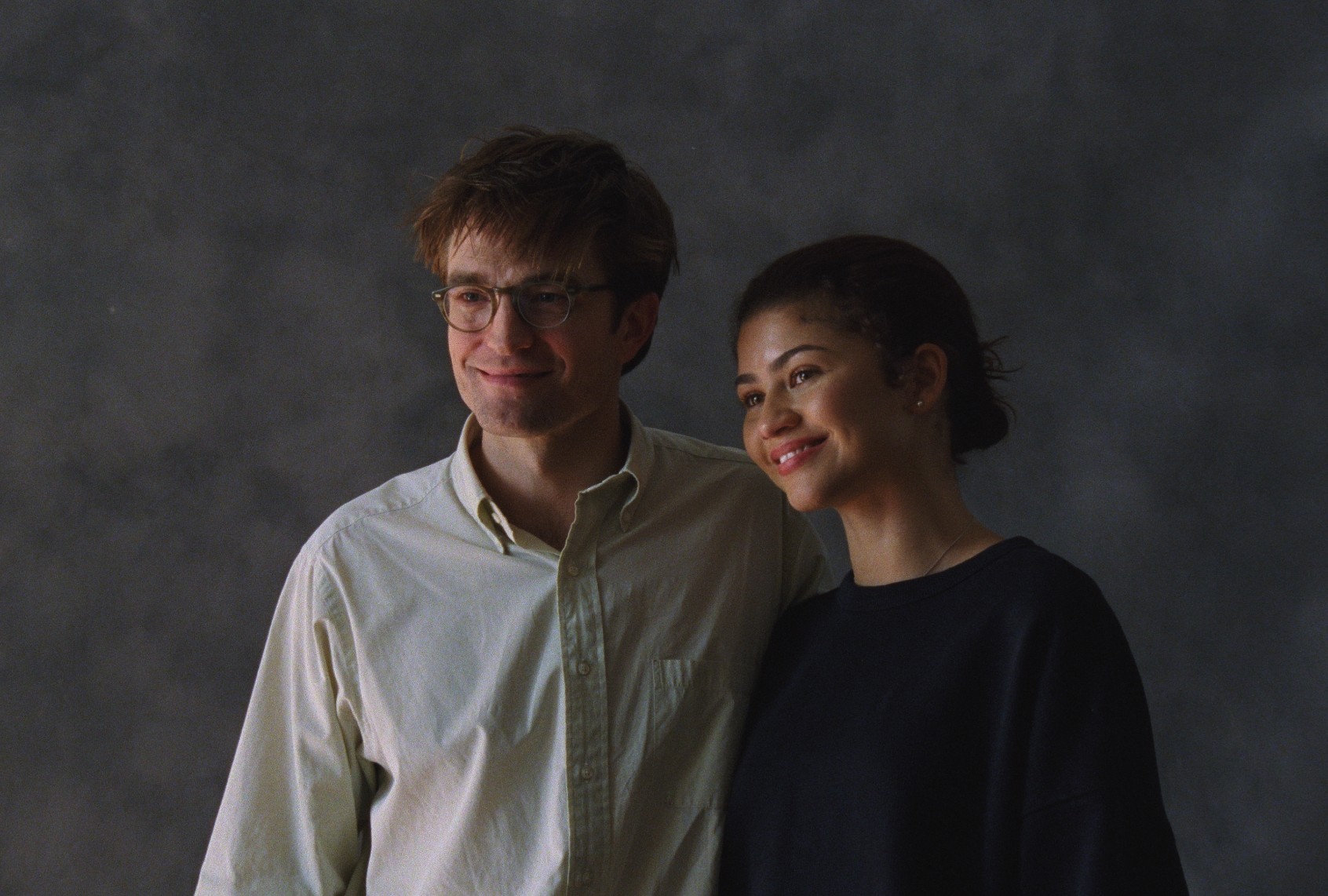

Trailer editing is a lost art. Modern audiences want transparency; they want to believe that, when they go to the movies, their money will be well-spent. It’s a zero-sum game for filmmakers and viewers alike, who would both do well to recognize the inherent value in surprise. But if you happened to catch the trailer for Kristoffer Borgli’s latest film, “The Drama,” ahead of its theatrical release this week, you’ll know that the movie’s narrative twist — which arrives early in the film — is also its selling point.
In one section of the clip, a bright-eyed and betrothed couple, Emma (Zendaya) and Charlie (Robert Pattinson), sit down to dinner with their friends, Mike (Mamoudou Athie) and Rachel (Alana Haim). It’s days before Charlie and Emma’s wedding, and Rachel suggests that the four of them play a party game and say the worst thing that they’ve ever done. Quick cuts between Charlie, Mike and Rachel suggest their admissions are intense but relatively innocuous — things that can be laughed off and chalked up to childhood immaturity. Then, it’s Emma’s turn. She downs her glass of orange wine, leans forward and confesses to something truly shocking. Whatever the act is, it’s hidden from the trailer, but the ensuing reactions are not. Charlie raises an eyebrow. Emma stammers and apologizes. Rachel’s eyes sharpen with steely fury before yelling expletives across the table. Emma’s revelation has thrown everything into question. Cut to the next section. There will be no further information, only biting intrigue. This is one film trailer keeping the cards close to its chest, and for good reason: “The Drama” is required viewing.
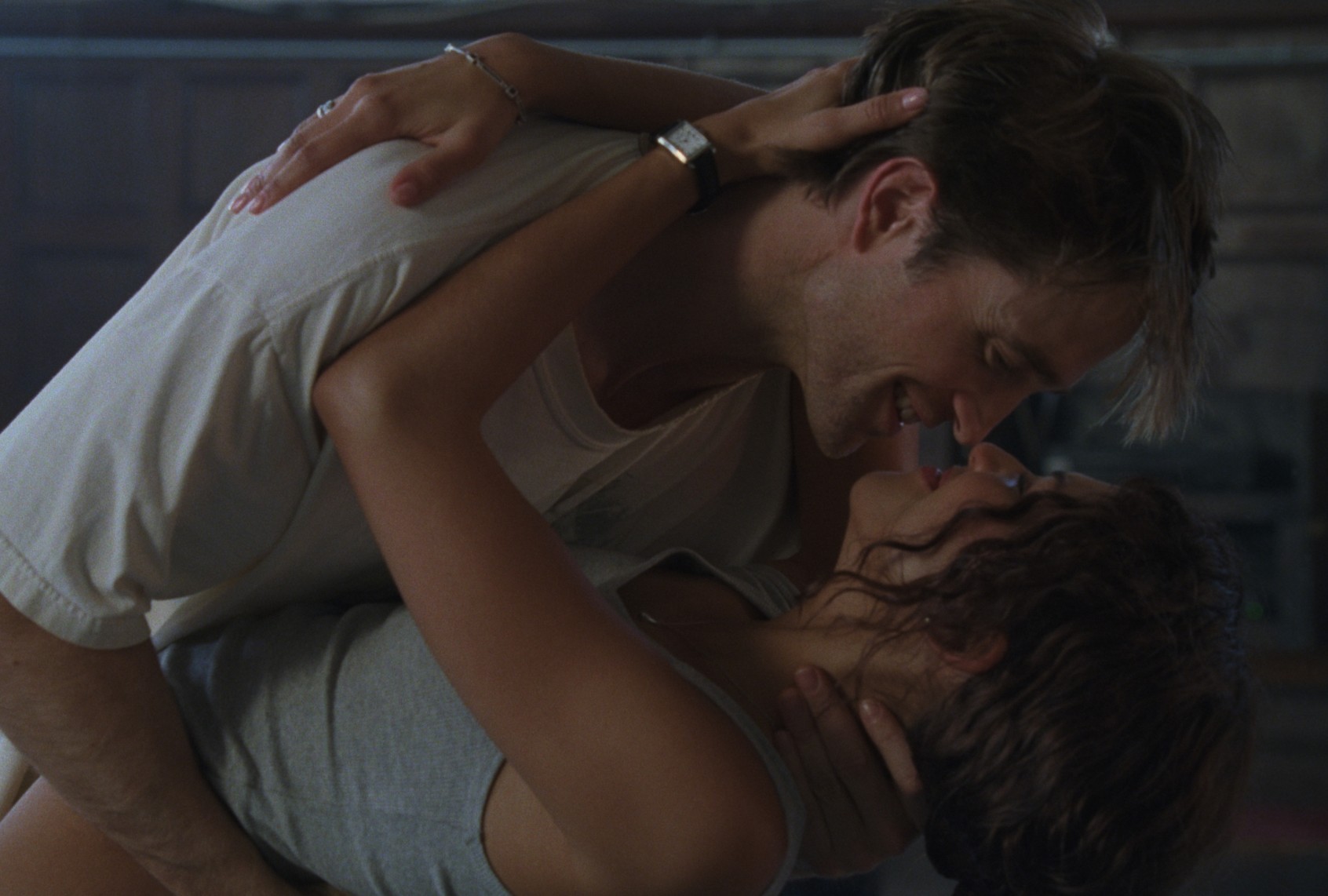
(A24) Robert Pattinson and Zendaya in “The Drama”
In its willingness to usefully engage with our everyday ugliness, “The Drama” is the boldest mainstream American film in years.
But if you live in America, or if you’ve even been privy to the country’s culture over the last century — Americentrism basically ensures that — Emma’s admission won’t come as a shock. And given that early versions of the script have been floating around online for months, and that TMZ took the most salacious route in spoiling the film for clicks with a headline that alludes to the twist, this all seems par for the course. A24 and Borgli surely knew this secret couldn’t stay hidden forever, and that’s ultimately a good thing. Viewers who aren’t reeling from the reveal in their theater seat will have just as much to parse from “The Drama” as those who go in totally blind.
The movie’s real twist is in everything that follows the trailer’s tease. Borgli’s audacious, stark writing defies faux outrage, even if that performative indignation will be an inevitable product of a film so daring. The twist is not Emma’s confession itself, but how the film contends with its dark, exquisitely nuanced subject matter in a way that is completely different from its contemporaries. Borgli’s film is not bashful, nor oversimplified. It’s a cracked mirror, with each fragment revealing a different, distorted image of the human psyche — and it’s really funny, too. In its willingness to usefully engage with our everyday ugliness, “The Drama” is the boldest mainstream American film in years. And this is where you should stop reading if you don’t want to know more.
The scene where the quartet plays their pre-wedding parlor game occurs about 25 minutes into Borgli’s film, and is ripe with instrumental, pre-twist subtext. The four friends aren’t just having a dinner party; they’re finalizing the catering menu for Charlie and Emma’s nuptials. It’s just days before the wedding, and as the caterer gently pleads, a “yes” has to be absolutely final this time around. But the pair of young couples are treating this practical business transaction between customer and caterer as their double date, lingering too long and asking for more wine, joking that they’re not quite certain yet. But as affable as this group seems, they aren’t considering anyone but themselves. How anyone else in their vicinity is affected by their actions is an afterthought. Everyone’s relaxed. Nothing can go wrong — right?
Wrong. All that booze-assisted ease sours when the game takes a far darker and blisteringly honest turn than anyone was expecting when Emma gulps her glass of wine and admits, with some apprehension, that she “almost did a mass shooting.” The confession sucks the air out of the room, leaving just enough for some nervous laughter. Initially, everyone thinks it’s a joke. Of course it is, who would ever say something like that? But, then again, what kind of person would joke about something like that? Either way, Emma has backed herself into a corner and hopes that honesty and context will be her saving grace. She explains that she got as far as planning the event — practicing with her dad’s rifle in the woods, permanently blowing out an eardrum in the process — and bringing a weapon to school, only to back out at the last minute. No one was hurt, she scrubbed the thought from her head and became the upstanding moral citizen she is today.
Want more from culture than just the latest trend? The Swell highlights art made to last.
Sign up here
But this has already gone too far. With just a handful of words, Emma has altered everyone’s perception of her, including her fiancé’s. As hard as Charlie tries to look at her the same way, his expression is different. His mouth doesn’t close, his eyebrows stay raised, his hands tremble. The enormity of this admission is palpable. Everything is out of control, and Charlie and Emma are left to head home on their own to figure out the next steps, if there are any next steps to be taken at all.
It would be easy to take Emma’s confession as a simple cinematic provocation, a tone-deaf narrative device intended to make viewers squirm in their seats. “What’s the worst, most vile thing a filmmaker could conjure up to hinge an entire movie on?” But Borgli is testing how capable audiences are of tempering their knee-jerk reactions. Just because a topic is controversial doesn’t mean that it should be dismissed. Sweeping contentious issues under the rug and relegating them to wanton aggravation is one major way of letting these same topics fester. Problems that go unquestioned can’t be resolved. There’s a difference between making something provocative and outright, intentional provocation. With “The Drama,” Borgli walks the line between the two without breaking a sweat. A view from his angle is exactly what cinema needs.
The move is risky, and it will be quarrelsome — especially for those who still see Zendaya as an idyllic Disney star, despite her respectable penchant for complicated characters. Her performance is staggeringly human, so honest and unvarnished that it immediately calls to mind Meryl Streep’s similarly prickly work in “Sophie’s Choice.” She’s the kind of actor we desperately need right now, someone who isn’t afraid to challenge themselves or risk their viewership with a daring role.
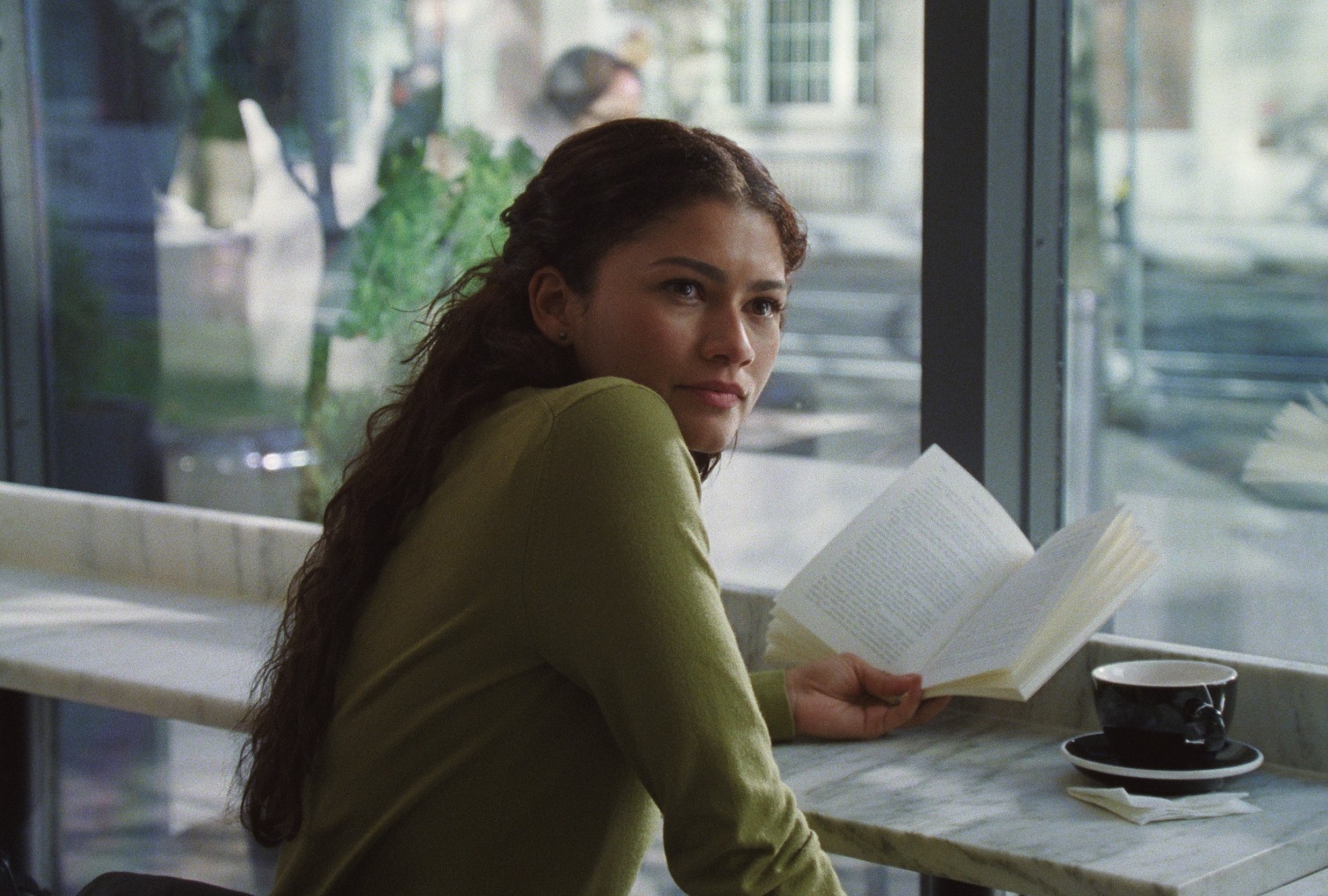
(A24) Zendaya in “The Drama”
But what makes “The Drama” daring isn’t just its subject matter. The twist is the headline-generator, sure, but it’s just the tip of the iceberg. Borgli digs deep into Emma’s psyche, pairing explanations from current-day Emma with glimpses of her younger self, wonderfully realized by Jordyn Curet. By putting an image to Emma’s repulsive teenage plan, the director bravely humanizes a character who deserves a more thoughtful look, reminding viewers that we’re all capable of evil impulses, and that our worth as people isn’t depleted by the darkness that ensnares us. I found the film particularly moving when it confronts the total freedom that teenagers have today. Violence is incentivised by online echo chambers and clicks in a country where the lie of the parasocial digital community exacerbates real-life loneliness. The internet’s vast expanse, once seen as welcoming, is horrifically isolating. Depression and desensitization are fueled by easy access to the most startling, graphic images one could imagine, all one click away.
It would be easy to take Emma’s confession as a simple cinematic provocation. But just because a topic is controversial doesn’t mean that it should be dismissed. Problems that go unquestioned can’t be resolved. There’s a difference between making something provocative and outright, intentional provocation.
When Emma tries to explain herself the day after the confession, she admits, “I liked the aesthetics of it.” This is the modern American gothic: grainy photos taken on a MacBook of a teenage girl in a camouflage jacket, holding a gun, and posted on Tumblr. Later, Charlie, who works for the Cambridge Museum, finds an art book called “Brainrot” — reminiscent of Lindsay McCrum’s 2011 book, “Chicks with Guns” — on his desk, filled with pictures of women in bikinis holding firearms. The images look like production stills from Harmony Korine’s 2012 film, “Spring Breakers,” itself a Tumblr obsession in the microblogging site’s heyday that one could easily argue numbed impressionable young users to the impact of gun violence. Borgli fearlessly asks how quickly the images we consume by scrolling or watching the news affect our thinking. More startling than Emma’s initial revelation is the reason why she didn’t go through with it: Another shooting happened in the same town, on the same day, killing a classmate. Soon after, Emma joined her fellow students in anti-gun advocacy, influenced by new images and thoughts of hope and legislative change. “It felt like finally waking up from a bad dream,” she tells Charlie.
We need your help to stay independent
As impressed with “The Drama” as I am, it would be insincere not to look at Borgli’s film in a wider context. An essay the filmmaker penned for the Norwegian magazine “D2” in 2012 has recently resurfaced, putting his new film into a stranger perspective. In the piece, Borgli discusses a relationship he had at 27 with a girl who was “not old enough to vote.” While he doesn’t get into the nature of the relationship itself, he admits it’s akin to the one Woody Allen has in “Manhattan,” only with a significantly smaller age gap. It’s not a great look.
I’m not here to excuse this essay or deliver some platitude about separating art from the artist. I do, however, think it’s worth considering that “The Drama” could be read as a regretful analysis of one’s worst mistakes. Can we still be loved even at our worst? Are we still deserving of kindness when someone knows our darkest, most cruel impulses? If Borgli’s film is to be believed, we only really begin to understand someone when they betray our trust. The only way to know someone is to hurt them and be hurt in return — within reason, of course. As Charlie and Emma reconcile their relationship with her past, her honesty reframes everything, even with their friends.
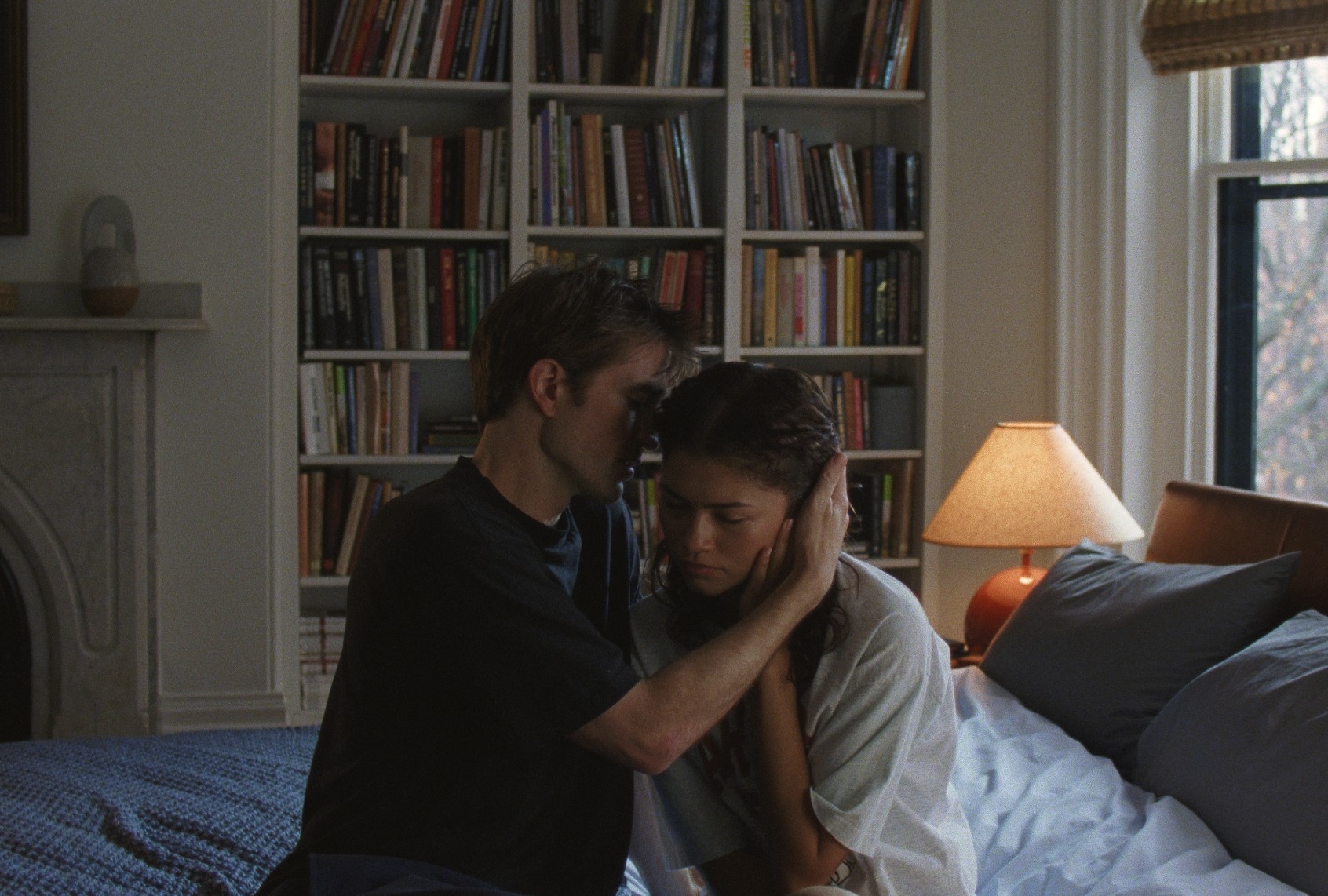
(A24) Robert Pattinson and Zendaya in “The Drama”
Here, Borgli only skims the surface, counting on subtext to imply that Charlie and Rachel have been forced to confront innate prejudices about their partners, who are both Black. It’s an important narrative ripple that’s demoted to a thematic layer, but the film maintains its bite. “The Drama” isn’t trying to hit every mark. Borgli’s certainly aware that no one film can start and end multiple conversations within its limited runtime. But the questions the film confronts the viewer with, and the depths of American darkness it plummets to, are brash and critical. I don’t like to call them polarizing, because they shouldn’t be.
“The Drama” is not a tidy film from any angle. Its themes are extreme and uncomfortable. Its director’s past actions are more than questionable. But if audiences are willing to keep an open mind and engage with it — to not be upset when its dark humor earns a chuckle, or its characters are approached with empathy — it will reward on a massive scale. Americans face a crisis of violence, yes, but the crisis of compassion is just as pressing. If there’s any hope of moving forward on a human, one-to-one level, how we treat each other must be drastically reexamined. “Radical transparency” and “radical acceptance” are terms that have been co-opted by TikTokers and AI chatbots to coddle people with therapy-speak until the terminology has lost all its meaning. Real radicalism is accepting the discomfort; it’s acknowledging that two or more things can coexist, and addressing all of those facets at once, even if the result isn’t perfect. It’s radical to love someone because they’re honest, not in spite of their honesty. I love “The Drama” the same way.
Read more
about films that are more than they appear
