

Lines wrap around the block for The Corner Store, where reservations are as elusive as they are coveted. Inside, the menu reads like a mix of city chic and childhood favorites. Lobster and caviar rolls sit next to five-cheese pizza rolls. For dessert? Soft serve with sprinkles. Or maybe even an ice cream sundae. It’s familiar, nostalgic and just refined enough to justify the price point.
At the U.S. Open last August, $100 caviar-topped chicken nuggets made just as many headlines as the matches themselves. The highfalutin nuggets were courtesy of Coqodaq, a high-end New York City joint known for its Korean fried chicken, and securing a box at this year’s tennis tournament was almost as coveted as tickets to the event itself. An eyebrow-raising detail, when the U.S. Open’s other dining options include offerings from multiple Michelin-starred chefs and restaurants.
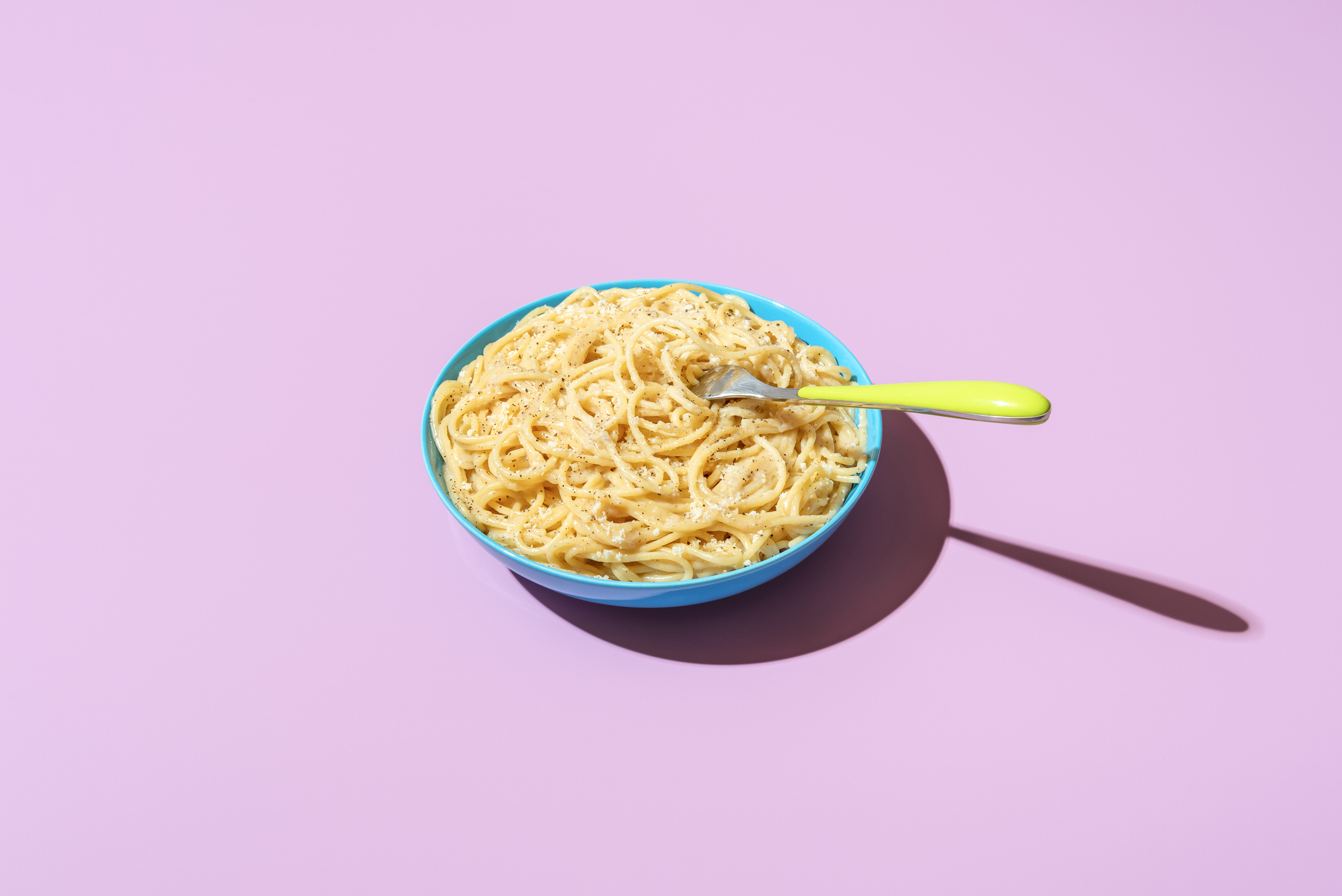
Across fast-casual chains and buzzy dining rooms alike, the aesthetic is unmistakable: mac and cheese cosplaying as cacio e pepe, menus flaunt croquetas and hand pies that are really just mozzarella sticks and overpriced pizza pockets, caesar salad everything.
The hottest tables in America are serving what suspiciously looks a lot like the kids menu — but with an adult price tag.
I’m sure you can think of at least half a dozen restaurants that have followed this pattern recently: Beyond Coqodaq and The Corner Store, there’s Bad Roman, C as in Charlie, Pearl Box, need I go on? That’s not to say that these restaurants are child-like or “for children,” sometimes it’s just one dish or gimmick that evokes these feelings, but you can’t deny that they are leaning into playful, nostalgic formats — building entire concepts around food that feels whimsical, familiar, and even a little unserious.
At first glance, it reads as ironic. A wink at the diner. A way of saying: Here you are sitting in a white-tablecloth restaurant where a martini and fries costs more than your phone bill, but here’s a jar of candy to snack on.
When you step back, it seems ridiculous. But there’s no doubt people enjoy it; these are some of the most impossible tables to get in New York. So instead of dismissing it as a bygone trend, why don’t we ask ourselves why? What looks like regression is often better understood as response.
Want more great food writing and recipes? Sign up for Salon’s free food newsletter, The Bite.
The idea of a “kid’s menu” isn’t universal. As anthropologist Harry West points out, the phenomenon is far more pronounced in the United States than in many other parts of the world, where children are more often expected to eat variations of if not the same food as adults. “I think the catering to children is a much stronger phenomenon in the U.S. than you find in many places,” says West, “And I think the tolerance for ultra processed foods and the kinds of things that you’re talking about is also much higher in the U.S. than it is in Europe.” Chicken tenders, buttered noodles, the multi-billion dollar industries of American fast food and ultra-processed snack foods have created a category that didn’t necessarily need to exist. Now, adults are reclaiming it.
To understand why, it helps to look beyond the plate.
“Across the board, I would say that there just definitely has been an increase in nostalgia,” says workplace well-being expert Jennifer Moss, who has spent years studying happiness, burnout and emotional behavior. Over time, she says, her work has increasingly focused on the ways institutional stressors — from work culture to global instability — have eroded people’s sense of well-being.
She says that it all relates back to COVID. “A lot of that is a result of the fact that we’re still in this crisis mode. We’re still in a state of high anxiety, high stress, that hasn’t changed. We’ve actually seen it worse,” says Moss.
We need your help to stay independent.
In that environment, food becomes more than sustenance. It becomes a coping mechanism.
“When we’re anxious, we want to go back to things that made us feel safe,” Moss says. “That could be our mother’s cooking or grandmother’s recipes. All of that just drives our sense of stability when we’re feeling fragile.”
She describes a growing phenomenon she calls “new-stalgia” — a blending of old and new that pulls people back into that place of feeling connected to their youth and connected to the things that made them feel good.
There’s a biological component, too. Stress increases cortisol levels, which in turn drives cravings for quick, energy-dense foods — carbs, sugar, the kinds of things that dominate elementary school diets.
“We’re trying to essentially get that chemical boost that is subconsciously being eroded from the anxiety that we’re experiencing,” Moss says.
In other words, the urge to order a plate of buttered noodles or a perfectly crisp chicken nugget isn’t childish. In many ways, it’s inevitable. Our bodies are searching for a chemical, emotional solution to the overwhelming sense of anxiety and dread that faces many adults of all ages in today’s world.
In restaurant kitchens, that impulse is playing out in real time — and on the bill.
Because comfort isn’t just emotional. It’s financial. Even outside of the buzzy, TikTok-trending dining rooms, “kids menu energy” has spread to fast food and fast casual dining as well with many adults ordering kids menu options, especially in to-go settings, to save a few bucks.
“There’s an economic factor in that, you know, ordering kids meals is a lot less expensive,” Moss says.
In the United States, 88% of adults felt some sort of financial stress as they began 2026, and as of April 2026, 49% of American families say they don’t have enough resources to cover essential expenses. In a moment defined by inflation, rising rents, jaw-dropping grocery prices, and lingering economic uncertainty, the appeal of the kids menu is obvious.
For restaurants, the math works, too. Dishes built around ingredients like pasta, bread, and fried proteins are often cheaper to produce than trend-driven luxuries like wagyu beef or imported seafood. In an industry still recovering from pandemic-era losses, those margins matter.
However, it seems like some chains may have caught on to these lunchtime “hacks.” Cava, the Mediterranean version of Chipotle, has faced online backlash after raising its kids meal prices and changing the format to what customers say is much less food than before.
For restaurants, the math works, too. Dishes built around ingredients like pasta, bread, and fried proteins are often cheaper to produce than trend-driven luxuries like wagyu beef or imported seafood. In an industry still recovering from pandemic-era losses, those margins matter.
Nostalgia, it turns out, is not just emotionally resonant. It’s good business.
“I think we see a lot of people in the food industries… doing things that are trying to connect back to the past,” says West. “A big part of that is connecting to childhood.”
In a food system shaped by decades of industrialization, many of the connections people once had to food — to place, to ritual, to community — have weakened. What replaces them, increasingly, is a curated version of the past.
“It’s a pretty pronounced phenomenon right now,” West says, “kind of nostalgia in food and trying to make those connections with the past and with previous experiences.”
Sometimes, that nostalgia gets repackaged and sold back at a premium. Foods once considered simple — even low-status — are rebranded, elevated, and, in some cases, priced out of reach for the very people who grew up eating them.
“Because often they’re working in places that are depopulated and marginalized by the experience of modernity over the past several decades,” says West, “But by doing that, often they wind up producing a product that’s only accessible to the rich and to the few.”
It’s the same logic that turned lobster from prison food into a luxury, or quinoa from a staple into a “superfood.”
He talks about a trip he took one summer to the French Alps doing research with artisan cheese makers. He was staying in a hotel that would have been crowded during the winter tourist season, but in the summertime was nearly empty.
“I saw an item on the dessert menu, and I thought, ‘That looks really interesting. I’ve never heard of that.’ I was in this French, high-end hotel restaurant. It must be some French gastronomic thing,” said West.
So he ordered it. The menu listed this mystery dessert as “mars,” and when it arrived at the table he discovered that it wasn’t some gastronomical anomaly, but exactly what the menu said.
“It was a deep fried Mars bar,” said West, “So there we have it, in the middle of France, you know, this gastronomic capital of the world, right? This idea of connecting people to this sense of pleasure of the past through kids’ food.”
Childhood, too, can be commodified.
And social media only accelerates the cycle.
“We look to these influencers who are making these unbelievable foods,” Moss says. “It looks so good. It makes us want it. My daughter is sending me photos all the time of this incredible food.”
The result is a kind of “stunt food” economy — dishes designed as much for the camera as for the palate. Playful, nostalgic, visually striking. Easy to share, easy to crave.
But that visibility comes with a cost.
“Most people just kind of look at it and say they can’t make it, or they can’t afford to make it, so it can also make us feel worse about ourselves because of that comparison piece. Any sort of upward comparison — social comparison, algorithmic social media platforms — it decreased our happiness, especially for anyone 30 and under,” Moss says, referencing this year’s World Happiness Report.
At the same time adults are gravitating toward buttered noodles and chicken tenders, there’s a growing movement to expand children’s palates — to move beyond the beige, to introduce complexity, to treat kids as capable diners rather than picky ones.
The same platforms that make these foods feel ubiquitous can also make them feel unattainable — something to aspire to, replicate, or consume as part of a broader performance of being “in the know.”
Even comfort becomes content.
There’s another level of irony embedded in all of this.
At the same time adults are gravitating toward buttered noodles and chicken tenders, there’s a growing movement to expand children’s palates — to move beyond the beige, to introduce complexity, to treat kids as capable diners rather than picky ones.
In some restaurants, children are eating tasting menus, sampling raw fish, developing preferences that would have once been considered decidedly adult. De La Soil in Washington has a spam fired rice with house furikake in the “for the kiddos” section of its menu. Silver Diner, which has locations across the Mid-Atlantic states, offers a free-range turkey platter with rosemary-sage gravy and ginger cranberry-orange sauce on its kids’ menu. Park Chalet in San Francisco offers Atlantic salmon and a $16 flatiron steak that diners say is “prepared exactly like the adult portion.”
On social media, it’s a point of pride for parents to showcase their children eating “adult” foods like oysters and octopus.
As some kids are pushed to eat more adventurously, adults are quietly retreating.
None of this is to say that ordering chicken nuggets — with or without caviar — is inherently a problem.
But it is revealing.
In a moment defined by anxiety, instability, and a persistent sense that the world is tilting off its axis, the appeal of simplicity makes sense. So does the desire to feel cared for, to feel safe, to return, even briefly, to a time when someone else was in charge.
“Instead of adulting, we can go back to being a kid for a very short amount of time through our food,” Moss says.
It’s funny. It’s indulgent. It’s everywhere. We’re all “in on the joke” when we order mac and cheese or finger foods or a messy ice cream sundae from a high-end restaurant, but maybe instead of brushing it off, we should appreciate this moment in food for what it can be: an opportunity to reconnect with our youthful energy. A time when we didn’t worry and weren’t burdened with adulting.
We all know the kids table is more fun anyway.
Read more
about this topic
