
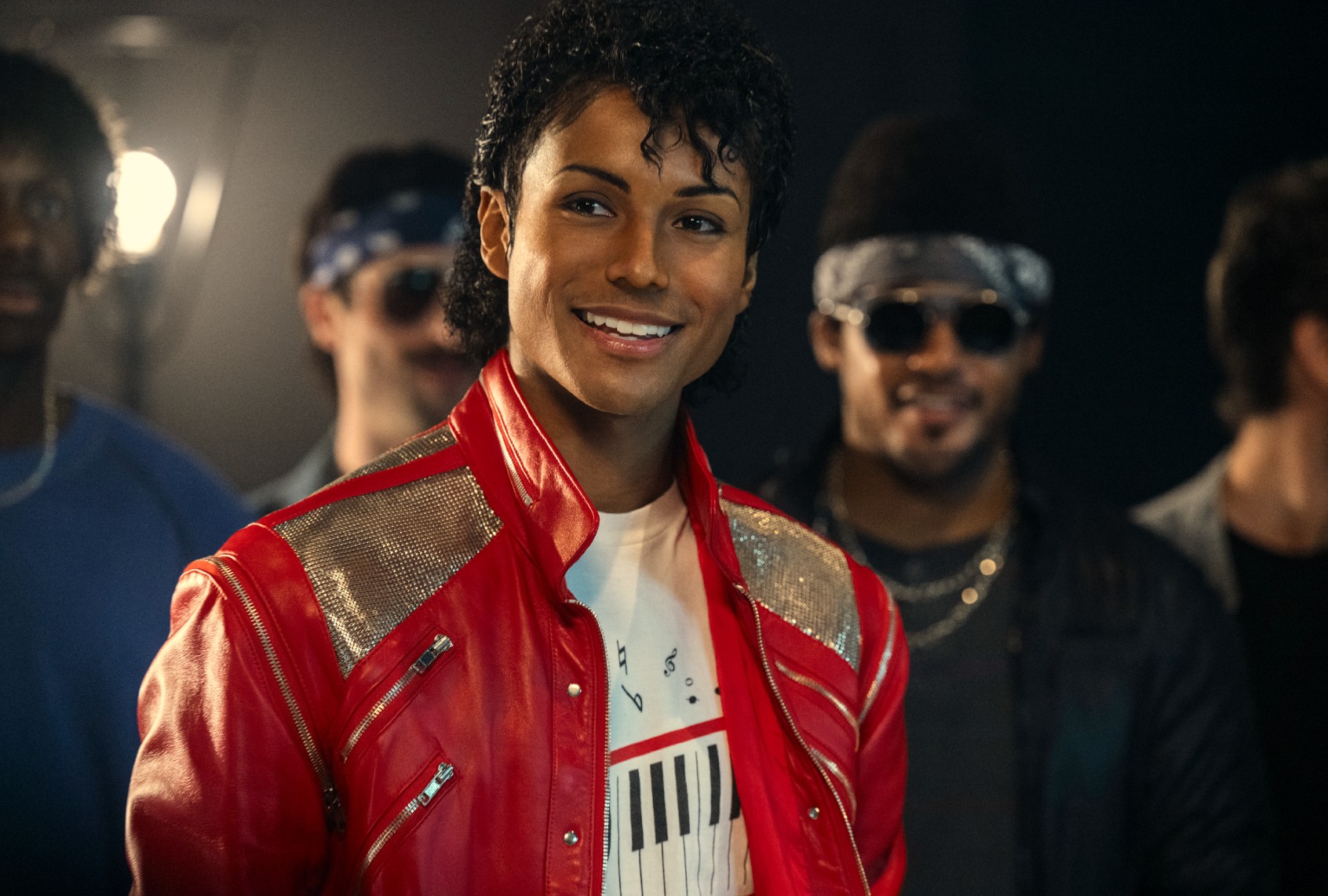

If Michael Jackson’s estate hoped the late King of Pop’s long-gestating biopic would restore the singer’s shattered reputation and solidify his legacy once and for all, they probably shouldn’t have approved a movie so damn weird. It’s not because director Antoine Fuqua’s style is hackneyed, or that screenwriter John Logan’s script has all the dramatic tension of a glass of still water — though both of those things are true, too. “Michael” is bizarre because everything left unsaid still lingers between the lines, sandwiched between the formidable melodies of his greatest hits, like toxic ooze leaking out from the middle of two slices of Wonderbread.
In the days, weeks and months leading up to the release of “Michael,” the one question that loitered at the top of my mind was why Jackson’s estate wasn’t content to leave well enough alone. More than 15 years removed from the singer’s death in 2009, Jackson’s once-radioactive name had softened with time. You could walk through a grocery store, hear “Billie Jean” playing over the sound system, and shimmy your shoulders, feeling slightly less guilty than you might’ve during the aughts. At that time, Jackson’s name was primarily associated with multiple allegations of sexual abuse of young boys, among a litany of other scandals. (No doubt seeing the video of Jackson dangling his infant son over a hotel balcony airing on a loop on VH1 and E! damaged some part of my malleable childhood psyche.) Though Jackson settled out of court after the first allegations in 1994 and was acquitted in a separate trial in 2005, the hearings — and Jackson’s disturbing, repeated attempts to publicly combat the claims — irrevocably stained his career. By all accounts, dying was the best thing for Jackson’s legacy, drumming up sympathy sales and soft-hearted recollections of a child star who spent his youth abused by his father, Joe, and his adulthood stunted by a disconcerting reluctance to grow up.
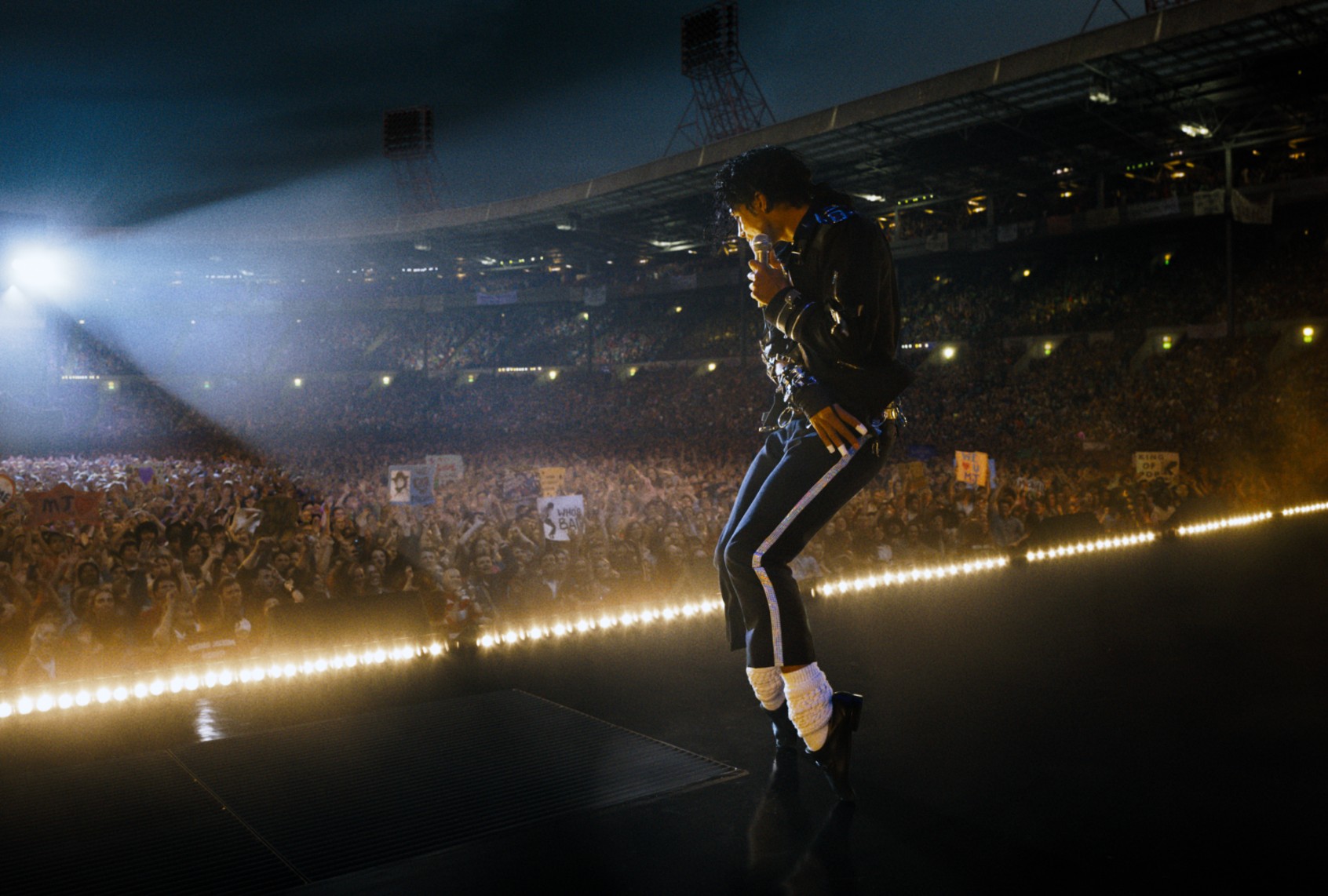
(Lionsgate) Jaafar Jackson as Michael Jackson in “Michael”
And then, “Leaving Neverland” aired. In the two-part 2019 HBO documentary, two of Jackson’s former companions, James Safechuck and Wade Robson, provided harrowing accounts of years of alleged childhood sexual abuse by Jackson. Their stories were powerful in and of themselves. But more than that, they were gripping and important testaments of how trauma affects survivors, the chilling intricacies of long-term sexual abuse, and how blinding the glimmering light of fame can truly be. The documentary was well-received and buzzy, but for Jackson’s army of fans, it didn’t move the needle. They’d continue to play his music and worship at his altar. Even something as convincing as “Leaving Neverland” couldn’t dissuade diehards from their king.
Anyone with a slightly discerning eye can see this is a puff piece, a two-hour-long greatest hits CD. What’s most disturbing is how little people seem to care. “Michael” might be a self-evident, self-sustaining, self-indulgent piece of PR. But layer a catchy tune over all that artifice, and the music is the only thing many people will hear.
Michael Jackson’s estate could’ve existed in this gray area forevermore, letting his memory hover somewhere between genius and joker. The old heads would’ve passed the music on, the new generations could conduct their own research, and everyone would be free to do as they please. But greed is a funny thing. It clouds rationality and skews decisions. Once your eyes fill with dollar signs, it’s hard to see anything else, which is precisely why “Michael” arrives with the classically dumb ignorance of Wile E. Coyote lighting a 20-foot-long fuse, hoping that this will be the time his plans don’t end in explosive catastrophe.
We live in a world where people don’t even bother to look out the window in the morning before picking up their phones, ready to get online and join in whatever discourse the day’s generating. Releasing a film like “Michael” into that universe isn’t bold; it verges on idiotic. No matter how sanitized and safe the movie may be — and rest assured, it’s as sterile as possible — there was no way Fuqua’s film wasn’t going to unearth mountains of readily available information and firsthand quotes from Jackson himself that cast a sickly spotlight over the singer. Ahead of the release, one of Jackson’s nephews, Taj, said that the media “[doesn’t] get to control the narrative anymore.” The only problem with leaving all of this to the court of public opinion is that there is no judge, and there is no jury; just piles of inflammatory proof of Jackson’s licentious behavior.
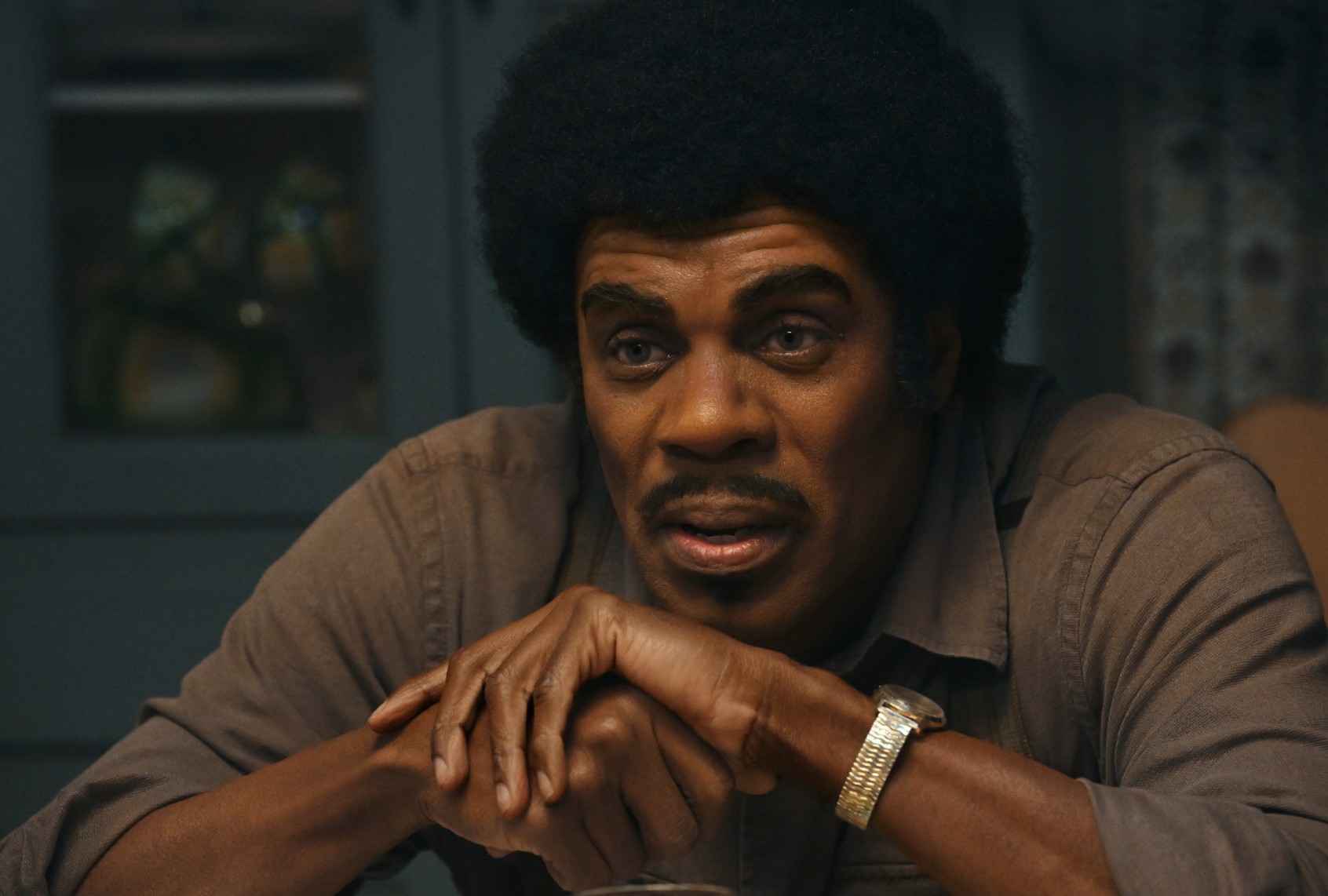
(Glen Wilson/Lionsgate) Colman Domingo as Joseph Jackson in “Michael”
But let’s assume that “Michael” could be the restorative justice that the Jackson estate and his indignant fans hope it will be. That would require the film to be conceived, shot and edited with even a modicum of foresight. Prudence was clearly not a priority, given that reshoots were ordered when production discovered a clause in Jackson accuser Jordan Chandler’s legal settlement that barred him from being mentioned or depicted in a film. The error reportedly cost $15 million to correct, forcing the script to be rewritten to omit early discussions of Jackson’s legal battles.
Then again, all of “Michael” is one big, expensive mistake. The acting is subpar at best, the screenplay barely scrapes the surface of the King of Pop’s inner world, and the only thing more questionable than the Jackson estate’s motivations are the prosthetics on Colman Domingo’s half-baked portrayal of Joe Jackson. Anyone with a slightly discerning eye can see this is a puff piece, a two-hour-long greatest hits CD. What’s most disturbing is how little people seem to care. “Michael” might be a self-evident, self-sustaining, self-indulgent piece of PR. But layer a catchy tune over all that artifice, and the music is the only thing many people will hear.
Want more from culture than just the latest trend? The Swell highlights art made to last.
Sign up here
That was certainly the case at my public screening on Thursday evening. I’d decided that the only way to truly experience “Michael” was to see it with a crowd of people paying to see it. I wondered what their reactions would be like and if there would be any noteworthy conversations about the morality of the whole experience beforehand. (Granted, I tossed $19 toward the movie, but a nasty cold kept me from an earlier press screening, and so this new opportunity presented itself.) To my chagrin but not my surprise, no one else in the theater came with their tail tucked between their legs, covered by a trench coat. Not a single person wore big sunglasses or an even bigger hat. Disguises aren’t necessary when shame doesn’t factor into the price of admission. I got the distinct impression that I was the only person there to see “Michael.” Everyone else was ready to see the King of Pop perform live for one night only.
Fuqua understands that making a narrative film into a glorified concert is the ideal way to breeze past anything unsavory. Spend more than half the runtime reminding the audience why they love Jackson’s music, and they’re likely to enjoy the film by association. Audience members clapped and sang along to “Thriller” and “Wanna Be Startin’ Somethin’,” and whooped every time Michael — played with admittedly impressive accuracy by Jackson’s nephew, Jaafar — hit a spin or kick. The film’s portrayal of The Jackson 5 years aims for even rosier nostalgia, evoking memories of hearing a young Michael’s voice, cascading over the radio waves and into the hearts of millions. And although the film does feature one short scene of Michael being beaten by Joe as a child, Domingo’s character is strangely unthreatening, especially given the stories of extensive abuse the Jacksons suffered. If even an admittedly abusive father can’t have his violence portrayed with some accuracy, what hope is there to see Michael depicted with anything less than the utmost flattery?
We need your help to stay independent.
But just because the allegations against Jackson have been yanked from the film doesn’t mean that they aren’t still there, casting a shadow over almost every scene. There are multiple sequences of Jackson with kids, visiting children’s hospitals and frequenting toy stores to sign autographs until his hands are sore. These scenes were the only time a hush fell over the entire auditorium, as if every member of the audience was waiting for the other shoe to drop. The quiet was hair-raising in its own way. It felt like a collective acknowledgement that everyone in the room knew about the substantial claims leveled against Jackson, but that we were holding our breath until the next scene, when a new song or cameo from Bubbles the chimpanzee would distract us from the truth, eating at the back of our minds.
By not actually addressing the elephant in the room, “Michael” makes its subject look like a bona fide creep. If the goal was to make Jackson’s proclivities look normal and wholesome, congratulations, “Michael” is a spectacular failure.
This was the real-life version of a mindless doomscroll, when all of the world’s atrocities barely register. It occurred to me that, as much as 2026 isn’t the ideal time for “Michael” to be released, it’s also the perfect moment. The world is a very different place now, and yet, it’s the same as it ever was. We have far more intimate, horrifying knowledge about the fundamental evil of power and fame, but little we can do to fight it. As always, our money and our attention are the most robust tools in our arsenal. But “Michael” is going to make a boatload of cash regardless. Maybe this is a losing battle. Even in death, Jackson has the last word.
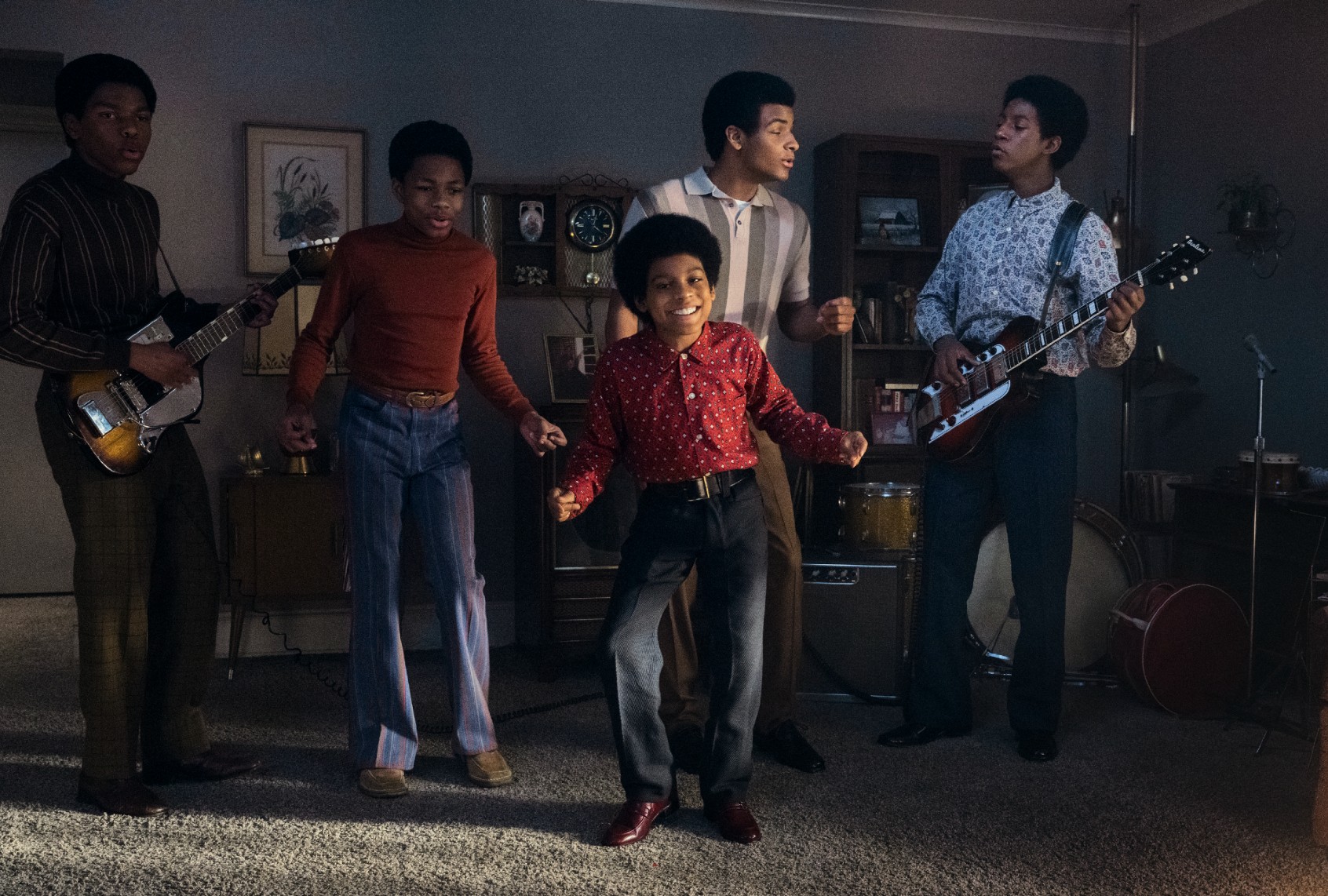
(Lionsgate) Judah Edwards as young Tito, Jaylen Lyndon Hunter as young Marlon, Juliano Krue Valdi as young Michael, Nathaniel Logan McIntyre as young Jackie and Jayden Harville as young Jermaine in “Michael”
But as ugly as greed can be, it can be oh so beautiful. This movie exists for two reasons: to make money, and to polish Jackson’s muddied legacy. “Michael” will accomplish the former, but the film proves the latter impossible. Forced to restructure the film and mix existing footage with reshot scenes, all of those sequences of Michael alongside children now feel eerie and upsetting, even if the film doesn’t touch on the allegations. It appears that these scenes were scattered heavily throughout “Michael” so that the film could use them to convince viewers that Jackson never did anything wrong. “He couldn’t hurt a fly, see? He’s so kind, look at how much time he’s spending alongside the youth, how much he cares about their happiness!” But by not actually addressing the elephant in the room, “Michael” does the opposite, making its subject look like a bona fide creep. It also doesn’t help that there’s a repeated, intense focus on Jackson’s obsession with “Peter Pan,” but the film ends before the construction of his Neverland Ranch. If the goal was to make Jackson’s proclivities look normal and wholesome, congratulations, “Michael” is a spectacular failure.
Though the film was originally reported to be three-and-a-half hours long, covering far more of Jackson’s life, this truncated version clocks in at just over two. “Michael” still ends on a high note — one of Jackson’s last — as the singer readies the release of 1988’s “Bad.” Ironically, it’s the time when Jackson’s music and personal affairs started to become bad, too. In the ’90s, Jackson’s career would be shrouded in scandal. He’d lose his lucrative Pepsi deal and find himself fighting against the mysterious persona he intentionally crafted.
This is an era that would be near-impossible to retell in a film without heavy editing and flagrant omissions, and I wish the Jackson estate the best of luck trying to make good on the final title card promising, “His story continues.” (Maybe they were just trying to covertly drum up some extra sales of Jackson’s 1995 album of the same name, who knows!)
Regardless of what the future holds, it’s worth reflecting on the present. “Michael” doesn’t exist in a vacuum. The powers that be built and nurtured a world where a film like this can thrive, a world where the president was found liable for sexual assault and forced to pay millions of dollars in damages. Our social media feeds are filled with conspiracy theorists treating Jeffrey Epstein’s sex trafficking as a joke, interspersed with videos of drone bombs destroying schools, homes and lives in Iran and Palestine in real time. We’re taught to care less and less, without any say in the matter. But now and then, something slips through the cracks, something that can’t be sanitized or ignored, no matter how much money or editing goes into it. “Michael” is that disastrous blunder, the thing so completely enveloped in its own self-righteousness that looks terrible no matter where you’re standing. For those trying to find some faith that not everything can be swept under the rug, look no further. In the words of Jackson himself: This is it.
Read more
about biopics
