

It may seem like years in the past at this point, but it was only three little months ago that the world got itself worked into a lather over Emerald Fennell’s “Wuthering Heights.” The crux of the outrage surrounding Fennell’s film stemmed largely from the fact that she refused to rename her relatively loose, aesthetic-minded adaptation with a title that didn’t directly reference Emily Brontë’s novel. Literary purists were incensed. “This is not our ‘Wuthering Heights’!” they cried, pouring their souls out onto the internet. But Fennell’s film was a racy, adult-oriented retelling, made for people old enough to understand the difference between source material and an adaptation that remixes the themes and events of the original story necessary to produce a fresh take. It was a movie that trusted its viewers to separate the book and Fennell’s own cinematic idea of it. It was not to be taken as gospel because the target audience would ideally have fully formed brains.
The same can’t be said about the new animated adaptation of “Animal Farm,” which bears so little resemblance to George Orwell’s perpetually relevant 1945 allegorical novella that it might as well be “If You Give a Mouse a Cookie.” There are animals, yes. And they are indeed on a farm. They even share the same names as the characters in Orwell’s story. But that’s about where the comparisons cease. Gone are the thoughtful metaphors for the Russian Revolution, Stalinism and the policies governing the USSR; now replaced by clunky critiques of capitalism and contemporary American politics, with an added dose of fart jokes.
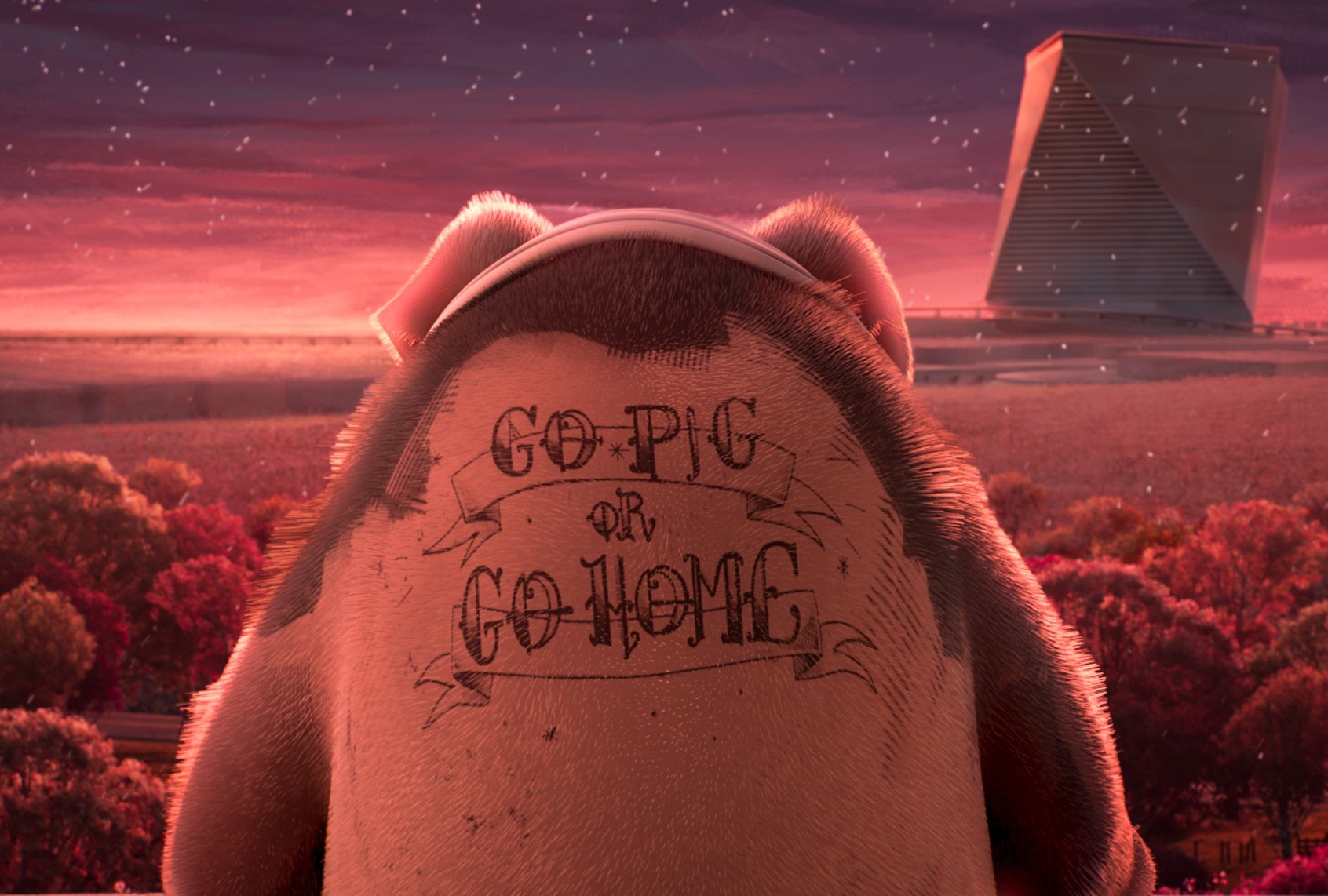
(Angel Studios) “Animal Farm”
Not only is the narrative in this “Animal Farm” not the story you knew it to be, but its social implications could be far more disconcerting than a simple change of ideology.
But it’s not just the film itself that feels off, with its allegory’s dull arrow landing in a field thousands of acres away from the target. This version of “Animal Farm” also carries the distinctly eerie backing from Angel Studios, which picked up the film’s North American distribution rights after it premiered at the Annecy International Animated Film Festival last year. If you’re unfamiliar with Angel Studios — if the name doesn’t send a chill down your spine — it’s the production and distribution company that brought us the infamous “Sound of Freedom,” which shattered box office records in 2023 despite being closely tied to QAnon conspiracy theories. Neither “Sound of Freedom” nor “Animal Farm” was produced by Angel Studios; they were only distributed, meaning that Angel acquired the rights to bring both films to theatrical audiences.
That might not seem strange at first glance. You might say, “Well, the people at Angel Studios know what makes money. They saw a hole in the market and pursued a film to fill it, and they surely thought the same when they pounced on an animated adaptation of an Orwell classic with a star-studded voice cast.”
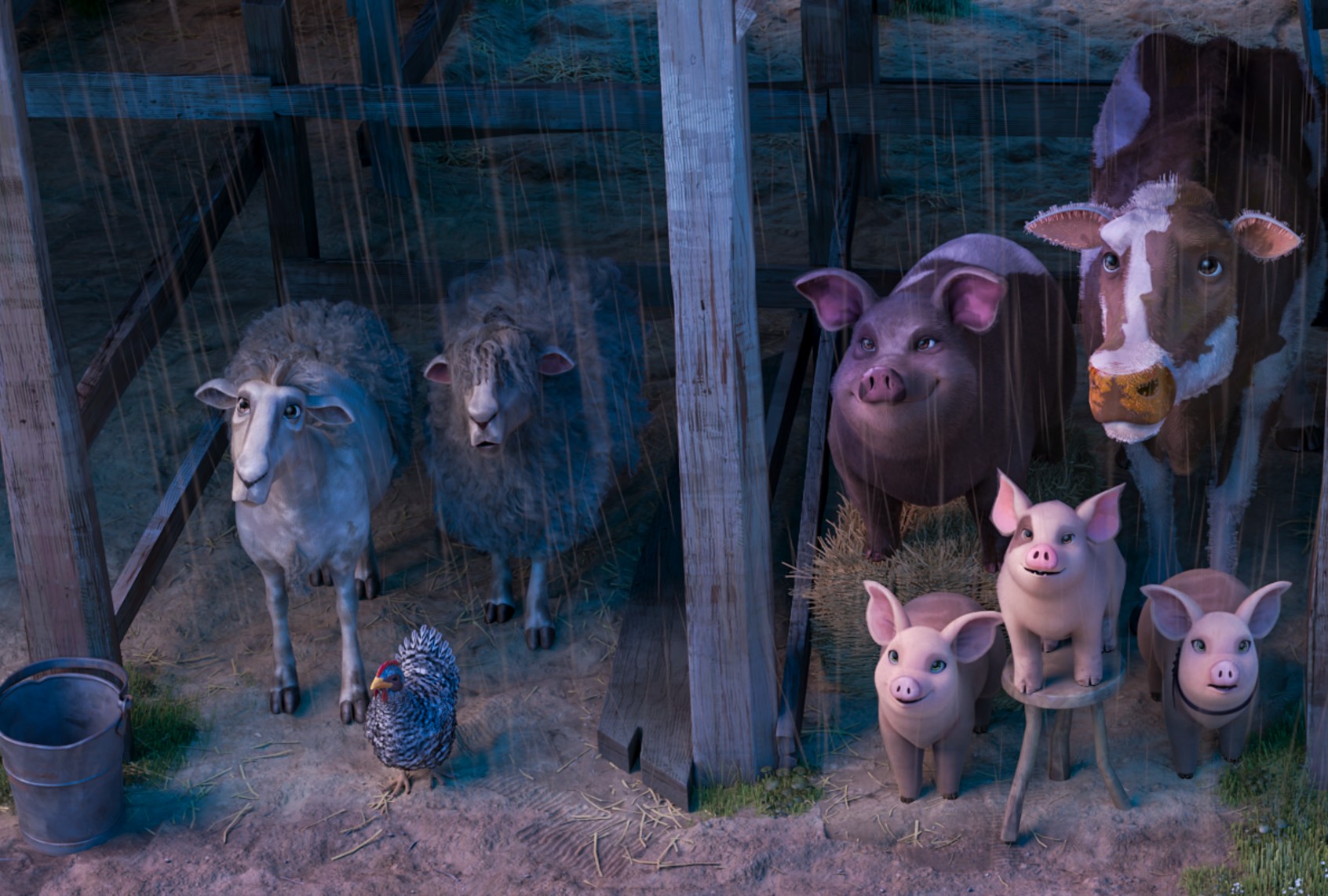
(Angel Studios) “Animal Farm”
But these things don’t happen by accident. A family of Latter-Day Saints heads up Angel Studios, and a fair share of its titles across both television and film spaces are right-leaning media with Christian values. If that’s what you’re looking for in your children’s media, I won’t stand in your way. Go for it! But if you’re concerned that your hard-earned dollar might be put back into a machine that’s used to purchase dangerous, conspiracy-minded media propped up by Donald Trump and the rest of the MAGA crowd, take heed. Not only is the narrative in this “Animal Farm” not the story you knew it to be, but its social implications could be far more disconcerting than a simple change of ideology.
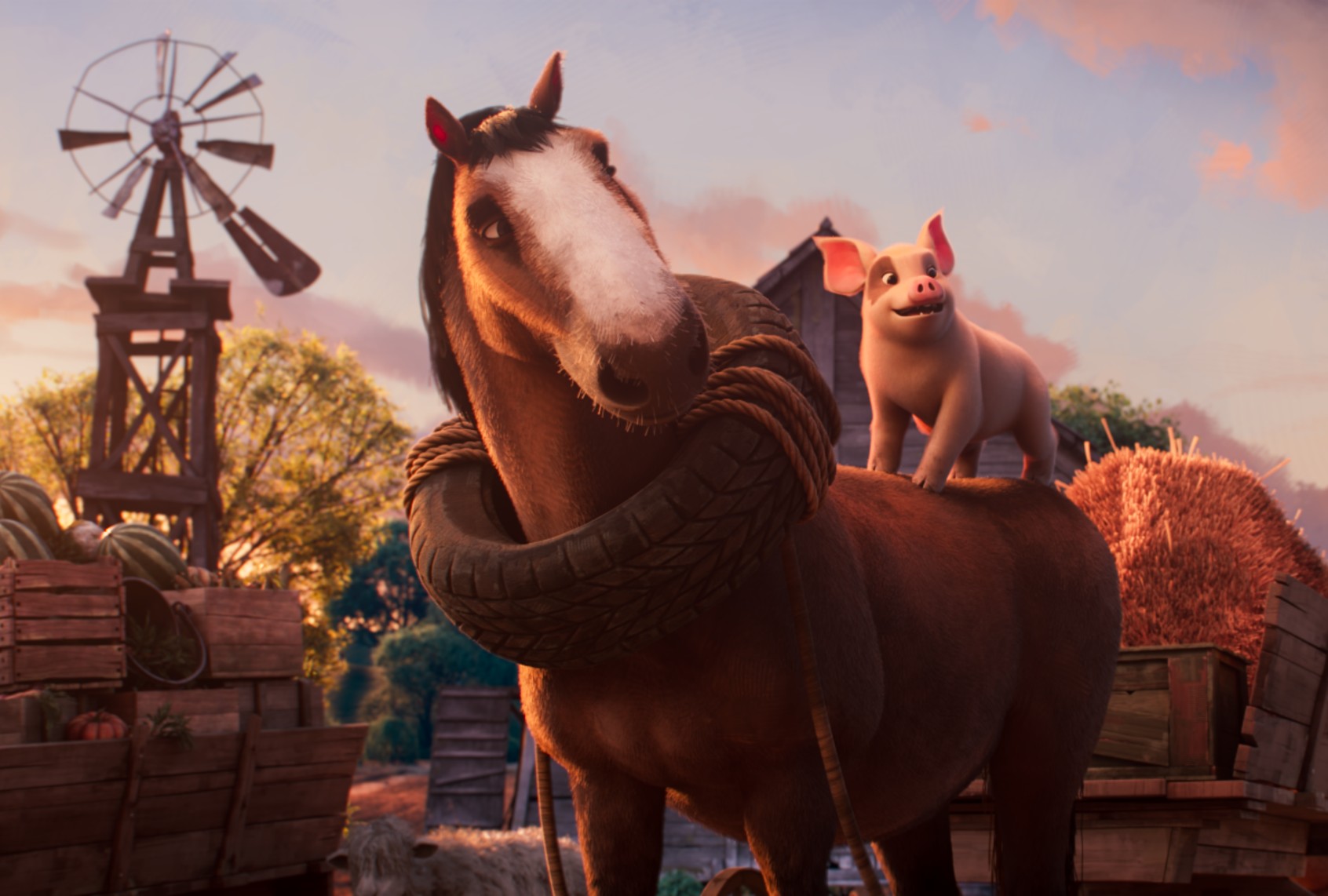
Directed by Andy Serkis with a screenplay from Nicholas Stoller, “Animal Farm” reduces Orwell’s already simplistic allegory to a shadow of its former self. When the nefarious Pilkington Industries repossesses Manor Farm after a failure to make payments, the animals inhabiting the stead are nearly trucked off to their demise. Realizing that they’re headed to the slaughterhouse, the animals rebel against the humans, save themselves, and reinhabit the farm, establishing their own system of checks and balances to ensure their survival. Snowball (Laverne Cox), the leader of this revolution and the closest in ideals to Orwell’s democratic socialism, believes in a farm where equality and collective preservation are paramount. The idler pig, Napoleon (Seth Rogen), would rather the animals gorge themselves on feed, lie around and pass gas all day. When Napoleon’s way of living results in the farm’s precious resources depleting faster than expected, he arranges to sell animal goods at a human market, bartering for money that can buy them supplies and keep the bank’s owner, Freida Pilkington (Glenn Close), off their backs — or, more accurately, their tails. Soon, Napoleon and Snowball’s beliefs clash, and Pilkington sees an opportunity to exploit the farm at its weakest moment.
Want more from culture than just the latest trend? The Swell highlights art made to last.
Sign up here
(Angel Studios) “Animal Farm”
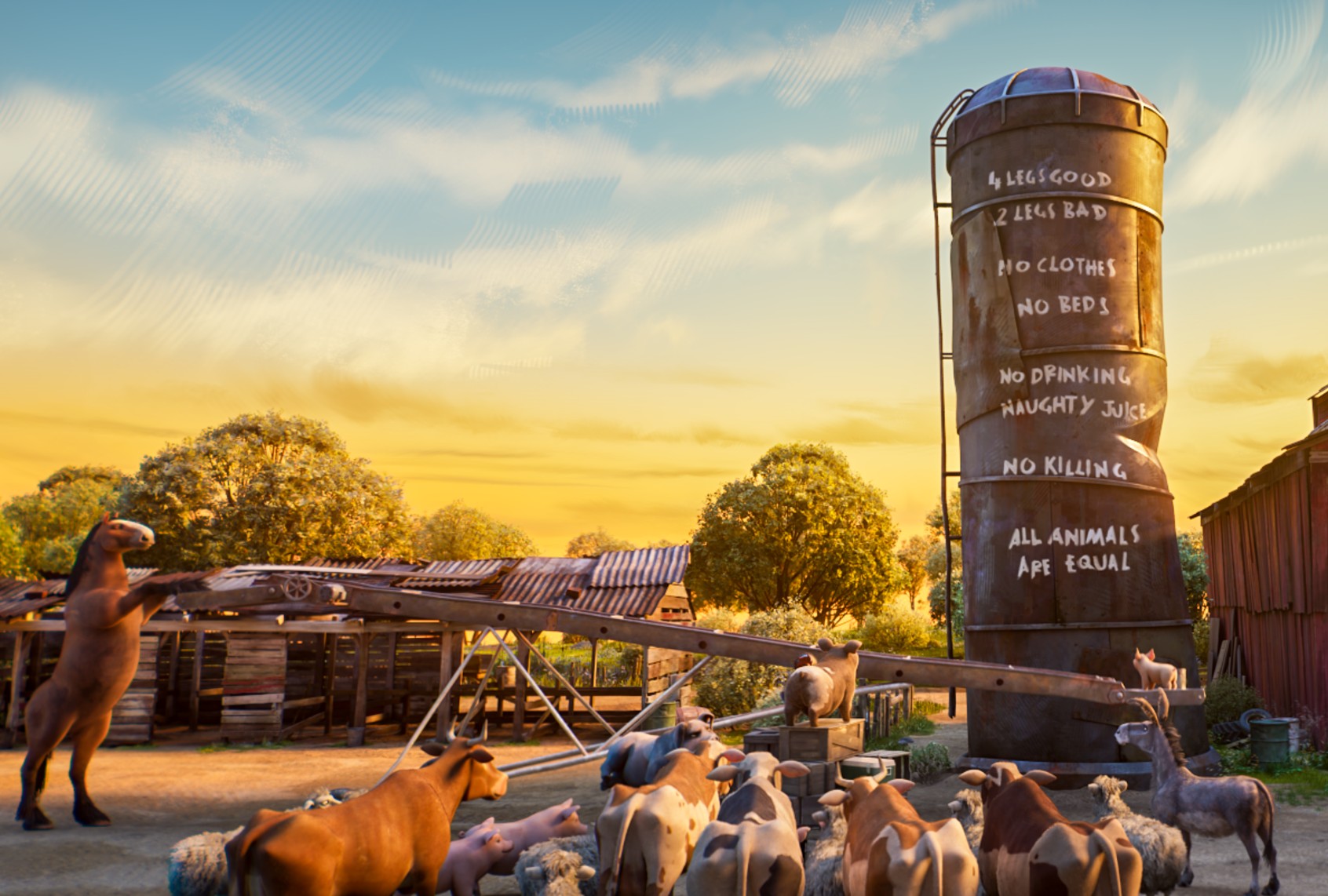
Serkis’ “Animal Farm” wastes no time confirming suspicions that it’s a watered-down version of Orwell’s dystopic classic. Thematic ideologies conflict as often as the animals do. The film is somewhat a critique of basic capitalism, but without any elements that would warrant this narrative change, such as the introduction of taxes that could further sow (pun intended) discord between the animals. Other times, it plays with vague ideas about totalitarianism that are hard to grasp onto when they’re buried under jokes about animals drinking too much “naughty juice” and stumbling around, drunk off both power and the forbidden beverage. The movie’s most interesting and topical decision is reinventing Freida Pilkington as a Cybertruck-driving, tech billionaire who wants nothing more than a healthy cash flow, manipulating every animal to keep her money coming in. Now there’s an allegory that young people can use: the depiction of tech wealth as inherently evil, built on the backs of exploited workers in the name of “advancement,” instead of something to aspire to.
Unfortunately, “Animal Farm” isn’t interested in saying anything beyond (quite literally), “We should all help each other out.” Platitudes are for popsicle sticks and fortune cookies, not feature-length adaptations of literary classics intended to warn readers about how easily power can bleed into corruption. Serkis’ attempt to update this story isn’t a scourge on animation or children’s media; it’s simply not as observant and symbolic as it should be. This “Animal Farm” is ignorant of the fact that kids need to be stimulated by more than scatalogical humor to actually influence their perspectives, rather than cater to their existing tastes and knowledge.
But from my understanding, that’s exactly the kind of film Angel Studios is looking to distribute: a movie that seems like it’s saying something, when in reality, it’s spouting a whole lot of nothing. “Animal Farm” is the ideal Angel Studios production, with enough big-name stars to attract an audience willing to overlook the distributor and its history, or who don’t even know about either aspect to begin with. The film is, by all measures, the studio’s first foray into the Hollywood-adjacent territory it purports to rally against.

(Angel Studios) “Animal Farm”
Why would Angel Studios pick up this film for distribution and risk aligning itself with the Hollywood elite that it so forthrightly challenges? Money and trust.
In a 2024 press release preceding Angel becoming a publicly traded company, the studio wrote, “The problem that Angel Studios seeks to address is that a limited number of Hollywood studio decision-makers determine which films and television shows are made.” The release goes on to mention the Angel Guild, a group of over 1 million members who pay to review preview media the studio may acquire. “This growing membership — rather than Hollywood executives — watch and select winning films and shows prior to release.”
How do Angel Guild members choose, you might ask? By determining which media — or “torch,” as they’re called — “amplifies light,” an undefined expression that asks each person to vote based on their values. It doesn’t take a rocket scientist to figure out what those values might be. A child old enough to make some sense of Orwell’s “Animal Farm” could probably figure it out. “Sound of Freedom” had church groups busing to theaters to watch the movie in hordes. MAGA influencers and figureheads touted it as an anti-establishment godsend. QAnon conspiracists used the film to confirm their outrageous machinations. All of this resulted in “Sound of Freedom” breaking box office records, drawing millions of people to the Angel Guild.
Where things get really strange is when you consider that Serkis’ “Animal Farm,” in and of itself, is not a conservative movie. Rogen, Close and Cox are not right-wing actors. Each one of them is an outspoken champion of progressive values. So why would Angel Studios pick up this film for distribution and risk aligning itself with the Hollywood elite that it so forthrightly challenges?
We need your help to stay independent.
To put it plainly: money and trust. Parents are looking to entertain their children for 90 minutes with something that isn’t pure garbage, and a few familiar names on the roster of voice actors means that mom and dad might have a slim shot at being engaged, too. But a percentage of every ticket purchased still goes back to Angel Studios, and that money could very well fund the cost of acquiring and distributing another “Sound of Freedom.” If parents or their kids like the film, there’s a good chance they’ll become brand-loyal to Angel Studios. Look at Illumination, Pixar and Dreamworks, all animation studios that maintain a dedicated following because audiences enjoy their work.
Everything points back in the direction of Angel Studios — or, really, the underbelly beneath it. Funnily enough, I don’t disagree with that press release that states Hollywood studios have their own unique set of problems, or that they shouldn’t be the only ones to dictate which movies get made, and for whom. All of that is true. But just because there are fundamental problems with the studio system, it doesn’t mean that Angel’s mission to “amplify light” shouldn’t raise an eyebrow. If the surprisingly formidable voice cast of Animal Farm isn’t enough to get the film picked up by a credible distributor, it should be a sign that the movie is not very good to begin with. And one has to wonder what kind of studio would want to distribute a load of pigswill.
Read more
about what’s new in animation
