
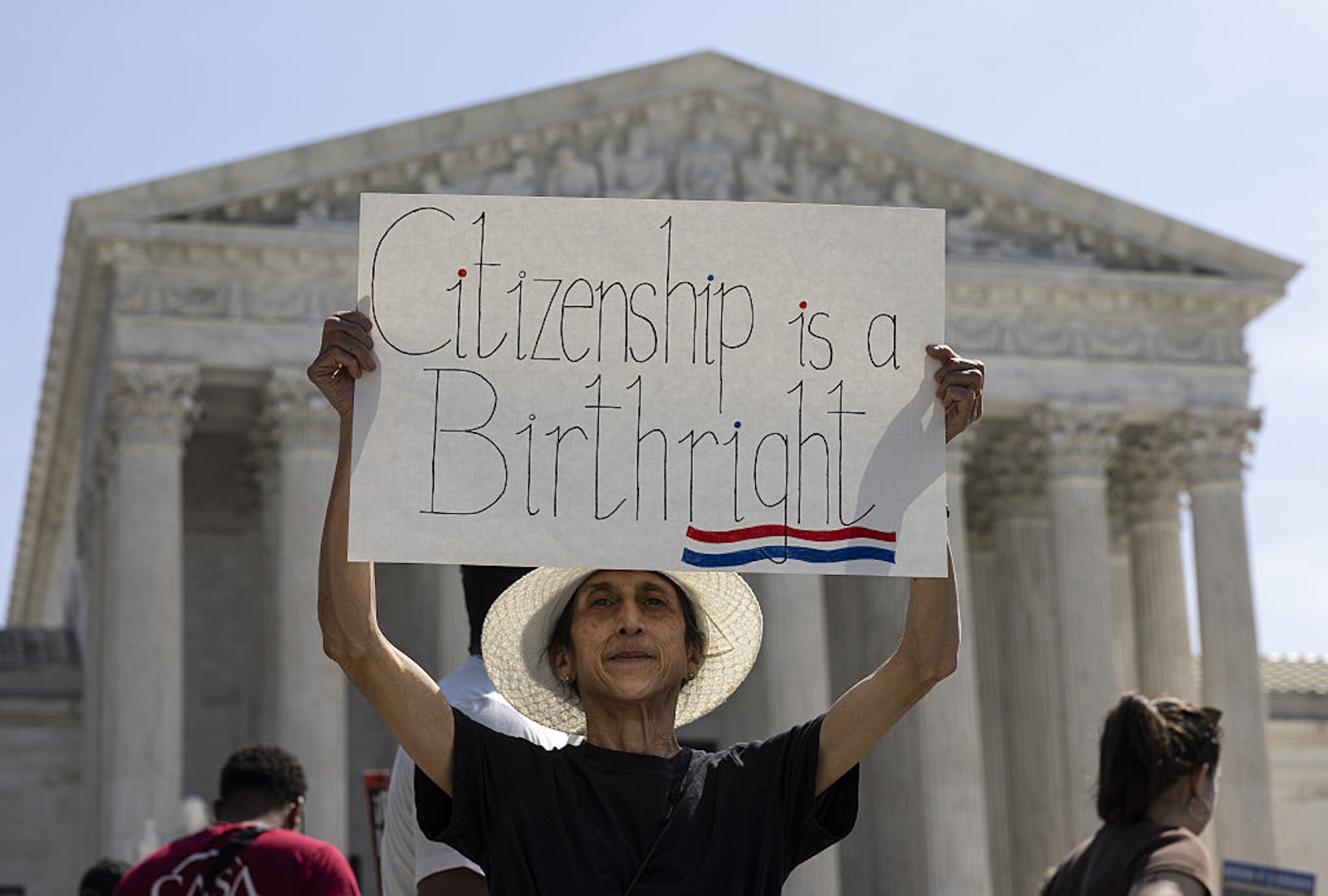

The Supreme Court on Tuesday struck down President Donald Trump‘s executive order limiting birthright citizenship, closing out the current session by broadly upholding the 14th Amendment’s citizenship clause.
The justices ruled 6-3 in favor of the respondents, with Justice Brett Kavanaugh concurring in the judgment and dissenting in part, and Justices Samuel Alito, Neil Gorsuch and Clarence Thomas dissenting fully. The decision affirmed the District Court for the District of New Hampshire’s 2025 ruling blocking the executive order from taking effect and determined that children born in the United States to parents unlawfully or temporarily present in the country are citizens at birth.
“Citizenship, then and now, was the right to have rights — to freely participate in our political community. The Framers of the 14th Amendment extended that promise to ‘every free-born person in this land,'” Chief Justice John Roberts wrote in the majority opinion. “We keep that promise today.”
Trump responded optimistically to the ruling in a post to his social network Truth Social Tuesday, recognizing the decision as “too bad for our country” and calling on Congress to propose legislation to end birthright citizenship.
“No long and unwieldy constitutional amendment is necessary! Congress should start TODAY to work on ending expensive and unfair to our country, birthright citizenship,” he wrote. “They will have my complete and total support!”
Start your day with essential news from Salon.
Sign up for our free morning newsletter, Crash Course.
In a post shared before the ruling Tuesday, the president also shared an article from Just the News titled, “Trump’s efforts to reverse birthright citizenship may succeed with or without SCOTUS.”
Though the decision dealt a blow to the president, the Supreme Court has not completely upended his strict immigration policy agenda. The ruling comes on the heels of three immigration-related decisions last week that favored the Trump administration’s pursuit of tighter restrictions on legal immigration pathways.
CORRECTION: This article has been updated to more accurately reflect the nuances of how the Supreme Court justices voted.
