


In the nail-biting climactic sequence of Brian De Palma’s 1981 thriller, “Blow Out,” Jack (John Travolta), a sound designer for low-budget, softcore slasher movies, races through the streets of Philadelphia, where a parade has gathered to celebrate 135 years since the Liberty Bell was last rung. He pushes past marching bands with their instruments held high and parade spectators decked out in red, white and blue regalia. The music and cheers blur into a low hum, drowned out by the deafening sound of a ticking clock only Jack can hear. A handful of precious seconds stand between justice and another innocent person falling victim to America’s rot. What a staggering picture: this single speck of righteousness, clawing through a sea of blind patriotism, praying that, this time, morality will prevail.
But it doesn’t. It can’t. De Palma may be best known for his stylistic trademarks and penchant for perversion, but he’s also one of American cinema’s great realists. (And, admittedly, my personal favorite.) His films treat themes of voyeurism, casual criminality and sexual debauchery with as much reverence as dreams and artistic process. De Palma paints pictures that don’t conflict so much as they coexist, like two sides of a coin — purity and debauchery, the real, politically sanctioned currencies of this country — fresh from the U.S. Mint.
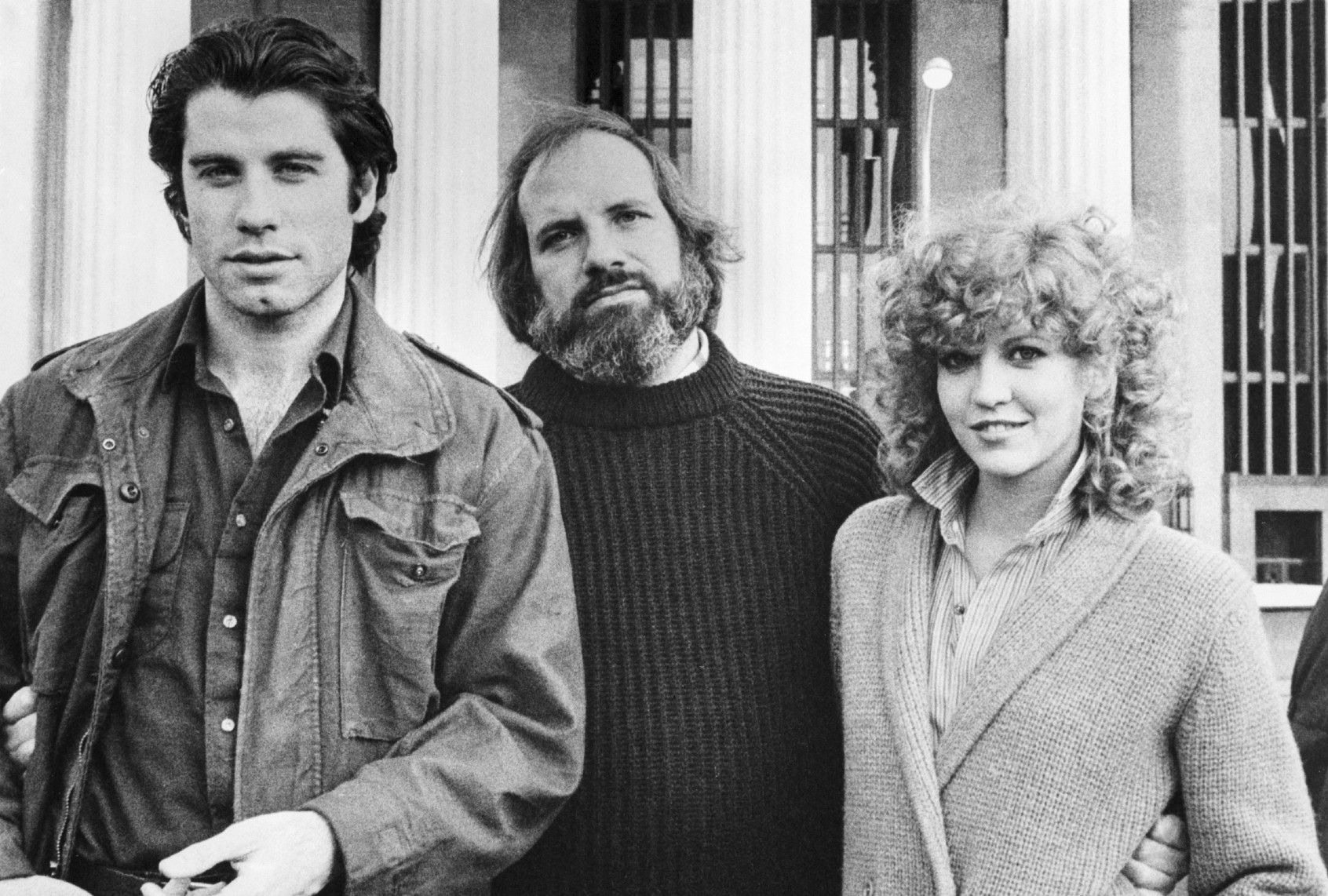
(Bettmann/Getty Images) John Travolta, Brian De Palma and Nancy Allen in “Blow Out”
American immorality is a rot that spreads quickly and kills without thought or remorse. It is the biological makeup of a country founded on slaughter. And as “Blow Out” reminds us, all it takes to be pulled into this vicious riptide is the squeal of a shot-out tire skidding against the asphalt.
Released 45 years ago this month, the anniversary of “Blow Out” coincides with a much less celebratory event: America’s semiquincentennial — or the country’s 250th birthday, if, like me, you’re easily confused by numerical multipliers. The anniversary arrives during one of America’s most hostile eras, which is significant, considering nearly every decade since the country’s founding has, at some point, been beleaguered by social or political malevolence. As much as Americans try to tell ourselves that democracy isn’t going anywhere and that the American dream of hard work and freedom can prevail, the last decade has repeatedly proven those notions antiquated. In the first six months of 2026 alone, innocent civilians were gunned down in the streets at the order of the president, the country illegally engaged in war with Iran, outright political propaganda was screened nationwide, and a once-beautiful reflecting pool turned into a bacteria-ridden mess. As my colleague Chauncey DeVega so succinctly puts it, the 250th anniversary “feels less like a celebration than mourning.”
Want more from culture than just the latest trend? The Swell highlights art made to last.
Sign up here
While “Blow Out” may not exactly be the pick-me-up Americans might look for this July 4, it’s the film that most roaringly reflects the country’s current state. As De Palma posits, this was always a place where corruption and dishonesty could flourish. But what’s remarkable is that, although the movie is a tale of political conspiracy and violent machinations, De Palma correctly asserts that these things are not exclusive to those in the highest seats of power. And at the same time, the consequences of such wickedness do not only affect their chosen targets. American immorality is a rot that spreads quickly and kills without thought or remorse. It is the biological makeup of a country founded on slaughter. And as “Blow Out” reminds us, all it takes to be pulled into this vicious riptide is the squeal of a shot-out tire skidding against the asphalt.
Dissatisfied with the canned screams and stock sounds of howling wind used in the first cut of their new horror film, Jack’s director sends him into the field to record a new batch of effects for the movie. While recording in a park one evening, Jack picks up the sound of a car tire exploding before he sees the vehicle careen off the road and into a creek. Instinctively, he abandons his sound gear and dives into the water, rescuing a young woman named Sally (Nancy Allen) from the passenger’s side of the car, while the driver succumbs to a watery grave. At the hospital, Jack learns that the man behind the wheel was Governor George McRyan, a presidential hopeful polling extremely well in the primaries, who left a campaign event with Sally as his escort. At the hospital, McRyan’s former assistant asks Jack to leave Sally out of his reports to the press and police, suggesting that McRyan’s wife and children shouldn’t have to endure that part of the story along with his death. Though Jack is ultimately convinced, he balks at first. “That is what happened; that is the truth, right?” he asks.
Early in the film, De Palma establishes a base of references to grim incidents in American political history, from which he can work outward. The inciting accident itself closely mirrors the Chappaquiddick incident. At the same time, stills from the crash footage — sold to local papers by a local man named Manny Karp (Dennis Franz), who claims to have recorded the event by chance — are referred to as Manny’s Zapruder film. To De Palma, the sensational response to this violence is as American as the violence itself. The morning after the crash, Jack slows down his audio from the night before and hears the gunshot that blew the tire out. Realizing the accident might have actually been an assassination, Jack heads to the nearest newsstand to get a copy of Manny’s photos, pushing past rubberneckers drawn to the posted signs boasting: “Exclusive Photos of McRyan’s Death!”
As much as “Blow Out” is a film about institutional corruption, it’s also about cinema’s unique ability to reveal that very corruption to the viewer. The medium offers us ways to understand the world when reality doesn’t always make sense, which, these days, is more often than not. When Jack pairs cut-outs of Manny’s stills with his audio, he forms a crude piece of damning evidence. Seeing is believing, and with “Blow Out,” De Palma asks his audience to believe by neatly stacking layers of mystery and political intrigue, crafting a credible look at the deceit that operates in the background until it explodes into the spotlight.
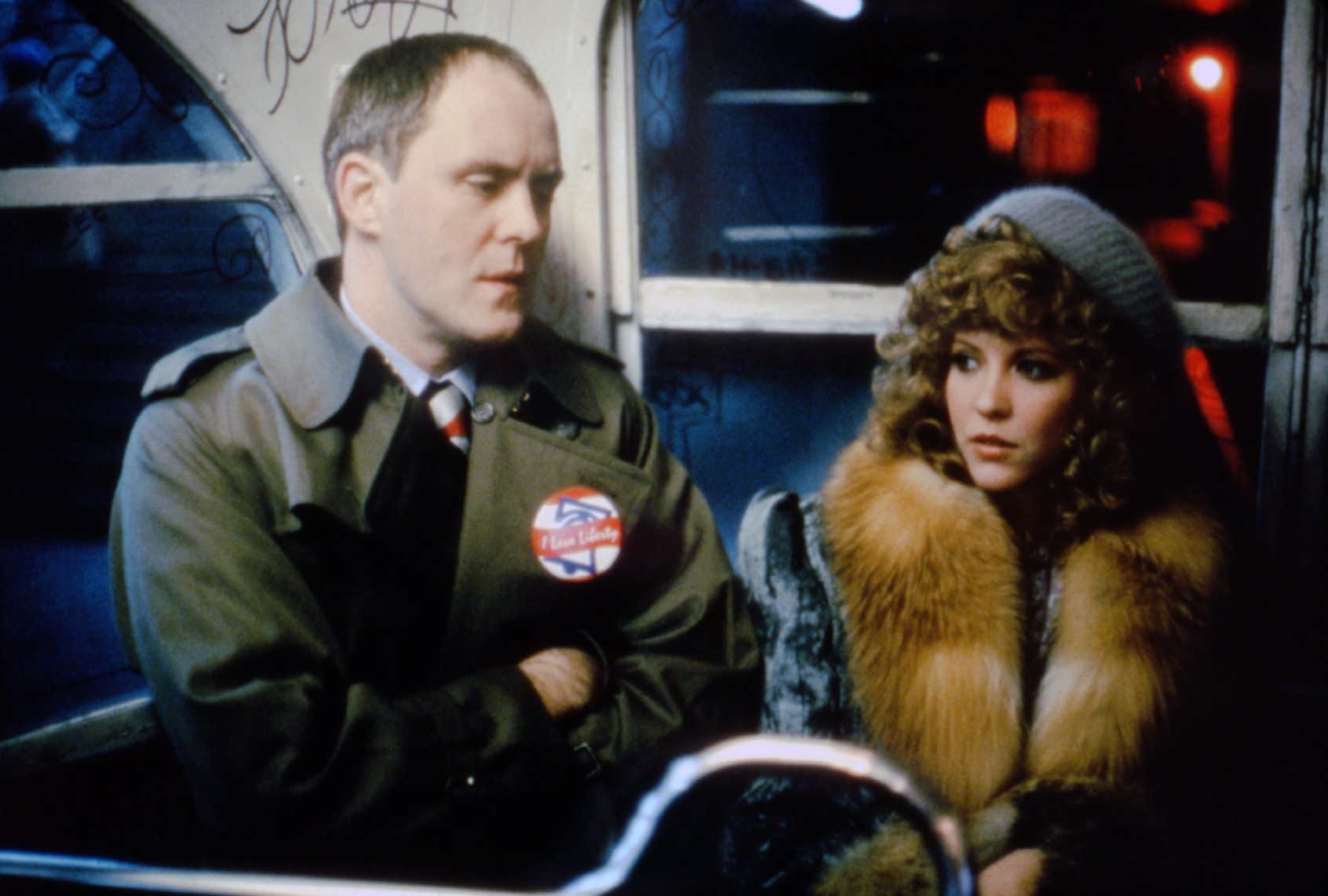
(Filmways Pictures/Sunset Boulevard/Corbis via Getty Images) John Lithgow and Nancy Allen in “Blow Out”
Jack and Sally’s fated romance is the final piece of the puzzle, the pièce de résistance that helps De Palma’s film rise above the other thrillers of its ilk. Their instant connection echoes another key principle of America’s founding: hope.
What’s frightening is how frequently those revelations happen by total accident. For every Watergate-adjacent scandal that dominates the headlines, one has to assume there are 10 more attempts at collusion just like it, happening as we speak. And in a place like the United States, where everyone is in pursuit of power, walking around with a smoking gun puts a target on your back. So when a woman who looks almost identical to Sally is strangled to death and left at a construction site, it quickly becomes apparent that there’s an attempted cover-up afoot. As it turns out, McRyan was never meant to die; he was only supposed to be photographed in a compromising position with Sally so the pictures would generate a scandal, knocking McRyan out of the race. But a rogue third party decided to shoot out the tire, and now, the success of this master plan hinges on Sally being erased and Jack’s proof being destroyed.
As the action ramps up, De Palma cleverly incorporates every narrative element of the great Hollywood film. Rapturous romance, torrid conspiracy and distinctly depraved corruption intertwine to create something that looks altogether familiar — at least to anyone who’s faced all of the triumphs and trials that come with trying to hack it in this country. There are no happy endings here, at least ones that are fortified by the American way of life. “Liberty and justice for all” is a myth that “Blow Out” debunks at every turn. Rarely do the systems put in place to help us actually serve that purpose. Instead, they encourage division, enable wrongdoing and allow bad actors to get off scot-free. By making a relatively small-time conspiracy into a grand cinematic affair, De Palma illustrates just how easily a single evil idea can spiral into catastrophe in seconds.
We need your help to stay independent.
But “Blow Out” goes one step further by bringing Jack and Sally — two unwitting parties to the same wicked plot — together. Their fated romance is the final piece of the puzzle, the pièce de résistance that helps De Palma’s film rise above the other thrillers of its ilk. Their instant connection, aided by Travolta and Allen’s electric chemistry, echoes another key principle of America’s founding: hope. Sally and Jack are bound by their shared experience, not just in the car accident but in life, too. They’ve both been searching for their place in this country, forced to take jobs they’re not exactly passionate about just to pay the bills. That mutual struggle is something they can both understand, and it’s an integral part of why their coupling works. They yearn for more, and they’ve found it in each other.
Action, suspense, and noir thrills are all great. A ferocious indictment of America? All the better. But it’s what De Palma does with these characters that makes my head spin. “Blow Out” tees up an astonishing setup and payoff, yet does so with a graceful simplicity that makes returning to the film edifying no matter how many times you’ve seen it.
Through all of the murky questions about the differences between power and glory, decency and impropriety, De Palma lands on a remarkable base of human connection that elevates “Blow Out” beyond the average thriller. And as Jack races through the streets, trying to catch up with Sally as soon as he understands the gravity of the situation they’ve found themselves in, it’s painfully clear that De Palma wants this edge-of-your-seat, heart-pounding sequence to be as edifying and unforgettable as possible. In a country where everyone is out for themselves and no one is guaranteed support, our God-given imperative is to look out for each other. Maybe it’s all we can do. And as bleak as that may be, it can be beautiful, too. As De Palma’s masterpiece reminds us, love can be just as immortalizing as film.
Read more
about movies worth watching
