

Brunch is, culturally speaking, a meal of excess.
There are bottomless mimosas and $28 omelets, towers of French toast and Bloody Marys accessorized like seafood platters. At the peak of 2010s hipster brunch, I remember passing a restaurant whose chalkboard sign perpetually announced that the soup of the day was “whisky.” There, brunch lasted from 11 a.m. until 6 p.m., by which point the distinction between brunch and simply spending the entire day at a bar had become largely academic.
It is also the meal at which I most frequently perform what I call “a pancake for the table?” The act is very simple: I ask whether anyone would like a pancake for the table. They say yes. I order one pancake. The pancake arrives, exactly as promised, and everyone gets an extra bite of something sweet.
That tiny bit of superfluity is part of brunch’s appeal. Breakfast is necessary; brunch should feel as though someone has added a flourish.
That feeling can be strangely difficult to recreate at home. Even as someone who works in food, my first meal of the day tends to veer utilitarian, including on weekends, when I may not eat it until 10 or 11. Rice and eggs. A store-bought breakfast burrito. A good smoothie. All perfectly satisfying, but not exactly the sort of meal that makes you consider ordering a pancake for the bedroom.
I’m a firm believer that entertaining at home should not attempt to recreate a restaurant experience beat for beat. Dining out is one kind of pleasure; having people over is another. The useful question is not, “How do I turn my apartment into a restaurant?” It is, “What part of that hospitality do I want to borrow?”
Maybe it’s lower lighting, good hand soap in the bathroom or a beautiful bread course placed on the table before anyone has had time to wonder whether they are hungry. In the case of brunch, I think it is that feeling of having just a little too much: something savory and something sweet, a second round of coffee, one dish that seems more elaborate than the occasion strictly requires.
We need your help to stay independent.
The trick is creating that sense of abundance without requiring too much of yourself during your limited weekend downtime. We are not looking for a $76 grocery bill for a single meal, a sink full of mixing bowls or several hours spent laminating and proofing dough before anyone else wakes up.
The answer is frozen puff pastry, one of life’s still-affordable little luxuries.
For about $6, a box gives you two buttery sheets of possibility: enough to make crisp, savory egg tarts for the main course — and a small sweet course to follow. Add a cold, slushy coffee drink and suddenly breakfast at home begins to feel like brunch. Just with no reservations, no bottomless anything and, ideally, very few dishes.
Frozen puff pastry is something of a foodie darling, but deservedly so. Its appeal lies in the lightness and butteriness created through lamination, a process I love for its inherent culinary alchemy: You mean that repeatedly folding layers of dough around slabs of butter eventually produces all that airiness, height and crisp, shattering drama? Say more.
In this case, however, someone else has already done the folding. Puff pastry gives you the pleasure of that transformation (and the persuasive appearance that you have done pastry) without requiring you to get too much flour under your nails before coffee.
Want more great food writing and recipes? Sign up for Salon’s free food newsletter, The Bite.
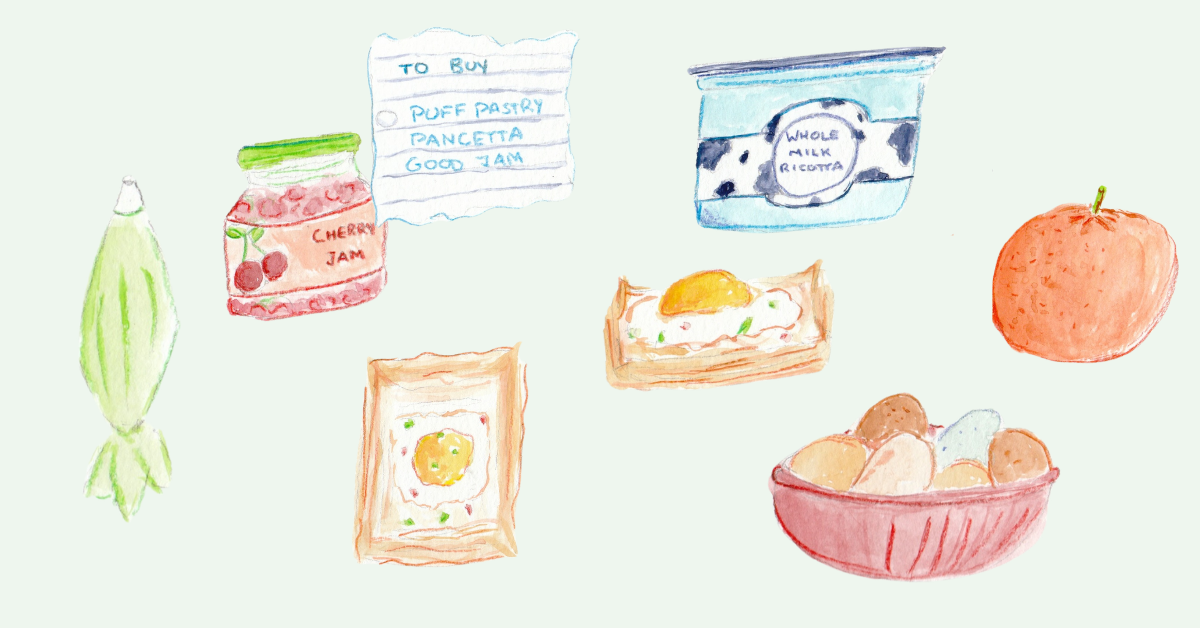
One box also creates the kind of abundance that makes brunch feel distinct from breakfast. The first sheet becomes the main course: four crisp, savory egg tarts with pancetta, pecorino and enough black pepper to evoke cacio e pepe. The second becomes dessert — or, more brunchily, “a little something sweet” —in the form of miniature jam pastries topped with citrus-whipped ricotta. It is my homemade equivalent of ordering the pancake for the table.
Puff pastry basics
Frozen puff pastry is wonderfully forgiving, provided you remember that butter prefers to stay cool. Thaw the pastry according to the package directions — ideally in the refrigerator, where it can become pliable without turning warm or sticky — and unfold it gently. Use only a light dusting of flour, cut with a sharp knife and handle the dough as little as possible. Those distinct layers of chilled dough and butter are what create puff pastry’s dramatic height, so if the sheet begins to feel limp or greasy, return it to the refrigerator for 10 to 15 minutes.
And give your oven plenty of time to preheat: Cold pastry meeting strong heat is where the magic happens.
These savory tarts are essentially egg-in-a-basket dressed for brunch. Each one has a crisp, dramatically puffed border surrounding a baked egg, with salty pancetta, sharp pecorino and enough black pepper to send the whole thing in a cacio e pepe direction. Lemon zest and chives added at the end keep all that buttery richness feeling bright.
Cut one sheet of puff pastry into four rectangles and arrange them on a parchment-lined sheet pan. Place a 3-ounce ramekin in the center of each rectangle to weigh down a well for the egg, then brush the exposed pastry lightly with egg wash. Parbake until the borders have risen and begun to turn golden. Carefully remove the ramekins and return the pastries to the oven just until the bottoms of the wells are firm enough to hold an egg.
Crack one egg into each center, then scatter with cubed pancetta, grated pecorino and plenty of black pepper. Bake until the whites are set and the yolks are cooked to your liking. Finish with finely grated lemon zest and a confetti of chopped chives.
Makes 4 tarts
Ingredients
-
1 sheet frozen puff pastry, thawed but still cold
-
5 large eggs, divided
-
2 to 3 ounces pancetta, cut into small cubes
-
1/3 cup finely grated Pecorino Romano, plus more for serving
-
Freshly ground black pepper
-
Finely grated zest of 1 lemon
-
2 tablespoons finely chopped fresh chives
-
All-purpose flour, for the work surface
Preparation
-
Heat the oven to 400°F. Line a rimmed baking sheet with parchment paper.
-
On a lightly floured surface, unfold the puff pastry and cut it into four equal rectangles. Transfer the rectangles to the prepared baking sheet.
-
Place a small oven-safe 3-ounce ramekin in the center of each rectangle, pressing down lightly to create a well. Beat 1 egg with 1 teaspoon water, then brush the exposed pastry with the egg wash. Avoid brushing the cut edges, which can prevent the layers from rising freely.
-
Refrigerate the assembled pastries for 10 minutes, or until the dough feels cold and firm.
-
Bake for 12 to 15 minutes, until the pastry borders are puffed and beginning to turn golden. Carefully remove the hot ramekins. If the centers have puffed, gently press them down with the back of a spoon.
-
Return the pastries to the oven for 3 to 5 minutes, until the bottoms of the wells feel firm and no longer look raw.
-
Crack each of the remaining 4 eggs into a separate small bowl. Carefully slide one egg yolk, followed by the white, into each pastry well. Hold back a little of the white if necessary to prevent it from overflowing.
-
Scatter the pancetta and pecorino around the eggs, then season generously with black pepper. Bake for another 7 to 10 minutes, until the egg whites are set and the yolks are cooked to your liking. The eggs will continue to firm slightly after leaving the oven.
-
Finish the tarts with lemon zest, chopped chives, additional pecorino and another turn of black pepper. Serve immediately.
Note: Very finely diced pancetta should cook through alongside the eggs. For larger or thicker cubes, briefly cook the pancetta in a skillet before adding it to the tarts.
The second sheet becomes the pastry course: crisp little cups filled with jewel-toned summer jam and crowned with swoops of citrus-whipped ricotta. They look bakery-case fancy, especially once the ricotta is piped, but the actual labor involved is satisfyingly minimal. Choose whatever farmers market flavor is calling to you—apricot, sour cherry, blackberry and red plum would all be excellent this time of year.
Cut the pastry into roughly nine 3-inch squares and tuck each one into a prepared muffin tin, leaving the corners to rise jauntily above the cups. Spoon a modest amount of jam into each center; resist overfilling, since hot jam often seemingly has ambitions of its own. Bake until the pastry is deeply puffed and golden, then allow the pastries to cool completely.
Just before serving, top each one with a generous swirl of citrus-whipped ricotta from a piping bag. You could spoon it on instead, of course, but piping the ricotta creates exactly the kind of unnecessary flourish brunch deserves.
Makes 9 pastries
Ingredients
For the pastries
-
1 sheet frozen puff pastry, thawed but still cold
-
Butter or nonstick cooking spray, for the muffin tin
-
1/3 to 1/2 cup fruit jam
-
All-purpose flour, for the work surface
For the citrus-whipped ricotta
-
1 cup whole-milk ricotta
-
2 tablespoons heavy cream
-
2 tablespoons confectioners’ sugar, or to taste
-
1 teaspoon finely grated lemon or orange zest
-
1/2 teaspoon vanilla extract
-
Pinch of kosher salt
Preparation
-
Heat the oven to 400°F. Lightly grease 9 cups of a standard muffin tin.
-
On a lightly floured surface, unfold the puff pastry and cut it into nine roughly 3-inch squares.
-
Gently press one pastry square into each prepared muffin cup, leaving the pointed corners extending above the rim. Do not worry about making them perfectly uniform; their slightly tousled edges are part of the charm.
-
Refrigerate the muffin tin for 10 minutes, or until the pastry feels cold and firm.
-
Spoon about 2 teaspoons of jam into the center of each pastry.
-
Bake for 18 to 22 minutes, rotating the tin halfway through, until the pastry is deeply puffed and golden brown.
-
Let the pastries cool in the tin for 10 minutes, then gently loosen them with a small offset spatula or butter knife. Transfer to a wire rack and cool completely.
-
Meanwhile, combine the ricotta, heavy cream, confectioners’ sugar, citrus zest, vanilla and salt in a food processor. Process for 1 to 2 minutes, scraping down the sides as needed, until smooth, airy and thick enough to hold its shape. Alternatively, whip the mixture with an electric mixer for 2 to 3 minutes.
-
Transfer the whipped ricotta to a piping bag fitted with a large round or star tip. You can also use a resealable plastic baggie with the corner snipped as a makeshift piping bag. Refrigerate until ready to serve.
-
Just before serving, pipe a generous swirl of citrus-whipped ricotta onto each cooled pastry. Finish with additional citrus zest, if desired.
Note: If the ricotta seems especially wet, drain it in a fine-mesh sieve before whipping. The pastries can be baked several hours ahead, but wait to add the ricotta until shortly before serving so the pastry remains crisp.
This story originally appeared in The Bite, my weekly food newsletter for Salon. If you enjoyed it and would like more essays, recipes, technique explainers and interviews sent straight to your inbox, subscribe here.
Read more
about this topic
