
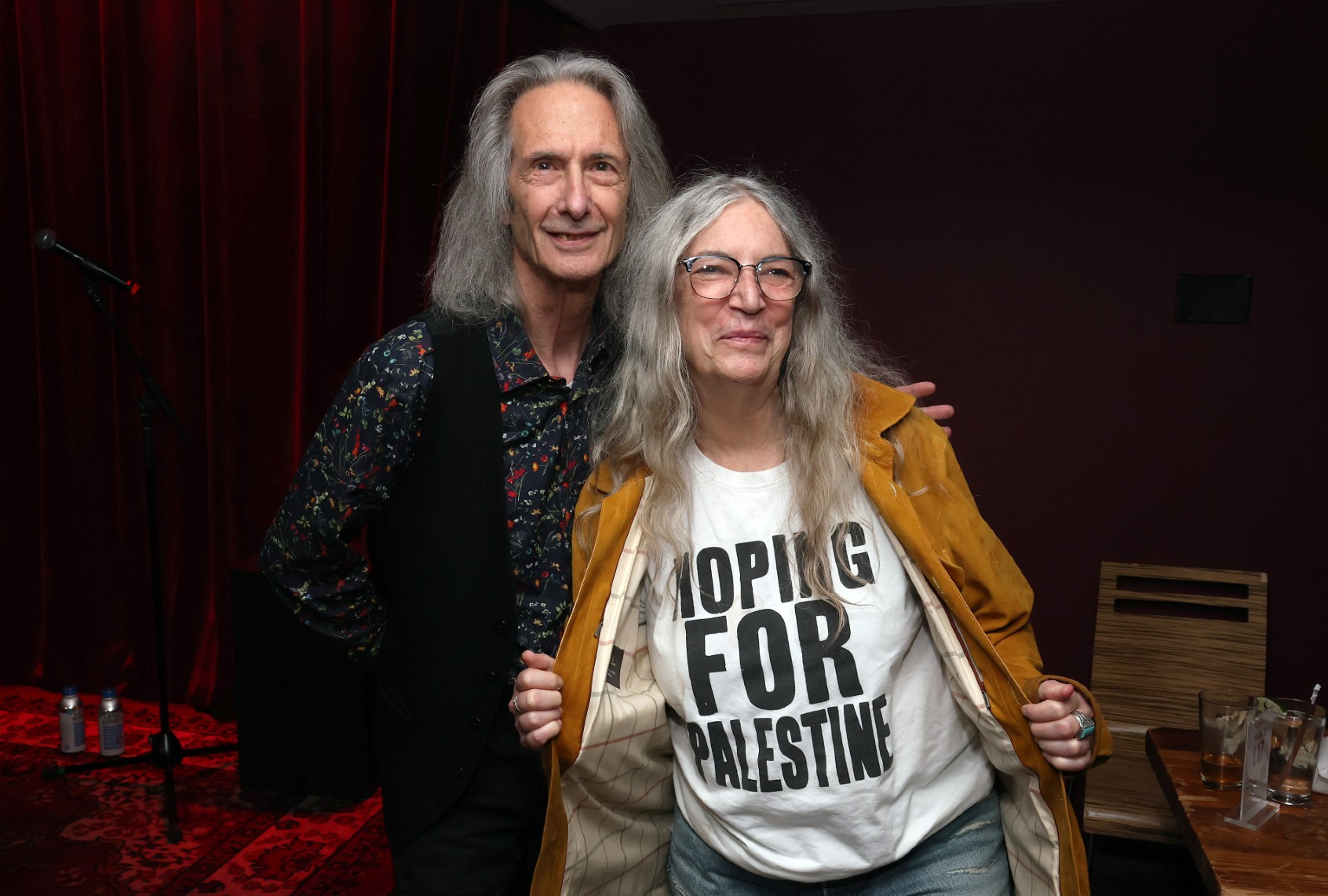

Lenny Kaye is one of rock ’n’ roll’s national treasures. He’s the guy who never has to pay for his drinks in bars from Stockholm to Shanghai, thanks to “Nuggets,” his now-essential compilation of what were obscure garage rock classics that became the foundation of punk rock and a lingua franca for the spirit of DIY. He’s the kind of guy who should have been given a Guggenheim Fellowship because of his galactic range of interests, knowledge and influences and for his input and his contributions to rock ‘n’ roll as an art form.
Lenny was at Patti’s side until she bowed out of public life and rejoined her when she returned — but he’s never sat still.
Kaye was writing about music — for publications like Rock Scene, Crawdaddy and Rolling Stone — when the discipline was still nascent. If you read his early writing, which is well worth your time to hunt down (like this review of The Rolling Stones’ “Exile On Main Street,” in 1972), he brought knowledge and curiosity and genuine enthusiasm; even if he didn’t like something, he still gave it his serious consideration.
It was that exact spirit of inquiry, within an article about the history of the doo-wop revival, that caught the attention of another doo-wop aficionado from South Jersey. She tracked him down and they became friends, hanging out and listening to music. One night, she asked him if he thought he could make a guitar sound like a car crash for an upcoming poetry reading she was doing, and that’s how Kaye joined forces with Patti Smith.
Lenny was at Patti’s side until she bowed out of public life and rejoined her when she returned — but he’s never sat still. Across the years, he put together a band (The Lenny Kaye Connection), accompanied Jim Carroll as he tried to work out his rock ‘n’ roll form, wrote Waylon Jennings’ biography, produced Suzanne Vega’s first two solo albums (among others), has a country and western alter ego, wrote introductions and liner notes and seemingly offered and participated in hundreds of other contributions across the decades. Lenny Kaye was the kind of cool, level-headed rock ‘n’ roll maven who was both important to and part of our history. His openness and curiosity — still, turning 80 later this year! — makes him the music fan’s music fan.
The only thing Lenny Kaye somehow hadn’t done was release a solo record, which he rectified in July of 2026 with the release of “Goin’ Local,” out on Yep Roc on July 17. “Goin’ Local” is a collection of deliberate compositions across a range of styles, whether straight-ahead rock ‘n’ roll (the title track), ballads (“This Love,” “Let’s Make A Memory”), folk rock (“The Things You Leave Behind”) and sweet ditties (“World Book Night,” “Pennsylvania Girls”) that might seem light until you find yourself humming them later after only listening to them once. There are bulletproof pop melodies, gentle riffs, solid construction, and engaging stories. And that’s the result of a formidable quantity of skills acquired over half a century immersed in the rock ‘n’ roll trenches, whether as a listener, critic, producer, or active participant.
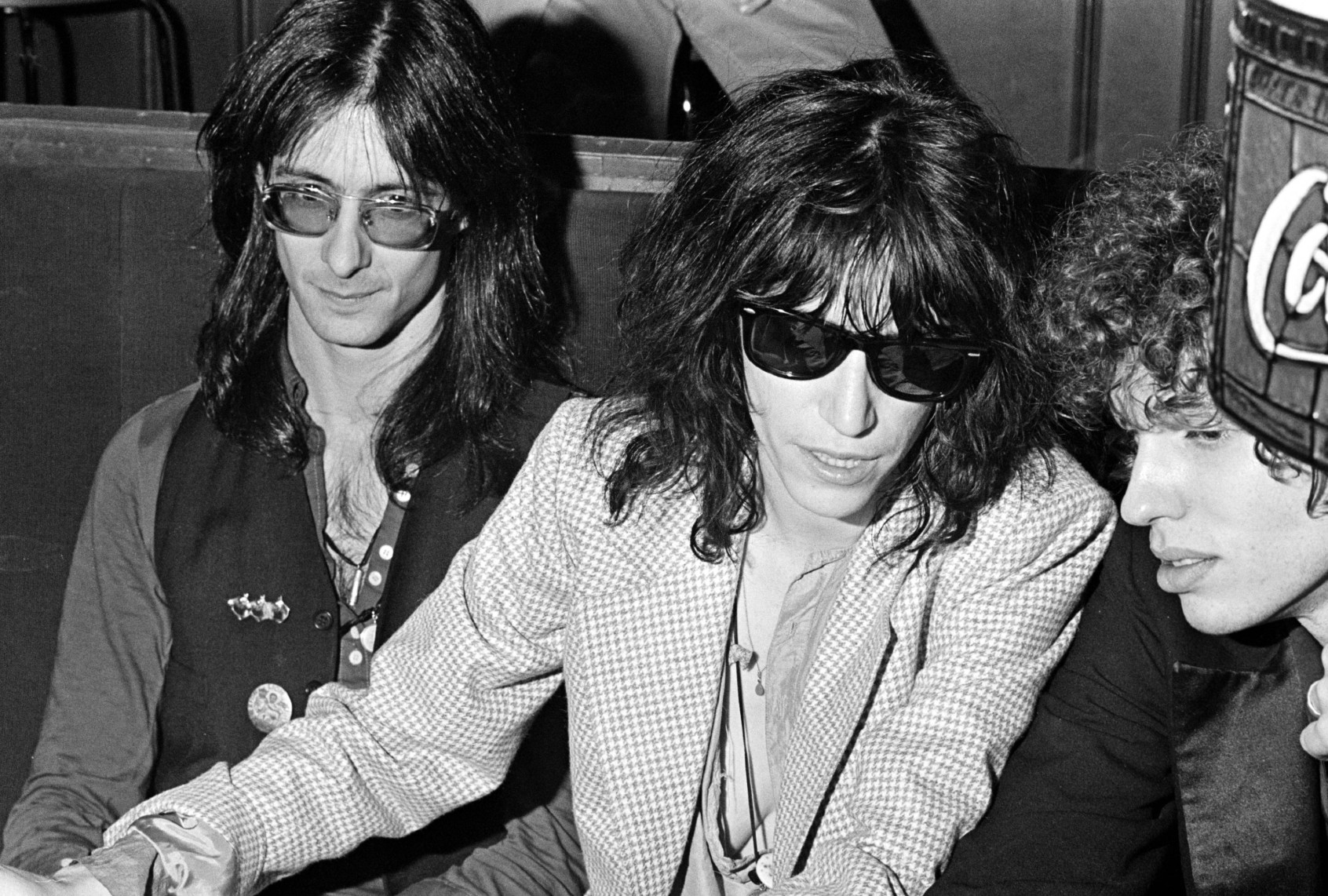
(Jorgen Angel/Redferns/Getty Images) Patti Smith poses with Lenny Kaye (left) and Richard Sohl (right) from the Patti Smith Group
“Goin’ Local” was assembled both from songs he started 15 years ago with friend and bandmate Tony Shanahan (who has a co-production credit and also plays on half the tracks), and another half dozen that were written over the last few years. “I don’t write a lot of songs,” Kaye told Salon, “I believe a song has to need to be written, if only for one to figure out a situation or to understand the dynamic of a relationship, or something occurs to me that needs framing as if in a picture. So if I write one or two songs a year, I’m happy with that, and I bring them to fruition. But I just continue to sit there with the guitar, and come up with something that is meaningful to me and hopefully, whoever listens.”
Lenny Kaye was the kind of cool, level-headed rock ‘n’ roll maven who was both important to and part of our history. His openness and curiosity — still, turning 80 later this year! — makes him the music fan’s music fan.
The title track is a perfectly crunchy, rock ‘n’ roll number about haunting the East Village’s watering holes and the people you meet (and the challenges of maintaining a cross-borough relationship). Emphasizing the ‘local’ point, the album’s cover is a black-and-white historical photograph from the early 1900s, taken from the New York Public Library’s historical collection, with Kaye imposed into the frame, standing under elevated train tracks. Look closer and you can just make out the street number of the Lyceum Concert Garden (“Follies of the Day!”), which was located on the Bowery at number 302. That’s across the street and about half a block away from where CBGB’s would find itself decades later, and also just happens to be adjacent to another landmark: “If you stand in front of CBGB and look in the 10:00 position, that’s where I lived,” Kaye confirmed.
One of the record’s highlights is a co-write with the musician who stood to Kaye’s right onstage for more than 50 years. “Solstice,” where he shares writing credits with Patti Smith, possesses the same kind of metaphysical shimmer that’s often intrinsic to a Patti Smith composition (think “Ghost Dance” or “Beneath the Southern Cross” to name two other relevant co-writes from the pair). As to how the song ended up on “Goin’ Local,” Kaye said, “As the song developed, Patti thought it certainly suited my new persona,” he told Salon, “and she urged me to sing it. I mean, she could have sung it quite well, but she urged me to take it under my wing and express it. And she felt it appealed to a certain sense of the celestial that I have in my solo persona.”
Want more from culture than just the latest trend? The Swell highlights art made to last.
Sign up here
Then there’s the delightful “World Book Night,” a song that Kaye performed live via livestream from Electric Lady with Smith during the days of the COVID-19 lockdown, on the anniversary of their first performance together at St. Marks On The Bowery in 1971. “I wrote it originally when there was a kind of strange day set aside called ‘World Book Night.’ Publishers would give books to people and they would spread out all over the city or wherever they were and just hand them out for free, at subway stations or on the beach, and I thought that was a beautiful thing,” Kaye explained. “. . . It’s just my tribute to the written word, how it feels putting those words one after another after another, and the readers out there who find them and find something of themselves within the pages of a book.”
On the note of physical media, there’s “The Things You Leave Behind,” a song that Kaye’s been playing at the occasional solo show for a while now. It’s a wistful, country-folk paean that offers both a wry yet realistic assessment of the disposition of collections someone leaves the planet. “Gonna pick up the pieces and your life and theirs/who gets what and why/we all cart around a whole lot of baggage/that would better be left/by the side of the road/books and records, old clothes and photos. . .” and of course, in Kaye’s case, guitars.
One of the record’s highlights is a co-write with the musician who stood to Kaye’s right onstage for more than 50 years. “Solstice,” where he shares writing credits with Patti Smith, possesses the same kind of metaphysical shimmer that’s often intrinsic to a Patti Smith composition.
Even at 79 — he’ll hit octogenarian status in December — Kaye confesses he hasn’t slowed down as a collector. “I haven’t cut myself off yet, but I’ve been more discerning,” he tells Salon. “That said, I always come home from being on the road with a few well-chosen records and a few well-chosen books that I will read one of these days.”
Does he still have a holy grail?
Kaye laughs. “Absolutely not. At this point my holy grails are things I have yet to discover. I found most of the things I really needed to have, but every once in a while you’re exposed to a new record, and sometimes it’s not that great to just be able to go on eBay and poke the bid. You want to find it. You want to find it in context.”
He’s on a roll now: “The other day I was in the East Village and I went past a store on E. 2nd Street called Ergot and I walked in and they had 12 Umm Kulthum 45s from the ’60s and I just put my money down, came home with them, and they’re all fascinating. I have certain genres that I always check out: I’m particularly into Jamaican gospel now, which is kind of primitive and not reggae, very illuminated, great singers. I’m into Egyptian music too; I really like the music of the Middle East. And of course then there’s the rock band that I’ve never heard of that really needs to be part of my collection.” He pauses. “I always think, like the song, about cleaning it up or at least culling it so I could get all the records off the floor and onto the shelves.”
Kaye was good friends with Tom Verlaine, the late Television guitarist whose epic collections of books are still being distributed and caused hour-long lines when they were first put up for sale, and whose music equipment is next for dissemination. Salon asked Kaye if he had any clue to the extent of his friend’s collection, or its future plans for disposition?
“No, but I’m very excited because it’s kind of a way for me to perhaps move my accumulations into the world at large,” he said. “I knew that Tom loved records, books, all of the above, and often would find the weirdest, which is of course great. I think it’s wonderful that his legacy of intellectual curiosity is being moved into the world at large so other people can be illuminated by his quest for the unusual.”
On the subject of holy grails, there’s the first recording by Lenny Kaye, “Crazy Like A Fox,” released under the nom de guerre Link Cromwell. That was the result of Kaye’s uncle Larry Kusik, who was a working film songwriter (his credits include the love themes from both “The Godfather” and “Romeo and Juliet”), trying to get in on the burgeoning protest music movement in the 1960s. He recruited his nephew to sing the vocals and although the song didn’t chart (it got re-released a decade later under the auspices of Ork Records, the label that launched in order to release the first Television single), it did give the young hopeful Kaye the conviction that he could find a way in the music business. And decades later, that’s Uncle Larry’s lyrics behind the plaintive and gorgeously intricate “Yes I Will,” the album’s closer.
So while “Goin’ Local” is technically Kaye’s first solo record, back in 1984, there was another project, the Lenny Kaye Connection, a quartet which gigged around New York City and environs. They released one album, “I’ve Got A Right,” not on a major label but instead on Giorno Poetry Systems, a record label started by downtown poet John Giorno. The Connection reunited back in 2022 for a show in honor of Kaye’s 75th birthday, but the record’s been out of print for some time. Salon asked Kaye if there were any plans to reissue it, even just on streaming.
“Well, you never know,” Kaye said. “Right now I’m kind of pointed to the future. I’ve listened to that record recently and I do songs from it. I still do ‘I’ve Got A Right’ and ‘Record Collector,’ which I often play when I appear at record stores, but at this point I’m future-oriented. I mean, it came out 42 years ago. It represents a much younger version of myself, and right now I’m more in tune with who I am today. That doesn’t mean that it might not see a reissue along with some of the bonus tracks that got left by the wayside in those days, but right now I’m really moving into the future.”
He continued, “I have studio time booked and Dennis Dyken from the Smithereens is going to come up and play on a couple of songs that I have under construction, and that to me is where my fascination is. I think the Lenny Kaye Connection has merit. It is kind of my debut solo album, even though it was within a group context. But to be honest, I’m more about the future. I mean, Patti has that great quote, ‘Progress isn’t the future, it’s keeping up with the present,’ and my present is unfolding at actually quite an unexpectedly rapid rate, so today, I’m just gonna ride that pony.”
“Patti has that great quote, ‘Progress isn’t the future, it’s keeping up with the present,’ and my present is unfolding at actually quite an unexpectedly rapid rate, so today, I’m just gonna ride that pony.” Kaye says.
In 2022, Kaye’s book “Lightning Striking: Ten Transformative Moments in Rock ‘n’ Roll” was published. It wasn’t the long-awaited memoir folks might have hoped for, but it was a sterling example of the kind of careful scholarship Kaye excels at, where he can maintain a 30,000-foot view over music history while diving deep into specifics and individual historical moments. This was Kaye’s fourth book, along with the other considerable inches of print he’s logged over the decades. Salon asked Kaye if there were any plans for more long-form writing.
“I think I mostly got it out of my system for ‘Lightning Striking,’ that seemed to cover all the bases, though I just did a foreword for a Led Zeppelin biography called ‘When Giants Walk The Earth’ by Nick Walls. So I still write. I have some vague ideas, but right now more on the musical side of my personality,” Kaye said. “You know, writing is time-consuming and very solitary and I’m enjoying making music and following that inclination in my personality. I’m not ruling out another piece of writing. But again, you go into any bookstore and there’s millions of volumes, so just like a song, it has to mean something.”
We need your help to stay independent.
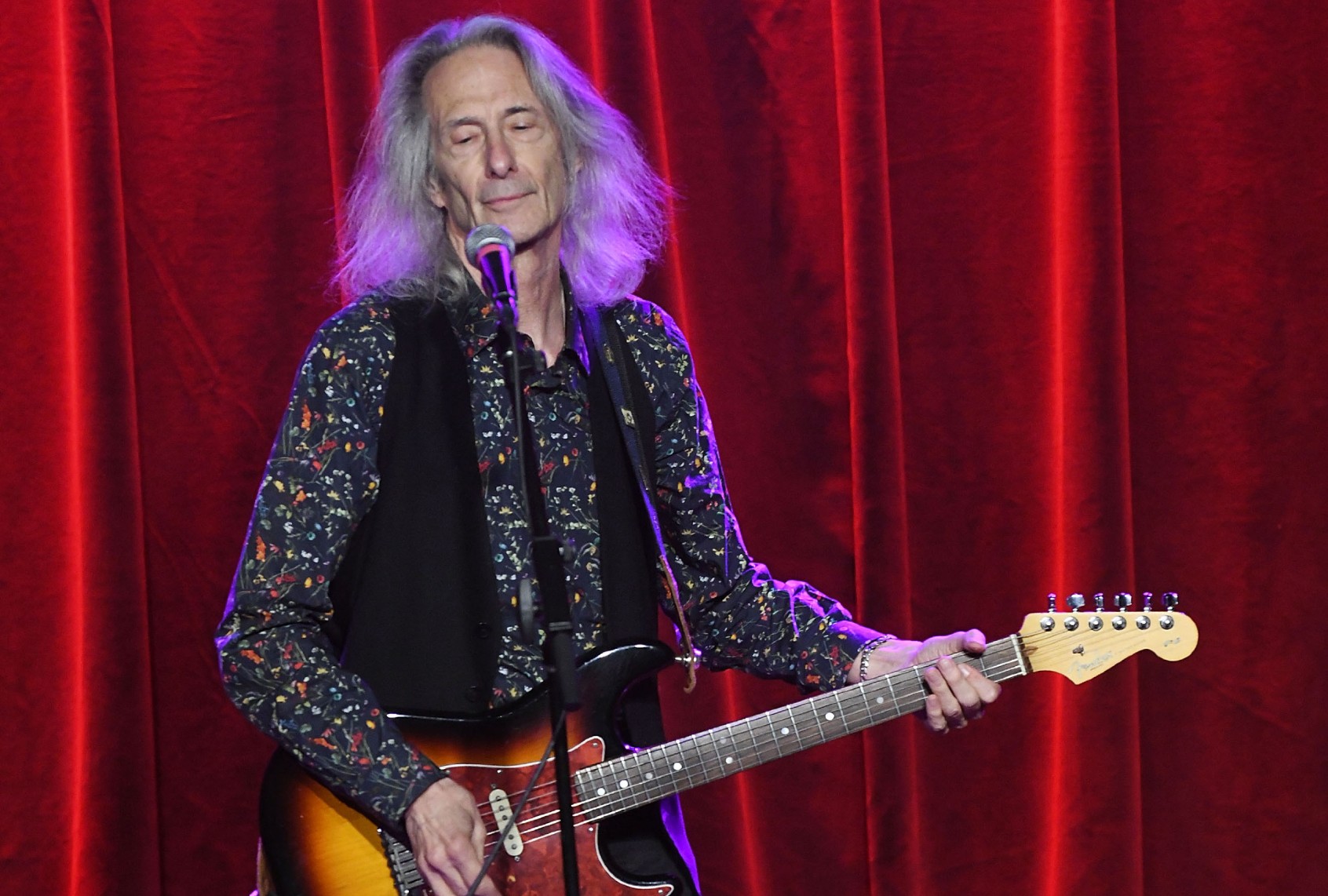
(Bobby Bank/Getty Images) Lenny Kaye
But he’s not saying no. “I would like to assemble a collection of some of my writings. But that means I have to go into the file cabinet and be shocked by some of my early attempts at explicating rock ‘n’ roll . . . when I finish this next solo record, and see the Adrift project (his “goth psych jam band, a power trio”) through to its record, perhaps I’ll feel like I’ve done that and I can return to the one word after another, after another, after another. I do believe that in writing, there is a rhythm and melody within a sentence, just like there’s a narrative arc in a guitar solo.”
Across the last 60 years or so, Kaye has toured the globe, worked with amazing musicians, and witnessed multiple incredible moments. Salon asked if he had one favorite thing that he’d gotten to do because he was Lenny Kaye.
“It’s really hard for me to say ‘favorite things,’” he explained. “My favorite thing is, I like to go and hang out, and see what the serendipity and pinball of the night shows me. I mean, I’ve done incredible things as a musician. The Dalai Lama put a scarf around my neck at Glastonbury, and I’ve also stayed up till four o’clock in the morning with Tom Clark singing songs at the Treehouse at 2A. To me, they’re all kind of a thing. But what my favorite thing to do is see what my inclination is in terms of the next sentence or the next song or the next guitar part. The fact that I can continue to do that is really my favorite thing.”
Kaye’s always had an optimistic, positive attitude, and that has not changed. “Right now I’m a solo artist, which is kind of fun. I’m up there like a folk troubadour, singing the songs, reading from the book, and making some well-timed joke,” he told Salon. “It’s portable and there’s a certain sense of being able to control the song. I do like the power of a band behind me, but I’ll see how that begins to reveal itself. I’m having a good time.”
He continued, “I feel good. I’m a new artist! That’s what cracks me up. I feel whatever I’ve done in the past, this is a new mode of presentation for me. And it feels very much at one with who I am at this moment, drawing on the experience of, at this point, sixty years of playing that guitar, and yet I feel an excitement because I’m entering uncharted territory. And that, to me, is what makes life exciting and revelatory.”
“Goin’ Local” is out now via Yep Roc and Bandcamp; you can keep up with him on YouTube and Instagram.
Read more
from music columnist Caryn Rose
