

The road to Democratic control of the Senate remains steep, but Donald Trump’s historic unpopularity, the misbegotten war in Iran and a wobbly economy have opened a slender path.
The thinking goes that if Democrats can hold every blue seat, prevail in North Carolina and defeat Sen. Susan Collins in Maine, then they must take any two from a list of red states that could well be in some semblance of play: Texas, Alaska, Ohio, Iowa or Nebraska.
Imagine that almost everything goes right. Democrats hold Georgia and New Hampshire. They claim North Carolina, vanquish Collins, and spring upsets in Texas and Alaska. But the chamber remains in GOP hands because Michigan Democrats could not reunify after a bruising primary. Kick away a winnable race in Michigan and, in this scenario, Ohio, Iowa or Nebraska also becomes a must.
So don’t lose Michigan.
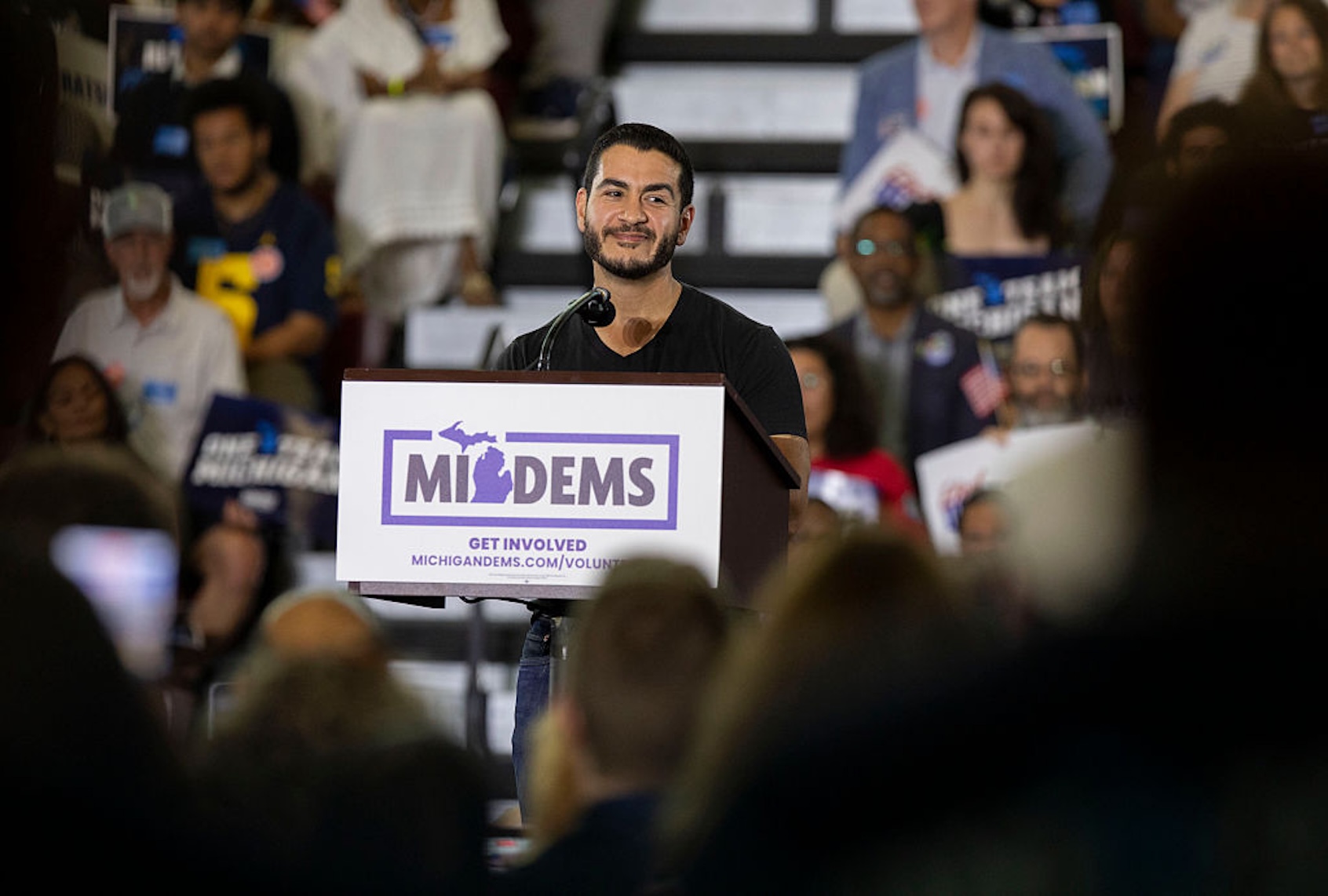
On Tuesday, Dr. Abdul El-Sayed defeated Rep. Haley Stevens to claim the Democratic nomination. All the instant analysis is true: This was a political earthquake and one of the biggest wins progressives have scored. Stevens was better funded and the candidate of the Democratic establishment. El-Sayed’s win is a sign of the importance of Gaza inside the Democratic coalition, and of shrinking support for Israel. Now, his ability to close the deal this fall will be a crucial test of progressive electability ahead of the 2028 presidential election.
The race was also closer than expected. With a small number of votes outstanding, El-Sayed’s lead is just under 16,000. He fell short of a clear majority, winning with 48.5%. And while both candidates continue to say all the right things about coming together for what will be a very close battle against an old-school conservative in former GOP Rep. Mike Rogers this fall, the tight margin, El-Sayed’s failure to secure a true majority and the nastiness of the race could make that difficult.
After all, El-Sayed recently had to plead with his backers not to take personal shots at Stevens and her accent online. The airwaves were filled with millions of dollars in negative ads, many of them determined to paint El-Sayed as unelectable in the general. He called Stevens “a suit with a large AIPAC bank account.” She retorted that “Everyone in America understands you want to blame all of your problems on Jewish Americans.” A unity breakfast might not be enough to paper all that over in a matter of weeks, especially if the super PACs that backed Stevens continue to spend millions to fan the flames against El-Sayed in the general election.
This race could have been run in a far different and more positive manner. If it had, both progressives and Democrats as a party would be in a much stronger position heading into what will likely be a very competitive general election that decides control of the chamber.
This race could have been run in a far different and more positive manner. If it had, both progressives and Democrats as a party would be in a much stronger position heading into what will likely be a very competitive general election that decides control of the chamber. The stakes are high and will determine, among other things, whether Trump can confirm Supreme Court justices over the next two years.
Imagine the difference that ranked choice voting would have had in the primary. A third Democrat, state Sen. Mallory McMorrow, won over 4% of the vote despite dropping out of the race several weeks ago. She won 61,000-plus votes, almost four times the difference between El-Sayed and Stevens. If Michigan used RCV in its primaries — like Maine, New York City and dozens of cities nationwide — the winner would have been able to claim a majority, and an easier path to unifying the party.
Some $60 million of negative ads flooded Michigan’s airwaves over this primary. Ranked choice voting wouldn’t have stopped that entirely; important, contentious issues were at stake. Outside dollars were a given. Yet RCV has been proven to lower the temperature in races like this and encourage conversation, coalition-building and respect.
Start your day with essential news from Salon.
Sign up for our free morning newsletter, Crash Course.
It’s entirely likely that an RCV race would have looked quite different. McMorrow and other challengers — forced out to provide voters with a binary, two candidate contest without spoilers — would have been able to stay in the race. Then, El-Sayed, Stevens and the others would have had every incentive to build a coalition through second choices to reach 50%. That comes from finding common ground, not from scare ads and nasty attacks. The winner of a race like that would be in far stronger shape, and ready to focus on the Republicans. Instead, El-Sayed is stuck trying to rebuild an intra-party coalition after the primary.
Instead, as McMorrow faded, party leaders and donors leaned on the state senator, a promising, charismatic politician, to exit and reduce the field to two. But this strategy didn’t produce a majority winner. It just limited choices before voters, and the winner still fell short of a majority. Democrats look less unified in a must-win race as a result.
Ranked-choice voting doesn’t fix everything that’s wrong with our politics. It’s not a silver bullet that cures polarization, settles complicated policy debates or ensures that everyone gets along. But it’s such an obviously useful tool in races like this that it makes zero sense not to use it.
We need your help to stay independent.
Win or lose, progressives and centrists will debate the meaning of this race for some time to come. That’s fine. In some form, the party is endlessly re-fighting 2016 over and over again. The more immediate issue is that primaries like this are going to continue to be contentious. Democrats would be in a better position to win races they absolutely must win if they adopted ranked choice voting in primaries like Michigan’s this. (Republican primaries would benefit from this nonpartisan tool too).
This is a lesson that Democrats absolutely must learn ahead of the 2028 presidential primaries. Then, it won’t simply be a schism between centrists and the left, but between multiple candidates within each lane and others representing different perspectives, backgrounds and parts of the country.
It will be painful for Democrats if they fail to take the Senate because they lost Michigan. But if that happens, it might not be because El-Sayed was too progressive for a swing state — but because Democrats chose their nominee through a process that bloodied and embittered everyone with no hope of consensus, and no easy path to reconciliation. In Michigan, and in other bitter primaries to come, they are going to need one.
Read more
about the 2026 midterms
