

I have spent the last several days in bridal-shower mode, which is how I recently became the sort of woman who knows where, in Louisville, one might procure emergency ribbon.
My sister Emma is getting married this fall, and almost immediately after my plane landed this week, I entered the particular logistics fugue that precedes a family party. I had been up since 4 a.m.; by late morning, I was meeting with the caterer, picking up shower cookies and thankfully noticing that several of them said “Emily” instead of “Emma,” and making what would become the first of several trips to the craft store. Two mornings in a row, I raided the Trader Joe’s flower department. By the end of it, the haul had colonized the dining room, where stems and ribbon and half-finished bouquets competed for every available flat surface. I knew exactly how much ribbon needed to be snipped for tying them.
The food, meanwhile, was Southern party food in its highest form: mini hot browns, baby quiches, chicken salad sandwiches, pimento cheese, little pieces of chicken and waffle secured together with toothpicks. There were cookies shaped like diamond rings and white dresses. Southern party food has such a hold on me because it seems almost tailor-made to be eaten while standing up and complimenting someone’s dress. Everything is tiny, rich, charming and prepared to circulate.
It was all wonderful. The shower was lovely. This is an extraordinarily joyful season of my family’s life, and I have felt almost embarrassingly happy to be in the middle of it.
I am also tired.
And sometime after the last guest had left, while I was packing up the remaining finger sandwiches, I had an abrupt and extremely specific thought:
Beans would be amazing.
More precisely, I wanted my black bean soup.
There is perhaps no food less dressed for a bridal shower. Black bean soup is very brown. It does not arrange especially prettily on a platter. If Southern party food is a sundress, this soup is the soft home sweater you change into after everyone has gone.
Want more great food writing and recipes? Sign up for Salon’s free food newsletter, The Bite.
That is, increasingly, what I mean when I think about home food: food that doesn’t have to perform.
The version I make is smoky rather than particularly spicy, thick with some beans that have nearly dissolved into the broth and others left whole. There are peppers, tomato, lots of onion, savory stock and a splash of soy sauce, which sounds slightly unexpected until you taste what it does there. I finish each bowl with scallions, a squeeze of lime and far too many salty tortilla chips. The chips crunch; the lime cuts through; underneath is this thick, dark, smoky soup that makes me want to sink into a chair and simply be there for a while.
My flight gets back to Chicago Monday evening. I already know I have enough of the ingredients waiting at home to make some version of it.
I think I’ll put a pot on, let it simmer for an hour, and go unpack and take a shower.
The funny thing is that this soup was born on another tired Monday.
A soup that started with gossip
I had finished work, then gone to the pharmacy, gone to the gym and finished the laundry. By the time I remembered that a trip to the grocery store was still theoretically part of the evening’s agenda, I had run out of whatever internal resource makes a person capable of voluntarily entering a supermarket. I didn’t particularly want takeout, either. So dinner began gradually assembling itself from what was already in the house.
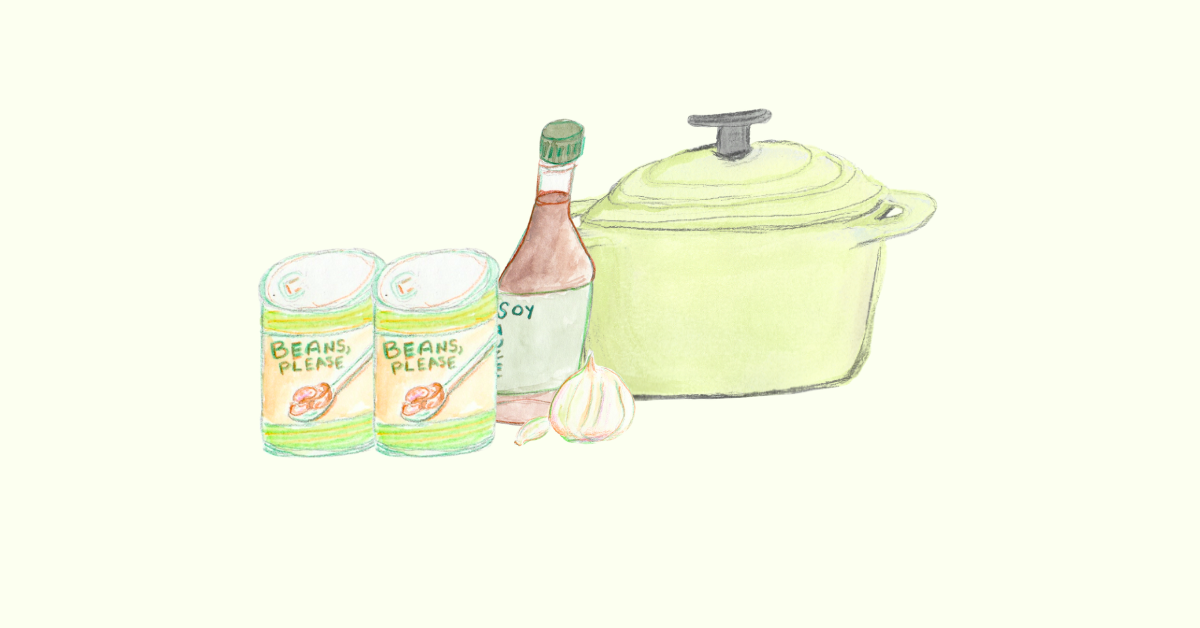
There were frozen chopped onions and peppers, two cans of black beans, bouillon cubes and a fair amount of leftover chipotle-heavy salsa from a recent breakfast-burrito order. I heated olive oil, tipped in a frankly excessive amount of onion, followed it with the peppers and garlic powder, then started adding spices until the kitchen smelled like dinner might actually happen. Cumin, chili powder, a little cayenne, black pepper. Soy sauce went in because soy sauce so often goes into things I cook when I want them to taste a little deeper and more savory than they currently do. Then came the salsa, the first can of beans and some broth.
My plan was to let the whole thing simmer for about half an hour.
Then someone called with gossip.
I love beans, but I also love gossip, and eventually the conversation became more interesting than whatever was happening on the stove. I stopped babysitting the pot. By the time I returned my attention to it, the first can of beans had begun collapsing into itself, thickening the broth as it went. This is one of my favorite things about beans and legumes: the almost improbable creaminess that can be coaxed from them with little more than heat and time.
I mashed some of the softened beans against the side of the pot with a spoon. I still had another can sitting on the counter, and because I had been winging the whole operation, I wasn’t sure whether I would need it. After tasting the soup, I decided I did — not because it needed to be much thicker, but because I wanted a little texture back. I wanted some of the beans to remain recognizably beans.
We need your help to stay independent.
So in went the second can, along with another splash of broth. I let it simmer again.
Stephen, my partner, went back for a second bowl. On his way to the kitchen, he asked whether this was a recipe I had shared yet.
I told him I had just thrown it together.
“You couldn’t tell,” he said.
And I believe him.
I’ve made the soup about five times since, ostensibly in the interest of turning the throw-together into something resembling a recipe, and what has surprised me is how little I’ve wanted to change. If I have more energy, I’ll chop a fresh onion and a couple of peppers myself. If I don’t, I remain an evangelist for the bags of pre-chopped frozen versions. I have waxed poetic about frozen onions before, but they really are one of the minor miracles of the modern kitchen: heat some oil, throw in an onion you did not have to peel, chop or clean off a cutting board, and suddenly you have the beginning of an astonishing number of dinners. Frozen peppers deserve similar respect.
The rest of the soup has proven equally willing to meet me where I am. Fresh garlic, garlic powder or roasted garlic all work. I’ve used several kinds of smoky salsa, some purchased intentionally and others inherited from takeout bags. Canned tomatoes and a chipotle from a tin of adobo work beautifully, too. In the rare event that I am out of soy sauce, a spoonful of white miso gets me to roughly the same savory place.
There is really only one part I won’t shortcut: the hour on the stove.
Thirty minutes will make you a perfectly respectable pot of black bean soup. But an hour changes it. The onions and peppers stop announcing themselves individually. The tomato darkens and settles in. The first round of beans gives up enough of itself to turn the broth thick and creamy, while the second stays just intact enough to offer some resistance to the spoon.
The ingredient list is flexible. The hour, I’ve learned, is the recipe.
Ingredients
-
2 tablespoons olive oil
-
1 cup chopped yellow or white onion, from about 1 large onion, fresh or frozen
-
1/2 red bell pepper, chopped, fresh or frozen
-
1/2 green bell pepper, chopped, fresh or frozen
-
2 teaspoons garlic powder
-
2 teaspoons ground cumin
-
1 teaspoon chili powder
-
1/4 teaspoon cayenne pepper, or more to taste
-
Freshly ground black pepper
-
1 tablespoon soy sauce, plus more to taste
-
1 cup smoky chipotle salsa
or 1 (14- to 15-ounce) can diced tomatoes plus 1 chipotle pepper in adobo, finely chopped -
2 (15-ounce) cans black beans, drained and rinsed
-
2 1/2 to 3 cups chicken or vegetable stock, divided
-
Kosher salt, as needed
-
Chopped fresh cilantro, optional
-
Lime wedges, for serving
-
Thinly sliced scallions, for serving
-
Tortilla chips, preferably more than seems reasonable, for serving
-
Steamed white rice, optional, for serving
Directions
- Heat the olive oil in a large saucepan or Dutch oven over medium heat. Add the onion and bell peppers and cook, stirring occasionally, until very soft and fragrant, 8 to 10 minutes.
-
Add the garlic powder, cumin, chili powder, cayenne and several grinds of black pepper. Cook for about 1 minute, stirring, until the spices are fragrant. Add the soy sauce and stir to coat the vegetables.
-
Add the salsa. If using diced tomatoes and chipotle instead, add them now. Cook, stirring occasionally, until the mixture has thickened considerably and begins to leave browned bits on the bottom of the pot, about 5 to 8 minutes. Don’t rush this part: that concentration and browning help build the soup’s smoky, savory base.
-
Add one can of black beans and 2 cups of the stock, scraping the bottom of the pot to loosen all of those browned bits. Bring to a gentle simmer and cook, uncovered, for 30 minutes, stirring occasionally.
-
Remove the pot briefly from the heat. By now, the beans should be very tender and beginning to collapse into the broth. Use the back of a wooden spoon or a potato masher to mash them until the soup is thick and creamy but not completely smooth.
-
Return the pot to medium-low heat. Add the second can of black beans and 1/2 cup of the remaining stock. Simmer for another 30 minutes, adding up to another 1/2 cup stock if the soup becomes thicker than you like.
-
Taste and adjust with additional soy sauce, black pepper or salt as needed. Stir in a handful of cilantro, if using.
-
Ladle into bowls and finish with a generous squeeze of lime, sliced scallions and far too many tortilla chips. Serve with steamed white rice, if desired.
This story originally appeared in The Bite, my weekly food newsletter for Salon. If you enjoyed it and would like more essays, recipes, technique explainers and interviews sent straight to your inbox, subscribe here.
Read more
about this topic
