
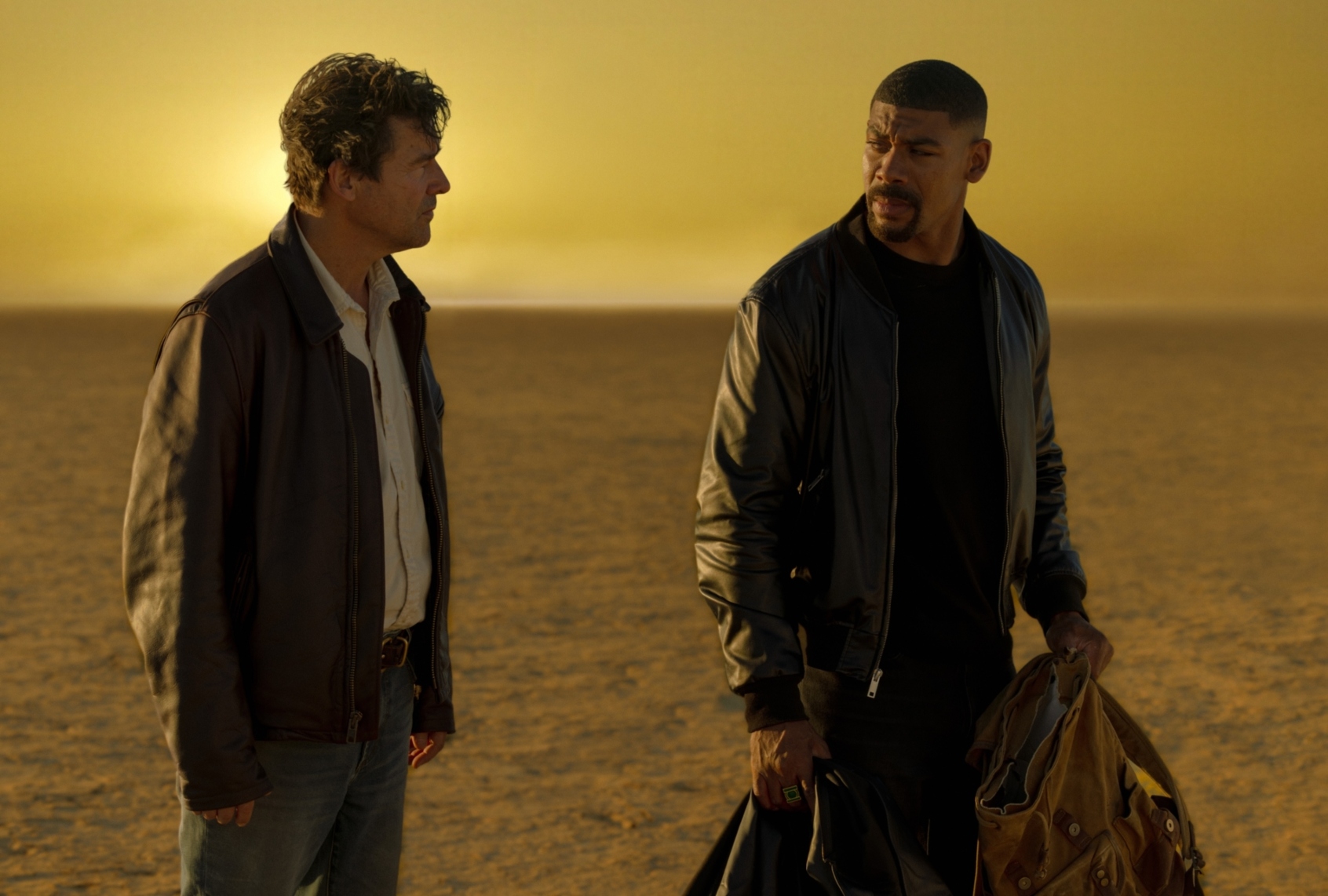

John Stewart was always going to claim his ring. That much was a given on “Lanterns” from the moment HBO debuted the first images of Aaron Pierre’s John and Kyle Chandler’s Hal Jordan – there’s that, and DC Comics’ established lore. The question was always how.
The answer, in the end, was by breaking his lifelong conditioning, contradicting one of the main qualifications of heroic worthiness established by a council of powerful beings most people aren’t even aware exists. John was taught that Green Lanterns must be fearless beings capable of focusing and wielding their will. In 2016, John did exactly that when he finally took the ring from Hal and killed an adversary he’d grown to care about.
Maneuvering Hal to a place of vulnerability required focus. Summoning the will to surrender that power he’d trained all his life to inherit, to the Guardians of the Universe ordering him to betray his friend, is a Herculean act.
But the ultimate reveal of the “Lanterns” finale, besides resolving the mystery established in the series premiere, is that the supposedly infallible Guardians are wrong to view fearlessness as the ultimate virtue. “Fear and love make people scared,” John says to his friend Kerry (Kelly Macdonald), a small-town sheriff, “and scared people can do anything.”
What a long, strange hero’s journey it’s been. In its eight episodes, “Lanterns” wrestled with an array of concepts some viewers loved and others … well, you know, fanboys and the internet.
Along with being an origin story and an alien hunt unfurling in a 2016-set timeline, “Lanterns” grounds itself in a murder mystery that defines its 2026 plot running in parallel. Only in 2026, John isn’t a Lantern, and Hal, his one-time mentor, turns up dead.
Throughout the season, “Lanterns” played upon established canon to thread a host of themes. Among them are white male entitlement versus the crushing demands of Black exceptionalism; the complicated bond linking fathers to sons; and the agonizing bravery required of mothers raising boys the world is conditioned to ostracize.
That last one is how John solves the season’s overarching mystery, settling one of the story’s defining and tormented relationships into a peaceful place. On the surface, John’s trajectory is that of a son forced to correct his father’s failure. But it’s John’s mother, Bernadette (Jasmine Cephas Jones), who always keeps him on task — even as it pains her to do it.
Only after John declines the call to be Earth’s Lantern and gets to know Kerry and her family, including her son Noah (Shea Pritchard), does he realize the purpose in breaking his programming.
 (John Johnson/HBO Max)
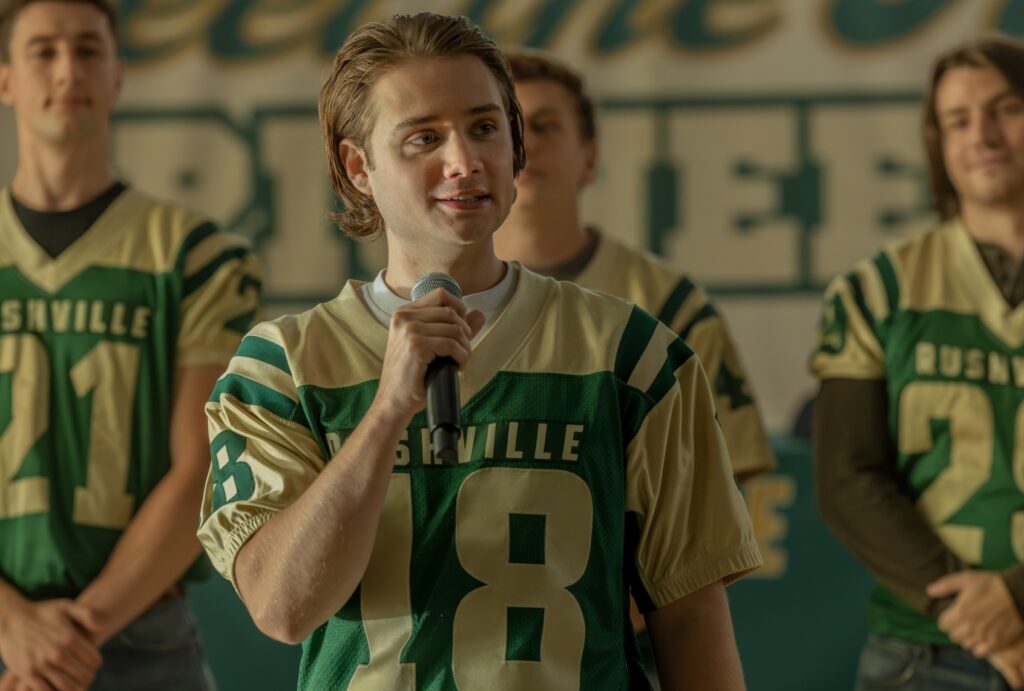
Noah has his own to overcome. He’s a star high school jock, the pride of Rushville and the grandson of Zoe (Poorna Jagannathan), who seduced John in 2016 and turned out to be the rogue extraterrestrial he and Hal were looking for: a Manhunter, synthetic beings created by the Guardians before the Lantern Corps replaced them. Zoe nearly destroys Rushville to save herself, while John almost violates his principles to seize the ring from Hal, per the Guardians’ orders, and take out Zoe.
If you watched that pivotal fifth episode and wondered why she smiled right before John put a bullet in her brain, maybe it’s because she knew she wasn’t the last of her kind. Noah is extraordinary because he’s also a Manhunter, created by the alien technology Zoe used to impregnate Kerry.
And as one exceptional son recognizes in another, the difference between how we’re born and what we become is who nurtures us.
Kerry is the reason that Noah grew up a kind, considerate young man. But he can’t help feeling the tug of his genetic programming to infiltrate the highest rungs of politics and manipulate the levers of power, he admits.
It’s only after he confesses to murdering Hal, looking visibly afraid all the while, that John realizes the only person more fearful of Noah being discovered is his mother, Kerry — the person who actually shot Hal Jordan in the face.
The fact that “Lanterns” is a conversation with and about fear — its avoidance and the lengths we go to to negate it — explains the audience’s divided response to the show. Some people will always want their superhero TV shows to feature battles and explosions every week. “Lanterns” delivered that primarily in its fifth episode, then fueled the rest with dramatic chemistry and punchy dialogue.
Its scripts also hold plenty of wisdom, including what exiled fugitive Lantern Sinestro (Ulrich Thomsen) shares after John finds him on a dead world, along with a lantern Sinestro forged for Noah that uses fear as part of its power source. The fallen Sinestro calls fear an evolutionary intelligence: “Show me a species that’s fearless, I’ll show you something on the extinction list,” he says.
“If harnessed correctly,” Sinestro adds, “fear can be the most powerful force in the universe.” To charge Hal’s nearly dead ring, then, means changing the terms of engagement with its might. It also means erasing the construct of Hal’s consciousness that has guided John since his mentor died.
This turn illuminates something important.
We need your help to stay independent.
Throughout its run, some viewers have been bewildered as to why some of the same people who loved “Peacemaker” and “The Boys,” two other superhero shows that indicted white supremacy, deemed “Lanterns” to be performatively progressive.
Basic hypocrisy is the simplest answer; it comes as easily to some of us as breathing. But what “Lanterns” does with John Stewart delineates the divide between sympathetic and empathetic storytelling. “Peacemaker” creator James Gunn and “The Boys” creator and showrunner Eric Kripke are paragons of a white guy conveying their understanding of nonwhite experiences from their perspective. Both shows’ white heroes understand that racism, and specifically Nazism, is bad.
 (John Johnson/HBO Max)
“Lanterns” is also co-created by three white guys — showrunner Chris Mundy, Damon Lindelof and Tom King — who tapped Vanessa Baden Kelly, a Black woman, to tell John Stewart’s story from a place of firsthand experience. By placing us inside John’s life, Baden Kelly vicariously produced, in some, a feeling of familiarity and, in others, discomfort. She wrote John’s story from a place of empathy; Gunn and Kripke, along with the “Lanterns” creators, can only be sympathetic.
Sympathy is, by its nature, separate from another’s discomfort, thoughts and prayers offered from a distance. Empathy can make us feel things we may not like, including reactions like fear. Hence the Christian nationalist push to brand empathy as toxic.
Want more from culture than just the latest trend? The Swell highlights art made to last.
Sign up here
Intentionally or not, then, John’s ultimate choice to let Noah live and keep Kerry’s culpability in Hal’s death a secret is a demonstration of empathy’s bravery. With Kerry’s nurturing to keep Noah in check — perhaps — John can embrace his destiny on his terms, as he tells arrogant Guy Gardner (Nathan Fillion), the Guardians’ official doofus, when John calls for him.
“Think of me as an independent contractor. No Guardians. No Corps,” he says. “You take the stars, have fun. I’ll take the dirt. I’m completely confident we won’t get in each other’s way.”
One of the last things Hal Jordan’s hologram tells John before he blinks out, possibly forever, will define Pierre’s hero moving forward, along with this series, should it earn a second season. “Don’t be afraid to be afraid,” he says.
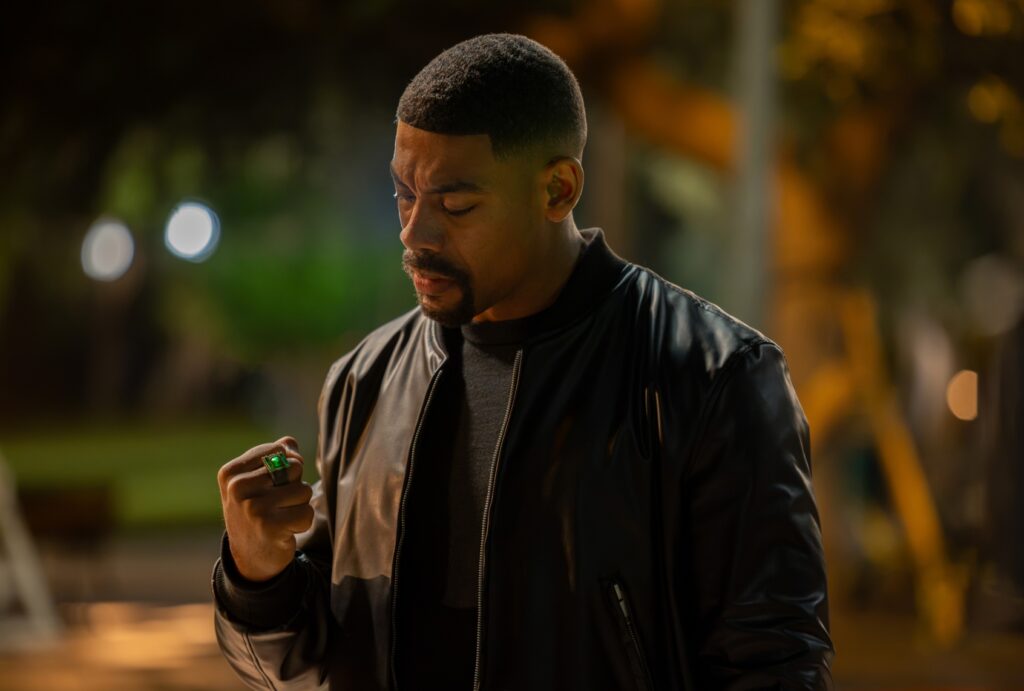
Then, as John charges his ring, he composes a new oath: “In brightest day, in the darkest night / I’ll embrace my fear. I’ll do what’s right / I choose this ring, I choose this fight / In service to this lantern’s light.”
Earth has Guy Gardner’s sympathy, but the world needs John Stewart — a hero who knows fear and was raised to understand what to do with it.
All episodes of “Lanterns” are streaming on HBO Max.
Read more
about superhero TV shows and movies
