
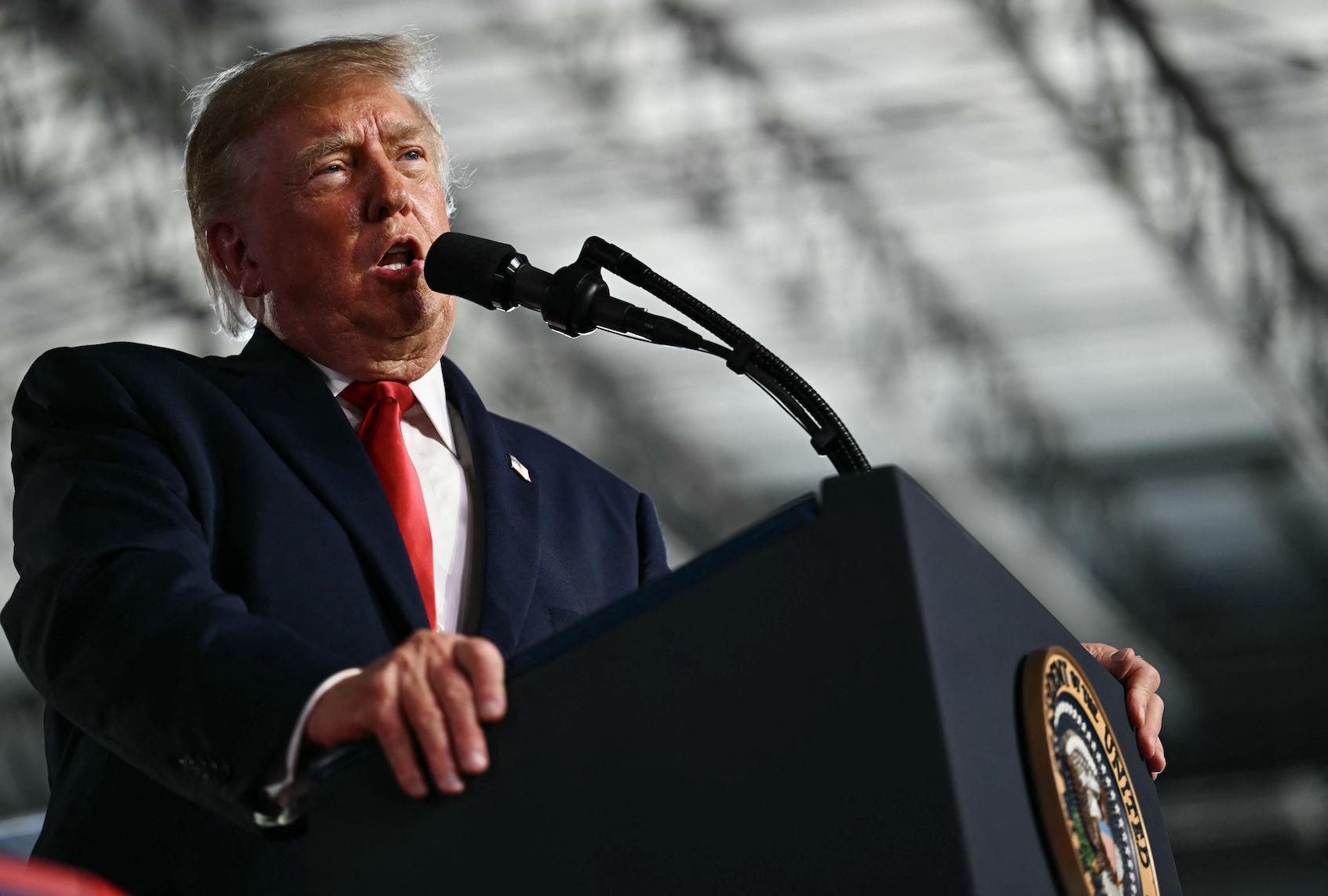

With the midterm elections a week away, President Donald Trump is pre-emptively casting doubt on the results if they are unfavorable to the Republican Party. On Tuesday, reporters asked the president if he would unconditionally accept the results in November. “I will if they’re honest elections,” Trump responded.
It’s a familiar line for Trump. As the Washington Post summarized, “In 2016, Trump said he would accept the election results ‘if I win.’ In 2020, he repeatedly declined to commit to accept the results, saying ‘We’re going to have to see what happens.’ In 2024, Trump said he would accept the results if the election was ‘fair and legal and good.’”
Trump has yet to admit he lost the 2020 election against Joe Biden, claiming he won more than 100 times, despite there being no evidence of widespread voter fraud. The president has lost at least 64 court cases challenging the results.
But some analysts are growing increasingly worried Trump might do more to annul voting results this time around, especially as the Department of Justice is getting increasingly involved in the elections. Earlier this month, the DOJ filed criminal charges against more than two dozen green card holders in California, accusing them of illegally registering to vote or casting fraudulent ballots. Last week, Trump personally requested a DOJ lawsuit against Alaska to block certification of the state’s Senate election if the Republican incumbent loses. The New York Times reported it was “a highly unusual move that signaled an effort to potentially intervene in the outcome.”
On Monday, the Trump administration threatened Washington state with legal action if it did not purge around 400 people from its voter rolls that they claim are not U.S. citizens.
Start your day with essential news from Salon.
Sign up for our free morning newsletter, Crash Course.
“The timing of this request — one week before the General Election — is no doubt intended to cast unfounded suspicion on the results,” Washington Secretary of State Steve Hobbs said in a statement on Monday. “We take our responsibility to protect voter information seriously and will only respond to requests that follow due process. We saw what happened in California and don’t want Washingtonians to be harassed.”
Even if these attempts don’t work, the overall goal may be to rattle voter confidence in the security of the U.S. elections. “This is part of the election takeover playbook that I’ve seen around the world and unfortunately in some other autocratic environments,” Michael McNulty, a former senior elections adviser for the U.S. Agency for International Development, told the New York Times. McNulty has studied elections in countries like El Salvador, Hungary and Venezuela. “Trump has essentially undermined the independence of the DOJ and it’s been weaponized,” he said.
“Time and again, the evidence shows U.S. elections are secure. State and local election officials, in communities across the country, painstakingly implement layered security to protect the integrity of elections,” Ben Hovland and Emma Hulbert write in a recent article for Center for American Progress. “Despite all this evidence, the Trump administration continues to call the security of elections into question. As the Center for American Progress has detailed, alleging voter fraud or invoking national security emergencies provide powerful pretexts for challenging election results, despite the fact that these claims are contrived to justify just such election subversion. Widespread voter fraud is a myth, and presidents have no constitutional or legal authority to take control of elections.”
