Barbara Boxer, D-Calif.

It’s not morning in California

It's an apocalyptic twilight; Barbara Boxer as the new Herbert Hoover

  • more
    • All Share Services

It's not morning in California


Adam Hanft dissects and deconstructs political advertising at Spin Season, where this originally appeared

Somebody’s been spending some time researching Google images and the bleak 1930s iconography of Dorothea Lange and Walker Evans.

Carly Fiorina’s new attack on Barbara Boxer goes for the depression jugular, with a stark series of graphic, high-contrast black-and-white shots that paint a eschatological picture of California. One photograph, depicting the liquidation of a retail store, could have been lifted from a Walker Evans retrospective at the San Francisco MOMA

Check out that opening scene. Grim-faced farmers standing on a barren field, a Grapes of Wrathian image if ever there was one. During this, the equally ominous announcer intones:

“After 28 long years of Washington partisanship, this is Barbara Boxer’s California. Trillions in reckless wasteful spending. Destroying small business. Killing jobs. Crushing hopes.”

It’s a calculated effort to move people by activating the neural circuits that exist in their brains. We all have imprints of the calamity of the Great Depression, and this spot seeks to summon them up and pin them on Boxer. As Drew Westen, who wrote “The Political Brain” puts it:

“Electoral success is about shaping and activating voters’ networks of association — bundles of thoughts, feelings, sounds, and images that become linked in the brain. Political campaigns are about activating and shaping networks through stories and images.”

Will the spot succeed? For it to work, there needs to be an existing network of imprints about Boxer that can be stimulated by the imagery we’re seeing. You need to connect with a fundamental impression to be able to amplify and harness it. I don’t think that’s the case here.

Yes, Boxer is seen as a dogmatic liberal, a big spender, and somewhat self-righteous. But the commercial pushes too far past the boundaries of Boxer’s perceptual map. Voters just won’t emotionally accept the argument that the economic wreckage they see around them is “Barbara Boxer’s California.” They recognize, on some equally deep level, that the responsibility for California’s condition is spread wide. The exaggeration doesn’t fit the crime.

By contrast, Boxer’s new spot is positively chirpy, with upbeat music and a string of her accomplishments, from veteran’s benefits to after-school centers to “fighting for new jobs.”

But the commercial is a dud. Just as Fiorina overstates Boxer’s culpability, this spot feels blithely detached from the immediate and profound crisis California is facing. What Senator couldn’t dredge up and string together a few one-off accomplishments after decades in the Senate?

Boxer’s previous spot, vilifying Fiorina for layoffs and shipping jobs offshore when she ran HP, were negative but far more effective, because they tapped into another set of neural circuits – that Fiorina is cold and calculating.

So as far as this round of spots goes, it’s Fiorina’s landscape of destruction versus Boxer’s landscape of denial. Boxer is slightly ahead in the polls, and Fiorina’s shout-out to John Steinbeck might actually widen the gap.


Adam Hanft writes and comments frequently on politics and culture for The Daily Beast, Fast Company, Huffington Post, CNN, Fox News, Politics Daily, the Barnes & Noble Review, and elsewhere. He is founder of Hanft Projects, a strategic and brand consultancy.

Are GOP midterm expectations oversold?

The "Democratic doom" narrative is meant to demoralize, but even Scott Rasmussen believes Dems will hold the Senate

  • more
    • All Share Services

Are GOP midterm expectations oversold?Sen. Barbara Boxer (D-Calif.) and Kentucky Senate candidate Jack Conway.

Creating the universal premonition of Democratic doom is always among the most useful elements of Republican strategy. A broad feeling of foreboding demoralizes the party base, repels independent voters who prefer the winning side, and strikes emotional chords that are at least as important in electoral behavior as ideologies and issues. So Republican leaders and pundits regularly issue outlandish predictions of crushing victory, echoed across the media spectrum until they become self-fulfilling.

This year’s real conditions for Democrats are certainly threatening, but there are indications that the impending repudiation will not be as devastating as suggested by the current narrative. Whatever ultimately happens in the House, where a Republican takeover appears likely if not inevitable, the Senate will probably remain under Democratic control — despite enormous spending by “independent” groups such as the Club for Growth, the voice of Wall Street conservatives; American Crossroads, the Karl Rove outfit; and the Chamber of Commerce.

At least that is the view of Scott Rasmussen, the pollster whose survey techniques and conservative predilections have often provoked suspicions of Republican bias in his results. As of last Friday, Rasmussen’s latest “Midterm Election Update” said that “a Republican takeover of the Senate appears unlikely,” with Democrats predicted to hold at least 51 seats, Republicans at least 45, and four races (in Nevada, Colorado, Wisconsin and Illinois) rated as tossups. Today Rasmussen marginally revised that estimate by moving West Virginia into the “Toss-up” column when a new poll showed popular Democratic Gov. Joe Manchin slightly behind Republican businessman John Raese in the Senate race.

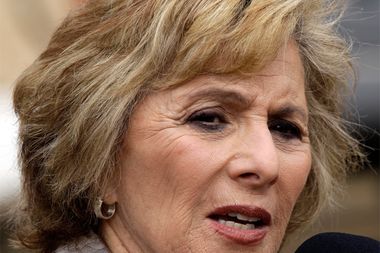
Meanwhile the revision of Republican expectations of glory is fully underway in California, where Sen. Barbara Boxer was once among the GOP’s prime targets. Now the incumbent Democrat is starting to pull ahead of Republican Carly Fiorina, despite a wave of negative ads bought by the Chamber of Commerce and other third-party opponents. (Last week Rasmussen revised its assessment of the race from Toss-Up to Lean Dem.) Even more notable is the surge of Attorney General Jerry Brown, the Democrat running for governor against former eBay CEO Meg Whitman, billionaire darling of the Republican right, whose record campaign expenditure of $120 million (and climbing) is expected to be four or five times more than that of her opponent. That massive spending imbalance, with thousands of anti-Brown commercials flooding the state’s airwaves on her behalf, has itself become a symbol of Whitman’s distance from ordinary citizens.

Other signs of life on the Democratic horizon include the surprising polls showing that Kentucky Democratic Senate nominee Jack Conway is roughly tied with Republican Rand Paul, the Tea Party’s favorite loony until the advent of Christine O’Donnell. If Conway had enough money to match the third-party expenditures on Paul’s behalf, he might even have a chance to win.

Democrats elsewhere could learn from the examples of Brown and Boxer — and even Conway — who haven’t hesitated to strike back hard or behave like winners. What those races show is that monetary advantage need not always determine outcomes. If Democrats stop ducking and cowering — and offer an aggressive “closing argument” — they may still escape the worst possible debacle in November.

Continue Reading Close

Joe Conason blogs in Salon several times a week and writes a weekly column for the New York Observer. His latest book is "It Can Happen Here: Authoritarian Peril in the Age of Bush."

Wednesday link dump: Drone doom

Our "secret" war continues, Obama antitrust failure, and Mike Castle signs on with the repealers

  • more
    • All Share Services

Alex Pareene

Alex Pareene writes about politics for Salon and is the author of "The Rude Guide to Mitt." Email him at apareene@salon.com and follow him on Twitter @pareene

Tea party, GOP, primed for November wins

Senate races are among the most hotly contested as Republicans attempt to change the Washington power dynamic

  • more
    • All Share Services

In the turbulent year of the tea party, Republican Rep. Mike Castle of Delaware set out to jangle no nerves as he ran for a Senate seat long held by Vice President Joseph Biden. It’s the way Republican strategists originally envisioned 2010, a roster of seasoned politicians pointing the party toward significant gains in the Senate.

“He brings our style of civility and independence to Washington and works to develop solutions,” is the soothing, even quaint message on the 71-year-old lawmaker’s campaign website, which shows him in a suit and tie, working alone at his desk. Experience “is hugely important,” he said in an interview.

After two terms as governor and nine as the state’s lone congressman, Castle appears better positioned than other veterans who faced a tea party-backed challenge this year. If he prevails over Christine O’Donnell on Sept. 14 — he and GOP officials have launched a fierce counterattack — he would join more than a half-dozen other veteran Republican officeholders on the ballot in Senate races.

In matters of style as well as policy and political experience, they are the polar opposite of Rand Paul of Kentucky, Sharron Angle of Nevada and Ken Buck in Colorado. Those three tapped into an anti-government sentiment, espouse politically risky positions, won primaries over establishment candidates, and now face difficult races in the fall.

No matter the blend of candidates that Republicans end up with, a persistently weak economy and voter anger add up to enough competitive races to give them at least an outside chance of winning Senate control. Already, a constellation of outside groups is spending heavily on television in Senate races, including more than $5 million this summer for two groups backed by former George W. Bush political adviser Karl Rove.

Republicans need to capture 10 seats to win a majority, and as many as a dozen held by Democrats appear competitive, as well as at least five currently in the hands of the GOP.

Ironically, as the primary season draws to a close and the fall campaign dawns, both parties try to straddle politically inconvenient facts that underscore broader trends.

Democrats are loath to concede their majority is at risk. “I don’t think there are” enough competitive races for that to happen, said Sen. Robert Menendez of New Jersey, head of the party’s Senate campaign committee. Yet the party’s strategists issue a stream of statements saying that many tea party-backed challengers in tight contests are “too extreme” and will cost the GOP its chance of gaining control.

The committee is making a quick check to see whether it has a late, low-budget opportunity in strongly Republican Alaska, where tea party-backed challenger Joe Miller defeated GOP Sen. Lisa Murkowski in a recent primary.

Senate Republican leader Mitch McConnell of Kentucky and other lawmakers in his party tried repeatedly to defeat tea party-supported challengers in Kentucky, Colorado, Florida, Nevada and elsewhere in recent months, privately expressing fears they would prove unelectable.

Now, after compiling a mixed record in the primaries, the campaign chairman, Sen. John Cornyn of Texas, says the fall is “an opportunity for Republicans, independents libertarians and disgruntled Democrats to come together around a fiscal responsibility message and one that says the government can’t grow itself out of this problem.”

There was never any doubt that GOP strategists wanted Castle on the ballot. Arguably the most moderate Republican in the House, he also was viewed as the only contender with a chance to win the seat at a time when Beau Biden, the state attorney general and son of the vice president, seemed likely to run.

When the younger Biden opted not to run, enter Chris Coons, a lawyer now in his second term as executive of the largest of the state’s three counties.

Other veteran Republicans on Senate ballots this fall include Rep. John Boozman of Arkansas, whom party officials say needed some coaxing to run. Now he leads Democratic Sen. Blanche Lincoln by significant margins in public and private polls.

Already, Democrats have tacitly written off a seat in North Dakota, where former GOP Gov. John Hoeven, initially a reluctant candidate, is favored to succeed retiring Democratic Sen. Byron Dorgan.

Former GOP Sen. Dan Coats is ahead in the polls as he tries to win back an Indiana seat he voluntarily gave up a dozen years ago.

Next door in Illinois, Republican Rep. Mark Kirk is in a tougher race with Democrat Alexi Giannoulias for the seat President Barack Obama once held. Kirk, too, was courted heavily by Cornyn and others.

Republican veterans also are on the ballot in important Midwestern races where GOP senators are retiring. In Ohio, former Rep. Rob Portman, who served in two Cabinet-level positions in the Bush administration, polls ahead of Democratic Lt. Gov. Lee Fisher and had a multimillion-dollar cash-on-hand advantage in the most recent fundraising report.

Missouri Rep. Roy Blunt, a former member of the House Republican leadership, is in a competitive contest with Democratic Secretary of State Robin Carnahan for an open seat in GOP hands.

In other races that are tight heading into the fall campaign, the political pedigree of the Republican is mixed.

In Florida, former House Speaker Marco Rubio is a rarity, a tea party favorite who is also an accomplished politician. The three-way race with Democratic Rep. Kendrick Meek and Gov. Charlie Crist, a former Republican running as an independent, is one of the most unpredictable in the country.

In Pennsylvania, Pat Toomey, a former congressman and ex-head of the conservative Club for Growth, is running against Democratic Rep. Joe Sestak. Sestak defeated Sen. Arlen Specter in the Democratic primary.

Republicans got the recruit they wanted in Washington state this summer, and Dino Rossi is challenging Democratic Sen. Patty Murray.

In Wisconsin, California and Connecticut, where veteran Democrats are on the ballot, it’s the size of a candidate’s checkbook as much as ideology that mattered keenly to Republican recruiters.

Millionaire Ron Johnson, a political novice, is challenging Democratic Sen. Russ Feingold of Wisconsin. In Connecticut, where Democratic Sen. Chris Dodd is retiring, Linda McMahon, former CEO of World Wrestling Entertainment, spent millions of her own money to win the primary and has pledged to spend millions more against Democratic Attorney General Dick Blumenthal.

In California, former Hewlett-Packard CEO Carly Fiorina is challenging three-term Democratic Sen. Barbara Boxer in the costliest campaign state in the country.

In a difficult environment, Democrats also cite opportunities to pick up a seat.

High on the list is Missouri, followed by Kentucky, where Attorney General Jack Conway is running against Paul, and the complicated three-way Florida election. In Louisiana, Democratic Rep. Charlie Melancon is challenging Republican Sen. David Vitter.

Their claims have been more muted about the Delaware race, although the vice president is expected to make at least two more appearances in the state this fall.

Coons says he successfully restored his county to financial health and is ready to do the same for the federal government.

Treading carefully, at least for now, he says Castle is a “decent and likable man” but one who votes more and more like a conservative Republican while Delaware grows increasingly Democratic.

“He has lost or forgotten the courage to stand up to the increasingly conservative bent of his party,” Coons says, pointing to the congressman’s votes against the Obama administration’s economic stimulus legislation of 2009 as well as the landmark health care bill.

On the other hand, as an outsider, Coons complains that Castle voted for the financial bailout of 2008, adding it lacked accountability.

Castle’s rebuttal skips past any political implications of his votes in Congress.

The stimulus did little beyond creating temporary construction jobs, he says in an interview, and the administration lowballed the cost estimates for the health care bill. “Most of the banking (bailout) money has been repaid with interest.”

A Republican in a Democratic state, and a longtime moderate in a conservative party under pressure from the tea party movement, Castle talks of government and civility, not politics.

“Once we are elected I think we have a responsibility to sit down and work out our differences,” he said.

——

Online:

Democratic Senatorial Campaign Committee: http://www.dscc.org/

National Republican Senatorial Committee: http://www.nrsc.org/

Continue Reading Close

Schwarzenegger: Allow same-sex marriages to resume

In a role reversal, the California governor exhorts a judge to sign off on gay weddings

  • more
    • All Share Services

California Gov. Arnold Schwarzenegger, who twice vetoed legislation that would have legalized same-sex marriage, has surprised gay rights supporters by urging a federal judge to allow gay couples to resume marrying in the state without further delay.

Lawyers for Schwarzenegger, Attorney General Jerry Brown, two gay couples and the city of San Francisco all filed legal motions Friday asking Chief U.S. District Court Judge Vaughn Walker to implement his ruling striking California’s voter-approved same-sex marriage ban as unconstitutional.

“The Administration believes the public interest is best served by permitting the court’s judgment to go into effect, thereby restoring the right of same-sex couples to marry in California,” the Republican governor’s lawyers said on his behalf. “Doing so is consistent with California’s long history of treating all people and their relationships with equal dignity and respect.”

In his 136-page decision overturning Proposition 8 Wednesday, Walker said he was ordering the state to cease enforcing the 22-month-old ban. But he agreed to suspend the order until he could review the briefs submitted Friday.

The measure’s sponsors have asked the judge to keep the ban in effect until their appeal of Walker’s ruling invalidating Proposition 8 is decided by higher courts.

They argued in court papers filed earlier this week that resuming gay marriage now would cause legal chaos if the U.S. 9th Circuit Court of Appeals or U.S. Supreme Court eventually reverse Walker’s ruling.

It was unclear when the judge would decide whether to grant a stay that would prevent marriage licenses from being issued to gay couples during the appeals process.

If he does clear the way for same-sex couples to wed, lawyers for sponsors of Proposition 8 said Friday they would seek an emergency order from the 9th Circuit to prevent that from happening.

The governor and attorney general almost always defend state laws when they are challenged, regardless of their personal views. But in this case, both Schwarzenegger and Brown refused to participate in fighting the lawsuit aimed at overturning the ban, even though they both were named as defendants.

That left the job of defending Proposition 8 to its backers, a coalition of religious and conservative groups known as Protect Marriage.

Although Schwarzenegger opposed the ban when it appeared on the November 2008 ballot and said after the election that it he hoped a court would overturn it, he officially took a neutral position in the lawsuit.

During the year it was in Walker’s courtroom, the judge several times pointedly asked the governor’s lawyer he was interested in knowing Schwarzenegger’s position on the case. His Friday motion was his boldest pronouncement on the issue.

“His support today and at other critical junctures in our struggle against this discriminatory measure goes a long way in helping us realize our ultimate dream of achieving full equality for lesbian, gay, bisexual and transgender Californians,” said Geoff Kors, executive director of Equality California, the state’s largest gay rights group.

In 2005, Schwarzenegger vetoed a bill approved by the Legislature that would have legalized same-sex marriage. At the time, California had a law passed by voters in 2000 limiting marriage to a man and a woman. The governor said in his veto message he thought it was wrong for lawmakers to overturn a popular vote. He took the same position when the Legislature passed a second gay marriage bill two years later.

In May 2008, the California Supreme Court overturned the 2000 law and same-sex couples were allowed to wed. But Proposition 8 overrode the court’s decision by amending the state Constitution.

Brown, the Democratic nominee who is seeking to replace Schwarzenegger when he is termed out of office this year, was more active than Schwarzenegger in supporting the lawsuit that led Walker to invalidate Proposition 8, submitting legal papers calling the ban unconstitutional.

He also said Friday that it’s time for gays to begin marrying again.

“While there is still the potential for limited administrative burdens should future marriages of same-sex couples be later declared invalid, these potential burdens are outweighed by this court’s conclusion, based on the overwhelming evidence, that Proposition 8 is unconstitutional,” Brown said in his legal filing.

The legal team of David Boise and Ted Orson, who filed the lawsuit on behalf of two gay couples that led to Walker’s ruling, also submitted a motion in conjunction with the city of San Francisco, another plaintiff.

They all argued that since the judge declared Proposition 8 to be illegal, gay couples should be able to marry now.

Boise and Orson said gay couples “will continue to suffer irreparable harm if Proposition 8′s irrational deprivation of their constitutional rights is prolonged.”

Santa Cruz County Clerk Gail Peelers, president of the California Association of Clerk and Elected Officials, said county agencies that issue marriage licenses will be ready to serve same-sex couples whenever they get the green light.

During the window in 2008 when same-sex marriage was legal in California, the state changed its marriage license applications to be gender-neutral so applicants only had to check boxes indicating “bride” or “groom” if they chose to.

At the same time, Peelers said local officials do not want to be in the position of being asked to issue licenses if Walker enforces his decision only to have an appeals court later impose a stay. It would be better for all involved to have the process be unambiguous, she said.

“We don’t want to issue a couple who are in love and want to get married a $75 license and then turn around a minute or a week later and say that license is no longer valid,” she said. “We don’t want anyone to be in the position of being led down that path.”

——

Associated Press Writer Lisa Elf contributed to this report.

Continue Reading Close

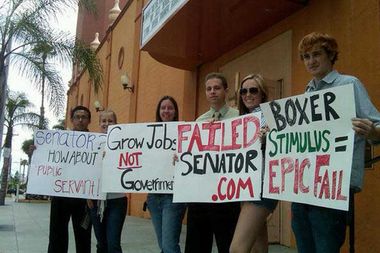
All Carly Fiorina supporters have the exact same handwriting

Various "handwritten" anti-Boxer signs across California bear a remarkable resemblance

  • more
    • All Share Services

All Carly Fiorina supporters have the exact same handwriting

Here’s a little tip for all you candidates out there, from your friendly War Room blogger: If you’re going to mass-produce handwritten-looking campaign signs for (paid?) supporters to hoist all across the state, why not try having different staffers write each one, so they don’t look identical? Also, why not just print actual professional signs? No one actually has anything against professional signs.

Also, if you’re called on it, because your campaign’s Twitter account posts pictures of people with identical signs on the same day on opposite ends of the state, as Carly Fiorina’s campaign did, you should come up with a better excuse than “Office Max and Staples carry the same paper and markers.”

Alex Pareene

Alex Pareene writes about politics for Salon and is the author of "The Rude Guide to Mitt." Email him at apareene@salon.com and follow him on Twitter @pareene

Page 1 of 8 in Barbara Boxer, D-Calif.