The Killer Inside Me

“The Trip”: Steve Coogan’s sly, hilarious road movie

Pick of the week: Two British comics on a fine-dining tour in a side-splitting, casually brilliant guy flick

  • more
    • All Share Services

Steve Coogan is the one-man apotheosis of British comedy’s translation problem. A household name in the United Kingdom, thanks largely to his TV persona as the intolerably dense and pompous chat-show host Alan Partridge, Coogan could most likely stroll through any American shopping mall in total anonymity (unless he encountered the Monty Python buffs gathered at the comics store). Sure, he played Octavius in the “Night at the Museum” comedies and Hades, god of the underworld, in “Percy Jackson & the Olympians: The Lightning Thief” — but therein lies the problem, or one of them anyway. His biggest role in an American film, I believe, has been as the muumuu-wearing drama teacher in “Hamlet 2,” an expensive and unfunny flop that everyone involved is eager to forget.

While his countrymen Russell Brand and Ricky Gervais have had their own problems rendering themselves suitable for American consumption, and arguably have dumbed themselves down a tad (or more), at least they’re recognizably the same performers that they were at home, and offer rough approximations of their existing shtick. Coogan is a total superstar of British pop culture, and a supporting player in sub-mediocre Hollywood kids’ movies. My abbreviated explanation for this, by the way, is that while Americans don’t mind being made fun of, exactly — see under Simpson, Homer — Coogan’s style of mockery is fundamentally unstable in a way that makes the Yank public uncomfortable. He’s permanently taking the piss, as the British say, and his targets include the audience, himself, the characters he’s playing, the movie or show he’s in, the medium of stardom and pretty much anything else you like.

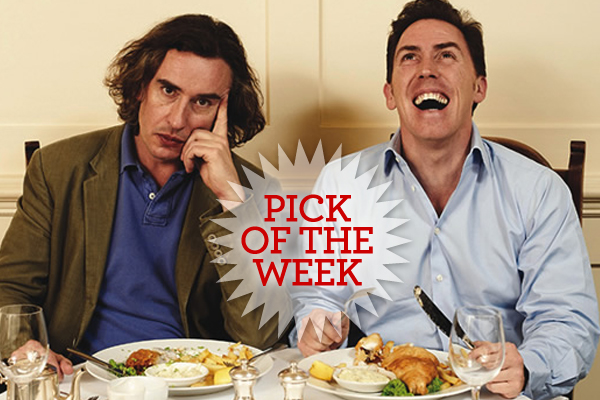
In Michael Winterbottom’s rambling and dazzlingly funny “The Trip,” which isn’t quite a dramatic film or a documentary and doesn’t belong to any other known genre either, Coogan gets to act out his American failure in a mixture of Freudian psychodrama and sympathetic magic. (I’m sure Winterbottom is aware of the legendary Roger Corman 1967 acid-sploitation flick of the same title, starring Peter Fonda and Bruce Dern, but beyond that I’m not sure what to say.) Playing himself, or at least a character called Steve Coogan, he spends much of the movie in unhappy phone conversations with his agents, turning down villain roles in second-rate movies and contemplating a seven-year commitment to an HBO medical drama. “I don’t want to do British TV!” he whines at one point — and that must have gotten a laugh on the first go-round, since “The Trip” began life as a six-episode BBC series, later edited into this theatrical film.

Coogan even has a dream in “The Trip” about a poolside idyll in Beverly Hills, where a fast-talking American agent played by Ben Stiller assures him that all the Stateside “auteurs” — Wes Anderson, P.T. Anderson, Alexander Payne, the Coens, the Wachowskis — want to work with him, before vanishing in unsatisfying, dream-image fashion: “I have to go! I have a thing! I probably won’t talk to you later!” At least that one’s better than the other dream, the one where a fan stops Coogan on the street to get his autograph and then shows him a hilarious tabloid headline, in which Coogan’s dad refers to him with the all-purpose British epithet that American publications don’t generally permit. (Coogan does indeed have a reputation in showbiz circles as a party animal, womanizer and all-around that word, and perhaps the best way to handle that is to go straight at it, as he does here.)

“The Trip” has played to packed houses at numerous film festivals, including Toronto last fall and Tribeca this spring. It’s finally reaching theatrical and VOD release this week, and if you’re a fan of British comedy in its most oblique, taking-the-piss form, it’s a movie not to miss. Furthermore, it’s not merely funny in a hilarious YouTube clip sort of way (although it’s very funny in that way too). Winterbottom (also the director of “The Killer Inside Me,” “The Road to Guantánamo” and “24 Hour Party People,” among many other things) is an audacious and intelligent filmmaker whose work always deserves to be taken seriously, and never more so than when it appears to be offhand and not serious at all. Under the guise of being nothing more than a quasi-documentary about two comedians cutting up and scarfing gourmet cuisine, “The Trip” may be the wryest and most affecting of all the recent movies about middle-aged male angst.

The ostensible premise of the original BBC series — and to some extent its actual premise, since the documentary elements are legitimate — was that Coogan and Welsh actor and stand-up comic Rob Brydon would head out on a fine-dining tour of twee country inns across the north of England, so the former could cash in on a posh journalism assignment. They’re not best friends or anything; Coogan calls Brydon only because Coogan’s American girlfriend (Margo Stilley) has bailed out and gone back to New York after a semi-breakup. In fact they know each other’s work much better than they actually know each other, and you can easily find Internet snippets of their dueling impressions: Michael Caine, most famously, but also Woody Allen, Al Pacino and various others. (Trust me: It’s all better, and funnier, in the context of the movie.)

At the risk of needlessly complicating things, I should add that Coogan and Brydon have played “themselves” before, in Winterbottom’s 2005 “Tristram Shandy: A Cock and Bull Story,” which both was and was not an attempt to adapt Laurence Sterne’s pre-postmodern 18th-century novel, and that “The Trip” is arguably a spinoff from or sequel to that movie. I think the right way to put it is that sometimes Coogan and Brydon really are playing themselves, sometimes they’re playing caricatures of themselves, and sometimes they’re playing stock British comedy figures. Brydon is the far more likable, self-effacing one, with a bit of a chip on his shoulder about being so much less famous. (And it’s somehow perfect that he’s best known for a weird little voice thing he does called “Small Man in a Box,” which is now available as an iPhone app. You really couldn’t make that up.) Coogan is of course the vainglorious ass, both the bigger star and the bigger failure, taking agents’ calls about atrocious-sounding HBO pilots and going home to an empty London apartment. It’s a brave and strange performance that purposefully smudges the distance between Steve Coogan and Alan Partridge.

Like “Tristram Shandy,” “The Trip” is both what it’s pretending to be — in this case, a story about combative old friends taking a food-and-wine vacation; a sideways Anglo remake of Payne’s “Sideways” — and an attempt to rip away the veil of fiction and expose the backstage machinery of the entertainment industry and the everyday silliness of those who live in it. I end up feeling unsure whether Winterbottom is spoofing the spate of movies about self-pitying middle-aged guys or perfecting the genre, and I further suspect there’s no difference. The casual, improvised, doesn’t-matter quality of “The Trip” can’t quite conceal how brilliant it is. This is an instant classic of British comedy, culminating in an a cappella duet of ABBA’s “The Winner Takes It All” that will leave you weeping with laughter, and maybe just weeping.

“The Trip” is now playing in New York, with more cities to follow, and will be available on-demand from many cable and satellite providers beginning June 22.

“The Killer Inside Me”: Much ado about misogyny

"The Killer Inside Me's" violence will shock and offend. But it's a crucial element of an important, flawed film

  • more
    • All Share Services

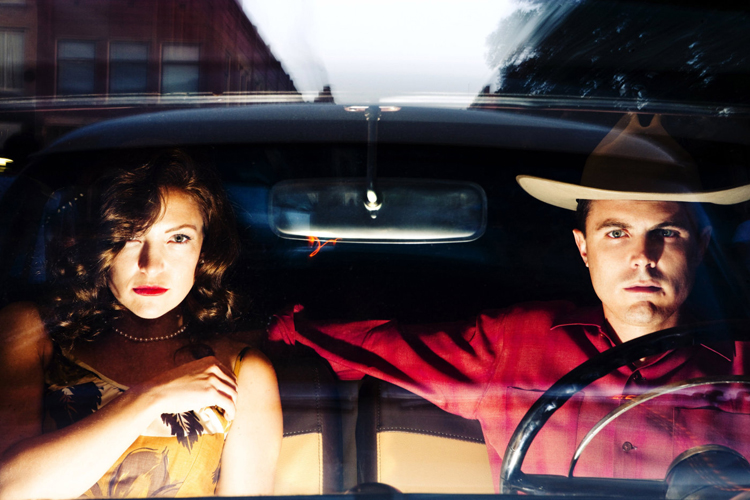
Kate Hudson and Casey Affleck in "The Killer Inside Me"

As was already clear when I wrote about the Tribeca Film Festival premiere of “The Killer Inside Me” two months ago, Michael Winterbottom’s adaptation of Jim Thompson’s legendary 1950s crime novel is likely to provoke a strong, and strongly divided, response. “The Killer Inside Me” tells the story of Lou Ford (played by Casey Affleck), who presents as an all-American deputy sheriff in small-town Texas but gradually slides into psychotic, misogynistic violence.

Since Lou narrates the Thompson novel, and film is by its nature a more detached and objective medium than fiction, there are limits to how well Winterbottom and screenwriter John Curran can capture the book’s eerie, haunting power, or Lou’s willful lack of self-knowledge. But the novel’s most notorious scene, in which Lou calmly pulls on a pair of black gloves and sets about beating his hooker girlfriend to death, all the while apologizing to her and telling her he loves her, is rendered in explosive and terrifying detail. It serves as a rupture in the film’s narrative of reality, one almost as dramatic as the moment when the film appears to break in the projector during Bergman’s “Persona.”

Up till then, Lou appears to be an intriguing, somewhat dark film-noir hero. Yeah, he’s cheating on his wife, he bends his law-enforcement role to suit his own purposes, he has an appetite for sadomasochistic sex. You may or may not find that distasteful, but it belongs to the genre. This horror-show does not. Here is this handsome, intriguing good-boy/bad-boy character, in whom we have invested at least a little prurient identification, pummeling a beautiful woman’s face into a grisly, bloody mass while murmuring, “Hold on, sweetheart. It’s almost over.” You sit there in shocked disbelief: This can’t be happening. But it is.

It’s a dreadful scene that provokes powerful emotions: Pity and terror, of course, for Joyce Lakeland (Jessica Alba, in the movie), who loves Lou passionately and yearns to make him happy and would probably still forgive him for this vile betrayal. Beyond that, though, what’s also shocking is the sense that we are implicated in the crime: It’s as if, by taking the ride with Lou through his moral ambiguity and his smoldering, dangerous sex scenes with Joyce, we’ve given him permission to push through all possible boundaries of good and evil and decency and sanity, like a demented Nietzschean Superman. You get the same feeling, in a somewhat different fashion, from reading the book. Thompson almost taunts us: OK, crime-fiction readers, you want a story about a dark-hearted killer? That’s what you paid for, right? Well, try this.

Unfortunately, “The Killer Inside Me” has already become a Rorschach blot that reflects the public’s widely varying ideas about extreme media depictions of violence, especially violence against women. I say “unfortunately” because few of the pro-or-con responses based on that perception will do justice to the work itself. If you believe, or fear, that movie violence serves as a form of pornographic wish-fulfillment for male audience members, and may in fact legitimize or enable acts of real-world violence, then of course you’ll find the movie repellent and indefensible, no matter how well it’s executed or what its creators have to say about it.

One could certainly argue that that view is simplistic and uninformed. (I’m reminded of then-Sen. Hillary Rodham Clinton’s attacks on the “Grand Theft Auto” games, which she clearly hadn’t even looked at, let alone tried to play.) At the risk of starting a long and contentious sidebar discussion, I’ll suggest that generations of sociologists have tried and failed to establish clear links between watching violence on-screen and committing violent acts in person. Leaving that issue aside, the most common rejoinder from defenders of media violence — that it plays a complicated and cathartic role for the spectator, whose focus shifts back and forth from victim to perpetrator — may miss the point of Thompson’s novel even more.

Winterbottom’s adaptation of the novel is spellbinding cinema, with all the atmosphere, technical excellence and expert pacing the British director is known for. Perhaps more important, it captures much of the nihilistic soul of Thompson’s novel, which aims to be a self-undermining critique of crime fiction, as well as a bleak biblical parable about the darkness and violence he sees at the heart of America and masculinity and perhaps human nature. In a funny way, “The Killer Inside Me” comes closer to agreeing with its critics than its defenders; it’s almost a work that argues that it ought not to be seen (or read), or at least ought not to be necessary.

I would argue, in fact, that the book and movie’s portrait of Lou Ford pre-echoes some second-wave feminist ideas about men, women and rape, such as those of Susan Brownmiller. Thompson believed that male-female sexual relations, even in their so-called normal guise, contained hints of violence, and that it didn’t take much to tip them over into terrible brutality. He definitely does not depict Lou and Joyce’s S/M sexual relationship as innocent and consensual play (as contemporary p.c. sexuality would have it), but as the mutual opening of a door that leads to much darker places. There are hints of a psychological explanation, if you want them — Lou has a history as both a sexual abuser and an abuse victim — but the boundary between normalcy and raving psychotic madness seems dangerously permeable.

As I wrote in April, to complain that “The Killer Inside Me” is full of misogynistic violence is a little like reading “Moby-Dick” and objecting to all the stuff about whaling. Violence against women is Thompson’s text and theme and central metaphor — and in case I haven’t made this clear, anyone who might find the violence in this movie gratifying or arousing is already virtually beyond the bounds of professional help.

Played by Affleck with unruffled aplomb, Deputy Lou doesn’t even carry a gun because crime in the oil boomtown of Central City, Texas, is nearly nonexistent. But beneath his ultra-normal veneer Lou has the tastes and background of a depraved European aristocrat (indeed, I suspect Lou served as an inspiration for Thomas Harris’ creation of Hannibal Lecter). He’s probably the only person in Central City who reads Freud and listens to Schubert — or whose sexual appetites suggest the Marquis de Sade or Georges Bataille.

Within the first few minutes of the film, Lou is sent to run Joyce out of town and she responds by slapping and slugging him. She’s bored and lonely and sick of sleeping with ugly guys for money; she’s looking for a reaction, and she gets one: On the verge of walking out, Lou comes back and tackles her, pulling down her panties and whipping her bare ass with his belt. The sequence is both erotic and violent, profoundly troubling and potentially arousing, designed to provoke a whiplash of emotional, psychological and libidinal responses. It sets the table for what follows: an exploration of the dividing line between sex and death that’s at least as morbid and philosophical as anything in modernist European literature. 

Depending on your point of view, Lou is either a deranged sociopath or an inevitable product of his environment, and the genius of Thompson’s novel — and of screenwriter Curran’s extraordinarily faithful adaptation — lies in the fact that interpreting what happens is entirely up to you. Lou himself does not understand why he does the vicious and bloody things he does (Affleck narrates some portions of the film in bursts of Thompsonian prose), but as the story becomes increasingly fantastical and grotesque, he gets a pretty clear idea how it’s going to end.

You can make a case for “The Killer Inside Me” as one of the most important American novels of the 20th century, but it’s essentially a work of fatalistic allegory, and as Winterbottom’s film goes along it can’t help becoming more like an ordinary crime movie. Ned Beatty, Elias Koteas and Simon Baker stand out among the cast of befuddled Central City locals — Baker plays the out-of-town lawman who first suspects that Lou’s behind the local crime wave — but Kate Hudson is a bit stranded as Lou’s doomed fiancée, Amy. She meets a similar fate to Joyce’s, late in the film, and while Winterbottom is sticking close to the book here, as elsewhere, I think he’s violating a cardinal rule of moviemaking: Show us something shocking once, and it has a didactic force. Show it again, and it becomes technical, or sickening, or both.

If the pileup of corpses and the ensuing ludicrous conflagration that ends “The Killer Inside Me” is the only conclusion Lou can imagine, Winterbottom and Curran might have thought a little harder about the fact that Lou is completely insane. In a novel, especially one with an unreliable narrator, there is no necessary distinction between fantasy and reality, and no way to verify or falsify the narrator’s account. Lou Ford longs to destroy not just himself and those around him — especially those who love him — but also the story he’s telling and those of us reading or watching it. If Winterbottom’s film were literally a bomb that blew us all up after we watched it — that blew us up because we watched it — it might fulfill all its antihero’s and original creator’s ambitions.

“The Killer Inside Me” opens June 18 in theaters in many major cities. It will also be available  on-demand via IFC In Theaters, on most cable-TV systems. 

Continue Reading Close

Is “The Killer Inside Me” too misogynist?

Jessica Alba and Casey Affleck defend Winterbottom's grueling adaptation from charges of violence against women

  • more
    • All Share Services

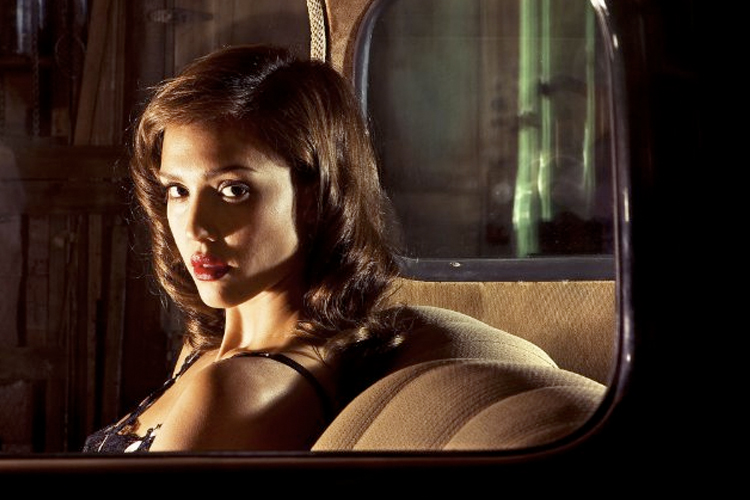
Is Jessica Alba in "The Killer Inside Me."

Long before any civilians had actually seen it, Michael Winterbottom’s film “The Killer Inside Me” — adapted from Jim Thompson’s legendary 1952 crime novel — became a blogosphere target as a purported example of Hollywood’s pornographic glorification of violence against women. After the movie’s Sundance premiere in January, a female audience member assailed Winterbottom and the festival during the post-screening Q&A: “I don’t understand how Sundance could book this movie. How dare you? How dare Sundance?”

There were reports at the time that co-star Jessica Alba, who plays a prostitute who is literally beaten to a pulp by Casey Affleck’s deputy-sheriff protagonist, had walked out of that Sundance screening in disgust. Alba later denied this, and on Tuesday night at the film’s New York premiere in the Tribeca Film Festival, she and other cast members (including Kate Hudson, whose character suffers a similar fate) mounted an articulate defense of Winterbottom and his movie.

“Believe it or not, when I read the script it was a little bit watered down from the novel,” Alba said during an onstage chat with blogger and critic Glenn Kenny. “I read the novel and found it incredibly powerful. I took it to Michael and said, ‘I want to shoot this.’”

What “this” means is a story about one of the most chilling antiheroes in fictional history. On some level, complaining that “The Killer Inside Me” is full of misogynistic violence is akin to reading “Moby-Dick” and objecting to all the stuff about whaling. Lou Ford (played brilliantly by Affleck) presents at first as a baby-faced, all-American small-town cop, who doesn’t even carry a gun because crime in Central City, Texas, is nearly nonexistent. But beneath his ultra-normal veneer Lou has the tastes and background of a depraved European aristocrat (indeed, I suspect Lou inspired Thomas Harris’ creation of Hannibal Lecter). He’s probably the only person in Central City who reads Freud and listens to Schubert — or whose sexual appetite goes quite so far into sadomasochism, and beyond.

Within the first few minutes of the film, Lou responds to being slapped and slugged by Joyce Lakeland (Alba), a hooker he’s running out of town, by pulling down her panties and whipping her bare ass with his belt. Is this safe and sane, consensual S/M play? Absolutely not. Is it what they both want? Absolutely yes. The sequence is both erotic and violent, profoundly troubling and potentially arousing, designed to provoke a whiplash of emotional, psychological and libidinal responses. It sets the table for what follows: an exploration of the boundary between Eros and Thanatos, love and annihilation, that’s at least as dark as anything found in the collected works of the Marquis de Sade and Georges Bataille.


Depending on your point of view, Lou is either a deranged sociopath or an inevitable product of his environment, and the genius of Thompson’s novel — and of screenwriter John Curran’s extraordinarily faithful adaptation — lies in the fact that interpreting what happens is entirely up to you. Lou himself does not understand why he does the vicious and bloody things he does (Affleck narrates some portions of the film in bursts of Thompsonian prose), and perhaps the best way to understand “The Killer Inside Me” is as a savage Biblical parable that might be about America, might be about masculinity and might be about human nature.

Now, the Tribeca premiere was a much different and more carefully managed event than the Sundance catastrophe. This was a relatively small audience of well-connected New Yorkers and film industry insiders, exactly the sort of people likely to pride themselves on their sophistication (I observed no walkouts). As mentioned earlier, the movie was followed by an intimate on-stage conclave featuring the actors and director, with no audience feedback invited. But make no mistake, this is an extremely tough film to watch, and it’s meant to be. Some viewers will surely react with the visceral disgust that woman expressed at Sundance, and that’s every bit as legitimate as a more detached and analytical response.

In the worst of several gruesome scenes in “The Killer Inside Me,” Lou pulls on a pair of gloves and methodically sets about beating Joyce to death with his fists. (Spoiler police: This doesn’t count, I promise.) This scene is shocking in its graphic and bloody depiction of violence, and perhaps more shocking in what it suggests: Joyce’s eagerness for unbridled rough sex has opened the door to something much worse, and has even, in some sense, invited a brutal self-destruction that corresponds to her own self-hatred.

As Jessica Alba put it: “I think she bonds with him and encourages him to release his inner darkness. I think she’s found her soulmate, her guy, and in some way she knows how it’s going to end.”

Worst of all, perhaps, is the way Lou keeps telling her that he loves her and that he’s sorry, and then keeps on hitting her. “Hold on, sweetheart,” he tells her, in a tender lover’s voice. “It’s almost over.” He gets worked up through physical exertion, but seems emotionally calm and untroubled.

This scene raises many unmanageable and explosive questions, and it definitely does not present a politically palatable version of male-on-female brutality in an era when we have been trained to believe that sex is not violence and violence is not sex. Thompson’s view (and Winterbottom’s) is more fatalistic (and perhaps also more romantic) than that. I would even argue that the book and movie’s portrait of Lou Ford pre-echoes some second-wave feminist ideas about men, women and rape: Male-female sexual relations, even in their normal guise, contain hints of violence, and it doesn’t take much to tip them into apocalyptic darkness.

“The Killer Inside Me” will be released later this year by IFC Films, and a full review should wait until then. In the post-film discussion, Casey Affleck discussed the picture’s aims admirably. “I hope there’s room for discussion around this film, and room for people to tell us we’re being irresponsible,” he said. “But to me, irresponsible is when you have a movie where 300 people get killed by robots, and none of it matters, none of it registers. In this movie, we wanted the violence to seem real, and the victims of violence to seem real. I think we’ve been very responsible in how we approached the violence. I wouldn’t have done the movie otherwise.”

Continue Reading Close