Edward Mason

Another Massachusetts meltdown?

Elizabeth Warren's recent struggles have some Democratic operatives worried about a Martha Coakley redux

  • more
    • All Share Services

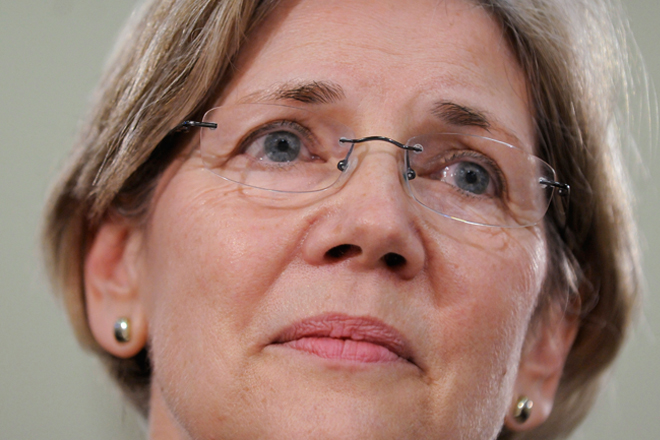
Another Massachusetts meltdown?Elizabeth Warren (Credit: Reuters/Jonathan Ernst)

The story about Elizabeth Warren’s Native American heritage refuses to die. Today, state Republicans are calling on Harvard to investigate whether Warren used her Native American status to land her teaching post. Some Democrats, haunted by the infamous meltdown of Martha Coakley against Scott Brown two years ago, are wondering if it’s déjà vu all over again.

“The people in Washington are saying, ‘The people in Massachusetts are a bunch of fuck-ups who couldn’t run a race for dog catcher,’” said one veteran Massachusetts Democratic insider. “This is someone they handpicked, filled the coffers with millions and millions of dollars, made it their number one race, and the people who are up here running it with every resource you would ever want are getting killed.”

The Boston Herald broke the story April 27 that Harvard touted Warren’s Indian ancestry, and it’s been downhill since for the Senate hopeful. A genealogist has suggested Warren is 1/32 Native American, although the campaign has not provided documents backing her claim. Warren spoke in one interview of grandparents with “high-cheekbones.”

Joe Trippi, the prominent Democratic consultant, said the response to the initial stories raised questions in the nation’s capital about the campaign’s readiness to deal with a dangerous foe.

“There is a question about why they weren’t prepared,” Trippi said. “This happening in May is a wake-up call. They have to be ready for a much tougher fight than they envisioned.”

Warren should have expected such attacks: Brown’s chief strategist, Eric Fehrnstrom, is famous for confrontational tactics. “It’s great to be out there trying to make a case for working people, but the other side is not going to let you do that — Fehrnstrom doesn’t work that way,” Trippi said. “He’s going to try and make it into a knife fight. You have to be ready to make the process case and fight back.”

There’s a growing concern that Warren’s campaign has been too passive in its clashes with Brown, indeed that they’ve been too one-sided.

Dan Payne, a veteran Democratic consultant based in Boston, said the non-handling of the Native American question is part of a larger problem that has plagued the presumptive Democratic nominee.

“There are a finite number of weeks a candidate has to beat a popular incumbent,” Payne said. “If you spend a week on your Indian heritage and a week on tax returns, you’re not making the case against the incumbent. That’s the problem. The Warren camp has been made the incumbent and Brown has been made the challenger. It’s been a role reversal.”

Democrats don’t like to use the “C” word — Coakley. But Payne said, like Coakley, who didn’t understand she needed to shake hands outside a chilly Fenway Park, Warren doesn’t seem to know what to do with Brown.

For instance, Brown got free media showing he hit a half-court basketball shot – even though he needed several tries. The shot builds on his regular guy image, which neutralizes Warren’s arguments she stands up for the regular guy, Payne said. Yet, you never heard Warren ever smack him down.

“So far, Warren has shown an inability to deal with Brown’s use of symbols,” Payne said.

Warren’s chief strategist is Doug Rubin, who masterminded Gov. Deval Patrick’s two improbable victories – both based on positive campaigning and avoiding negative attacks. Fehrnstrom, meanwhile, gets out of bed thinking how to attack, said Payne.

Even before Warren entered the race, Fehrnstrom anonymously tweeted as Crazy Khazei, lobbing broadsides aimed at her while disguised as a loony version of another Democratic rival, Alan Khazei – until he was unmasked.

“It’s been very mean and it’s only going to get meaner,” said Michael Shea, a Democratic consultant. “They’ve raised $30 million and it’s not going toward positive ads, and it’s only just begun.”

There’s no doubt the Senate race is going to be nasty. It’s had a negative tone from Day One, when Brown – in response to a joke Warren made about him paying for college by posing nude – quipped on a radio show he was glad the 52-year-old hadn’t done the same.

The Native American story may appear an isolated one but it’s part of Brown’s strategy to craft a narrative about the first-time candidate, said Peter Ubertaccio, chairman of the department of political scientist at Stonehill College.

“You do that by raising questions about who she said she is and hold up who is in tune with average voters and is more like average voters,” Ubertaccio said.

In a statement, Warren’s campaign said:

Elizabeth has been straightforward and open about her heritage while the people who recruited her have made it clear it was because of her extraordinary skill as a teacher and a groundbreaking scholar. Scott Brown has been peddling nasty insinuations to distract from his million-dollar tax returns and multi-million dollar Wall Street fundraising. We’re getting back to the issues that really matter in this election, like how to level the playing field for middle class families.”

Democrats aren’t giving up on Warren.

Washington has tried to bolster Warren, Payne said. For instance, the president is signaling his support by appearing in an ad with Warren running on television stations statewide.

Trippi noted that while the Republicans drag out the story about her native roots, Warren’s campaign continues to show positive signs – and it’s only May.

“[Brown] scored,” Trippi said. “But she’s raising money, she has a very strong message, and the people know she’s fighting for the working people of Massachusetts.”

But Brown isn’t giving up either.

“Scott Brown takes this very seriously,” the Democratic insider cautioned. “This is control of the United States Senate. This is big stuff.”

The stimulus plan that Romney forgot

The Republican front-runner runs away from another part of his record: His $700 million jobs plans in Massachusetts

  • more
    • All Share Services

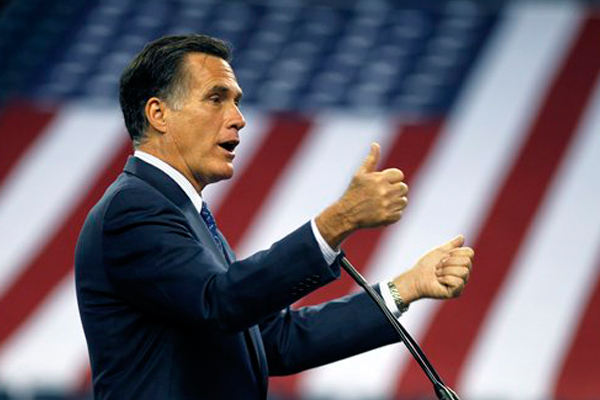
The stimulus plan that Romney forgotMitt Romney (Credit: AP)

With polls showing a tightening race, Rick Santorum leveled a broadside at rival Mitt Romney in this morning’s Wall Street Journal, suggesting the Massachusetts Republican had a “last-minute conversion” to conservative principles and was trying to distract voters from a liberal record of taxes and fee hikes as governor.

Barnstorming through Michigan, Romney returned fire by telling the Boston Globe, “It’s time he focuses on the economy … if the economy’s going to be the issue we focus on, who has the experience to actually get this economy going again?”

But Romney’s track record in Massachusetts for getting the economy moving may not be reassuring to conservatives.

As governor, Romney proposed more than $700 million in economic stimulus in a pair of packages over three years to right a sickly state economy that shed thousands of jobs before he took office, including offering to hand employers $30,000 for each worker they hired, even though he now bashes his Republican and Democratic foes over wasteful government spending.

As he stumps in Michigan, experts say this is yet another example of how Romney’s moderate governing style clashes with his conservative campaign attacks against Republican and Democratic rivals, amplifying Romney’s image as a candidate without a core.

“This has been his greatest vulnerability,” said Julian Zelizer, a Princeton University political scientist. “He looks like a guy who’ll say anything to win, and it’s a problem.”

Romney, like Obama, inherited a disaster. By the time he took office in January 2003, the Massachusetts unemployment rate rose to 5.8 percent from 5.3 percent a year earlier, and 66,000 fewer people had jobs, according to the Bureau of Labor Statistics. And his Republican predecessor left him a $3 billion budget deficit.

That year, Romney balanced the budget with Democrats by cutting spending and raising fees without hiking taxes (although some critics argued the fees amounted to tax hikes).

Romney’s first stimulus proposal in 2003 was a relatively narrow $125 million one. Eventually, Romney and the Democrats agreed on a $100 million version with tax credits and grants to promote the high technology industry. But the governor vetoed workforce training grants used to upgrade workers’ skills.

Two years later, Romney was eyeing a presidential bid, and job creation stubbornly lagged (Massachusetts would place 47thin the nation in job creation under Romney according to Northeastern University’s Center for Labor Market Studies). This time, the governor went big. In February 2005, Romney unveiled a sweeping $600 million stimulus package to kick-start the economy and create 20,000 jobs over five years.

“We’ve been doing the same thing, year after year,” Romney told the Greater Boston Chamber of Commerce, according to accounts at the time. ‘‘Let’s do something different. Let’s learn from what the other states that are actually gaining new employers are doing.”

The biggest big-ticket item was $300 million in bonds diverted for transportation projects, some of the money going straight to private companies’ infrastructure improvements. He’d also put about $250 million back into employers’ pockets but let them skip tax payments to the state’s jobless benefits fund for a year – this was controversial, since the fund was just beginning to build itself back up after the recession.

Most controversial: Romney wanted to spend $37 million to create new jobs by offering employers $30,000 for each new person they hired.

That piece was a dud with budget hawks like Michael Widmer, president of the nonpartisan Massachusetts Taxpayers Foundation, who felt it was a giveaway to businesses that never had to prove they needed the dough or they’d keep the workers after taking the cash.

“We’ve never been fans of direct payments for hiring individuals,” Widmer said. “Those have not shown to be particularly effective. We felt the Legislature was wise not to go along with his proposals.”

In January 2006, as Romney prepared to deliver his State of the State address, his spokesman Eric Fehrnstrom pressed to get the public behind the Republican stimulus. The quote sounds like it could have come from President Obama, even though it comes from one of Romney’s current strategists.

“When we came into office, the state was losing jobs by the thousands every month,” said Fehrnstrom at the time. “Today we are adding jobs, and the unemployment rate is almost a full point lower [than] it was when we took office. But we have more work to do.”

But Democrats, not wanting to give Romney a win, passed their $700 million stimulus bill in June – which Fehrnstrom hoped would “give a shot in the arm to the economy.”

Romney’s push for stimulus help was not unusual – or wrong, said Widmer. States can’t run deficits the way the federal government can, and it’s only at the national level that Republicans appear opposed to pumping money into the economy.

“He proposed the kind of spending that Democrats and Republicans have done in Massachusetts for decades, and there was no reluctance on his part to do it,” Widmer said.

As tomorrow’s vote in Michigan looms, Romney took to the airwaves to assure voters he’s a conservative through-and-through.

“The biggest misconception is that I come from Massachusetts, so I can’t be conservative,” Romney told Fox News host Chris Wallace, before ticking off by campaign-trail-rote a record as Massachusetts governor that included balancing budgets, cutting taxes 19 times and being pro-life.

The misconception is not unfounded.

Just days earlier, Romney strayed from conservative talking points by telling a Michigan audience spending cuts during a recession slows economic growth – only to have his campaign briskly walk those words back after a scolding from the free-market Club for Growth for his heresy.

There’s a danger to Romney reversing course from the moderate path he pursued as a governor, Zelizer said, as he blasts Santorum for being a big government Republican or Obama for the $787 billion stimulus and pumping money into the auto industry. Even worse, he added, is when his campaign crew doesn’t seem aware of its blunder.

“Romney tries to make dramatic statements about Obama and his opponents, yet his staff must know it contradicts his record,” Zelizer said. “This undercuts him and dampens enthusiasm for him.”

Lucky for Romney, his native state knows his record and the GOP field is weak enough that he can get away with what otherwise would be fatal flaws in another candidate, said Matt Grossman, a political scientist at Michigan State University.

“The question is, is there a Republican candidate who is viable,” Grossman said. “The question is, Anybody-But-Mitt, who?”

Continue Reading Close

35 Romney endorsers received contributions first

Mitt takes the endorsement game "to a whole new level"

  • more
    • All Share Services

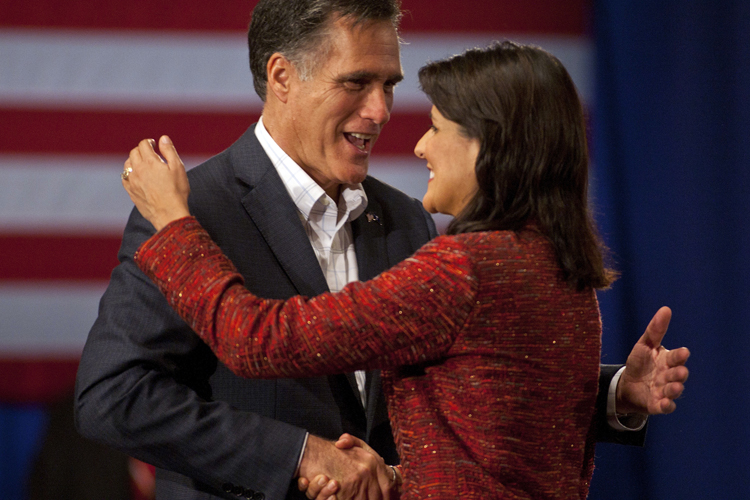
35 Romney endorsers received contributions firstMitt Romney and South Carolina Gov. Nikki Haley (Credit: © Chris Keane / Reuters)

Money may not be buying Mitt Romney much Republican love, but it’s going a long way toward helping him buy the next best thing: endorsements in the GOP primaries.

Romney’s Free and Strong America PAC and its affiliates states have lavished close to $1.3 million in campaign donations to federal, state and local GOP politicians, almost all since 2010. His recipients include officials in the major upcoming primary states of New Hampshire and South Carolina, and in three southern Super Tuesday states where he was trounced four years ago.

In New Hampshire, a U.S. senator, a congressman, 10 state senators and three executive councilors shared $26,000 in donations from Romney’s Free and Strong America PAC in 2010 and 2011 combined. All 15 have showered Romney with endorsements leading up to Tuesday’s primary

South Carolina Gov. Nikki Haley came out for Romney last month – a year after his Free and Strong America PACs funneled $36,000 to the Tea Party darling’s 2010 election bid. And 19 state and Washington, D.C., lawmakers in three Super Tuesday states – Georgia, Tennessee and Virginia — are backing Romney after his PAC poured a total of $125,500 into their coffers for elections held in 2009 and 2010.

“This is as old as politics itself,” Edwin Bender, executive director of the National Institute of Money in State Politics. “He’s just taking it to a whole new level.”

Julian Zelizer, a Princeton University political scientist, said Romney’s gambit is a smart strategy for a deep-pocketed candidate. “He’s investing wisely and trying not just to run up the numbers where he’s strong, but trying to build it up where he’s weakest,” Zelizer said.

Nowhere has Romney spent as heavily – and harvested the rewards – as in Tuesday’s must-win state of New Hampshire. Romney’s Free and Strong America PAC and its Granite State affiliate invested some $53,000 to help local officials win races, and another  $13,000 for congressional and Senate candidates.

New Hampshire state Sen. Sharon Carson said in a press release that she took the time to examine the “backgrounds and qualifications of each of the candidates” running for president before she backed Romney on Dec. 27. She received $1,000 from Romney’s federal Free and Strong America PAC for her winning 2010 reelection bid.

Kelly Ayotte – a Tea Party Republican who won a U.S. Senate seat – received $5,000 from Romney’s PAC in 2010 for her winning bid and $2,500 from the PAC in 2011, according to federal records. She endorsed Romney in November.

U.S. Rep. Charlie Bass also endorsed Romney in November. He received  $3,500 from Romney’s PAC in 2010 and and $2,000 2011 from Romney’s PAC. State Senate President Peter Bragdon endorsed Romney Dec. 1. He received $1,000 from Romney’s Free and Strong America / New Hampshire PAC on Oct. 4, 2010.

Dante Scala, a University of New Hampshire political scientist, said Romney needs 35 to 40 percent of the vote to be viewed as the winner.  Romney’s strategy of snatching up local endorsements has resonated with Granite State residents, and that’s reflected in the widening gap in the polls.

“They want to suck all the oxygen out of the primary,” Scala said. “And so far they’ve succeeded.”

After his crushing 2008 campaign defeat, Romney created the Free and Strong America leadership PAC to contribute to local, state and federal officials’ campaigns.

According to the Federal Election Commission and OpenSecrets.org, the PAC donated $890,299 to some 167 congressional and Senate candidates in 2010, while distributing another $404,226 in 2010 to state and local candidates, according to state campaign finance records collected by FollowTheMoney.org.

If Romney’s been chided for being too moderate, he’s shown little moderation when it comes to the mother’s milk of politics: money.

“Clearly, the one thing Mitt Romney has to his advantage is money, and the best way to use it in the early stages is to spread it around to build up a political organization,” said Michael Dennehy an unaligned New Hampshire GOP operative. “Now, it appears he’s reaping the benefits.”

Romney is already earning dividends in states where he suffered embarrassing setbacks in 2008. In South Carolina, for example, Romney placed a distant third behind Mike Huckabee and John McCain.

Romney trumpeted the backing of Haley in December. The pair are touring South Carolina Friday and New Hampshire this weekend. His Free and Strong America PAC raised a lofty $36,000 for her in 2010.

Romney also is bolstering his support in three March 6 Super Tuesday states where his showing was dismal in 2008.

In Georgia, where Romney finished a distant third behind Huckabee and McCain, Free and Strong spent $36,000 in 2010 on 24 state candidates. So far, 11 have endorsed Romney ahead of the primary. Another nine congressmen received $25,052 in 2010 from the PAC, and four are backing Romney.

In Tennessee, another Super Tuesday state where Romney also finished third, Romney netted the backing of U.S. Reps. Diane Black and Jimmy Duncan. They were among GOP state and federal Tennessee candidates who split $17,500 from Romney’s Free and Strong America PAC in 2010.

In 2008, Romney placed fourth behind McCain, Huckabee and Ron Paul in Virginia. But this year he snagged the backing of Lt. Gov. Bill Bolling and Rep. Barbara Comstock, who were among the recipients of some $27,500 donated by the Free and Strong America PAC.

So far, the spending has paid off not just in endorsements but in the development of a campaign infrastructure, experts said. This will help Romney against less well-funded rivals when the primaries are in several states simultaneously and particularly on Super Tuesday, when surrogates are vital in many places at once.

But there’s a risk, Zelizer warned, that over-spending could get Romney painted as an out-of-touch elitist trying to buy his delegates.

“He doesn’t want this to backfire and look like he has so much money, he’s buying an election, he’s buying a nomination,” Zelizer said.

There’s also controversy. For while the practice of contributing to campaigns in exchange for endorsements isn’t new, the New Hampshire and Alabama Democratic Parties have filed complaints with the Federal Election Commission. They charge that the Free and Strong PACS coordinate with the state affiliates to circumvent federal and state campaign laws. The PACs have denied any wrongdoing.

Dennehy, the GOP operative, said that rather than complain, others should wonder why they’re not exerting their political muscle as effectively as Romney.

“He’s the only one who donated a sizable amount of money to dozens of elected officials,” Dennehy added. “Let’s face it. When no one else gives you money, you don’t think long and hard who’ll you’ll give your endorsement to.”

Continue Reading Close

Beware of Mitt, say Bay State conservatives

The right-wing in Massachusetts has a message for Iowa

  • more
    • All Share Services

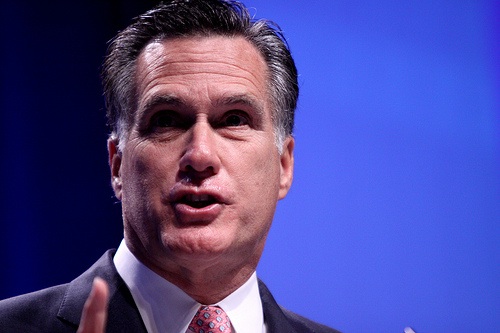
Beware of Mitt, say Bay State conservatives (Credit: Neontommy (Creative Commons))

Mitt Romney’s Iowa surge coincides with a new Iowa TV spot in which he touts himself as a genuinely conservative businessman who will shrink and streamline the federal government.

But some Massachusetts tax watchdogs and small government advocates who remember Romney’s days in the governor’s chair say: Iowa buyer beware. They note that Romney promised leaner government when he sat atop Beacon Hill from 2003 to 2007, only to leave the state largely unchanged. Rather, they say his legacy is thick with tax and fee hikes that should make conservatives do a double-take, a big-government proposal for what amounted to a “revenue czar,” and, of course, Romney-care, which bears no small resemblance to President Obama’s Afford Healthcare Act.

“Did he make government smaller and simpler – no, it looked very much like what it did four years earlier,” said Michael Widmer, president of the nonpartisan Massachusetts Taxpayers Foundation. “There was very little reform to show for his four years.”

Gubernatorial candidate Romney vowed sweeping changes to the Bay State in 2002 – just as he is doing in 2012 while running against Washington. He inherited a $3 billion budget deficit, a recession and a declining jobs base.

As a candidate, Romney vowed to find $2 billion to $3 billion in waste, fraud, abuse and duplication from state government to close the budget gap. Romney simply cut spending and axed programs. (Widmer noted Romney never found the alleged billions in wastefulness.) And, in the ultimate apostasy for 2012 conservatives, Romney also went hard after corporate loopholes to generate more tax money from businesses.

Equally notable, critics say, is that Romney raised revenues with a host of fee hikes and tax levies. In essence, when you needed it from the state, he jacked up its price.

In all, Romney proposed 88 fee hikes in his first budget – not all of which became law. Fee hikes were proposed on a spectacular array of items that had been free or cheap: hunting licenses, permits to sell used cars, elevator inspection permits, fees to leave your car at a state reservation, fees to deliver petroleum. He even proposed a $15 fee for I.D. cards for the Massachusetts Commission for the Blind – a plan that was rejected.

It was the sort of balanced approach – a combination of spending cuts and revenue enhancements – that’s become a non-starter in Republican Washington.
“He balanced budget old fashioned way,” Widmer said. “You cut programs and raised revenue.”

While some minor agencies were combined to save money, Widmer poo-poohed any notion of serious executive branch restructuring under Romney.

“Reforms were never realistically going to be part of the equation,” Widmer said.

Brian Gilmore, executive vice president at Associated Industries of Massachusetts, the state’s largest employer trade group, recalled “there was nibbling around the edges …(but) there weren’t major changes” — such as slashing the ranks of state employees, as was done under former Republican Gov. William Weld in the 1900s?

Indeed, the public sector labor force expanded under Romney’s watch. According to the Department of Labor and Workforce Development, the state payroll increased by 3,000 workers, or 2.6 percent, under Romney,

Gilmore’s group has a bone to pick with Romney the conservative businessman. While it applauded a number of his stands as good for business, the group found it “unfair” that Romney went after business tax loopholes three times in four years for a total of $375 million annually.

If businesses were outraged by the loophole closings, they were flabbergasted by what many called an “unprecedented” expansion of state power by the GOP governor.

As he cracked down on loopholes, Romney also proposed giving control to the state revenue commissioner to adjust the tax filings of certain corporations who used complicated transactions and out-of-state shelters to avoid paying their fair share of state taxes.

“It was something you might take out of the liberal Democratic playbook,” said David Tuerck, director of the conservative Beacon Hill Institute.

Romney eventually withdrew the proposal. But Tuerck warns Iowa conservatives that Romney’s signature health care reform – grew rather than whittled away at the size of the state. It forced the creation of a new agency, the HealthCare Connector.

“It becomes a way to make government bigger,” said Tureck, an opponent of both the state and national health care laws. “It was naïve of Romney to think you could put a mandate into the system and think expanded coverage wasn’t an expansion.”

But James Stergios, executive director of the Pioneer Institute, a market-based think tank, said conservative critics are wrong to focus on loophole closings and Romneycare. He saw Romney’s reforms up close as chief of staff and undersecretary for policy in state Office of Environmental Affairs.

“The cuts in 2003-2004 were real – there were people marching in the street saying, ‘What about my programs,’” Stergios said, recalling emergency budget cuts Romney made to slash spending.

Romney did shrink some agencies, including a pair in Stergios’ department — merging the patronage haven Boston-based Metropolitan District Commission and state parks offices to form the Department of Conservation and Recreation.

“That says something about his ability to streamline government,” Stergios said.

Romney merged other agencies – for instance, he combined the sprawling state colleges and universities and forced out University of Massachusetts President William Bulger, brother of alleged mob boss James “Whitey” Bulger. But he failed to get a Democratic Legislature to go along with plans to consolidate the troubled, costly Massachusetts Turnpike Authority into his highway department. It would take his successor, Democratic Gov. Deval Patrick, to slap together all of the state’s transportation agencies into a single cost-saving entity.

The irony for Romney is that in running away from his record in Massachusetts, he is running from the very “balanced approach” to budget deficits — closing loopholes, raising revenues and enacting spending cuts — that a lot of conservative and middle-of-the-road Americans believe is needed to right the ship in Washington.

Tureck warned Iowa conservatives to steer clear of Romney-style reform.

“He has an aura of being a big government conservative – his willingness to roll back Obama['s health care program] is not as clear as Santorum or Bachmann,” Tureck said. “Iowans should think about that when they decide who to vote for.”

Continue Reading Close

Mitt has always plummeted in the polls

As governor, he excelled in alienating; how he spoiled a holiday party

  • more
    • All Share Services

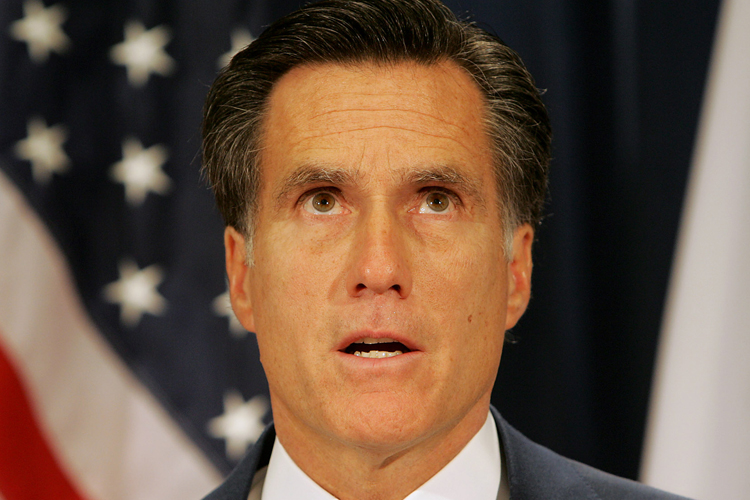
Mitt has always plummeted in the pollsUh oh. Gov. Mitt Romney was already falling in Dec 2004 (Credit: AP/Winslow Townson)

When it comes to deep erosion of support, Mitt Romney is no political newbie. His collapsing poll numbers as governor of Massachusetts (from 2003 to 2007) are an ominous preview of the steady disenchantment he is experiencing now.

“His favorability was basically a straight line down from his honeymoon,” said David Paleologos, director of Suffolk University’s Political Research Center and a longtime Massachusetts pollster. “Sometimes familiarity breeds contempt.”

Now a University of Massachusetts-Lowell/Boston Herald poll conducted last week shows that 48 percent of registered voters in Massachusetts have an unfavorable opinion of the former Republican governor, compared with just 40 percent favorable. In September, 45 percent of voters thought favorably of Romney, while 43 percent looked unfavorably on him. This 10-point swing in his favorability rating is mirrored nationally and in polls in early-voting states. For Romney, rapid descent is a familiar feeling.

Let’s go to the videotape.

Romney entered the Massachusetts State House in January 2003 with a flashy favorability rating of 61 percent. After demanding cuts to fix a $650 million budget hole, voters rewarded him in March 2003 with a 61 percent job approval rating as well, according to a University of Massachusetts-Lowell poll.

That was Romney’s zenith. By November 2004, voters were souring, and a Suffolk poll found his favorable rating had dropped to 47 percent.

A year later, that rating sank another 14 points. Just 33 percent of Bay State voters had a favorable opinion of Romney in 2005, according to Suffolk, while 49 percent were unfavorable.

Things did not improve in 2006, when Suffolk found that his unfavorable rating had risen to 55 percent while his favorable remained stagnant.

By November 2006, as he closed out his increasingly absentee term, his overall job approval rating had cratered to 36 percent.  He’d also begun ducking reporters, notably dodging questions after a menorah-lighting ceremony outside his office.

“To know Mitt Romney is to dislike him,” said Thomas Whalen, a Boston University political science professor. “That is the moral of the story.”

The Hanukah episode came after Romney spent nearly a month away from the Bay State – and the local media — stoking his 2008 presidential ambitions. After cheerfully delivering remarks to a Jewish audience about a neighbor whose name wasn’t Semitic-sounding, Romney dashed down the hall to his office as reporters gave chase. It was not endearing.

Romney was hurt by a slow economic recovery  — while the jobless rate fell, the state was 47thin the nation in job creation, according to the Center for Labor Market Studies. He also raised $375 million of business taxes, according to the Massachusetts Taxpayers Foundation. Being a Republican in Massachusetts during the Bush administration hardly helped.

But Romney’s laser focus on his presidential aspirations led to a political blunder that cost him dearly. He wagered his future on running a slate of 100 Republicans against a Democratic state Legislature in 2004 in a very blue state – and they all lost. Romney, Whalen said, spent the rest of his term using his post as a springboard for his next gig – the presidency.

“It was so blatantly obvious he was planning to leave town,” Whalen said. “People saw it as a cynical ploy.”

A week of polling now shows that Romney is dropping in early-voting states. The more he campaigns, the more ground he seems to lose.

Perhaps most worrisome is word that Romney’s lead in New Hampshire has dwindled. It’s currently 39 percent, versus 23 percent for sudden front-runner Newt Gingrich. But Romney once polled at 45 percent in New Hampshire, a state that knows him almost as well as Massachusetts does.

“Romney has a coldness, an aloofness about him. It’s hard to warm up to him,” said University of Virginia political scientist Larry Sabato. “That’s the reason he doesn’t wear well. He aims to please constantly, he desperately tries to please, but he doesn’t.”

Sabato reckons the problem is all in Mitt’s head.

“There’s a rigidity in Mitt Romney, in his personal and private life,” Sabato said. “He puts a plan together and follows it even when it’s not relevant to new developments. And that’s one of the problems.”

To Whalen, Romney’s history of wearing thin on voters and his rough relationship with the press shed critical light on the Mitt meltdown on Fox News, and his reaction to the sudden ascent of Gingrich. His problem isn’t a new rival. His problem is himself.

“Romney is showing all the opposite traits [of Gingrich], showing bizarre behavior with the press and voters,” Whalen said. “He’s treating this as a coronation when it’s far from a lock.”

Here’s the kicker: We asked the Romney camp multiple times over two days to explain the drop in the polls, but they did not respond.

Continue Reading Close