Friday, Feb 28, 2003 9:47 PM UTC
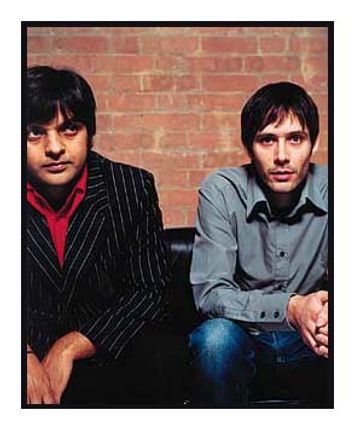
Taking a step toward perky pop tunes, Chicago's the Sea and Cake deliver their most charmingly elegant and fully realized effort to date.
By Ewald Christians
Over the course of six albums since 1993, Chicago-based quartet the Sea and Cake have developed and refined their stylish post-rock sound — a tight, jazz-inspired reworking of rock song structures and time signatures. While their 2000 album, “Oui,” was noticeably leaner and less improvisational than previous recordings, on “One Bedroom” the band takes another step toward shorter, downright perky pop tunes.
As ever, John McEntire’s driven, repetitive percussive lines and Sam Prekop’s warm, breathy vocals are perfectly complemented by the intricate guitar work of Archer Prewitt and the bass progressions of Eric Claridge. It’s the gurgling electronic underpinnings and distinctly cheerful ’70s synth chimes that make the difference here, adding needed texture and distracting from overly rigid rhythmic structures.
The catchy “Shoulder Length” and “Mr. F” exemplify the band’s more playful approach and their willingness to try out classic pop arrangements. As a result, “One Bedroom” is their most fully realized and charmingly elegant effort to date. Nonetheless, it’s the exquisite remake of David Bowie’s 1977 hit “Sound & Vision” that steals the show.
“One Bedroom” is out now on Thrill Jockey.
Tuesday, Nov 19, 2002 3:45 PM UTC
MC Mike Skinner's outstanding debut album delivers the most comprehensive look at British working-class life since "Trainspotting."
By Ewald Christians
The Streets
“Original Pirate Material”
Out now on Vice Records
The Streets’ debut, “Original Pirate Material,” is a blend of garage beats and rhymes delivered in such heavily accented British slang, they require a glossary. (Wisely, the Streets’ American label provides the lyrics on its Web site.) The release garnered a Mercury Prize nomination in the U.K. earlier this year after being hailed by many critics as one of the most important records in years — in any genre. So what is all the fuss about?
“Material” is the brainchild of Mike Skinner, a pasty 23-year-old Brit who wrote and recorded it in his bedroom. Despite the moniker, The Streets have little to do with crime-lord posturing or other thug-life tales of American gangsta rap. Skinner reports on the everyday lives of people like himself and his mates, chronicling, as he puts it, “a day in the life of a geezer.” (“Geezer” means guy or dude, not old man.) To that end, any street in England that is home to young, perpetually broke, PlayStation-addicted potheads who are bored out of their minds will do.
However, Skinner’s songs are more than celebrations of slackerdom. They are smart, often funny and remarkably nuanced descriptions of failed relationships (“It’s Too Late”), violent youths (“Geezers Need Excitement”) and, naturally, drinking binges gone awry (“Too Much Brandy”). Loaded with social commentary, “Material” paints an honest picture of modern working-class England, a country struggling with “deep-seated urban decay,” in the form of high unemployment rates and rising cases of youth violence. Skinner, to his credit, refrains from romanticizing these predicaments. He understands the problematic nature of “real manhood” well enough to know it’s important to “let geezers know you’re not lightweight,” but that doesn’t stop him from telling off a jealous boyfriend who is ready to beat up a competitor — “football fan style.” His message to his peers is to “leave the forces,” to take a step back, calm down and then make better choices.
But Skinner is not naive enough to fully trust in this approach either. Consequently, one of the most brilliant moments on “Material” occurs when he undercuts the diary-style immediacy of his story by removing himself from the narration. The track “Same Old Thing” starts with the universal complaint “round here nothing seems to change / same old thing everday” — then the beats stop and Skinner sings, “Apparently there’s a whole world out there / I just don’t see it.” Simultaneously, a second voice (also Skinner’s) seems to answer, “It’s right there / that’s it, that’s it, that’s it!” but the message evidently fails to reach the first speaker, who simply continues his lament.
Continue Reading
Close
Wednesday, Aug 28, 2002 9:01 PM UTC
Montreal-based DJ Marc Leclair plunders radio broadcasts for what he calls "microsamples" and collages the fragments onto a canvas of contagious dance beats. Listen in.
By Ewald Christians
Akufen
“My Way”
Out now on Force Inc.
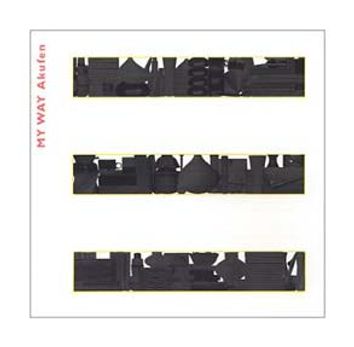
Montreal-based Akufen’s “My Way” primarily showcases DJ Marc Leclair’s newly developed production technique called “microsampling,” and doubles as an intriguing dance music album. Leclair records hours worth of radio broadcasts each day and creates tiny samples from this source, often using only a fraction of a spoken word or a single guitar riff. He then assembles these fragments into sound collages and backs them up with fast-paced 4/4 techno-style drum loops. Et voilà, house music.
According to Leclair, his approach is inspired by the Canadian automatist movement of the 1940s that tried to achieve artistic expression without a preconceived idea of the outcome. Automatist painter Jean Paul Riopelle, for instance, filled his canvases with numerous and seemingly insignificant objects which added unexpected visual depths to his works. Likewise, Leclair masterfully shapes thousands of randomly selected sound artifacts into new formations. He does so often with surprising effects like on “Deck the House,” when a myriad of sampled word fragments, though unchanged, seem to gradually turn into sung lyrics including harmonies.
Random elements in music are not a new phenomenon by any means — an entire sub-genre of electronic music is based on errors, or so-called glitches, that become (part of) the music. Leclair, however, maintains full control over the process and is less interested in incorporating waste products as such than he is in recycling them. In Akufen’s microsampling universe there is no distinction between accidental and planned sound. In fact, the nature and context of the source are completely irrelevant: Any old airwave will do.
Continue Reading
Close
Wednesday, Jul 17, 2002 5:37 PM UTC
"Reset" is the peer-reviewed, accelerated remix version of Peter Kruder's (one half of Austrian drum 'n' bass duo Kruder & Dorfmeister) 1999 solo release "Peace Orchestra." Listen in.
By Ewald Christians
Peace Orchestra
“Reset”
Out now on !K7 Records
Peace Orchestra is Austrian DJ Peter Kruder, together with Richard Dorfmeister of Kruder & Dorfmeister fame. The duo’s acid-jazzed drum ‘n’ bass albums “DJ Kicks” (1996) and “K&D Sessions”(1998) received much critical acclaim, making them one of the few electronic DJ acts to be embraced by mainstream media.
In 1999 Kruder released his first solo record, “Peace Orchestra,” a down-tempo album on which he smoothly combined jazz, dub and bossa. Here, on the new “Reset,” Kruder’s contemporaries revisit the tracks from “Peace Orchestra,” and deliver 11 diverse remixes (each remix comes courtesy of a different artist). Electronic musicians Gotan Project, Beanfield, Zero dB and Tr|by Trio are among the rearrangers who take liberties with Kruder’s original material, adding and subtracting elements, morphing styles and changing speeds.
Gotan whips the meditative, spaced-out “The Man” into a hyperactively swinging easy-listening version of its former self, while Rainer Trüby transforms the subdued, jazzy “Shining” into a bonafide drum ‘n’ bass number, easily tripling the original’s beats-per-minute count. Indeed, most of the “Reset” remixers choose to accelerate the loungy headphone music of “Peace Orchestra,” relentlessly pushing it onto the dance floor.
 |
Peace Orchestra’s “The Man” Remixed by Gotan Project |
|
| Audio: Real Audio |
| Duration: 7:17 |
Continue Reading
Close
Monday, Jul 1, 2002 11:52 PM UTC
Ex-Crowded House frontman Finn releases his second solo album, "One All," enlisting the help of former Prince muses Wendy & Lisa. Listen in.
By Ewald Christians
Neil Finn
“One All”
Out now on Nettwerk America
Neil Finn began his musical career in the mid-1970s with eccentric New Zealand pop outfit Split Enz, fronted by Tim Finn, his elder brother. After Split Enz broke up in 1983, Neil formed the pop trio Crowded House. The band had their breakthrough in the U.S. with the singles “Don’t Dream It’s Over” and “Something So Strong,” both featured on their self-titled 1985 debut album. Four crisp pop albums and a decade later, Finn brought Crowded House to a close and teamed up with his brother again. In 1995 they cut an album consisting mostly of vocal duets with sparse acoustic accompaniment. Then, three years later, Neil released “Try Whistling This,” without band or brother.
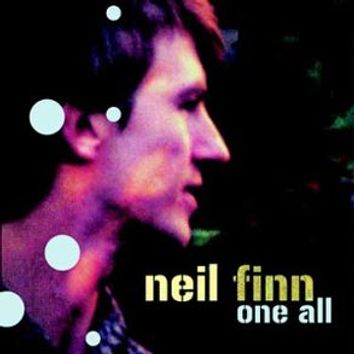
“One All,” his second solo effort, was released in the rest of the world as “One Nil” in spring of 2001. This year’s U.S. version features slightly different mixes of some of the “One Nil” material as well as two new songs (“Lullabye Requiem” and “Human Kindness”). Notable collaborators on “One All” include Lisa Coleman (vocals, keyboard) and Wendy Melvoin, who plays drums and/or bass on every track except the two late additions, and also co-wrote three songs with Finn. Yes, these are Wendy & Lisa of Prince and the Revolution fame.
Finn sticks to his trademark sweet melodies and atmospheric arrangements on “One All.” He’s always played beautiful pop tunes, but at the same time his lyrics are full of doubt and darkness: “Anytime” finds him pondering myriad ways to die, and on “Driving Me Mad” (listen to this track below) he complains “Year after year / the demons always come.” So while the presence of Prince’s former muses may ease his pain, Finn is still a haunted man.
Continue Reading
Close
Friday, May 24, 2002 8:00 AM UTC
Underwater vibes: Icelandic band Mum combine intricate beat programming with warm liquid soundscapes.
By Ewald Christians
Mum
“Finally We Are No One”
Fat Cat Records
Release date: May 28, 2002
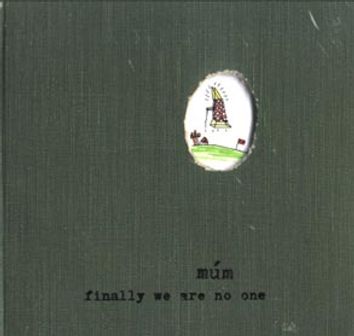
Mum, formed in 1997, are two guys and two twin sisters hailing from Iceland. “Finally We Are No One” is their second album, the follow-up to “Yesterday Was Dramatic — Today Is Okay” released in 2000. On this release Mum return with the same intricate, laptop-based glitch beat programming featured on their first record, but they shift their focus to a warmer sound, sprinkled with soft vocals and richly textured acoustic elements such as guitars, bass, accordion and cello.
Iceland, of course, is also the home of pop chanteuse Bjork and indie band Sigur Ros. Like both of those acts, Mum create beautiful soundscapes and subtle, fragile arrangements. But instead of the vocal acrobatics of Bjork or the wind-swept, static noise epics of Sigur Ros, Mum make electronic music with a strong affinity for liquid sounds. Throughout the album, water seems to be trickling and seeping in through the cracks of drum patterns, washing over bleeps and bass lines.
Mum have performed concerts in unusual places, including shows in Iceland’s public pools. (The band used U.S. military underwater speakers while listeners floated on water with their ears submerged; you had to be in the water to hear anything at all.) “Faraway Swimmingpool” feels like an attempt to simulate that experience, and many other tracks on “Finally” have an equally bubbly, yet muffled quality.
Mum’s most recent project involves accompanying Sergei Eisenstein’s 1925 silent film “Battleship Potemkin,” a show that will be shipped stateside this summer.
Continue Reading
Close
Page
1
of
2
in
Ewald Christians