Frederick Clarkson

The quiet fall of an American terrorist

In late 2001, antiabortion fanatic Clayton Waagner used packets of bogus anthrax to shut down scores of clinics nationwide. When he was convicted last week, the press was notably absent.

  • more
    • All Share Services

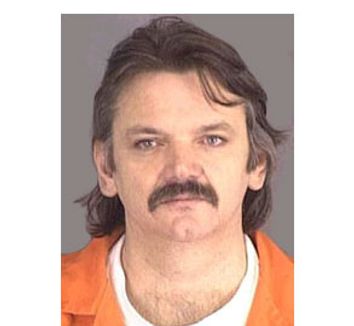
Only a couple of years ago, Clayton Waagner was one of three extreme-right American terrorists on the FBI’s 10 Most Wanted list, a self-styled avenging angel of the unborn. In the autumn of 2001, at the apex of national fear about terrorist strikes and deadly anthrax attacks, he mailed hundreds of envelopes stuffed with white powder and threatening letters to abortion clinics and reproductive rights organizations — all in the name of the antiabortion Army of God. Doctors, staffers, clients and their families were terrified, and hundreds of clinics were shut down. That made Clayton Waagner a celebrity, of sorts, and to some, a hero.

Waagner lost his spot atop the 10 Most Wanted lists when an alert Kinko’s clerk outside of Cincinnati recognized him from a wanted poster, and in a federal courtroom in Philadelphia last week, he was convicted of threatening the use of weapons of mass destruction and other federal charges, more than 50 counts in all. The two-week trial was remarkable not so much for its verdict as for the near-complete lack of media attention that it attracted. Perhaps the conclusion was too anticlimactic, a foregone conclusion. Or perhaps it was because Attorney General John Ashcroft’s prosecutors sought to make the trial not about abortion, but about “anthrax hoaxes.” In a news culture obsessed with Osama bin Laden and Saddam Hussein and overseas terror threats, few reporters were there for the denouement.

Though he now faces a possible sentence of life in prison, Waagner went down without a word of regret or remorse. Acting as his own attorney, he said in his closing argument to the jury that he was “tickled” that people were terrorized by the anthrax threats. After the verdict was read, he shook the prosecutors’ hands and then told the judge: “It was fun.” The feds want to talk with him further about the violent antiabortion underground, but he told FBI agent James Fitzgerald, who took his original confession: “I’m still not going to cooperate.”

Perhaps it’s no surprise that Waagner’s story is already disappearing into the deep shadows still cast by Sept. 11, 2001. But he was very much a part of that story, and the fear he created, amplified in that climate of terror, still reverberates through the culture.

Waagner was in federal custody awaiting sentencing on federal weapons and stolen vehicle charges — none related to antiabortion activities — when he made a dramatic escape from federal custody in February 2001. On the lam, he declared himself to be “God’s warrior” and a “terrorist” in a manifesto published on the Army of God Web site. He threatened to kill as many abortion providers as he could. He robbed banks, bought guns and computers, stalked clinics, and prepared for war against abortion.

He never fired a shot, but he contributed to the terrorization of the nation at its lowest moment in recent history. He mailed or FedEx’d some 550 envelopes containing white powder to abortion rights organizations and clinics in the name of the Army of God. “You have been exposed to anthrax,” each letter announced. “We are going to kill all of you. From the Army of God, Virginia Dare Chapter.”

Waagner’s threatening packages arrived during the same period when real anthrax attacks on media outlets and Congress killed five people. Even Ashcroft, a resolute abortion opponent, called Waagner a terrorist. The entire nation was on edge, fearful of the threat of all forms of terrorism. Indeed, in response to some of Waagner’s missives, whole city blocks were evacuated. People were stripped and hosed down with Clorox by hazmat teams in protective spacesuits.

Although the victims of the anthrax threats testified at Waagner’s trial, the significance of their experience was nowhere to be seen in the press coverage. On the same day that the victims testified, the news media’s angle du jour was that Waagner had mistakenly sent one powder packet to a Pennsylvania antiabortion crisis pregnancy center. While this made Waagner look foolish, unreported were the extraordinary horrors of Waagner’s acts of terror around the country. The trivialization of Waagner’s crimes by inattention and the depiction of him as a buffoon concerns Ann Glazier, director of clinic security at Planned Parenthood Federation of America for the past 10 years.

“Some of those women [who received the anthrax threats] are still terrified,” she told Salon. “They cannot talk about this without breaking into tears and shaking. So this idea that, this is a guy who sort of did this as a joke or a lark is enraging to people like me. You can look at this and see the damage.”

Glazier knows more stories of the horror’s impact than probably anyone, and they spill out over the phone line one by one. One wave of Waagner’s mailing was infused with a chemical that sets off false positives in tests for anthrax. It took the Centers for Disease Control 10-12 hours to figure it out. Glazier spent many of those hours on the phone with the terrified.

“There was no way you could treat this as anything other than the real thing,” she said. “There were women who were forced to disrobe in front of complete strangers. They were given showers and made to stand out in the cold. A hazmat team brought one woman to the hospital where the E.R. person screamed at her — ‘You contaminated the entire hospital!’ Another woman took off her clothes and was given a lab coat. She went to the hospital where she was decontaminated. But when she got to her car, she realized that all of her keys, her money, her identification, were locked up with her contaminated clothes in the hospital … Lots of people had to go through the same thing. It was terrifying and it still terrifies them.”

Waagner kept the feds on the run and abortion providers on edge for 10 months until his capture in December 2001.

Originally, Waagner wanted to use his trial as an international media stage to put abortion on trial. He planned to use the “necessity defense,” which is the argument that sometimes the crime needed to be committed to stop a different or greater crime. Waagner initially argued that if he committed any crimes, they were intended to prevent the murder of the unborn. While the necessity defense has been used successfully by women who’ve been subjected to domestic violence and, in fear of their lives, killed their husbands, no judge has ever allowed it as a defense in a case involving crimes against abortion providers. Waagner’s case proved to be no exception.

In fact, the Bush administration’s Department of Justice wanted to make certain that Waagner’s trial was not going to be about abortion. He was bitterly disappointed that he was not allowed to use the necessity defense, and made a point of getting the judge to reassure him that he could appeal partly on the court’s denial. Acting as his own attorney, Waagner tried to raise his issues at every turn. And while he got in his licks, “The prosecution made it their business to make sure that he was not able to do that,” Glazier said. “They were totally conscious that he was going to try to go there every single minute. And he did. Prosecutors always were on their feet in a flash. And he got overruled every time.”

The Department of Justice wanted to try the case narrowly on the anthrax attacks and on using the Internet to make threats. Prosecutors did everything they could to keep information about Waagner’s previous incarceration, his escape and his life on the lam out of the trial. At one point, Glazier noted, prosecutors showed the jurors a photograph of the trunk of the Mercedes Benz Waagner was driving when he was captured. The picture showed the printer he used to make the letters he mailed with the anthrax threats. But it was cropped so as not to show the case of shotgun shells that was also in the trunk.

Waagner didn’t do much to help himself during the trial. Neither did his witnesses. Waagner himself seemed torn between his pride in his career as a terrorist and maintaining the façade of innocence while acting as his own attorney. “It was as if he could not decide whether he was going to say he did it,” Glazier observed, “or whether he would hint that he was fronting for someone else. He kept going back and forth, and the jurors’ eyes were rolling around in their heads.”

“He repeatedly bragged that he had been the most wanted man in America and that he was a terrorist,” said Glazier, still incredulous about Waagner’s performance. “It was unbelievable.”

Clearly, Waagner was going to have a tough time convincing the jury of his innocence. He had given a two-hour taped confession to an FBI agent. He also made another taped confession, a bizarre episode reported by Salon at the time.

Just after Thanksgiving 2001, Waagner entered the Carrollton, Ga., home of antiabortion militant Neal Horsley, whom he supposedly tied up and held at gunpoint while confessing to the anthrax threats on tape. Horsley, best know for his notorious Nuremberg Files Web site (which crossed out the names of abortion-providing physicians after they were murdered), immediately put out the news about Waagner’s confession, and his claim to have a list of 42 clinic staff who would be killed if they did not resign their jobs. Horsley’s role and relationship to Waagner has been odd. He hyped Waagner’s mission on his Web sites, and presented him as Waagner presented himself — as a man sent by God on a mission to scare abortion providers out of business. He treated Waagner as capable of killing. This made Horsley a fan — but not, as it turned out, one who would be any help in court.

Waagner’s trial defense — for which he was unable to provide any corroboration — was that he lied to Horsley and to the FBI to throw the feds off of the scent and to “take the pressure off” other antiabortion activists.

On Horsley’s tape, played for the jury, Waagner described why he sent the packets of bogus anthrax to the clinics: “What I’ve been doing over the last nine months in a very orchestrated manner is to give those people a chance to quit. I want to demonstrate to them how truly vulnerable they are. I put anthrax in their face, or what they thought was anthrax … They have no security, none.”

Horsley was Waagner’s main defense witness, and under questioning by Waagner, Horsley talked about abortion and wept about abortion — but then maintained that he believed Waagner had mailed the anthrax threats and that he had “the capacity to do things nobody could imagine.” Looking at Waagner, he said: “You wanted to terrorize people so they would discontinue killing little babies.”

Although the drama was high, the media interest in the Waagner trial was low. There was little national coverage beyond the Associated Press. The newspapers of record, the New York Times and the Washington Post, gave the case little more than a passing mention. Observers such as Dallas Blanchard, a retired professor of sociology who has written several books on the antiabortion movement, think that Waagner’s conviction was “a foregone conclusion … [and] routine.” With “no potential dramatic disclosures,” he says, there were few elements of political soap opera to attract the press.

The news media may have been missing the forest for the trees. There was a time in 2001 when for the first time in history three of the FBI’s Ten Most Wanted criminals were antiabortion domestic terrorists. But the past year has seen a series of victories by federal agents and prosecutors against the notorious trio. Before Waagner’s conviction, Eric Rudolph, the Olympic bombing and clinic bombing suspect, was captured; and James Kopp was tried and convicted for the 1998 sniper attack that killed Dr. Barnett Slepian, an abortion provider, inside of his home in suburban Buffalo, N.Y.

Chip Berlet, senior analyst at Political Research Associates, a progressive think tank near Boston, agrees that while the outcome was not in doubt, there was more to why the press stayed away in droves. “Once somebody claims a religious motivation for an act of terrorism,” he said, “most people, including reporters and editors, become unglued.” If Waagner had been a self-identified Muslim terrorist instead of a Christian terrorist, Berlet observed, “he’d have been lynched by now.” Indeed, while news reports invariably note that he is a self-described terrorist, and dutifully quote him as saying so, they also studiously avoid use of the word “Christian.”

“The notion of Christian terrorists is a place people don’t want to go,” Glazier agreed. “And the notion of there being more than one Christian terrorist is a place where people also don’t want to go.”

Reporters and editors often “fear to offend,” added Berlet. “But if it’s fair to say if we can see the religious motivations in the Taliban, we ought to be able to see them in Waagner or Eric Rudolph.” He notes that although Waagner and his associates in the Army of God “represent a tiny fraction of the wider Christian right, people don’t know how to make sense of it.” And reporters, he says, “walk away from it.”

Though Waagner’s crimes fiercely exploited the fears created by 9/11, Berlet says the press has tended to diminish the crimes. For example, he says, most of the stories use the term “anthrax hoax” to describe Waagner’s crimes. But “just because a terrorist threat turns out to be a hoax does not mean that it has no effect.”

Waagner has been closely linked to the violent, antiabortion Army of God. To this day the group hails him as a “Hero of the Faith” on its Web site, along with such antiabortion luminaries as Paul Hill, who was executed in Florida for murdering an abortion provider and a volunteer escort. He is known to have corresponded with Army of God leaders prior to his escape from prison. An allegedly autobiographical account of Waagner’s career as a terrorist is available on the AOG Web site and the proceeds go to Waagner’s wife. Titled “Fighting the Great American Holocaust,” the cover art is a self-portrait in which Waagner is wearing mirror-lensed glasses that reflect two figures in white hazmat suits at work before a Planned Parenthood sign.

“While an FBI Most Wanted Fugitive, I made my most effective attack on the abortion industry,” reads the account. “In October of 2001 I mailed fake anthrax to 500 abortion clinics. In November of 2001 I Federal Expressed another 300 fake anthrax letters. The white powder I used was harmless, but tested positive for anthrax.

“Most of the 580 abortion clinics I closed in 2001 remained closed for a week, resulting in 3,940 clinic closure days, and the disruption of nearly 20,000 scheduled abortions. According to abortion clinic numbers, 5,000 or more babies are alive today because of my act of ‘Domestic Terrorism.’

“I will spend the rest of my life in a federal prison. It seems a small price to pay.”

The frequent Web bouquets from the Army of God notwithstanding, Waagner received little personal support at his trial. Only the Rev. Michael Bray of nearby Bowie, Md., a convicted clinic bomber and the “chaplain” of the Army of God, attended. That contrasts starkly with the gatherings of AOG members in support of James Kopp in Buffalo earlier this year and the AOG vigils at the September execution of Paul Hill in Florida.

Ann Glazier thinks that the federal heat is just too great and people are keeping their distance. Not so long ago, she says, Army of God leaders carried themselves with a certain swagger that they could threaten people and clinics with impunity. But she thinks a turning point came in the run-up to Hill’s execution in September, when the Florida attorney general, two corrections officials, and the judge who sentenced Hill to death all received threatening letters containing bullets. “Suddenly it’s not so much fun to be a Christian terrorist in the Army of God anymore,” she observed.

That may be an augur for the future of the most violent wing of the antiabortion movement. Experts see that law enforcement’s view of terrorism — and its capacity for more organized response — has changed enormously. That makes it far more difficult for the violent wing of the antiabortion movement to operate.

Waagner is, in their view, an exception that proves the rule. Professor Blanchard, who taught in Pensacola, Fla., an epicenter of antiabortion attacks, thinks that while the violent element “is still there,” Waagner was an isolated entrepreneur who sought “a brief moment of fame” in exchange for “permanent security and having his most momentous decisions for the rest of his life being what flavor gum to chew.” As for the rest of the violent element, he says that they “went semi-underground under federal pressure” following the passage of the Federal Access to Clinic Entrances Act, and now “more and more resembled the militia’s ‘leaderless resistance.’”

Ellie Smeal, president of the Feminist Majority Foundation, has a similar view. Law enforcement’s response to antiabortion violence has greatly improved, she says. She notes that there is “a more profound appreciation for how terrible terrorism can be and how it can destroy a society.” But “the investigative work that would lead you to the next one is falling short,” Smeal says. There are people still at large who “aided and abetted Kopp and Rudolph, and whoever is winding them up … The odds are we are not done with this, and we won’t be until the core that has been encouraging violence, itself unravels.”

“It’s not unlike al-Qaida,” she observed. “The 19 hijackers died but they certainly did not act alone. But so far, nobody higher up has been arrested.”

Did Waagner have help while he was on the lam? “Absolutely,” said Glazier. “There is no doubt in my mind.”

It is tempting to think or to believe that the worst of antiabortion terrorism is over. The capture of Waagner, Kopp and Rudolph certainly are triumphs of federal law enforcement in the age of terrorism. There have been no murders or major arsons or bombings this year. But windows have been shot out. There have been minor arsons. And anonymous threats to use of weapons of mass destruction against clinics and providers are practically routine. In 2002, according to statistics compiled by the National Abortion Federation, 23 clinics received anthrax threat in the mail. Before Waagner’s 2001 rampage, clinics reported 77 anthrax threats.

No one has been arrested in connection with any of these terrorist incidents before or since Clayton Waagner.

They ban textbooks, don’t they?

Texas school officials rejected a widely used environmental textbook, claiming it was filled with errors. The author says they're censoring him because they didn't like his green views -- and he's suing.

  • more
    • All Share Services

A federal lawsuit filed last week in Texas may very well turn into the Lone Star State’s own version of the Scopes “Monkey Trial” — the famous 1925 court battle in which two of America’s most famous attorneys debated whether evolution should be taught in the public schools. Then, the underlying issue was whether Christianity should trump science; today, it is the scientific status of mainstream environmentalism. In the current case, the author of a widely used environmental textbook is suing five present and former members of the Texas State Board of Education, who two years ago rejected his book because of alleged factual errors and pervasive bias. Claiming that the author’s free speech and equal protection rights were violated by an act of censorship, the lawsuit asserts that the real reason the book was rejected was the author’s environmentalist views, which clash with those of right-wing school-board members.

The lawsuit, filed Oct. 30 in U.S. District Court for the Northern District of Texas by the Washington-based Trial Lawyers for Public Justice, was also filed on behalf of several Texas high school students, who the suit alleges have been denied access to this book. The plaintiffs want the book included on the state list of approved texts, a court order declaring that the board members’ rejection of the book was unconstitutional, and unspecified damages stemming from the lost sales.

The stakes of the suit could hardly be higher. The battle is a veritable microcosm of the culture wars, pitting the Christian right, energy industry supporters, and defenders of Texas’ right to control the textbooks its students read against environmentalists, the publishing industry, First Amendment advocates, and professional educators.

The textbook at the center of the suit is “Environmental Science: Creating a Sustainable Future,” by Daniel D. Chiras. The book, which is in its sixth edition and has been taught in many colleges and high schools in Texas and across the country for 20 years, passed the usual rigorous peer review process and had been recommended by the commissioner of education, along with two others. However, in a last-minute hearing before the board in November 2001, the book was rejected by conservative board members, who said it was factually inaccurate and espoused a “radical” environmental agenda. The board called it “anti-Christian” and “anti-American” because, among other things, it claimed there is a scientific consensus regarding global warming.

The unusual feature of the rejection was that the board and its individual members ignored the formal review, apparently relying on a 24-page critique prepared by a conservative think tank, the Texas Public Policy Foundation (TPPF), an organization closely tied to the state Republican Party and one of whose board members is married to the chairperson of the board of education. The board was also apparently influenced by testimony from members of a right-wing activist group, Citizens for a Sound Economy, at the hearing. After a stormy hearing, the board, which is made up of 10 Republicans and five Democrats, voted to reject the book along straight party lines.

At the hearing the TPPF charged that the book was not acceptable for use in Texas classrooms. Asserting that the “vitriol against Western civilization and its primary belief systems is shocking,” the TPPF’s critique, written by Duggan Flanakin, alleged that the book is full of “errors of fact and significant omissions, in addition to the heavy bias toward radical politics.” At times, the TPPF’s critique veered into shrill rhetoric more reminiscent of Rush Limbaugh than a sober academic review, as when it charged that by championing solar energy and turning “producers and marketers of traditional energy sources into bogeymen … this text provides yet another form of flag burning.” The TPPF also engaged in some crude smearing, saying that Chiras’ claim that air travel has an “increasingly high environmental cost … makes Osama Bin Laden into a hero of sorts for discouraging air travel in the United States and elsewhere.”

The director of Citizens for a Sound Economy claimed, among other things, that the book “blames Christianity, Democracy and Industrialization … as causing the so-called [environmental] ‘crisis’” and that this is “highly offensive to patriotic Americans and Christians.”

Most of the alleged factual errors cited in the TPPF’s critique appear to be matters of ideological controversy or irresolvable philosophical disputes, not matters of provable fact. For example, Flanakin attacked as an “inaccuracy” Chiras’ statement that indigenous peoples practiced sustainable development, which required an integrated set of goals. “One can hardly reason that these primitive societies set clearly definable goals, or even that they practiced sustainability,” Flanakin wrote. “It is more likely that most of these largely nomadic peoples espoused a ‘frontier ethic’ that was made possible by the fact of very small populations and large territories.” As Flanakin’s use of the words “more likely” indicate, this would not appear to be a point that can be definitively proved one way or the other.

According to Texas law, the board has the right to reject a textbook if it contains factual errors, but not because it disagrees with the author’s viewpoint. Burt Neuborne, a professor of First Amendment law at New York University, says, “You can’t choose a book based on the viewpoint of the author. A government official has the power to make determinations based on quality and accuracy, but he does not have the power to censor what school children hear, and turn the school system into a propaganda mill.” At the same time, he cautions, “If there really are questions of fact, and quality, the courts can’t second-guess.”

There is no question that Chiras is an active and committed environmentalist. His book sounds loud alarms about the state of the world environment, including global warming, deforestation and other crises. He argues that the current situation is not sustainable and that the developed nations, which consume a disproportionate share of the earth’s resources, urgently need to change their ways. He points out that the rise of industrialized civilization had serious negative consequences for the environment. He critiques current policies and lays out a number of alternatives to them.

None of these viewpoints is particularly controversial within environmental science — in fact, they could be said to pretty much represent mainstream environmentalist thinking. But mainstream environmentalism hardly seems mainstream to conservative board members, who note that Texas law requires that its textbooks promote democracy, patriotism and free enterprise. Chiras insists that his book is completely consistent with those goals.

Since environmentalism is not a hard science, like mathematics or physics, questions of fact can be hard to establish. The TPPF critique attacks Chiras’ book for being one-sided, but the line between being biased and simply having a point of view — and in Chiras’ case, a point of view that is far from heterodox in his field — is almost impossible to define. As a result, the outcome of the lawsuit is hard to call.

Whatever its fate, the Chiras case is a shot across the bow of a powerful, assertive and increasingly successful conservative faction on the board that openly boasts of its ability to affect the national textbook publishing industry. As the nation’s second-largest textbook market (after California, which also has a statewide approval process for public school textbooks), Texas is likely to purchase some $700 million worth of school textbooks over the next two years. Because of the scale of the Texas market, publishers often cater to what they think will sell to the board. “Publishers fear offending the Texas board, which often sets the agenda for textbooks nationwide,” says Adele Kimmel, an attorney with Trial Lawyers for Public Justice.

The bottom line, in Neuborne’s words: “The market is such that if publishers can’t print separate editions, Texas censors not only its own books, but the entire nation’s.”

Most states select textbooks on a school-by-school or district-by-district basis. Texas subjects proposed textbooks to a rigorous review process according to what subjects are scheduled for review that year. Then the state’s schools are given a list of approved books. The state will only pay for books on the list.

For decades, Christian right activists have made the Texas board a principal battleground in the culture wars. The book-selection process eventually became so politicized that in 1995, the state Legislature stepped in and largely cut the board out of the process. Book approval is now supposed to be primarily handled by professionals in the Texas Education Agency, and by outside review panels, with the board’s role limited to approving or rejecting books based on whether the book is well made, factual and conforms to the educational standards measured by the statewide standardized test. Chiras’ book is the first to be rejected since the law was passed.

Critics say that conservatives on the board have found a way around this by using bogus claims of “factual error” to get rid of books they disagree with. What’s more, they charge that the board is using conservative groups like the TPPF as fronts, allowing them to provide critiques that authors and publishers must respond to — which means rewriting their books — in order to gain approval. “They are basically a mouthpiece for the board in these issues,” according to attorney Adele Kimmel. She says the unstated but obvious message is that “if you don’t correct what we think are errors, your book will not be adopted. Anything they disagree with is described as a factual error.”

Suspicions that the board and conservative groups are working together are not allayed by the fact that current board chairwoman Geraldine Miller’s husband, Vance, is a board member of the Texas Public Policy Foundation.

Don McLeroy, a board member from Bryan named as a defendant in the lawsuit, had not heard much about the suit when Salon reached him on his cellphone as he drove across west Texas. Before his cell connection broke up, McLeroy said that he made his decision because of factual errors in the book. “It’s the only book we’ve rejected since I’ve been on the board for five years,” he explained. “We can reject a book for factual errors and inaccuracies. And that’s the basis for why we rejected the book.” He referred Salon to an article he had written at the time in which he explained his action. The piece reads in part: “The entire construct of the book is based on a factual error and false premise … The Western Christian civilization countries [sic] are the cleanest, and have the most stable population growths in the world … The claim that the root cause of environmental problems is economic growth is simply wrong.”

Steve Baughman Jensen, one of Chiras’ lawyers, says the board’s actions were “not based on any legitimate concerns for factual accuracy or curriculum fulfillment,” but on disagreement with “Dr. Chiras’ viewpoints on environmental and economic issues, views based on 30 years of scientific study.” He adds, “We really think that this is a case not just of officials going beyond their authority, but officials censoring speech and viewpoints.”

David Bradley, a board member from Beaumont and another defendant, rejects the argument that Chiras’ First Amendment rights were violated. “That position just doesn’t hold water,” he said angrily. “You need to qualify for the right to speak to 4 million Texas public school children. He didn’t meet the qualifications. His case is meritless. It’s just opportunistic grandstanding.”

In comments to the Galveston County Daily News, Bradley took issue with the fact that Chiras’ book used panoramic photos of housing developments as examples of a negative impact on the environment.

“I’m in real estate,” he said. “I see that and I see $250,000 homes; I see mortgage bankers; I see carpenters; I see jobs. I see a tax base.”

For his part, Chiras said, “I was stunned by the board’s decision to reject my textbook. Texas public high schools used an earlier edition of my book, and colleges across the country, including a state university in Texas, have used the current edition. It is incredibly offensive and unfair that my book was falsely portrayed as ‘anti-Christian’ when this same book is used at Baylor University — a top-tier Christian school and Texas’ oldest university.”

The spectre of right-wing ideologues using financial pressure to force textbooks to be rewritten hangs over other Texas textbooks as well. This month, the Texas board will consider the adoption of statewide biology textbooks. The process has been shaping up for months, involving many of the same dynamics as with the environmental books. A conservative research group, the Discovery Institute of Seattle, has argued that the biology textbooks contain factual errors; the books’ defenders say the criticisms, as with Chiras’ book, are nothing more than viewpoint censorship. The Discovery Institute has presented the publishers with its criticisms, and is already crowing about “corrections” they have gained from publishers in advance of the final review by the state board.

Board member Bradley thinks the filing of the Chiras suit is intended to influence that debate. “The board is considering the adoption of biology textbooks this year, which has also been somewhat controversial and a hot issue.” McLeroy agrees, adding, “You’ve got all this heavy lobbying, the National Center for Science Education on one side and the Discovery Institute on the good science side, or the anti-evolution side, whatever you want to call it.”

The Discovery Institute is best known for promoting the “intelligent design” theory of the origin of the universe as a counter to conventional evolution theory. Intelligent design theory holds that the origin and development of the universe and living things are best explained by an “intelligent cause” rather than by such processes as natural selection and random mutation, cornerstones of the theory of evolution.

Charlotte Coffelt, a leader in the Houston chapter of Americans United for Separation of Church and State, asserts that the Christian right members of the board are on a “mission to stop certain textbooks for children over the issue of evolution.” She claims that the board’s real agenda is to promote creationism — the view held by fundamentalist Christians that God created the world, for which no scientific evidence exists — by “masking it as intelligent design.” The Discovery Institute denies that it is seeking to include intelligent design in the textbooks.

The lawsuit also discusses how the other two books that had been approved by the professional review process and recommended by the commissioner of education were handled, as further examples of the board’s intentions and methodology. Their fate may be even more chilling than the banning of Chiras’ book.

The second book, “Environmental Science: How the World Works and Your Place in It,” was initially rejected by the board. It was finally published — but only after its publisher, who desperately wanted the sale, agreed to allow it to be censored. According to the suit, unnamed state education officials and the publisher, J.M. LeBel Enterprises, had a late-night editing session during which the publisher agreed to change crucial passages about, among other things, global warming. (Cynthia Thornton, a member of the state Board of Education, called the text’s pre-edited section on global warming “alarmist poppycock.”)

A New York Times story on textbook censorship revealed some of the alterations. The Times reported, for example, that the sentence “Destruction of the tropical rain forest could affect weather over the entire planet” was changed to “Tropical rain forest ecosystems impact weather over the entire planet.” The following remarkable sentence was added: “In the past, the earth has been much warmer than it is now, and fossils of sea creatures show us that the sea level was much higher than it is today. So does it really matter if the world gets warmer?” And this sentence was deleted: “Most experts on global warming feel that immediate action should be taken to curb global warming.”

The publisher later told the New York Times that the process was akin to “book burning” and “100 percent political.”

The third book reviewed and approved for use was “Global Science: Energy, Resources, Environment,” 5th edition, by John W. Christensen, published by Kendall/Hunt Publishing Company. Flanakin of the TPPF approvingly noted that the book was prepared with the help of the industry organization American Institute of Mining, Metallurgical, and Petroleum Engineers. Also, according to the New York Times, the book was partly funded by the Mineral Information Institute, a nonprofit group whose board is almost entirely composed of top mining industry officials. In his statement to the board, Duggan said he felt it was the “finest and most readable textbook” he had ever reviewed.

Board chairwoman Grace Shore, co-owner of an oil and gas company, TEC Well Service, of Longview, Texas, told the Austin American Statesman, “[t]he oil and gas industry should be consulted” regarding environmental science textbooks because “[w]e always get a raw deal.”

Adele Kimmel of TLPJ said that it “was not an accident” that the board “ultimately chose to adopt a book financed by the mining industry over one that emphasizes the importance of critical thinking.”

Chiras vs. Miller may very well turn out to be a landmark case, even if the plaintiffs do not prevail. Neuborne told Salon, “It’s a hard case to win. The board is going to say that they are acting within their authority and made their decision based on quality issues. They [the plaintiffs] are going to have to prove that the members of the board were not acting in good faith and that they are not telling the truth. And that’s very hard to do.” If the suit prevails, he thinks the board will probably be required to send the book out for an independent professional review. But he notes that there may be nothing to prevent them from rejecting the book over and over again.

“The only real defense against this [textbook censorship],” he said, “is better public school officials.”

Continue Reading Close

A radical antiabortionist backs down

Feeling the heat not just from the courts but from mainstream pro-lifers, Nuremberg Files Web site creator Neal Horsley takes down the crossed-off names of doctors killed by antiabortion zealots.

  • more
    • All Share Services

A radical antiabortionist backs down

Neal Horsley, creator of the virulently antiabortion Nuremberg Files Web site, has taken down the most inflammatory postings from his site: the crossed-out names of doctors and clinic workers who have been killed by antiabortion militants. Horsley blames the courts, which had recently ruled against him and his Web site on two related matters. But equal pressure may have come from his fellow pro-lifers, who increasingly see Horsley’s extreme tactics as a major liability.

A month ago, Horsley and his Web site were dealt a major blow in federal court. In a 6-5 decision, the 9th U.S. Circuit Court of Appeals ruled that members of the American Coalition of Life Activists had illegally threatened abortion doctors by publishing Old West “Wanted”-style posters identifying a dozen doctors and including detailed information about them, including their home addresses, on Horsley’s “Nuremberg Files” Web site. Two previous murders of abortion doctors had been preceded by similar posters. Four of the doctors sued. Horsley later began crossing through the names of doctors murdered by antiabortionists and graying out those who were wounded.

The ruling in the landmark case, Planned Parenthood vs. American Coalition of Life Activists, upheld the 1999 verdict of a federal jury in Portland, Ore., that ACLA’s “Deadly Dozen” campaign, including a version posted on the Nuremberg Files, constituted a “true threat” of violence. Writing for the court majority, Judge Pamela Rymer held that “there is substantial evidence” that the posters were prepared and disseminated to intimidate physicians from providing reproductive health services. “Holding [coalition members] accountable for this conduct does not impinge on legitimate protest or advocacy,” she concluded. The court ruled that the fact the “Wanted” posters included such data as the doctors’ home addresses, their social security numbers, and the names of their children and where they went to school, and were made by activists who considered the murder of abortion providers “justifiable homicide,” constituted a true threat. (In fact, the doctors were so concerned that they had taken to wearing bulletproof vests and instructing thier children on what do if they thought they heard shots.)

In the hours following the assassination of Dr. Barnett Slepian in his home in 1998, Horsley “struck through” the doctor’s name. An international media firestorm followed, and Horsley’s site became widely regarded as a “hit list.”

Four days after the Slepian murder, Geraldo Rivera confronted Horsley on his CNBC “Upfront Tonight” show. Rivera charged, “In listing these people’s names and their addresses and their Social Security numbers, what you [Horsley] are doing, in my opinion, is aiding and abetting a homicide.” Horsley filed a libel and slander suit against Rivera. But on May 28, a three-judge panel of the 11th Circuit Court of Appeals in Atlanta concluded that “a reasonable viewer would have understood Rivera’s comments merely as expressing his belief that Horsley shared in the moral culpability for Dr. Slepian’s death, not as a literal assertion that Horsley had, by his actions, committed a felony.”

James Kopp, who has been charged in the murder of Slepian, was recently extradited to the United States from France to stand trial.

Violence has been a defining dimension of the antiabortion movement for a quarter of a century. But it was once the province of underground zealots; today the practitioners and proponents of antiabortion violence have gone public. The now defunct American Coalition of Life Activists morphed into the aboveground political apparatus of the violent Army of God — with Horsley as its most prominent front man. Indeed, the Army of God Web site celebrates Horsley as “A Hero of the Faith.” But the media — and lately, even mainstream antiabortion groups — take a dimmer view of him.

The same day that the 9th Circuit court announced its decision, the Wall Street Journal ran a major article on another section of Horsley’s Web site called the Live Web Cam Project. As reported in Salon last year, this site features thousands of photographs and some videos of patients, clinic workers and clinic defenders, in an effort to intimidate women from seeking and receiving legal abortions.

Horsley’s site has periodically provided grist for the mill of talking heads on national TV shows from “Crossfire” to “The O’Reilly Factor.” In addition, tghe Journal article led to numerous local stories in both print and broadcast media, which put more mainstream antiabortion groups on the spot to take a clear position on the Web Cam site. On May 29, KOIN TV in Portland reported that “members of Oregon Right to Life say [the Web Cam Project] adds more hurt to a difficult and sensitive situation, hampering the message they want to send.” On the same day, WLWT News in Cincinnati reported that Ohio Right to Life president J. Patrick Conroy said “Not only do I object to it on the basis of the intimidation factor, but I think in this case the backlash will exceed the intended, anticipated benefits.”

But the most significant clash between Horsley and more mainstream antiabortion figures was the encounter between him and far-right orator, perennial presidential candidate and talk-show host Alan Keyes.

Horsley clearly expected a sympathetic reception from the uncompromisingly pro-life Allen Keyes. But he was in for a painful surprise. After reminding viewers, “I don’t think that there’s a stronger advocate of the pro-life position in America today than I try to be in everything that I do and say,” Keyes went on: “But I want to tell you quite bluntly that I think that what you are doing is wrong, that it’s harmful to the pro-life movement, that it represents the kind of tactic that will disgrace and discredit what we are trying to do, and that it involves a tactic that, because it disregards what ought to be our own principle of care and concern for life, is actually contrary to the truths we’re supposed to stand for. And I want to say quite bluntly on behalf of the pro-life movement itself, I wish you’d stop it.”

Stunned, Horsley began by praising his host’s godliness, saying, “You represent to me a man who’s blessed my soul.” But then he fired back, saying, “I think you’re ignoring the fact that these people are going to kill God’s children … a woman who goes and kills her baby is involved in some degree of homicide and she’s going to be punished. And we can pretend she’s a victim, but the reality is she knows what she’s doing. And God knows she knows what she’s doing. And we’ve got to start acting like that’s the truth or else we confuse people.”

Keyes countered: “I believe deeply in the injunction ‘Speak the truth with love.’ And love means that you don’t endanger somebody, that you don’t approach them in a way that will actually possibly bring harm and grief upon them because, in your self-righteousness, you think you’re the instrument of God’s punishment … I think the question of conscience and punishment ought to be left in his hands.”

Horsley started to reply but Keyes cut him off. “[W]e must not unleash greater evils in what we do to stop the evil we’re looking at,” Keyes said. “And if we go forward in a way that suggests we’re declaring some kind of physical war on people, then the end result will be a worse situation, and we’ll be to blame for it.”

Horsley denied he was doing what Keyes accused him of, but Keyes insisted Horsley’s actions were “going to hurt” the pro-life movement.

Frustrated, Horsley broke in: “Hey, when are you going to let me talk?”

“I did let you talk,” said Keyes. “We’ve run out of time, actually.”

“See, that’s it. You came here and ambushed me,” Horsley said. “That was a lousy thing to do.”

Keyes urged him to pray.

Since these denunciations, and his legal setbacks, Horsley has beaten a hasty, apparently tactical retreat. The photographs and videos of people coming and going from clinics are still up. But the struck-through names of the dead, and the grayed-out names of the wounded, are gone. So are the listings for President George W. Bush and former President Bill Clinton, and the names of the six-judge majority of the 9th Circuit Court of Appeals and the original trial judge. Strangely, the names of the six justices of the U.S. Supreme Court whose voting record on abortion Horsley disapproves of are still listed on the Nuremberg Files.

On his site, Horsley explains the changes. “Due To The Recent Ninth Circuit Court of Appeals Decision,” he declares, “We Have Reverted To A Version Of The Nuremberg Files Published Without The Strike Through Lines Defined By A Hysterical Ninth Circuit Court of Appeals As A ‘True Threat.’”

In fact, the court did not consider the strike-throughs the principal threat. But perhaps Horsley thought they were. In the 2001 HBO documentary “Soldiers in the Army of God,” Horsley recalled his reaction to the assassination of Dr. Slepian. Pointing to Slepian’s crossed-out name on his computer screen, he said, “When I drew a line through his name, I said ‘See, I told ya. There’s another one. How many more is it gonna take?’”

“The evidence is at hand,” Horsley declared. “There are people out there who [will] go out and blow their brains out.”

Horsley’s saga is far from over. The case has been appealed to the Supreme Court.

Continue Reading Close

Brand new war for the Army of God?

Under government scrutiny for their ties to antiabortion anthrax hoax letters, the Army's leaders are spouting new, violent rhetoric against gays.

  • more
    • All Share Services

Brand new war for the Army of God?

“Let us give thanks,” Army of God “chaplain” Rev. Michael Bray proclaimed on the Army of God Web site, after sword-wielding officials in Saudi Arabia beheaded three gay men New Year’s Day. The official Saudi Press Agency reported that the men had “committed acts of sodomy, married each other, seduced young men and attacked those who rebuked them.”

Best known for its terror campaign against abortion providers, the militant Army of God has lately displayed a virulent antigay animus in recent postings on its Web site. The sudden trend has set off alarms among human rights groups.

“This is really chilling,” Surina Khan, executive director of the International Gay and Lesbian Human Rights Commission, told Salon. “It really disturbs me, in terms of the rhetoric and what effect it has.”

Ironically, the Army of God is expressing new solidarity with Muslim extremists just as the right-wing extremists have come under new scrutiny by the U.S. government for their own links to terror, post-Sept. 11. The violence-prone Army of God drew intensified federal attention thanks to its praise (“great idea!”) for the anthrax scare at 550 clinics and abortion rights organizations last fall, perpetrated by self-described antiabortion “terrorist” Clayton Waagner. Waagner signed his threats “Army of God.”

Deputy U.S. Marshals in Ohio captured Waagner in December after 10 months on the lam — during which he merrily robbed banks, bought weapons and surveillance equipment, stole cars, and stalked clinics and clinic personnel. Arresting officers found that he had $10,000 cash in his pocket and computer components and a loaded handgun stashed in his stolen Mercedes-Benz. U.S. Marshals arrested Waagner, an escaped federal fugitive, and turned up the heat on the Army of God, which had supported his flight from justice, even allowing him to post communiques to the antiabortion community on its Web site. It probably doesn’t help, in this age of vigilance against terror, that several Army of God figures have repeatedly expressed approval for the use of chemical and biological agents against abortion providers.

After years of complaining that federal officials weren’t taking threats against them sufficiently seriously, abortion providers and advocates are relatively happy with the way the federal government has responded to the latest anthrax threats. Apparently feeling the heat of federal law enforcement agencies, Rev. Michael Bray even canceled his annual White Rose Banquet, usually a high-profile fundraiser and Army of God rally held near the nation’s capital every January on the anniversary of the Supreme Court’s Roe v. Wade decision. Bray held a “private meeting” instead.

And yet, with its antiabortion threats coming in for more government scrutiny, the Army of God has apparently decided to ratchet up its antigay rhetoric. The antigay animus of the group’s Web master and spokesman, Rev. Donald Spitz, has erupted into obsession in the two special sections of the group’s Web site. One offers a selection of links to various news stories, some from dubious sources. For example:

“Saudi Arabia chop the heads off three homos” [sic]

“Homosexual fag Elton John says he is lucky not to have AIDS”

“Presbyterians Wrestle Over Ban on Homo Clergy. If they have an question about it, they are obviously apostate.”

“American Red Cross to give 9/11 funds to sodomites” (about a story on providing aid to 9/11 victims regardless of sexual orientation)

“Homo fag TV channel will soon be broadcasting their filthy crimes against humanity” (on the prospect of an all-gay cable TV channel)

“Massachusetts Governor picks sex perverted sodomite as running mate” (after Massachusetts Acting Governor Jane Swift picked an openly gay man as her candidate for lieutenant governor)

Another section of Spitz’s site is devoted to explaining “why you should never give money to the United Way.” The reason? The United Way gives money to family planning organizations and abortion providers like Planned Parenthood but “refuses money to the Boy Scouts because the Boy Scouts will not let child molesting homosexual sex perverts become Scout Masters and take your children out to the woods to molest them.”

While Spitz has a sharp eye for potential antigay headlines, Michael Bray has been more focused on the opportunity the Saudi gay beheadings may afford to get some “discussion” going toward a more theocratic order in America.

“While the Christians among us westerners would decline to emulate our Muslim friends in many ways … ” he notes, “we can appreciate the justice they advocate regarding sodomy. Might these fellows also consider an embryonic jihad? Let us welcome these tools of purification. Open the borders! Bring in some agents of cleansing.”

“In the meantime,” he concludes, “let us pray for justice: viz., that the heads of adulterers, sodomites, murderers, child murderers (abortionists), witches, traitors, and kidnappers roll.”

“I think this is a blatant call for people to murder gays and lesbians, among others,” Lorri L. Jean, executive director of the National Gay and Lesbian Task Force told Salon. “It’s the logical extension of radical fundamentalism and religious intolerance.”

“I think that any alliance they may be building with fundamentalist Muslims is alarming,” says Surina Kahn, of the International Gay and Lesbian Human Rights Commission. “And this may be just the beginning.”

While Bray has called for prayers of Thanksgiving for the Saudi executions, Kahn’s group is publicizing Amnesty International’s blistering report on the incident. The report denounces the vague charges, secret trials and executions of the three men.

Bray’s cheering of the Saudi executions is striking in light of the usual contempt for all things Islam expressed by the far Christian right. “One has to appreciate the cosmic irony here,” said Chip Berlet, senior analyst at Political Research Associates in Somerville, Mass. “They can side with a religion they don’t approve of against a scapegoat they both loathe and demonize.”

Berlet isn’t surprised by the Army of God’s antigay outbursts. “Within the Christian Right, there is a distinction between the reformists and those who want insurgency,” he says. Revolutionary groups like the Army of God, he says, see before them a “three-headed monster — of liberalism, feminism (which includes abortion), and the gay and lesbian civil rights movement. And the monster doesn’t die,” he observes, “unless you cut off all three.”

Spitz’s headlines also echo the vitriol of Rev. Fred Phelps, an antigay protestor and provocateur best known for his Web site, God Hates Fags. Pastor of the tiny Westboro Baptist Church in Topeka, Kan., Phelps and his cult-like entourage are notorious for picketing the funerals of AIDS victims. But Phelps’ group has recently picketed such unlikely targets as Weight Watchers spokeswoman and former princess Sarah Ferguson (“fag enabling whore”), and President George and Laura Bush (“demon possessed fag enablers”).

But Phelps is not known for specifically encouraging bombings and assassinations, while that has been the raison d’jtre of the Army of God. So the Army’s sudden increase in antigay rhetoric worries hate-group watchers. “We know that in the race-hate movement,” Berlet explained, “people who have been fed a steady diet of demonization based on falsehoods have gone out and attacked people — people who have been targeted by the rhetoric. So we know this happens.”

The question is whether the escalation of the Army of God’s antigay rhetoric signals a coming campaign of violence of the sort that has targeted abortion providers, or a pernicious but nonviolent distraction for a group whose harassment of abortion providers has suddenly come in for greater federal scrutiny. But hate-group watchers say they’re monitoring the group closely looking for an answer.

Continue Reading Close

Our own terror cells

If the Bush administration treated homegrown terrorists like their overseas comrades, its dragnet could ensnare the far political right -- and John Ashcroft.

  • more
    • All Share Services

Our own terror cells

Self-described anti-abortion “terrorist” Clayton Waagner, arrested last month by the FBI, might remain a footnote in the White House’s war on terror. But should the Department of Justice decide to treat Waagner — the man who has admitted to sending hundreds of anthrax threats to clinics and abortion rights organizations in October and November — as more than just a lone nut case, and rather as part of a domestic terrorist network, that could all change quickly.

And if the Justice Department decides to pursue this network with the same zeal with which it has pursued foreign terrorist networks in this country, it could expose a network that spreads broadly from the far-right fringe to right-wing politics. Even, indirectly, to the attorney general himself.

Waagner signed his anthrax hoax letters “Army of God” — after the violent anti-abortion group he affiliates with. An Army of God adjunct called Prisoners of Christ, meanwhile, gets part of its cash flow from an Oklahoma City company called AmeriVision, which fashions itself as a Christian right version of the liberal Working Assets long-distance phone service. AmeriVision — using the brand name “LifeLine” — “provides 10 percent of our long distance revenues to thousands of organizations that support family values — all part of our Christian commitment of helping others,” according to its Web site. LifeLine’s client list reads like a who’s who of the Christian right: American Family Association, Concerned Women for America, Christian Broadcasting Network, the Christian Coalition, Gun Owners of America and the National Right to Life Committee. For several years LifeLine also partnered with the militant anti-abortion group Operation Rescue.

AmeriVision says it has donated over $50 million to its “partners” in the 10 years of its existence. One of those partners is Prisoners of Christ — whose address is a private postal box four blocks from the White House. This reporter called LifeLine in December as a prospective customer and was told that LifeLine had cut checks averaging between $40 and $50 a month to Prisoners of Christ since May of 1996, and that the money flows to a Washington D.C. public relations group called Christian Communication Network headed by Gary McCullough — the longtime principal of Prisoners of Christ. (McCullough’s group maintains a web link to the Prisoners of Christ site.) When Salon called McCullough for comment about the LifeLine connection, he said, “We are a small potato in that pie and I prefer not to comment,” then hung up. When Salon contacted LifeLine again for an official response, we were told that under the privacy rules set forth by the Federal Communications Commission, they “cannot give out customer or donor information.”

Meanwhile, during the time of his announcement for president, then-Sen. John Ashcroft was the Christian right’s favorite contender. To help finance his campaign, Ashcroft made a pilgrimage to Oklahoma City, where he addressed a group of AmeriVision executives at the Oklahoma City Marriott Hotel on Nov. 11, 1997, according to an account in the St. Louis Post Dispatch. Campaign finance reports reveal that top AmeriVision executives kicked at least $26,500 into Ashcroft’s Spirit of America PAC within days of the candidate’s personal pitch for funds. Contributors included company founders Tracy Freeny and Carl Thompson, who each contributed $5,000 to Ashcroft’s Spirit of America PAC. Major stockholder and soon to be board member Jay Sekulow and his wife, Pamela, also contributed $5,000 each; five executives of AmeriVision’s VisionQuest and Hebron marketing divisions contributed a total of $5,000; and investor and later director John Damoose added $500.

In 2000, AmeriVision board member Jay Sekulow and Pamela Sekulow contributed the legal maximum of $2,000 each to Ashcroft’s unsuccessful reelection campaign to the U.S. Senate.

Should President Bush’s imposition of “terrorist sanctions” be applied to companies with ties to domestic terrorists — as with the 62 individuals and businesses whose assets were frozen because of their alleged ties to foreign terrorists — it is conceivable that not only Army of God but, through its connections, AmeriVision could be a target as well. And Ashcroft would find himself in the awkward position of trying to investigate one of his own campaign contributors.

Embarrassment caused by financial contributors is not a new problem for politicians, of course. “If you strip away the hot button issues of abortion and terrorism,” says Larry Noble, executive director of the Center for Responsive Politics, “what you have is a classic case of a business having made campaign contributions. And now the administration has to make a decision that may financially impact that business. People will logically ask, what connection is there between the campaign contribution and the decision?”

But contributions from groups with ties to any form of terrorism, of course, are a whole different story. And foes of Army of God — and Ashcroft, who has largely given a cold shoulder to abortion rights groups since taking office — are more than eager to promote Waagner and the group as serious domestic threats.

“This is the first time that these anthrax threat letters have been classified as domestic terrorism,” says Vicki Saporta, executive director of the National Abortion Federation, whose members had received over 80 anthrax threats by mail prior to Waagner’s crime spree. “I think there has been a very big change in the way these crimes are being viewed.”

“But,” she says, “until we start looking at these individuals as part of a network that thinks it appropriate to murder people to accomplish their political objectives, we are doomed to looking at individual crimes after they are already committed.”

Working Assets, meanwhile, has mounted its own letter-writing campaign to get the Justice Department to designate the Army of God as a terrorist group. “By even cautious standards,” writes Working Assets president Michael Kieschnick, “the Army of God is clearly a terrorist organization and should be treated as such by the Department of Justice. Where possible, this should carry the following legal consequences, similar to those imposed on foreign terrorist organizations.” Working Assets, which also incorporates social and political views as part of its marketing efforts, has given grants to Planned Parenthood Federation of America among other reproductive rights, environmental and social justice organizations.

Kieschnick points out that if his campaign succeeds, it would mean that it would be specifically against the law to fund or materially support the Army of God (and, by connection, Prisoners of Christ), just as it would any other terrorist group. Banks and other financial institutions would be obliged to block funds designated for the Army of God and report their actions to the Department of the Treasury.

But many of these groups receive their money directly, and not just through the conservative Christian phone service. Visitors to the Prisoners of Christ Web site are urged to sign up with LifeLine. “Help the prisoners with every call,” supporters are urged, “10 cents a minute, 30 minutes free, plus 10% back to this ministry.” All you do is “Call 1-800-607-5155 and tell them you want 30 free minutes and 10% of your long distance bill to go to” Prisoners of Christ. An announcement next to the ad for LifeLine also urges that checks “for general prisoner needs” should be sent to the White Rose Fund, care of one of the leading institutions in the Army of God network: Reformation Lutheran Church in Bowie, Md.

This church, headed by convicted clinic bomber Rev. Michael Bray, is best known for playing host to a Prisoners of Christ fund-raiser — the annual White Rose Banquet — a name misappropriated from a short-lived World War II-era anti-Nazi resistance group. Convicted anti-abortion felons and their most vocal supporters publicly gather every year on the anniversary of Roe vs. Wade to celebrate their victories and raise funds for their imprisoned martyrs. This year’s event has been announced on the Army of God Web site. Typically about 100 veterans of militant and violent anti-abortion activism gather to network, to raise funds, and to taunt the abortion rights groups and law enforcement agencies that monitor the event closely. Bray, for example, described the attendees at the 1997 banquet as an “august cadre of conspirators.”

Last year’s banquet featured a blatant appeal from convicted arsonist Dennis Malvesi. He thanked those who helped him — without naming names — and called on others to assist those “on the lam, from the lock gluer to the bomber [to] arsonists and snipers.”

Apparently Malvesi wasn’t asking anyone to do anything he wouldn’t do himself. According to a federal indictment, he had been secretly assisting accused assassin James Kopp, who was on the lam in Europe at the time. But the feds were already onto Malvesi.

While Malvesi was in Bowie, Md., bucking up the White Rose banqueteers, the FBI was searching Malvesi’s apartment in Brooklyn. They eventually captured Kopp by tracking Malvesi’s efforts to wire him money in France. Malvesi and his associate Laura Marra are now in jail without bond, charged with aiding and abetting Kopp’s flight from justice.

The funds raised at the White Rose Banquet are ostensibly for the Prisoners of Christ, which also provides financial support to the most notorious anti-abortion criminals and criminal suspects currently behind bars: Paul Hill, on Florida’s death row for the murder of a doctor and his escort; Michael Griffin, serving a life sentence for murdering a doctor; Shelly Shannon, convicted of the attempted murder of a doctor and series of arsons across the western United States; and James Kopp, indicted for the murder of a doctor and awaiting extradition from France. Kopp has also been charged in Canada for a series of sniper attacks on physicians. Malvesi and Laura Marra are being held without bond in New York on charges of aiding Kopp in his international flight from justice.

The highlight of each year’s banquet is an auction featuring relics of terrorist acts and handicrafts by convicted felons. The announcement for the 2002 banquet, for example, reminds prospective attendees:

Items donated by prisoners in the past have included: handicrafts, pencil sketches, including calligraphy of the Ten Commandments, by Paul Hill; artwork from Shelley Shannon; the black leather jacket worn by James Mitchell as he burned a baby killing center in Northern Virginia; denim jacket Joshua Graff wore while performing his acts of kindness towards the unborn; and the watch used by Dennis Malvesi to time his incendiary device to blow up Planned Parenthood in NYC.

Perhaps the most remarkable aspect of the banquet is that it is visible proof that there exists more than just a loose association of individuals or small groups utilizing the name of Army of God. “Nothing secret about that meeting anymore,” observes Tracy Sefl, a sociologist at the University of Illinois who has studied the nexus of these groups. It’s so obvious, she says, that the White Rose Banquet might as well be called the “annual above-ground meeting of the Army of God.”

But it is long past time that the Army of God should be viewed as more than a confederacy of lone nuts, according to Sefl. She sees the Army of God and its constituent parts as displaying considerable “rationality and organization” — particularly in the staging of the White Rose Banquet.

“If an organization exists to create order, to plan, to articulate a message,” she says, “these are all things that we see in the Army of God.” Other characteristics of organization evident in the Army of God are such things as “commonality of language, shared tools, identifiable leadership, and fund-raising,” she observes. “The hook? Prisoners of Christ.”

The Army of God has evolved, she believes. “As the political climate has changed around clinics, so has the Army of God. It’s a classic case of organizational behavior,” she says. “It adapts to its environment.”

Continue Reading Close

Abortion terrorism intrigue

The Nuremberg Files' Neal Horsley says fugitive abortion foe Clayton Waagner took him hostage, claimed credit for anthrax hoax -- and promised to kill 42 clinic workers if they don't resign. Skeptics say they're in cahoots.

  • more
    • All Share Services

Abortion terrorism intrigue

Fugitive antiabortion militant Clayton Waagner says he’s responsible for sending letters and Federal Express packages purporting to be laced with anthrax to some 700 abortion providers and abortion rights groups last month. He also claims he has a hit list of 42 clinic workers he will murder if they don’t quit their jobs.

At least that’s the story being put forward by fellow abortion foe Neal Horsley, proprietor of the notorious Nuremberg Files Web site. In one of the more far-fetched tales to emerge from the extreme anti-abortion movement, Horsley claims Waagner took him hostage on the day after Thanksgiving and used him as his mouthpiece to claim responsibility for the anthrax letters and to announce his threat of new violence against abortion providers.

Clinic security experts say they doubt that Horsley was actually taken hostage by Waagner. But they believe his message from the violent fugitive is authentic.

Waagner escaped from federal custody in February while awaiting sentencing on federal firearms and stolen vehicle charges. Since then, authorities say, he has been driving back and forth across the country, stealing cars, robbing banks and stalking abortion clinics. He says he’s assembling a cache of weapons and compiling dossiers on clinic staff in order “to kill as many of them as I can,” or so he claimed in a communiqui posted on the Army of God Web site, run by the Rev. Donald Spitz, earlier this year. The FBI put him on its 10 Most Wanted List in September.

“We take it very seriously,” said FBI spokesman Bill Crowley of the bureau’s Pittsburgh field office. “Every law enforcement officer in the country is on the lookout for this guy. And we will continue to go after him until we locate and apprehend him.” The feds want Waagner so badly, Crowley says, they’ve established a multi-agency task force that includes the FBI, the U.S. Marshals Service and the U.S. Postal Inspection Service.

Meanwhile, clinic officials are also taking the latest round of threats from Waagner seriously. Ann Glazier, director of clinic security for Planned Parenthood Federation of America, says the organization has strong security measures already in place. “Both the U.S. Marshals Service and the FBI have been extremely serious about catching Waagner,” Glazier says. “I just hope they will be as aggressive as they have been in the past.”

But the bizarre circumstances of Waagner’s supposed announcement are raising questions about both the message and the messenger. Glazier, for one, believes Horsley and Waagner are in cahoots. “Waagner and Horsley seem to think of this as a joke. A terrorist joke,” she says.

Horsley is the man behind the Nuremberg Files, a warren of antiabortion Web sites listing the names of abortion providers and staff as well as those he perceives as supporters of abortion rights — from former President Clinton to President Bush, as well as six of the nine justices of the U.S. Supreme Court. A federal court found that publishing the names, addresses and photos of abortion providers on the site as well as in the form of Old West wanted posters amounted to an unlawful threat to abortion providers. But the decision was reversed by a three-judge panel, whose reversal was in turn reversed by the 9th Circuit Court of Appeals, which will rehear the case in November.

Now, in a special section of his Web site, Horsley tells a wild tale of being visited by Clayton Waagner the day after Thanksgiving at his Carrollton, Ga., home. The desperado had a gun, he says, but Horsley claims he nevertheless “managed” to get Waagner to agree to an hour-long taped interview.

“I knew a lot about Clayton Waagner,” Horsley writes. “I knew he had been on the FBI’s 10 Most Wanted List for months; I knew he had been spotlighted on America’s Most Wanted on numerous occasions; and I knew that at this time when America is taking terrorists Dead or Alive all over the world, Clay Waagner was touted as the most hunted man in America because he was a bona fide Terrorist.”

Waagner told Horsley that he was behind the mailed anthrax threats to abortion providers, a claim Horsley said he greeted with “skepticism” at first. “I certainly did not want to call the man with a pistol in his lap a liar,” Horsley wrote. The mailings, first by U.S. mail and then via Federal Express, contained powder and a letter. The ones that came via U.S. mail were signed “Army of God, Virginia Dare chapter,” while the second batch was claimed by the “Virginia Dare cell.” The letters claimed that the recipient had been exposed to anthrax, though none ultimately tested positive.

“Waagner showed me evidence,” Horsley says, that proved to his satisfaction that not only had the fugitive sent the anthrax threats, but “he had also staked out 42 abortion workers so that it was only a matter of time until he would assassinate them all.” According to Horsley, the 42 workers on Waagner’s list include “people representing the entire spectrum of abortion employees from abortionists to the person who cleans the building at night.”

When Waagner finished, Horsley says, “he tied me up with duct tape so that it took many long minutes before I could untie myself.”

Then, Horsley says, he called the police. He has since been interviewed by the FBI. He claims the police took the tape of the interview.

He insists that his agreement to function as the intermediary for Waagner’s threat does not constitute “aiding and abetting terrorism.” “By publishing this information,” he claims, “I am actually giving the 42 abortion employees who are slated to die by Clayton Waagner an opportunity to live.”

But apparently Waagner told no one — not even Horsley — the names of the supposed Waagner 42. “The Holy Spirit will tell them,” Waagner said.

“Based on everything I learned about Clay Waagner,” Horsley wrote, “he is likely looking down his sights at an abortion employee right now.”

This was not the first communication between Waagner and Horsley. The men had corresponded while Waagner was in prison. Other antiabortion militants have also corresponded with Waagner, including Army of God spokesman Don Spitz.

Some advocates who monitor groups like the Army of God and other violent right-wing organizations say the federal government hasn’t done enough to make sure they’re not behind the deadly anthrax mailings, which have so far killed five people and infected more than a dozen others, as well as the hundreds of letters to abortion providers that proved to be a hoax. But Waagner has certainly come in for federal scrutiny: His family home in Pennsylvania was searched last week by agents from several federal law enforcement agencies, including the U.S. Postal Inspection Service, giving rise to speculation that he could be a suspect in the mailed anthrax threats.

Horsley, a longtime front man for the Army of God, is now offering to receive resignations from the 42 abortion workers Waagner claims he will assassinate. “Abortion Employees who think they might be one of the 42 targeted for death by Clayton Lee Waagner,” Horsley writes, are to post the information on a bulletin board Horsley will establish on his Web site, so that Waagner can access it and know whom not to kill.

Abortion providers and their advocates hope Horsley is coming in for some federal scrutiny as well for his role in helping Waagner publicize his threat against providers.

“I imagine that Horsley is enjoying this immensely,” complains Ann Glazier. “The problem with the anthrax threat letters from the beginning,” she says, “is that it’s been played like some kind of psychotic joke. There is an element to the letters and the mailings that’s like a kids game. Like ‘Ha ha, you can’t catch me!’”

Continue Reading Close

Page 1 of 2 in Frederick Clarkson