Heller McAlpin

An elegy to a lost friend

A bittersweet memoir about a friend's suicide provides a beautiful meditation on grief and loss

This article appears courtesy of The Barnes & Noble Review

Henry James’ famous exhortation to “Try to be one of the people on whom nothing is lost” clearly hasn’t been lost on Sarah Manguso. In “The Two Kinds of Decay,” her fiercely observant, wrenching 2008 memoir of her struggle with a rare, life-threatening autoimmune disease that struck in her early 20s, Manguso wrote: “This is suffering’s lesson: pay attention. The important part might come in a form you do not recognize.”

Barnes & Noble ReviewExquisite focus is also key to Manguso’s new book, “The Guardians,” a bittersweet elegy to a friend who “eloped” from a locked psychiatric ward on a torrential July day in 2008 and, some ten hours later, threw himself in front of a Metro-North train in Riverdale. Although they were never lovers, Harris Wulfson was one of Manguso’s closest friends for ten years. A brilliant musician and composer, Harris, as she refers to him, had suffered three psychotic breaks in the three years prior to his death.

Manguso brings her own experience with anxiety and depression — and with the potentially calamitous side effects of psychotropic medication — to bear on her friend’s death. Intensely concerned with the various ways memories and feelings can be evoked through the artful manipulation of language, she explores the extent to which we are our friends’ guardians and, in outliving them, the guardians of their memory.

It is not essential to have read Manguso’s compact memoir to appreciate “The Guardians,” but it helps explain her extreme reaction to Harris’s death. Chances are, reading one of these two books will make you want to read the other. I read her new book first, and, not knowing her back story, had the erroneous impression that the primary source of her past misery was psychological. She mentions being in lockdown for suicidal despair, and her eleven years on psychotropic medications. Her struggle with a terrifying physical disease called chronic idiopathic demyelinating polyradiculoneuropathy (in remission for years) gets no explicit mention, perhaps because she feels she put it to rest in “The Two Kinds of Decay.”

Reading the volumes out of order also highlights Harris’s absence from the earlier book — making one wonder if his importance to her increased in retrospect. Manguso doesn’t flag the fact that, in the years that Harris was struggling with mental breakdowns, her literary star was rising: a Rome Prize fellowship sent her abroad for what turned out to be the last year of his life — which was also the year that “The Two Kinds of Decay” was published to great acclaim.

The question arises: why would one want to read about such unrelievedly grim subjects? The answer lies in the writer’s literally transcendent prose. Manguso’s writing manages, in carefully honed bursts of pointed, poetic observation, to transcend the darkness and turn it into something beautiful. The results are also deeply instructive, not in the manner we’ve come to fatuously call “self-help” but in the way that good literature expands and illuminates our realm of experience.

How does Manguso pull this off? First, by making us understand who Harris was to her. While she questions the intensity and validity of her grief given her non-privileged mourner status as neither girlfriend, wife, nor family member, she travels in memory to his downtown Manhattan loft, where a changing cast of recent college graduates, including herself for a time, took up residence. As in her memoir, she is refreshingly matter-of-fact about sex. She replays conversations about Harris’s reportedly “majestic organ,” which they could discuss “as if it were an amazing restaurant in another town” precisely because they weren’t physically intimate. Writing with just the right blend of wistfulness and whimsy, she adds, “Now it is among the great mysteries.”

She recalls Passover at his mother’s house on Long Island, where they enjoyed the thought that his grandmother might mistake them for a couple. On September 11, 2001, they stood huddled together on the Brooklyn side of the East River watching the Towers collapse before heading out to Great Neck: “And of course the whole memory of that morning has been written over with what has happened since: My friend, who stood with me and helped me, who hugged me as we walked back toward the city from the river shore, is dead.”

Manguso returns to July 23, 2008, repeatedly, trying to imagine Harris’s last hours and moments. Her belief in “the possibility of unendurable suffering” prevents her from being angry at her friend. She explains the akathisia she believes drove him to his death — unbearable discomfort and restlessness that are known side effects of the medications he’d been put on in the hospital. (What enabled him to act on this misery, however, was fatal human error: being carelessly let out of the locked ward.)

A self-described former poet who “traded poetry for a longer life,” Manguso is fascinated not just with memory and language but with narrative form. Fiction, one gathers, eludes her. She writes, “I have no interest in hanging a true story on an artificial scaffolding of plot, but what is the true story? My friend died — that isn’t a story.” In a 2009 interview, she described her work-in-progress as a novel about surveillance and paranoia, called “The Guardians.” In the book that turned out to be a meditation on grief and loss rather than a novel about surveillance and paranoia, Manguso comments: “The ten missing hours would make a good story if I liked making up stories, but I don’t,” and then adds a puzzling coda: “I try not to make anything up, and I fail every time.”

Hmmm. Whatever else is fabricated, and however artfully conveyed, the sentiment here is real: “Love abides. There is no other solace.”

The mysterious connection between reading girls

A novel uses portraits of young women with books for inspiration as it traces seven tales spanning seven centuries

This article appears courtesy of The Barnes & Noble Review.

Remember those old writing assignments where you were asked to fabricate a story inspired by an art postcard? “Girl Reading,” Katie Ward’s demanding yet virtuosic first novel, takes that exercise to new levels by spinning seven separate tales spanning seven centuries, from 1333 through 2060, all connected to portraits of young women reading. At times, it feels like an amped-up version of “Girl With a Pearl Earring,” and one chapter, set during World War I in an English country house occupied by bohemian artists and a hawk-eyed, lovesick 15-year-old, evokes both Ian McEwan’s “Atonement” and the Bloomsbury circle. But despite these varied associations, Ward’s ambitious, sui generis book is no mere mashup.

Barnes & Noble ReviewIf your idea of a good book is one that transports you to different times and places yet speaks to current issues — and you don’t mind some initial disorientation — climb onboard. Among Ward’s reading women are Laura Agnelli, a foundling who hopes to become a nun but is conscripted to sit for a temperamental artist, Simone Martini, who’s been commissioned to paint an altarpiece of the Annunciation for the new cathedral in Siena in 1333. He poses her with the Koran, and their somewhat unlikely, anachronistically feminist-tinged conversations encompass everything from the symbolic import of lilies and vessels to the Bible’s take on abortion.

Zoom ahead 300 years to 17th-century Amsterdam, where deaf housemaid Esther struggles to keep her job despite the enmity of her mistress and the unwanted attentions of her master, painter Pieter Janssens Elinga. He catches her reading one of his wife’s untouched books and immortalizes the scene in a painting in which the viewer spies the scene from behind.

Nearly 200 years later, the modest widow of a photographer strives to run her husband’s Piccadilly portrait studio while training their young son to take over the business. When her long-estranged, flamboyant twin sister, a spiritualist who moved to America, shows up on tour, the two hash out old resentments from a childhood in enforced show business that suited only one of them. The once-identical twins are beautifully captured in a succinct assessment: “Two carriage wheels, weathered differently.”

What’s the connection between these stories — beyond depictions of women with their heads bent over printed pages? Trying to figure out the link is, in part, what keeps us reading, so I won’t give away Ward’s surprising and utterly audacious climax. What I can mention is her primary interest in women’s struggles for independence and autonomy through the centuries, which leads to an ongoing debate over whether marriage is desirable or just a benign form of bondage. She brings these themes to a head not just in her highly original, futuristic final chapter but in the most contemporary of the tales. This involves a late-night, unexpectedly intimate conversation between an ambitious, politically engaged woman working for a Conservative MP and a stranger she meets in a neighborhood pub. That Jeannine Okoro, “a person who decided what she wants and then gets it,” would share her private life — she is agonizing over whether to accept her longtime boyfriend’s marriage proposal — with a man she at first lashes out at for trying to snap her picture may seem as unlikely as the earlier scene in which meek Laura Agnelli confides in forbidding Simone Martini, but Ward manages to pull off these serendipitous conversations.

Be forewarned, however, that Ward is a demanding writer. In addition to her penchant for throwing us into disorienting, unfamiliar situations that only gradually become clear, she eschews setting off dialogue with quotation marks and often avoids commas as well. She prefers to imply rather than spell out conclusions — a tendency that will frustrate some readers while enthralling others. (In the case of her 2008 Shoreditch Bar story, I must confess that I’m not 100 percent certain what her cryptic coda indicates, though I have my theories.) That said, “Girl Reading,” with its intricately worked, wide-ranging scenarios, rewards the careful reader and would make a great book group selection, with plenty of latitude for discussion. It’s an impressive, intelligent debut.

Continue Reading Close

The cruel truth about love

A new novel sheds a depressing light on romance as it explores one couple's inability to connect

This article appears courtesy of The Barnes & Noble Review.

Insecurity and uncertainty rule the day in David Szalay’s third novel, “Spring,” which zeroes in on an uneasy, fledgling relationship between two woefully up-in-the-air 30-somethings in present-day London. Canadian-born Szalay, anointed one of the 20 best British novelists under 40 by the Telegraph in 2010, doesn’t shy away from anything, including awkward sex, in his vivisection of this unpromising affair. The result is an intense portrait of the challenging complexity of really connecting with someone. In some ways it’s like a bleak answer to Alain de Botton’s “On Love,” a more playful, whimsical novel about the often painful vicissitudes of romantic relationships.

Barnes & Noble ReviewSzalay’s main character, James, is a born entrepreneur and risk taker who has made and lost several fortunes since he decided to skip university at 17 — including, on paper at least, a multimillion-pound killing on an Internet start-up that succumbed to the dot-com bust. Now he’s involved in shady horse racing fixes, though he finds himself no longer yearning for extravagant wealth so much as middle-class stability, even in his personal life. Unfortunately, he’s a poor judge of character. This leads him into business dealings with a stalker; a sleazy, ultra-conservative horse trainer; and a self-destructive misfit schoolmate. It also contributes to his persistent, hopeless pursuit of skittish Katherine Persson, a Cambridge University graduate who is currently working in a posh Park Lane hotel, in a dissatisfying managerial job that’s intellectually beneath her, with vague hopes of someday opening her own resort. Katherine, separated from her philandering photographer husband, Fraser King — whom she met while he was staking out a celebrity in the hotel lobby — is uncertain how she feels about Fraser or James.

James worries constantly “that things are not okay,” his moods fluctuating with Katherine’s willingness to see him. Even when she is brutally honest about her wishy-washy feelings, James somehow fails to recognize that things are neither OK nor destined to be. She dodges his kisses and pares down planned weekends together to “the pathetic rind of Sunday evening.” Worse, she greets his early confession of love with a series of sighs and “several frozen seconds” of silence before responding, “I can’t say the same, James. I can’t say the same.” Szalay captures both the clueless nature of infatuation (love is blind) and a disconnection so profound that nothing transmits between this couple without static and distortion.

Fortunately, flashbacks to Katherine’s initial passion for her husband and James’ high-flying days whizzing around town in a new Aston while checking in on his bankers and tech teams “to make sure everything was okay” let some air into what might otherwise be a suffocating narrative. So, too, do deft switches among the various characters’ perspectives, including that of the morally bankrupt horse trainer, who seems to have wandered in from a Dick Francis novel.

As T. S. Eliot noted in “The Waste Land,” there’s a cruelty to spring, “mixing / Memory and desire.” Szalay turns vernal rejuvenation into a source of further sadness, “the way everything is moving on, starting something new.” Even the changeable spring weather is, like Katherine, “still making up its mind what to do.” This study of frustration and ambivalence — of a woman who worries about passion being a thing of the past for her and a man unable to feel his feelings, never mind express them — is insightful but (sigh) depressing.

Continue Reading Close

Grief that doesn’t heal

A new memoir explores one father's experience coming to grips with his daughter's death

This article appears courtesy of The Barnes & Noble Review.

When Roger Rosenblatt’s 38-year-old daughter, Amy, a pediatrician, died unexpectedly of an undetected heart condition in 2007, he and his wife of nearly 50 years moved from their home in Quogue, on the southern shore of Long Island, down to their daughter’s house in Bethesda, Maryland, to help their son-in-law, a hand surgeon, take care of their three small grandchildren, then ages six, five and one. In his beautiful memoir “Making Toast,” Rosenblatt chronicled how pulling together to create a hectic, multigenerational household saved them all. Despite its heart-rending subject matter, “Making Toast” was ultimately a hopeful, heartwarming book.

Kayak Morning,” which deals with the tenaciousness of grief, is a more melancholy read, less cathartic and reassuring. It is a bereaved father’s meditation on unacceptable loss. What it has going for it is searing honesty, exquisitely expressed. Discussing his earlier volume, Rosenblatt writes, “In it, I tried to suggest that the best one can do in a situation such as ours is to get on with it. I believe that still. What I failed to calculate is the pain that increases even as one gets on with it.” A therapist friend tells him, “Grief comes to you all at once, so you think it will be over all at once. But it is your guest for a lifetime.” The challenge, Rosenblatt comes to understand, is to transform grief into a positive force.

Always a loner, Rosenblatt takes up kayaking two and a half years after Amy’s death as an escape from his hectic household — which gathers in Quogue during the summer. Affording rare moments of solitude, his time on the water is brooding time away from the brood. “Kayak Morning” opens just past dawn on June 27, 2010, a few months after the publication of “Making Toast.” While the rest of his family — including his wife, two grown sons, and six grandchildren — sleep, Rosenblatt slides his olive-green kayak into the water and paddles out to Penniman’s Creek. Over the next seven hours (and 145 pages), he explores both his own life and that of the half-mile-long creek, letting his thoughts and boat meander, “bob[bing] along in solitary confinement” as the “tides rummage with the pebbles.”

Rosenblatt’s observations about his palindromic vessel, literature, and his own painful feelings are sometimes somber but always rich. He comments, “You can’t always make your way in the world by moving up. Or down, for that matter. Boats move laterally on water, which levels everything. It is one of the two great levelers.” Rosenblatt is practiced enough to know that his statement is far more powerful without spelling out the second leveler.

As Rosenblatt’s reflections make clear, it wasn’t as if he lived a life sheltered from painful realities before Amy’s death. The author of 15 books, including “Children of War,” Rosenblatt recollects grim assignments reporting on Cambodian girls in Thai refugee camps, patients in a Beirut mental hospital, and children of Hutus and surviving Tutsis staring out windows in a U.N. camp in Tanzania. He recalls the many U.S. presidents he has met, including an affable Ronald Reagan, about whom he wrote the “Man of the Year” story for Time magazine.

Amid his anger at God and disgust with his own weakness and self-absorption, his thoughts frequently turn to literature, including works about fathers and daughters (“King Lear,” “Emma,” “Washington Square”) and “crazy old men in boats: Coleridge’s Ancient Mariner, Hemingway’s Old Man, Captains Ahab, Nemo, McWhirr, Wolf Larsen, Queeg, Bligh.” Commenting that “Only literary jerks like me think of ‘Moby-Dick’ in Starbucks,” he adds, “Seeing the world through a book darkly. I’m not sure it’s good for you.”

In other words, all that intellectualizing and introspection may not be as effective a path to happiness as just doing what you have to do: “Too much is made of the value of plumbing the depths. The nice thing about kayaking is that you ride the surface, which is akin to dealing with the task at hand.” Still, for certain people — Rosenblatt among them — plumbing the depths is inescapable. And writing, which, like kayaking, requires “precision and restraint,” is what keeps him afloat, even if it is not as effective at making “sorrow endurable, evil intelligible, justice desirable, and love possible” as he would wish.

Drifting on the water, he realizes that “Art does not make up a life. Experience does not make up a life. And death does not make up a life either.” What does, then? Love. “Kayak Morning,” with this hopeful epiphany, leaves us looking forward to Rosenblatt’s next update on how he and his extended family are getting on with the business of making “somewhere out of nowhere,” triumphing over the devastations of abiding grief through enduring love.

Continue Reading Close

Imagining H.G. Wells' sex life

A new novel provides a faithful fictionalization of the sci-fi icon's less famous exploits

When it comes to novels about famous people, two roads diverge in a yellow wood. Writers of historical fiction tend to stick to the more traveled road paved with facts, a route that leads to novelized or dramatized biographies; sometimes they choose to focus on a specific period or event in a person’s life, which was Colm Toibin’s approach in The Master,” about Henry James’ last years. Taking the less familiar fork — Tom Stoppard’s specialty in drama — involves imagining sometimes outlandish scenarios or clearly fictitious what-might-have-beens that feature real people or a mix of actual and made-up characters. Cynthia Ozick’s “Dictation,” which invents freighted interchanges not just between Henry James and Joseph Conrad, but between their secretaries, is a recent journey down this path.

Barnes & Noble ReviewDavid Lodge informs us upfront in “A Man of Parts,” his novel based on the life of H.G. Wells, that “Nearly everything that happens in this narrative is based on factual sources.” While this makes his book an excellent introduction to Wells’ life and work, it’s evident that this staunchly faithful approach poses some daunting artistic constraints on a novelist.

It’s not hard to see what attracted Lodge to Wells, who was the author of more than 100 books (including “The Time Machine,” “War of the Worlds,” and “Tono-Bungay”) and lover of more than 100 women (including Rebecca West and Moura Budberg, a probable Russian spy). Beyond character study, Lodge’s mission is to make this brilliant, controversial writer, who, comet-like, “appeared suddenly out of obscurity at the end of the 19th century and blazed in the literary firmament for decades, evoking astonishment and awe and alarm — glow in the firmament once again.”

Wells’ rapidly written novels reflected a kaleidoscopic mix of his political concerns about the effects of science and capitalism run rampant and his extremely complicated personal life. At his best, including his World War I novel “Mr Britling Sees It Through,” (“The last one anybody would want to read twice”), his fiction contained “many recognizable fragments of his life, shaken up with some invented ones to make a new pattern.” He was decades ahead of his time not only as a proponent of Free Love, but in foreseeing the “destructive application of new advances in science and technology,” including tank warfare, nuclear fission and atomic bombs, and in proposing world government as a safeguard to mankind’s well-being.

Lodge, a literary critic and author of 13 novels, including “Changing Places,” “Therapy” and “Author, Author,” often writes with humor about affairs among academics. His last novel, “Deaf Sentence” (2008), concerned a man with hearing loss who gets into a sticky situation with a younger, manipulative woman — a perfect warmup for writing about Wells, who had an amazing capacity for getting himself into — and out of — godawful messes with women half his age.

“A Man of Parts” opens in blitzed London in the spring of 1944, when Wells, nearly 78, diagnosed with liver cancer and eclipsed by modernists like Virginia Woolf and James Joyce, retreats into his own head to review his life. Lodge writes, “The mind is a time machine that travels backwards in memory and forwards in prophecy, but he has done with prophecy now. His mind is at the end of its tether, he cannot bear to look forward into the chaos ahead. He looks back, at his life: has it, taken all in all, been a success or failure?” Lodge has Wells realize that “In trying to answer this question it is useful to have a second voice. He can, for instance, interview himself about his past, lobbing easy questions and answering them expansively, as he used to do in the days when journalists were still interested.” This leads to a somewhat clunky setup in which ersatz interviews are interspersed with more general reminiscences written in a tight but somewhat awkward third-person point of view.

“A Man of Parts” is as readable as it is in large part because Lodge has structured it around the most prominent of Wells’ string of sexual entanglements. In his posthumously published postscript to his 1934 two-volume “Experiment in Autobiography” — one of Lodge’s primary sources — Wells asserted that his “passages” often had nothing to do with love but were about giving and receiving pleasure. Lodge writes, “Sex for him was ideally a form of recreation, like tennis or badminton, something you did when you had completed a satisfactory bit of work, to let off steam and exercise the body instead of the mind for a while.” Physically incompatible with his unbelievably tolerant second wife, Jane, they reached an agreement early in their marriage that she would be his helpmeet and run his home while allowing him his dalliances, as long as he was open about them. He, in turn, vowed never to leave her. She was “an absolute brick” even during the scandals that arose after he slept with the virgin daughters of friends, impregnating several of them: “He thought of it as completing a young girl’s education at her request.” A novel written from Jane’s point of view is one I’d love to read.

As Lodge makes clear in his epigraph, his title alludes to both senses of the noun “parts” — his subject’s many abilities and his privates. Lodge attempts to do justice to all aspects of Wells, but it’s the sexual shenanigans more than the tussling with fellow members of the socialist Fabian Society that hold sway. Blocks of quotes from Wells’ novels and from prickly correspondence with George Bernard Shaw and Henry James, however welcome in a biography, interrupt the novel’s narrative flow. Yet despite some unwieldy patches, readers who stick with “A Man of Parts” will be rewarded with an insightful portrait of a flawed but magnetic man who tried to change the world through both his behavior and his writing, between bedcovers and bookcovers.

Continue Reading Close

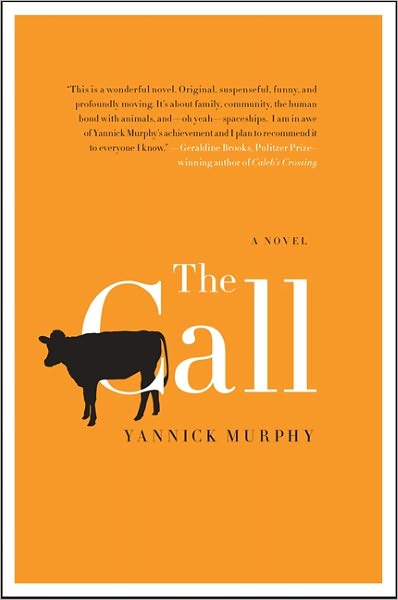
“The Call”: A wry take on rural life

Yannick Murphy's quirky new novel tells the story of a Vermont man and his family in quick, clever dispatches

Yannick Murphy’s last novel, the alluring “Signed, Mata Hari” (2007), channeled the seductive voice of the glamorous Dutch-born exotic dancer who was executed by the French in 1917 for purported espionage. With “The Call,” Murphy returns closer to home — way closer — though not to the tough, gritty New York City of the 1970s described in her autobiographical coming-of-age tale, “Here They Come” (2006).

“The Call” takes the form of a series of wry, terse bulletins about the stresses and joys of work and family. The narrator — or diarist — is a veterinarian who lives in rural Vermont with his wife, a harried homemaker/writer, their three children, and their two Newfoundland dogs. (Yannick Murphy lives in rural Vermont with her veterinarian husband, three children and two Newfoundlands.) If this sounds prosaic, let me stress that “The Call” is anything but: It is fresh and beguiling on several levels.

First, there’s the unusual outline format, in which the narrator, David Appleton, telegraphs his daily thoughts and activities in descriptions pared to the essentials but flecked with humor. For example: “CALL: A cow with her dead calf half-born. ACTION: Put on boots and pulled dead calf out while standing in a field of mud. RESULT: Hind legs tore off from dead calf while I pulled…. WHAT THE CHILDREN SAID TO ME WHEN I GOT HOME: Hi, Pop.”

Packed into the clever, clipped entries is all sorts of quirky information, providing fascinating glimpses into what, for many readers, will be a world almost as exotic as that of Mata Hari. The narrator receives calls for “colicking” horses, “chokes,” prepurchase exams, difficult births, and putting down lame animals. His tools include an emasculator for castrating a draft horse, a tube to snake through a colicking horse’s nostrils in order to pipe oil into its stomach, gentamicin injections for a shire’s respiratory infection, and portable X-ray equipment. His clients include an old woman who takes her beloved sheep, named Alice, with her to church, and a man who winters his cows in his basement. The good doctor is reminded the hard way — with an eyeful of spit — never to look an alpaca in the eye. Ducks, we learn, unlike chickens, defecate liquid, and the pig is the rare animal that uses mirrors the way people do. Among the goods David is offered in exchange for his services are mutton, maple syrup, and a pet rat — which, in deference to his wife’s sensibilities, he declines.

All this is plenty to hold our interest, but there’s also dramatic tension. “The Call” spans four seasons, beginning with the fall, when David takes his oldest child, 12-year-old son Sam, deer hunting for the first time. In order to spot their prey, they climb onto two wooden tree stands on their property. When Sam is knocked off his perch by the impact of a gunshot hitting his shoulder — mistaken for grouse by a fugitive hunter — David “can’t get to him fast enough.” He rushes Sam to the hospital, where he languishes in a coma, his future uncertain. His wife reacts with rage. David obsesses over finding the man responsible, surprisingly difficult in a town of 600 with 100 hunting licenses.

Murphy’s narrator is an idiosyncratic guy. He’s convinced that he keeps seeing spacecraft — one of the book’s less engaging leitmotifs meant to highlight David’s sense of the myriad dangers always lurking and ready to upend his family’s happiness and safety. There’s an additional plot development (which I won’t give away) concerning a caller who tests the family’s moral fiber. The book would have been fine without it, though it demonstrates the lengths to which the narrator will go to protect the people and animals he cares about.

All is not hunky-dory at chez Appleton, but it’s a loving home nonetheless. Their bedroom is abuzz with flies. Their diapered pet rabbit is given free rein. Work is worrisomely slow. The couple fight: “WHAT MY WIFE CAN DO: Make me angrier than I have ever been. WHAT OUR NEWFOUNDLAND DOGS DO: Never make me angry.” His reaction when she rants about the household mess or hounds him to have his abnormally high PSA levels rechecked is to run outside with his kids.

It’s fascinating to read about all this from a male point of view, as imagined by a woman, and even more intriguing when one considers Murphy’s authorial flexibility and generosity in stepping outside herself to show the wife in a less than flattering light and give the husband the last word. One of David’s entries reads: “THIS IS WHAT I WANT ON MY TOMBSTONE: He loved his children.” The portrait of family life that emerges in “The Call” — at once ironic and warm — is “as layered as something in nature.” Wonderful.

Continue Reading Close

Page 1 of 2 in Heller McAlpin

www.salon.com/writer/heller_mcalpin/index.html