Ingrid Ricks

When my dad and I were hustlers

We slept in his truck and lived off our wits. The experience brought us together in a way nothing else could

Dad and I were vagabonds. It’s a lifestyle he’d been living for years, and one I had begged to join since I was 4. Now that I was 13 and on the run from a cruel Mormon stepfather, he and I had finally joined forces. We’d quickly become two of the best tool hustlers in the Midwest.

Every morning at six, we’d gas up at a 7-Eleven and treat ourselves to a Diet Dr. Pepper to get our juices flowing.

“What’s our saying?” Dad would yell as he turned the key in our old brown Dodge pickup.

“The early bird gets the worm!” we would shout in unison.

It was the early 1980s and the oil boom was in full-swing. Our sales strategy consisted of driving the back roads of Oklahoma, Arkansas, Kansas and Iowa looking for prospects. We kept our eyes peeled for the lone gas station attendant or a do-it-yourself mechanic working on his car. But what interested us most were the oil rig sites where, at any given time, a group of two or three migrant workers could be found taking a smoke break or digging into the sandwiches they’d brought from home.

“These guys have so much money in their pockets they are just waiting for an opportunity to spend it,” Dad would say as we pulled up to a job site. “Well, they are about to get their chance.”

Whenever Dad or I spotted what looked like a good prospect, Dad parked the truck, hopped out and initiated a conversation.

“Is it hot enough for you, today?” he would ask, or “I think it’s quitting time, don’t you?”

If the guy responded positively, Dad would make small talk for a couple more minutes to warm him up. Then he would casually mention that he was liquidating some tools and ask if the guy would like to take a look.

I always waited for the designated moment to bring out the merchandise. Sometimes Dad just looked over at the truck and gave me a quick nod. On other occasions, it boiled down to time.

“If I’m still gone after five minutes, bring me a wrench set,” he would say as he left the truck.

When it was time, I grabbed the agreed upon tools from the back of the truck, ran to Dad’s side and flashed my warmest smile. When our prospect saw that Dad had a daughter with him, it usually softened him up and he was willing to spend $15 even if he didn’t need a wrench set. Unlike my siblings, who viewed our father as a stranger who rarely visited, I understood Dad and his need to be free. But it was during those long hours on the road that I really began to see what drove him.

Dad filled me with stories about his childhood. He told me about growing up on a farm in a four-room shack without heat, running water or even an indoor toilet. Each morning at 4 a.m., Dad helped Grandpa feed the pigs and milk the cows. Then he headed off to elementary school while Grandpa traveled sixty miles to a construction job — which barely netted enough to cover the basics for a growing family that would swell to 11 children.

“I would read these books on slavery and about how slaves were given a rundown shack and a little food in exchange for their labor,” Dad told me as we drove down the road. “Then I would look at my dad and realize he was a slave. He worked so hard every day and all he got in exchange was barely enough to put a shack over our heads and feed us. I decided that I was going to do whatever it took to escape that life. “

To others, Dad and I might have looked like slaves ourselves. Each day we were forced to earn enough money to survive until the next and rarely took time off. When we had a good sales day, we rented a room at a Motel 6. When we didn’t, we crashed in a rest area or a truck stop parking lot.

We spent 12 hours a day in a hot truck without air conditioning. But to Dad and me, it was paradise. Each morning we headed out on an open highway, the truck taking us wherever we wanted to go as we belted out the lyrics to Willie Nelson’s “On the Road Again,” our theme song. And unlike the never-ending home church sessions and suffocating, rigid lifestyle I faced at home, Dad and I had only one rule: sell tools.

With the pressure always on us to make money, we rarely had time for entertainment. But we occasionally took a break and treated ourselves to a movie or a steak and baked potato at Shoney’s. We also had a standing weekly date with the TV show “Dallas.” Dad loved the main character, J.R., both because he was a savvy, ruthless businessman who had millions of dollars, and because Dad’s name, Jerry Ricks, shared the same initials.

“You know what time it is, don’t you?” Dad would say each Sunday night, a few minutes before the show was to begin.

“It’s Dallas time!” I would call out.

If we were at a motel, we kicked back on our beds with a can of Diet Dr. Pepper a piece and flipped on the TV. If we were spending the night in the truck, we found a truck stop lounge, plopped down on one of the couches, and lost ourselves in the lives of J.R., Sue Ellen and the rest of the Dallas gang.

Our time on the road together ended when I started my junior year in high school. Dad and I had a run-in with the law that had shaken both of us and made me rethink our lifestyle. But more than that, I was now sixteen and wanted to date and hang out with friends. Dad was also ready to move on. He had met a woman we both knew would take my place on the road.

Our lives drifted apart. He got married and eventually so did I. We both started new families and settled in different parts of the country.

Dad’s now almost 72 and at 44, I’m the age he was the last summer we traveled together — with a 12-year-old daughter of my own who’s a lot like I was back then.

I called him the other day to tell him I would be in his city the last week in June. We’d had a rare, explosive argument a few weeks earlier and I knew we were both hurting. We needed to recapture the magic of our time together — back when it was just the two of us, a truck full of tools, an open road and Willie Nelson singing on the radio.

“How about if we have a dad/daughter date, just you and me,” I said into the phone, feeling myself yearning for the past. “I’ll take you out for a nice dinner and maybe we can even rent a motel room, just like old times.”

“Yes. Absolutely,” he said, the heavy weight lifting from voice. “We need that, you and me. We really do.”

He paused for a moment and I knew what was coming.

“Maybe I should load up an old truck with tools and you and me hit the road for a week or two. What do you think about that?”

I smiled at the up-tick in his voice.

“Yeah those days were really something, weren’t they, Ingrid?” he continued, his voice trailing off. “Whatever happens in life, no one can ever take that away from us.”

I pulled a Playboy Bunny stunt on my dad

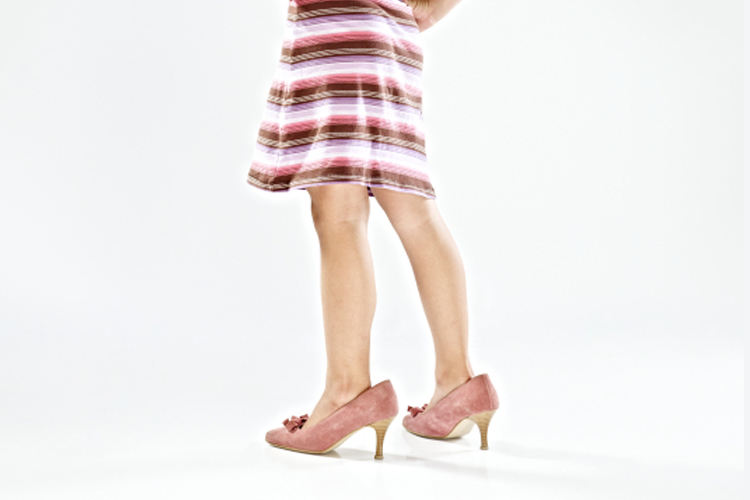
At 10, I thought dressing up in sexy clothes and jumping out of his birthday cake would impress him. It didn't

It’s hard to say why I thought my dad would love me more if I was sexy.

But with him gone all the time and my mom, my two sisters and me all vying for his attention, I knew I was going to have to do something big to get noticed. And what could be bigger than jumping out of a cake in a string bikini?

I’d watched a Playboy Bunny do this on TV a few days earlier and it was the first thing that popped into my 10-year-old mind when Dad called to say he would be home for his birthday.

I didn’t own a string bikini and had no clue how to make the trick cake that was used on TV. But I concocted a modified version that I was certain would elevate me to favorite-child status.

Early on the morning of Dad’s late summer birthday, I recruited my 8-year-old sister, Heidi, to help me make a chocolate cake. Dad wasn’t due home until 4 p.m., but I wanted to make sure there was plenty of time to execute my plan.

“What I want you to do is wrap me in a box with the cake and then I’ll jump out and surprise him,” I told her while we frosted the cake and carefully arranged 37 candles.

I spent hours getting ready. As a young Mormon girl, a bikini of any sort was out of the question. But I dressed in the most revealing outfit I owned, a strawberry-patterned terry-cloth shorts and halter top outfit my cousin had recently donated. I brushed my long auburn hair until it was smooth and glossy, and softened my lips with Vaseline. I even sneaked a little of Mom’s mascara to make my eyes pop.

To substitute for the confetti the girl in the bikini used, I convinced Heidi to help me cut up the Sunday paper into thin strips. We then headed to the cellar to retrieve the cardboard box Mom used to haul around her canning bottles. Together, we dragged the box up the wooden stairs and positioned it near the front door.

At 3:30 p.m., I climbed in. The box was just big enough for me to sit down in if I pulled my knees into my chest. Heidi handed me the cake pan, which I balanced on my knees. Then she shoved the newspaper strips into the cracks on either side of me.

Once that was done, she set to work wrapping the box.

“Hurry up,” I urged from behind the cardboard walls. “He’s going to be here any minute.”

Heidi finished wrapping just before 4 p.m. and went to hide in the living room.

Ten minutes passed. Then 20.

My legs started to cramp and the air in the box turned hot and clammy.

“Heidi, I can’t breathe!” I yelled. “You’ve got to get me some air!”

She ran to Mom’s sewing room, grabbed a pair of scissors and punched holes in the back of the box. Then she headed back to her hiding spot.

We waited. There was no sign of my dad.

After an hour and a half, Mom announced that she and the other kids were going to the neighborhood block party for some sloppy Joes. I loved sloppy Joes and had been looking forward to the party all week.

“OK. I’ll be over in a few minutes — just as soon as Dad gets here,” I called from inside the box.

Time slowly ticked away. To keep me company, Heidi came out of her hiding spot and sat next to the box. We talked about the surprised look on Dad’s face when he opened his present.

Another half-hour passed before the phone rang. Heidi ran to answer it. It was Dad.

“I’m running a little late,” he told her. “I should be there in a half-hour or so.”

Heidi decided this would give her plenty of time to head across the street for some food. I envisioned all my neighbors laughing and having a good time. Along with the sloppy Joes, I knew there would be potato chips and orange soda — food we were never allowed to eat at home.

As I heard the door shut behind Heidi, I ignored my growling stomach and focused my thoughts on Dad and on how happy I would make him.

The minutes crawled.

Sweat rolled down my back and I could feel the newspaper strips sticking to my legs. I wiggled my feet to keep them from falling asleep.

Heidi returned after a few minutes. The block party ended soon after and Mom, my 13-year-old sister, Connie, and my 5-year-old brother, Jacob, came home as well.

“What are you doing?” Connie asked as they filed past the box. I could feel her eyes rolling in her head.

Heidi punched a few more holes into the back of the box so I could breathe more easily. Finally, at 7 p.m., Dad arrived.

“Hi, Dad,” Heidi said the moment he opened the door. “Open your present.”

I was dripping with sweat and my hair was matted against my face. The chocolate frosting had melted and dark smudges of ink from the newspaper confetti covered my thighs.

“Surprise!” I yelled as I struggled to stand up.

A long second of silence followed. The room was so quiet I could hear my heart beat.

“Well, this is nice,” Dad said finally.

I heard the hesitation in his voice as he eyed both me and the cake. I was suddenly mortified by my bare stomach and sweaty, ink-covered body. I didn’t need a mirror to know how ridiculous I looked. I saw it in Dad’s face.

“I tell you what,” he said, pushing past me as he spoke. “I have to make a quick phone call and then we’ll eat.”

I watched him head for the kitchen, leaving me standing in the box with the cake and confetti. Heidi trailed behind him, anxious to distance herself from the spectacle she had helped create.

My face flushed with shame. For a minute, I was too stung to move. I just stood there in my sweaty, inky mess. I could feel the tears welling up but I refused to let them come. I didn’t want my family to see the extent of my humiliation.

I waited for a few minutes to pull myself together. Then I carefully climbed out of the box with the cake, forced my mouth into a smile and headed for the kitchen.


Continue Reading Close

Rescue me from my life, Marie Osmond

As a kid, I pretended TV's richest singing Mormons were going to save me from my crazy, dirt-poor existence

Being stuck in a dirt-poor family with a zealot Mormon mother and an explosive, absent dad wasn’t what I had in mind for my life. 

Between our daily, hour-long home church sessions to save our souls, monthly trips to the church welfare office to beg for food, and irregular visits from my dad that always ended in screaming fits, kicked-in walls and broken furniture, I had reached my breaking point and started fantasizing about a way out.

At age 9, with nowhere to run, I adopted a daily mental escape ritual that consisted of locking myself in my attic room, lying down on the stack of mattresses that constituted my bed, closing my eyes and dreaming about my real family — the Osmonds — who would soon come to take me away.

I settled on the Osmonds because they were rich, famous and Mormon, and I figured they already had so many kids that throwing me into the bunch wouldn’t make a difference. My fantasy was always the same. There had been a horrible mix-up in the hospital nursery on the day I was born and I had been given to the wrong family. For years the Osmonds had been secretly looking for me. They couldn’t advertise it because they didn’t want hundreds of kids coming out of the woodwork claiming to be theirs, so it was taking longer than it should have. But any minute now, I expected them to knock on the door and save me. 

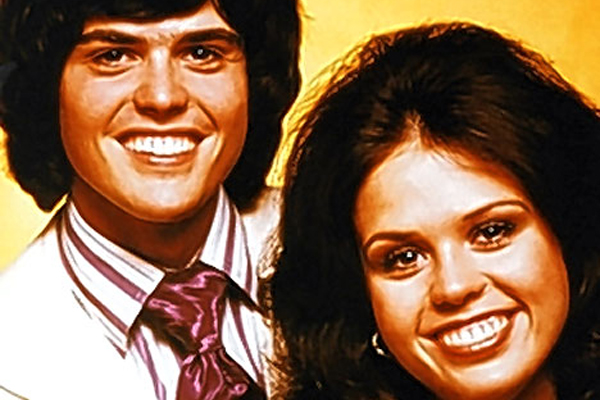
I imagined how angry Donny would be when he discovered that his little sister had been living in such awful conditions. Once rescued and driven the hundred-mile journey by stretch limo to the Osmond compound, he would take me into his room — which I knew from reading Tiger Beat magazine could only be entered through a tunnel — and sit me down on his bed, which I envisioned would feature a purple quilt since purple was Donny’s favorite color.

“I’ll never let anyone hurt you or treat you like that again,” he would fume, putting his arm around me protectively and holding me close.

Wrapping up our private talk, the two of us would make our way back through the tunnel and out into the living room, where all of my other brothers, and my sister, Marie, would smother me with hugs and tell me how sorry they were for losing me. I would pretend to be angry at first, just so they knew how hurt I was. But then I would melt from their love and affection and tell them that I forgave them.

After feasting on a celebration dinner at a fancy restaurant nestled against the mountains in Provo, Utah, we would head back to the Osmond compound where a surprise would be waiting for me. My new parents would walk me into my bedroom, a big, beautiful room with delicate wallpaper featuring tiny purple violets and plush cream-colored carpet. In the center of the room would be a large, four-post bed with princess curtains and a white, lace-lined down comforter. Amid my squeals of delight, Marie would come into the room, gently take me by the hand, and lead me to my walk-in closet, which would be packed with Calvin Klein jeans, thick hand-knitted sweaters and a dozen or so pairs of Cherokee-brand shoes.

My daydreams were so vivid they began crossing over into real life. I started making daily phone calls to an Osmond Ranch I had located in Paradise, Utah, hoping that Donny, Marie or their youngest brother, Jimmy, would answer. I was so sure the Osmonds were coming for me that I sat glued to “The Donny and Marie Show” each week and then headed down to the cellar where Mom stored our church-mandated food supply to mimic their songs. As the youngest and newest Osmond, I figured I would be joining the Donny and Marie act and I wanted to be prepared.

My sister, Connie, also an Osmond fan, was disgusted by my near perfect delivery of “Paper Roses,” Marie’s signature song.

“You know, you could get sued for copying her like that,” she bellowed once when she caught me mid-act. “They have copyright laws!”

I ignored her and kept singing. Inside, I was ecstatic. I knew I sounded good and her protests only confirmed it. When my family came for me, I would be ready.

My Osmond rescue fantasy sustained me until I was 12, when I began escaping my life for real by joining my dad on the road as a tool-selling vagabond.

By my mid-teens, I wanted nothing to do with the Mormon religion and certainly didn’t want to be rescued by anyone practicing the faith. But over the years, I’ve held a soft spot for the Osmonds, especially for my fantasy sister, Marie.

I secretly cheered for Marie a few years back when she appeared on “Dancing With the Stars,” and quietly mourned her loss when her oldest son committed suicide last year.  I’ve followed her struggle with depression and rocky marriages, and have sent dozens of silent prayers her way. Now, when I see her on Nutrisystem commercials, beaming and beautiful after dropping 50 pounds, I celebrate her victory.

Though I rarely do it out loud, I’ll always be rooting for Marie, Donny and the rest of the Osmonds. Because when I needed it most, they were there to help me through. 

If you have a story about how pop culture saved you, send it to savedbypop@salon.com, or blog your story on Open Salon and tag it “saved by pop.”

Continue Reading Close

What I learned by going blind

I was terrified I wouldn't see my girls grow up. But as I lost my sight, I began to focus on what really mattered

Going blind sucks. So does walking into an eye doctor’s office for the first time in your life with trendy red cat-eye frames already picked out, only to be told that you’ve got a serious problem that no glasses — regardless of how good they look on you — are going to fix.

I was 37 when I was diagnosed with retinitis pigmentosa, a degenerative eye disease that first steals your night vision, then knocks out your peripheral vision, then usually takes what’s left. I should have guessed something was wrong when I sideswiped a car on the freeway after looking into the right lane and seeing nothing. But it was dark and raining, and I chalked it up to that. It wasn’t until I played racquetball with my husband a few weeks later and couldn’t see well enough to score a point that it occurred to me something wasn’t right. So, at my husband’s prodding, I agreed to get my vision checked.

Even after the eye doctor gazed into the back of my eyes and quietly informed me that what he saw resembled a rare degenerative eye disease, I wasn’t overly concerned. After all, I had gotten by fine until now and figured if I did have RP — which he admitted he wasn’t sure about — I was in the very beginning stages. But I knew it was serious when I saw a nurse whispering about me to the retina specialist my eye doctor had recommended, and then heard my name called ahead of a whole roomful of patients with scary-looking eye patches, walkers and canes.

Based on their behavior, I was suddenly convinced I had a brain tumor — a possibility I had uncovered during the countless Google searches I had done in the week since my first eye appointment. So I was initially relieved when the ancient-looking specialist announced that I had all the classic signs of RP. That is, until he told me that I was already legally blind, asked me how I’d ever managed to get by on such limited eyesight, chastised me for waiting so long to get my eyes checked, and then propped me up like a monkey, trained what felt like a car light on my inner eyeballs, forced my eyelids open and invited a string of residents to get an up-close look at an advanced case of RP.

“So what resources do you recommend?” I asked at the end of my torture session, rattling off the list of vision-enhancing nutritional supplements I’d found during my Internet searches. Given that he was the RP expert, I figured he would be a wealth of knowledge. Instead of counseling me on the best vitamin brands, he scribbled down the phone number to the Center for the Blind and shoved it into my hand.

“Here,” he said. “I’ve yet to discover a vitamin or anything else that’s made any real difference with RP. Medical help is at least 20 years out and it’s not likely to benefit you anyway. I’m sorry.”

“What about driving?” I pleaded, sucking in my breath like a 2-year-old.  

“You seem like an intelligent woman,” he said, already turning toward the door. “What do you think?”

I spent the next week huddled in my basement sobbing. I mourned the vision I had lost, but mostly I cried because I was terrified about what awaited me. I cried out of fear I wouldn’t see my two daughters, barely 5 and 2, grow up. I cried about lost future candlelight dinners with my husband and about the burden I feared I would become to him. I cried because I couldn’t drive anymore and because I was scared I wouldn’t be able to work. I cried over lost sunsets and ocean views and any other beautiful scenery I would miss out on. I cried until finally it occurred to me that I could still see and that maybe, instead of mourning the unknown future, I should concentrate on Now.

It’s been seven years since I discovered that my tunnel-vision eyesight wasn’t merely a reflection of what friends have often joked is my tunnel-focused personality. In that time, my vision has shrunk from a 10-degree to 5-degree visual field — fueling a determined quest to halt the progression of the disease and preserve what precious eyesight I still have. Having concluded that the retina specialist was bad for my health, I’ve instead sought out every alternative treatment I can find. I’ve changed my diet, I down Chinese herbs, I undergo acupuncture, I ingest cocktails of vitamins, I stare into a color therapy lamp, I pump electrical micro currents into my eyes, and I try to do daily eye exercises.

In a world of fading vision, I’ve encountered plenty of things to avoid. They include coffee shops that allow dogs (one belly flop onto a hard cement floor amid a Saturday morning coffee crowd is enough), treadmills (flying off of one at six miles an hour hurts), stairs without rails, crowds, darkness and negative people.  

But I’ve also discovered plenty to embrace. Every day I look at my two daughters, now 12 and 9, and soak in their amazing beauty, their smiles and their zest for life. I walk a lot, which means I’ve gotten to know my Seattle neighborhood and the neighbors in it, and I’m in good shape as a result. I eat better, have grown to love spinach and even have my 9-year-old daughter craving salmon and salad. I’ve learned to accept help from people who extend an arm when it’s dark, that I have a husband who doesn’t shy from adversity, and that living fully in the moment is the best defense against fear.

I’m still feeling my way around this world of semi-darkness. During an evening party a month ago, I spent an hour talking with a woman, only to introduce myself to her a few minutes after we had parted ways. The next night, after tucking my daughters into bed and making myself some tea, I went searching the house for my latest issue of the New Yorker. I rounded a dark corner too sharply, smashed into the divider wall, and cracked open my forehead — leaving an inch-long vertical gash extending mid-forehead to my eyebrow. My husband cleaned up the blood and cinched up the wound as tight as he could with a bandage, then warned me I might not want to look in the mirror.

Gazing at my reflection the other day, I found myself lamenting over the fact that the new scar on my face wasn’t going away. Then it occurred to me that the alternative was not seeing the scar at all.

That’s when I discovered something new to embrace. Because every time I see the scar, I’m reminded to stay vigilant about doing everything I can to save my remaining eyesight. But I’m also reminded to focus on what matters in life — my family, my friends, this moment. I try never to lose sight of that. 

Continue Reading Close
www.salon.com/writer/ingrid_ricks/index.html