BERLIN (AP) — Germany’s economy slipped into reverse in the last quarter of 2011 in spite of showing strong overall growth for the year of 3 percent, the country’s Federal Statistics Office said Wednesday.
The country’s annual growth rate was achieved in spite of the financial crisis in Europe which has other economies such as Greece, Spain and Italy struggling with huge debts and slumping output.
“The German economy again grew robustly in 2011,” the statistics office, Destatis, said in a statement.
In 2010, the German economy grew by 3.7 percent after a painful contraction of 5.1 percent in 2009, which was by far its worst showing since World War II.
While the 2011 growth figure was as expected by analysts, the statistics office also said that the German economy likely contracted by 0.25 percent in the last quarter of 2011. The exact figure for fourth quarter growth is due only in mid-February and could be revised.
Joerg Kraemer, the chief economist for Commerzbank, expressed little surprise regarding the slowdown and told German news agency dapd he expected the economy to shrink in the first quarter of 2012 as well. That would put it in a recession, technically defined as two consecutive quarters of economic contraction.
Most recent economic indicators suggest 2012 will be a tough year, both for Germany and the rest of Europe.
“While the German economy grew very strongly in the last two years, this year’s growth will be much lower, especially because of the crisis in the eurozone,” Ferdinand Fichtner, the head of the DIW economic institute, said in a statement.
Germany’s 2011 growth puts it in a small group of strongly performing eurozone countries, along with Finland, Austria, Slovakia, and Luxembourg. France should see more moderate growth of around 1.7 for the year, according to the International Monetary Fund, while output stagnates amid high unemployment in Spain and Italy, the recent focus of the debt crisis.
Greece and Portugal, bailed out to avoid default, are in deep recessions.
Germany should outperform the United States, which announces 2011 GDP data on Jan. 27; the IMF has estimated 1.6 percent for the year. The figure remains far short of emerging economies such as China, estimated at 9.5 percent, and India at 7.8 percent.
But it did help bring Germany’s deficit down to only 1 percent of gross domestic product, well below the limit of 3.0 percent enshrined in the eurozone’s rules.
Germany’s strongest growth was seen in the first six months of the year, when consumer spending rose 1.5 percent — the biggest increase in five years.
Exports were also strong, according to Destatis, growing 8.2 percent compared with the year before. Imports rose 7.2 percent.
Simon Junker, an expert with the DIW institute, warned that expectations for the economy in 2012 were damped by the eurozone crisis and that both exports and imports would slow down.
“Germany’s strongly export-driven economy will not be able to elude the slowdown of the global economy,” Junker said. “Especially German exports will suffer from the eurozone crisis.”
However, the DIW said, there is reason to be optimistic if the eurozone governments “manage to quickly and believably contain the crisis.”
___
McHugh reported from Frankfurt.
BERLIN (AP) — Germany’s economy slipped into reverse in the last quarter of 2011 in spite of showing strong overall growth for the year of 3 percent, the country’s Federal Statistics Office said Wednesday.
The country’s annual growth rate was achieved in spite of the financial crisis in Europe which has other economies such as Greece, Spain and Italy struggling with huge debts and slumping output.
“The German economy again grew robustly in 2011,” the statistics office, Destatis, said in a statement.
In 2010, the German economy grew by 3.7 percent after a painful contraction of 5.1 percent in 2009, which was by far its worst showing since World War II.
While the 2011 growth figure was as expected by analysts, the statistics office also said that the German economy likely contracted by 0.25 percent in the last quarter of 2011. The exact figure for fourth quarter growth is due only in mid-February and could be revised.
Joerg Kraemer, the chief economist for Commerzbank, expressed little surprise regarding the slowdown and told German news agency dapd he expected the economy to shrink in the first quarter of 2012 as well. That would put it in a recession, technically defined as two consecutive quarters of economic contraction.
Most recent economic indicators suggest 2012 will be a tough year, both for Germany and the rest of Europe.
“While the German economy grew very strongly in the last two years, this year’s growth will be much lower, especially because of the crisis in the eurozone,” Ferdinand Fichtner, the head of the DIW economic institute, said in a statement.
Germany’s 2011 growth puts it in a small group of strongly performing eurozone countries, along with Finland, Austria, Slovakia, and Luxembourg. France should see more moderate growth of around 1.7 for the year, according to the International Monetary Fund, while output stagnates amid high unemployment in Spain and Italy, the recent focus of the debt crisis.
Greece and Portugal, bailed out to avoid default, are in deep recessions.
Germany should outperform the United States, which announces 2011 GDP data on Jan. 27; the IMF has estimated 1.6 percent for the year. The figure remains far short of emerging economies such as China, estimated at 9.5 percent, and India at 7.8 percent.
But it did help bring Germany’s deficit down to only 1 percent of gross domestic product, well below the limit of 3.0 percent enshrined in the eurozone’s rules.
Germany’s strongest growth was seen in the first six months of the year, when consumer spending rose 1.5 percent — the biggest increase in five years.
Exports were also strong, according to Destatis, growing 8.2 percent compared with the year before. Imports rose 7.2 percent.
Simon Junker, an expert with the DIW institute, warned that expectations for the economy in 2012 were damped by the eurozone crisis and that both exports and imports would slow down.
“Germany’s strongly export-driven economy will not be able to elude the slowdown of the global economy,” Junker said. “Especially German exports will suffer from the eurozone crisis.”
However, the DIW said, there is reason to be optimistic if the eurozone governments “manage to quickly and believably contain the crisis.”
___
McHugh reported from Frankfurt.
Continue Reading
Close
Germany reported two more deaths and 300 more E. coli cases Wednesday, but its health minister insisted that new infections were dropping, giving some hope that the world’s deadliest E. coli outbreak was abating.
Health Minister Daniel Bahr spoke before an emergency meeting in Berlin with health officials from the European Union, which is getting concerned about Germany’s handling of the crisis.
“I cannot yet give an all-clear, but after an analysis of the numbers there’s reason for hope,” Bahr told ARD television. “The numbers are continuously falling — which nonetheless means that there can still be new cases and that one unfortunately has to expect new deaths too — but overall new infections are clearly going down.”
Bahr said the death toll has risen to 26 — 25 in Germany plus one in Sweden.
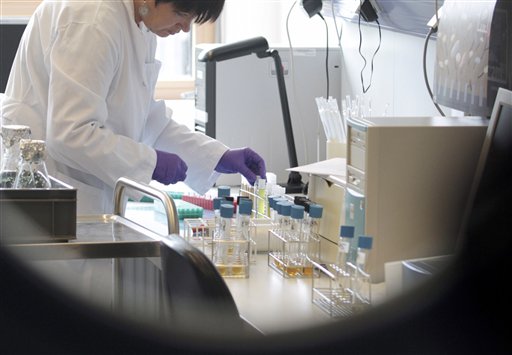
Germany’s national disease control center, the Robert Koch Institute, said the number of reported cases in Germany rose by more than 300 to 2,648. Nearly 700 of those affected are hospitalized with a serious complication that can cause kidney failure. Another 100 E. coli cases are in other European countries and the United States.
The Koch Institute did not fully back Bahr’s optimism. It said there was a declining trend in new cases but added it’s not clear yet whether that’s because the outbreak is truly waning or whether it’s because consumers are staying away from the raw vegetables believed to be the source of the E. coli.
EU health chief John Dalli, meanwhile, demanded that German health authorities work more closely with international experts in fighting the deadly epidemic, saying they should use “the experience and expertise in all of Europe and even outside of Europe,” according to the Die Welt newspaper.
“The focus of this meeting is to ensure that all the steps are being taken to get to … the final elimination of this contamination as soon as possible and to see whether any more resources and efforts should be made,” Dalli told reporters as he went into the Berlin meeting.
Outside health experts and even German lawmakers have strongly criticized the German investigation, saying the infections should have been spotted much sooner.
Weeks after the outbreak began on May 2, German officials are still looking for its cause. Spanish cucumbers were initially blamed, then ruled out after tests showed they had a different strain of E. coli. On Sunday, investigators pointed the finger at German sprouts, only to backtrack a day later when initial tests were negative.
On Wednesday, the agriculture minister of Lower Saxony, who had first warned of eating sprouts on Sunday, said authorities are still expecting new lab results from an organic farm that has been the focus of their investigation.
Gert Lindemann said authorities still considering the farm in Bienenbuettel in northern Germany a possible source for the E.coli outbreak.
Bahr reiterated that the source of the infection may never been found, a stance U.S. experts have called a cop-out.
A warning against eating cucumbers, tomatoes, lettuce and vegetable sprouts is still in place.
Consumers across Europe are shunning fruit and vegetables, with EU farmers claiming losses up to euro417 million ($611 million) as ripe produce rots in fields and warehouses. On Tuesday, Spain, Italy and France angrily demanded compensation for their farmers who have been blindsided by the huge losses in the E. coli outbreak.
The outcry forced the EU farm chief to increase his offer of aid to over euro150 million.
Grocery stores in Germany are reporting losses up to 40 percent in sales of fresh produce, daily Bild reported.
In China, authorities ordered stepped-up health inspections for travelers arriving from Germany to prevent the super-toxic strain from reaching its shores.
David Rising in Berlin and Gillian Wong in Beijing, China contributed reporting.
Continue Reading
Close
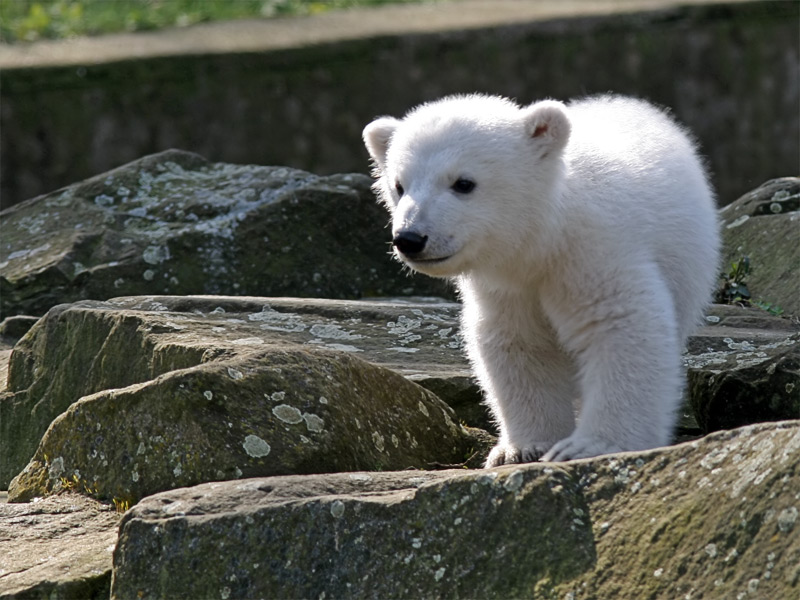
Berlin’s beloved polar bear Knut, an international star who as a cuddly, fluffy cub graced magazine covers, movies and merchandise, died Saturday. His death at the young age of four took zookeepers and animal experts by surprise.
The celebrity bear died suddenly in his compound at the Berlin Zoo on Saturday afternoon, bear keeper Heiner Kloes told The Associated Press. He waded into the water in his enclosure before having a short spasm and then dying in front of hundreds of zoo visitors.
While the life expectancy of polar bear in the wild is between 15 and 20 years, animals in captivity can live even longer because they are not exposed to hunger, thirst or infections. A postmortem will be conducted on Monday to try to pinpoint the cause of death, Kloes said.
“He certainly did not die of old age,” Thomas Pietsch from the Vier Pfoten group for the prevention of cruelty to animals told German news agency DAPD.
His death was met by an immediate outpouring of sorrow. As the news of Knut’s death spread through the city, more Knut fans showed up at the zoo, assembling in front of the bear compound to mourn his loss.
Berlin Mayor Klaus Wowereit called Knut’s death “awful,” telling the B.Z. daily, “we all held him so dear.”
“He was the star of the Berlin zoos,” he said.
Rejected by his mother at birth on December 5, 2006, along with his twin brother, who only survived a couple of days, Knut first attracted attention when his main caregiver, Thomas Doerflein, camped out at the zoo to give the button-eyed cub his bottle every two hours. Doerflein cuddled and played with him at daily public appearances to the delight of thousands of people who came to watch.
Fan clubs sprung up across the globe, including in Japan, the United States and Germany. Fans followed his every move, including his weight battle — he had a weakness for croissants — or plans to move to a different zoo.
“Knutmania” led to a 2007 Vanity Fair cover with actor Leonardo DiCaprio shot by photographer Annie Leibovitz, a film and plush likenesses. Though the zoo has never released exact numbers, Knut merchandise including postcards, key chains, candy and stuffed Knuts have brought in hundreds of thousands of euros.
He was so adored, and profitable, Berlin’s zoo paid some euro430,000 ($600,000) to the Neumuenster zoo to settle a financial dispute over his ownership. Neumuenster owns Knut’s father and had insisted it was the legal owner of Knut, the elder bear’s first offspring.
No longer a cub, Knut grew rapidly, weighing a hulking 440-pounds (200-kilograms) by age two, and trading in white fluff for yellowish fur. Doerflein, the zookeeper who raised him, died in 2008 of a heart attack, earning front page headlines in German newspapaper as “Knut’s daddy.”
Between 600 and 700 people were at his compound when Knut died, zoo officials said. One visitor said she watched Knut lying on the surface of the water motionless with only his back showing for ten minutes until zookeepers came and fenced off the compound.
“Everybody was asking, ‘What’s going on, why is Knut not moving?’” said Camilla Verde, a 30-year-old Italian who lives in Berlin.
“All the zoo keepers who put up the fences were so very sad. One of them said, ‘He was our baby,’” she said.
Some said they feared Knut had died from all the stress that stardom brings.
“I suspect he died of a heart attack,” said Elke Neumann, who had come to Knut’s enclosure when she heard of his death. “And I hope the medical officials will be able to confirm that it was because of stress.”
———-
Markus Schreiber and Tomislav Skaro contributed reporting from Berlin.
Continue Reading
Close
A tell-all book by a former WikiLeaks insider casts founder Julian Assange as an “emperor” who has become just the kind of public figure he is trying to expose.
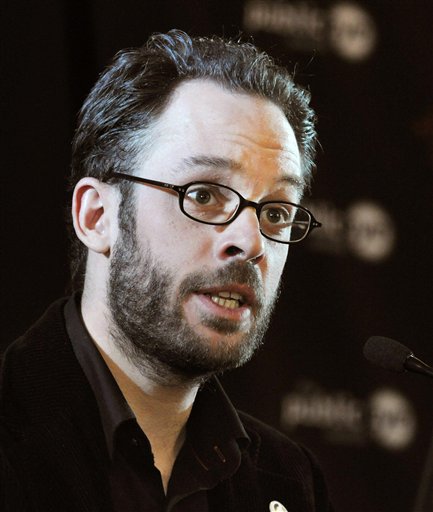
Daniel Domscheit-Berg, the former WikiLeaks spokesman who left the secret-spilling website after a bitter dispute with Assange, writes about his euphoria at the website’s spectacular rise as well as his disillusionment with a leader he describes as delusional and power-crazed.
The Associated Press reviewed a German-language copy of “Inside WikiLeaks: My Time with Julian Assange at the World’s Most Dangerous Website” ahead of its release Friday in 16 countries. Domscheit-Berg was launching the book Thursday with a press conference.
“WikiLeaks turned pale computer geeks, whose cleverness otherwise would not have been noticed by anybody, into public figures, who put fear into politicians, CEOS and military chiefs around the world,” he writes in the book.
But Domscheit-Berg, who last month launched a rival website called OpenLeaks, also traces the arc of an increasingly fraught relationship that eventually erupts into conflict.
WikiLeaks’ original mission to “control the power executed behind closed doors and to create transparency, where it was being denied” deteriorated into a situation in which the group was “gradually corrupted by power and secrecy itself,” he writes.
Disputes sprang up over money, lack of transparency and Assange’s belief in conspiracy theories, he claims. Assange was certain “we wouldn’t be safe walking down the street, that our mail and suitcases were being X-rayed, that we had to go underground … and needed bulletproof vests,” the book says.
The breakup came in September after Domscheit-Berg challenged Assange’s leadership qualities. The former spokesman — who then went by the alias Daniel Schmitt — claims his rebellion got him kicked out of WikiLeaks, something Assange has publicly denied.
“A leader communicates and cultivates trust in himself. You are doing the exact opposite. You behave like some kind of emperor or slave trader,” Domscheit-Berg recounts telling Assange in their final computer chat. WikiLeaks spokesman Kristinn Hrafnsson said he had no immediate comment.
Domscheit-Berg, a 32-year-old German computer scientist, told the AP in an interview that “Assange became exactly the kind of person he despised and wanted to fight.”
“It is therefore very important that it is made clear how everything went down and why, in the end, we decided to leave the project — and that is something that Mr. Assange has described the wrong way,” Domscheit-Berg said.
Domscheit-Berg’s book will be released in Germany, Australia, South Korea, Britain and 12 other European countries on Friday. In the United States, it will be published four days later, on Feb. 15. Other countries including Japan, Brazil, and Russia plan publication soon.
WikiLeaks touched off an international uproar in April 2010 when it released a classified helicopter video showing a U.S. attack that killed two Reuters journalists in Iraq. It later began publishing tens of thousands of U.S. military documents on the wars in Afghanistan and Iraq, and classified U.S. diplomatic cables whose revelations angered and embarrassed the U.S. and its allies.
Assange told a London audience in September that the German had been suspended — although he declined to go into details. He denied there had been a dispute over his management. “It was about a different issue,” Assange said. He refused to elaborate.
Several reporters from The Guardian, The New York Times and Der Spiegel, who were involved in their news outlets’ publication of leaked WikiLeaks documents, have also written books on their dealings with the group and Assange that will be published soon or are already available.
Assange, who is currently fighting an extradition trial in London over rape allegations in Sweden, is also planning to publish his own version of events in April.
In launching OpenLeaks, Domscheit-Berg said he planned to give whistleblowers more control over the secrets they spill. He has criticized WikiLeaks for both receiving documents and aggressively vetting how they are presented to the public.
Continue Reading
Close
Germany’s domestic intelligence service on Monday started a program for Islamist radicals who want to quit extremism, an initiative under which people will be offered help finding new jobs and moving home.
A spokeswoman for the agency, who was talking on condition of anonymity in line with agency policy, declined to say how much money had been allocated or how many employees were working for the program.
However, she said the agency would guarantee confidentiality to users, and also help with safety measures if people seeking to quit are threatened by radicals.
“Our program is an offer for those who want to leave extremism behind,” she said. “Once we find out what their needs are, we will develop the program accordingly.”
The intelligence service estimates there are more than 36,000 Islamist extremists in Germany, but only a fraction of those are considered potentially violent.
The program, which is called HATIF — meaning phone in Arabic — also is aimed at family members or friends of people who have come under influence of extremists.
They can contact members of the intelligence service online or call a specific number. The service is offered in German, Turkish and Arabic.
Germany has not seen a large-scale terror attack, but in recent years, there have been attempts to commit attacks on public transportation and U.S. military bases.
Continue Reading
Close