Madeline Holler

Tyranny of cloth diapers

I gave birth at home and breastfed. My mom was drugged up and never lactated. Which one of us got the better deal?

  • more
    • All Share Services

Tyranny of cloth diapers (Credit: boumen&japet via Shutterstock)

Kids love hearing the story of their birth and, growing up, I was no exception. I came into the world just as feminists began demanding that women be allowed to labor naturally, huffing and puffing their way through contractions, husbands and friends in the delivery room for emotional support.

My mother would have none of that. She was gassed into a twilight sleep and shot up with opiates for the pain. Flat on her back and feet in the stirrups, she pushed on command until I fell into the doctor’s arms. My arrival – another girl! — was announced to my dad, who sat with other bored men in the waiting room. He would first see me through a window, where I was displayed among the other newborns, swaddled tight and sleeping.

One final detail I insisted that my mom include with each retelling: “And then you got a shot?”

“That’s right,” she would say, referring to the heavy dose of estrogen once routinely injected after a birth. “That way my body wouldn’t make milk, and I could go back to work.” I couldn’t help myself; I cheered.

I loved that shot because of what it meant to my mom, something I understood even at a young age. She had tried being a housewife after my sister was born the year before, but the drudgery of washing and folding diapers, the inanity of popular soap operas, the lack of tangible accomplishments at the end of each day, had her clawing her way back to a steadily rising corporate career when I was only 6 weeks old.

Contrast this with my own children’s more feral birth stories, which involve some or all of the following: midwives, birthing tubs, hospital-grade pads lining my sofa and living room floor. And breastfeeding. Lots and lots of breastfeeding. I squeezed what maternity leave I could from federal laws. In the end, though, I quit my job so I could figure out this life-shifting role without the hassle of long commutes, expensive child care, and pumping breast milk while perched over a toilet.

The way I looked at it, I was taking the maternity leave my society didn’t want me to have and that women like my own mother never wanted. But the French feminist and philosopher Elisabeth Badinter argues in her 2010 book, which was finally released in English this week, I was yet another newbie mom screwing things up.

In “The Conflict: How Modern Motherhood Undermines the Status of Women,” Badinter explains that, 30 years ago, things were looking good for a generation of moms in Western Europe – women had total control over reproduction, they had achieved financial independence, wage gaps were shrinking. Then a global economic crisis kicked women off the job, pushing them back in the home and searching for meaning. At the same time, a renewed interest in the environment persuaded grown-ups to look to the earth and tradition for answers. Marry the two, Badinter argues, and a new type of mom was born — one who knew what she wanted for her babies and believed she possessed some innate wisdom to make it happen. Problem is, these moms, the daughters of Badinter’s and my mother’s generation, set women back decades with things like drug-free births, generous, state-sanctioned maternity and paternity leaves, and, of all tools of the Man, cloth diapers.

There’s a new tyrant oppressing women’s lives, Badinter claims. And it’s a nipple-sucking, nap-fighting, incontinent little baby.

Sure, children have been ruining their mothers’ lives since we evolved from chimps. But what makes this snapshot in time so different, according to Badinter, is the fact that modern, emancipated mothers are so complicit in their own destruction. Lactating, co-sleeping, time off from work – that’s a bunch of “naturalist” mumbo-jumbo and a distraction from a woman’s duty to herself and a society that wants to see her as equal but can’t quite get past the milk stains on her blouse. These days, though, not only do women welcome the career interruption, according to Badinter, but they also buy into the idea that mothering is an instinct. So women adopt a “naturalist” lifestyle, carrying their babies, spending time with them, actually purchasing, on purpose, diapers that have to be scraped and washed rather than tossed in the trash.

For Badinter, this naturalist parenting has taken over, triggered mom guilt, convinced us that we should refuse epidurals, breastfeed off-schedule, and, of all things, take advantage of long, paid maternity leaves. Who cares that these things might actually be the woman’s choice, make sense for her family, satiate her curiosity about the thresholds of human pain? By participating, women are ceding power back to men. The men? They don’t have to lift a finger – thanks to moms, they’ve regained control over everything.

I’ve been a modern mom long enough to look at mommy-wars rhetoric like Badinter’s with the skeptical eye of a wounded veteran. I mean, she makes a great case that mothering trends come and go and are rarely based on irrefutable science. Epidurals? Safe. Breast milk? Not all that. Skin-to-skin bonding with babies? Fun but hardly crucial. I think we all know we’re not going to be snacking on placenta forever. Then again, does a home birth really have a negative impact on the stubborn wage gap?

Badinter particularly has it in for breastfeeding, something she thinks too many women have been tricked into and something French women aren’t all that interested in trying. Why bother, she wants to know. It ties moms down, adds a layer of guilt, isn’t any better than bottles and formula. Anyway, it’s taxing – on the woman and her “conjugal partner.” When it comes time to bed down, rather than offering up bountiful breasts for her mate to fondle, moms are pushing fathers to the couch to make room for her new lover – a co-sleeping baby. It’s an arrangement, she recounts with seeming horror, that can last for years.

Badinter’s critique is not surprising, given how zealous the “breast is best” messengers can be. (She dedicates a delightful number of pages to taking down La Leche League.) But as a mom who breastfed her kids for years, I can assure you that nurslings are a ball-and-chain only as much as the outside world won’t welcome them in. In which case, it’s not breastfeeding moms who are undermining women’s status, it’s the same old mother- and child-averse institutions – work, school, swimming pools swarming with conservatives. Modern engineering has made babies a kind of go-anywhere accessory. Problem is, too much of society prefers they’re not anywhere, no matter what they eat.

Badinter isn’t the first aging feminist to accuse younger women of trying to settle the score with their feminist foremothers. Was my decision to take a career break, suckling my babies for years and even, occasionally, wrapping them in cloth diapers a rebellion against my mother’s hard-driving, job-focused ways? The artificial milk and endless hours at a babysitter’s? That’s not how I see it. My mother and I both reacted to the demands of our time. In this book-length attempt to scold the young’uns for screwing up progress, Badinter, like others before her, fails to see that what her generation gave us were real choices.

After I was born, the corporate career window was closing on my mom with every day that I got older. She crawled back through just in time and made a decent life for herself and her family. I, on the other hand, felt like I had time. Sticking with one company for life was as outdated as a postpartum estrogen shot. I didn’t have to rely on the one job that I left. I could start a new career when I was ready. My mother’s urgent return to work had paved a slow and meandering path for women (and men!) of my generation. I wasn’t expected to leave my job to be with my kids, which is exactly why I could consider it.

Generation gaps aside, Badinter’s book ultimately feels outdated. Most of her data comes from the 1980s and ’90s, and family life has evolved dramatically since then. I’m in Year 11 of motherhood, and I feel I’ve witnessed modern parenting change right before my eyes. Where Badinter reports regression for women, I see signs of progress.

Instead of the old-guard patriarchy taking over the wheel, more and more partners share the load – either through necessity or a sincere desire to be with their kids. I have as many stay-at-home-dad friends as I do similarly barely employed mom friends. These dads can work the cloth diapers as well as any oppressed French eco-femme. They heat formula, thaw frozen breast milk and pack healthy lunches. They attend playgroups and work the co-op preschools during the day and send out resumes and story pitches and teach classes at night. Want to piss them off? Just call them “Mr. Mom.” Or tell them they’re doing a great job babysitting their kids.

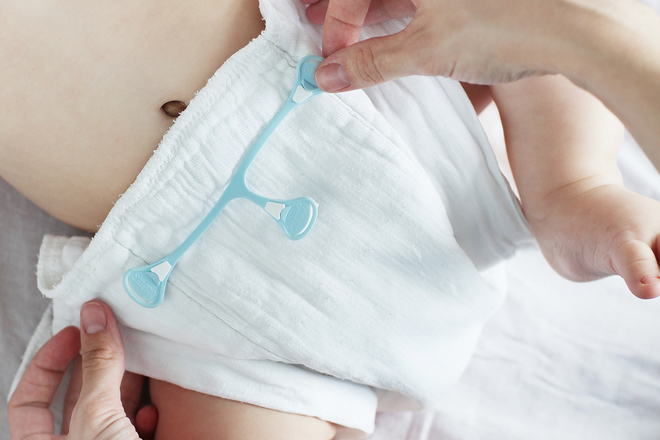
I’m not saying Badinter is completely out of touch with Western mothers’ lives. It’s true that motherhood lowers women’s status. But that’s not a modern phenomenon – and it has little, if anything, to do with cloth diapers. Has she even seen modern cloth diapers and accompanying accessories? If it weren’t for the fun colors and ridiculous brand names (Fuzzi Bunz?), you could easily mistake them for Pampers.

Where modern women do undermine themselves is the constant questioning of their choices and allowing for an onslaught of guilt. No matter what we do, it’s wrong in someone’s eyes – so why do we take any of this criticism seriously? Instead of doing as we please and moving on, as Badinter praises French women for doing, we do as we please and then punish ourselves with guilt. I should know: Though I stand by the choices I’ve made as a mom, this book made me feel like shit. Then again, so did the Tiger Mom treatise and, more recently, the book about how superior French parents are to me. Why so little faith in my own decisions?

My mom, on the other hand, never regretted her estrogen shots or worried that baby formula had made me fat. Yet she absolutely loved the idea that I nursed her grandkids. For a baby shower, she gave me cloth diapers. My mom even managed after a while to stop making negative comments about mothers who didn’t go to work every day. These weren’t slights against me — just an old habit from when she had to defend mothers who did.

Why my kids watched me give birth

I wanted them to witness the pain and emotion of life. Then I started screaming -- and my daughter started crying

  • more
    • All Share Services

Why my kids watched me give birth

Deep into my third pregnancy — days and days past my due date — I asked my two daughters whether they wanted to be at home for the birth.

“No,” my 7-year-old, Beatrice, said.

“No,” echoed her 3-year-old sister, Frances. Frances would chew glass if Beatrice said she thought it was a good idea. I knew she was just going along.

“Fine, but will you be OK if you have to be home while I have the baby?” I asked. “You know, if we can’t get ahold of someone to come get you?”

“No,” Beatrice said.

“No.” That was Frances.

“Well, we’ll figure it out.” That’s my mantra when I’m faced with too many or too few choices. I tucked my daughters in and closed the door.

That night, I went into labor.

I’m not exactly Type-A and planning doesn’t come naturally to me. Added to that, this was my second home birth. It was easy not to get worked up over the details. It wasn’t until two weeks before my due date that I finally requested the results of a first-trimester sonogram and genetics test be sent to my midwife. I had to pay rush shipping for my birth kit — all the sterilized gauze pads, alcohol swabs, gloves and goop the midwife needs at the birth. We had only just picked names. Where to send the girls while I labored and birthed their younger sibling was even lower on my list of urgent tasks.

Ideally, I thought, I’d shoot this baby out during school hours and we wouldn’t need a plan. Everything was falling into place.

Between the short, regular contractions that morning, I helped the girls get ready for school. Once they left, I called my midwife.

“No big deal,” I told her, “but I’m definitely in labor.” Then I updated my Facebook status, “… is in labor!” And I watched TV. In labor.

After the 30-minute school/preschool dropoff circuit, my husband came home, where he would conduct his workday. Between checking e-mails, he rearranged furniture. After editing a manuscript, he set up the labor tub, an inflatable plastic kiddie pool with a noticeable off-gas. I sipped coffee. I contracted. I sipped water. I contracted. “Still having contractions,” I told my midwife around lunchtime. “Still no big deal.”

My husband, Wayne, asked for the plan. “Where are we taking the girls?”

“Not sure,” I said to him. But, at that point, I was. I wanted them with me, the image of their brother’s birth burned in their brains. Not at all for sentimental reasons, though. No, quite the opposite.

Here’s what happens once you’ve given birth at home, which I had, nearly four years before: You’re called a hero, told you’re brave, held up as the opposite of your best friend who had a planned C-section. You’re now the spokesperson for all things “crunchy” (including Waldorf education, which makes you giggle, and vegetarianism, which makes you crave pork chops). Your e-mail address gets forwarded to pregnant sisters/friends/co-workers who want to talk to you about “natural birth.” It’s all a part of the home-birther package.

But the praise isn’t true (like hell, I was a hero), crunchiness gets exaggerated, and the conversations, encouragement and reading lists for the “natural birth” hopefuls, in my experience, mostly led to the operating room. By this third pregnancy, I had grown weary of assumptions people made about me, my lifestyle, my parenting. Just mentioning a home birth was interpreted as judging women who prefer hospitals. I sensed moms offering me excuses for their epidurals when, really? I just wanted to sniff their newborns’ heads. During this pregnancy, I avoided talking casually about the politics and practices of modern-day childbirth. Unless it was with my two daughters.

Them, I wanted to know everything. And they did.

I told and retold their birth stories, I read them other people’s birth stories. We looked at books, talked mechanics. I described the pain, the emotions, the little things (like Beatrice’s hangnail at her birth) and the big things (like crapping on the floor during Frances’).

So it was with education in mind — education with a whiff of indoctrination — that I wanted them to see a woman give birth. Sort of a health class video meant to supplement the textbook and lectures. After all their excitement and knowledge, I was sure they’d enjoy being a part of it.

Three o’clock. No baby yet. Time to pick the girls up from school. My husband filled up the pool with warm water before heading out. Then he left me.

Alone.

And that’s when I started having the baby.

Contractions came on hard and, oh, so frequently.

I called my midwife, who could get to our place in 20 minutes. I called my husband, who hadn’t been gone more than 10.

“Where are you?” I whimpered.

In the background, I heard Beatrice’s worried voice: “Is Mommy OK?”

“Just … can you … hang on,” I interrupted my thought with a loud moan.

“Was that Mommy?” She was scared. I knew that soon she’d be crying.

“Should I come home?” Wayne asked. He had just started the cross-town trip to Frances’ preschool. “What do you want me to do about the kids?”

“Just get everyone and come back,” I said. “We’ll figure it out.”

Another contraction. I hadn’t figured it out. It was too late for a Plan B.

The contractions were suddenly hard. And coming really, really fast. Again, I called my midwife.

“The tub … should I get in the tub or stay out?” I asked. I couldn’t remember if the tub slowed things down or sped them up.

“Stay out of the tub,” she said urgently. “Stay out.”

I stayed out. Every fact I had ever learned about birth shuffled through my mind like flashcards. Lights trigger adrenalin, which slows or stops labor.

I turned on lights.

Noise, voices, talking … takes you out of the zone, gets you thinking, which triggers labor-slowing adrenalin. I turned on NPR. I listened. I thought. So many thoughts! I repeated what I heard, out loud, to the fish spray-painted on the pool. Another contraction. When that was over, I thought some more.

Wine. I was once at meeting of home-birth moms, years before, and I overheard one woman telling her birth story. “I drank a glass of wine to slow things down,” she said. “But my labor wound up totally stalled.”

Totally stalled, totally stalled. I uncorked. I poured. I concentrated on closing-bell stock reports and the Dow.

Now I was groaning. Contracting and groaning. And guzzling wine.

Finally, my midwife arrived, along with her daughter.

Then Wayne arrived, along with ours.

“Hey, guys,” I said before moaning as they walked through the door. My voice was shaky, and I gritted my teeth. Beatrice wouldn’t look at me.

I couldn’t hug her because I needed my arms to tear off my pants, I was so desperate to get into the pool. “Don’t worry, sweetie,” I called out, half-naked and stepping into a pool where our coffee table had been. “This is all very, very normal.”

Frances asked if she could stick her hand in the water, but Beatrice walked straight to her room. She was crying. She was scared.

How could I have not figured something else out?

Beatrice is a sensitive girl, especially when it comes to her mother’s emotional state. She can tell from just a slight change in my breathing that a movie has me choked up. In general, she’s fine with physical pain and sadness — splinters, saying goodbye to grandparents. But she’s not fine with the idea of pain — tweezers with which to extract the splinter, a car ride to the airport.

Knowing this, we had talked about the noise I might make while in labor. We had also talked about possible emergency scenarios. Perhaps I had underplayed the former and overplayed the latter. Either way, each sound I made took her further away from the idea of a sweet baby and closer to the idea of losing her mother.

There was no way to stop and no way to muffle the noise. Our house is small. Less than 700 square feet. She heard every sound I couldn’t stifle. I heard her every stressed-out whimper my groaning triggered.

“Go tell her I’m fine,” I barked to Wayne. “Tell her it only hurts during the contractions.”

Another contraction. I was really loud and couldn’t help it.

Wayne was back at the pool. “She said she’s going to faint.”

“Mommy’s OK,” I yelled. “Come out and talk to …” An agonizing groan finished my sentence. Another contraction.

“I don’t want to!”

“Here,” I said, handing my husband the digital camera. “Take a picture.”

I grabbed my full glass of water … moaned through another contraction … then smiled holding the glass up high as if saying a toast. Click!

“Now go show her I’m smiling,” I growled. Another contraction. Another moan.

A few minutes later, Beatrice came out of her room.

“I don’t want to be here,” she said, crying. I squeezed her hand. And then grimaced.

“Remember what we talked about?” I asked her after the contraction ended. “How it hurts but then it stops?”

“No,” she said. “You said you wouldn’t be very loud.” True. This was definitely my most vocal labor.

An hour later, my midwife tried unsuccessfully to coax me out of the tub. Shortly after that, I felt the urge to push.

That’s when I got really noisy. My half-minute moans turned to deep growls and sometimes ecstatic-sounding pants, which made me self-conscious but apparently Beatrice less worried. Eventually, she and her sister came out and gathered around the pool.

“Reach down and feel the baby,” the midwife urged me. After that, the head was out.

I shut out the noise, pushed through the pain and squeezed my son out the rest of the way. I reached for him while still on my knees and then turned to rest my back against the side of the tub.

Happy, relieved and a little overwhelmed, I threw my head back against the side of the pool to look at Wayne. My cheek brushed against Beatrice as she reached over to touch her brother’s back. I pushed my head into her side, an armless hug, a reassuring nudge. I felt her solid body and her softness next to me.

“Can I hold him?” she asked.

After the cord was cut each sister took turns with their brother. In the meantime, we chatted, I answered the midwife’s questions, remembered to actually nurse the little guy.

“So what did you think?” I asked the girls, the adrenalin rush making me extra-effusive. “Aren’t you glad you were here?”

“Not really,” Beatrice said.

“No,” that was Frances.

I tried. Maybe they’ll thank me later.

Madeline Holler is a writer and mother of three living in Long Beach, Calif. She is a regular contributor to Babble.com’s Strollerderby blog.

Continue Reading Close

I am a Radical Homemaker failure

A new movement of canning, baking moms find inspiration in frugality. Me? I just hate it

  • more
    • All Share Services

I am a Radical Homemaker failure

When my husband told me he wanted to fall back on his Ph.D. and start a career in academics, rather than continue earning piles of gold shoveling rocks for Satan, who was I to argue?

I had left my own short but nicely paid career, thanks to a paltry maternity leave and a too-long commute, in order to spend time with our daughter.

“Sure, honey,” I said. “Follow your dreams.”

“The pay’s pretty low,” he said, before accepting his only offer, a year-long lectureship at a private university in the Midwest.

“How bad could it be?” I thought.

“$36,000 for the year,” he said, a third of what we had been living on.

I picked up the phone and called U-haul.

After we settled, I looked for work but couldn’t find childcare that made part-time work affordable. Instead, we cut back: no ballet, Kindermusik or swim lessons for the kid. No date nights or special gifts for us. We dressed in marked-down Old Navy and filled the car with gas just once a week. I missed my best friend’s wedding.

We ate differently, too: We didn’t go out, I cooked mostly from scratch, we bought ingredients in bulk. I made my own yogurt, thin and sour compared to the $4 buckets of organic plain that we liked.

I didn’t know it eight years ago when we made this move, but spending less instead of earning more nudged us toward the Radical Homemakers movement, a group of educated men and women living as if money’s not everything and working for The Man gets in the way of what is: relationships, health, freedom.

Shannon Hayes, a mother and wife with a Ph.D. in sustainable agriculture, explains this new breed of extreme Hausfrau — which includes lots of men — in her book “Radical Homemakers: Reclaiming Domesticity From a Consumer Culture.” The title sounds a little like an Etsy vs. Goliath tale, but it’s not all about shopping less and locally. More central to the Radical Homemaker agenda is the idea that we don’t have to rely on nameless, faceless corporations to feed, clothe, shelter and entertain us. Instead, we can take ourselves out of an economy that requires endless hours of work while others raise our kids and chemists make our food — all so we can go out and buy stuff that wrecks the planet. We don’t need paychecks — at least, not much of one. We might not even need health insurance. Instead, Radical Homemakers survive on home-grown food, old-timey skills and a willingness to help the neighbors.

No health insurance? Yeah, I wasn’t so radical.

Hayes and her husband live in a converted shack (with a $170,000 solar-powered, multiroom extension) in Waterville, N.Y, where, along with her parents, they raise, process and sell grass-fed livestock on Sap Bush Hollow Farm. The couple grows almost all of their own food and uses the extra to barter for necessary services. Their income, around $43,000 a year, would be modest for a highly educated single, much less a family of four. Yet they get along just fine. It’s not all lamb slaughters and hanging laundry, either. Hayes’ family spent an enviable three months in France one winter and traveled to Brazil for research during another.

My family’s $36,000 was tight and did not include a garden — or France. I marveled at the fact that we managed. Also? I sort of hated it.

I hated the insecurity, that we weren’t funding our retirements, or college or savings.

I hated being left behind. By then, our friends had settled into careers, started families, entered escrow. While they drove new hybrids all over town hunting down backsplashes for new Viking stoves, I was loading up on two-for-one gallons of milk or racing to the zoo before 9 a.m., where I had heard the parking lot attendant would wave me in for free.

In the drop-off line at preschool, tiny mothers climbed like mountain goats into SUVs the size of K2. Our lifestyle came off as quaint or quirky, and these moms sweetly waved down to me in our ’97 Nissan Altima, the difference in altitude fitting.

Which is a terrible attitude for a borderline radical. Effecting change, Hayes writes, means “letting go of our attachments to employment, releasing ourselves from the pressure of the status race … spending more time thinking about what we can do rather than what we can acquire.” I quietly punished myself for not trying harder to find a job, any job, which could have doubled our bottom line and silenced the voices in my head that called me a freeloader. Or worse? A housewife.

Hayes, on the other hand, thinks even Betty Friedan would approve: According to her, Radical Homemakers show what “domesticity can look like in an era that has benefited from feminism; where domination and oppression are cast aside, where the choice to stay home is no longer equated with mind-numbing drudgery, economic insecurity, or relentless servitude.”

Entangling family with green living and quality of life is exactly what gets on the nerves of French feminist Elisabeth Badinter. In her not-yet-translated book, “Le Conflit,” she accuses today’s new mothers of falling for eco- and bio-mumbo jumbo. They willingly breast-feed their kids, give birth at home, leave careers and forgo conveniences like disposable diapers and painkillers during labor. The modern baby, she writes, is “the best ally of masculine domination,” love-struck mothers accomplices in their own demise. It’s reminiscent of author Linda Hirshman’s 2006 book-length admonishment, “Get to Work,” in which she urged mothers to hold on to hard-fought gains for women in the workplace and end that ridiculous “opt-out revolution,” New York Times writer Lisa Belkin’s term for Ivy League-degreed new moms walking out of the firm to go play in the sandbox.

For Hayes, masculine domination is beside the point: Americans (men and women) are oppressed by corporations, money, things, ourselves. Radical Homemakers — Ivy League degrees and all — are the real opt-out revolutionaries. They have a far bigger purpose than Belkin’s infamous subjects ever considered: family, community, planet and social justice.

But the work. Oh, the work! Not spending money is an incredible amount of work. I had considered — sometimes seriously — canning produce as a way to keep costs down. Canning is a common theme in Hayes’ book. Just thinking about putting up a winter’s worth of green beans and apricot jam, though, made me want to take a nap. Even baking all of my own bread sounded dreadful. For me, kneading dough was the physical manifestation of pushing and pressing all of life’s ambitions into one yeasty ball of carbs.

Living on the cheap is exhausting, mentally and emotionally. I don’t mind going without. But for what you do need? That takes planning. It takes so much time.

I enrolled our daughter at a co-op preschool, where, in exchange for low tuition, I wiped down toilets, attended endless meetings and worked several five-hour shifts a month. I spent hours on Craigslist — and days of follow-up — to find a suitable coffee table. Meanwhile, Crate and Barrel had the perfect one in stock. Finding a new shirt to meet up with an editor turned into a soul-crushing ordeal, since I shopped nowhere but Target and Old Navy.

Real Radical Homemakers, Hayes makes clear, approach things differently. They would simply borrow a shirt, build a coffee table, embrace the kneading. They’d call in for backup to help with the beans. Radical Homemakers would give preschool goat-moms the finger. No, wait, they wouldn’t send their kids to preschool in the first place! Really, they’re much stronger people than me. They’d never whine about Crate and Barrel.

“It’s temporary,” my husband would remind me, temporary and good. We had learned to emphasize family not things, books and board games, not cable TV.

But it wasn’t temporary. I had another baby. Eventually, we moved to Southern California, where my husband had been offered a permanent job. Though he was offered significantly more — and I was earning a few bucks freelancing — our move coincided with a housing bubble that forced us into the kind of rentals we hadn’t seen since graduate school: stained carpeting, neighbors who threw all-night parties and pit bulls. Lots and lots of pit bulls.

“We’ve moved backwards,” I sometimes think. Our high-earning, home-owning days are nearly a decade behind us, our 40s staring us in the face.

“But we’re happy?” my husband offers.

Not exactly. What I am is ambivalent. In the last few years, even mainstream culture has been all about green living, hyper-locavorism, Michael Pollan and his five ingredients. Even the biggest corporations attempt to tread lightly on the planet — BP being a notable exception. Really, there’s never been a less embarrassing time to drive a ’93 Ford Festiva, which I sometimes do. The economic meltdown has made frugal living fashionable, purposeful and much less quaint. But go radical? I just can’t. 

I wasn’t raised on a farm (Hayes was), and I’ve never kept a basil plant alive from one caprese salad to the next. I don’t trust myself with a bread starter, much less livestock. Imagining total reliance on a backyard farm makes me cry for my starving children. I am comforted by our growing 401K. And I can’t help it: A little piece of me dies when I notice the baby sitter drives a nicer car than us.

Hayes has an answer for my reluctance: Radicalizing one’s homemaking is a process. First, you renounce (Satan’s not the boss of me! Fuck Crate and Barrel), then you reclaim (you learn how to can). Finally, you rebuild, which means convincing others to radicalize, too. No one gets there overnight. Or, in my case, ever. I’m sure I’m not the only one.

Like a majority of Americans, I’ll always prefer direct deposit to getting paid in chicken eggs. I’m comfortable with the smile-and-wave relationships I have with most of my neighbors. While I share the Radical Homemakers’ family, environmental and social justice values, the way they propose bringing about change requires too much of the kind of work I frankly don’t want to do. I’m fine giving up stuff. But I can’t imagine spending afternoons rendering fat and lacto-fermenting cucumbers. That would be too much like shoveling rocks, even if it wasn’t for Satan.

Madeline Holler is a writer and mother of three living in Long Beach, Calif. She is a regular contributor to Babble.com’s Strollerderby blog.

Continue Reading Close