Maggie Severns

Amazon, the tax bully

After years of fighting, the Internet giant learns to live with the online sales tax

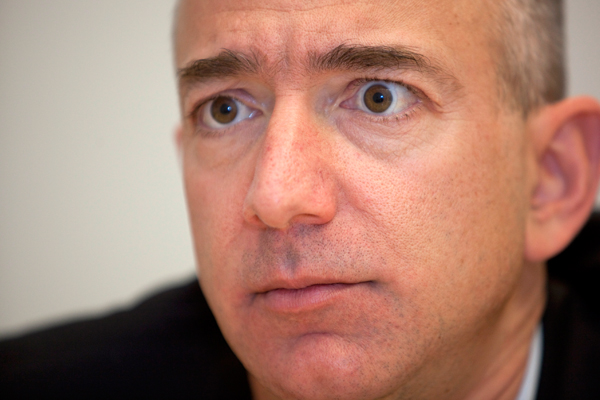
Jeff Bezos of Amazon.com (Credit: Reuters/Kim White)

WASHINGTON, DC– Paul Misener, the vice president for global public policy at Amazon.com, appeared before members of Congress Wednesday to urge it to pass a proposed bill that would require online retailers — including Amazon itself — to collect state sales tax on the goods they sell through their websites.

“Congress should help address the states’ budget shortfalls without spending federal funds, by authorizing the states to require collection of the billions of revenue dollars already owed,” Misener said.

Currently, through a loophole created in 1992, online retailers that do not have physical stores in a state do not have to collect sales tax on the goods that they sell there. This sales tax loophole creates a loss of approximately $23 billion in uncollected state sales taxes every year. During tight budgetary years, state governments are now hungry to collect that money.

Whether Republican or Democratic, state governments have started duking it out with corporations such as Amazon, arguing that having a distribution warehouse in a state counts as having a “brick and mortar” presence there, thus requiring the company to pay sales tax. Recent congressional legislation, introduced by Reps. Steve Womack and Jackie Speier, known as the Marketplace Equality Act in the House, would allow states to opt into collecting sales tax from online retailers without the struggle. (A corresponding Senate bill has been introduced by Dick Durbin, Lamar Alexander and Mike Enzi.

Similar federal-level bills have been introduced in the past, but the new legislation is more flexible for states. The measure has garnered support from both Democrats and Republicans in a Congress that is usually bitterly divided on taxation issues. And Amazon, which was previously the ringleader among online retailers who uniformly opposed the previous bills, has unexpectedly decided to switch sides.  Amazon now supports the federal intervention it once opposed.

The reason for Amazon’s change of heart: the company knows it is fighting a losing battle. “They reached a point where they were fighting so many states — I think they realized that it was in their best interest to finally support a national solution rather than deal with 45 states coming at them from all different directions,” said Jason Brewer, a vice president at the Retail Industry Leaders Association, a group that represents Amazon’s rivals among the big box retailers such as Best Buy and Home Depot.

To Amazon’s chagrin, Texas, New York, Illinois, Tennessee, California and other states have already passed legislation requiring online retailers to pay sales tax. These struggles have not been easy. Often it was Paul Misener himself trying to protect Amazon’s favorite loophole. When Tennessee lawmakers tried to force Amazon.com to collect sales tax, Misener threatened to punish the state by closing its warehouses, costing Tennessee jobs. He eventually brokered an agreement where Tennessee would delay action until 2012 in exchange for Amazon opening two new warehouses that would create 1,200 full-time and 2,000 seasonal jobs.

In California, when Gov. Jerry Brown signed a deal to make the company pay sales tax, Amazon threatened a ballot referendum and gathered over $5 million for signature-gathering to back it up — despite the fact that the R&D lab that created the Amazon Kindle is located in Cupertino, California. Amazon eventually conceded, and agreed to abandon the ballot initiative–in exchange for a delay in the state implementing the new law.

Patrick Byrne, chairman and CEO of Overstock.com, sparred with Misener at the hearing. “Our tax accountants have never let me try something that aggressive,” he said of Amazon’s previous insistence on not paying taxes on goods, even in states where the company has physical offices and warehouses.

Amazon and other online retailers have had good reason to try to keep the loophole open in the past. The loophole gives them  an advantage over their competitors, such as WalMart and Best Buy, that have physical stores in addition to online ones. They have must pay state sales taxes on all goods, even those purchased online.

WalMart, Best Buy, Home Depot and others have clearly felt the sting of Amazon’s success and have fought back in recent years. They established the Alliance for Main Street Fairness to work “to close the anti-small business sales tax loophole,” that is, the online sales tax exemption. Through this organization, WalMart and others take advantage of a momentary alliance between giant corporations and mom-and-pop stores. As the saying goes, the enemy’s enemy is your friend — and right now everyone’s enemy is Amazon.

Amazon seems to have recognized that its attempts to bully states are no longer working. Now the company is adapting its position fast. Amazon is good at adapting. Started as an online bookseller, Amazon has grown with the Internet, now selling everything from lawnmowers to wedding rings. When book sales plummeted, Amazon produced the Kindle, a low-price tablet where buyers can purchase digital books from Amazon with a single click. As the online marketplace grew massive, Amazon created its successful Prime service, which gives customers free shipping, for an annual $79 fee. Amazon actually loses $11 per customer annually on Prime, but it creates valuable consumer loyalty in the process.

Amazon displayed similar craftiness in front of Congress yesterday. Rather than continuing to fight a losing battle over sales tax in the states, Amazon flipped its position, and now the company will avoid fighting state-by-state battles that it would have lost eventually.

And in defeat, Amazon is already looking for ways to win. In early November, the company announced that it will roll out a new service early next year that will collect sales tax on behalf of its Amazon Marketplace vendors, the hundreds of thousands of businesses that sell their goods through Amazon.com. Amazon plans on collecting a 2.9 percent surcharge for acting as the sales tax calculator and collector, a fee that will presumably either get passed on to the vendor or the consumer.Rather than being hit by new sales tax regulations, the company is now using the regulations to profit.

Amazon remains a bully, and a very agile one at that.

Reform beyond Michelle Rhee

After her controversial predecessor, Kaya Henderson settles down D.C.'s troubled school system. Can she save it?

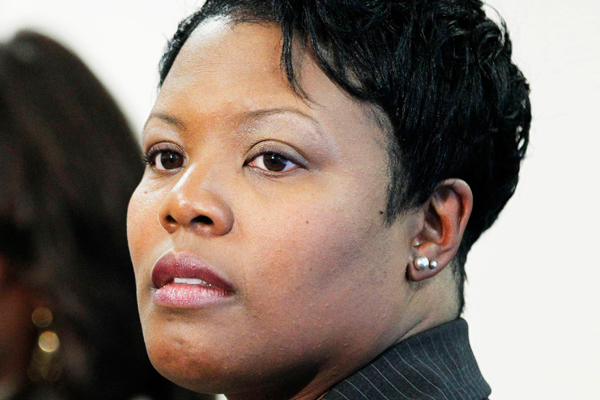
Kaya Henderson, chancellor of the Washington, D.C., schools (Credit: AP/Manuel Balce Ceneta)

Earlier today, Gene Lyons discussed several of the problems with the education reform movement and came to a familiar conclusion: that education reformers like former Washington schools chancellor Michelle Rhee are ruining the public school system in the United States. He uses the current teacher assessment system in Tennessee, where districts are assessing kindgergarten through 3rd-grade teachers based on a 5th-grade teacher’s student test scores, as evidence that the reform agenda has gone horribly awry.

No doubt the situation Lyons refers to in Tennessee is evidence of a botched reform strategy. Yet in other areas of the country, some education reformers are working to improve school districts in ways that are both effective and increasingly popular with unions and the public. Quietly, and with little national attention thus far, recently appointed Washington, D.C., public schools chancellor Kaya Henderson is attempting to do just that: set a standard for a more nuanced, second-generation brand of education reform.

Henderson replaced Rhee as chancellor of D.C.’s public schools one year ago this month. Though her name might not be well known,  the  fate of education reformers around the country  just might rest on Henderson’s shoulders. Over the past year, Henderson has been finding out what school reform looks like in the wake of a bloody, district-wide overhaul. While reform hot spots like New York and Chicago wrestle with change, Washington is learning about politics and progress in a post-reform city. After the multi-year struggle with the D.C. teachers union that turned Rhee into a celebrity and District of Columbia Public Schools (DCPS) into a veritable war zone between 2007 and 2010, Washington has been focusing on the nuts and bolts of education, like standardizing its curriculum and improving low-performing schools.

And instead of Rhee, there’s Henderson, who took charge of the district mid-transformation and is working to keep it on the trajectory Rhee started. Henderson and Rhee have a long history; she had been working for Rhee for 11 years prior to Rhee’s departure from D.C. public schools and served as deputy chancellor while Rhee was at DCPS.

For those who champion urban education reform as a solution to all that ails public education in the United States, there’s more at stake now than there was when Rhee arrived at DCPS in the spring of 2007. Education reform is popular and hotly debated, but reformers have yet to prove that their strategies can revive a school district in a sustained, measurable way. Maintaining D.C.’s momentum and gaining the support of skeptical city residents poses a huge challenge for Henderson. She will have to do both if she wants the political clout to follow through on her reform agenda. Complicating matters further is the fact that, for the first time in 11 years, Rhee is not there to do the political dirty work.

Rhee and Henderson have similar backgrounds: Both taught through Teach for America, both worked at the New Teacher Project, a nonprofit Rhee founded, and both have almost identical ideas on education policy. Their public faces, however, couldn’t be more different. One could never imagine Rhee’s trademark scowl, the one she wore with a power suit on the cover of Time in November 2008, on Henderson’s cheery face.

Henderson, who worked with Teach for America in the Bronx after graduating from Georgetown University, then moved to D.C. to work for TFA, then for the New Teacher Project, is known to be affable and good at building relationships. Rhee, on the other hand, was known for how bad she was at building relationships with unions, teachers and most anyone who stood in the way of her ambitious plans.

Rhee was chancellor in D.C. for three years and four months, during which the city was a laboratory for ideas that reformers — including President Obama and Education Secretary Arne Duncan, who was CEO of Chicago Public Schools at the time — had never seen implemented on a district-wide scale. She worked fast: In her first year as chancellor she closed 21 under-enrolled or low-performing schools, expanded public preschools and special education programs, and fired 98 employees from the district central office who were deemed either unproductive or unnecessary. Between 2008 and 2010 the overhaul continued and Rhee notably created D.C.’s teacher evaluation system, which Henderson helped design. Rhee fired over 500 teachers for low performance during that time.

Rhee resigned from DCPS in November of 2010 after the city elected a new mayor, Vincent Gray, who had run on an anti-Rhee platform. Rhee moved on to found StudentsFirst, an advocacy organization that works to change teacher workforce policies. Gray nominated Henderson  as chancellor and she was confirmed last spring.

Henderson made two small but mighty choices during her first few months as chancellor that helped secure her as a leader and quell fears among many district parents that she might not be tough enough to fill Rhee’s shoes. She fired an unpopular private management firm that Rhee had hired to turn around a low-performing high school and she reassigned the principal of Hardy Middle School in Georgetown, whom Rhee had placed at the school a year earlier.

That decision had sparked a public relations debacle for Rhee when she allegedly ousted the principal because he wasn’t receptive to her plans for drawing more neighborhood students, who were predominantly upper-class and white, to attend the school, which had a predominantly black student body that came from other parts of the city to attend the well-performing school. Rhee has said that she was misunderstood in the situation.

“Henderson bought credibility by making very tough decisions by moving the principal at Hardy without creating the angst that Rhee created when putting that principal there in the first place,” said Rachel Lerman, a parent of twins at Oyster Adams charter school who has been involved with a variety of school organizations, charter and non-charter, in the district.

It was a twofer: The decision won Henderson credit and distanced her slightly from Rhee’s reputation as a chancellor obsessed with attracting middle- and upper-class white students into the system to the detriment of black students. Race will likely continue to be an issue as more and more white parents begin enrolling their children in Washington’s public schools. Henderson has an advantage over Rhee because she is black and has a longer history with the city, but Henderson did cause a stir in September when she told a roomful of community members that the reason for the increase in white enrollment was “the promise of a good education.”

As for the teachers unions, the situation is somewhat diffused compared to the Rhee years. “It would be hard for her to do worse in getting along with teachers unions than Rhee,” said Jay Matthews, longtime education columnist for the Washington Post. “The level of confrontation — the shouting and screaming — is much better than before.”

As chancellor, Rhee’s great white whale was a new teacher contract. Teacher tenure was (and arguably still is) the most taboo workforce policy for a reformer to meddle with in the school system. Rhee went after tenure with headline-making zeal, demanding a new contract that allowed her to fire teachers who were deemed ineffective and reward teachers who performed well with higher pay and large bonuses.

Henderson was essential to those negotiations, which lasted from the fall of 2007 to the spring of 2010, according to Matthews.

“Kaya was very careful to stay behind the scenes. She was the point person behind the contract and she was staying behind the union. She was working closely with the union, and with the arbitration,” Matthews said. The agreement that was eventually ratified by over 80 percent of the teachers union includes ending tenure and allowing DCPS to fire teachers who are repeatedly deemed ineffective, and higher pay and up to $25,000 bonuses for teachers who perform well at their jobs.

In the district, people see Henderson following Rhee’s old playbook as chancellor but often fail to recognize that Henderson was part-author of that playbook to begin with. This probably plays to Henderson’s advantage. As Rhee’s replacement, she has managed to differentiate herself from Rhee just enough to avoid the heat that would’ve come from being perceived as a second Rhee, while still capitalizing on the no-bullshit environment Rhee established while at DCPS. When Henderson fired 206 teachers because they had poor performance according to D.C.’s teacher evaluation system last July, for example, there was little controversy.

The jury is still out on the D.C. public schools. The reforms that began in 2007 have since been marred by an unresolved cheating scandal, though recent national test scores show some signs of improvement. When Rhee arrived at DCPS just 8 percent of 8th graders were proficient in math and 12 percent were proficient in reading, and today, those numbers are slightly better: 17 percent of 8th graders are proficient in math and 16 percent are proficient in reading.

Test scores aside, enrollment is up for the third straight year at DCPS after a decade of decline and the most recent parents’ survey showed that the percentage who feel that DCPS is “on the right track for student achievement” increased steadily between 2008 and 2011.

On the whole, the capital is sill one of the lowest-performing school districts in the country. One thing reformers and unions can agree on is that DCPS has a long way to go. The question they probably don’t agree on — the question no one knows the answer to, but that Kaya Henderson is quietly, relentlessly answering — is whether Henderson will be the one to complete the transformation of D.C. public schools.

Continue Reading Close

Another hidden supercommittee menace

The "secret farm bill" could overhaul U.S. agriculture for the next five years with no public debate

Rep. Collin Peterson, ranking Democrat on the House Agriculture Committee (Credit: Reuters)

The congressional deficit supercommittee is pulling into the home stretch. Whether the secret, round-the-clock negotiations among its 12 members will yield a budget-cutting deal before its Thanksgiving deadline is the subject of intense speculation in Washington.

Republican co-chair Jeb Hensarling indicated on MSNBC on Tuesday night that the Republicans have gone as far as they are willing to go when it comes to compromise. House Democratic Whip Steny Hoyer, D-Md., Sen. Mark Warner, D-Va., and others held a press conference this morning urging the supercommittee to “go big” on an agreement over deficit reduction. The White House, in the meantime, is bracing for failure, according to the Washington Post.

This speculation changes daily, making it hard to tell how things will unfold over the next week. But what if the supercommittee does succeed in “going big”? What would that deal look like? Yes, a deficit agreement could result in changes to programs like Social Security and Medicaid. What has been less noticed is that a supercommittee deal could — and likely would– end up rewriting other policies in ways that are entirely unexpected.

Enter the so-called secret farm bill, an oddball piece of deficit reduction legislation that could rewrite agriculture policy in the United States in one behind-closed-doors deal.

“There’s no question that the farm bill is what agriculture wants to do,” said a budget expert who works closely with farm states. Essentially, the farm bill could become a part of deficit reduction because the House and Senate Agriculture Committees are trying to take advantage of the way the supercommittee’s process was set up. Congressional committees can submit recommendations to the supercommittee on ways they would like to see spending cut in their programs.

The House and Senate Agriculture Committees, led by agriculture’s “Big Four,” Sens. Debbie Stabenow, D-Mich., and Pat Roberts, R-Kan., and Reps. Frank Lucas, R-Okla., and Collin Peterson, D-Minn., appear poised to try to submit their suggestion in the form of the farm bill.

The farm bill, approved every five years by Congress, has more to do with your life than you might think. This legislation sets most food and agriculture policies in the United States, from food stamps to food safety measures and crop subsidies. If the Big Four submit a bill that spends less money than the old farm bill did, it could be passable as deficit reduction and potentially get swept through Congress on the coattails of a deficit reduction plan. Though it’s impossible to tell exactly what such a plan would look like, it’s logical that states the Big Four represent — Michigan, Kansas, Oklahoma, Minnesota — and other farm states would be well-represented.

But if the secret farm bill become law, some people will go ballistic. Anti-obesity advocates, food safety watchdogs, and food policy advocates have been waiting for Congress to write the next farm bill, which is a rare opportunity for them to plug new policies, such as targeting food stamps so they encourage low-income families to buy healthy foods. But if the new farm bill is written and debated behind closed doors, as is happening right now, they will have to wait another five years for that opportunity.

“A farm bill that preserves the status quo instead of addressing a food system that causes disease and wrecks the environment isn’t even marginally serious about deficit reduction,” wrote food writer and activist Mark Bittman in an Op-Ed for the New York Times last week.

It sounds batty, but slipping relatively small pieces of legislation into large, high-stakes bills is a proven way to get a bill passed. The health care reform bill that passed last spring, for example, included a major rewrite of a 40-year-old student loan program that was similarly folded into health reform at the last minute. It was the biggest piece of education-related legislation to get passed Congress in years and it was barely reviewed.

Corn states vs. rice states

The Big Four stand to gain two things by slipping their farm bill into a deficit agreement:

First, they avoid a scenario where the supercommittee simply caps the amount of money budgeted for agriculture in coming years, giving the agriculture committees less autonomy in their decision-making.

Second, if they reauthorize the farm bill now they can avoid what would likely be a messy, public battle over food policy and agriculture reform slated to take place next summer, in the middle of an election cycle.

Insiders and advocates say the possibility of the secret farm bill becoming the law of the land depends on a number of things happening in the coming weeks.

First, the Big Four need to come to an agreement and actually submit a plan that saves the $23 billion to $25 billion over 10 years, as the supercommittee has asked it to do. There are three areas where the agriculture budget could get slashed: nutrition programs such as food stamps, conservation programs that help preserve land and prevent pollution, and crop subsidies.

It’s likely that around half of the cuts, ranging from $13 billion to $15 billion over 10 years, would come from dropping crop subsidies and replacing them with an expanded crop insurance program that would enable farmers to collect a larger share of their losses from insurance during years with poor profits.

Currently, internal divisions are preventing the committees from agreeing among themselves, says a source who works on Capitol Hill. The division line within the Big Four and other congressmen who are trying to lobby them currently falls mostly between corn states, such as Minnesota, and rice states, such as Arkansas.

Collin Peterson of Minnesota, for example, is a strong supporter of the new insurance plan. Corn is somewhat volatile and corn farmers would gain from having expanded insurance. Rice, on the other hand, is a less volatile crop and thus benefits more from straight cash subsidies, making it likely that congressmen from rice-producing states are opposing the new insurance deal.  Sen. John Boozman, R-Ark., for example, recently emphasized the importance of keeping the “farm safety net” (subsidies and insurance) intact in a deficit deal and played down the need for crop insurance in his state when speaking to the Arkansas News. Unsurprisingly, Arkansas grows almost half of the U.S. supply of rice.

That’s the debate within farm states. The interests of those not representing farmers, such as people concerned about reducing agriculture pollution or reforming the food stamps program so it encourages families to buy healthier food, don’t figure into this equation, and are likely to be overlooked by the secret farm bill.

Food stamps would also likely see a small cut, because the the program is popular but constitutes an estimated two-thirds of the costs of the current farm bill, making it hard for the Big Four to plot out a way to reduce spending without at least a minor reduction in spending on food stamps.

The Big Four will likely try to sell the new insurance program as having big cost savings though it might not, in fact, save money. During years with good crop prices and yield, offering government-subsidized insurance to farmers is relatively inexpensive. But during years when crop prices and/or yields fall, the government will dole out more money to farmers who have experienced losses, resulting in much less savings.

There’s a good chance the supercommittee won’t fall for agriculture’s bait-and-switch with regard to crop subsidies. But the committee could make a deal that hits its deficit reduction mark and looks good on paper while ignoring the variations in actual agriculture savings. An expanded crop insurance program could be popular, too. As one Capitol Hill veteran noted, “Congress loves temporary disaster relief.”

If the supercommittee does accept the farm bill and then manages to strike a deal before Thanksgiving, then the farm bill heads to Congress as part of the deficit reduction agreement. Congressmen will have to swallow the entire agreement or none at all. It’s unlikely that many would change their vote on the $1.2 trillion bill because of the relatively small, $23 billion agriculture component, meaning that if the supercommittee makes a plan that wins approval, the secret farm bill would become law regardless of who loves or hates it.

“The outside has really been shut out of the process,” commented a source on Capitol Hill. With this and other “secret” bills, there’s no knowing what surprises might be waiting if the supercommittee does in fact make a deal.

Continue Reading Close

Obama’s tough love for Head Start

The president, with rare support from Congress, is rebooting preschool for the poor.

President Barack Obama visits a Head Start Center in Yeadon, Pa. (Credit: AP/Charles Dharapak)

Before an audience of voters in Yeadon, Pa., on Tuesday, President Obama announced major changes to the Head Start program, which provides preschool access for children from low-income families, and scolded Congress for not doing more for education.

“This is the first time in history that Head Start programs will truly be held accountable for performance,” Obama explained during the speech. It’s surprising but true: While No Child Left Behind and other education reform measures have placed a spotlight on school and teacher accountability, Head Start has been plodding along untouched. Head Start preschools that do a poor job can keep receiving funding for years without ever making changes to their programs, the GAO reported in 2005.

In the future, Head Start programs will be thoroughly evaluated on a regular basis, and programs that aren’t doing a good job will have to recompete for their funding with other preschools in the area that want Head Start funding. It’s a classic example of Obama the policy wonk doing one thing he does well: taking an existing liberal program and sprucing it up, but in a way that is cost-neutral so the change draws minimal criticism.

The president wasn’t shy about leveraging the Head Start changes as another piece of his new “We Can’t Wait” agenda. This is the education/reelection strategy that drove drove the changes to student loan policy the administration announced two weeks ago, as well as its plan to issue waivers that will exempt states from some No Child Left Behind provisions.

“There’s no substitute for Congress doing its job,” Obama said in Yeadon. He berated Congress for not “fixing” problems with No Child Left Behind and rejecting his latest $30 billion teacher jobs bill. “We want to work with Congress but we’re not going to wait,” he added.

In fact, Congress did approve these changes to Head Start, in 2007, under the Bush administration. With widespread bipartisan support, the Head Start reauthorization act mandated a new system, like the one announced today, for renewing Head Start grants. Changing leadership in the White House and at the Office of Head Start likely slowed down the new Head Start rules from being issued, making today’s announcement long overdue.

Still, it couldn’t have come soon enough. Studies have repeatedly shown that effective preschool programs can help break the poverty cycle by providing children with a social and educational base to build on during their school years. Meanwhile, children who start kindergarten having not been exposed to many books or other educational tools are far more likely to fall behind in school.

Researchers have questioned whether Head Start itself is an “effective” program, however. Earlier this year, a study that had been commissioned by the Department of Health and Human Services showed that the gains made by children during their years in Head Start disappeared by the time those children reached first grade. Granted, some Head Start preschools are better than others, but the conclusion was troubling nonetheless.

Health and Human Services estimates that one-third of all Head Start programs will have to recompete for their Head Start grants. This is a lot of programs, and a lot of potential for backfire. The potential payoff, however, is big: a revived program that makes major positive impact in the lives of children from-low income families.

Continue Reading Close
www.salon.com/writer/maggie_severns/index.html