Margot Mifflin

Mockingbird sings

The first biography of the reclusive Harper Lee shows that she contributed much more to "In Cold Blood" than we thought.

  • more
    • All Share Services

Mockingbird sings

The good news is that Harper Lee is alive, living with her sister in their hometown of Monroeville, Ala. She hasn’t published a book since her Pulitzer Prize-winning “To Kill a Mockingbird” (1960), the most popular American novel of the 20th century (still beguiling nearly 1 million readers a year), which begat a film so true to its namesake that the two have merged in the public mind. The bad news is that she gave her last interview in 1964 and refused to cooperate with Charles Shields for this biography, which starts with a bang and ends with a desperate cry for help. Still, what “Mockingbird: A Portrait of Harper Lee” lacks in access, it makes up for in excellent timing and impressive research.

After the 2005 release of the film “Capote,” with its frustratingly hazy depiction of Truman Capote’s friend and “research assistant” Nelle (to friends) Harper (to readers) Lee, the door swung open for a biography. “Mockingbird” is the first, arriving just after she turned 80. Though it’s ostensibly about the author, whose Alabama family and Southern racial consciousness inspired “To Kill a Mockingbird,” it’s also about Lee and Capote, childhood friends who grew up to become symbiotic figures, both personally and artistically, during the ’60s. Both were precocious children out of step with their peers, whose slippery grip on gender was a social liability. As Shields puts it, “she was too rough for the girls, and he was too soft for the boys.” Each had emotionally absent mothers: Capote’s was a self-absorbed social climber; Lee’s was chronically depressed, though in her more functional youth she’d played piano at Capote’s 16-year-old mother’s wedding. (To embroider this family quilt, Capote’s father came on to Lee when she was a teenager and she responded by punching him in the nose; Capote hated Lee’s gossipy mother, and parodied her, at age 10, in a story called “Mrs. Busybody.”)

If the two shared what Lee called a “common anguish” and Capote dubbed “an apartness” in childhood, they were inverted artistically as adults: Each was fascinated by crime, but “In Cold Blood,” Capote’s genre-busting “non-fiction novel” about the murder of a Kansas family, exposed a world of random violence, presaging a future of rogue postal workers and murderous schoolchildren, while “To Kill a Mockingbird” painted a moral portrait of good and evil, leaving the reader comfortably nestled in the lap of righteousness. Shields doesn’t frame it this way; his story is more anecdotal than analytical, but he gives you the raw material, neatly packaged, on which to base any number of term papers about the correlations between the two writers and their work. He answers several questions that have swirled around Lee and Capote (yes, the character Dill was based on Capote; no, Capote did not write part or all of “To Kill a Mockingbird”), and he introduces fresh information that puts a new spin on both authors. For example, Lee inspired Capote’s character Ann “Jumbo” Finchburg, (“a sawed off but solid tomboy with an all-hell-let-loose wrestling technique”) in his story “The Thanksgiving Visitor,” as well as the boyish Idabel Tompkins of his novel “Other Voices, Other Rooms.”

For fans of both Capote and “Capote,” Shields’ most salient revelation will be that Lee’s contribution to “In Cold Blood” was much greater than the film conveys. First, Lee served as a social lubricant for Capote, who impressed Kansas Bureau of Investigation detective Harold Nye as “an absolute flake” in contrast to his assistant, who “looked like normal folk.” Lead detective Alvin Dewey said, “If Capote came on as something of a shocker, she was there to absorb the shock.” (He also called her a “good looker,” though she was known for being frumpy.) More significantly, Capote relied on Lee not just for research, but also for characterization. “Nelle’s gift for creating character sketches turned out to complement Truman’s ability to recall remarks,” writes Shields, reporting on the duo’s first trip to Holcomb, Kan., to research the murders in 1959. “Many times over the next month, Capote’s telegraphic descriptions of a conversation would end with ‘See NL’s notes’ to remind him to use her insights later.”

Lee noted that Dick Hickock’s face, disfigured in a car accident, looked like someone had “cut it down the middle, then put it back together not quite in place.” Capote wrote, “It was as though his head had been halved like an apple, then put together a fraction off center.” Capote paid the murderers $50 each to meet with him and Lee. In her notes about Hickock’s demeanor during the interview, Lee wrote, “Never seen anyone so poised, relaxed, free & easy in the face of four 1st degree murder charges. He gave the impression of being completely in the moment, with no concern about tomorrow’s troubles.” Capote observed Hickock in prison: “Outwardly, Hickock seemed to one and all an unusually untroubled man.”

Capote left out unflattering details about the Clutter family, some of which Lee had collected, because he needed his victims to look good. For example, Lee reported that the two surviving Clutter daughters showed up the day after their entire family was murdered and argued over who would take what, down to the kitchen utensils. Lee spoke to a family friend who recalled Nancy Clutter breaking down and crying about her mentally ill mother. And she wrote about how lonely and isolated Nancy was, asking, “How did she maintain the outward semblance of a wholesome, extremely bright and popular teenager without cracking at the seams? Her family life was ghastly.” Capote sought the emotional truth of the Clutter murders, but, partly because of his careerism, he and Lee seem to have found two different stories.

Shields’ chapter on “In Cold Blood” is almost worth the price alone, and makes you wonder why the film’s producers didn’t comb Capote’s papers for material with Shields’ thoroughness. He also draws compelling points of connection between Lee’s own childhood and the events of “To Kill a Mockingbird.”

For practical purposes, Atticus Finch was A.C. Lee, Harper Lee’s father, a respected Monroeville lawyer who had defended two black men accused of murder, and lost. (Nelle’s maternal grandfather was named Finch.) But the book’s plot was based on a case in which a white jury convicted a black man of raping a white woman in Monroeville in 1934, causing local citizens to question the fairness of the decision. Shields notes, however, that A.C. Lee “only gradually rose to the moral standards of Atticus … Like most men of his generation, he believed the current social order, segregation, was natural and created harmony between the races.” He didn’t become a civil rights advocate until the ’50s. As a father, too, A.C. Lee was Atticus: firm, moral but never sanctimonious, and a bit old for fatherhood by the time Lee, the youngest of four children, was born. Gregory Peck met and studied him in preparation for the role of Atticus, calling him “a fine old gentleman of eighty-two, and truly sophisticated although he had never traveled more than a few miles from that small southern town.”

And, of course, Scout was Lee. Her apparently bipolar mother, who died when Lee was 25, was a cipher (Lee dispensed with Scout’s mother by killing her before the start of the novel). Like Scout, Lee was a precocious kid who called her teacher by her first name as she did her father, and brawled with boys. Capote claimed that the first third of the novel, in which the children taunt Boo Radley, was “quite literal and true.” In some sense, Lee preserved her Scoutness into adulthood: She never advanced artistically beyond her first novel, and never had an adult relationship — or at least a public one. She lived by her own code, refusing to join the social whirl of literary New York. For years she spoke of writing a second novel, and in the ’70s, when it failed to materialize, her sister Alice claimed, straight-facedly, that a burglar had broken into her apartment and lifted the manuscript.

“Mockingbird: A Life of Harper Lee” is compelling for the reason “Capote” was: Both chronicle the creation of a great book, but Shields, a former high school teacher, pays closer attention to the writing than to the research process, tracing the nucleus of “To Kill a Mockingbird” as far back as Lee’s college days. In this sense, “Mockingbird” is more a biography of a novel than an author, and Shields would have done better to skip the hermetic second half of Lee’s life instead of forcing it into 13 grasping and uncertain pages at the end. Only Harper Lee can say why Harper Lee never wrote another novel — or, for that matter, anything beyond a few hackneyed women’s magazine articles in the ’60s. Only Harper Lee can say whether Harper Lee was gay, or whether, as Capote suggested in a letter, she was “unhappily in love with a man impossible to marry” (possibly her married literary agent). Though Shields can’t begin to answer the big questions about Lee’s personal life, his analysis of her novel’s inception and impact almost fills the gap, but even there, he’s neglected an important aspect of her artistry: a discussion of Scout, Lee’s 6-year-old narrator, as an icon of American girlhood.

For thousands of postwar American women, Scout is a touchstone of childhood authenticity. In some Mary Pipheresque prelapsarian state, we were all Scout once: unfiltered, free-ranging, with a physical confidence rooted in a prepubescent androgyny — qualities inevitably poisoned by the idiotic affectations of adolescence. (When she senses the feminizing agenda her stuffy aunt has in store for her, Scout feels “the starched walls of a pink cotton penitentiary closing in” on her.) Lee’s magic (which some early critics perceived as a failure) was in ventriloquizing the experiences of a 6-year old in the voice of a grown woman, offering a bridge back to childhood. As a motherless child, Scout demonstrates how children treat life’s curveballs as what happens, not what shouldn’t happen, and adjust their expectations accordingly. She’s unlike other girl characters, filmic or literary, of her age: Who even remembers the name of Mary Poppins’ wide-eyed female charge or the girls in “The Railway Children”? Even the more heroic contemporary preteens who’ve followed, like Hermione of “Harry Potter,” are not protagonists. What other girl character has Scout’s open grace, her left hook, and the narrative to herself from beginning to end?

Shields does an excellent job of tracing the evolution of Lee’s book and tracking its success; less so of parsing its cultural value. Still, “Mockingbird” lays a strong foundation for Lee scholarship, and turns up some marvelous ephemera. (Mary Badham, who played Scout in the movie, blew her lines repeatedly at the close of filming because she didn’t want the experience to end.) Despite some overextended metaphors, the writing is taut, briskly paced and sometimes lovely: Shields describes A.C. Lee’s arrival in Monroe County, Ala., where “sawmills were chewing into the piney woods, filling the air with their ear-splitting whine and the vinegary smell of fresh cut lumber.” And he’s highlighted a side of Lee that’s subtly evident in her novel, though wholly absent from the film “Capote”: her wry and sometimes cutting sense of humor (honed, apparently, when she was the editor of the humor magazine at the University of Alabama, where she studied law). When she was told her book had great appeal for children, for example, she deadpanned, “But I hate children. I can’t stand them.”

Lee was — is — a quiet nonconformist whose rejection of celebrity is almost unimaginable in today’s media culture, especially for a bestselling author. Fame caught her by surprise; she hoped her book would meet a “quick and merciful death” and instead it achieved immortality. As a fellow Alabamian who knew her as a fledging writer in New York noted, “Here was this dumpy girl from Monroeville. We didn’t think she was up to much. She said she was writing a book and that was that.”

The real Calamity Jane

America's favorite cross-dressing, gunslinging frontier woman was less (and more) than her legend would have you think.

  • more
    • All Share Services

The real Calamity Jane

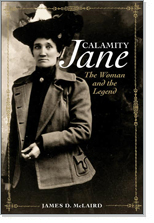
As author James D. McLaird confesses in his conclusion to “Calamity Jane: The Woman and the Legend,” historians sure know how to ruin a good story. In this case, somebody had to do it. Calamity Jane — 19th century gunslinger, drinker and cross-dresser — was so barnacled over with myth that it had become impossible to see the lady for the lore. From dime-store novels of the 1870s and ’80s chronicling her frontier fearlessness, to Doris Day’s G-rated Jane in the 1953 musical “Calamity Jane,” to Jane Alexander’s feminist reanimation of her in a 1984 ABC special, to Robin Weigert’s blowsy portrayal of her on the HBO series “Deadwood,” Calamity Jane has served as a Rorschach blot for devotees of unconventional women for over a century. Then again there was Larry McMurtry’s “Buffalo Girls” — published in 1990 — which trashed the myth altogether, casting her as a drunk, a liar and a hermaphrodite.

Love her or hate her, you probably don’t know her at all. Nee Martha Canary, she was less — and more — than she’s cracked up to be: She was a cook and a laundress, a dance hall girl and a prostitute, an abject alcoholic and a devoted nurse, an abused wife and a mother who said of her daughter, Jessie, “She’s all I’ve got to live fer; she’s my only comfort.” She knew Wild Bill Hickok, who was newly married, for a mere six weeks before he was shot down in Deadwood, S.D. Legend has it — wrongly — that they were lovers. And let the record show: Though she sometimes donned men’s clothes, Canary typically wore a dress.

In “Calamity Jane: The Woman and the Legend,” McLaird, a professor emeritus at Dakota Wesleyan University, sets out to correct the errors that plague Canary scholarship and, more significantly, to explain how her life was recast to fulfill a romantic vision of frontier life. Some of the tall tales about her spring from dime novels in which she was written into fabricated exploits; others were plucked from her own falsified autobiography (“I was considered the most reckless and daring rider and one of the best shots in the western country”). But weirdly enough, a major source of misinformation about her came from her impostor daughter, Jean McCormick, who popped up in 1941 with a forged memoir, itself spun from popular fictions, that crystallized Canary’s myth and went unquestioned for decades. McCormick claimed her parents were Calamity Jane and Wild Bill Hickok, and because so little research had been done on Canary, the forgery, which McLaird debunks in a few deft and convincing strokes, was long accepted as fact.

McLaird all but apologizes for writing a book whose somewhat piecemeal narrative (chunks of Canary’s story are lost to history) is further fractured by the rebuttals necessary to defending its accuracy. No family records survive, and her 1896 autobiography was propaganda. “Sadly,” McLaird notes in his introduction, “after romantic adventures are removed, her story is mostly an account of uneventful daily life interrupted by drinking binges.” But the myth-making (much of which Canary orchestrated herself through newspaper interviews) is as interesting as the myth, and through the host of colorful quotes McLaird has unearthed both by and about her, Canary emerges as a character worth mythologizing. (If only McLaird weren’t so resistant to paraphrasing: In some passages, the book reads like a Zagat’s restaurant guide, with multiple partial quotes crammed into one chop suey sentence after another.)

Born in Mercer County, Mo., in 1856, Canary was the oldest of some unknown number of siblings. Her father was a farmer; her mother was, by one account, an illiterate prostitute whose husband, taken by her beauty, tried to reform her, and failed. After some legal wrangling over land, the family sold their property and left Missouri in the early 1860s, heading for Montana gold. But they fell on hard times; her mother died in a mining camp in Blackfoot City, Mont., when Canary was about 9. After taking the children to Salt Lake City, her father died soon after.

Canary was presumably taken in by an adoptive family, but by the time she was 14 or 15, she was on her own, working at a boarding house in Piedmont, Wyo., and dancing with soldiers at night, until the owner kicked her out for appearing at a party in a soldier’s uniform at a time when women could be fined for wearing men’s clothes. She followed freighting teams along the railroad, worked as a laundress, dance hall girl and prostitute or “camp follower,” though she later claimed she spent her teens engaged in military campaigns against Indians in Wyoming. She was one of the first white women to enter the Black Hills of South Dakota — but not as a soldier. One wagon train captain heading there from Cheyenne recalled seeing her, then 20, driving a team and wearing a buckskin suit. “The first place that attracted her attention,” he said, “was a saloon, where she was soon made blind as a bat from looking through the bottom of a glass.”

Canary’s notoriety evolved into respectability in 1876 Deadwood, when she met Wild Bill Hickok, the legendary desperado who was both admired for his courage and despised, says McLaird, “for his showy dress, his itchy trigger-finger and his compulsive gambling.” For all executive producer David Milch’s claimsfor its veracity, HBO’s “Deadwood” got Jane wrong: She wasn’t an idle drunk in buckskins; rather, she was a dance hall girl in the early days of E.A. Swearingen’s Gem saloon, which was, at the time, a lumber and canvas construction where three women and a man dressed as a woman entertained customers. A Deadwood bartender claimed Swearingen sent Canary to “white slave” for him in Sidney, Neb., and that she brought back 10 girls she’d lured with stories of the vast wealth in the region. By one account, she followed Hickok all over Deadwood and wailed when he was killed; by another, her crush was Hickok’s partner, Charley Utter, a local dandy. Though she called Hickok her friend in her autobiography, she later told the press he was her “affianced husband.”

The seeds of her legend planted, Canary became a dime-novel heroine, inspiring writers to work her into their stories of frontier bravery, even though her daily life involved a string of low-paying jobs and bouts of heavy drinking. She lived all over the Northwest, marrying at least three men (one of whom was jailed for attacking her) and working — intermittently — as an attraction in Wild West and dime museum shows. She bore a son who probably died in infancy (she called him “muzzie’s yittle snoozey darling”) and later Jessie, who, before she was given up for adoption at around age 10, was taunted at school because of Canary’s reputation. Wherever she could, she sold photos of herself for extra cash.

As a public figure, Canary was the Courtney Love of her day: A talented pioneer in a man’s world, she was a chronic substance abuser prone to outrageous behavior and forever linked in the public mind to a dead man whose fame overshadowed her own. The difference between them is found in Canary’s private acts of kindness. In a 1924 book, two pioneers who wrote about the Black Hills gold rush attempted to debunk Canary’s myth, claiming she was “nothing more than a common prostitute, drunken, disorderly and wholly devoid of any conception of morality.” Still, they said, she deserved recognition as a Black Hills luminary because of her humanitarian gestures: When hundreds of Deadwood residents were struck by a smallpox scourge in 1878, for example, other women in the camp refused to help them for fear they would contract it, but Jane cared for them, day and night, over the course of weeks. She was also, said a man who knew her in Spokane, Wash., “the last person to hold the head of and administer consolation to the troubled gambler or erstwhile bad man who was about to depart into the new country.”

The challenge McLaird faces in telling Canary’s story is resolving — or, at least, acknowledging — its many contradictions: Some said she was beautiful, others called her repulsive, and the book’s photos show her to be striking at best, homely at worst, with bottomlessly sad eyes in every shot. One reporter called her “an ignorant woman of mostly unwomanly habits”; another said she was “generous, forgiving, kind-hearted, sociable, and yet when aroused, has all the daring and courage of the lion or the devil himself.” She got her nickname because of her calamitous past (as an orphan), or because she caused her lovers venereal calamity, or because she was always in trouble, or because she cried “What a calamity” when she lost at poker, or because of the way she nursed people during epidemics. (To becloud things further, there were several other western women named Calamity Jane, all prostitutes and alcoholics.)

McLaird has done vast and careful research, digging up juicy anecdotes and providing important correctives to the Calamity Jane myth. But he doesn’t quite deliver on the promise he offers at the start of the book, which is to explain why, if she was not much different from other frontier women, her life was spun into legend. He doesn’t even discuss “Deadwood,” nominated last year for 11 Emmy awards (as much a marketing oversight as an editorial lapse), which features a Jane who seems to fascinate viewers (and polarize opinion) just as the real one did. Historically thoroughgoing as his book is, it tracks but doesn’t fully illuminate the half-life Calamity Jane has enjoyed since Canary’s death, at 47, from “inflammation of the bowels” (no doubt brought on by alcohol abuse), when her body, lying in state, had to be guarded against women who clipped locks of her hair to take as souvenirs.

Who knows why we still thrill to her badness? She was a maverick, outsize and free-spirited, seemingly self-reliant yet vulnerable, who gave men a run for their money through her cursing, drinking, riding and gunmanship (which may explain why McMurtry cut her down to size by making her half a woman). Like so many pop culture icons, she lived fast, died young and was quickly canonized, yet her fictional self so quickly preempted the real one that it’s almost impossible to say her legend is anything but fiction. In the end, a cowboy who knew her in Spokane (where she was the “keystone around which all the excitement and life of the new town was reared”) provided the most concise eulogy for Calamity Jane: “She was a good woman [,] only she drinked.”

Continue Reading Close

Dr. Dittohead

I thought my therapist was brilliant -- until I discovered her love for Rush Limbaugh.

  • more
    • All Share Services

Dr. Dittohead

I was sitting in therapy describing an in-law I like, and quickly heading for a “but.”

“He’s a loving, caring, selfless man — but his politics are all about hatred,” I said. “He’s not educated, and more significant, he’s ignorant — he actually listens to Rush Limbaugh.”

I waited for a “Whoo boy!” or a sympathetic smile, but my shrink just stared at me, expressionless.

“I assume you’re not a Limbaugh fan,” I ventured, assured that this woman, so nuanced in her thinking, couldn’t possibly be a Dittohead. She was so reasonable that I couldn’t imagine her getting off on Rush’s demented tirades. She didn’t seem square enough for his politics, and I was certain no hate radio fan was capable of her intellectual sophistication. Besides, she was an educated urban Jewish professional, and Rush’s audience consisted largely of white suburban males.

She held my gaze a few excruciating seconds longer. “Actually, I am,” she said. My moral compass began spinning wildly. I was suddenly sitting with someone new. The levelheaded sage in whom I’d confided for nearly a year had been replaced by an off-the-rack ideologue.

There were five minutes left in the session, and I felt like running. “Well, this could devolve into a whole political discussion, so I’ll just finish the story,” I rallied.

For the next week, I struggled with an overwhelming sense of betrayal. It was as if she’d been rooting around in the drawers of my mind under false pretenses. I had entrusted her with my darkest secrets: We’d covered the deaths of my father and stepfather; family troubles; career worries, everything from nightmares about rape to — even worse — a recent dream in which I was sleeping with the man I considered to be the epitome of 20th century masculinity gone wrong: John Wayne. And he was paunchy.

My shrink was fair in her thinking, focused in her probing, able to see all sides of an issue. Yet she considered Rush Limbaugh to be an acceptable human being? An arrogant, small-minded, hypocritical bigot? The family-values man who’s been married three times and blames the divorce rate on liberals? The soapbox patriot who didn’t vote until he was 35, and then only because a journalist outed him? I couldn’t square her sensitive touch with the knowledge that she bought into Rush’s bone-headed binarism and uncivil discourse.

When I told one of my sisters about my discovery, she responded flatly, “You can’t see her anymore.” She didn’t see how my therapy could succeed if I didn’t trust my therapist’s judgment. “Well, we all have our quirks,” my other sister said. “I watch ‘Survivor’ every week.” She shared my misperception that educated people don’t listen to Rush — except as a form of cultural slumming in the ill-mannered freak show of talk radio. “Maybe her interest in Rush is ironic,” suggested a friend who, like me, listens to shock jocks now and then just to see what the radical right says the liberal conspiracy is up to, and to marvel at how much air time they devote to bashing Democrats, exposing their own ideological unease. But my shrink’s Rush habit wasn’t an ironic posture or an idle tour of enemy territory. She was serious; her admission was unqualified.

At the next session, I told her that her disclosure was a huge problem for me, and we spent the hour talking about Rush, who had just entered rehab. I enjoyed saying the words, “It doesn’t bother me that he’s a drug addict,” before explaining that I couldn’t reconcile his ideology of snarling intolerance with her professional persona. I granted her that I didn’t even find his recent Donovan McNabb gaffe worth losing his ESPN gig over, and neither did most of my black journalism students, but I wouldn’t forgive him for telling a black caller, years ago, to take the bone out of his nose and call back later, among other cracks. She’d never heard this. I didn’t mention that he’d called 13-year-old Chelsea Clinton the White House dog, or that he’d claimed that all composite illustrations of criminals look like Jesse Jackson, or that he’d joked about AIDS.

When I told her that — with all due respect — I had never met an educated person who listened to Limbaugh (a college dropout), she insisted that many of his callers are educated. “I think he’s a very intelligent man,” she said.

“He may be very intelligent,” I said, “but his mind is a corkscrew.” I mentioned that Limbaugh’s diatribes, heavy on ad hominem attack and logical fallacy, embody the sort of faux-reasoning I trot out for my composition students to illustrate how not to write an argument. Then there are the Stephen Glass-caliber fabrications, which both filled a 1995 book published by Fairness and Accuracy in Reporting and helped Al Franken land a bestseller. (Quoth Rush: “There are more acres of forestland in America today than when Columbus discovered the continent in 1492.”)

But mainly, I said, I couldn’t understand how my shrink, a champion of civility and personal accountability, could buy the vitriol of hate radio — not to mention the self-serving sanctimony of a rehabee who advocated jail for all drug addicts. (“If people are violating the law by doing drugs,” the pill-popping pope of WABC has opined, “they ought to be accused and they ought to be convicted and they ought to be sent up.”)

She listened patiently, then said she didn’t hear the hatred or lies I heard on his show. She wasn’t defensive. She didn’t care if I detested Rush, and she didn’t see why I cared that she liked him, though she did admit that she should never have revealed it in therapy.

“Do you think I’ve helped you?” she asked.

“Absolutely,” I answered.

“Does the knowledge that I listen to Rush change anything you’ve learned here?”

“No.” But secretly I feared it would now. I felt like Larry David in the season finale of “Curb Your Enthusiasm,” an episode in which he’s happily being seduced — until a photo of Bush 43 on the woman’s dresser kills his passion and turns his stomach.

The next week we picked up where we’d left off two weeks earlier. Rush faded into history but continued to haunt me. There were moments when my shrink warned me about the dangers of taking responsibility for too many people around me, and I thought, “Is this just the selfish, boot-strapper, I-got-mine Republican approach to human interaction? Is it what Dr. Laura would advise?”

Outside of therapy, I wondered, Would my shrink condone Laura Ingraham’s adolescent on-air mockery of people like Terri Gross? If Ann Coulter were sitting in my shrink’s office saying she wished Timothy McVeigh had blown up the New York Times building, would my shrink suggest she start coming twice a week? Would the words “danger to society” come to mind?

And how would my shrink, a successful professional in New York, counsel Rush, who believes that “feminism was established so that unattractive women could have access to the mainstream of society”? Would she tell him that his dismal marital history might be rooted in his infantile belief that “if you want a successful marriage, let your husband do what he wants to do”?

Professionally, she counseled against virtually all of Rush’s rhetorical techniques: name-calling, “provocative” language, finger pointing and mudslinging — diversions, she would say, from the project of self-realization. Privately, she got something from Rush. I would never know what it was — but by now it hardly seemed worth pondering, if it hadn’t affected my therapy. Week after week, my shrink impressed me with her insights. She may have been a hate radio subscriber, but in the cloister of her own office, she didn’t judge. She met me on my own terms, which required precisely the kind of tolerance Rush rejects. And she taught me lessons that changed my life.

I only wish she could do the same for Rush.

Continue Reading Close

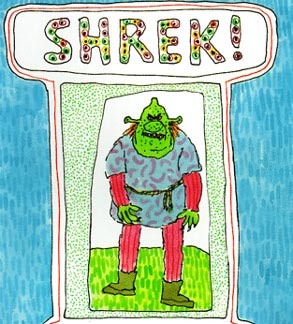
“Shrek” is not Shrek!

William Steig's subversive misanthropy is jettisoned for winking innuendo in the movie version of his children's book.

  • more
    • All Share Services

The hallelujah chorus has begun. Since it opened last week, “Shrek” has become a box-office hit, with the second highest debut for an animated film after “Toy Story 2.” Entertainment Weekly calls it “a feisty but good natured embrace of the inner ogre in everyone.” Variety deems it “an instant animated classic.” And the Washington Post says it’s, well, “perdurable.” There are dissenters: Some critics have chafed at the potty humor and the Disney-bashing industry in jokes, and in the New Yorker last week, Anthony Lane smartly questioned the merits of realism as “the Holy Grail” of computer animation, especially at the expense of genuine fairy tale charm.

But in this sea of media attention, one small detail seems to have gone unremarked: Has no William Steig fan noticed that “Shrek” is not Shrek? That the book on which the movie is based does not feature a sensitive hero, an incarcerated princess or a host of abused Disney characters fated for “resettlement”? That the directors have traded the subversive misanthropy of Steig’s 1990 book for a Hollywood ending? That the animators jettisoned Steig’s wonderfully loopy illustration style so they could join the digital race to realism? Or that the film doesn’t feature a single line of Steig’s crotchety dialogue? Not even Shrek’s masterful ode to his blue-lipped mistress: “Your horny warts, your rosy wens/like slimy bogs and fusty fens/thrill me.”

Why even call this movie “Shrek”?

The beauty of Steig’s story is in Shrek’s devilish enjoyment of his hideous world. When his parents kick him out of “the black hole in which he’d been hatched,” Shrek, “giving off his awful fumes,” sets out to do “his share of damage.” Steig writes, “It delighted him to see the flowers bend aside and the trees lean away to let him go by.” (Animate that.) Along the way, in exchange for a few of his “rare lice,” a witch tells his fortune:

“A donkey takes you to a knight/him you conquer in a fight/Then you wed a princess who/Is even uglier than you.”

He meets a peasant (“You there, varlet … why so blithe?”) and steals his dinner, then dispatches a dragon with a blast of putrid blue flame between the eyes. His darkest moment comes during a nap in which he dreams he’s in a field of flowers with children frolicking around him. “Some of the children kept hugging and kissing him, and there was nothing he could do to make them stop. He woke up in a daze, babbling like a baby: ‘It was only a bad dream … a horrible dream!’”

Shrek finds his “jabbering jackass” and rides it to the castle of the repulsive princess, where a knave greets him: “Magician’s mercury, plumber’s lead/I smite your stupid, scabby head.” With a blast of fire, Shrek overwhelms him and enters the castle, where he sees a hall of mirrors containing hundreds of appallingly hideous creatures. He regards his many selves, “full of rabid self-esteem, happier than ever to be exactly what he was.”

Fortified, he meets his stunningly ugly princess, and they exchange fetid compliments. (“Oh ghastly you/With lips of blue/Your ruddy eyes/With carmine sties/enchant me.”) When they marry, she wears a cloak covered in spiders and carries a cactus, and they live “happily ever after, scaring the socks off all who fell afoul of them.”

Granted, Steig’s 30-page bildungsroman isn’t plot heavy enough to sustain a feature film — embellishments were needed — but that’s no reason to trash the original.

Steig’s story is gently menacing, unsentimental and harmlessly deviant from start to finish. The movie is winking and cynical. (What is a kindergartner to make of a gingerbread man yelling “Eat me” at a man torturing it? My daughter hated this scene for its meanness. I hated it for going over her head in the service of a bad pun.) But once the sardonicism is exhausted, “Shrek” winds up in a bog of emotion, cheapened by what came before.

While Steig’s romance hinges on the lovers’ mutual appreciation of their inverted values, the movie restores traditional values and, worse, tacks on a threadbare moral that Steig never inflicted on his readers: You can’t judge a book by its cover. If there’s one thing a Steig book will never do, it’s preach. This kind of stop ‘n’ shop sanctimony is, to paraphrase “The Toy Brother” — another fine Steig book — a first-rate pain in the pants.

Children love Shrek’s upside-down world for its pure illogic; overlaying it with pedagogy just drags a good story down. And the moral isn’t even consistent: If looks don’t matter, why is Lord Farquaad’s (John Lithgow) towering ego offset by his short stature, and why does Fiona (Cameron Diaz) immediately disdain him for his size instead of his cruelty?

And the characters are all wrong. Mike Myers’ Shrek, charming as he is (OK, those expressive, tuberlike ears slayed me), is a sensitive guy in ugly casing; the storybook Shrek is a bumbling brute inside and out. And Fiona isn’t ugly, even when she’s supposed to be. Even at night when, because of a spell cast on her as a child, her ogre self emerges, she looks more like an overfed Cabbage Patch doll with the drowning eyes and apologetic expression of a Hummel figurine than like Steig’s confidently wretched crone. (On the other hand, that she farts and burps, fights and talks back, and remains an ogre in the end is something for the history books.)

Consider the landmarks of animated film history and their female content: “Snow White and the Seven Dwarfs” (1938), the first animated feature and a spectacularly beautiful film, introduced a helium-voiced heroine who apologizes for crying after being kicked to the curb and nearly murdered (Deborah Tannen, white courtesy phone); her defining moment comes when she sings “Someday, my prince will come.” Next, “Toy Story” (1995), the first computer-animated feature, chock-full of memorable characters and madcap adventure, and witty, well plotted and funny, yes, in that “all the females on earth are inexplicably missing” way.

And now “Shrek,” the first computer-animated movie starring human characters, a feat of realism that marks the flowering of the digital age, which offers … an imprisoned princess, in cold storage for marriage. Radical. Even 93-year-old Steig didn’t write a damsel in distress into his story when he penned it over a decade ago. While Fiona’s dramatic bust-to-waist ratio is certainly an animation coup, shouldn’t a computer age princess be free?

Finally, the Disney jabs in this movie generate as many problems as laughs. Once producer Jeffrey Katzenberg gets his revenge on his former employer through the Mauschwitz opening scene, the conceit of the homeless characters and their predicament is dropped, leaving a conspicuous loose thread. And if memory serves, Eddie Murphy already did that jivey, ingratiating sidekick routine as Mushu in “Mulan.” One wonders first why DreamWorks used a secondhand minstrel show — and second, why Disney’s?

“Shrek” has its moments — Leonard Cohen’s “Hallelujah” and Fiona’s hilarious ear-scraping vocal solo among them — none of which are remotely connected to the book. It even features some tender scenes of natural wonder that seem to have wandered into the script out of other Steig books, like “Gorky Rises.”

But while Steig’s Shrek spoofs European fairy tales, the movie skewers Disney fairy tales — a pasteurized genre unto itself that would need more than bathroom humor for really stinging satiric effect. The idea that because parents have wearied of fairy tale earnestness kids need a good dose of postmodern irony is just wrong. At the ripe old age of 5, my child doesn’t need her icons smashed just yet, thanks. And call me hopelessly altruistic, but I’m willing to sit through a movie with her even if it isn’t outfitted with a meta-narrative for my jaded-boomer parallel enjoyment.

Instead, give me the 1996 Children’s Circle Video “The William Steig Library.” It doesn’t have the promotional machine behind it that made “Shrek” a monster hit, but it does include four animated Steig stories (two featuring Lithgow), with plot, dialogue and visuals intact, and an interview with the author in which he extols the importance of talking to kids on their level.

“You have to write for children,” he says. “If you don’t write for children, you’ll end up writing ‘Moby-Dick.’”

Or schlock like “Shrek.”

Continue Reading Close

Who are you calling “Ms.”?

Why have women suddenly rejected the politically charged courtesy title?

  • more
    • All Share Services

Who are you calling

It started at a children’s backyard birthday party when a little girl I’d never met ran up to tell me about a puppet show, stopping first to ask my name. I gave her my given name, but she said her mother wanted her to use people’s “grown-up names — like Mrs.” When I told her she could call me “Ms. Mifflin,” I saw by her confusion that this hadn’t been offered as an option. So I found myself on my knees explaining it, secretly hoping that her mother wouldn’t come after me with a garden hose for imparting this feminist fact of life to her 5-year-old daughter.

In the next few weeks, I became acutely aware of how often I was not addressed as Ms. socially. School officials, car mechanics and telemarketers all used Mrs. or Miss, hitching it arbitrarily to my surname or my husband’s.

I began asking friends when and by whom they are called Ms. For most, it happens only at work. An administrator at my daughter’s elementary school told me that although many teachers choose Ms. as a courtesy title, most students call them Mrs. whether they’re married or not. And so it seems that Ms. — popularized in the ’70s and intended to elide marital status as Mr. does — has become the norm in the professional world. But it hasn’t stuck socially. Why?

Certainly, Ms. carries ’70s feminist baggage that’s anathema to post-feminists and anti-feminists alike: To them, it’s not just the name of an eye-crossingly boring magazine, it’s a title only fist-thumping proselytizers adopt.

They might be surprised to learn that modern feminists did not come up with Ms. in the first place. The title’s earliest documented appearance was on the 1767 tombstone of a Massachusetts woman named Sarah Spooner. Some scholars have theorized that it was first used, like Miss and Mrs., as an abbreviation for Mistress, a 14th century translation of the French maitresse (a term of respect for women of prestige).

In the 17th century, Mrs. was used for adult women, married or not; Miss was used for girls. Only in the late 18th century did these titles begin to denote marital status, possibly as a result of the Industrial Revolution, during which women began working outside the home, and needed their sexual availability clarified.

Though Ms. has been attributed to first-wave feminism, its use and specific meaning during the late 19th century are unclear. In the 1940s, however, it was appearing in secretarial handbooks as a counterpart to Mr. Second-wave feminists embraced it, and in the debut issue of Ms. magazine in 1972, the editors explained the title: “Ms. is being adopted as a standard form of address by women who want to be recognized as individuals, rather than being identified by their relationship with a man.” By the 1980s, according to public opinion polls, about a third of U.S. women endorsed its use.

In an increasingly egalitarian culture, with more women marrying later (or not marrying at all) and retaining their birth names after marriage, Ms. is more fitting than ever. It’s equally useful for divorced women who shed their married names.

But for a courtesy title intended as a neutral counterpart to Mr., Ms. is larded with sticky, often contradictory associations. For example, a 1998 survey of 10,000 Midwesterners revealed that women who use Ms. were perceived as better educated and more independent, outspoken and self-confident than those who use Mrs. or Miss. But they were also presumed by the respondents to be less attractive and less likely to be effective wives and mothers.

Of course, the resistance of traditionalist folk to Ms. comes as no surprise. What stumps me is the schizoid use of the term by female professionals. How does one explain the career women who use their birth names at work and their husband’s names socially? What about the divorced businesswoman who told me that her teenage son’s friends call her “Miss Thompson,” which she considers to be a nice conflation of Ms. and Mrs. Or the New York Times weddings page, which is filled with female lawyers and executives who “will use [their family names] professionally.”

Neoconservatives, socialites and the pre-feminist generation aside, why would a 21st century woman choose to identify herself foremost as a wife? And if she does, why only away from work?

Hoping for illumination, I turned to an arbiter of social etiquette, Miss Manners (columnist Judith Martin), and found my identity crisis theory immediately confirmed. I dialed her number wondering whether to address her as “Miss Manners” or “Ms. Martin,” but found that her secretary referred to her as “Mrs. Martin.”

In print, Miss Manners has called Ms. “a clever, useful invention.” But she wisely cautions that “in this period of transition, it is courteous to address people in the fashion with which they feel comfortable.” When I asked her if this transition would conclude with the exclusive use of “Ms.,” she said: “If we’re lucky, ‘Ms.’ will eventually become the standard female title.”

Miss Manners is usually a champ when it comes to balancing good sense with good form in tidy explanatory packages. But when I asked her about her personal choice, she let me down. “In the spirit of tolerance,” she answered, “I use them all: Mrs. for my married name, Miss for my pen name and Ms. for anyone who cares to apply it to either. Out of pity for those who are sick of hearing explanations, I will refrain from offering any.” So much for the imminent standardization of the clever, useful title.

One impediment to our widespread acceptance of Ms. is the cloud of misunderstanding that still surrounds it. A 1998 study by Barbara Kelly of “folklinguistic attitudes” to the use of the term Ms. showed that many people link it to marital status. They assume it refers to a divorced, widowed or unmarried woman; that it deliberately conceals marital status, highlights single status or shows that a woman is not committed to her husband.

How ironic that a title created to neutralize the issue of wedlock came to be so elaborately misconstrued in that very context. And let’s not chalk this up to men: Fully 49 percent of the women interviewed by Kelly didn’t understand how Ms. should be used.

Stranger yet is the fact that many interpretations of female courtesy titles directly contradict each other, indicating that each has its own social Rorschach effect. One woman told me that Ms. makes her think of “a stuffy socialite who lunches at Le Cirque.” Another said, “I do know some women who ‘tolerate’ being called Mrs. (with the husband’s first and last name) in social circles. This is common among the wealthy, where for some reason they can’t break tradition and give women individual identities.”

One woman who uses Ms. surmised that some people use Mrs. because they don’t want their husbands to think they’re “passing themselves off as not married.” (Would we ever suspect a Mr. of doing this?) Some women change their titles by the hour or the year (Ms. until 5 p.m., Mrs. after hours; Miss to people who knew them before they were married …), suggesting multiple personalities fragmented along the lines of work and marriage.

The contradiction I see has nothing to do with taking a man’s name, nor does it apply to befuddled youths who misuse Ms. simply because courtesy titles in general are in decline. It’s the conditional use of Ms. that jars, implying that sexual/marital neutrality is suitable in the workplace but not in the outside world.

Working women who shift to Mrs. once they are away from their desks assuage a distinctly Victorian fear: that professional achievement will magically unsex them. As Carl Jung put it: “In taking up a masculine calling, studying and working in a man’s way, woman is doing something not wholly in agreement with, if not directly injurious to, her feminine nature.”

So the Ms. who socked it to the district attorney at work and goes home to become Mrs. proves that she hasn’t sacrificed her marriageability on the altar of her career. Her feminine currency is validated with every utterance of the title, because at its crudest, Mrs. trumpets sexual status: taken.

In the context of women’s history, the fortification of this home/work divide is a dangerous business: It contradicts the logic underpinning some of the most important family-friendly initiatives on the public table: flextime, parental leave, job sharing and on-site day care — all designed to allow personal and professional identities to overlap by strengthening connections between them.

This division reinforces the Midwestern stereotype that an independent woman (Ms.) and a good wife (Mrs.) can’t be the same person, and it’s the reason Hillary Rodham, lawyer, was reborn as Hillary Rodham Clinton, wife, when her career became a potential liability for her husband’s. At its most extreme, this work/home, public/private dualism drives every repressive patriarchy in the land, from the Mormon Church to the Taliban.

On its evolutionary journey from feminist red flag to Everywoman courtesy title, Ms. still roils with semiotic undercurrents churned up during feminism’s second wave. But that’s no excuse for using it selectively. Tell me you reject Ms. because you’re not a feminist, or that the title is tethered to a movement that overlooked you, or that your mother shoved it down your throat. Tell me that your marriage is your greatest accomplishment, or that you were married in 1956. But don’t say Ms. describes you at work and not at home. It’s just so 20th century.

Continue Reading Close

Singing the pink blues

Why do makers of toys and computer games still practice segregation?

  • more
    • All Share Services

Two years ago, for a few moments on Christmas morning, I was delightfully deluded. As my 2-year-old unwrapped her Little Tikes Wee Waffle farm set, I imagined we were in an idyllic, prelapsarian toddler phase in which children’s toys were unisex.

At least this year, I thought, there will be no battles over whether Barbie and her wardrobe will inhabit our house, no pop-psych deconstructions of the Little Mermaid trading her voice for a husband. We won’t debate whether Power Rangers provide badly needed female action heroes or equal opportunity violence. It will be all Duplos, Play Doh and Beanie Babies.

But I was wrong.

As we assembled the farm set, we found that the father plugged into a round hole in the driver’s seat of the tractor but the mother — literally a square peg in a round hole — didn’t. And so it began.

Thirty years of feminism notwithstanding, the mass-market toy industry has either slept through the women’s movement or woefully misunderstood it. Nowhere is this more apparent than at the annual American International Toy Fair, where gender apartheid flowers freely in a hothouse of go-go commerce: girls get dolls, kitchen sets and makeup packaged in Pepto-Bismol pink; boys get weapons, action figures and vehicles in everything but pink. The color-coding starts at birth, and the role assignments kick in when children are still toddlers, barely able to keep their balance, much less process the demands of their gender.

Like many parents before me, I decided that this was a simple issue of choice. My girl would get boys’ toys along with baby dolls.

But my solution was wrong. I’ve since discovered that if I encourage my 4-year-old daughter to cross-play, I push her into a world without women; a galaxy of “Star Wars” action figures in which the rare female — Princess Leia, for example — is lauded as “the essence of youthful exuberance and blossoming beauty.” (But she’s an action figure — what does she do?) I wasn’t sure this was a world to which equal access was even desirable.

When I investigated the only commercial arena in which “boys” toys are being aggressively marketed to girls — computer games — I found another kind of segregation. Here, girls are hustled into a pink ghetto of “girl games” where they remain a special interest group, spoon-fed a familiar diet of fashion, ponies and crafts. I assumed any company hip enough to use the motto “for girls who aren’t afraid of a mouse” would give good content. But I was wrong again.

So, with the exception of a few exemplary gender-neutral companies like Wild Planet and Broderbund, my daughter has had three options: traditional play in a world without men; boy play in an androcracy; or a girl ghetto of low-content computer games. Who’d have thought that gender divisions would be so rigid at the turn of the millennium — after the WNBA and Xena?

Although progress is being made in upscale mail-order catalogs like PlayFair Toys and Constructive Playthings, where color coding is less rampant and girls model firefighter costumes, commercial retailers remain perversely retrograde.

Take, for example, the Nano Fighter, a boxing “virtual pet” offered last year by Playmates Toys, unveiled with a flourish of essentialist logic: “The product takes on the nurturing play pattern loved by girls and replaces it with the competitive play boys crave,” allowing “an almost limitless number of Nano Fighters to be connected together to create a massive elimination tournament.” And for girls? Baby dolls, fashion dolls and “Nanosalon.”

According to a recent survey by the Renfrew Center in Philadelphia, 90 percent of commercial toys and dolls for girls age 2 to 10 emphasize beauty, shopping and dating. Even if you’re a parent who, like me, isn’t squeamish about tea sets and dress-ups or even Barbie — in moderation — you have to ask, is that all there is? Is it such commercial suicide for companies to push gender lines? Couldn’t cross-marketing even boost sales?

Mainstream toy companies rely on the chicken-and-the-egg rationale as they insist on sex-typing toys: Whatever the cause — culture or chromosomes — boys and girls tend to play with weapons and dolls respectively, they say, so manufacturers target them accordingly, perpetuating the pattern.

Even when commercial manufacturers make a pitch to consumers who are concerned about gender bias, they fall short, promoting a system of parallel, not integrated, play. In the mid-’90s, for example, LEGO, whose infinitely creative plastic building toys seem naturally unisex, ventured a girl-specific line called Belville. Dubbed “a great place for girls to go on vacation,” Belville included a campsite, a secret island, a beach set and scant possibilities for building — which would explain its commercial failure.

“Our research shows that by age 5, most girls move toward more traditional toys and they see LEGOs as their brothers’ toys,” LEGO spokeswoman AnneMarie Mathews told me after Belville went belly up. “Girls and mothers told us what they wanted, which was role-playing opportunities and the pastel colors. Belville was popular, but it was discontinued because it couldn’t compete with the other products in our line.”

What about integrated systems in which male and female figures coexist on a pirate ship or on the moon, in the wild West or undersea? Why do those places — marketed to boys — have to be populated only by boys and men?

Even “Sesame Street” is a largely male address. Although many human females live there, only about a quarter of the Muppets are girls, and less than a quarter of the Muppets sold as dolls are female.

Every parent knows, of course, that no one is forced to shop according to type. On one level, girls have even greater play opportunities than boys: They are freer — and more often encouraged — to cross-play than boys.

“Girls’ changing societal roles have enlarged what is acceptable for them to play with,” says JoAnne Oppenheim, who with her mother, Stephanie, publishes the annual “Oppenheim Toy Portfolio: The Best Toys, Books, Videos and Software for Kids” (which now includes top-rated “gender-free products”). “In our culture — and I do think it’s cultural — we can accept the idea that girls will be tomboys and outgrow it, but if we buy boys sissyish gifts, they might not outgrow it.”

Psychologists who’ve studied cross-play frame this idea a bit differently: “Many cultures, including our own, assign greater status to the male sex role … and boys face stronger pressures than girls to adhere to sex-appropriate codes of conduct,” writes D.R. Shaffer in “Social and Personality Development.” “The major task for young girls is to learn how not to be babies, whereas young boys must learn how not to be girls.”

Nowhere is the androcracy of boys’ toys more evident than in “Toy Story 2,” where just two out of Andy’s 16 toys (not including his 200 toy soldiers) are female.

In the first “Toy Story,” the female toys don’t even rate dialogue, except for the seductress Bo Peep, who propositions Woody after he finds her sheep. They speak in “Toy Story 2″ (“It’s so nice to have a big strong spud in the house,” says Mrs. Potatohead), but not for long: The women — Mrs. Potatohead and Bo Peep — stay home while the men go out to rescue Woody.

Even Hamm, a piggy bank packing $6 in change, is better suited for adventure than a woman. And as spunky as cowgirl Jessie is, she still wimps out on the airplane (“What do we do now?” she wails), lets Woody save her in the end and becomes Buzz’s object of desire back at the homestead. (But then, with its stay-at-home mom and all-white cast, “Toy Story 2″ is more about boomer nostalgia than ’90s kids — another story altogether.)

If toy companies have largely ignored girls’ desire to cross-play, however, software designers have cashed in on it.

Mattel’s Fashion Designer Barbie CD-ROM is commonly touted as the electronic Prometheus that, in 1996, proved that girls weren’t genetically indisposed to computers. The game, which allows players to design clothes on-screen and print them out, outsold popular boy-dominated titles (including Doom and Quake) in its first two months on the market.

But it wasn’t the first game for girls. In 1994, Her Interactive released the much-reviled McKenzie & Co., a role-playing game with video clips in which the primary goal was to get a date for the prom.

The idea behind both games was to get girls wired by giving them “what they want” — a phrase software companies, like toy manufacturers, use over and over to justify their products. Her Interactive had surveyed 2,000 girls before designing McKenzie & Co. Laura Groppe, founder of Girl Games Inc., crashed slumber parties and sat in on Girl Scout meetings before launching her 1996 title Let’s Talk About Me, a melange of fashion, horoscopes, interviews with successful women and candid body talk.

Girlware flooded the market in 1997 — dubbed the “Year for Girls” in computer games — and the boom continues. In their new book, “From Barbie to Mortal Kombat,” authors Justine Cassell and Henry Jenkins track the trend, tracing it to “an unusual and highly unstable alliance between feminist activists (who want to change the ‘gendering’ of digital technology) and industry leaders (who want to create a girls’ market for their games).” It is not clear, they say, “whether it’s possible to fully reconcile the political goal with the economic one.”

These warring impulses have spawned a schizoid genre: girl games that seek to seduce — through subjects like fashion and friendship — and educate — via information about health and women’s history. Consequently, the new software functions more like instructional teen magazines than games per se. These products aren’t much fun, and action is rarely part of the mix.

Theresa Duncan is one of the few designers with a flagrant disregard for focus groups or educational content. Her titles, which neither force-feed users high fiber content nor pander to the lowest common denominator, are some of the smartest out there.

Duncan released her first CD-ROM, Chop Suey, in 1995 to critical acclaim. In it, sisters Lily and June Bugg bop around their small town after eating Chinese food, stumbling on tea parties and visiting with their eccentric aunt Rose. Next came Smarty (in which a 7-year-old tools around Detroit, finding genie lamps and playing pinball with a witch), followed by Zero Zero, a picaresque Parisian tale set in 1899.

Duncan alone appears to have harnessed the unique properties of CD-ROM technology: Instead of trying to map books and games onto it or transposing doll-play into it, she enriches her quirky, highly literary story lines by expanding them through a garden of digital forking paths.

Unfortunately, art doesn’t sell. Although her titles are well-reviewed, Duncan has had trouble distributing them, and recently quit making children’s software because, she says, she wasn’t interested in the TV and product tie-ins that distributors demand.

The appeal of computer games like Duncan’s Zero Zero or Broderbund’s Where in the World is Carmen Sandiego, which draw girls in without targeting them specifically, raises the question: Is a CD-ROM of one’s own necessary for smoothing a girl’s way into electronic play?

Some girls find “pink” software patronizing, and enjoy video game shoot’em-ups even though there’s not a girl title in the genre; indeed, fierce coalitions of such gamers have emerged on the Internet.

As one player posted in a discussion group, “Maybe it’s a problem that girls don’t like to play games that slaughter entire planets. Maybe it’s why we are still underpaid, still struggling, still fighting for our rights. Maybe if we had the mettle to take on an entire planet, we could fight some of the smaller battles we face every day.”

But a look at the numbers confirms that pink software satisfies an enormous need; according to PC Data, girl games’ sales increased by 250 percent from 1996 to1997, while overall software game sales went up only 22 percent. With that many girls getting wired that quickly, girl games clearly have their commercial benefits, even if they reinforce the same tired gender divisions found in the toy world.

For the most part, girl games are toys in drag: The technology is “male,” but the pastel content has been dragged wholesale out of Toys ‘R’ Us. Still, the difference between pink software designers and toy manufacturers is that some of the former, successfully or not, indulge a social vision of what girls can be — not what they’ve always been.

“With time,” write the editors of “From Barbie to Mortal Kombat,” “we expect that, by pushing at both ends of the spectrum of what girl games look like, a gender-neutral space may open up in the middle, a space that allows multiple definitions of girlhood and boyhood, and multiple types of interaction with computer games of all sorts.”

What if the same philosophy informed the slow-to-evolve toy industry? I can see it now: a world of Tickle-Me-Zoes, gadget patch dolls and Wee Waffle sets where mothers not only drive the tractors, but also program the software.

Continue Reading Close

Page 1 of 2 in Margot Mifflin