Melissa Eddy

All Eyes On German Renewable Energy Efforts

  • more
    • All Share Services

All Eyes On German Renewable Energy EffortsIn this photo taken Nov. 12, 2011, a self-made place-name sign is seen at the entrance of the village of Feldheim near Berlin, Germany. Sign reads 'Energy Autarkic District Feldheim, City of Treuenbrietzen'. Chancellor Angela Merkel's government passed legislation in June setting the country on course to generate a third of its power through renewable sources _ such as wind, solar, geothermal and bioenergy _ within a decade, reaching 80 percent by 2050, while creating jobs, increasing energy security and reducing harmful emissions.The goals are among the world's most ambitious, and expensive, and other industrialized nations from the U.S. to Japan are watching to see whether transforming into a nation powered by renewable energy sources can really work. (AP Photo/Michael Sohn)(Credit: AP)

FELDHEIM, Germany (AP) — This tiny village of 37 gray homes and farm buildings clustered along the main road in a wind-swept corner of rural eastern Germany seems an unlikely place for a revolution.

Yet environmentalists, experts and politicians from El Salvador to Japan to South Africa have flocked here in the past year to learn how Feldheim, a village of just 145 people, is already putting into practice Germany’s vision of a future powered entirely by renewable energy.

Chancellor Angela Merkel’s government passed legislation in June setting the country on course to generate a third of its power through renewable sources — such as wind, solar, geothermal and bioenergy — within a decade, reaching 80 percent by 2050, while creating jobs, increasing energy security and reducing harmful emissions.

The goals are among the world’s most ambitious, and expensive, and other industrialized nations from the U.S. to Japan are watching to see whether transforming into a nation powered by renewable energy sources can really work.

“Germany can’t afford to fail, because the whole world is looking at the German model and asking, can Germany move us to new business models, new infrastructure?,” said Jeremy Rifkin, a U.S. economist who has advised the European Union and Merkel.

In June, the nation passed the 20 percent mark for drawing electric power from a mix of wind, solar and other renewables. That compares with about 9 percent in the United States or Japan — both of which rely heavily on hydroelectric power, an energy source that has long been used.

Expanding renewables depends on the right mix of resources, as well as government subsidies and investment incentive — and a willingness by taxpayers to shoulder their share of the burden. Germans currently pay a 3.5 euro cent per kilowatt-hour tax, roughly euro157 ($205) per year for a typical family of four, to support research and investment in and subsidize the production and consumption of energy from renewable sources.

That allows for homeowners who install solar panels on their rooftops, or communities like Feldheim that build their own biogas plants, to be paid above-market prices for selling back to the grid, to ensure that their investment at least breaks even.

Critics, like the Institute for Energy Research, based in Washington, D.C., maintain such tariffs put an unfair burden of expanding renewables squarely on the taxpayer. At the same time, to make renewable energy work on the larger scale, Germany will have to pour billions into infrastructure, including updating its grid.

Key to success of the transformation will be getting the nation’s powerful industries on board, to drive innovation in technology and create jobs. According to the Environment Ministry, overall investment in renewable energy production equipment more than doubled to euro29.4 billion ($38.44 billion) in 2011. Solid growth in the sector is projected through the next decade.

Some 370,000 people in Germany now have jobs in the renewable sector, more than double the number in 2004, a point used as proof that tax payers’ investment is paying off.

Feldheim has zero unemployment — despite its tiny size — compared with roughly 30 percent in other villages in the economically depressed state of Brandenburg, which views investments in renewables as a ticket for a brighter future. Most residents work in the plant that produces biogas — fuel made by the breakdown of organic material such as plants or food waste — or maintain the wind and solar parks that provide the village’s electricity.

“The energy revolution is already taking place right here,” says Werner Frohwitter, spokesman for the Energiequelle company that helped set up and run Feldheim’s energy concept.

But it’s not only in the country. Earlier this month in Berlin, officials unveiled a prototype of a self-sustaining, energy-efficient home, built from recycled materials and complete with electric vehicles that can be charged in its garage.

The aim of the prototype home is to produce twice as much energy as is used by a family of four — chosen from a willing pool of volunteers who will be selected to live in the home for 15 months — through a combination of solar photovoltaics and energy management technology, in order to show the technology already exists to allow people to be energy self-sufficient.

“We want to show people that already today it is possible to live completely from renewable energy,” said German Transport Minister Peter Ramsauer as the project, dubbed “Efficiency House Plus,” was unveiled. The house is part of a wider euro1.2 million ($1.57 million) project investing in energy-efficient buildings.

“The Efficiency House Plus will set standards that can be adopted by the majority in the short term,” Ramsauer told The Associated Press. “The basic principle is that the house produces more energy than needed to live. The extra energy is then used to charge electric-powered cars and bicycles or sold back to the public grid.”

Germany’s four leading car makers are also participating in the project with BMW AG, Daimler AG, Volkswagen AG and Opel, which is part of Buick’s parent company, General Motors Co., each making an E-car for use by in the home.

Such strong cooperation between Germany’s industrial sector coupled with a political landscape that emphasizes stability and a heightened public ecological sensibility makes Germany fertile ground to lead the way in the transformation from a post-carbon economy to one run on renewable energy.

“Germany has the most robust industrial economy per capita. When you talk about industrial revolution, that’s Germany. It’s German technology, it’s German IT, it’s German commutation,” said Rifkin, who outlines what he calls the “The Third Industrial Revolution,” in a newly released book of the same title that explains how the economies in the future could swap fossil fuels for renewable energies and still maintain growth.

Robert Pottmann, an asset manager with Munich Re, one of the world’s biggest reinsurers, says the company seeks to invest about euro2.5 billion ($3.27 billion) in the next few years in renewable energy assets such as “wind farms, solar projects or maybe new electricity grids.”

Alan Simpson, an independent energy and climate adviser from Britain who visited Feldheim as part of a wider tour of Germany last month to see what the renewable revolution looks like up close said it was inspiring to view what is being accomplished on the ground.

“It’s great to think about Germany delivering on everything that we are being told in Great Britain is impossible,” Simpson said.

Amid the excitement, there is also an awareness of the real need for the German experiment to succeed.

“If Germany can’t pull this off,” said Rifkin. “We don’t have a plan B.”

___

Associated Press writer Juergen Baetz contributed to this story from Berlin.

___

On the Internet:

Feldheim: http://www.neue-energien-forum-feldheim.de/

German Renewable Energy Agency: http://www.unendlich-viel-energie.de/en/homepage.html

All Eyes On German Renewable Energy Efforts

  • more
    • All Share Services

FELDHEIM, Germany (AP) — This tiny village of 37 gray homes and farm buildings clustered along the main road in a wind-swept corner of rural eastern Germany seems an unlikely place for a revolution.

Yet environmentalists, experts and politicians from El Salvador to Japan to South Africa have flocked here in the past year to learn how Feldheim, a village of just 145 people, is already putting into practice Germany’s vision of a future powered entirely by renewable energy.

Chancellor Angela Merkel’s government passed legislation in June setting the country on course to generate a third of its power through renewable sources — such as wind, solar, geothermal and bioenergy — within a decade, reaching 80 percent by 2050, while creating jobs, increasing energy security and reducing harmful emissions.

The goals are among the world’s most ambitious, and expensive, and other industrialized nations from the U.S. to Japan are watching to see whether transforming into a nation powered by renewable energy sources can really work.

“Germany can’t afford to fail, because the whole world is looking at the German model and asking, can Germany move us to new business models, new infrastructure?,” said Jeremy Rifkin, a U.S. economist who has advised the European Union and Merkel.

In June, the nation passed the 20 percent mark for drawing electric power from a mix of wind, solar and other renewables. That compares with about 9 percent in the United States or Japan — both of which rely heavily on hydroelectric power, an energy source that has long been used.

Expanding renewables depends on the right mix of resources, as well as government subsidies and investment incentive — and a willingness by taxpayers to shoulder their share of the burden. Germans currently pay a 3.5 euro cent per kilowatt-hour tax, roughly euro157 ($205) per year for a typical family of four, to support research and investment in and subsidize the production and consumption of energy from renewable sources.

That allows for homeowners who install solar panels on their rooftops, or communities like Feldheim that build their own biogas plants, to be paid above-market prices for selling back to the grid, to ensure that their investment at least breaks even.

Critics, like the Institute for Energy Research, based in Washington, D.C., maintain such tariffs put an unfair burden of expanding renewables squarely on the taxpayer. At the same time, to make renewable energy work on the larger scale, Germany will have to pour billions into infrastructure, including updating its grid.

Key to success of the transformation will be getting the nation’s powerful industries on board, to drive innovation in technology and create jobs. According to the Environment Ministry, overall investment in renewable energy production equipment more than doubled to euro29.4 billion ($38.44 billion) in 2011. Solid growth in the sector is projected through the next decade.

Some 370,000 people in Germany now have jobs in the renewable sector, more than double the number in 2004, a point used as proof that tax payers’ investment is paying off.

Feldheim has zero unemployment — despite its tiny size — compared with roughly 30 percent in other villages in the economically depressed state of Brandenburg, which views investments in renewables as a ticket for a brighter future. Most residents work in the plant that produces biogas — fuel made by the breakdown of organic material such as plants or food waste — or maintain the wind and solar parks that provide the village’s electricity.

“The energy revolution is already taking place right here,” says Werner Frohwitter, spokesman for the Energiequelle company that helped set up and run Feldheim’s energy concept.

But it’s not only in the country. Earlier this month in Berlin, officials unveiled a prototype of a self-sustaining, energy-efficient home, built from recycled materials and complete with electric vehicles that can be charged in its garage.

The aim of the prototype home is to produce twice as much energy as is used by a family of four — chosen from a willing pool of volunteers who will be selected to live in the home for 15 months — through a combination of solar photovoltaics and energy management technology, in order to show the technology already exists to allow people to be energy self-sufficient.

“We want to show people that already today it is possible to live completely from renewable energy,” said German Transport Minister Peter Ramsauer as the project, dubbed “Efficiency House Plus,” was unveiled. The house is part of a wider euro1.2 million ($1.57 million) project investing in energy-efficient buildings.

“The Efficiency House Plus will set standards that can be adopted by the majority in the short term,” Ramsauer told The Associated Press. “The basic principle is that the house produces more energy than needed to live. The extra energy is then used to charge electric-powered cars and bicycles or sold back to the public grid.”

Germany’s four leading car makers are also participating in the project with BMW AG, Daimler AG, Volkswagen AG and Opel, which is part of Buick’s parent company, General Motors Co., each making an E-car for use by in the home.

Such strong cooperation between Germany’s industrial sector coupled with a political landscape that emphasizes stability and a heightened public ecological sensibility makes Germany fertile ground to lead the way in the transformation from a post-carbon economy to one run on renewable energy.

“Germany has the most robust industrial economy per capita. When you talk about industrial revolution, that’s Germany. It’s German technology, it’s German IT, it’s German commutation,” said Rifkin, who outlines what he calls the “The Third Industrial Revolution,” in a newly released book of the same title that explains how the economies in the future could swap fossil fuels for renewable energies and still maintain growth.

Robert Pottmann, an asset manager with Munich Re, one of the world’s biggest reinsurers, says the company seeks to invest about euro2.5 billion ($3.27 billion) in the next few years in renewable energy assets such as “wind farms, solar projects or maybe new electricity grids.”

Alan Simpson, an independent energy and climate adviser from Britain who visited Feldheim as part of a wider tour of Germany last month to see what the renewable revolution looks like up close said it was inspiring to view what is being accomplished on the ground.

“It’s great to think about Germany delivering on everything that we are being told in Great Britain is impossible,” Simpson said.

Amid the excitement, there is also an awareness of the real need for the German experiment to succeed.

“If Germany can’t pull this off,” said Rifkin. “We don’t have a plan B.”

___

Associated Press writer Juergen Baetz contributed to this story from Berlin.

___

On the Internet:

Feldheim: http://www.neue-energien-forum-feldheim.de/

German Renewable Energy Agency: http://www.unendlich-viel-energie.de/en/homepage.html

Continue Reading Close

All Eyes On German Renewable Energy Efforts

  • more
    • All Share Services

All Eyes On German Renewable Energy EffortsIn this photo taken Nov. 12, 2011, a self-made place-name sign is seen at the entrance of the village of Feldheim near Berlin, Germany. Sign reads 'Energy Autarkic District Feldheim, City of Treuenbrietzen'. Chancellor Angela Merkel's government passed legislation in June setting the country on course to generate a third of its power through renewable sources _ such as wind, solar, geothermal and bioenergy _ within a decade, reaching 80 percent by 2050, while creating jobs, increasing energy security and reducing harmful emissions.The goals are among the world's most ambitious, and expensive, and other industrialized nations from the U.S. to Japan are watching to see whether transforming into a nation powered by renewable energy sources can really work. (AP Photo/Michael Sohn)(Credit: AP)

FELDHEIM, Germany (AP) — This tiny village in a wind-swept corner of eastern Germany seems an unlikely place for a revolution.

Yet environmentalists, experts and politicians from El Salvador to Japan to South Africa have flocked here in the past year to learn how Feldheim, with just 145 people, is already putting into practice Germany’s vision of a future powered entirely by renewable energy.

Chancellor Angela Merkel’s government passed legislation in June setting the country on course to generate a third of its power through renewable sources — such as wind, solar, geothermal and bioenergy — within a decade, reaching 80 percent by 2050, while creating jobs, increasing energy security and reducing harmful emissions.

The goals are among the world’s most ambitious, and expensive, and other industrialized nations from the U.S. to Japan are watching to see whether transforming into a nation powered by renewable energy sources can really work.

“Germany can’t afford to fail, because the whole world is looking at the German model and asking, can Germany move us to new business models, new infrastructure?” said Jeremy Rifkin, a U.S. economist who has advised the European Union and Merkel.

In June, the nation passed the 20 percent mark for drawing electric power from a mix of wind, solar and other renewables. That compares with about 9 percent in the United States or Japan — both of which rely heavily on hydroelectric power, a source that has long been used.

Expanding renewables depends on the right mix of resources, as well as government subsidies and investment incentive — and a willingness by taxpayers to shoulder their share of the burden. Germans currently pay a 3.5 euro cent per kilowatt-hour tax, roughly euro157 ($205) per year for a typical family of four, to support research and investment in and subsidize the production and consumption of energy from renewable sources.

That allows for homeowners who install solar panels on their rooftops, or communities like Feldheim that build their own biogas plants, to be paid above-market prices for selling back to the grid, to ensure that their investment at least breaks even.

Critics, like the Institute for Energy Research, based in Washington, D.C., maintain such tariffs put an unfair burden of expanding renewables squarely on the taxpayer. At the same time, to make renewable energy work on the larger scale, Germany will have to pour billions into infrastructure, including updating its grid.

Key to success of the transformation will be getting the nation’s powerful industries on board, to drive innovation in technology and create jobs. According to the Environment Ministry, overall investment in renewable energy production equipment more than doubled to euro29.4 billion ($38.44 billion) in 2011. Solid growth in the sector is projected through the next decade.

Some 370,000 people in Germany now have jobs in the renewable sector, more than double the number in 2004, a point used as proof that tax payers’ investment is paying off.

Feldheim has zero unemployment compared with roughly 30 percent in other villages in the economically depressed state of Brandenburg, which views investments in renewables as a ticket for a brighter future. Most residents work in the plant that produces biogas — fuel made by the breakdown of organic material such as plants or food waste — or maintain the wind and solar parks that provide the village’s electricity.

“The energy revolution is already taking place right here,” says Werner Frohwitter, spokesman for the Energiequelle company that helped set up and run Feldheim’s energy concept.

But it’s not only in the countryside. Earlier this month in Berlin, officials unveiled a prototype of a self-sustaining, energy-efficient home, built from recycled materials and complete with electric vehicles that can be charged in its garage.

The aim of the prototype home is to produce twice as much energy as is used by a family of four — chosen from a willing pool of volunteers who will be selected to live in the home for 15 months — through a combination of solar photovoltaics and energy management technology, in order to show the technology already exists to allow people to be energy self-sufficient.

“We want to show people that already today it is possible to live completely from renewable energy,” said German Transport Minister Peter Ramsauer as the project, dubbed “Efficiency House Plus,” was unveiled. The house is part of a wider euro1.2 million ($1.57 million) project investing in energy-efficient buildings.

“The Efficiency House Plus will set standards that can be adopted by the majority in the short term,” Ramsauer told The Associated Press. “The basic principle is that the house produces more energy than needed to live. The extra energy is then used to charge electric-powered cars and bicycles or sold back to the public grid.”

Germany’s four leading car makers are also participating in the project with BMW AG, Daimler AG, Volkswagen AG and Opel, which is part of Buick’s parent company, General Motors Co., each making an E-car for use by in the home.

Such strong cooperation between Germany’s industrial sector, coupled with a political landscape that emphasizes stability and a heightened public ecological sensibility, makes Germany fertile ground to lead the way in the transformation from a post-carbon economy to one run on renewable energy.

“Germany has the most robust industrial economy per capita. When you talk about industrial revolution, that’s Germany. It’s German technology, it’s German IT, it’s German commutation,” said Rifkin, who outlines what he calls the “The Third Industrial Revolution,” in a newly released book of the same title that explains how the economies in the future could swap fossil fuels for renewable energies and still maintain growth.

Robert Pottmann, an asset manager with Munich Re, one of the world’s biggest reinsurers, says the company seeks to invest about euro2.5 billion ($3.27 billion) in the next few years in renewable energy assets such as “wind farms, solar projects or maybe new electricity grids.”

Alan Simpson, an independent energy and climate adviser from Britain who visited Feldheim as part of a wider tour of Germany last month to see what the renewable revolution looks like up close said it was inspiring to view what is being accomplished on the ground.

“It’s great to think about Germany delivering on everything that we are being told in Great Britain is impossible,” Simpson said.

Amid the excitement, there is also an awareness of the real need for the German experiment to succeed.

“If Germany can’t pull this off,” said Rifkin. “We don’t have a plan B.”

___

Associated Press writer Juergen Baetz contributed to this story from Berlin.

___

On the Internet:

Feldheim: http://www.neue-energien-forum-feldheim.de/

German Renewable Energy Agency: http://www.unendlich-viel-energie.de/en/homepage.html

Continue Reading Close

U.S., allies try to report Syria to U.N.

Resolution finds Syria in "non-compliance with its obligations" to the International Atomic Energy Agency

  • more
    • All Share Services

U.S., allies try to report Syria to U.N.In this photo released by the Syrian official news agency SANA and according to them, Syrian policemen carry the coffins of their comrades who were killed in recent violence in the country, during their funeral procession at the Police Hospital in Damascus, Syria on Tuesday, June 7, 2011. Residents fled the northern region of Jisr al-Shughour on Tuesday where authorities said weekend clashes between armed men and government troops killed 120 security forces, fearing retaliation from a regime known for ruthlessly crushing dissent. (AP Photo/SANA) EDITORIAL USE ONLY(Credit: AP)

The United States and its allies pushed ahead Wednesday with efforts to bring Syria before the U.N. Security Council for failure to cooperate with the International Atomic Energy Agency, despite opposition from China and Russia.

A draft of a resolution obtained by The Associated Press finds Syria in “non-compliance with its obligations” with IAEA requirements to allow inspectors access to all nuclear facilities to ensure they are not being used for military purposes.

The draft criticizes Syria’s lack of cooperation with “repeated requests for access” by the U.N. nuclear agency to information about a facility at Dair Alzour that appears to have been a nuclear reactor capable of producing plutonium, which is used to arm nuclear weapons. The site was destroyed in 2007.

The draft was circulated Wednesday to the 35 ministers who serve on the IAEA’s board of governors to be discussed and put to vote. It needs majority approval from the board before it can be sent to the Security Council.

The IAEA has tried in vain since 2008 to follow up on strong evidence that the Dair Alzour site, bombed in 2007 by Israeli warplanes, was a nearly finished reactor built with North Korea’s help.

Drawing on a May 24 report by IAEA chief Yukiya Amano, the resolution expresses “serious concern” over what it calls “Syria’s lack of cooperation with the IAEA Director General’s repeated requests for access to additional information and locations as well as Syria’s refusal to engage substantively with the Agency on the nature of the Dair Alzour site.”

Some nations have expressed misgivings about bringing Syria before the Security Council over an unresolved nuclear issue while there is a nationwide crackdown on a revolt against President Bashar Assad, but diplomats have indicated that a majority should be possible.

But without China and Russia the question remains whether that is enough, given the power of those nations to veto any measures that come before the Security Council.

—-

Associated Press writer George Jahn contributed to this report.

Continue Reading Close

Berlin airports reopen as ash moves on

Activity from Icelandic volcano has declined sharply; traffic in European airspace could return to normal Thursday

  • more
    • All Share Services

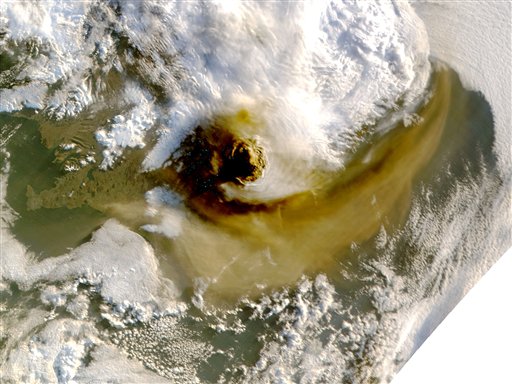
Berlin airports reopen as ash moves onThis image provided by NASA shows an image taken by a NASA MODIS satellite acquired at 1:15 a.m. EDT on May 22, 2011 shows the ash plume from the Grimsvotn volcano casts shadow to the west. The Grimsvotn volcano began erupting on Saturday, May 21 sending clouds of ash high into the air. The amount of ash spewing from the volcano tapered off dramatically on Tuesday, however, said Elin Jonasdottir, a forecaster at Iceland's meteorological office. The blue dots are data dropouts probably caused by the very bad light in the shadow of the plume. (AP Photo/NASA)(Credit: AP)

A cloud of volcanic ash from Iceland that had forced airport closures in northern Germany blew further north and east on Wednesday afternoon, allowing air traffic to resume as experts said the eruption appeared be winding down.

European air traffic controllers said they expected about 700 flights to be canceled on Wednesday, but Eurocontrol added that activity from Iceland’s Grimsvotn volcano has declined sharply and that traffic in European airspace could return to normal Thursday.

“There were very few eruptions by the volcano over the last six to 12 hours so the volcano is in a reasonably calm state at the moment,” said Brian Flynn, head of network operations for Eurocontrol. “Assuming that continues, we would expect that the European aviation would be able to return to almost a normal situation within the next 24 hours.”

Volcano experts in Iceland said the eruption appeared to be tapering off. Observers at the crater were reporting only steam, said Pall Einarsson, from the University of Iceland.

“The worst is over,” said Icelandic Prime Minister Johanna Sigurdardottir in a statement, after touring the region around Grimsvotn on Tuesday.

“Our geoscientists say that the eruption is waning day by day and that the problems arising in our neighboring countries as a result of volcanic ash should be resolved quickly,” Sigurdardottir said.

Ash from the volcano forced the cancellation of hundreds of flights over Britain on Tuesday as winds blew the ash over Scotland, but British airspace was clear on Wednesday.

German air traffic control banned all takeoffs and landings at airports in Berlin, Bremen, Hamburg and Luebeck for several hours early Wednesday, causing hundreds of flights to be canceled. Travelers had been warned in advance.

Eurocontrol said the ash has reached parts of Russia, but has not affected air traffic there. Transpolar flights through the region were being diverted around the affected area, but were flying as scheduled. About 500 flights to and from Europe cross the Arctic every day.

While experts say particles in the ash could stall jet engines and sandblast planes’ windows, many in Britain argued the flight bans were a massive overreaction by badly prepared safety regulators.

A British Airways test flight passing through the affected area was unaffected, said Willie Walsh, the chief executive of International Airlines Group — formed from the merger of BA and Iberia.

“We flew in the red zone for about 45 minutes at different altitudes over Scotland” and the north of England, Walsh told BBC radio. “All the filters were removed and will be sent to a laboratory for testing. The simple answer is that we found nothing.”

Irish budget airline Ryanair has also challenged the results, saying Tuesday it had sent its own airplane into Scottish airspace and found no ash in the atmosphere.

But German transport minister Peter Ramsauer insisted the precautions are justified, and said that authorities were better prepared after the Eyjafjallajokull volcano eruption last year forced the closure of European airspace for five days, stranding millions.

“We have developed a very refined regulation since the big ash cloud last April,” Ramsauer told ARD public broadcaster. “We are much better prepared to handle such a situation.”

Last year, European aviation authorities closed vast swaths of European airspace as soon as they detected the presence of even a small amount of volcanic ash in the atmosphere. This year, they are trying a more sophisticated approach.

Aviation authorities will give airlines detailed information about the location and density of ash clouds. Any airline that wants to fly through the ash cloud can do so if it can convince its own national aviation regulators it is safe.

The Grimsvotn volcano began erupting on Saturday, sending clouds of ash high into the air.

The main international body representing carriers, the International Air Transport Association, complained to the British government Tuesday about the way it had handled the issue, saying it should have had Cessna planes ready to carry out tests, instead of relying on the weather service.

——

Lekic reported from Brussels. Associated Press writers Raphael G. Satter and Danica Kirka contributed to this report from London.

Continue Reading Close

Suspect in Frankfurt shooting admits targeting American troops

The alleged shooter in Frankfurt, a Muslim airport employee, says he worked alone and aimed for Americans

  • more
    • All Share Services

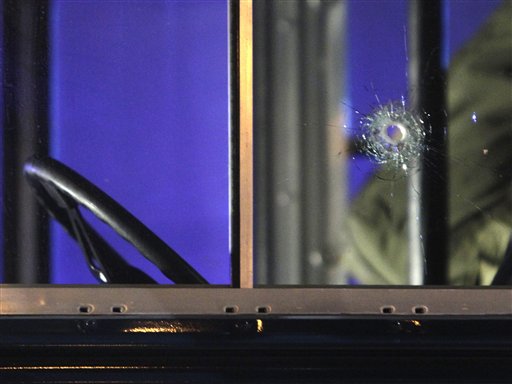
Suspect in Frankfurt shooting admits targeting American troopsA bullet hole is seen in the driver's window as the bus is towed away after a gunman fired shots at U.S. soldiers on the bus outside Frankfurt airport, Germany, Wednesday, March 2, 2011 killing two airmen and wounding two before being taken into custody. (AP Photo/Michael Probst)(Credit: AP)

The suspect in the slaying of two U.S. airmen at Frankfurt airport has confessed to targeting American military members, a German security official said Thursday as investigators probed what they considered a possible act of Islamic terrorism.

German federal prosecutors took over the investigation into Wednesday’s shooting, which also injured two U.S. airmen, one of them critically. They are working together with U.S. authorities.

Hesse state Interior Minister Boris Rhein told reporters in Wiesbaden that the suspect, identified as a 21-year-old ethnic Albanian from Kosovo, was apparently radicalized over the last few weeks. The attacker’s family in northern Kosovo identified him as Arid Uka, whose family has been living in Germany for 40 years.

The suspect opened fire on a busload of U.S. airmen on their way from their base in England to serve in Afghanistan, said Marine Col. Dave Lapan, a Pentagon spokesman.

Uka’s family said he worked at Frankfurt airport and was a devout Muslim. He was taken into custody immediately after the shooting and is to appear later Thursday in federal court in Karlsruhe.

There was disagreement Thursday between German and American officials whether the suspect may have had help. So far, German investigators thought he did not, but Americans were not ruling that out yet.

“From our investigation so far we conclude that he acted alone,” Rhein said. “So far we cannot see a network.”

Though the U.S. Embassy in Kosovo’s capital of Pristina referred to “the act of a single individual,” Lapan at the Pentagon said was still not clear whether others could have been involved in planning the attack.

“One of the key focuses if the investigation will be to determine whether others were involved in the incident besides the shooter,” Lapan said.

Federal prosecutors said the suspect was accused of killing two U.S. military personnel and seriously injuring two others.

“Given the circumstances, there is a suspicion that the act was motivated by Islamism,” they said in a statement, without elaborating.

Rhein said the suspect’s apartment and his computer have been searched and investigators were looking to shed further light on his motives. He said investigators believe the suspect had contact with other radical Muslims on Facebook “but there is no network in the sense of a terror cell.”

“There are signs that this is about a radicalized Muslim,” he said.

The suspect’s Facebook photo features a silhouette of Kosovo, with the phrase “There is no God but God and Mohammad is his prophet” written above it on Arabic. Rhein said the suspect recently changed his profile name from his real name to the nom de guerre “Abu Reyyan.”

One of his Facebook friends said he knew little about him.

“He was very unremarkable and low-key,” Kerem Kenan wrote to The Associated Press. “We had no personal contacts. I’m appalled by the incident.”

One airman remained in critical condition after being shot in the head and the another wounded airman was not in a life-threatening condition, Frankfurt police spokesman Juergen Linker told the DAPD news agency. None of the victims have been publicly identified, pending notification of next of kin.

At his father’s home in Frankfurt on Thursday, a man yelled at reporters to “go away,” threatening to call police. Neighbors described Uka as a loner who kept to himself, but never seemed unfriendly.

“I do think he was religious, but he is just a normal young guy — completely normal,” neighbor Katharina Freier told AP Television News. “We were all shocked.”

Kosovo is mostly Muslim, but its estimated 2 million ethnic Albanians are strongly pro-American due to the U.S.’s leading role in NATO’s 1999 bombing of Serb forces that paved the way for Kosovo to secede from Serbia.

The U.S. Embassy in Pristina said the attack “will in no way affect the deep and abiding friendship between our two countries.”

Uka’s uncle, Rexhep Uka, said the suspect’s grandfather was a religious leader at a mosque in a village near the Kosovo town of Mitrovica, and that Arid Uka was a devout Muslim himself. But he also said the family was pro-American and was also having a hard time imagining that their nephew was involved.

“I love the Americans because they helped us a lot in times of trouble,” he told the AP in Kosovo. “I had an American neighbor and we never had a problem. What happened in Germany is beyond me.”

Behxhet Uka, a first cousin of the suspect, said he had spoken to the gunman’s father in Frankfurt by telephone several times. The family told him that all they knew was that their son did not come home from work Wednesday at the Frankfurt airport.

“We heard about this from the local police,” he said. “I would hope that this is not true, but if it is true, it will be very hard for us here in Kosovo. We could not imagine something like this would happen because Americans are our brothers.”

Mitrovca, a former mining town, has also been the focus of reports that it breeds radical Islamic extremists.

Frankfurt airport spokesman Alfred Schmoeger said he had “no information” about Uka working at the airport, but said it was being checked.

“We have 70,000 people who work here at 500 businesses,” he said.

Police said the attacker had an altercation with U.S. military personnel in front of a bus outside the airport’s Terminal 2. They said the man started shooting, then boarded the bus briefly and was apprehended by police when he tried to escape.

The airmen, based in the Lakenheath airfield in eastern England, were bound for Ramstein Air Base, from where they were to have been sent to Afghanistan.

The U.S. has some 50,000 troops stationed in Germany. It operates several major facilities in the Frankfurt region, including the Ramstein Air Base, which is often used as a logistical hub for operations in Afghanistan and Iraq.

In Washington, President Barack Obama promised to “spare no effort” in investigating the slayings.

“I’m saddened and I’m outraged by this attack,” he said.

——–

Eddy reported from Berlin. Juergen Baetz and David Rising in Berlin, Bassem Mroue in Cairo and Pauline Jelinek in Washington also contributed.

Continue Reading Close

Page 1 of 2 in Melissa Eddy