Mirko Ilic

The prettiest boy in the world

A Bosnian male model is now appearing in bra ads -- and challenging how we think about beauty

This article originally appeared on Imprint.

ImprintRecently in Holland there appeared a series of ads designed by Doom&Dickson for a HEMA’s push-up bra, using this tag line:

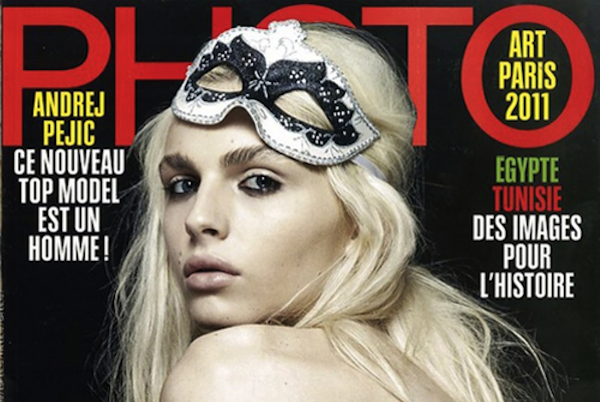
A push-up bra that gives you 2 cup sizes extra. Modeled by Andrej Pejic. A man. So imagine what it can do for a woman.

Andrej Pejic, a male model from Bosnia, is from my neck of the woods and is also known as “the prettiest boy in the world.” In the fashion industry, where a small percentage of female models succeed, Andrej is widely accepted as one of the top supermodels by fashion and mainstream media (See covers below).

When you find out he is a man, does he become less beautiful? If so, does that challenge your thinking about beauty?

Copyright F+W Media Inc. 2012.

Salon is proud to feature content from Imprint, the fastest-growing design community on the web. Brought to you by Print magazine, America’s oldest and most trusted design voice, Imprint features some of the biggest names in the industry covering visual culture from every angle. Imprint advances and expands the design conversation, providing fresh daily content to the community (and now to salon.com!), sparking conversation, competition, criticism, and passion among its members.

Kim Jong Il’s career in advertising

North Korea's late dictator was the unwitting participant in a number of marketing campaigns

This article originally appeared on Imprint.

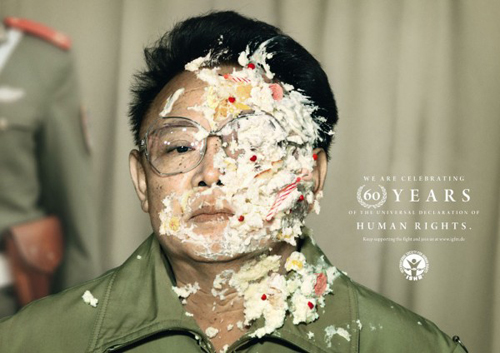
ImprintOn Saturday, Dec. 17, 2011, traveling on his train, Kim Jong Il, president of North Korea and star of advertising world died. Here are some highlights of his advertising career.

Copyright F+W Media Inc. 2011.

Salon is proud to feature content from Imprint, the fastest-growing design community on the web. Brought to you by Print magazine, America’s oldest and most trusted design voice, Imprint features some of the biggest names in the industry covering visual culture from every angle. Imprint advances and expands the design conversation, providing fresh daily content to the community (and now to salon.com!), sparking conversation, competition, criticism, and passion among its members.

Continue Reading Close

The crushing symbolism of the boot

The black Jackboot has long been used to represent oppression. What makes it such a powerful visual? VIDEO

(Credit: Courtesy of Mirko Ilic)
This article originally appeared on Imprint.

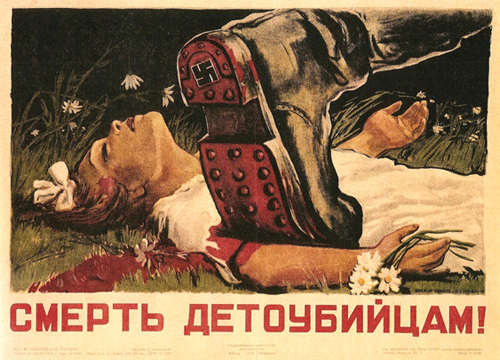
ImprintSince WWI, the image of the Jackboot has been used repeatedly as a symbol of totalitarianism and military aggression, often embellished with a symbol — just so you know who is oppressing whom.

Help Britain

Fight to Prevent This

Nazi Boots

CCCP

Rand Paul

Why the sole of the boot (funny choice of words … it must be my English)? Because everything underneath the sole of the boot is insignificant and small: bugs, worms, little men/creepy crawlies.

Because of this, the oppressed often portray themselves under the boot.

Time Magazine

The Big One

At the same time, the oppressors try to disguise themselves (like the recent example of UDC, the right-wing political party in Switzerland, in their campaign against immigration). They portray immigrants (painted black, of course) stepping on the pristine Swiss flag.

Or sometimes, they don’t want to pretend at all, like skinheads on the covers of their CDs.

But in some other cultures, the sole of the shoe is considered one of the filthiest things because the sole is in direct contact with dirt and feces. That’s why lately we see images of people stepping on photographs of local tyrants, dictators, and “bad guys.” But sometimes if they can’t step on their face, they try to throw shoes at their face.

This new “spring/uprising” movement of the little man creates a new visual trend captured perfectly by the latest poster of Amnesty International.

As Robert Crumb says, Keep on Truckin’…

Keep on Truckin'

All images courtesy of the author.

Watch the Flickr slideshow with 80+ more “boot” images:

Copyright F+W Media Inc. 2011.

Salon is proud to feature content from Imprint, the fastest-growing design community on the Web. Brought to you by Print magazine, America’s oldest and most trusted design voice, Imprint features some of the biggest names in the industry covering visual culture from every angle. Imprint advances and expands the design conversation, providing fresh daily content to the community (and now to salon.com), sparking conversation, competition, criticism and passion among its members.

Continue Reading Close

The power of the letter “o”

A look at movie posters that take advantage of the vowel's design potential

Cops and Mafia the boob tube

Merchandise such as toys, cups, T-shirts, towels, bed coverings, bags, lunch boxes, pencils and notebooks are financially very important for movies. Therefore the branding of a movie is very important to studios.

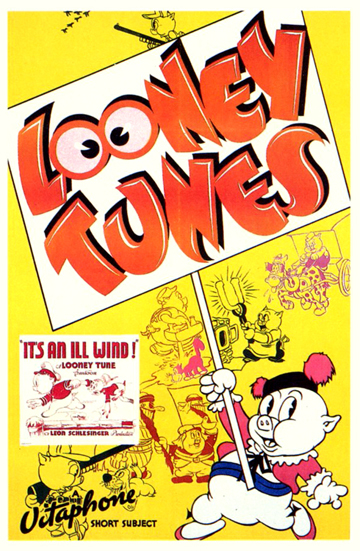
But not all movies have cute animated characters or a comics hero to fill that role. They must rely on logos created out of the title of the movie. Sometimes they get lucky when they have the letter “o” in the title. Having two “o’s” in the title is almost like the Chinese character for “double happiness.” Why the letter “o”? It has a hole in the middle and one can put things in it. It works perfectly every time, in every way, by using the outline of the “o,” putting things inside such as eyeballs, faces, people, replacing the letter with round objects, or even with objects that are not even round. For example the heart is used very often despite the fact that it looks more like the letter “v.” One just cannot lose by going with the “o.” Remember, it even worked for the president.


quantum of solace

one body too manyWe added 60 new images of movie posters to the Flickr collection. There are all together 189 images, sometimes using one, sometimes two, and sometimes even three o’s to create the logo / title. Next time we can talk about other letters used in the titles of movie posters.


lady be good

looney tunes hollywood sodom and gomorrah body and soul Brooklyn gorilla look


boton

the shooting mikpokoemo platoon


fireproof

All images on this page are courtesy of Mirko Ilic, a New York-based graphic designer and illustrator. He co-authored “The Design of Dissent” with Milton Glaser, and “The Anatomy of Design and Icons of Graphic Design” with Steven Heller. He teaches illustration at the School of Visual Arts.

Copyright F+W Media Inc. 2011.

Salon is proud to feature content from Imprint, the fastest-growing design community on the Web. Brought to you by Print magazine, America’s oldest and most trusted design voice, Imprint features some of the biggest names in the industry covering visual culture from every angle. Imprint advances and expands the design conversation, providing fresh daily content to the community (and now to salon.com!), sparking conversation, competition, criticism and passion among its members.

Continue Reading Close

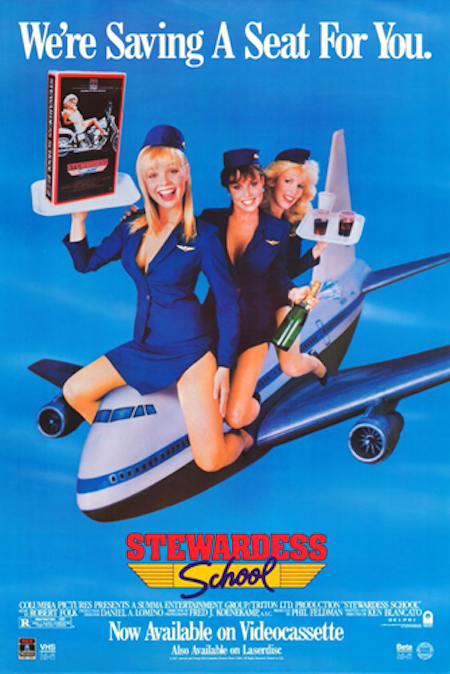
Advertising’s sexual obsession with flight

From Navy boys on missiles to pinup girls on planes, we explore a design love affair

The first legend about flying females was that of witches — women who made pacts with the devil. They turned brooms, a symbol of servitude and submission, into one of power and flight. To fly, all they needed to do was put the long handle of a broom between their legs.

The next flying possibility for females appeared in France in 1695 with the publication of the book “Tales of My Mother Goose.” In that case, the female was riding the long neck of the goose. Soon after, other elongated animals followed.

But males wanted to fly too. Icarus’ method did not work for them. They wanted to sit on something too. The first publication of “The Surprising Adventures of Baron Munchhausen” in Germany in 1781 gave them that opportunity, putting Baron Munchhausen on the ball. Actually, on a cannon ball.

In 1943, the German movie “The Surprising Adventures of Baron Munchhausen” was released. Here is a French version of the DVD cover for the same movie. I would like you to pay attention to the configuration and shapes of the surrounding towers/minarets. Very soon, everybody was sitting on one kind of ball or another.

But let’s go back to the cannon ball. Actually, to the cannon — that elongated, powerful weapon which propels the cannon balls. In the case of the cannon, size matters. The bigger the size, the further it can propel the cannon balls/shells.

In 1917, the U.S. Navy released the poster “Join the Navy,” created by an artist named Babcock. No doubt it was influenced by the story of Baron Munchhausen and the image of cowboys riding wild broncos.


In the Second World War, the airplane squads would often paint pinup girls on the nose of the airplanes. Some of them were shown sitting on bombs or riding them.

Director Stanley Kubrick immortalized riding bombs in his ironic Cold War comedy “Dr. Strangelove or: How I Learned to Stop Worrying and Love the Bomb.” (1964)


The Cold War introduced a new vehicle to ride: the nuclear rocket. Rockets with aerodynamic shapes were created for deep penetration behind enemy lines. And probably for those reasons, they became desirable objects on which to sit.

Old means of transportation such as airplanes and trains remained desirable to ride, as in the case of the ad for the Pennsylvania Railroad with Roy Rogers. Only I am a bit confused: does this mean Roy has a big or small train?

But then again, one does not need vehicles to ride or sit on. Any elongated object will do the trick, such as a bottle, a carrot, a banana, a cigar, a pencil, a log or a wrench.

On the Flickr slide show (also below), you’ll find over 230 images on this subject. Ride on.

All images on this page are courtesy of Mirko Ilic, a New York-based graphic designer and illustrator. He co-authored “The Design of Dissent,” with Milton Glaser, and “The Anatomy of Design and Icons of Graphic Design,” with Steven Heller. He teaches illustration at the School of Visual Arts.

Copyright F+W Media Inc. 2011.

Salon is proud to feature content from Imprint, the fastest-growing design community on the Web. Brought to you by Print magazine, America’s oldest and most trusted design voice, Imprint features some of the biggest names in the industry covering visual culture from every angle. Imprint advances and expands the design conversation, providing fresh daily content to the community (and now to Salon.com!), sparking conversation, competition, criticism, and passion among its members.

Continue Reading Close
www.salon.com/writer/mirko_ilic/index.html