Paul Di Filippo

The brilliance of speculative sci-fi

What if we launched an extreme geo-engineering project? Or the U.S. and the UAE swapped places? Two books answer

  • more
    • All Share Services

The brilliance of speculative sci-fi
This article appears courtesy of The Barnes & Noble Review.

Isaac Asimov memorably identified the three major types of science fiction as “What if,” “If only,” and “If this goes on.” Magnificent works have emerged from each of these categories, but readers — and writers — have reserved their greatest love for the first of the trio. Asking simple, counterintuitive, counterfactual or even childlike and naïve questions — the kinds that begin with those two words — seems to unlock the storytelling imagination like nothing else.

Barnes & Noble ReviewIn many cases, what follows naturally from “What if” is something almost as fundamental to speculative fiction: the Big Idea. A massive, revolutionary, visionary conceit that practically begs to be instantiated in fiction. Big Ideas are the highbrow cousin of the Hollywood “elevator pitch,” a concise formulation of a winning premise. (And sometimes a Big Idea gets positively reductive, producing a “Big Dumb Object,” such as Larry Niven’s Ringworld.) The Big Idea might very well be attended, in an SF novel, by a flock of lesser idealings to help support it. But generally, the core notion looms at the center, like a monarch on the throne. Recognizing the centrality and importance of such crystallizing conceits, author John Scalzi even invites his peers to discuss the Big Ideas behind their own projects at his popular blog, Whatever.

Some Big Ideas, of course, prove derivative; others shrink on the page for want of narrative oxygen. But two recent novels exemplify the marvelous possibilities of this classic approach to speculative fiction.

In “Arctic Rising,” Tobias Buckell presents a gripping and convincing near-future scenario that is composed of many beautifully machined speculative parts, which all cohere into a stirring, verisimilitudinous portrait of our world circa 2050. Additionally, he provides a thriller-style plot worthy of Hitchcock or Neal Stephenson. But at the heart of the novel is a single thought seed: “What if a wild-eyed, maverick geo-engineering project intended to counter climate change was indeed carried out?” Around this notion Buckell secretes a pearl of a book, with many intricate laminations.

Buckell’s previous novels have been funky, baroque, rather gonzo outings: hipster space operas. In this novel, he strips down his prose, characters, and plot to a more “commercial” level without sacrificing his unique voice or genre integrity. He concentrates on extrapolations of the Brunner-Gibson-Doctorow-Stross variety to produce a propulsive and readable novel that performs SF’s essential function of creating a totally believable world ripped from tomorrow’s headlines.

In Buckell’s future, global warming has opened up the North Polar regions into a new frontier, rich with arable land, fresh habitable niches, and valuable resources of all stripes. Existing governments have stepped into the breach in places, and new polities have formed in others, including most prominently a floating city-state named Thule. (Buckell is as generous with his social science speculations as he is with his environmental ones.)

But this bustling new free enterprise zone is being threatened by the actions of the Gaia Corporation, whose secret macro-engineering scheme promises to undo the new realities and restore the status quo ante. In this setting, the novel’s sly title becomes a three-pronged phrase: the Arctic is rising as a powerhouse region even as its ocean waters inexorably rise, and at the same time that its citizens are rebelling. Buckell keeps these three plates spinning with a juggler’s precision.

While on patrol one day, Anika Duncan, Nigerian-born dirigible pilot for the United Nations Polar Guard, intercepts a tramp freighter doing suspicious things. Shot down by the crew, she survives, only to find that what she has witnessed has put her on the hit lists of several covert, competing factions. Over the course of just a few days, Anika will be hounded and chivvied across the Arctic (giving Buckell a plausible reason to show us an impressive range of venues), her life in constant danger. She’ll lose old friends, make new ones, and generally comport herself with bravery, resourcefulness, and intelligence, eventually ferreting out the true dimensions of the plot and taking bold, risky actions to stymie it. Though she fits the type of a plucky action hero well enough, Buckell’s depiction of Anika is a solid, flexible, rich construction, endearing to any reader, I am sure, and providing a beautiful entry point into this radically different world.

Buckell’s supporting characters exhibit similar depth and heft. And he’s not above taking some satirical jabs at the more archetypical among them, mainly the founders of Gaia, Paige Greer and Ivan Cohen, who started as college whiz kids but became morally problematical Dr. No analogues. “*Cough* Google *Cough*”

In the best tradition of this subgenre, Buckell spins off great satellite ideas around his Big Idea on every page. Think that Chinese manufacturers like Foxconn represent the apex of such mercenary ventures? What about floating factory ships that hover above oil feedstocks and churn out plastic toys in situ? That’s just the barest sample of Buckell’s lateral thinking.

Buckell — who was born in the Caribbean — has long favored a multicultural approach to his fiction, and he continues in that vein here, careful to present a wide range of ethnicities and worldviews, from Anika on down. And if this book has any slant, it’s a liberal-leftist-netizen leaning. But at the same time, Buckell revels in enough gunplay and violence and Realpolitik to deter any charges of touchy-feely wimpiness. In fact, although Anika agonizes over various deaths and brutalities, with each fatality being accorded proper moral gravitas, she shows no hesitation in shooting up the scenery when necessary. One might even charge Buckell with a little too much enjoyment of the resulting carnage. But then again, Big Ideas generally leave big swaths of creative destruction in their wake.

- – - – - – - – - -

If you amalgamated the methodical, punctilious, world-building skills of Ian McDonald (“The Dervish House”) with the reality-distortion powers of Philip K. Dick (“The Man in the High Castle”) and then folded in the satirical, take-no-prisoners savagery of Norman Spinrad (“The Iron Dream”), you might very well be able to produce a book approximating Matt Ruff’s “The Mirage” — God willing, as Ruff’s characters are continually cautioning. Ruff’s Big Idea masterstroke — so simple yet infinitely deep — is to imagine a world where every polarity of the post-9/11 scene has been flipped 180 degrees. (Actually, of course, for maximum plausibility, the fictional timeline is shown to have diverged from ours much earlier, at the end of the Ottoman Empire.)

America, a jealous, backward, fragmented, fundamentalist-ridden failed nation, is responsible for the terrorist-driven, airplane-mediated destruction of the World Trade Towers of Baghdad, cosmopolitan metropolis of the United Arab States, that enlightened, progressive, technology-rich superpower in a continuum just one funhouse mirror removed from ours. The event occurs not on 9/11/2001 but on 11/9/2001, that off-kilter date serving as just the merest hint of the radical transvaluation Ruff has in store. And the novel is set more or less ten years after, in the long, grinding aftermath of that event.

Ruff leads with a charming, utterly engrossing cast: Mustafa, Samir, and Amal, with Mustafa the privileged point of view — three UAS Homeland Security agents who will invariably provoke thoughts of the Mod Squad. But any intentional campiness functions as just a slightly quirky flavor to their tight-knit ensemble, as they undertake perilous campaigns against Christian terrorists. And coming to dominate their assignments are rumors of “the mirage,” the alien fundamentalist belief that their world of Islamic hegemony is a fictitious one, somehow deriving from another, prior, more “real” continuum. And when actual artifacts from the crazy alternate history — our world, of course — begin to bleed over, events really begin to get weird, in the manner of China Miéville’s “The City & the City”.

Aside from satisfying the traditional requirements of any good story — dramatic character arcs, suspenseful plotting, fusion of theme and action — which he does admirably, Ruff’s titanic accomplishments with this book lie along two parallel yet complementary axes.

First is the sheer magnificent magnitude of his world building. This universe of Islamic supremacy is the most tangible such creation since Kim Stanley Robinson’s “The Years of Rice and Salt”. (And it’s a testament to the paucity of ambition among current SF writers that such a juicy topic has basically gone begging, despite its immediacy and topicality, save for these two novels.) Ruff has not let one niche of his imaginary culture or politics go unexplored. He’s even imagined the kind of lolcats this world would boast! Courtesy of Ruff’s hard work, the reader inhabits this world as fully as possible. And the information is delivered with sophisticated, effortless grace. The excerpts before each chapter from the “Library of Alexandria” web pages (the new world’s Wikipedia) help a lot in this cause. Moreover, Ruff creates a completely sympathetic portrait of the world, warts and glamour both, not some propagandist’s one-dimensional caricature in either direction. It’s a humanist, naturalistic depiction. Yes, the world of the UAS discriminates against homosexuality still, to the point where Samir’s gayness is used as blackmail material. But there’s no mindless jihad against other cultures, and in fact the enlightened Muslims work hand-in-hand with the Israelis, whose post-WWII refugee nation was founded in the ruins of Germany! (“The Israelis were bombing Vienna” is the opening line to one chapter.)

Mention of this Zionist dislocation brings us to the second aspect of the book, the estrangement lurking beneath the acute mimesis. Ruff is out to blow your mind with the way things might have gone, given a few divergent forks in the historical road. And much of this estrangement is conveyed in the alternate careers of famous people, rendered completely believable. Saddam Hussein is a notorious gangster. Osama bin Laden is a right-wing senator. Gaddafi is the Jerry “Governor Moonbeam” Brown of the nation. Without over-reliance on the shorthand, ready-made personalities of the famous — a common misstep in shoddy alternate histories — Ruff still employs these recognizable personages (mostly offstage, except for Saddam) as perfect foils for his tale. And I haven’t even spoiled many of the most surprising appearances.

Finally, Ruff doesn’t fudge the ontological weirdness of his world. When you learn what triggered the birth of this parallel timeline, you will be astonished at his audacity.

These two strong pillars — the richly sub-created timeline and its salient anamorphic reflections of our own era — together make for a book that will captivate upon an initial surface reading and trouble your certainties long after.

The overlooked sci-fi of 2011

These novels explore a virus-plagued West, a reality-altered utopia and a collapsed American empire

  • more
    • All Share Services

The overlooked sci-fi of 2011
This article appears courtesy of The Barnes & Noble Review.

When compiling best-of lists at the end of the year, it’s easy to overlook certain classes of deserving books. In a year filled with massive, highly publicized releases — a new Neal Stephenson, a Vernor Vinge sequel awaited for twenty years — wonderful books with less flash can go unnoticed in the shadows. A debut novel, perhaps. Or the second book in a quiet series. Or a novel published right at the busy holiday end of the calendar year.

Barnes & Noble ReviewI have selected one of each of these oft-neglected types to bring to your attention. But besides highlighting these superior books, this essay hopes to remind you to cast your own literary nets widely when selecting your personal candidates for the year’s finest.

When the World Is Running Down

The old career path for genre writers — polish your chops with short stories, garner some notice, then get a book deal — has undergone lots of evolution. Many young writers leap straight to novel-length tales nowadays — not always nimbly or successfully enough to ensure a long run. But for some, the old ways still work. Will McIntosh is one such. After graduating from the fabled Clarion SF Workshop in 2003, he began publishing accomplished short stories, finally picking up a Hugo Award for “Bridesicle.”  This year sees his first book, “Soft Apocalypse,” and it bears the razor-sharp edge earned by the honing of that apprentice work.

McIntosh’s bracingly bleak novel, a triumph of believable doomsaying with a black-humored heart, stands firmly in the “Mundane SF” camp first staked out by Geoff Ryman and later best exemplified by Paolo Bacigalupi’s “The Windup Girl,” a book that’s kissing cousin to McIntosh’s. Eschewing the more outré tropes and conceits of SF — telepathy, interstellar empires, sentient robots — Mundane SF focuses on the realistic near-term prospects of our planet. And as you might suspect, if you’ve even been scanning the headlines lately, those horizons can look awfully grim. McIntosh’s genius what-if premise shows a bedrock simplicity: what would the world look and feel like if the conditions in Somalia circa 2011 — amped up speculatively, of course — prevailed everywhere?  Specifically, in Savannah, Georgia, home to Jasper, our semi-likable, semi-detestable  antihero.

A Millennial Baby, Jasper was born in 1995, and we pick up his tale in the year 2023, when he’s a homeless gypsy roaming the parched, designer virus-plagued, hate-filled American West with his fellow impoverished tribe members. He soon relocates back to his home city and finds life improving a tiny bit, as he grabs the lowest rung on the ladder of some kind of minimal stability and security, finding work in a convenience store. But all is relative. Jumpy-Jump terrorists roam the streets openly. Civil Defense forces are a venal extortion racket. Mutant bamboo sown by the Science Alliance erupts through the pavement unpredictably. And it’s generally a dog-eat-dog (or person-eat-dog) existence.

McIntosh tells his tale in fluid first-person reportage, with chapters that function almost as stand-alone stories, but with recurrent characters and threads and symbols, following an arc of entropy and maturation. Each chapter leaps ahead significantly in time, giving the narrative a disorienting jump-cut momentum. We ride the shoulders of Jasper as, with his posse of idiosyncratic pals, he alternates between selfishness and altruism, despair and hope, lust and apathy.

McIntosh’s unrelenting and unflinching car crash documentary of a novel surprises by just how tonic it is. There’s a liberation to be had in envisioning the worst that can happen, and somehow living through it. Harking back to such landmarks as Fritz Leiber’s “Coming Attraction,” John Barnes’ Century Next Door series, and Thomas Disch’s 334, the book actually might be best likened to a season of “Friends” or “Seinfeld,” mated with John Brunner’s “The Sheep Look Up,” pushing chrome-plated irony through bloody horror and emerging annealed.

War Is Over if You Want It

Although Kathleen Ann Goonan’s 2007 novel “In War Times” won the John Campbell Award, it’s been relatively neglected ever since, uninvited into the upper ranks of the fannish canon of 21st-century SF. My evidence for this, besides intuition and hearsay? Here’s one measure. The novel’s title plus Goonan’s last name, used as search terms, translate into some 80,000 Google hits. The same test on the similarly scaled, more populist book of a peer, John Scalzi’s “Old Man’s War,” delivers half a million references. Scalzi’s novel had two years’ head start, but still …

The outsider nature of “In War Times” derives from the old controversies of mainstream versus genre, of subtlety versus flash, of humanism versus technophilia. Although it should be said right from the outset that this is a problem of perception, not reality, since Goonan’s superb book actually unites and transcends all these antinomies with skill and zest. Yet to a superficial reader, it seems to lean away from pure science fiction while still containing a core of speculative imagination. Its territory is awkwardly situated between two literary camps.

Goonan’s novel covers the years 1940 to 1980. It’s the saga at first of loner Sam Dance and, eventually, his family too, after he marries vivacious OSS agent Bette Elegante. Sam is a young man when WWII breaks out, tasked with secret radar work for the Army. But he also has a mission that’s even more hidden. He’s been covertly entrusted with half-formed plans and clues about a weird gadget, developed by the mysterious scientist Eliani Hadntz. The Hadntz Device could literally remake the world, using quantum linkages between the brain and matter to alter history and shift the entire planet into new, more welcoming timelines.

Mining her own father’s actual WWII experiences, Goonan achieves a deep and rich verisimilitude for all the wartime passages. She crafts a beautiful correspondence between jazz music and quantum physics (shades of Richard Feynman’s bongo playing!). Her unique interpretation of the many-worlds theory is genuinely speculative. She builds living characters beautifully from the ground up, making us feel intensely for Sam and company. Her utopian themes are inspiring. And her sly depiction of warping realities is worthy of Philip K. Dick. In short, this novel reads like Thomas Pynchon’s “Gravity’s Rainbow,” seeded with Christopher Priest’s “The Separation” and watered with some of Michael Moorcock’s multiversal inventions. It should really be on every fan’s shortlist of best books of the past decade.

Now comes the sequel, which has been reviewed only lightly since its midyear release. “This Shared Dream,” while fully as expert and enjoyable as its predecessor, feels necessarily different. “In War Times” was all about the exciting quest, with victory uncertain; “This Shared Dream”is all about protecting and extending what was won, inglorious maintenance duty. The challenges and price of defending an achievement are different than those of winning the prize in the first place.

The year is 1991, and Sam and Bette have been separated from their loved ones by the reality-shifting their work has brought about. On the timeline they are now sundered from, their three children — Jill, Brian and Megan — are all adults with families of their own. But only Jill remembers, in nebulous jigsaw fashion, that the world was ever different. The dissonance is driving her crazy and ruining her personal life. But otherwise, the world is ticking along nicely (no AIDS, no war, universal education through smartbooks). The Hadntz Device is now distributed in consumer products that conduce toward peace, stability, equality and empathy. HD-50, an upgrade that enforces instant empathy, looms on the horizon. (Goonan has some sharp things to say about thrusting goodness onto people against their will.)  But the speed bump in the path to paradise is an elderly unreformed Nazi who wants to use the power of reality alteration for his own nefarious purposes. He’ll be as much a threat to Jill and family as the disbelief the rest of the world has in her revelations.

The narrative is split mainly among the viewpoints of Bette and her three children, making for a more diffuse story than previously. But Goonan employs the multivalent perspective to get across a good portrait of her proto-utopia: a bold undertaking often shirked by SF writers. Additionally, there’s a kind of mythic, familial John Crowley ambiance, as the doings at the ancestral Dance homestead, Halcyon House, resonate with the magical affairs at the Drinkwater manse in “Little, Big.”

Goonan also gets a good Henry Kuttner vibe going — recall that writer’s classic “Mimsy Were the Borogoves,” in which toys displaced from the future cause children to evolve strangely. Goonan’s take: “The essential agents in Hadntz’s Device, which fostered altruism, were also in the cereal toys she had just sold to General Mills. These agents were transmittable through touch, and through the very air. They formed networks, which would grow. Their molecular design came from another timeline, one in which engineering had accomplished molecular replication. Should one be cut in two, each would regenerate a complete figure. This practically guaranteed worldwide distribution in a short period of time.”

The story, much of which unpacks lost memories in a solidly constructed Washington, D.C., venue, nonetheless manages to convey a sense of urgency about humanity’s evolutionary path. Goonan uses the word “fragile” often, hinting at the house-of-cards nature of civilization. The urgent necessity for our species to master its worst impulses and take charge of its own destiny — a core tenet of the SF genre — has seldom been conveyed with such emotional and intellectual force.

The Future Is a Voyage Without End!

Lately, if we do not find ourselves living through the collapse of civilization in our science fiction novels, we are often just on the far side of such a sea change, inhabiting an “Ozymandias” landscape with the melancholy feeling of Gray’s “Elegy Written in a Country Church-Yard.”  This mode has noble roots in SF:  George Stewart’s “Earth Abides;” Edgar Pangborn’s “Davy;” John Crowley’s “Engine Summer;” Robert Charles Wilson’s “Julian Comstock”. Tales of humble folks in reduced circumstances, oftentimes exhibiting strange adaptive customs, living in the ruins of our techno-Acropolises. Jump ahead far enough in time, and you end up in Jack Vance’s “The Dying Earth,” where our failed era is mere myth.

John Wright’s heady, slam-bang new series kickoff, “Count to a Trillion” (somewhat haplessly released in a season when the attention of readers is elsewhere and many best-of selections have already been solidified), starts out in such a milieu, before moving to far stranger places.

In the 2200s, the remnants of the fallen USA are ruled by the dominant powers of the Hispanosphere and the Indosphere. (The whole globe is a place of diminished expectations, still emerging from various plagues, wars, and Dark Ages.)  Our hero, Menelaus Montrose, is a young Texas lad prone to dreaming about past and future glories. (He is particularly enamored with an ancient “Star Trek”-style show called “Asymptote,” whose catchphrase is “The Future Is a Voyage Without End!”)  He grows up to be a lawyer specializing in out-of-court settlements: dueling to the death. But he’s rescued from this harsh career by a patron who recognizes his innate intelligence.

After training, Menelaus finds himself on mankind’s first new expedition to the stars. But something goes horribly wrong: he’s put into suspended animation and is awakened after 164 years, when his condition can finally be cured. But this farther-off future is still not up to Menelaus’s lofty dreams, and he sets out to do something about his disappointments, employing his mutant brain, Tex-Mex aggressiveness (cue the ring-tailed roarer antics of R. A. Lafferty), and his love for the beautiful Princess Rania, ruler of the galaxy — or at least mankind’s sorry portion thereof.

With his previous book having been the authorized sequel to an A. E. van Vogt series — “Null-A Continuum” — Wright is still flying high in the recomplicated space-opera fashion. This story is full of million-year-old indecipherable Monuments, ruthless hordes of cruel machines, and deadly intrigue among the merciless technocrats. But overall, Wright has toned down the surreal jargon and bizarre conceits this time around for a less-complex approach. He’s plainly bent on emulating such straight-ahead past masters as Edmond Hamilton and Jack Williamson, whose Golden Age sagas of Earthmen transported to the far future enchanted many a reader. Some Leigh Brackett-style planetary romance can be discerned here too. And Wright resonates beautifully with this tradition, modifying it skillfully for sophisticated twenty-first-century tastes.

But the book features one last layer: the meta-, or self-referential one. Menelaus Montrose is not a naive hero but rather what passes for an SF fan of his era. His first observations upon being revived are complaints about the lack of progress, including the semi-serious, “So no voluptuous green-skinned spacewomen in silvery space-bikinis?” He stands in for all those diehard fans who continue to believe in SF’s bright futures and limitless horizons, despite any short-term roadblocks, however high and seemingly insurmountable. This theme aligns Wright with some recent thoughtful work by William Barton.

“Count to a Trillion” is both a love letter and a call to arms. If you really believe the future is a voyage without end, consider this book the start to the countdown.

Continue Reading Close

How the LEGO cult was born

A new book traces the story behind the plastic bricks that have entranced generations of kids

  • more
    • All Share Services

How the LEGO cult was born
This article appears courtesy of The Barnes & Noble Review.

When I was a child, and well into my adolescent years, I played with LEGO blocks in a curious fashion I invented for myself, and which, for all I know, might still be a unique mode.

Barnes & Noble ReviewStarting with a good-size base plate, I would construct a labyrinth of narrow corridors, inserting windows randomly into the exterior walls. There was but a single egress. When the walls were about four bricks high, I capped them with a ceiling that was unbroken except for a single hole leading to the now-hidden level. Atop that ceiling, I built a second, different labyrinth, whose sole exit was that floor hole. That second story got its own ceiling with a gap. Repeat till bricks ran out, with a final roof featuring its own entrance hole down to the top maze level.

Into this boxy affair, I would drop a marble. The object was to tilt and shift and shake the box until the marble emerged from the bottom door. The only clues one got to the marble’s progress were what one’s imperfect memory of the multilevel layout provided, and when the marble showed up in a random window.

I spent countless ecstatic hours in this hypnotic building and maze-running pastime, deriving subtle and sophisticated pleasures from the simplest bricks in the LEGO catalog. No other toy, however complicated and expensive, could have provided the same intense fun.

Nowadays, of course, decades after my own youth, LEGO has broadened and deepened its offerings to include an infinity of models and expansion kits, elaborate parts and figures and robotic components, as well as narrative-based packages (Bionicles) and online games and design tools. But at the heart of the experience remains the Holy Brick, with its satisfying capacity to mate ingeniously and heterogeneously with its own kind, according to the builder’s creativity.

John Baichtal (contributor to Make magazine) and Joe Meno (founder of the LEGO zine BrickJournal) understand this numinous aspect completely. When, in their exhaustive and rapturous survey of the multicolored building blocks, “The Cult of LEGO,” they present the original patent application drawing for what was then, in 1958, called a “toy plastic brick” (or, earlier, “automatic binding brick”), the effect is that of viewing the tablets that held the Ten Commandments, or perhaps the Sistine Chapel artwork. The receptive reader is in the presence of the divine genesis.

As new immigrants to LEGO-land will soon learn, this reverential attitude does not overstate the fanatical devotion LEGO inspires in a certain subset of all those who encounter it. “The Cult of LEGO” is so named for good reason, and the book’s handsomely designed and overstuffed eye-popping pages offer plenty of proof of the fannish devotion and inspired participation juiced by the cult.

After giving us a concise and vivid history of the product, the authors present us with some representative or high-profile creators, lamenting a certain gender inequality and seeking to offset it by a long profile of Fay Rhodes. They highlight many of the most ingenious constructions, from the sheerly practical (iPod docks) to the transgressively controversial (Zbigniew Libera’s LEGO Concentration Camp). Cogent discussions are devoted to the “minifigs,” the humanoid citizens of LEGO-dom (over 4,000 different ones to date!). The practices of doing tiny vignettes and YouTube animations get full coverage. We learn of such slice-of-life mini-dioramas as Big Daddy’s Nelson’s “Noisy Neighbor” and “Dentist’s Office” (titles appended by this reporter). And clever stop-motion animations such as Parry Gripp’s film-festival entry “Megaphone” abound online.

The potential of these bricks for use in high art is thoroughly explored. The reader will feel that he or she is getting in on the ground floor of a new, museum-worthy medium. The competitive nature of LEGO building receives a wry look. Some creations contain anywhere from half a million bricks to three times that number, and cost thousands of dollars and thousands of assembly hours. In Germany, a model of the Allianz Arena uses 1.3 million bricks and weighs 1.5 tons. Creator René Hoffmeister has assembled a replica of a container ship employing 400,000 bricks and measuring 24 feet long.

Overall, while the authors treat their subject with absolute respect, they are far from stuffy or closed-minded, injecting humor and a sense of proportion into all their text. After all, LEGO ain’t rocket science or brain surgery (although through its robotics packages and its employment as therapy for autism sufferers, the product does contribute mightily to education).

With worldwide LEGO activity being so voluminous, it’s only natural that even such a fine volume might miss a couple of primo examples. But I was a bit surprised not to see mention of the life-size LEGO Batman (a prominent attraction at many recent comics conventions), or Norman Mailer’s famous LEGO city, which dominated the writer’s apartment for years.

But given the wealth of imaginative real estate surveyed here, any budding adherent or veteran AFOL (Adult Fan of Lego) will feel they have been given a pass straight into the utopian playtime dreams of LEGO’s Danish Dad, Ole Kirk Christiansen.

Continue Reading Close

“The Magician” sequel delves further into fantasy

Grossman's second installment leaves the real world behind as its hero copes with universal moral questions

  • more
    • All Share Services

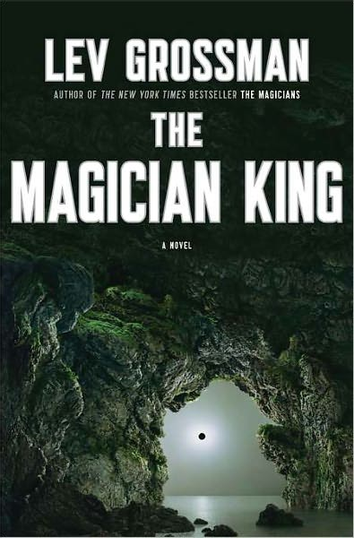
In a recent essay in the Wall Street Journal, novelist and critic Lev Grossman used the release of George R. R. Martin’s newest, long-awaited sword and sorcery novel as a hook upon which to hang a spirited defense of fantasy literature in general. Grossman first claimed that many average readers and cultural arbiters disrespected fantasy, sneerily regarding it as fit only for children, or child-minded adults. (The lament echoes Woody Allen’s famous complaint to Newsweek in 1978: “When you do comedy you’re not sitting at the grown-ups’ table, you’re sitting at the children’s table.”)

Barnes & Noble ReviewTo the contrary, Grossman claimed, fantasy was the Ur-literature of our species; had produced many canonical works of genius; was fully capable of dealing with vital issues in a mature and complex fashion; and continued to inspire contemporary works marked by supreme craft, beauty and importance.

These verbal pugilistics on behalf of fantasy’s honor do seem a bit like a Civil War reenactment. That particular battle has long ago been fought and decided, in fantasy’s favor. We won. Although mimetic fiction still occupies a few catbird seats, such as the Booker Prize and the Times Literary Supplement and a few stodgy halls of academe, the sheer volume of fantastika — to employ ace critic John Clute‘s umbrella term for science fiction, fantasy, horror, surrealism, magical realism and any hybrid thereof — currently filling our cinemas and best-seller lists and e-readers is an incontrovertible measure of fantastika’s popularity. When Joyce Carol Oates is extolling H. P. Lovecraft in the New York Review of Books, it seems a bit greedy and peevish and retrogressive to claim, “We can’t get no respect.”

But hidden in Grossman’s essay is a serious issue still unsettled in the minds of many, believers and non-believers alike. Large-scale acceptance of fantasy does not necessarily reflect a high quality of product. This particular ocean of story might very well be nothing more than the Great Pacific Garbage Patch, a Sargasso of shoddy plastic cultural flotsam.

Can a fantastical novel also exhibit all the virtues of the best mimetic fiction? Grossman cites several books that, he feels, do. I could adduce others he obviously omits for lack of space, such as Mark Helprin’s “Winter’s Tale”, John Crowley’s “Little, Big” and Mervyn Peake’s “Gormenghast” trilogy. But we need not look so far afield, given that we have Grossman’s own new novel “The Magician King” to hand, a sequel to his bestseller “The Magicians.” Chances are good we can count on it to aspire to the heights Grossman preaches, and to make his case. Certainly the first entry in his series — and what else labels a book “popular fiction” more definitively than being part of a series? — did indeed achieve a very respectable hieros gamos of naturalism and the fantastic.

Quentin Coldwater is a brainy, disaffected 17-year-old whose life is overturned one day when he is accepted into the mysterious Brakebills College for Magical Pedagogy, situated behind cloaking barriers somewhere in upstate New York. Having long dwelled mentally in daydreams inspired by a set of classic YA novels about a magical land named Fillory (think Lewis’ “Narnia” tales), Quentin is primed to accept this magical destiny. But even in the midst of the miraculous, he soon finds that he cannot avoid all the adolescent tribulations that are the common lot of all humans, magicians or mundanes. Affairs of status and of the heart and soul bedevil him. After four tumultuous years he graduates and lands in New York City, but finds a world made easy by magic to be one of aimless hedonism. When one of his peers announces that Fillory is real and he’s found a way there, Quentin naturally signs up for the expedition. But that secondary creation will prove as dangerous and unsatisfying as Earth, and the group’s sojourn turns into a battle with tragic consequences. The aftermath leaves Quentin stranded among the mundanes, an exile from which he is finally released in the closing pages of “The Magicians.”

Grossman’s hybrid approach is worth pausing over. Beyond its sorcerous concerns, “The Magicians” delivered a sterling coming-of-age tale. It’s not “A Portrait of the Artist as a Young Man,” but what else other than Joyce’s original is? Quentin and his peers are utterly credible depictions of ambitious, confused, overconfident, talented, wary youngsters. They come in all flavors, from effete Eliot to domineering Janet to wise and shy yet powerful Alice. Their whole ménage resembles something out of Jay McInerney or Bret Easton Ellis, Douglas Coupland or Donna Tartt:

Then he would take off his clothes, which reeked of cigarette smoke, like a toad shedding its skin, and Alice would stir sleepily in the sheets and sit up, the white sheet slipping down off her heavy breasts. She would lean against him, their backs against the cool white wooden curl of their sleigh bed, not speaking, and they would watch as dawn came up, and a garbage truck moved haltingly down the block, its pneumatic biceps gleaming as it greedily consumed whatever its overalled attendants flung into it, ingesting what the city had expectorated. And Quentin would feel a lofty pity for the garbagemen, and for all straights and civilians. He wondered what they could possibly have in their uncharmed lives that made them think they were worth living.

The fantastical elements of the story, while familiar, are fervently embraced, fully fleshed out, and wittily arrayed. His treatment of the unreal, of course, is very “meta” or recursive. Characters react to disruptions in consensus reality by referencing “The Lord of the Rings,” for instance. This kind of knowingness on the part of the protagonists can be dangerous, throwing the reader out of engagement with the story. But Grossman carries it off.

Discussion of the literary antecedents for a school for magicians is well-trodden territory after Rowling’s books. Similarly, the notion of mortals entering a world out of the pages of literature goes back at least as far as de Camp & Pratt’s Harold Shea stories from the 1940s and has received a more recent workout in Michael Ende’s “The Neverending Story.” Oddly enough, an ongoing graphic novel on the same theme, “The Unwritten,” by Mike Carey and Peter Gross, commenced simultaneously with “The Magicians.” And Christopher Plover, author of the Fillory saga, calls to mind Fellowes Kraft from John Crowley’s “Aegypt” sequence.

But Grossman’s evocation of magic and its true nature has an appealing vivacity and muscular strangeness to it. The scene where Quentin and friends are transformed to geese bears the oddball authenticity of George MacDonald. Generally, Grossman’s magicians remind me of those in Jack Vance’s “Dying Earth” books: aloof, weird, competitive, posthuman and harsh, having paid a high price for their powers. Vance’s perfect short story “Green Magic” seems a likely additional influence.

If the ratio between naturalism and fantastika was 50-50 in “The Magicians,” “The Magician King” features a skewing of those proportions, in favor of fantasy. The four-book division of the novel allots but one book to Earthly doings, when Quentin and Julia are stranded back “home.” It almost seems as if Grossman is saying, “I can lift anchor and cast off for wilder shores, now that I’ve shown you my ship’s timbers are sound.” The storytelling and characterization remain sharp, even as the story’s reach expands.

The new book opens two years beyond the closure of the prior one. Quentin, Julia, Eliot and Janet have been ruling in Fillory and leading a magical, albeit bland and pampered life. In this pastorale, however, Julia is an enigmatic element of darkness. She was Quentin’s high-school crush, last seen as a desperate magician wannabe, who came up in the mystical hierarchy not through Brakebills but through the underground system of “hedge magic.” She seems to harbor a dark secret, which we will learn about in separate chapters devoted to her back story. At first, her past seems tangential to the main plot, almost gratuitous biography. But Grossman cleverly dovetails both at the climax.

The new adventures of Quentin Coldwater contain a wealth of surprises: shocking magic, surreal sights (I loved the notion of a conventional land train porpoising through the sea), triumphs and reversals, new venues, new characters. (The outstanding one is the charming Aussie mage Poppy, a paradoxically rational witch with a thing for dragons.) To detail them would be to ruin readerly enjoyment, and so I won’t. Suffice it to say that vast cosmic changes are afoot, in Fillory and even on Earth, propelling Quentin and company on the majestic quest he longs for, but leaving him at risk of losing all he belatedly realizes he cherishes.

While the first book read like Salinger crossed with Dunsany — “The Catcher in the Rye Meets the King of Elfland’s Daughter,” anyone? — the new novel resembles nothing so much as two classic ancestors: Robert Heinlein’s “Glory Road” and William Goldman’s “The Princess Bride.” There’s even a jaunty master swordsman here named Bingle, who will remind you of “Bride’s” Inigo Montoya. Grossman keeps up the fanboy knowingness: “The Deeper Magic always seemed to come up when Ember [the Ram God of Fillory] didn’t feel like doing something, or needed to close a plot hole.” But it never reaches the tipping point of breaking the reader’s engagement with the suspenseful wonder.

Although this book’s MacGuffin — saving the universe for magic — won’t necessarily resonate with those who loved best the boarding school parts of “The Magicians,” Grossman still manages to deliver themes and situations that resonate with eternal inner moral conundrums we’ve all experienced, even if we have not found ourselves harrowing Hell, as Quentin (wounded in his side like Christ, no less) has to do at one point.

Penny, one of Quentin’s classmates, resurfaces at a certain instance to disclose some truths. “In the Order, we call it ‘inverse profundity …’ The deeper you go into the cosmic mysteries, the less interesting everything gets.” Quentin doesn’t quite buy this revelation: Penny’s always been a bit of a twit. And I think neither does Grossman. He’s tweaking us, daring us to be callous, blinkered, stockbroker fools, to disbelieve in magic and render our own unique lives mundane. Rather, if there is any truth at all to Penny’s observation, it might be turned inside out and inverted by one of Brakebill’s spells, until it approaches the words of David Ben-Gurion: “Anyone who doesn’t believe in miracles is not a realist.”

Continue Reading Close

Heinlein and Asimov’s WWII adventures

A new novel reimagines the lives of several famous authors in wartime Philadelphia

  • more
    • All Share Services

Heinlein and Asimov's WWII adventures

Writers like to write about writers almost as much as moviemakers like to make movies about moviemakers. On second thought, maybe more. Considering only 20th-century books and films, the litany of famous directors who have created cinema about Hollywood is considerably smaller than the catalog of famous writers who have fictionalized fellow scribblers. From Thomases Wolfe and Mann, through Herman Wouk and Philip Roth, down to David Lodge and Jay Parini, authors like nothing better than writing about the glories and sufferings of themselves and their peers.

Barnes & Noble ReviewMany times the author protagonist is an emblematical invention, even if roman à  clef elements might exist. But equally often, and especially of late, the ink-stained hero or heroine of such books is an actual historical personage, shanghaied willy-nilly into the living author’s schemes. If Poe or Twain had heirs, there’d be identity-theft lawsuits galore!

Using a famed author as one’s protagonist is as enticing as it is problematical. Such figures come with ready-made biographies and fan bases, both of which can aid the living writer in constructing the story and securing a readership. On the other hand, so many ineluctable biographical facts can constrain the imagination. Incorporating ready-made historical quirks and incidents into one’s narrative can look like cheating, a default on the fiction writer’s primary responsibility to invent. And any perceived inability to capture the subject’s definitive personality and charisma can turn off readers as well.

I speak knowledgeably, as an unrepentant, veteran committer of such literary sins. My story collection “Lost Pages” features over a dozen tales starring such writers as Robert Heinlein, Thomas Pynchon, Franz Kafka and Philip K. Dick. Additionally, I’ve employed Albert Camus, Robert Frost, Emily Dickinson and Walt Whitman in other outings. The creation of new adventures for beloved scribes is a dicey business, but incredible, invigorating fun when you can bring it off. At least it feels like that from my self-centered writerly perspective — and also, I hope, from the viewpoint of like-minded readers.

Novelist Paul Malmont boldly and outrageously doubled down on the whole author-as-protagonist gamble with his 2006 adventure “The Chinatown Death Cloud Peril.” Not only did Malmont daringly feature an entire salon’s worth of real authors as his troupe, he set his tale in the pulp era, circa 1938, that Golden Age of Magazines when fiction writers were arguably more respected and democratically influential than they ever were before or since. His novel managed to be both a total immersion in the pulp-writer lifestyle, objectively viewed, and a thrilling adventure of the sort commonly produced by those folks. (Malmont’s wild-eyed scenario involved poison gas, revenants, and a wily Oriental Menace, to name a few aspects.)

The story’s main heroes were Walter Gibson, creator of the Shadow; Lester Dent, Doc Savage’s amanuensis; and L. Ron Hubbard, of later Scientology infamy, but in the late-Depression year of our story merely a brash and upcoming pulpster. Along with these mainstays we also encountered such figures as H. P. Lovecraft, John W. Campbell, Robert Heinlein, and, briefly, Siegel and Shuster peddling their crazy “Superman” property, a cameo appearance that instantly reminds us of Michael Chabon’s allied outing in “The Amazing Adventures of Kavalier & Clay.”

The style of Malmont’s writing is, by turns analytical, journalistic, affectionate, elegiac, philosophical, and, well, pulpish. He reconstructs his characters and their era with historical fidelity and empathy without feeling chained to total textbook accuracy. The rivalry between Gibson and Dent comes off as highly believable, as do Hubbard’s outsize ambitions. Likewise, Dent’s passion for his wife, Norma, and Gibson’s wavering love affair with magician’s assistant Litzka provide plenty of authentic romance. Malmont blends this verisimilitude with outlandish blood-and-thunder action, thus illustrating his central conundrum: “Where does pulp end and reality begin?” Taken all in all, the book delivers both thrills and meditative reflections on the writerly condition.

He is not, of course, the first author to utilize elements of this particular cast and era. Notably, Richard Lupoff gave HPL an outing in “Lovecraft’s Book,” and David Barbour and Richard Raleigh sent both Lovecraft and Robert E. Howard afield in “Shadows Bend.” But Malmont trumps his predecessors by the intensity of his novel’s immersion in the pulpster milieu, and possibly in sheer storytelling virtues as well.

Malmont’s new “The Astounding, the Amazing, and the Unknown” (its title harking back to three SF magazines of the era) leaps ahead a few years after the “amazing adventures of Gibson & Dent” to the middle of World War II and the venue of the Philadelphia Naval Yards, where several conscripted SF authors are at work for the military: Robert Heinlein, Isaac Asimov and L. Sprague de Camp. This historical nexus is well known to many fans of the genre, and Malmont’s choice was anticipated in “Green Fire,” a similarly premised novella co-authored by Eileen Gunn, Michael Swanwick, Pat Murphy, and Andy Duncan. Can Malmont bring new verve and insights to the scene?

We begin with a framing story, as physicist Richard Feynman and friends are being feted, postwar, on Long Island. Prompted, Feynman launches into the account of these 1943 adventures, asking his listeners, in a phrase that parallels the prior book’s enigma, to determine “where the science ends and the science fiction begins.”

The cast is introduced through the lens of their most personal relationships. Pedantic and jokerish young Isaac Asimov and his new bride, Gertrude, are experiencing marital troubles, partly due to her parochial loneliness and lack of sophistication. Confident Bob Heinlein, in charge of this R&D gang of scribes, is cosseting his mentally disturbed wife, Leslyn. Only elegant L. Sprague de Camp and his beautiful spouse, Catherine, seem at ease. Together, the men enthuse about science fiction, dishing dirt on their peers, dreaming of the fabulous stories they will write, and trying to apply the ethos and technics of SF to the war effort.

Enter the lost scientific mysteries of the recently deceased Nikola Tesla. (We learn that Tesla’s unfinished death ray was responsible for the famed Tunguska event in Siberia.) Enter three familiar faces from the previous outing: sociopathic egomaniac L. Ron Hubbard; jovial Lester Dent; and weary, fading Walter Gibson. Enter Lt. Virginia Gerstenfeld, soon to be the second Mrs. Heinlein. Enter Jack Parsons, rocket engineer with Aleister Crowley pretensions. Enter suspicious G-men, hot on the trail of supposed spies in the SF community. Enter young soldier Kurt Vonnegut, Professor Albert Einstein, Air Force pilot Jimmy Stewart, and more writers such as Hugh Cave, Judith Merril, Fred Pohl, Ray Bradbury, and Cleve Cartmill. The result? A seething scrum of high-minded conversation and low-down deeds.

This sequel is more naturalistic than its predecessor, with interpersonal drama coming to the fore, as if to reflect the changing zeitgeist. None of the writers emerge as caricatures of their public personas, but as earnest, breathing men and women. Malmont plainly has a blast re-creating this dangerous, promising era and putting its inhabitants through their larger-than-life paces.

But for all of Malmont’s scrupulous research and loving devotion to period detail, he makes one grievous error of speech, and not to mention it would invalidate my praise of his authenticity. He has our authors toss around the term “sci-fi,” which, alas, was not coined and popularized until the late 1950s, by master fan Forrest J. Ackerman. Putting it in the mouths of Heinlein and Asimov in 1943 is one of the more incredible features of an outlandish pulp plot.

The most fascinating thing about this book, once we applaud its vigorous storytelling and historical acumen, is its publication by Simon & Schuster as a non-genre release of distinction, rather than within as a science fiction novel per se. When the protagonists begin debating the obscure controversies among the Futurians — a fan group that included Asimov and Damon Knight among many other notables — I experienced a surreal moment of deracination. Even 20 or 30 years ago, such material would have been relegated to the pages of fanzines or novels from specialty small presses. Now it’s mainstream. Has the geekification of the planet actually progressed to this incredible point?

Or is Malmont simply honoring the dream of science fiction’s potency, as articulated by Heinlein in “Issue 1, Episode 6″ of the novel?

An incredible future is just waiting for us; about to unfold. Everyone feels it. I think what we do as writers is lay out a conceptual framework for people who want to build that bridge to tomorrow… I think what we’re doing is helping inspire and guide people past the perils and pitfalls to a better day.

If Asimov and Heinlein and their peers are truly among the 21st century’s Founding Fathers, then Malmont is their Ken Burns.

Continue Reading Close

“Fuzzy Nation”: Can a reboot bring back the “Fuzzies”?

A new book attempts to reinvigorate the classic science fiction series about a race of small, furry creatures

  • more
    • All Share Services

Although modern readers sometimes bemoan the commodification of popular fiction into literary franchises divorced from their original creators, the extension of fictional properties by other hands — authorized or unauthorized — extends back at least as far as 1870, when a variety of authors stepped forth to pick up the novel Charles Dickens left unfinished at his death, “The Mystery of Edwin Drood.” The popularity of Sherlock Holmes ensured that post-Doyle continuations of his sleuthing by others, right down to the present day, would soon outnumber the canonical tales. James Bond lives on long after Ian Fleming finished with him, as do the subcreations of V. C. Andrews, Margaret Mitchell, and Robert Ludlum. And of course, a flourishing factory for Jane Austen sequels, monsterized or naturalistic, churns out product.

Barnes & Noble ReviewGenerally speaking, all of these “sequels by other hands” respect the canonical works, using the originals as a bible or springboard. The new exploits might fill in the hidden past of the characters, or extend their adventures into the future of their timelines, or even laterally, but they generally hew to the “facts” and personages as laid down by the original creators. Oftentimes there is even an explicit continuity manual for the franchise, especially in high-earning, multi-tentacled enterprises such as “Star Wars.”

But everything sacred about a beloved literary property is up for play in a “reboot.”

With the metaphor drawn from a restart of a computer’s operating system, the reboot takes a formerly popular or declining property of a certain vintage, strips it down to what the rebuilders esteem as its core characters and tropes, and rebuilds the franchise radically for a contemporary audience. The most famous and successful instances in recent times are probably J. J. Abrams’ “Star Trek” movie, the SyFy channel’s “Battlestar Galactica,” and Christopher Nolan’s “Batman Begins.” (The most horrifyingly doomed instance is surely Frank Miller’s “The Spirit” film.)

The invention and appeal of the modern reboot — or, to use the older, pre-digital term, “relaunch” — can be laid at the door of the comics field, and specifically to one man, DC Comics editor Julius Schwartz. In 1956, Schwartz got the brainstorm of taking the 1940s Golden Age character the Flash and refashioning his back story, personality, milieu, and cast of supporting characters for a new set of readers. The resulting relaunch was so successful that others quickly followed — Green Lantern, the Atom, Hawkman — and the Silver Age of comics was born.

In the world of prose science fiction, however, reboots have been sparse. The sanctity of original texts is paramount among fans. While SF works might become dated in their details, as once-distant scenarios turn into yesterday’s tomorrows, readers are used to making mental adjustments to compensate, and so feel no need for reboots. And while readers might tolerate and enjoy extensions of the canon, radical rethinking of a property is less welcome.

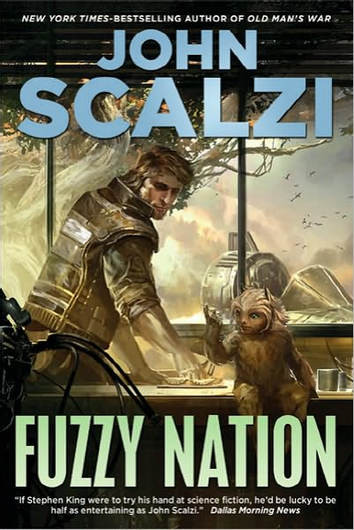
Leave it to John Scalzi, contrarian, genre aficionado and bold pioneer, to attempt such a thing, and upon one of the field’s best-loved franchises, H. Beam Piper’s Fuzzy saga.

H. Beam Piper (1904-64) was a popular author in the second tier of SF writers during the mid-twentieth century. A tragic figure dead by his own hand when faced with seemingly inescapable penury, apparent career stagnation, and a bad divorce, Piper published two novels during his lifetime about a race of charming aliens known as Fuzzies: “Little Fuzzy” in 1962 and “Fuzzy Sapiens” in 1964. A third, long-lost entry, “Fuzzies and Other People,” was posthumously issued in 1984.

“Little Fuzzy” is cleverly constructed, compact, masterful, lighthearted yet dramatic, an average-guy-fights-corrupt-establishment tear-jerker that also manages to deal with deep philosophical and neurological issues still current today: what constitutes consciousness and sapience, and how do we recognize it?

On the corporate-run planet Zarathustra, vigorous 70-year-old prospector Jack Holloway is the first human to encounter the Fuzzies, 2-foot-tall furry humanoids migrating to escape human-induced climate change. Novice readers might picture the Ewoks from “Star Wars,” with some of the appealing qualities of Tribbles (“Star Trek”), Hokas (Poul Anderson and Gordon Dickson) and Schmoos (Al Capp) thrown in for good measure. Holloway adopts a family unit of the smart and neotenically appealing Fuzzies, becoming their “Pappy Jack,” and is soon embroiled in a fight to prove their status as fully aware beings, with a colorful cast of supporting players on both sides of the battle. Gunplay and courtroom drama alternate, with Holloway and the Fuzzies emerging triumphant.

The sequel, “Fuzzy Sapiens,” picks up the story just a week later. Holloway and posse are running Zarathustra, but the corporate crowd still has designs on the world. Yet, to everyone’s surprise, bad guy CEO Victor Grego proves susceptible to Fuzzy charm and adapts to the new regime. The intersection of idealism and commerce is leavened with suspense from a criminal enterprise employing mistreated Fuzzies, and the puzzling “genetic trap” of their reproductive capacity.

The two decades after “Fuzzy Sapiens “saw a brace of reader-demanded sequels by other hands: “Fuzzy Bones” by William Tuning and “Golden Dream: A Fuzzy Odyssey” by Ardath Mayhar. Then came the belated discovery of “Fuzzies and Other People,” which recast the continuity as Piper had originally envisioned. Four months have passed since the prior adventure. The Fuzzies are attending school, and are heirs to Zarathustra’s sunstone riches. Meanwhile, the humans debate issues of paternalism, cultural contamination, and hybrid vigor. The book ends with the Fuzzies as “permanent children,” affectionate soul mates for humans. Not pets, of course, but not quite peers.

Enter Scalzi. On his widely read blog, the author confessed that he wrote his reboot without any guarantee of publication or approval from the Piper estate, strictly out of love for the franchise and a desire to re-engineer it for a new generation of readers.

Where did those impulses take him and the Fuzzies exactly? And was this trip necessary?

“Fuzzy Nation” opens with Jack Holloway prospecting with his dog, Carl, in the wilds of Zarathustra, and discovering an unprecedented motherlode of sunstones by accident. He returns, naturally somewhat elated, to his lonely cabin, where he encounters and interacts with the first Fuzzy intruder, who subsequently takes off, leaving Jack free to visit his ex-girlfriend Isabel Wangai, planetary biologist, in the nearby town. In short order, a family of “Fuzzys” (Scalzi’s preferred spelling) is camping out in Jack’s home, Isabel is doing fieldwork to vet them for sapience, the nasty scion of the Zarathustra corporation is pressuring Jack to ally himself with the company against the Fuzzys, and a judicial hearing is underway to determine whether the Fuzzys merit further investigation as possible sentient natives. The hearing goes in favor of the Fuzzys, which triggers nasty covert reprisals by the corporation — these in turn met by derring-do and cunning on the part of Jack and his friends. In the end, the Fuzzys are established as sentients, and the planet is theirs, with suitable rewards for Jack.

Taken solely on its own merits, “Fuzzy Nation” is a jim-dandy, thought-provoking thrill ride. Readers will race through this novel and demand more at the end. Scalzi possesses a writing style that is seductively transparent but which yields a distinctive voice. You cannot mistake his work for another’s. His potent affect of glee and knowingness, humility and bravado, respect and irreverence, always comes across. He sets up his alien world economically, taking Piper’s premises from a generation or two back and kitting them out for twenty-first-century realities. He populates his lived-in world with real humans who engage in real conversations. He moves the plot along in a sprightly manner and whips out his big surprise in a climactic trial scene. His speculative elements are modest yet sound — barring his fudging of faster-than-light communication in a pivotal courtroom scene. This book does no dishonor to its predecessor and will provide plenty of enjoyment to readers who might never have encountered the original.

And yet, I find myself unable to like “Fuzzy Nation” as much as I like “Little Fuzzy.” “Little Fuzzy,” it seems to me, is the Saturday Evening Post, and “Fuzzy Nation” is DreamWorks. One is gold and one is bronze. That reaction certainly says more about me than about the book. But let me catalog the differences between the two books that illuminate what has been abandoned. (It’s all down to the shifts in culture since 1962, of course.)

First and most consequentially comes the change in Jack Holloway. Gone is the 70-year-old, incorruptible, ornery loner worried about his fading physical prowess. (Yuck! A hero with gray hair!) In his place is a healthy young Han Solo rogue and scamp given to situational ethics and a hearty self-interest. Let’s call him Jack2. Jack2′s personal stake in the matter of Fuzzy sapience — if the Fuzzys aren’t sapient, he’ll earn billions, a temptation Jack1 never faced — distorts all the moral gravitas of the cause. Jack2 ultimately does the right thing, acknowledging his mixed self-nature and the dicey way he played the game in a closing speech, but that is not sufficient to restore the moral compass.

The reader might say that such a presentation is simply more realistic, in line with the grey nature of the world. But actually, “Fuzzy Nation” ends up being a much more black-and-white rendering of reality than its template. Because Jack2, our antihero, is already ethically compromised, his enemies, to appear worse, have to be 100 percent bad! It makes no sense for Han Solo to fight his exact counterpart, another shifty, likable mercenary; they’d probably just strike a deal. Han Solo needs a Darth Vader, which is provided by cruel, greedy, and effete scion Wheaton Aubrey VII and his henchmen — a far cry from amenable-to-reason Victor Grego.

Consider Piper’s original series, where even the worst character, the murderer of Fuzzies Leonard Kellogg, had a change of heart and actually committed suicide out of guilt. His counterpart here, Joe DeLise, exhibits no such depth. This offloading of partial complicity onto a fallible hero renders the tale much less idealistically stirring. But again, that’s SatEvePost versus Spielberg.

Ramping up the noise level and the slapstick (the Fuzzy First Family engages in “Three Stooges” antics) and the smart-assery is likewise consistent with the current model of Hollywood-influenced storytelling. Moments of quiet or reflection or meditation are forgone in favor of quips and fistfights, and a plethora of such. “Fuzzy Nation,” covering the same story arc, is almost twice as long as “Little Fuzzy,” in the manner of all genre novels these days. I make no assertion as to which mode is superior; fashions in storytelling come and go. But I do assert a difference in the way such a story is internalized.

Finally, the Fuzzys themselves. They are not presented as tool users, a part of their original charm and an essential portion of their Piper identity, solely so that Scalzi can get in his big reveal. We are not privy to their stream-of-consciousness as we were in Piper’s books, another distancing factor. And their place in a disturbed ecosystem is less clearly portrayed and felt. Finally, there is Scalzi’s explicit linkage of Fuzzies and cats. I can’t swear to it, but I’m willing to bet Piper never used the over-obvious word “cat” once in three books. The Internet fetishization of felines leaks over into this novel, rendering the Fuzzys closer to an Internet meme than to the inheritors of an alien magisterium.

As with all SF, “Fuzzy Nation” reveals more about the present year of 2011 than it does about some probable future, just as “Little Fuzzy” disclosed the essence of 1962. Which world you prefer to visit is up to you, but Scalzi offers us the choice.

Continue Reading Close

Page 1 of 3 in Paul Di Filippo