The menu at the Cabin was long, one of those unwieldy, laminated mega-menus that grace the tables of roadside diners and chalets everywhere, and reflected a classic attention to theme (gumbo burger, gumbo omelet, gumbo). If the menu had been covered in tinfoil, I would’ve had a late-summer tan by the time I reached the dessert page. When our waiter approached, I asked — in what I imagined was a small act of clever, Yankee defiance — if the gumbo was any good.
My friend Gabbie and I had come directly from a tour of a former sugar plantation down the road, in Vacherie, La., called Oak Alley, and I had a crook in my neck. Up until that morning, whenever I heard the word “plantation,” I’d thought “slavery.” When I’d booked the tour, I had done so in the spirit of a visitor to Dachau or Wounded Knee. But the tour itself was given in the spirit of a visit to the home of a tasteful, Southern movie star. Our guide, in a tone equal parts admiring and envious, devoted 90 minutes to the armoires, linens and chamber pots of the home, but almost no time to the people who built, creased and cleaned them. The words “slave” and “slavery” were never mentioned.
“I guess the white people in antebellum drag getting misty about ‘the Golden Age of the South’ might have been our first clue,” Gabbie observed.
We did hear the word “servant” on the tour, two or three times, in the telling of what were meant to be amusing anecdotes about the idiosyncrasies of the servants’ owners. Our guide was dressed in an elaborate, sky-blue ball gown, and chirped about what fun it was for her to “go back in time and live like Scarlett O’Hara for a day.”
As Gabbie read from the menu in her best Vivien Leigh, her eyes began to widen. She dropped the drawl and informed me that the Cabin had been serving busloads of visitors to Louisiana’s plantation country for more than 30 years on the strength of its reputation for authenticity, which the menu explained thusly: “Our goal is to preserve some of the local farming history, serve meals typical of the River Road tradition, and make your visit a relaxed and memorable one. The Cabin Restaurant began as one of the 10 original slave dwellings of the Monroe Plantation. Through the efforts, ideas, the love, sweat and patience of friends and family, you are able to enjoy a small sampling of Southern Louisiana history.”
The love, sweat and patience of actual participants in the “local farming history,” the original builders and tenants of the Cabin, were not dwelt upon or mentioned in the menu’s text, but their contribution to the restaurant’s ambience was subtly alluded to. As the waiter brought our food I read: “In the grand dining room, the roof is supported by four massive beams … placed so that the room resembles a Garconnier (the visiting bachelor’s quarters on a river road plantation.)”
And we put our menus down. I’ve enjoyed almost every spoonful of gumbo I’ve had over the years, whether in expensive restaurants, coffee shops or train stations, but I might have had my last one contemplating the events witnessed by the roof beams of a “visiting bachelor’s quarters” on a 19th-century sugar plantation.
- – - – - – - – - -
When the Civil War ended, there were no truth and reconciliation commissions formed to process memories, no Nuremberg Trials to enable reflection, no Great Emancipator to free the future from the past — only ghosts and the ravenous politics of memory. The need for national reckoning was quickly subordinated to the political imperative of reunification, and on both sides of the Mason Dixon line, forgetting became more valuable than remembering.
Southern apologists earned sudden fortunes in a gold rush of nostalgic forgetting. Within a year of the war’s end, a Virginia journalist named Edward Pollard published a novel called ”The Lost Cause: A New Southern History of the War of the Confederates,” a breathless, self-pitying fantasy, and the first of many to recast the conflict as a tragedy of fraternal strife and regional repression, to blame the Confederate defeat on the overwhelming resources and underhanded tactics of the North, exalt the Confederacy’s most ruthless generals as paragons of honor, revel in stories of freed people run amok, wallow in tearful, postwar family reunions, and pine for the “Golden Age” of hoop- skirts and happy-go-lucky chattel. It depicted slavery as a benign if not beneficial institution, and relegated further discussion on the topic to the offstage realm of “touchy” subjects, where, for perpetual Northern fear of offending delicate Southern sensibilities, it has languished ever since.
“Have you ever dreamed of waking up to an antebellum room that would be the envy of Scarlett O’Hara? The fulfillment of just such a dream is the essence of the Edgewood experience. Hosts Dot and Julian Boulware offer eight luxurious and charming guest rooms; six in the main house and two in the former slave’s quarters.” — Country Collections Magazine.
The scores of histories and plantation novels that followed Pollard’s, many produced by members of what came to be known as the Dunning School (after its founder, Columbia history professor William Archer Dunning), an influential movement of celebrity, revisionist scholars — a sort of mutton-chopped Heritage Foundation — helped concoct a broad, new Southern culture of perpetual grievance and nostalgia for a reimagined, antebellum idyll. The primary focus of most Dunning School stories was not the war itself, but Reconstruction, a period that Claude Bowers, an early-20th-century successor to Pollard (and given to similarly Glenn Beck-ian flights of tearful, dissociative rage) called “The Tragic Era.” It was a decade, as he saw it, marked by unrestrained Yankee corruption and sadism, which punished the South for secession and forced black suffrage on an already politically neutered white population. Bowers’ books demonized “fanatic” abolitionists and Ulysses S. Grant, exalted the Ku Klux Klan and Andrew Johnson, and sold hundreds of of thousands of copies.
“When a nigger died they let his folks come out the fields to see him afore he died. They buried him the same day, take a big plank and bust it with a ax in the middle enough to bend it back, and put the dead nigger in betwixt it. They’d cart them down to the graveyard on the place and not bury them deep enough that buzzards wouldn’t come circlin’ round. Niggers mourns now, but in them days they wasn’t no time for mournin’. — Mary Reynolds, former slave, 1936
By 1932, and the publication of “Gone With the Wind” — the ultimate Lost Cause novel and still the most popular book in America, after the Bible — Lost Cause literature succeeded in sacrificing the very meaning of the Civil War to the demands of myth-making. (The 1939 movie sealed the deal.) The culture of forgetting had become a national religion.
Seventy years later, movies like “The Help” — the latest in a long line of tributes to the unsung white heroes of black history, and a gauzy rendering of the civil rights era as a triumph of the human spirit over mean people — have taken up where ”Gone With the Wind” left off. A direct descendant of Lost Cause culture, modern nostalgia is souvenir nostalgia, a taxidermical, preservation-fetish that isolates parts from wholes, pulls symbols out of context, and shrinks cultural memories to the size of a 9/11 commemorative coin. (Never Forget!) It’s woven into every corner of the culture, high and low, North and South, as pervasive as sleep. And it is a black hole of memory, the place where memory goes to die.
“One woman thought all the slave houses (now guest rooms) should be torn down, because it was an insult and exploiting slavery and so forth. And I replied, very nicely, that I think she would be destroying history.” — Mary Hill Caperton, manager of the Quarters, a bed and breakfast in Charlottesville, Va.
The Cabin is only one of dozens of former slave quarters around the country that have been gussied-up into hotel rooms or restaurants. It was exceedingly pleasant and brightly lit, full of cheerful, laughing patrons. Astonishingly tall, wholesome-looking children in middle-school basketball jerseys pointed ketchup-dipped fries at their dad’s brows and made gentle jokes about their hairlines. The Doobie Brothers’ “China Grove” bubbled down from speakers in the rafters.
A man with a wide smile appeared next to our table, seemingly out of nowhere, and introduced himself as the restaurant’s manager. We chatted about the proper pronunciation of “crawfish,” and the differences between the gumbos made on the bayou and in New Orleans, and when the subject turned to the Cabin, I asked him how it felt to run a place that used to house slaves. “It’s history, and that’s all there is to it,” he said. “It’s not something we dwell on, or push out there for people to see. It is a touchy subject. We just want people to have a nice time when they come here, and to enjoy the food and the history. This is a place where everybody feels welcome.”
He had a point. Gabbie and I seemed to be the only ones in the room not smiling, and for a moment the queasiness of chronic self-doubt, the familiar nausea of the self-ostracized, the vegetarian in the steakhouse, made me wonder if it was us. Were we the ones not seeing straight, arching our eyebrows through a life on the wrong side of the looking glass? And then I wondered why I was flattering myself.
Dead-eyed nostalgia, whether practiced by Tea Partyers, advertising directors or me, in my “heritage” running shoes, typing away on a computer built by indentured servants, can be invisible to us. As invisible as the whip — the very old, well-used buggy whip — hanging on the Cabin’s wall must have been to whoever decided it was a good idea to hang it there.
Back then, black and white lived apart, went to different schools and churches, played on different playgrounds, and went to different restaurants, bars, theaters, and soda fountains. But we shared a country and a culture. We were one nation. We were Americans.” –Pat Buchanan
Don’t get me wrong — I like nostalgia, I miss nostalgia. The kind that involves remembering, anyway: mostly private, typically accidental, not always rosy. When my great-uncle told stories about flying bomber missions over Germany, he didn’t merely recall events — experiences that he had a complicated affection for — he wondered about them. His eyes grew pained and befuddled; his chest rose and fell with a fullness no amount of time could diminish. He wasn’t running from himself to an imagined past, he was finding himself in his story, sorting it out, trying to see it clearly.
House (now Speaker) John Boehner recently complained that Barack Obama and congressional Democrats “are snuffing out the America that I grew up in.” –Think Progress, July 1, 2010
Of course childhood nostalgia — the kind of remembering you do when remembering is new, when memories are full and dramatic because they’re few, and weightless — is different. Mourning hamsters. Idealizing grandparents. Chronicling summers like they’re centuries. When I had 12 years to look back on, they were eons. When I had 20 I said, “my whole life” and meant it.
But the past I remembered then wasn’t even my own. I sported a ridiculous ’50s trench coat and well-thumbed copies of “On the Road” in the ’80s the way 20-year-olds in ancient Rome probably carried Euripides in their vintage Greek togas. When you’re young, nostalgia isn’t about the past, but the future. It’s a train in the distance, a sound from the old days hinting at the new. When your own past is too frightening to look at, and the future is terrifyingly unknown, you fake your way through the present. I spent my days wanting something I couldn’t name, and because I didn’t have memories to attach to that yearning, I yearned for a time before me. I conjured a past and missed it and bought an overcoat I prayed I’d grow into.
Lincoln’s famous “house divided” analogy was a perfect one for a country in crisis, acknowledging as it did the psychic architecture of the nation, a collection of rooms under one roof. But his deep commitment to an authentic, family-like, postwar reconciliation was not matched by his successors. The North’s implementation of Reconstruction, in its moderate and radical forms, amounted to first coddling, then humiliating, a wayward sibling.
After Lincoln’s assassination, Republicans struck an implicit deal with the South, a sort of economic/cultural tradeoff, in which the South was allowed to construct the edifice of the Lost Cause culture in return for letting Northern investors exploit the South’s resources. For decades after the war, at cemetery and monument dedications, Blue-Gray reunions and Veterans Day parades, Northern politicians and former generals made a point of describing the conflict in the language of the Lost Cause, praising the chivalry of once-estranged brothers, lauding their former enemy’s fierce dedication to their mission, and rarely acknowledging what that mission had been. The relative postwar silence of the North on the issue of slavery, and the flagrant corruption of newly established Union military governments, helped stoke already flourishing Southern resentment and denial. Instead of beginning a period of reflection, the South spent the late 19th century dressing up in old uniforms and comforting itself with revisionist stories.
The Reconstruction-era South didn’t invent dishonesty, but its response to America’s defining trauma has become a foundational lie, supporting an ever-growing edifice of false history. It’s a lie so big no one will forcefully challenge it, a lie that’s too big to fail. In the sesquicentennial year of the Civil War, the “stars and bars” fly over state capitals, proclamations are issued that honor the Confederacy without mentioning slavery, and commuters drive to work on highways named after white supremacists. And appeals to wounded pride and the lost values of imagined pasts are an everyday part of our political culture.
Just like Pollard and Bowers before them, modern-day, Lost Cause-ers like Pat Buchanan reversed the tide of postwar popular opinion about a conflict, this time in Vietnam, by pining loudly for a law-and-order Eden that had been despoiled by protesters. And now the wholly invented fiction of hippies spitting on soldiers returning from Southeast Asia is believed by more Americans than remember what My Lai was.
The same pattern has repeated itself many times, from Morning in America to WMD, from the Swift Boaters to the Tea Party. The decade following the Civil War amounted to a tragic, missed opportunity for the South to engage in a different kind of remembering. Even a little grown-up nostalgia could have gone a good, long way. The illness implied in its suffix, the sickness of the heart that a powerful longing produces, can be as necessary and cleansing as a storm. But of course that’s what the Lost Causers were afraid of, are afraid of still, and have always been quick to nip in the bud.
WASHINGTON — President Reagan said Thursday that he has decided not to visit the site of a Nazi concentration camp during his trip to Europe next month because he wants to focus on peace rather than the past. He added that he believes West Germany’s present sense of collective guilt for the Holocaust of World War II, in which millions of Jews were killed, is “unnecessary.” — The Los Angeles Times, March 2, 1985
During a tour of Houmas House, another Louisiana River Road plantation, as our guide told a story about the acquisition of a particularly expensive set of silver by the proprietors of the estate, we wandered to a window, and noticed a ramshackle structure in the distance, maybe 70 yards away. Unmarked, unrenovated, unattended, a dilapidated cottage with a small front porch, half reclaimed by grass. A former slave cabin? Our guide said yes, and that plans to renovate the structure were in the works. She added that we were free to go out and take a look, once the tour was over.
Later that day, at Destrehan, a former sugar plantation a few miles down, the guide neglected to mention that it was the site of the largest slave revolt in American history.
When I asked Angela da Silva, a professor of black history at Lindenwood University, and owner of the St. Louis-based National Black Tourism Network, for her thoughts, she said, “Jesus coming down off the cross couldn’t get me to stay in some gentrified slave cabin with a jacuzzi in it. The misery and pain that happened in those cabins … This is about shame. People who own these places want the history to go away. But it won’t go away. And until we as black people insist on the story being told, no one has any incentive to change their business model.”
Da Silva grew up just a few miles from the Baker plantation in Missouri, where her family worked as slaves from 1837 until the end of the war. She learned almost nothing in school about slavery, she says, but her grandmother told her stories that she remembers to this day. As she spoke about sleeping in the same bed with her grandmother until she was 10, and waking up in the middle of the night to ask questions about her ancestors and life on the plantation, her voice softened, and she cleared her throat. I could hear her slow, full breathing over the phone.
“Once you got here, we were all the same. Isn’t that remarkable? But we also know that the very founders that wrote those documents worked tirelessly until slavery was no more in the United States.” –U.S. Rep. Michele Bachmann
Slavery is rarely mentioned on any private plantation tour. Proprietors typically insist that innovative architecture and interesting design justify their focus on the “Big Houses,” but that argument can be awfully hard to fathom. Leaving aside obvious exceptions like Monticello, surely the most notable thing about most plantations is not who lived there, who designed them or what they look like. A beautiful home made beautiful by slaves is not important for its beauty. To elevate aesthetic elements over history in the public presentation of slave estates is to demote people once inventoried like candlesticks to a status even lower than that of things. It’s an obscenity.
There is a small museum on the site of the I.G. Farben Building in Germany (a building that, it should be noted, is considered an architectural masterpiece), the former headquarters of the company responsible for enslaving hundreds of thousands of prisoners at its notorious “factories.” It’s dedicated to the memory of a former prisoner, and exhibits photos and documents from Farben’s disgraceful past. Tour guides at Auschwitz itself do not include the commandant’s extravagant house on their schedule. The point isn’t that American slavery is the exact moral or material equivalent of the Holocaust, but that our country’s “original sin” has not been fully, culturally processed.
If America is a family, it’s a family that has tacitly agreed to never speak again — not with much honesty, anyway — about the terrible things that went on in its divided house. Slavery has been taught, it has been written about. There can’t be many subjects that rival it as an academic ink-guzzler. But the culture has not digested slavery in a meaningful way, hasn’t absorbed it the way it has World War II or the Kennedy assassination. We don’t feel the connections to it in our bones. It’s hard enough these days to connect with what happened 15 minutes ago, let alone 15 decades, given the endless layers of “classic,” “heirloom,” “traditional” “collectible,” “old school” comfort we’re swaddled in. But isn’t it the least we could do? What is the willful forgetting of slavery if not the coverup of a crime, an abdication of responsibility to its victims and to ourselves?
If it’s true that we’re all breathing Caesar’s breath — that because of the finite amount of perpetually moving molecules on Earth, one or two that he breathed are in each of our exhalations — then we don’t need to dress up in his clothes to connect ourselves to the past, we’re already wearing them. The past is with us always, but we need to live with it, open our eyes and poke around in it, take it all in: the good, the bad and the mythic, if we want to stay connected to the ever-changing present.
A wise woman once said it takes a village to raise a child, and as a new father I have found this to be true.
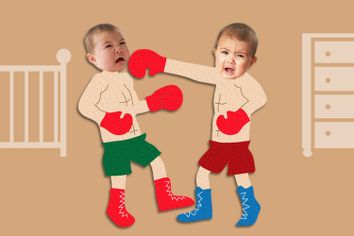
But lately I have also found the village to be dominated by two gangs of extremely, frighteningly organized parents, whom my wife and I spend a lot of time trying to avoid. Members of these gangs are lurking in every Pain Quotidian and farmers’ market in Los Angeles, fighting tooth-and-nail turf wars over the best way for kids to be born, eat, learn and especially sleep, which is how the gangs came by their now notorious names in our house: the Cribs and the Beds.
The Cribs, as you probably know, believe in “crying it out,” “walking it off,” and midcentury modern furniture. The Beds, of course, believe in co-sleeping, home birthing and placenta soup. Both groups believe that I, as a new parent, am a dangerous idiot, and they are not at all shy about letting me know that.
So I’m writing this to take a stand, to ask for your help in taking our village back, and in not getting the stink-eye at parties.
After only eight months of fatherhood I’ve learned a lot about the gangs. I’ve learned to recognize the Cribs’ distinctive attire (if I see a pair of orange Crocs coming my way, I just cross the street). I’ve come to know the Beds’ brutal hazing rituals (which they refer to as “Bikram yoga”). I’ve learned each gang’s colorful parenting patois.
But the main thing that distinguishes the gangs from each other is their philosophies. Fundamentally, the Cribs and Beds disagree about how kids should sleep. The first member of the Cribs I ever met explained to me, over a steamy quadruple espresso, that they believe a child will grow up to be calm, secure and independent as long as — over the sound of his own terrified howling and the screech of a white-noise machine turned up to 11 — he can’t hear his parents grinding their teeth with worry over following the same sleep-training regimen all their friends do.
The Beds, on the other hand, believe that independence is something a family does, together, in bed. According to a conversation I overheard at this year’s Topanga Canyon Soy Cheese and Hemp Festival, the Beds feel that nothing can match the sense of security a child feels when she cuddles with her mom, dad, sister, brother, stepsister and ferret, safe in the knowledge that they’ll all be with her through the night. Every minute. Of every night. While her brother farts on her knee. Family Bed parents feel that co-sleeping will engender a sense for the child, later in life, that she can face anything, as long as a much older man with gray back hair and bad breath holds her tight while she does.
The gangs speak their own languages when it comes to things like sleep training, and it’s important to learn to decipher them. For instance, our friend Marsha recently asked me whether our daughter was “sleeping through the night yet,” which in gang-speak means, “How are things on the Island of Misfit Parents?” I tried but failed to change the subject, and when I described the ambivalent, improvised approach Jenny and I take, I was met with the inevitable phrase, “Whatever works for you!” which means, “Have fun visiting her in juvie!”
The Cribs and Beds are mostly in agreement, however, about the notorious peanut dilemma. My wife and I love peanut butter. The first thing I did when she told me it was time to go to the hospital to have the baby was make two peanut butter and jelly sandwiches for her to have later. I put them in our special “Go Bag” with the earplugs, lip balm, Rebozo support slings and thought, “Did I just release evil peanut dust into the air? Is this the last PB&J we’ll eat for 18 years?” Many children, of course, have an allergy to peanuts, which doctors now believe is probably caused by an early exposure to peanut butter, and which can be prevented … by an early exposure to peanut butter. I understand this might be confusing, but don’t worry — it’s not your fault — it’s peanut butter’s fault for being mind-alteringly scrumptious. Both the Cribs and the Beds believe in the current scientific consensus that we must stay vigilant against peanut butter, by feeding it to our children early, but never. It’s a fairly safe subject to bring up, and good for fooling the gang-bangers into thinking you might be one of them.
And some Cribs and Beds are finding common ground on other issues. For instance, when Jenny was pregnant, and before we knew the sex of the baby, I, as a Jewish soon-to-be father, started to feel the pull of a 2,000-year tradition and considered circumcising my possible son. I mentioned this fact at a rumble (“baby shower”), where I learned that I was just as likely to be called a barbarian by a mom with seven holes punched in her ear and a line of credit at the pediatric homeopath’s as I was by the father of a 6-year-old figure skater. I also learned that the idea of not circumcising my son could get me accused of breaking a sacred covenant … by a twice-divorced Hollywood agent. I have to admit that, at that moment, it felt very tempting to join one of the gangs. To at least know where I stood, even if I had no idea what I thought. Maybe effective child rearing was really all about navigating life’s daily obstacles with the comforting, quiet sense of smugness that only parent-gang membership could provide. But I fought that impulse. I reminded myself that I have my own brand of arrogance, thank you very much. If there’s one thing a lifelong, fence-sitting commitment-phobe is good at, it’s not choosing sides.
But sometimes conflict is unavoidable, and it’s not pretty. The home-birthing wars could flare up again any minute now, and this time Ricki “On the Business of Being Born” Lake could make a full-fledged comeback. So, if you’re not in a gang, it’s very important to keep your wits about you. Soon after our daughter was born, we met a person who taught us the word “lactivist” is a real thing that exists. She said it in public, and she wasn’t laughing, so I guess she was more likely to be a member of the Beds than the Cribs. But she lacked any of the usual identifying accessories, such as the Bolivian slings that many members of the Beds use to carry their babies, or the actual Bolivians that the Cribs prefer, so I couldn’t be sure. Jenny had had a tough time getting our daughter to nurse properly for the first few weeks after she was born. After a very frustrating talk with the lactivist, Jenny asked her if it would ruin everything if she supplemented the baby’s feeding with a bottle once in a while, and through an ice-cold smile, without hesitation, the lactivist said, “It would.” As far as I’m concerned, the tears that popped out of Jenny’s eyes at that moment were a consequence of our first brush with gang violence.
Passions run very high on these subjects. The Beds feel that in defending something like home birth, they’re defending something primal and sacred, that they’re on the side of Mother Nature herself. The Cribs feel they’re on the side of modernity, of rational thinking, science and safety. When I hear them talk about it, I actually think both sides make a good case. But then, when I think about it a little more, I wonder about their sanity. Did I mention that I’m an ambivalent type? I wonder if maybe investing so much emotion in these issues isn’t misplacing it a little. Couldn’t they use all that righteous indignation for fixing the education system?
But see now, as I write that, I wonder why I’m being so hard on the gangs. Having a kid was an overwhelming experience. All of a sudden I was confronted with this fragile, chaotic, mortal life that I was responsible for. And then there was the baby! Seeing my own humanity clearly was one thing, but seeing my daughter’s was all things, all at once, forever. Living, breathing, surprising chaos right there in my mortal hands. It was enough to make me fear that chaos a little bit. To want to hang on, maybe a bit too tight.
When Jenny and I were in the hospital, we never ate one of those PB&J sandwiches. Her contractions never once settled in to the regular pattern we were told would mark the onset of labor. We never used anything in the “Go Bag,” or any of the special labor positions we’d learned and practiced in birthing class. But I’m glad we learned them. I’m glad we planned and made promises and came up with lots of rules for ourselves, because it helped focus our minds. It eased our worries, made us feel like this was doable. Made us feel like a family. Real gang members say that’s how they think of their gangs — as surrogate families. Not many of us live in the same house with our uncles or grandmothers anymore. These days our friends are our families. So maybe what the home birthers and crib lovers are defending isn’t merely about practices but about love and companionship. How these things help us find the sweet spot between chaos and order. Maybe people are just trying to find their footing on ever-shifting sands. Maybe we should all cut each a little slack.
Except for the people wearing orange Crocs, of course. You guys need to buy some real shoes.
Peter Birkenhead is the author of the memoir “Gonville.”
Continue Reading
Close
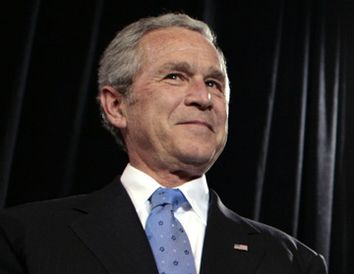
“There’s no doubt in my mind that each person who has been executed in our state was guilty of the crime committed.” — George W. Bush, June 2, 2000
“There is no doubt in my mind that Saddam Hussein was a grave and gathering threat to America and the world.” — GWB, Jan. 28, 2004
“There is no doubt in my mind that this country cannot [sic] achieve any objective we put our mind to.” — GWB, April 20, 2004
“There’s no doubt in my mind we made the right decision in Iraq.” — GWB, Sept. 2, 2004
“There’s no doubt in my mind that Afghanistan will remain a democracy and serve as an incredible example.” — GWB, Jan. 5, 2006
“There’s no doubt in my mind [warrantless surveillance] is legal.” — GWB, Jan. 26, 2006
Remember good old doubt? When a capacity for self-doubt was a prerequisite for self-knowledge and a hallmark of maturity? To put it another way, can you imagine John F. Kennedy walking with the swagger of George W. Bush? Kennedy walked like what he was — a man in pain from injuries he suffered in an actual war, and he allowed himself to be photographed hunched over with worry during the Cuban missile crisis. That picture, now an iconic image of heroic doubt, is sadly anachronistic.
Forty-five years ago today, JFK, speaking to the graduating class at Yale, said, “The great enemy of the truth is very often not the lie — deliberate, contrived, and dishonest — but the myth — persistent, persuasive, and unrealistic … Belief in myths allows the comfort of opinion without the discomfort of thought.” He urged the students to “move on from the reassuring repetition of stale phrases to a new, difficult, but essential confrontation with reality.” Kennedy was urging the students not to let the establishment, which he represented, get away with anything. Submit its rhetoric to the fiercest scrutiny. Think for yourself. It was an invitation that reflected his own education, two years earlier, in the wisdom of doubt.
By June 11, 1962, the president had learned the lessons of the Bay of Pigs disaster well. His Yale speech seemed infused with regret at not having treated the CIA’s intelligence with more skepticism before the invasion. (The agency had promised that the exiles could “melt into the mountains” if the plan failed — mountains that it failed to notice were 80 miles away.) The speech also foreshadowed his own fierce scrutiny of the rhetoric of Gen. Curtis LeMay and other administration hawks, who urged an attack during the missile crisis.
Six years after the speech, George W. Bush graduated from Yale and went on to confront reality with a vengeance, or, more accurately, ignore it all together, as Ron Suskind noted in “The One Percent Solution,” when he famously quoted a White House aide dismissing journalists and historians as “the reality-based community.” But it would be lazy and wrong to think of George Bush as the source from which the modern disdain for doubt flows. The truth is, we, as a culture, don’t value self-doubt the way we did in the time of Kennedy or of other famous doubters, like Lincoln or Jefferson. We have created the political culture of mythology JFK warned us about. We have the president and, as the recent presidential debates have shown, the potential presidents we deserve.
Let’s face it, George Bush doesn’t have to doubt himself, any more than Donald Trump or Tom Cruise or Mitt Romney do. We live in a culture where they will never be forced to examine their prejudices or flaws. Of course, they have been denied the true confidence of people who are brave enough to face their doubts and who know there are worse things than feeling insecure. Like, say, feeling too secure. Pumped up by steroidic pseudo-confidence and anesthetized by doubt-free sentimentality, they are incapable of feeling anything authentic and experiencing the world. But that hasn’t stopped them, and won’t stop others, from succeeding in a society that is more enamored of a non-reality-based conception of leadership than previous generations were.
JFK’s generation had been warned by FDR about the corrosive peril of fear, and they took the admonishment to heart. But imagine if they had approached their moment in history with the grandiose self-image with which we’ve approached ours. Without the wisdom of doubt, without the grace of humility and the simple ability to learn from mistakes, would anyone have called them the Greatest Generation? (And by the way, don’t we do them a disservice with that moniker — didn’t they fight against all things “greatest” and on the side of splendid imperfection?) Imagine what the world would look like if they’d had the disdain for humility we do, if they’d relied on a conception of themselves as innately good, if they’d allowed themselves to think they knew everything and therefore learned nothing.
But our generation has erected a culture that confuses happiness with a lack of discomfort, and leadership with an almost psychotic form of false optimism. We have ingeniously insulated ourselves from self-scrutiny and fear. We tuck ourselves away in gated communities, hibernate in food courts, or sleep in front of televisions, swathed in layer upon layer of soft and soporific comfort to protect ourselves from the bracing draft of doubt. We can barely feel our own culture anymore.
Our pretend fearlessness has made us timid. Some of our filmmakers, the Michael Bays and Brett Ratners, make movies as if they’re embarrassed by stories, and some of our singers, especially those of the emo variety, sing as if they’re embarrassed by melody. Most of us are getting our information from only a few sources, and it’s infused with narcotic banality: pillow-embroidery sentiment and locker room aphorisms that induce the waking sleep of consumerism. We’ve been convinced that good things go to people who “want it more than the other guy,” that wealth is a reward, and poverty a penalty. That the highest compliment we can pay each other is, we know what we want and how to get it, which makes us sound brave. But by banishing doubt we have cultivated fear. We’ve stopped looking under the bed for monsters. The good books and songs and movies, like last year’s harrowing “Little Children,” have to fight through layer upon layer of swaddling to get to us.
We’ve forgotten how valuable, even vital, it is to be bravely unsure of ourselves. We’ve forgotten that doubt is the hill that hope climbs, that without it our spirits atrophy.
You’d think that after the past six years we’d want some of JFK’s brand of genuine bravery and capacity for doubt in our leaders, but most of the current candidates for president, with a few exceptions, like Barack Obama,> John McCain and John Edwards, again sound like scared little children playing soldier. They puff up their chests and bray in the absolutist style of the guy who got us into the biggest mess of our lifetime. They clumsily and desperately make up facts, conflate enemies, and endorse the worst kinds of behavior, all to seem more certain than the next guy that evil is all around us. They present themselves as even less troubled by reality than our freedom-frying, deaf, dumb and blind dauphin. And at the same time they seem excruciatingly un-free, as if they’re straining against the straitjackets of political convention.
Our current presidential candidates could do us all a favor and read the words of a president who had to wear a confining back brace every day and who would often wince in pain, slump with doubt, and exhibit all sorts of human flaws — but also gave the impression that he could swim three miles in the South Pacific if he had to, even in his suit and tie. Someone who stood up to the fear-mongers of his day with courageous doubt, who knew firsthand that the closest thing there is to absolute evil is absolutism itself.
Continue Reading
Close
Dear Theater World,
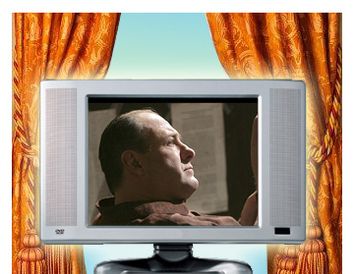
I know Sunday’s your big moment, and I don’t want to spoil anyone’s party, but I think you know not many people will be tuning in for the Tony awards that night. It’s not just because “The Sopranos” series finale will be on at the same time, though, frankly, that you scheduled the awards to run directly against it — essentially shrugging your shoulders at the culture-minded audience members you claim to court — does seem startlingly symbolic.
You seem to have trapped yourself in a system of theater creation in this country that is positively Soviet in its unwieldy, self-satisfied stuck-ness. A system that, for the last 50 years, has reacted to television not by learning from it but by “distinguishing” itself from it — and thereby neutering and bleeding itself into desiccated, rarefied irrelevance. But it doesn’t have to be that way.
Tell me something: How come the go-to insult for theater critics and theater makers is still the word “television”? And how come none of you who use it seem to have any idea how much you sound like grumpy old coots, sneering at the printing press, or the electric light? I say this as a friend, as someone who has acted in, directed and written for the theater: You have just got to get out more. I mean, the same elements that are considered avant-garde in the theater today were considered avant-garde in 1918. The theater still thinks dissonance is a daring musical gesture, and that nonlinear storytelling is new. It’s embarrassing how proudly it seems possessed by not only the aesthetic, but the ethos and issues of another era.
You know that people who write for film and television aren’t just doing it for the money anymore, right? They do it because their work won’t be developed to death by an endless supply of places with “mission statements,” because they know they will have more artistic freedom, more fun and more opportunities to do the kind of interesting work the theater once provided, about, you know, recognizable people in dramatic situations, struggling with the human condition.
If the theater is going to return to anything like its former position in our culture, it has to change. Why are some of you so resistant to the idea of marketing to young tastemakers, the 20- to 40-year-olds who enjoy sophisticated art and music, who are the potential defibrillators of the American theater? When you start producing more plays for and about the people in Nicole Holofcener’s movies, or David Chase’s television shows, you’ll be on the right track.
Some of you already are. There have been some good plays produced in the last 30 years — “Angels in America” sure was great — but there haven’t been enough of them. “Spring Awakening” and the upcoming “10 Million Miles” appeal to people who might not have been to the theater in a while, and that’s a very good thing. If you keep doing shows like that, keep producing plays that sound like they were written by people who might read Michael Chabon, or listen to the Decemberists, or watch “Weeds,” I promise you, more of those people will come to the theater.
But right now they’re more likely to see plays that sound as if they were written by the light of a candle in a Chianti bottle. Plays filled with cringingly unconfident writing that muddies the waters in order to make it all appear deep; writing full of insufferable name dropping and artless declaiming of Big Ideas, with a campy, brittle sense of humor right out of 1959, performed in a teeth-gratingly earnest, over-enunciated style that has become a parody of itself. Richard Greenberg’s insistent assertion of his bona fides as a collector of intellectual arcana in “Three Days of Rain,” the late August Wilson’s dogged refusal to trim his character’s verbal output to a level that would articulate their inner lives rather than the playwright’s high regard for his own ideas in plays like “Joe Turner’s Come and Gone” and Jon Robin Baitz’ determined obtuseness in plays like “A Fair Country” are symptoms of a theater community that has been too cloistered for too long.
Hasn’t our culture moved on a bit since, say, William Inge, and don’t we all kind of take it for granted, for instance, that sexual repression is bad? Why do we need to see yet another sexual awakening story, even if it’s by Terrence McNally (“Some Men”) or Jon Robin Baitz (“The Paris Letter”)? A lot of the better television shows, even back in 2003 or 2004, were weaving what was happening in the world into their stories in subtle, surprising, even funny ways, like it is in life, but the theater gave us two David Hare plays solemnly breaking the news that war is bad and George Bush is an idiot.
Some of you seem to think the problem is with the audience, and that the only prescription for what ails the theater is to redouble your commitment to doing work that is “important” and “ambitious.” I’ve got news for you: People aren’t staying away from the theater because it isn’t ambitious enough. They’re staying away because it’s relentlessly “ambitious,” because it keeps insisting on its own unique and righteous importance, despite all sad evidence to the contrary.
To be sure, when theater is great, it’s really great, and it can be transcendent. Of course, so can sculpture, and folk music, and animated movies. But the theater hasn’t been great for a long time now, and during that time, other storytelling forms, especially television, have seriously outpaced it. Do any of you think that there have been enough theater productions of note in the last 10 years that achieve the creative unity, the complexity, the appreciation of moral ambiguity, the timely insight, humor and, most important, entertainment value, of “The Sopranos”? Or “Six Feet Under” or “Arrested Development” or “The Simpsons” or “The Wire,” “The Larry Sanders Show” or “30 Rock” or “Deadwood” or “South Park” or “Prime Suspect” or “Curb Your Enthusiasm” or “ER” or “The Office”?
This is not accidental. It’s because the theater has been hijacked. It’s been commandeered by grant-proposal writers and dramaturges, by panel-discussion moderators and chin-in-hand bureaucrats, many of whom brook no more dissent than the Bush administration. To even suggest, at any of the endless symposiums that the theater community can’t get enough of these days, that the problems facing the theater might be solved by respecting the audience more instead of less, that perhaps, instead of designing condescending “outreach” programs, the theater might try educating itself, and listening to the people it’s been reaching out to, is to tempt the derisive wrath of a community whose motto might as well be “You’re with us or against us.”
This is why the theater many of us grew up with, that was so often moving, funny and fun, has been replaced by a bloodless, sexless, outdated facsimile. There are still exceptions, of course, like John Patrick Shanley’s “Doubt,” a play confident enough in its own ideas and emotional honesty to speak in a voice that’s lucid and thrilling instead of opaque and soporific. But most of the time when I see a play these days, I feel like I’m being read to from the journal of a bored, entitled graduate student. I often feel like I’d rather have watched a good episode of “Scrubs.”
The great artists of the theater’s Golden Era — many of whom would have scoffed at that characterization of themselves and insisted instead that they were craftsmen — great heroes like Abe Burrows, Noel Coward, Mary Martin, Bert Lahr, Frank Loesser and the rest, applied themselves to the modest and deeply difficult goal of creating work that was entertaining, and so, they invariably, and often inadvertently, created work that was profound. But now profundity is the unembarrassed goal. These days it seems like every other interview with one of you guys includes two or three unabashed pronouncements about your work’s importance. Way too many of you plead the case that theater people are great artists, unfairly ignored by a television-watching world that is too ignorant to appreciate you.
Which makes me wonder: Why are you asking for attention from people you look down on? It seems to me you should stop the us vs. them, and join the party. Because, and I say this only as someone who cares, you would do yourselves and everyone who loves you a big favor if you just broke down and got cable.
Continue Reading
Close
Steve Martin used to do a routine that went like this: “You too can be a millionaire! It’s easy: First, get a million dollars. Now…”
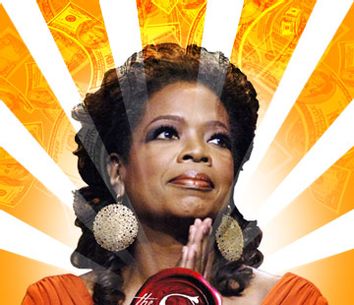
If you put that routine between hard covers, you’d have “The Secret,” the self-help manifesto and bottle of minty-fresh snake oil currently topping the bestseller lists. “The Secret” espouses a “philosophy” patched together by an Australian talk-show producer named Rhonda Byrne. Though “The Secret” unabashedly appropriates and mishmashes familiar self-help clichés, it was still the subject of two recent episodes of “The Oprah Winfrey Show” featuring a dream team of self-help gurus, all of whom contributed to the project.
The main idea of “The Secret” is that people need only visualize what they want in order to get it — and the book certainly has created instant wealth, at least for Rhonda Byrne and her partners-in-con. And the marketing idea behind it — the enlisting of that dream team, in what is essentially a massive, cross-promotional pyramid scheme — is brilliant. But what really makes “The Secret” more than a variation on an old theme is the involvement of Oprah Winfrey, who lends the whole enterprise more prestige, and, because of that prestige, more venality, than any previous self-help scam. Oprah hasn’t just endorsed “The Secret”; she’s championed it, put herself at the apex of its pyramid, and helped create a symbiotic economy of New Age quacks that almost puts OPEC to shame.
Why “venality”? Because, with survivors of Auschwitz still alive, Oprah writes this about “The Secret” on her Web site, “the energy you put into the world — both good and bad — is exactly what comes back to you. This means you create the circumstances of your life with the choices you make every day.” “Venality,” because Oprah, in the age of AIDS, is advertising a book that says, “You cannot ‘catch’ anything unless you think you can, and thinking you can is inviting it to you with your thought.” “Venality,” because Oprah, from a studio within walking distance of Chicago’s notorious Cabrini Green Projects, pitches a book that says, “The only reason any person does not have enough money is because they are blocking money from coming to them with their thoughts.”
Worse than “The Secret’s” blame-the-victim idiocy is its baldfaced bullshitting. The titular “secret” of the book is something the authors call the Law of Attraction. They maintain that the universe is governed by the principle that “like attracts like” and that our thoughts are like magnets: Positive thoughts attract positive events and negative thoughts attract negative events. Of course, magnets do exactly the opposite — positively charged magnets attract negatively charged particles — and the rest of “The Secret” has a similar relationship to the truth. Here it is on biblical history: “Abraham, Isaac, Jacob, Joseph, Moses, and Jesus were not only prosperity teachers, but also millionaires themselves, with more affluent lifestyles than many present-day millionaires could conceive of.” And worse than the idiocy and the bullshitting is its anti-intellectualism, because that’s at the root of the other two. Here’s “The Secret” on reading and, um, electricity: “When I discovered ‘The Secret’ I made a decision that I would not watch the news or read newspapers anymore, because it did not make me feel good,” and, “How does it work? Nobody knows. Just like nobody knows how electricity works. I don’t, do you?” And worst of all is the craven consumerist worldview at the heart of “The Secret,” because it’s why the book exists: “[The Secret] is like having the Universe as your catalogue. You flip through it and say, ‘I’d like to have this experience and I’d like to have that product and I’d like to have a person like that.’ It is you placing your order with the Universe. It’s really that easy.” That’s from Dr. Joe Vitale, former Amway executive and contributor to “The Secret,” on Oprah.com.
Oprah Winfrey is one of the richest women in the world, and one of the most influential. Her imprimatur has helped the authors of “The Secret” sell 2 million books (and 1 million DVDs), putting it ahead of the new Harry Potter book on the Amazon bestseller list. In the time Oprah spent advertising the lies in “The Secret,” she could have been exposing them to an audience that otherwise might have believed them. So why didn’t she? If James Frey deserved to be raked over the coals for lying about how drunk he was, doesn’t Oprah deserve some scrutiny for pitching the meretricious nonsense in “The Secret”?
Oprah has a reputation for doing good — she probably has more perceived moral authority than anyone in this country — and she has done a lot of good. But in light of her zealous support of a book that says, in this time of entrenched, systemic, institutionalized poverty, this time of no-bid contracts for war profiteers and heckuva-job governance, that “you can have, be, or do anything,” isn’t it reasonable to ask about why she does what she does, and the way she does it?
Oprah recently opened, with much fanfare, the Oprah Winfrey Leadership Academy in South Africa, and as I watched the network news stories about it, I couldn’t get “The Secret” out of my mind. I kept wondering what would happen if professor Sam Mhlongo, South Africa’s chief family practitioner who famously said that HIV doesn’t cause AIDS, read about Oprah’s connection to “The Secret” and found support there for his claim. I wondered if the students of the academy would read “The Secret” and start to believe that their parents deserved to be poor, or that the people of Darfur summoned the Janjaweed with “bad thoughts.” Will the heavier girls be told, as readers of “The Secret” are, that food doesn’t cause weight gain — thinking about weight gain does? Will they be told to not even look at fat people, as “The Secret” advises? Oprah is already promoting these ideas to her television audience. Why wouldn’t she espouse them to her students?
In many ways the Leadership Academy is a wonderful project, a school that will provide impoverished girls an education they otherwise might not have gotten. But it also seems to be the product, unavoidably, of the faux-spiritual, anti-intellectual, hyper-materialistic worldview expressed in “The Secret,” the book that the school’s founder has called “life changing.”
The academy is a controversial enough project in South Africa that the government withdrew its support, because of the amount of money that’s been spent on its well-reported, lavish design — money that could have gone instead to creating perfectly fine schools that served many, many more students than the 350 who will be making use of spa facilities at the academy. But, when I watched Oprah’s prime-time special about interviewing candidates for the school, it seemed to me that she wasn’t nearly as excited about providing an education to the girls as she was about providing a “Secret”-like “transformative experience.” (And not just for the girls, for herself; the first thing she said to the family members at the opening ceremony wasn’t, “Welcome to a great moment in your daughters’ lives,” it was, “Welcome to the proudest moment of my life.”)
On the special, Oprah talked far more about what the school would do for the girls’ self-esteem and material lives than what it would do for their intellects — sometimes sounding as if she was reading directly from “The Secret.” And in discussing what she was looking for in prospective students, she didn’t talk about finding the next Eleanor Roosevelt or Sally Ride or Jane Smiley. Instead she used “Entertainment Tonight” language like “It Girl” to describe her ideal candidate. She praised the girls for their spirit, for how much they “shined” and “glowed,” but never for their ideas or insights. Oprah puts a lot of energy and money into aesthetics — on her show, in her magazine, at her school. The publishers of “The Secret” have learned well from their sponsor and are just as visually savvy. They have created a look for their books, DVDs, CDs and marketing materials that conjures a “Da Vinci Code” aesthetic, full of pretty faux parchment, quill-and-ink fonts and wax seals.
Oprah’s TV special about the Leadership Academy, essentially an hourlong infomercial, was just as well-coiffed and “visuals”-heavy. In fact, when Oprah was choosing her students, her important criteria must have included their television interview skills. On-camera interviews with the girls were the centerpiece of the special, but as one spunky, telegenic candidate after another beamed her smile at the camera, I couldn’t help wondering how Joyce Carol Oates or Gertrude Stein or Madame Curie would have fared — would they have “shined” and “glowed,” or more likely talked in non-sound-bite-friendly paragraphs and maybe even, God forbid, the sometimes “dark” tones of authentic people, and been rejected. Sadly, the girls themselves (and who can blame them, desperate 12-year-olds trying to flatter their potential benefactor) parroted banal Oprah-isms, like “I want to be the best me I can be,” and “Be a leader not a follower” and “Don’t blend in, blend out,” with smiley gusto.
When the special was over, I found myself equally impressed and queasy, one part hopeful, one part worried. I was happy the school was there, but disturbed by the way it created an instant upper class out of the students, in a country that doesn’t exactly need any more segregation into haves and have-nots. I was hopeful for the students but nervous about what, exactly, they will be taught in a place called the Oprah Winfrey Leadership Academy. Will it be more “best me I can be” bromides? Will “The Secret” be on the syllabus? Oprah herself is going to teach “leadership classes” at the school, after all.
Has Oprah ever done anything that didn’t leave people with mixed feelings?
And at what point do we stop feeling like we have to take the good with the craven when it comes to Oprah, and the culture she’s helped to create? I get nauseated when I think of people in South Africa being taught they don’t have enough money because they’re “blocking it with their thoughts.” I’m already sickened by an American culture that teaches people, as “The Secret” does, that they “create the circumstances of their lives with the choices they make every day,” a culture that elected a president who cried tears of self-congratulation at his inauguration, rejects intellectualism, and believes he can intuit the trustworthiness of world leaders by looking into their eyes. I’m sickened by a culture in which the tenets of the Oprah philosophy have become conventional wisdom, in which genuine self-actualization has been confused with self-aggrandizement, reality is whatever you want it to be, and mammon is queen.
One of Oprah’s signature gimmicks has been giving stuff away to her audience (“giving” here means announcing the passing of stuff from corporate sponsors to audience members), most notably in a popular segment called “My Favorite Things.” These bits have revealed an Oprah who truly revels in consumer culture, and who can seem astonishingly oblivious to the way most people live and what they can afford. She seems to celebrate every event and milestone with extravagant stuff, indeed to not know how to celebrate without it. Oprah has explained the expensive appointments of her Leadership Academy by saying, “Beauty inspires.” True enough. But hasn’t the lack of beauty inspired some pretty great work? And aren’t there are all kinds of beauty?
You might expect a powerful person who thinks of herself as “deeply spiritual” to have a less worldly conception of it, and you might hope that she would encourage her followers to do the same, instead of urging them to buy books that call Jesus a “prosperity teacher.”
But, far more than “spiritual growth” or “empowerment,” Oprah and the authors of “The Secret” focus on imparting the message of getting rich. Even the biographies of the authors of “The Secret” on Oprah’s Web site are revealingly fixated on their rags-to-riches stories. James Arthur Ray is described as someone who was “almost going bankrupt, [which] forced him to focus on the life he truly wanted. Now he runs a multimillion-dollar corporation dedicated to teaching people how to create wealth in all areas of their lives.” The bio for Lisa Nichols says, “After hitting rock bottom at age 19, Lisa prayed for a better life. Now, she has made her fortune by motivating more than 60,000 teenagers to make better choices in their own lives.” And the one for “Chicken Soup for the Soul” creator Jack Canfield reads, he “was deep in debt before he made it big. Now his best-selling books have sold more than 100 million copies worldwide, and Jack travels the country teaching ‘The Secret’ of his success.”
There’s no doubt that Oprah’s doing a lot of good with her South African project, and with many other charitable works. And yeah, I know, her book club “gets people to read,” and yadda yadda yadda. But there’s also no doubt that a lot of us have been making forgiving disclaimers like that about Oprah for years. And that maybe they amount to trains-running-on-time arguments. Maybe it’s time to stop. After reading “The Secret,” it seemed to me that there were basically three possibilities: 1) Oprah really believes this stuff, and we should be very worried about her opening a school for anyone. 2) Oprah doesn’t believe this stuff and we should be very, very worried about her opening a school for anyone. 3) Oprah doesn’t know that any of this stuff is in the book or on her Web site and in a perfect world she wouldn’t be allowed to open a school for anyone.
The things that Oprah does, like promoting “The Secret,” can seem deceptively trivial, but it’s precisely because they’re silly that we should be concerned about their promotion by someone who is deadly earnest and deeply trusted by millions of people. It’s important to start taking a look at Oprah because her philosophy has in many ways become the dominant one in our culture, even for people who would never consider themselves disciples. Somebody is buying enough copies of “The Secret” to make it No. 1 on the Amazon bestseller list. Those somebodies may be religious zealots or atheists, Republicans or Democrats, but they are all believers, to one degree or another, and, perhaps unwittingly, in aspects of the Oprah/”Secret” culture. And yes, sure, a lot of the believing they do is harmless fun — everybody’s got some kind of rabbit’s foot in his pocket — but we’re not talking about rabbits’ feet here, we’re talking about whole, live rabbits pulled out of hats, and an audience that doesn’t think it’s being tricked.
“Secret”-style belief is a perfect product. Like Coca-Cola, it goes down easy and makes the consumer thirsty for more. It’s unthreateningly simple, and a lot more facile, sentimental and, perhaps paradoxically, intractable than the old-fashioned kind of belief. Like Amway, it enlists its consumers as unofficial salespeople, and the people who constitute its market feel like they’re part of a fold. It’s indistinguishable from, and inextricably bound up in, the Oprah idea of self-esteem, the kind of confidence you get not from testing yourself, but from “believing” in yourself. This modern idea of faith isn’t arrived at the old-fashioned way, by asking questions, but by getting answers. Instead of inquiry we have born-again epiphanies and cheesy self-help books — we have excuses for not engaging in inquiry at all. Let other people schlep down the road to Damascus; we’ll have Amazon send Damascus to us.
That “Secret”-style faith, whether it’s in God, or in one’s own preordained destiny to be an “American Idol,” which takes all of a moment to achieve, is perhaps its most important selling point. Here’s “The Secret” on arriving at faith: “Ask once, believe you have received, and all you have to do to receive is feel good.” The kind of faith that couldn’t be reached by shortcut, the confidence of the great doubters and worriers, of Moses and Abraham Lincoln and Jesus Christ, has been replaced by the insta-certainty and inflated “self-esteem” of “The Secret’s” believers.
Books like “The Secret” have created, and are feeding, an enormously diverse market of disciples, and they’re thriving in every corner of the culture, in megachurches and movies, politics and pop music, in sports arenas and state boards of education. Oprah has far more in common with George Bush than either would like to admit, and so do the psychics of Marin County, Calif., and the creationists of Kansas. The believers come from all walks of life, but they work the same way — mostly by bastardizing and warping source materials, from the Bible to the Bhagavad Gita, to make them fit their worldview. On Page 23 of “The Secret” you’ll find this revealing doozy: “Meditation quiets the mind, helps you control your thoughts.” Of course, the goal of meditation is precisely the opposite — it is to be conscious, to observe your thoughts honestly and clearly. But that’s the last thing the believers want to encourage. The authors of “The Secret” sell “control” in the form of “empowerment” and “quiet” in the form of belief, not consciousness.
The promises of Oprah culture can seem irresistible, and its hallmarks are becoming ubiquitous. Believers may be separated into tribes according to what they believe, but they do it in pretty much the same way, relying on a “Secret”-style conception of “intuition” — which seems to amount to the sneaking suspicion that they’re always right — to arrive at their tenets. Instead of the world as it is, constantly changing and full of contradiction, they see a fixed and fantastical place, where good things come to those who believe, whether it’s belief in a diet, a God, or a Habit of Successful People. These believers may believe in the healing power of homeopathy, or Scripture or organizational skills — in intelligent design, astrology or privatization. They all trust that their devotion will be rewarded with money and boyfriends and job promotions, with hockey championships and apartments. And most of all they believe — they really, really believe — in themselves.
For these believers, self-knowledge is much less important than self-”love.” But the question they never seem to ask themselves is: If you wouldn’t tell another person you loved her before you got to know her, why would you do that to yourself? Skipping the getting-to-know-you part has given us what we deserve: the Oprah culture. It’s a culture where superstition is “spirituality,” illiteracy is “authenticity,” and schoolmarm moralism is “character.” It’s a culture where people apologize by saying, “I’m sorry you took offense at what I said,” and forgive by saying, “I’m not angry at you anymore, I’m grateful to you for teaching me not to trust shitheads like you.” And that’s the part that should bother us most: the diminishing, even implicit mocking, of genuine goodness, and of authentic spiritual concerns and practices. Engagement, curiosity and active awe are in short supply these days, and it’s sickening to see them devalued and misrepresented.
Not that any of this is new. Aimee Semple McPherson, “The Power of Positive Thinking,” Father Coughlin, est, James Van Praagh — pick your influential snake-oil salesman or snake oil. They were all cut from the same cloth as Oprah and “The Secret.” The big, big difference is, well, the bigness. The infinitely bigger reach of the Oprah empire and its emissaries. They make their predecessors look like kids with lemonade stands. It would be stupidly dangerous to dismiss Oprah and “The Secret” as silly, or ultimately meaningless. They’re reaching more people than Harry Potter, for God-force’s sake. That’s why what Oprah does matters, and stinks. If you reach more people than Bill O’Reilly, if you have better name recognition than Nelson Mandela, if the books you endorse sell more than Stephen King’s, you should take some responsibility for your effect on the culture. The most powerful woman in the world is taking advantage of people who are desperate for meaning, by passionately championing a product that mocks the very idea of a meaningful life.
That means something.
Continue Reading
Close