Robert Ito

When a dying kid’s wish is to kill

A nonprofit helps terminally ill children with the unusual -- and to some, alarming -- dream of hunting an animal

  • more
    • All Share Services

When a dying kid's wish is to kill

Tina Pattison is in the wish-granting business. As president and founder of the nonprofit organization Hunt of a Lifetime, Pattison helps kids with life-threatening illnesses fulfill their dreams of shooting their first elk, or moose or boar. If your son is dying and wants to visit Disneyworld, well, she can’t do anything for you. But if your son wants to go out in the wilds of Maine with a high-powered rifle and bring down a really big bear, Pattison’s the woman you want to see.

Pattison is telling me all sorts of stories about her group, her life and the crazy things she’s seen running Hunt of a Lifetime for the past 11 years. We’re at the Oak Tree Gun Club, a lovely shooting facility about a half hour drive north of Los Angeles, and her stories are being punctuated by the pop, pop, pop of handgun fire from the nearby pistol range. She’s come here to Southern California for a celebrity sporting clays competition — two of the group’s longtime supporters are Ted Nugent and NASCAR champ Jeff Gordon — in the hopes of finding some big-name stars to help her cause.

A part-time school bus driver and mother of six boys, Pattison is explaining the difference between trophy hunting — killing an animal so that one can mount its head on one’s wall — and just plain hunting, where one kills to eat. Personally, Pattison’s not a trophy hunter, never has been, but some of the sick kids she arranges hunts for are, or would like to be, and really, what’s she going to say to them? What could anybody say? “I can’t blame ‘em,” she says. “Before they die, they want to put that mount on the wall. One of the boys, he’s 6 years old, and he’s got Type 1 juvenile diabetes. He’s been in three comas, and the last one, they didn’t think they were pulling him out. And he said, ‘I want to have a bigger deer rack on the wall than my dad.’ He’s 6 years old! What do you say to him? You can’t say, no, that’s not what hunting’s all about.”

Pattison’s odyssey with Hunt of a Lifetime began 12 years ago, when her son Matthew was diagnosed with Hodgkin’s lymphoma. When Pattison asked Matthew what he would like to do “in the future,” he told her he wanted to hunt moose with Dad. Knowing that moose hunts could run northwards of $10,000, Pattison went to the Make-A-Wish Foundation for help. We’re sorry, they told her, but we no longer do hunts; later, she learned that animal rights activists had put pressure on the group to stop. Pattison began contacting various outfitters for help. Finally, an outfitter in the tiny village of Nordegg, Alberta, called back and said, sure, we’ll take your son. The townspeople of Nordegg sprang for everything: food, housing, feed for the horses, a helicopter ride up into the mountains. On the first day of his hunt, Matthew got a moose, a big one. Six months later, on April 28, 1999, he died.

Pattison started Hunt of a Lifetime later that year, dedicating the organization to her late son. Since then, the group has granted more than 630 “dreams.” The majority of them have gone to boys, but dozens of girls have also been treated to hunts and fishing expeditions, courtesy of the group.

The organization is the focus of “The Harvest,” a feature-length documentary directed by filmmaker and sometime hunter Gabriel DeLoach. Born and raised in Wantage, N.J., DeLoach learned about the group in 2000 when he saw an ad of theirs while leafing through one of his dad’s old hunting magazines. “I was struck by the idea that a child facing death would want to take the life of another living being,” he says. DeLoach was studying film and journalism at the prestigious Maryland Institute College of Art in Baltimore and thought the organization might make a good story, so he gave Pattison a call. The two met up at a truck stop in northern Pennsylvania and talked for hours. Grad school and life intervened, though, and the project was shelved.

Seven years later, after getting injured while timber framing in Charlottesville, Va., DeLoach remembered the group and gave Pattison another call. She remembered him after all those years, and arranged to meet with him once again. For four years, he worked on the film, meeting kids and their families, going on hunts, spending thousands of dollars of his own money. Last winter, DeLoach solicited $10,000 on the funding platform Kickstarter to complete post-production on the film. “I’m totally broke,” he says.

“The Harvest” focuses on the lives and families of three young hunters (and descriptions below contain some minor spoilers for the documentary). Tyler, 14, dreams of shooting a black bear in Maine so that he can hang its body alongside the raccoon and muskrat pelts that adorn his bedroom walls. Casey, 20, hopes to bag an elk in New Mexico, a dream complicated by the fact that a surgery to remove a brain tumor has left him legally blind. Fourteen-year-old Arianna, a sweet-looking, wheelchair-bound girl who suffers from spina bifida, travels to Custer, S.D., crossbow and rifles at the ready, to shoot her first turkey.

Without giving too much away about the film, the kids get their wishes, albeit in vastly different ways. Tyler’s bear doesn’t go down easy, which leads to a tense, late-night search for the dying beast through pitch-black woods. Casey shoots his elk with the help of a sighted guide, who lines up the shot for him and tells him when to squeeze the trigger. Arianna gets sick on her hunt and has to be rushed to the hospital; in the end, her dad ends up taking down an enormous gobbler for her.

Some of the most moving scenes in the film, though, aren’t even remotely about hunting. DeLoach spends a lot of time with the families, and one learns a lot about the kids and their struggles through their fathers, awesome dads all.

“When you get to be older and you get cancer, well, then, you can say you lived your life,” says Tyler’s perpetually red-eyed dad, in one of the interviews. “Kids shouldn’t have to go through that. Children should get to live their life.” Later in the film, Tyler wonders about the life of the bear he just brought down. “I think it’s been wandering around the woods for about 12 years before I actually got up here,” he says. “So he’s had plenty of time to get ready to get hung on the wall. He’s enjoyed his time.”

It’s an eerie moment, given that Tyler, when he went out for his hunt, was just two years older than that bear. Has he had plenty of time? Does the boy even think about that in those terms?

“Tyler believed that by having a successful hunt, by taking the life of the big bear, that he would defeat his cancer, that it would not come back,” says DeLoach. “I think it’s easy to assign the symbol to the act of what these kids were doing, but for him, he really believed it. At the end of the film, he pretty much says that, that the bear’s the sacrifice for his life. That kind of blew our minds.”

While Tyler’s hunt was relatively easy — an accomplished hunter and trapper, Tyler got his bear on the very first day — others are much less so, and it’s remarkable to see the extraordinary lengths the group will go to just to fulfill a single wish. On one hunt, the boy couldn’t get out of his hospital bed, so the guides placed boy and bed into the back of a pickup truck and drove him out to his hunt. Specially designed equipment allows kids with limited upper body mobility to fire their rifles by blowing through a tube, and aim at targets using a joystick.

DeLoach struggled with what to show of the hunts, and how much. “I’ve seen a lot of animals die,” he says. “It just seemed rather gratuitous to show that over and over.” Even so, there’s plenty in the film to give nonhunters pause. Like the scene where they haul Casey’s elk out of the back of a pickup and half of the animal’s innards spill out. Or the scenes with Tyler’s wounded, fleeing bear, who gushes blood through the woods of Maine before finally curling up to die.

“I don’t want something to get shot,” says DeLoach. “Just like you don’t want a kid to die. It makes really good drama, but you don’t want it to happen. It’s awful that I picked a subject where I needed things to die in order to tell the story.”

Hunts aside, there are often issues and problems before a kid even picks up a rifle. Some parents try to game the system, requesting multiple “last wishes” from a variety of organizations (if a hunter has had wishes granted from other groups, they immediately go to the bottom of Hunt of a Lifetime’s list). Some kids will want to shoot an animal way beyond their abilities. Some hosts of TV hunting shows, says Pattison, just take the kids out to promote their series.

Kids will sometimes want to shoot an animal that’s out of season, too — not such a big deal for most children, who can afford to wait, but a big deal for these. “They want to hunt a caribou in the middle of winter,” says David McHugh, ambassador of the organization’s Minnesota chapter. “Well, the season is closed, so they can’t do it this year. But you talk to the doctors or the parents, and they say, he’s not going to make it another year.”

And then there are the people who are simply against all forms of hunting, even more so when kids are involved. “I have a letter from a man who said he will personally fly out from California, come to Pennsylvania, find me, and kill me,” says Pattison. Her voice is flat, as if she’s giving me a recipe for pie. “When I started the foundation, I figured I was going to piss off some people, so I took out a quarter million dollar life insurance policy. There are people that will follow right after me with the same heart and drive, so the only thing you’re gonna do by getting rid of me is make the foundation richer. So go for it. That’s the way I feel about it. I’ve lived a good life.”

If Pattison sometimes sounds like an evangelist, it’s because she’s absolutely certain of the goodness of her cause. “Ninety-nine percent of these kids aren’t thinking about a trophy hunt,” she says. “These kids are thinking, I want to go out and shoot that and bring the meat home to my family because I might not grow up to have my own family. They feel like men because they’re coming home with game. Or they’re thinking, I want to hunt a moose because I’ve always wondered what moose meat was like, and I might never get another chance to try it.”

DeLoach is proud of his film, and rightfully so: The documentary is powerful and disturbing, and its images and characters stay with one well after the film’s chilling epilogue. He’s happy that “The Harvest” was recently accepted into this year’s Camden International Film Festival, and he is currently submitting it to other festivals (to view the trailer, click here.) But hunting? After four years working on the film, DeLoach still wrestles with the same question he started with: Why would a dying kid want to do this?

“My hope is that people who hunt will think about their actions, and the gravity of them,” he says. “That’s all I want. When I started doing research on this film, I YouTubed “child hunter,” and the videos of these kids just aimlessly slaughtering animals made me sick to my stomach. It was a total game. Not that the Hunt of a Lifetime kids are doing that at all, but I was worried that that still existed. Take a few minutes on YouTube, and you’ll vomit.”

“So I hope that people will think about that a little bit more. It’s hard for kids. When I was a little kid with a BB gun, I killed birds and stuff. And then one day I just realized what that meant, and I never did it again. It would be nice if parents kind of instilled that in their kids, but you know kids. They’re gonna be ruthless. I just hope they’re not too ruthless.”

The weird popularity of real-life Quidditch

The Harry Potter-inspired game is becoming more than a campus goof. It has full-contact action -- and it has brooms

  • more
    • All Share Services

The weird popularity of real-life QuidditchInternational Quidditch Association logo. Credits for photos embedded in text: Joe Marquez, Kate Olen and Jim Kiernan.

It’s the second day of the Quidditch Western Cup, and two players, one male, one female, have just collided on the field. Both are flat on their backs, neither one moving, so the EMT walks over to take a look. After a minute or so, one player sits up, her face pink as a bad sunburn; the other is still thinking about getting up, but hasn’t quite yet. It was a brutal, high-speed smack, but nothing one wouldn’t see at any hard-fought soccer match, except for the fact that the two combatants weren’t even playing in the same match. One of them, it seems, had come flying into the other from an adjoining field. And then there are the brooms — yes, brooms — which, moments before impact, both players had been gripping between their legs.

Welcome to the wild and weird sport of Muggle Quidditch, where boundary lines are suggestions, four balls are in play at any given time, and every player — except for the elusive golden Snitch — dashes about with large, bristly broomsticks held mid-thigh. Six years ago, the game was just a cool idea hatched by a group of students at Vermont’s Middlebury College; today, there are more than 700 teams on high school and college campuses worldwide. Adapted from the high-flying sport popularized in the Harry Potter books and movies, the earthbound version boasts a governing body (the International Quidditch Association); a smart, funny magazine (the Monthly Seer); a World Cup competition, which, last year, drew 20,000 spectators; and an ever-expanding base of players and fans from San Diego to Seoul.

After the brooms, the first thing one notices about the sport is just how fast and physical it can be. Here at the Western Cup, a player got hit so hard it knocked out his contact lenses. Another collided brow to brow with an opponent, resulting in a broken nose and a nasty gash that required four stitches. At the 2010 World Cup in New York City, six players went to the hospital for injuries ranging from a dislocated ankle and a concussion to cracked ribs and a broken collarbone — and that year’s Cup had nothing on 2009, injury-wise. “I think there are some players that would like to see less physical contact,” says Alex Benepe, the IQA’s commissioner and CEO. “I have definitely not heard players clamoring for more physical contact, I’ll put it that way.”

The sport draws athletes from a variety of college sports, from soccer and rugby to softball and lacrosse. There are also scores of Harry Potter-loving players who have never participated in team sports at all, whose love of quidditch is based more on their love of Hogwarts than any dreams they might have of game-time glory. The ongoing dilemma: How does one accommodate the influx of increasingly talented athletes to the sport, without alienating hardcore Harry Potter fans drawn to it by all the cool capes and brooms?

One solution: rein in some of the sport’s crazier hits and take-downs. To that end, members of the IQA are currently drafting their first-ever referee guidebook, and will hold referee training workshops in the months leading up to the 2011 World Cup. “One of the biggest complaints from the 2010 World Cup was that the refs were not calling enough,” says Alicia Radford, who serves as the IQA’s treasurer and COO, as well as editor in chief of its monthly magazine. “Our players enjoy full contact, but they enjoy it legally.” An 11-person committee is also drafting the fifth edition of the group’s rulebook, adding clarity and detail to its section on physical contact.

Perhaps the biggest change this year is a planned move to create two separate divisions for the teams entering the 2011 World Cup. Squads will self-select into either division, and both divisions will award trophies (last year’s championship statuette was a plastic wizard affixed to the top of a vodka bottle). “I think there’s definitely a place for both sorts of teams,” says Radford. “We want the newer teams who might take it less seriously to be able to come out and play teams who feel the same way, and play a cleaner game with maybe less tackling and craziness.”

Even with the planned changes, Quidditch will always be a game of bumps, bruises and worse. The sport is full contact, as “chasers” try to hurl a quaffle (a volleyball) through mounted hoops, while other players toss bludgers (kickballs) at the chasers. The “keeper” — part goalie, part basketball center — blocks shots, or tackles would-be shotmakers. The game ends when a “seeker” snatches a sock tucked into the back of the Snitch’s shorts, which sounds easy, except the Snitch is typically quick as a hornet — most are cross-country runners — and can wrestle and body slam you, legally, but you can’t return the favor. Charges, stiff arms and tackles are allowed, as are bludger fastballs to an opponent’s face. “You get style points for a head shot,” says Benepe.

There are no real boundary markers on the field either, so tackles and scrums often take place amid clusters of fans trying to get out of the way of battling players. As for the Snitches, they aren’t bound by any rules, other than ones of “common sense” and human decency. The rule book says they should try not to slam into spectators, but just about anything else goes. “I’ve seen Snitches climb buildings, take off on bicycles, steal things from players,” says Benepe. “They kind of have a blank check.”

The result is one of barely controlled chaos — and most of the players wouldn’t have it any other way. Willie Jackson, a keeper for Arizona State University, combines surprising speed with an MMA grappler’s mentality. On the way to the finals of the Western Cup, which ASU won handily, Jackson could be found tackling some players, running full steam into others, and sitting atop still others. “The keeper’s greatest defense is the ground,” he says. “If you can get the other player on the ground and stay on top of them, you know the ground isn’t going anywhere.”

While many of the players are quick to point out that quidditch is no rougher than, say, football, or rugby, press them on it, and soon you start to hear the war stories. Eyes poked out. Cracked ribs. Bleeding head wounds and concussions. Players post photos of some of the worst of them online; others are content to merely write about them on their team’s Facebook page. “Amazingly, there haven’t been any groin injuries with the brooms,” says Benepe. “That’s what people always ask. I’ve seen a few people bust their lips on them, but I’ve never seen anything around the groin area. Or at least people don’t talk about it.”

There’s a break in the action on the field, so fans and players alike go to check out the assortment of booths just north of the announcer’s table. Vendors are selling all manner of Harry Potter memorabilia, including wands, broomsticks, plastic snitches and chocolate frogs. Kids, and not a few adults, sport Griffyndor robes and wizard hats. One large man — or woman, one can’t be sure — is dressed as Rubeus Hagrid, Hogwarts’ hirsute, half-giant groundskeeper. There are jugglers and carnival games and Harry Potter-themed snacks.

Rushing to and fro is the tournament director, Harrison Homel, who is easy to spot, as he is the only man in the park sporting a bowler hat and a big, bushy beard. In two years, the UCLA poli sci major has gone from teams correspondent (the lowest rung on the IQA ladder) to western regional director. “I never went out for sports in high school,” says Homel. “That was never my speed.” Even so, his love of Rowling’s magical world — well, that, and the brooms — proved irresistible, and he soon found himself playing on two teams: Ventura County’s Moorpark College, where he started the school’s squad, and later, at UCLA. “I’m a Harry Potter nerd in a big way,” he says.

As a player, organizer, and regional director, Homel has seen athletes of every skill level on the Quidditch field, some jocks, some not, some who love Rowling, some who could care less about her and her made-up world. “I came from a Harry Potter place, but I know a lot of people who didn’t,” he says. “There absolutely are players who haven’t read the books. For some, this is the only Harry Potter-related thing they do. The game is sort of able to bridge that gap between people who otherwise aren’t playing any sports, and people who are very, very active, but maybe aren’t as interested in nerding out about Harry Potter.”

If any one thing keeps both camps together, though, it just might be their mutual love of a sport that never takes itself too seriously. Rules and refs and hard hits aside, it’s a game based on a kid’s book. A wildly popular kid’s book, but a kid’s book, just the same. It’s a game where a big chunk of the audience look like team mascots, a sport where a big bone of contention is whether capes will be mandatory at the upcoming World Cup.

“We’re running around on broomsticks,” says Homel. “There’s absolutely a sense of tongue-in-cheek that comes with it. I think the minute that we get off the brooms, then we’re just playing any other sport. Then it’s football. There’s absolutely a competitive aspect to it, but at the end of the day, you’re still on a broom.” 

Continue Reading Close

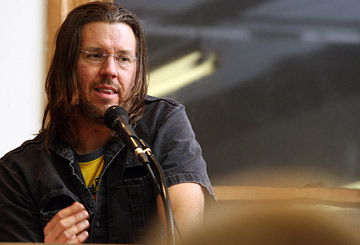
The last days of David Foster Wallace

The people who knew the brilliant writer best talk about the crippling anxiety and spiraling depression of his torturous final weeks.

  • more
    • All Share Services

The last days of David Foster Wallace

Following David Foster Wallace’s suicide on Sept. 12, stunned fans, colleagues and friends paid tribute to the writer in countless articles and blog posts. They wrote of his imagination and breadth of knowledge, of the ways in which his books and essays inspired a generation of writers and forever altered the literary landscape. They used words like “virtuoso” and “genius.” Many, like Jocelyn Zuckerman, the Gourmet editor who went to bat for Wallace’s infamous and groundbreaking essay “Consider the Lobster,” a masterwork that morphed from a scene piece about a festival in Maine into an essay about whether it’s ethical to boil lobsters alive (short answer: no), now mourn the enormous talent the world has lost. “A lot of people,” she says, “are really sad for all the books we’re not going to get to read.”

Those who knew him personally speak of his kindness: Longtime agent Bonnie Nadell recalls how he stood on line at FedEx the week before Christmas to mail an autographed book to a fan. “He would just do things like that because he was a really sweet person,” she says. His students at Pomona College in Claremont, Calif., remember the committed, engaged teacher: Amanda Shapiro had taken writing classes with him the past three years, and recalls the copious comments she got back from him about her assignments. “He would write five pages of notes on a six-page story,” she says, “and put so much care and thought into helping us as writers. He would type out the letters, and then annotate them, in pen, with little smiley faces and notes and corrections.”

A common thread running through the many magazine and newspaper tributes, the online eulogies and recalled anecdotes, was shock. Wallace may have been a hugely influential and critically celebrated figure, the winner, in 1997, of a MacArthur Foundation “genius” grant, but he was also a very quiet one. He had given few interviews in recent years, and he found much of the fame that came with literary success, the adoration and spotlight that countless other writers would have killed for a taste of, embarrassing and uncomfortable. He taught creative writing at Pomona, wrote short stories and essays and attended the occasional book reading and conference. When news of his suicide began to spread, fans were left wondering: Why? Why had this gifted, funny, often disarmingly humble writer — a man with seemingly so much to live for — taken his own life?

Unbeknown to most, Wallace had suffered from clinical depression for the past two decades. Family and close friends knew of it, but few others did. Over those years, Wallace had taken powerful anti-depression medication that had allowed him to work and write, according to his father, James Donald Wallace. But recently the drugs had been having very serious side effects. In June of 2007, Wallace and his doctor decided that they would have to try another course of treatment.

“Going off the medication was just catastrophic,” his father remembers. “Severe depression came back. They tried all kinds of things. He was hospitalized twice. Over the summer, he had a series of electro-convulsive therapy treatments, which just really left him very shaky and very fragile and unable to sleep.”

Suffering from near-crippling anxiety, Wallace found himself unable to write. “I don’t think he’d been able to write for more than a year,” says his father. Wallace told the human resources department at Pomona College that he would be unable to teach there in the fall, and he was granted a medical leave for the fall semester.

“I knew this summer had been particularly bad,” says Nadell. “My job was just to keep everyone and everything away from him.”

On Aug. 18, Wallace’s parents came to Claremont to stay with their son. Wallace’s wife of four years, Karen Green, had been called away on an urgent family matter, and Wallace did not want to be left alone. He had canceled previous visits with his parents over the past year, telling them that he couldn’t bear to have people in the house, even those he loved, so the invitation came as a welcome surprise to them.

When Mr. and Mrs. Wallace arrived, they found their son exhausted and gaunt. “He was very, very thin,” says his mother. “He weighed about 140 pounds, so I immediately started to try to put 40 or 50 pounds on him, the way mothers will.” She cooked and cleaned. Wallace couldn’t eat, he told his sister later, but he liked the way the house smelled, and how clean everything was.

Mornings were spent walking Wallace’s two dogs, Werner and Bella. Wallace and his parents strolled the streets of Claremont, talking of small things. In the afternoons, they spoke some more, and helped their son deal with the paperwork and insurance issues that had been piling up. “He was very glad we were there,” says his mother. “And he was very emotional. He was just terrified of so much. We would just try to hold him.” The memories bring tears. “He did tell me that he was glad I was his mom.”

The time together, she says, was a gift. “We hadn’t spent that much time with David since he was a small boy. Once they grow up and leave home you see them, of course, and you visit, but you don’t spend hours and hours with them.”

Toward the end of their visit, Wallace and his parents called his sister Amy. “I’m a public defender,” she says, “and I had just lost a trial that I was really upset about. He was really in a lot of pain, but he said all the right big brother things, you know, like how lucky my client was to have me.” She pauses. “That was the last time I spoke with him, and it was his last chance to be a big brother. I think it really made him feel better, at least for a few minutes. I know it made me feel better.”

The respite, though, was brief. “He told me that he wasn’t OK,” she says. “He was trying really hard to be OK, but he wasn’t.”

His wife returned home shortly after, and, on Aug. 30, James and Sally flew back to their home in Urbana, Ill. It was the last time they would see their son. Two weeks later, Wallace hanged himself. He was 46.

News of Wallace’s death shocked fans and colleagues worldwide, even those who knew firsthand of his struggles with depression. Longtime friends busied themselves with preparations for a memorial service in October, even though the very thought of speaking publicly of their friend filled them with dread. Jonathan Franzen, author of “The Corrections,” who knew Wallace for two decades, found it nearly impossible to speak about him, noting that if the words barely came now, how, in a month, would he know what to say?

His sister Amy described emotions ranging from disbelief to sadness to acceptance, of a sort. “Inevitably our thought was, if only he could have held on a little bit longer,” says sister Amy. “And then we realized, he did. How many extra weeks had he hung in there when he just couldn’t bear it? So we’re not angry at him. Not at all. We just miss him.”

While friends and family recalled the anguish of Wallace’s final weeks and days, they also wanted to talk about his sweetness, his unfailing politeness, his generosity of spirit. Amy spoke of the “magical uncle” who wasn’t so big on kids, but adored his two nieces. “He took them to Disneyland a few years ago,” she remembers, “and God, he hated stuff like that! Just all the people and the parking and the driving in L.A. But he absolutely delighted in being with them.” His mother talked about him as a husband who had, in Karen, found his best friend and soul mate. A painter and mixed media artist with her own art gallery, Beautiful Crap, in Claremont, Karen had met Wallace through a mutual friend and married him on Dec. 27, 2004, in the Champaign County Courthouse in Urbana. “The happiest he had ever been in his life was being married to Karen,” his mother says. “She was the one ideal person on the planet for him, and thank God he found her.”

When David was 5, his mother recalls, he decided that he had two careers to look forward to. He would be a professional football player, for one. In the off-season, while the other players were recuperating or doing whatever it is that pro football players do when they’re not running or passing or slamming their bodies into each other, he would be a neurosurgeon. His mother has no idea how, at 5, her son might have heard about neurosurgeons or what they were or did, but he had. The first day of his medical career, he promised his mom, he would take out all of her frayed nerves and fix them. “Somehow he knew about neurosurgeons,” she says, “and he knew that my nerves needed fixing.”

After Wallace’s death, readers began revisiting his books and essays, searching for clues to his death, hints of suicide notes planted between the lines. There were, of course, plenty to be found. There were references to depression, death, paranoia and, yes, suicide — more and more clues, the more one chose to look. But those who knew him hope that what we now know of the demons he struggled against won’t forever color the way his books are read, or the way he is remembered.

“I understand that he was apparently depressed, but that wasn’t the only important part of his life,” says former student Amanda Shapiro. “And I don’t think that’s where his genius came from. I think his genius came more out of his passion, and the things that he thought were worth living for and writing about in the world.”

“I hope he’ll be remembered in the way that every writer hopes to be remembered,” says Little, Brown publisher Michael Pietsch, who acquired and edited “Infinite Jest” in 1992 and had worked with Wallace ever since. “That people will continue to read his books. His mind is there on every page. ‘Infinite Jest,’ in particular, is one of the great works of a mind in our time.”

Continue Reading Close

The luau wars

Dartmouth Greeks tried to improve their reputation with a non-offensive Hawaiian luau. The leis never even made it off the rack.

  • more
    • All Share Services

The luau wars

What could be more fun, reasoned some young Dartmouth
fraternity brothers, than hosting a big party and
having everyone dress up like poor black people?
We’ll play lots of rap and hip-hop music, they
decided. We’ll tell our guests to “dress ghetto.”
News of the party sent Dartmouth undergrads scurrying
for Afro wigs, toy handguns and crimping irons.

Ten months and several protests later, Dartmouth is still trying to live down the now-infamous “ghetto party” with promises of greater cultural sensitivity and more aggressive outreach programs. Fraternities and school officials offered heartfelt apologies and
promises to do better. Everyone agreed on Step 1: no more ghetto parties. From now on, only happy, non-offensive theme parties — a festive Hawaiian luau, for instance.

That’s precisely what the brothers of Alpha Chi Alpha and the
sisters of Delta Delta Delta thought they were co-hosting in August — a harmless end-of-summer bash. But hours after the e-mail invitation went out, the Dartmouth campus was again in an uproar.

Aaron -Aina Akamu, the president of the school’s Hawaii club, had e-mailed out a note of protest, saying that calling the party a “luau” was offensive to him as a native Hawaiian. A traditional Hawaiian luau, he later argued, is a ceremony with a long history and deep cultural and religious significance. Alpha Chi’s “luau,” on the other hand — with its promises of Jello shots and scorpion bowls aplenty — had nothing at all to do with Hawaii, and everything to do with a bunch of frat guys getting together to get drunk.

Ordinarily, a few complaints about an offensive frat party would have barely raised an eyebrow on campus. This was, after all, Dartmouth, the inspiration for
the film “Animal House” — a campus where stories of fraternity brothers receiving oral sex from dogs and fondling a fellow pledge dressed as a bloody, post-mastectomy woman have become an integral part of Greek lore. What’s more, these so-called luaus have been thrown at schools across the country for years.

“I thought someone was joking with us,” said Alpha Chi summer president Eric Kelley about Akamu’s e-mail. It was no joke — the presidents from both the fraternity and the sorority met with Akamu later that night and agreed to cancel the party. Two hours
after that, the presidents sent out a formal apology campuswide for “any disrespect and harm our actions caused.”

The speedy response, many claim, had little to do with
concerns over cultural sensitivity. Following Dartmouth president James Wright’s
announcement last February of plans to reform the Greek system — a plan which includes making all the houses coed — many houses on campus are doing everything in their power
to avoid anything that smells even remotely of trouble. While many fraternity and sorority
members worry about the future of Dartmouth’s Greek system, others at Dartmouth are seizing this opportunity to reform what many describe as a racially hostile environment.

Dartmouth’s recent history suggests the fraternity and sorority members have plenty to worry about. In November, the ghetto-party incident drew more than 400 protesters to the university commons. In December, a fraternity-hosted “Miami” party — which invited guests to dress as Cubans — angered members of the Latino fraternity, Lambda Upsilon Lambda. On Columbus Day, Native Americans protesting the holiday were heckled by rowdy, drunk onlookers. And at homecoming, a fraternity sold “Yale sucks” T-shirts that depicted a bulldog performing oral sex on an Indian.

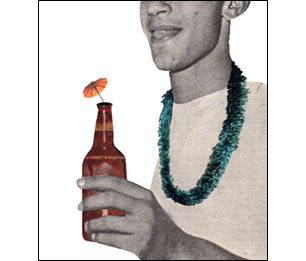
The Alpha Chi Alpha party, according to summer president Eric Kelley, wasn’t meant to be controversial at all. “People were going to dress up in flowered shirts, we’d get some leis, play some tropical music and have mixed drinks and appetizers,” he said.

The problem started when a social chair from the co-hosting sorority e-mailed her sisters asking for help with the event. The e-mail message included an invitation to dress
up “hawaiian style,” along with somewhat puzzling references to “pinatas” and “volleyball with those teekee lamps.” An idea to have an “american flag jello thing” was also floated in the message; that particular idea — a patriotic tribute consisting of red, white and blue jello shots in the shape of an American flag — had been initially suggested for the group’s Fourth of July barbecue. “It’s not 7/4,” the message read, “but hell, hawaii is a state!”

The message found its way to Akamu, who sent it to his friend Omar Rashid, president of Lambda Upsilon Lambda. Rashid, in turn, composed his own e-mail and sent it off to the Coed Fraternity Sorority Council, the Greek system’s governing body on campus.
Rashid’s message was much angrier, calling the party racist and bigoted, and he threatened to pull his own fraternity out of the CFSC if action was not taken against the two sponsoring houses.

That evening, tri-Delta president Alexandra Sophocles called Akamu. “We went for a really long walk and talked for about an hour and a half,” he recalls. “I could tell she was really sorry about what happened, and wanted to do something to try to make things right.”

Later that night, Sophocles and Akamu met with Alpha Chi president Kelley and the social chairs of the two houses. At 5:02 a.m., a campuswide e-mail went out apologizing for the planned party, and the two houses announced plans for a forum “about the misuse
of culture and ethnicity on campus.” Another racial incident at Dartmouth had been narrowly averted, it seemed, with all sides leaving happy.

And then the storm started.

When news of the controversy hit the campus and eventually the AP wires, hate mail poured in for Akamu and Rashid. “A lot of people were just swearing at me,” says Akamu, who
received more than 300 messages. “There were anonymous e-mails from bogus e-mail accounts saying, You better watch it, You better keep an eye out.”

Rashid received similar messages. The controversy sparked a wave of editorials and “letters
to the editor” to the Dartmouth, the campus’ daily newspaper, many ridiculing Akamu’s assertions and blasting the CFSC for giving in to Rashid’s demands.

In the end, Alpha Chi got off scot-free, while the sorority received full sanctions from the CFSC judiciary committee. Rashid blames Dartmouth’s long-standing “boys club” traditions — the college didn’t admit women until 1972 — for the uneven sentencing. “They penalized the sorority and not the fraternity,” he says, “because all the frat guys have each others’ backs.”

Largely lost in all the late-night sessions, online debates and irate editorials was the issue at the very heart of the controversy — namely, why were people
so offended by what was, in Dartmouth Review editor Steven
Menashi’s words, a “silly” and “harmless” frat party?

In fact, much of the confusion about the incident stemmed from the party announcement’s ambiguous text. What does “dress up hawaiian style” mean, exactly? Menashi insisted that “hawaiian style” didn’t mean dressing up like Hawaiians at all — no grass skirts, no coconut bras — but rather, dressing like “silly-looking American tourists with floral shirts
and straw hats.” Either way, the implication of dressing up “hawaiian style” meant wearing something a little goofy.

“It’s because these stereotypes [are] all they know about Hawaii,” says Akamu. “They actually think that’s real, so they don’t see what’s wrong with it.”

While the prospect of his home being used as a goofy theme for a fraternity costume party obviously irked Akamu, it was the “hell, hawaii is a state” comment that really struck a nerve.

For Akamu and many other native Hawaiians, the issue of Hawaiian statehood is
particularly sensitive. Supporters of Hawaiian sovereignty point to the “annexation” of the nation of Hawaii as nothing less than a hostile takeover by U.S. military and business interests, who forcibly dethroned and imprisoned the reigning monarch, Queen Liliuokalani, stole the land and installed pineapple magnate Sanford Dole as president.

Statehood in 1959 was just the final step in the takeover, they say — albeit a more palatable step at the time, since it meant the local populace would at least gain the rights of U.S. citizens. In 1993, President Clinton signed a bill apologizing for the overthrow, and native Hawaiian groups like Ka Lahui Hawai’i continue the fight to reclaim Hawaii’s status as a sovereign nation. And here was the issue of Hawaiian statehood, popping up in a jokey comment about Jello shots?

Like the Hawaiian sovereignty movement, it seems the cultural importance of the luau was news to the party planners. “We were kind of confused because we all knew the commercialized luaus some of us had been to at restaurants and resorts, and that’s
what we were basing ours on,” says fraternity president Kelley. “We had never even looked into the fact that there are two separate classes of luaus in Hawaii.”

Ty Kawika Tengan, a Dartmouth alum and former member of the Hawaii club, explained some of the differences in a recent letter to the college daily. “It is a joyous celebration of a people who are very strong and vibrant,” he wrote, “not the echoes of the past which may be conveniently appropriated as a decoration for a frat basement.”

But why can’t it be both? some wondered. Many argued that the luau had become so commercialized, such a part of American pop culture, that it is just as much Americana as Hawaiiana. That’s no excuse, responded Akamu: “I still don’t feel that it gives people the right to be ignorant about what a real luau is.”

At the end of the day, did anything good come out of the controversy? If nothing else, it did foster some unusual friendships. Akamu and sorority president Alexandra Sophocles became “very, very close, almost best friends” through the incident, says Akamu.
Sophocles agrees that the incident and the resulting fallout brought their small group — herself, Akamu, Rashid and his brother Ali and student assembly vice president Margaret Kuecker — much closer together. “By the end of the term, the five of us had no other friends,” laughs Sophocles.

And if the five did become social pariahs — even if only for a summer, and only on one small New Hampshire campus — Rashid sees the whole experience as a positive step, emblematic of good things to come. “Alexandra stood up in front of all the CFSC members and said, ‘Look, what happened was wrong,’” Rashid says, before launching into a spirited defense of, among others, Aaron Akamu, the ghetto-party protesters and James Wright, the university president with the controversial plans to clean up the Greek system
at Dartmouth.

“I guess it sounds corny, but it’s because of them that I’m happy to be a Dartmouth student,” says Rashid. “Those drunken idiots who go running around the green throwing up and pissing on themselves? They’re not Dartmouth.”

Continue Reading Close