Schuyler Velasco

Animal Planet’s monstrous makeover

The "Puppy Bowl" channel has become intent on terrifying its audience. What happened?

  • more
    • All Share Services

Animal Planet's monstrous makeoverFrom left: "River Monsters," "Monsters Inside Me" and "I, Predator"

In an early installment of the hit Animal Planet show “River Monsters,” self-identified “biologist and extreme angler” Jeremy Wade heads to the deep South of the United States to find a fish called the alligator gar, a big oafish-looking thing with a narrow snout and sharp teeth. They have a fearsome reputation as bloodthirsty limb-biters with a taste for human flesh, a point driven home with a flagrantly bad reenactment of a Depression-era little girl getting her foot bitten off.

He catches a 3-foot specimen, which bites him and sends blood squirting. Gars don’t like being caught, it seems, and they like British TV hosts fondling their jaws even less. Still, our alarm is piqued. “This was only a 3-footer,” Wade reminds us, waving his bloodied hand and forearm in front of the camera. “Imagine what a fully grown gar could do.” And I am, despite myself.

“River Monsters” is probably the best example of Animal Planet’s curious change in recent years, from a network dedicated to educational and entertaining animal programming to a channel intent on terrifying its viewers. Wade focuses on one presumably dangerous fresh-water dweller per episode, from the ubiquitous piranha in the pilot to more obscure critters like the aforementioned gars (which turn out to be harmless), freshwater sharks and species of giant “man-eating” catfish. The series premiere, in April 2009, was Animal Planet’s most successful ever, netting a cable-respectable 1.3 million viewers. The 2010 debut of the second season, in early 2010, drew 1.7 million, and it has remained the channel’s consistent ratings winner. (It’s third season premieres this spring.) But the show is also a sign of the broader change that’s happening across the cable TV universe — as more and more channels abandon the niches that make them unique, in favor of generically “extreme” reality programming that is also remarkably indistinguishable.

Being both a trivia fiend and a nature person, coming from a rich tradition of veterinarians, zookeepers and others heavily invested in the furry, feathery, scaley world, I used to love Animal Planet. I’d grown particularly fond of the network in the months after my move from the mellow, sprawling greens of Florida to gray, compact Manhattan. Shows like “Meerkat Manor” (a peek into the day-to-day lives of meerkats), “Big Cat Diary” (a look into the day-to-day lives of lions, leopards and cheetahs), and “It’s Me or the Dog” (like “Super Nanny,” but with dogs instead of children) were captivating not just for their educational and entertainment value, but for footage of uninterrupted expanses of sky and grass. I even looked at the suburban backyards of the dog training shows with an inconsolable longing.

But beginning in 2008, Animal Planet gradually unveiled a radically new programming agenda, starting with the network logo. Gone were the friendly rounded white letters on the green backdrop, topped by a silhouetted white elephant balancing a globe. That inviting image was replaced by the channel’s new logo: “ANIMAL PLANET,” in menacing all caps, the “M” knocked sideways as though not tough enough to stand with the other letters on this newly hardened dog-eat-dog network. There was a new Animal Planet in town, all right, and it was a biter.

The shows, too, had an added layer of grit. There was the short-lived “Jockeys,” a reality program about the diminutive, fearless athletes who race horses for a living. There were a few nature/survival reenactment testimonials, including two separate programs titled “I’m Alive” and “I Shouldn’t Be Alive,” both more or less about people getting lost in the wild and just barely not starving to death. Running between all of this survival were nearly nonstop ads for “The Pit Boss” (whose new season premiered this weekend), a reality show chronicling the daily life of an ex-con named Shorty Rossi who runs a little-person talent agency and rescues pit bull terriers in his spare time.

Since early 2010, though, as Shorty Rossi and company rolled in, the animals have started to play second fiddle on their own network. Then, this past spring, the Animal Planet unveiled its new, puzzling slogan: “Animal Planet: Surprisingly Human.” This last move was a particularly weird one, the equivalent of rebranding the Golf Channel: Surprisingly Football. “Animal Planet is not only about animals,” the network said about the shift, at the time, in a press release. “It’s about people … and real compelling human stories made more intense, more fun, more frightening, more alive and more entertaining.”

By and large, the shift has been a ratings success. Since the beginning of the programming overhaul in 2008, Animal Planet has had two years of uninterrupted ratings growth, and a seven-year drop in median age, inching it ever closer to the coveted 18-24 demographic. The “Puppy Bowl” network wanted to compete with the prime-time big boys, and to the minds behind the “Surprisingly Human” campaign, it needed an attitude adjustment to make that happen.

Oxymoronic slogan aside, there’s nothing wrong with the channel wanting to sex up its image a little. This is, after all, the network responsible for the Mario Lopez-hosted “Pet Star.” But was the only way to make animals entertaining really to pair them with entertaining TV people? Marjorie Kaplan, Animal Planet’s new programming director, believed it was, citing a need in several interviews to attract viewers who weren’t interested in nature in the first place. “When I got here, Animal Planet was the best-loved brand that nobody ever watched,” she told me. “We’re not looking to be a natural history channel. We’re looking to be an entertainment destination.” She seemed less concerned with whether the network could achieve higher ratings while remaining truly animal-centric. “If the [animals] category is not vital enough, we have to break the category,” she admitted. “Animal Planet is, in fact, not about animals.”

If you turn on Animal Planet today, you’ll find it hardly distinguishable from a running loop of “Most Extreme” video shows and weird reality TV. Watching an afternoon of it now is a far less soothing experience than it was even 18 months ago. These shows make you terrified of nature, even if you aren’t in some far-flung jungle. On Jan. 11, the network premiered “I, Predator,” which “puts you in the driver’s seat of nature’s most perfect predators as they attack and take down their prey.” One program, “Monsters Inside Me,” features stories from people who’ve had bouts with various flesh-eating bacteria, usually from snooping around a creek near their childhood homes or using sketchy bathrooms. It makes you never want to leave the house again. Which is a good tack, come to think of it, if you want people tucked safely at home watching your network.

“There will always be a segment of the public that is disinterested in wildlife and wild places,” Dan Lisowy, the educational director of the Bronx Zoo and Wildlife Conservation Society, told me. Lisowy’s job makes him responsible for nearly every animal-related education program in the New York City area, from elementary school teaching aids to continuing adult education classes. “I wonder if the advent of 200 channels of TV, some of which are dedicated to wildlife and nature programming 24/7, and the Internet and YouTube have simply saturated the market with what we define as nature documentaries,” he said. “YouTube lets people watch five minutes of action-packed wildlife footage, rather than sitting through 25 minutes of buildup to get there.”

If our ADD is partially to blame for the fall of the nature documentary, the greatest nature show ever produced, ironically, can probably be blamed for killing it. “Planet Earth,” which aired in the U.S. on the Discovery Channel in 2007, saw the genre’s potential fully realized. The lush 11-episode series, which boasted a cinematic budget and state-of-the-art technology, never-before-seen footage and a celebrity narrator, made all nature shows that had come before look like home movies by comparison. The series won a bevy of awards, spawned a feature film, and netted over 100 million total viewers, earning it the title of “most-watched cable event of all time.” There was no going back to what the nature documentary used to be. Unfortunately, multimillion-dollar, multi-year filming projects aren’t feasible as regular cable features, so one can only assume that Animal Planet had to look for new ways to make itself interesting.

But Animal Planet’s makeover reflects the bigger changes happening on cable. In terms of popular art being both accessible and viable, television is in a period of growth similar to that of film in the 1970s. With the cable structure as is, however, not every channel, particularly those originally set up to cater to specific interests, can be an AMC or an HBO. Nor should they have to be. Of all entertainment mediums right now, this is probably the only one that is expanding and becoming richer. History Channel, too, is filling up with offbeat reality programming, most of it about people doing horribly dangerous jobs and very little of it historical in any way. Much of it could slip into the revamped Animal Planet with little notice, particularly “Swamp People” (alligator hunters in backwoods Louisiana) and “Ice Road Truckers: Deadliest Roads” (self-explanatory). These shows seem to be the only way that the programming heads of these networks can think of to compete with other cable channels, leaving less and less room for more informative content. This is a pretty pessimistic, sad view of what attracts us, and as a result many of these “specialty” channels are becoming a blur. It’s really hard to tell History Channel, Animal Planet and Discovery Channel apart these days. When I first set out to watch “Swamp People,” I could not, for a million dollars, remember which channel it was on.

Kaplan cited Food Network as a major influence in Animal Planet’s new direction, “not that we’re a cooking channel, although you might see a little cooking on Animal Planet.” But Food Network still does cooking shows, just more interesting ones. It hasn’t abandoned the idea of the cooking show altogether. One thing Kaplan and her team fail to realize, or at least acknowledge, is that every specialty channel has adopted the same strategy as Animal Planet’s. That may work for ratings in the short term, but eventually these formerly specialty networks are all going to melt together into one, schlocky mess.

If these channels don’t want to disappear completely, they have to find a way to work within their specialty areas, not move away from them. Hopefully, once it widens its viewership, Animal Planet can drop the “Surprisingly Human” charade and admit that they are actually trying to get people interested in the natural world, without alienating those proud few of us who liked nature programming in the first place. There are signs it might be succeeding. Despite its protestations, “River Monsters” teaches as much about freshwater fish as any traditional narrated documentary could ever hope to. One of the network’s newest shows, “Pit Bulls and Parolees,” about a pit bull rescue that pairs the dogs with ex-cons, seems sensationalist on the surface, but it really gets at the difficulties of rehabilitating abused dogs, and, unexpectedly, the staggering amount of money required to keep animal shelters up and running.

But right now, these shows are few and far between. “Planet Earth” was successful because it made nature entertaining, not because it tried to pretend that it wasn’t really about nature. If Food Network can keep trucking along without a food poisoning testimonial show, surely there must be a way for Animal Planet to draw viewers without patronizing them, or having “Puppy Bowl” and “Pet Star” at one end and horrifying death-by-piranha on the other.

A baffling Norwegian music video reveals its secrets

Information and controversy emerge about the '80s all-star "Gylne Tider" singalong that's captivated the Web

  • more
    • All Share Services

A baffling Norwegian music video reveals its secretsPamela Anderson, Jason Alexander, Glenn Close and Peter Falk

If you were on the Internet this weekend, you may have seen what has to be one of the weirdest, most delightful and certainly most impressive viral videos to emerge in a very long time. An onslaught of ’80s and early ’90s stars, from Steve Guttenberg to Right Said Fred to the “Twin Peaks” ladies to Tonya Harding (Tonya Harding!), lip- syncing to a bad “We Are the World”-style cover of “Let It Be” on a green-screened beach. If you haven’t seen it yet, it’s never too late. Take a gander here:

We could watch that a million times. Although it wasn’t new to the Web, the video started making the rounds late Friday afternoon, and was the talk of the Salon offices for the last few hours of the work week. “This is like the unconscious cast of characters parading around the brains of one specific generation of pop culture consumers,” one colleague observed in an e-mail.

Which, it turns out, is precisely the point. As people discovered over the weekend, the video isn’t just an excuse to put a bunch of random washed-up celebrities together in a Beatles video: It’s a commercial for “Gylne Tider,” a popular program on Norway’s TV2 network. Hosted by Oyvind Mund, Steinar Martinsen and Ingar Thorsen, “Gylne Tider” (“Golden Days”) is “I Love the ’80s” as a travel documentary. Clad in their trademark matching red sweat shirts, the three hosts travel the world in search of their favorite bygone celebrities; the current fourth season features episodes dedicated to Huey Lewis, Pamela Anderson, Jason Alexander and Ricki Lake, among others.

But how did the “Gylne Tider” guys get so many stars to appear in their commercial? Several of the video’s celebs appear in episodes of the show, but according to at least one participant, trickery may have been afoot. The Hollywood Reporter reported this morning that actor David Faustino, who played son Bud Bundy on “Married With Children,” claims the Norwegian trio got him to be in the video by saying it was for charity. No other celebrities have corroborated his story so far.

In watching this, we also couldn’t help thinking of Matt Zoller Seitz’s weekend slide show of best and worst uses of Beatles music in popular culture, and where this “Let It Be” cover might fall. A beautiful, profound anthem at face value, “Let It Be” has become so overused and clichéd that at this point it’s hard to think of it as anything but a parody of itself — and this most ironic of contexts certainly doesn’t help.

The Web parodies have already begun to trickle in. Cracked.com put together its own take; it’s a pretty accurate subtitled representation of our own experience watching the clip. (“Wow, George Wendt really does not want to be here.” “When Bud Bundy is pointing at you twice, you should know that something is amiss.”) Enjoy below — along with the “Gylne Tider” cast’s epic rendition of “We Are the World.”


Continue Reading Close

“Toilets”: The hidden meaning of toilets

An expert explains what you didn't know about toilets -- from safety to cleanliness to gender politics

  • more
    • All Share Services

Why do we have so much trouble talking about toilets? After all, our anxieties about bathrooms can dictate the way we live our lives: We stress out about people overhearing our bodily functions in public restrooms; cab drivers in New York City have to pee in bottles for lack of bathroom breaks; women in some third-world countries must dehydrate themselves during the day to avoid relieving themselves in the presence of men. But try to bring up defecation or urination in a conversation, and all you’ll get are jokes, disgust or awkward silence.

We may not feel comfortable discussing them, but questions of where and how we do our business, particularly in public, have a tremendous impact on our everyday lives. That’s why “Toilet: Public Restrooms and the Politics of Sharing,” a new collection of academic essays, is so necessary. Edited by NYU sociology professor Harvey Molotch and doctoral student Laura Norén, “Toilet” is a collection of 12 essays by urbanists, historians, sociologists and other cultural analysts; it includes chapters on everything from urban planning to gender theory and crime, all examined through the prism of the public toilet.

Salon spoke with Molotch over the phone about the challenges of writing about the bathroom, why the common Western “chair toilet” isn’t the healthiest way to go, and which country boasts the world’s most awesome latrine.

It turns out the way that our culture uses the bathroom, sitting, might not actually be the most healthful way to do it. Many societies have “squat toilets”: People squat and rinse with water instead of wiping with paper, which is healthier not only in terms of intestinal issues, like making constipation less of a problem, but also from a sanitation standpoint. That’s really surprising. Why is squatting better, and if it is, why do we keep sitting?

Sitting is a cultural phenomenon, and it developed in royals as a way of giving deference and honor, as in thrones. When having objects became democratic, such that a lot of different people could have chairs and seats, sitting became commonplace. And as we adapted to this, we lost the muscle power to squat. The chair has snatched our body. We think we “use” the chair, but actually we’ve been conquered by the chair. When we go to have a bowel movement, this really comes to the fore. We don’t have the musculature to do it any other way.

The squatting position, on the other hand, causes the body to be arrayed in a very optimal way for expelling feces. At the same time it has the advantage that you’re not touching any appliance while you’re doing it, which is a phobia for many people. Feces does communicate disease, so you don’t want to have contact with it. That also goes along with the water, and most people I consult on this say that this is the more complete cleansing.

Gender issues related to toilets come up over and over again in the book. Should public toilets go unisex?

A public restroom has really become the last bastion of sexual segregation. And so, for good or for bad, it reinforces that separation. On the pro side, it’s just inefficient in terms of the use of space to have a separation of males and females. And there are people who cross-dress in terms of gender, or who are in different stages of sexual transition. For gays and lesbians, the sexual threat of someone of the opposite sex is not as great as the sexual tension of someone of the same sex. So the founding notion of this absolute separation is not true biologically, culturally or erotically.

I wonder about it, too, from a practical standpoint. On a smaller scale it seems fine, but I have a really hard time imagining unisex bathrooms at a rest stop or something. It seems like it would be both uncomfortable and unsafe.

In terms of security, anything that limits the number of people in a place actually provides access for criminals to do their mayhem. If you have anything that removes half the population from being in your presence, it eliminates that possibility of someone coming to your aid, so the security issue is actually a counterweight to the idea of separating men from women.

Why is the study of public toilets so important?

It involves an arena of life that affects a large number of people but is ordinarily not very easy to talk about. You risk ridicule and the possibility that writing about “poo poo” will cause people to think that you are engaging in something distasteful. People think that it defames the academic enterprise. At a very concrete level, when we’re writing, we don’t know exactly what kind of terminology to use, since all of it is in a taboo arena. And there’s a kind of continuum of taboo, with “shit” at one end and “feces” on the other. If you use terms like “feces,” you’re using a technical term, turning off readers and avoiding the words that people use in everyday life. And if you use words like “poo,” you look ridiculously cute. The New York Times doesn’t use the word “shit.” So settling on a certain vocabulary is a big decision.

The main thrust of the book is that public toilets can really tell us a great deal about the communities around them and the effectiveness or ineffectiveness of how those communities are run. How do we see this?

It’s important is because it determines who can go out in the city and who cannot, who can use public space and who cannot. Old people have a whole lot of trouble because they’ve got to go more often — they also have a lower tolerance for difficult situations, including cleanliness — along with pregnant women and people with babies. There’s a catalog of who needs public restrooms in a way that other people don’t. So it falls differently on different populations.

It’s also a laboratory for what we are willing to do to prevent some people from doing things we don’t like, and how much punishment will we give to everybody in order to ensure that. In public restrooms, we worry that people will have sex in them, and that people will do drugs in them, or vandalize them. The result of this is that we withdraw from providing the public facility altogether, and close down facilities, or don’t build them as we build new communities and new buildings. This is the dilemma in almost every sphere of public life, really.

Which places are actually good at managing their public toilets?

The best restrooms, the best toilets, are in Japan, flat out. It’s true in many respects. They take toilets more seriously than anywhere else in the world. In the U.S., I don’t think any city has done a good job. New York is not very good at it. They’ve closed a great majority of the public restrooms. We’ve really struggled with this, especially the more liberal cities like San Francisco, Santa Monica and Seattle. And one of the potential solutions is automated toilet facilities, the freestanding ones where you put money in.

But having to pay to use a public toilet seems like it would widen the inequality gulf.

It does, and that’s the great disadvantage. The advantage in the U.S., and in much of the world, is that it’s the only way we can get anything done. But it’s a terrible thing, because it means that people at the very bottom are the ones that are forced to pee on the wall, or in the alley, or defecate in public.

As you point out in the book, toilet issues pose a grave problem in poor countries, where the lack of proper facilities can be not just an inconvenience but a matter of life and death.

It’s mainly a problem for women, because they are the ones that are most deprived of these facilities. In many parts of the world, the gender differentiation and the burden on women is just overwhelming. In some places, when they use public latrines, including open fields, women have to go before daylight. So they try to gauge what they eat and when they eat it, or just miss work or school, which then further multiplies, reinforces, the problems they have. And there, the health problems are great. The problems of infection, intestinal infection, are increased for women in these particular cultures. And then, of course, there are the problems of menstruation, where you can’t have a system to deal with it — it runs on its own clock. But it’s not on the agenda of foreign aid. It’s not spoken of.

Where is the future of toilet technology headed?

More and more automation. Our bodies have to be choreographed by the appliance. And it’s kind of an extension of the way the toilet has snatched our body. We’ve all experienced the frustration of not knowing how to make the water go on. The electronic appliances assume a kind of conformity: Some people go into the cubicle and they don’t do the thing that is prescribed to them, and toilet is not ready for that. Now, the automatic feature presumes an automatic person: Someone who will go in, pull his pants down, and get up. But many people don’t do exactly that.

What’s the coolest restroom you’ve ever seen?

The one at Bryant Park in New York City. That space was completely redesigned years ago, and a keystone of the whole project was the restroom. Rather than just close the restroom, which would be the normal way of securing the park, they decided to make it really nice. They have a huge bouquet of fresh flowers kept at the entrance of the little lobby. What’s that saying is, “Look, this place is maintained. Someone is here on a regular basis, and we take its beauty and pleasantness very seriously.” And they do other things at Bryant Park to make sure that is true, like extremely frequent cleaning.

What’s the coolest toilet?

It’s a toilet from Japan, in which the top of the toilet is a sink. So you’re washing your hands in the sink, and that water is going down into the tank, and will be that water that’s used in the next flush. It cuts your water usage in half, and furthermore, when you wash your hands, you are now leaving the cubicle with clean hands.

Wow. That’s genius.

It is! It’s so simple! And it saves space, because now you don’t need separate space for the sink. The Japanese have had these things for many, many years.

They also have it that when you use the facility, you can push a button that will make music and disguise the sound. We all know what sounds we make. There’s nothing evil about it. It’s perfectly natural, necessary and needed. But we feel horribly exposed and humiliated when someone can hear us doing these things. So the solution for the Japanese is you press a button and other sounds happen, and people can’t hear the specifics of how your body makes its noise.

Continue Reading Close

Four Loko and the history of banned drinks

As New York outlaws the caffeinated alcohol, we talk to an expert about what happens when booze becomes illicit

  • more
    • All Share Services

Four Loko and the history of banned drinks

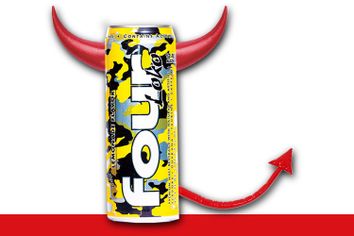
Four Loko — the latest wildly popular, wildly caffeinated, wildly alcoholic beverage to take hold with recreational drinkers — is not long for the Big Apple. On Sunday, Gov. Paterson announced New York would join a growing number of states, including Michigan, Washington, Utah and Oklahoma, that have banned the sweet, fruity concoction, nicknamed “blackout in a can” and ” liquid crack.” In addition to being super-potent (one 23.5-ounce can has as much alcohol as three beers and one to two servings of coffee), Four Loko has also been linked to several alcohol-related deaths and sicknesses (including the June beating of gay teenager in the Bronx) — so many, in fact, that the FDA is now reconsidering its approval of the product.

The beverage is just the latest in a rash of “demon drinks” to incite public outrage. It was only last year that another alcoholic energy beverage, Sparks, removed the caffeine amid public pressure. Everclear, a grain alcohol that boasts 95 percent alcohol, is banned in several states. Even Cristal, the signature hip-hop drink, was branded racist by Jay-Z in 2006, prompting a boycott of the brand. And, of course, there is the much-mythologized absinthe.

So where does the Four Loko ban figure in the history of taboo spirits? To get some historical perspective, we turned to Dan Okrent, the former public editor of the New York Times and an expert on the biggest ban in alcohol history: Prohibition. Okrent’s book. “The Last Call: The Rise and Fall of Prohibition” is the definitive history of the period. Salon spoke with him over the phone about how moral outrage over alcohol is different today than 80 years ago, and whether the banning of a drink can actually make it more popular.

What other drinks have met with this type of controversy?


Absinthe was outlawed because it was 150-proof. And at the time there were the same sort of arguments: that it was causing brain damage and hallucinations, and it was doing terrible things to people. That was the argument. Whether or not it’s true, I don’t know.

Let’s talk about the historical anxiety about certain drinks. What are some of the more ridiculous drinking bans?


Well, you can’t get much more ridiculous than a 14-year constitutional amendment! Although it’s interesting to note that it was not against the law to drink. It was against the law to sell, transport and manufacture alcohol. The specific bans that popped up in various states before that, in every instance, were honored more in the breach than in the reality. The state could ban the consumption of alcoholic beverages and people would find alcoholic beverages. Go to any college campus today where the drinking age is 21, and people find a way around the ban.

How does banning a drink, historically, play into its popularity?


Well, if is banned, how are people getting it? This is different from the total ban of alcohol, which immediately began a huge billion-dollar bootleg market. But I can’t see that happening with an individual brand, because there are plenty of other drinks to get. It’s hard to imagine people smuggling Four Loko and selling it after hours in speak-easies. People will drink something else. In states where it’s not banned, I could see how you could begin a marketing push: “Banned in New York! You can only get it here!” But within New York, who’s going to go through the bother?


A major sticking point for people who want the Four Loko ban is the combination of alcohol and caffeine. But that combo isn’t new. They’ve both been around for a long time, and people have been mixing them for a long time: Irish coffees, rum and cokes, Red Bull and vodka. Why the backlash now?


The logic of that would seem to be that you can’t stop people from mixing the two on their own, taking a coffee and pouring some Bailey’s or Kaluha into it. You can’t stop people from making explosives out of nitrogen fertilizer either. But you can outlaw the sale of explosives. Food and drug laws are there to protect people that don’t know what’s in the things they are buying. Whether it’s the nutrition information that’s put out on every food product sold in the U.S., or the smoking warnings on cigarettes, there’s this assumption that the government can play a role in  determining what we know about what we consume.


The push to ban Four Loko is coming from concerns over whether it is actually safe, as well as a sense that, with its sweet taste and bright packaging, it might be a little too appealing to underage drinkers. The New York SLA did a sting operation sending underage secret shoppers into bodegas to buy it, and the success of that played a large role in the ban. How does this sort of furor compare to the moral fury that caused Prohibition?


Men in the 19th century in both cities and the countryside were drinking huge quantities, and mistreating their families, and spending the mortgage money, and bringing home venereal diseases. It was a huge social problem. In 1830, Americans drank three times as much as they do today. And at the time women had no political or civil rights, really. A lot of other factors influenced it by 1910, but it was rooted in alcohol abuse. Genuine alcohol abuse. We drink about a third of what we drank then. There are a lot of reasons why people drank more then. One, the quality of water was so lousy, so it was almost a safer way to hydrate yourself. But in the words of one historian, Americans drank from the crack of dawn to the crack of dawn. It was a drunken society. Even industrial production was down lower. Factories couldn’t hope for a full staff on Monday, because Sunday was the day that people got smashed, workers would stop midmorning and mid-afternoon for a coffee break that was called “grog time” but it was booze. It’s hard to imagine today how much people drank then. So the moral furor that came out of it was out of this wish to protect people. The term used by the women who started that side of the movement was “home protection.” The men were drinking so much, and the families were suffering terribly because of it.

There are some rumblings that the various alcohol lobbies are behind the Four Loko ban, because it’s eating up a big market share. Do you think that could be the case? Is there any historical precedent for the industry blocking a specific product?


In the years before Prohibition, the beer lobby and liquor lobby hated each other. The beer people wanted to outlaw liquor. They said beer was liquid bread. It was nourishing. And those evil liquor people were trying to kill you. And the liquor people said, “Well, if you’re going to screw with us, then we’re not going to support anything you want to do.” So never refer to the beer and liquor lobby, because they really don’t like each other. That’s a good example.

Continue Reading Close

20 essential apps picked by people we trust

Neil Gaiman, Brian Williams, Rosanne Cash, Dan Savage and 16 others recommend the features they can't live without

  • more
    • All Share Services

20 essential apps picked by people we trust

View the slide show

Remember when you had to be at a computer to check your e-mail? Lug a cookbook or a magazine to find a recipe? Watch TV on … a TV? The things we can do with our smart phones these days seem endless. In fact, when it comes to apps, there often seems to be too much choice. With thousands of features out there, for everything from playing Scrabble to keeping our flights organized, it can be hard to figure out which ones are really worth the download. That’s where we come in.

To help you find the best apps, we’ve asked some of our favorite tech-savvy people –  writers, technology experts, actors, musicians, newscasters and more — to share their picks.

View the slide show

9 wild options for your cremains

Slide show: A look at the world of novelty cremains, from jewels to fireworks, and other ways to go out with a bang

  • more
    • All Share Services

9 wild options for your cremains

View the slide show

A few weeks ago, a savvy Web traveler alerted us to memorials.com, a funeral products website that, alongside the requisite caskets, headstones and urns, sells a set of items we found disturbing and fascinating: customized abstract paintings, created with the ashes of a loved one mixed into the paint.

Once we got over our knee-jerk revulsion, our curiosity was piqued. A little digging around unearthed a whole variety of unconventional memorial products: cremains pressed into diamonds, walking sticks, an eco-friendly coral reef. You can even incorporate ashes into a fireworks display, or press them into a vinyl record over music of your choosing.

Just in time for Day of the Dead, we wanted to take a closer look at what this alternative funeral industry says about the way we perceive, commodify and experience that most potent of life’s mysteries: death.

“The funeral industry is changing,” said Nick Drobnis, founder and president of Angels Flight, the cremains-in-fireworks company. “More and more families are beginning to see final services as a way to gather together and celebrate their loved ones’ lives rather than to mourn their passing. They want to remember something beautiful, not a somber graveside event.”

These options detailed in this slide show aren’t cheap, but then neither is a traditional casket funeral, which runs about $4,000 at minimum. But cost aside, why would anyone take such bizarre measures? At first glance, shooting the dearly departed off in a firework, or wearing them as a piece of jewelry, may seem disrespectful, creepy, even unhealthy. But according to R. Benyamin Cirlin C.S.W, grief counselor and executive director of the Center for Loss and Renewal in New York City, these individualized funerary rites can be a helpful way of getting through the grieving process. “The major issue when anyone loses someone is really about maintaining a relationship with the memory of a person. If doing something creative with cremains is a way of doing that, well, that’s fine. It’s not about one particular thing. For someone who gets stuck this might be very useful.”

But doesn’t wearing someone around your neck, or using him as walking stick for your daily hike, prevent you from getting over the loss? According to Cirlin, the concept of “letting go” is actually a very harmful one. “There’s no need whatsoever to let go of the person’s memory if you are able to let go of hopes for life to be exactly as it was,” he says. “The well-known grief therapist term of ‘letting go’ or ‘closure’ is somewhat of a misnomer. It’s really about, how can you take the relationship of a loved one and have it inform your life, and still find a way to manage the pain of the loss of physical presence and still have an ongoing relationship?”

In light of Cirlin’s assertion that no two people deal with a loss the same way, the rise of these specialty products and services starts to make sense. Western funeral customs are quite limited and homogenous, especially given the rich, diverse history of death ritual across cultures. “There’s just a deeply unsatisfying feeling to burying or spreading the ashes, for some people,” Dean VandenBiesen of LifeGem says. “There’s a loneliness there that we think our products address.”

So are these products in fact healthier coping strategies for the grief of losing a loved one, or are they just plain weird? Click through to decide for yourself.

View the slide show

Continue Reading Close

Page 1 of 2 in Schuyler Velasco