Stefan Beck

“Drop Dead Healthy”: A failed addition to “shtick lit”

In a book about one man's "quest for bodily perfection," the author doesn't even bother to try

This article appears courtesy of The Barnes & Noble Review.

In “Memoir: A History,” Ben Yagoda defines “shtick lit” as “[b]ooks perpetrated by people who undertook an unusual project with the express purpose of writing about it.” He identifies “Walden” as the earliest example of the genre, which would seem to establish a respectable pedigree, but the word perpetrated leaves little doubt as to Yagoda’s opinion of more recent efforts. He can’t be alone in casting a skeptical eye on shtick-lit superstar A. J. Jacobs, the Esquire writer responsible for “The Know-It-All” (shtick: reading the “Encyclopaedia Britannica” in its entirety), “The Year of Living Biblically” (shtick: following every biblical injunction to the letter for 12 lushly bearded, annoying months), and now “Drop Dead Healthy,” evidently a reboot of Remar Sutton’s out-of-print “Body Worry.”

Barnes & Noble ReviewFull disclosure: I undertook the project of reading an A. J. Jacobs’ book with the express purpose of writing about it. My plan was to acknowledge, with a touch of self-deprecating humor, the unlikeliness of my enterprise: I know this seems like a crazy waste of time, guys, but just hear me out…. I’d suffer a few well-timed setbacks, and — this is de rigueur — get chastised by my wife for neglecting her, the kids or my household chores. (I’m not married, but if memoir can massage the truth, why can’t reviews of memoir?) I thought about failing to finish the book. In the end, I may not have made it to my goal of 375 pages, but I did learn a whole lot about the value of shtick lit. Would I do it all again? Probably not, but I’m still glad I made the effort

Well, I did finish the book, and I did learn a lot about the value of shtick lit. The truth is, despite the warnings of Yagoda and others whose opinions I trust, I was never reluctant to read Jacobs. I find autodidacticism and self-improvement fascinating, and greatly to be encouraged. When I took up Jacobs, my hope was to defend him and his beleaguered genre from the cynics, the ones who can’t believe that anyone acts in a spirit of genuine curiosity or enthusiasm. I’d point out, too, that nobody is forcing them to buy shtick lit; if they have a philosophical objection to bogus projects undertaken expressly to be written about, they should make themselves useful and campaign to abolish the college essay.

The cover photo of Jacobs mock-struggling to do a pull-up is a clue to the fatal flaw of this book. It is not going to be, as advertised, a “quest for bodily perfection.” It is going to be a litany of shortcomings, a chronicle of thwartings and chastenings. It will consist of Jacobs dipping his toes in a thousand different dietary and fitness fads and will read like a novelization of every health-scare story and dubious medical study that ever beckoned from a website sidebar or nagged you from your Facebook feed. And because Jacobs will flit from topic to topic, body part to body part, anxiety to anxiety, the reader will almost but not quite fail to notice that Jacobs isn’t accomplishing very much at all.

It’s not that I wasn’t expecting this. I’m familiar with the conventions of the genre. It just took seeing them at their most conventional to realize that they’re dragging the genre down. Paradoxically, Jacobs expended an astonishing amount of hard work to produce a book this lazy. In just two years, he learned to eat better, to lift weights, to reduce his exposure to environmental toxins, to run correctly, and so on. He shed 16 pounds, or eight pounds per year — a little more impressive than it sounds when you consider that he must have gained muscle weight in the process. He cut his fat in half. He wrote his entire book on a treadmill, walking over a thousand miles in the process.

His labors culminate in conclusions any fool could have seen coming: “I’ll incorporate much of what I learned” and “I’ll follow fitness expert Oscar Wilde’s advice: Be moderate in all things, including moderation.” It’s not even really fair to call these conclusions, since they probably appeared verbatim in his book proposal. You aren’t supposed to criticize an author for not having written a different book, but what if the book he’s written doesn’t need to exist? What if everyone already knows that health fads are zany and that moderation is good? A book trading on such modest insights had better be mind-bendingly funny. A quick test: Jacobs is sold on skin care when he sees two guys — “leather jackets, Harley tattoos” — at Penn Station, talking moisturizers. Do you find this a) funny, b) funny but implausible, or c) so Shoebox Greetings unfunny that it doesn’t matter if it happened or not?

Most of Jacobs’ humor is of the self-deprecating or auto-emasculating variety. “[A]s an experiment,” Jacobs writes, “I’ve been wearing my blue bike helmet as I run my errands.” Have you been, man? Is anyone laughing at this? Hack comedy is one thing, but what irks me is that someone gave Jacobs a great deal of money — he mentions his advance repeatedly — to challenge himself, and instead of doing that he’s screwing around with stuff like wearing a bike helmet in public. “Bodily perfection” implies that your 44-year-old carcass is going to scale Half Dome or complete Marine Corps boot camp. I don’t care that you ate a bushel of vegetables, tried on a CPAP, or submitted to the indignity of wearing Vibram FiveFingers sneakers. I’d like to see some results. As it stands, we don’t even get an “after” photo.

Jacobs’ crowning achievement is a modest triathlon: 11 minutes of swimming, 33 minutes of bicycling, and an unspecified amount of jogging, probably 3.1 miles. Here lies the problem with shtick lit: the pedestrian nature of its goals. When men get old and retire — when they become the target market for books making light of their Jacobs-like ineptitude — they tend to read a lot of biography. Why? Perhaps it’s because age, regret and self-criticism conspire to produce a craving for real achievement, or at least for stories about real achievement. Most of us have been half-assing it since the day we were born. Self-deprecation has become a reflex, a preemptive excuse — which is why books like Jacobs’ will climb the bestseller lists and, let’s be fair, actually entertain the average reader. Yet if shtick lit is ever to live up to its promise, it’ll have to abandon its jokesy “points for trying” mentality and start attempting the impossible in earnest.

“When I was a Child I Read Books”: Biblical prose

Marylnne Robinson's astounding new book of essays delves into God, politics and her Idaho childhood

This article appears courtesy of The Barnes & Noble Review.

Whence came Marilynne Robinson? The author of Pulitzer-winning “Gilead” (2004), two other novels, and a remarkable body of nonfiction bears little resemblance to anyone else writing today. Critics reach for “biblical” to describe Cormac McCarthy’s prose, but the word is more aptly applied to Robinson’s, in which complexity and clarity walk hand in hand. (Robinson herself feels a larger debt to Cicero.) A Publishers Weekly review of her new essay collection, “When I Was a Child I Read Books,” remarks Robinson’s interest in “the Big Themes,” the winking capitals there to remind us that while deep curiosity about God, the soul, religion and the significance of mankind may not be unique to Robinson, it isn’t something we ought to expect from our literature as a matter of course. Most striking of all is Robinson’s mental work ethic. She seems to be incapable of a lazy conclusion.

Barnes & Noble ReviewBecause there are in any age so few minds of Robinson’s caliber, the question of her origins becomes important. In “When I Was a Child,” an essay of just nine pages, she gives a startling account. For starters, she is from Idaho. “I find,” she writes, “that the hardest work in the world — it may in fact be impossible — is to persuade Easterners that growing up in the West is not intellectually crippling.” The surprise here is nothing so banal as the fact that Robinson read constantly as a child, which she did. It is, rather, the way a certain idea or ideal of Westernness operated on her reading and thinking. Perhaps worked its magic on is a better way of putting it. “There was little” in her reading, she recalls, “that was relevant to my experience.” Educators, take note. “But I think it was in fact peculiarly Western to feel no tie of particularity to any single past or history.”

Robinson’s individualism, her experience of “deracination,” and the fact that “in the West ‘lonesome’ is a word with strongly positive connotations,” all underpin her ability to stand apart from human affairs and investigate them with clear eyes. She finds “no inevitable conflict between individualism as an ideal and a very positive interest in the good of society.” She regards the West, the American frontier, not only as a place or historical phenomenon but also as suggestive of an animating optimism about people and their potential. It is a shame that this superb short essay comes fifth, not first. It awakens the spirit of generosity and curiosity some readers will need if they are to derive any benefit from Robinson’s more contentious essays.

At least Robinson will not be accused of false advertising. In her introduction alone there is plenty to inflame readers of a host of political and religious persuasions. She believes that religion is central to the health of the nation but also that we must “reject participation in the bitter excitements that can surround religious difference.” She disdains all tribalisms, not only religious but also (gasp!) ethnic ones. She has hard words for capitalism as currently understood. Her concern for the public weal, encompassing everything from public education to medical and financial provisions for the vulnerable, may carry a whiff of what some have taken to calling socialism.

It cannot be any kind of picnic, in today’s America, to be profoundly religious — in fact, Calvinist — and profoundly unimpressed by the celebrity atheists while also being disgusted by the narrative of political and social decline favored by those most likely to value her religion. Of course, this is precisely where Robinson’s “Westernness” becomes indispensable: She is indifferent to alleviating her intellectual isolation, her outsider status — and what a trick, by the way, retaining outsider status despite a Pulitzer and a teaching position at Iowa — by keeping her guns holstered. Her best essays are the intellectual or critical equivalent of cleaning up some mess of a town and then riding off into the sunset.

A few examples are certainly in order. “The Fate of Ideas: Moses” is about unsavory trends in “scholarly-looking books about the Bible.” It is a skillful demolition of such books — books distinguished by their “tone of condescension toward biblical texts and narratives” — and as such can be enjoyed by those who prize demolition as well as by those who prize the Bible itself. Here is Robinson, gunslinger, projecting her air of quiet menace:

We are culturally predisposed to sheltering criticism from criticism; we have enshrined the iconoclast. If our feelings register some minor shock, or if we suppose the public might be somewhat irked, or even if we think we can discern some earnest hope on the part of a writer to irk or to offend ourselves or our neighbors, then a book is praised as a creditable effort and excused from the kind of attention that might raise questions about its actual novelty or merit.

This paragraph is, as they say, worth the price of admission. One can almost see the sweat beading on the brows of the authors Robinson has set out to corral — John Shelby Spong, Jack Miles, Jan Assmann, Regina Schwartz and Gerd Lüdemann. To appreciate what follows, one need only value expertise in the service of truth. Robinson’s desert-dry and frequently devastating wit doesn’t hurt. She reacts to Bishop Spong’s jaw-droppingly literal, utilitarian approach to Mosaic law this way: “Perhaps the sanctity of divine law does indeed rest on its aligning itself with Episcopalian practice. We will all find out when the trumpet sounds.” By the end of the essay, Moses has been, if one accepts the premise that he needed to be, rescued and rehabilitated.

“Freedom of Thought” picks up a thread from Robinson’s 2010 book, “Absence of Mind,” bemoaning several tendencies in modern thought about religion and consciousness. One is to separate the spiritual and the physical. Another is to see ancient religion as a faltering attempt to fulfill the function of science. “The notion,” Robinson writes, “that religion is intrinsically a crude explanatory strategy that should be dispelled and supplanted by science is based on a highly selective or tendentious reading of the literatures of religion. In some cases it is certainly fair to conclude that it is based on no reading at all…. In fact there is no moment in which, no perspective from which, science as science can regard human life and say that there is a beautiful, terrible mystery in it all, a great pathos. Art, music and religion tell us that.”

If one feels no challenge from Robinson’s essays, one is not thinking hard enough. If one finds nothing in them to disagree violently with, he is perhaps overawed by her credentials. Some of what she writes about the Cold War in “Austerity as Ideology” seems willfully naive. (“Each side proposed a way of life that was claimed to maximize human happiness,” she writes. One is tempted to say that, on the strength of the evidence, only one side had a right to believe it was correct.) The “imaginative love for people we do not know” which she touts, in “Imagination and Community,” as a prerequisite of good fiction and good citizenship, can seem as reflexive as suspicion, albeit riskier. She writes that “our great public education system is being starved,” which is, unless she is talking about something other than money, preposterous. Her desire to write for the ages can nudge her style toward affectation. Surely she is aware that “those tall highway signs that usually advertise hardware sales and dinner specials” are called, by the Americans for whom she feels such imaginative love, “billboards.”

One could go on, but one’s complaints would only underscore Robinson’s great strengths: independence and eccentricity. She argues that the language of public life is impoverished, that it has lost its “character of generosity” and “largeness of spirit.” She ought to add that, straitened by caution or fear, it has lost a certain quality of strangeness, too. Robinson, though some of her views are well known, is never predictable, for her discipline is to look at every question as though she were considering it for the first time. It is impossible not to be fortified and enlarged by a few hundred pages in her company.

Continue Reading Close

Stephen King takes on JFK

In the popular author's latest book, the protagonist goes back in time to stop the president from getting shot

This article appears courtesy of The Barnes & Noble Review.

Stephen King has something for everybody. For a highbrow critic like Harold Bloom, who condemned King as “an immensely inadequate writer on a sentence-by-sentence, paragraph-by-paragraph, book-by-book basis,” he offers a punching bag. For a certain type of highbrow reader, he offers a handy way to establish populist bona fides. When Nabokov wrote, in an essay on “Jekyll and Hyde,” “I am not one of those college professors who coyly boasts [sic] of enjoying detective stories,” he had this type in mind. For everyone else, King offers escape, or even respite, from reality. Pure entertainment. The sales figures bear this out. The cinematic adaptations needn’t even be named. Chances are you’ve had nightmares about one or two or most of them.

Barnes & Noble ReviewI state the obvious here because, never having read King before his new “11/22/63,” I had every expectation of falling into one of these camps. My ignorance isn’t intended as a handy way to establish elitist bona fides. I’d always wanted to read King. As a kid I got a few pages into “It” before my mom confiscated it, having chanced to see the sentence, “The fish had eaten this unfortunate gentleman’s eyes, three of his fingers, his penis, and most of his left foot.” Later, my grandma confiscated “Gerald’s Game”before I even started it. It was, needless to say, her own copy.

“11/22/63″ isn’t a horror story, though part of it is set in the same clown-haunted Derry, Maine, in which “It” opens. King’s much-bruited “sense of place,” his Maine, may be studied by the dumbed-down academe of the future the way Faulkner’s Yoknapatawpha is now, to the dismay of Harold Bloom’s corpse. In “11/22/63″ the sense of place is replaced with a sense of time. The novel is about Jake Epping, a high school English teacher who travels into the past to prevent the Kennedy assassination. Its subject, and in certain important ways its main character, is time itself. It reveals King as an almost willfully mediocre prose stylist, a great storyteller and — here’s the complicating surprise — a thoughtful navigator of the questions a curious normal person would have about time, causality, memory and love.

In other words, King is not Borges. He is your favorite high school English teacher, the one who married once, never left town, devoted his life to kids, and inquired as deeply as his mental equipment permitted into things that matter.

Jake Epping would be a failure by big-city standards, which is why he’s so appealing. His wife’s alcoholism destroyed his marriage (alcoholic King knows whereof he speaks), and the book opens with him slogging, like the Atlantic’s Professor X, through adult-education comp themes. One of his students writes, painfully and in emblematically crappy prose, of the tragedy that destroyed his family and left him crippled. Soon thereafter, Al, a diner owner of Jake’s acquaintance, suddenly dying of lung cancer, reveals that his pantry is a portal to 1958. Al, who has been using said portal to buy cheap hamburger meat, beseeches Jake to perform a nobler task that occurred to him too late: Save Kennedy in 1963. But Jake, the earnest Everyman, finds he wants to save everyone.

King goes easy on the SF time-travel minutiae. He tells the reader only that every time the traveler passes through the portal, his previous emendations to the space-time continuum receive a cosmic stet. If Jake fails on his first try, he may try, try again. Only after a while does he realize things don’t go entirely back to normal. He begins to notice odd coincidences or resonances — he refers to them as the past “harmonizing” with itself — that say something’s not quite right. There are jarring echoes of words and situations; people in the past who resemble, “Wizard of Oz”-style, people in the present; the déjà vu that makes all of us go a little mad sometimes. In what I suspect is characteristic King fashion, “not quite right” turns out to mean “terrifying.”

I knocked King’s prose. All I mean is that it’s breezy. His figures of speech invoke pop culture. His humor is observational in a folksy way, usually while pretending to impatience with itself. He is probably capable of other registers, but wise enough to know that his target audience — from the wind-ruddied denizens of Vacationland to the regular folk of the greater U.S. — doesn’t want them. More power to him. The trouble for a reviewer is that the tail meat, the twists and turns of his densely plotted and intensively researched story, must be held in reserve. Here’s a teaser: Jake Epping takes the name George Amberson. He stays flush by abusing his knowledge of sporting events; this plot leads to tragedy. He trails Lee Harvey Oswald and peripheral players like the best of G-men, even employing historically accurate surveillance equipment, so that he can be certain the man he has to kill is actually the guilty party. And he falls in love with a lindy-hopping high school librarian named Sadie Dunhill — but whether he saves her is, in the end, an open question.

It’s strange to say a middling stylist like King is a national treasure, but there it is. Even the abysmal H.P. Lovecraft, one of King’s touchstones, enjoys pride of place in the Library of America. What makes King great isn’t his writing, but his knack for prodding the average person to wonder about time, fate, theodicy and humanity (for King finds the humanity even in an assassin) in a useful, albeit rudimentary, way. The past is obdurate, the book tells us again and again. It doesn’t want to be changed, and will fight violently any attempt to change it. King’s imagination may be weirder and woollier than that of many of his contemporaries, but the themes explored in “11/22/63″ — loss, nostalgia, regret and wishful thinking — belong to all of us.

Continue Reading Close

Going native, over and over again

In a new collection of essays, John Jeremiah Sullivan covers everything from Katrina to Axl Rose

This article appears courtesy of The Barnes & Noble Review.

Deep inside a Tennessee cave, having executed a chimneyed traverse to “pass over the sixty-foot drop in the floor,” John Jeremiah Sullivan turned his light on “[b]ig blobs of black chert,” a “pure form of flint, the gray glassy stone from which most arrowheads are made.” The same ancient people who filled this cave with art would have used chert for weapons and tools, but, Sullivan learns from his guide, there was plenty of flint up above. “A riddle of the place,” he writes, “was why they were coming in here at all.”

Barnes & Noble ReviewThe reader might wonder if there’s a wink behind that sentence, if it’s an invitation to see the same riddle in the varied, often strange subjects of Sullivan’s essays. Sullivan, author of the phenomenal “Blood Horses,” Southern editor of the Paris Review, and contributor to GQ and Harper’s, has earned a reputation as a guy who nonchalantly goes wherever he feels like. Among “Pulphead’s” essays are disquisitions on near-death experience, Axl Rose, Constantine Rafinesque, caves, Bunny Wailer, and the theory that animals are turning against us.

Don’t make too much of the variety. William Hazlitt wrote about sundials and juggling, when not dilating on matters more easily understood as consequential. John McPhee has written magnificently on cattle branding, canoes, and, in 1967, long before every commodity needed its own 500-page panegyric, oranges. Topics like Christian rock, reality TV, Michael Jackson, and the proper way to approach obscure blues music, all addressed in “Pulphead,” wouldn’t seem exotic except by juxtaposition with one another.

What makes an essayist brilliant isn’t that he’s all over the map, but that he always goes native — and Sullivan always does. Perhaps the best example is his Pushcart Prize-winning essay “Mister Lytle.” In this masterfully compressed bildungsroman, Sullivan tells of his apprenticeship, at twenty, to the aged Andrew Nelson Lytle, a writer of the Southern Agrarian movement that included John Crowe Ransom, Allen Tate and Robert Penn Warren.

The essay begins with Sullivan helping to construct Lytle’s coffin, perhaps the only time literature and “workshopping” ever went harmoniously hand in hand. Living with Lytle, for that is the form Sullivan’s apprenticeship takes, enlarges his perspective. “The manner in which I related to him was essentially anthropological. Taking offense, for instance, to his more or less daily outbursts of racism, chauvinism, anti-Semitism, class snobbery, and what I can only call medieval nostalgia, seemed as absurd as debating these things with a caveman. Shut up and ask him what the cave art means.”

Sullivan recognizes the “self-service and even cynicism” of this approach, which is what places him above the ruck of most reporters. That he doesn’t feel guilty about them makes him better still. Going native doesn’t mean he has to stay there. In any case, the climax of this essay isn’t the unwelcome, confusing, and confused sexual advance that ends his partnership with the old master. It’s an earlier moment. Sullivan steals a look at a page of writing Lytle has been agonizing over, expecting to find something out of “The Shining”:

The sentence was perfect. In it, he described a memory from his childhood, of a group of people riding in an early automobile, and the driver lost control, and they veered through an open barn door, but by a glory of chance the barn was completely empty, and the doors on the other side stood wide open, too, so that the car passed straight through the barn and back out into the sunlight, by which time the passengers were already laughing and honking and waving their arms at the miracle of their own survival, and Lytle was somehow able, through his prose, to replicate this swift and almost alchemical transformation from horror to joy…. He never wrote any more. But for me it was the key to the year I lived with him. What he could still do, in his weakness, I couldn’t do.

That may have been true of Sullivan at age twenty, but now he can do a great many things with his prose. To give examples would be merely to catalogue, and to spoil surprises. Still, it’s worth mentioning that “Getting Down to What Is Really Real” is not only the last word on reality television but also, in parts, Muscle Milk-snortingly hilarious: “Throwing carbonic acid on our castmates because they used our special cup and then calling our mom to say, in a baby voice, ‘People don’t get me here.’ … This is us, a people of savage sentimentality, weeping and lifting weights.”

Or that “Upon This Rock,” about a Christian rock festival, is brutally critical without being condescending and illuminates, through the example of Sullivan’s own youthful experiences with religion, the progression from blind faith to a more fruitful skepticism. Or that Sullivan on the naturalist Rafinesque has written an ode to curiosity, and that Sullivan on his brother’s near-fatal electrocution, on cave painting, and on animal intelligence evokes mysteries of time and consciousness that are difficult to explore without sounding like you’ve tumbled down the world’s biggest bong.

There are just a few duds among these fourteen pieces, and “dud” is a deliberately relative term. Sullivan’s failures make excellent reading. They are useful lessons in investigation and composition, too. “At a Shelter (After Katrina),” for instance, reveals that not even a mind as incandescent as his can stroll into an aftermath, collect an epiphany, and make it work in prose. Yet, if an aftermath must be documented, and it must, you could do worse than Sullivan. Maybe you couldn’t do better.

Katrina, the excesses of the Tea Party (the subject of another essay here) — these would yield, paradoxically, anybody’s palest efforts. It is when Sullivan is doing his own thing, out on weird assignments a minor talent would have to beg just to write on spec, that he dazzles with his curiosity and insight. He’s better at bringing a reader’s interest to bear on his own obsessions than at inhabiting an interest the reader is obligated to share.

Truth is, political anger and sandwich boards and people coming together after disasters are important the way, say, recycling is important. Thinking about them is a dull duty, not a pleasure, and there is no original take. The virtue of Sullivan’s best work is selfishness: He makes you care about whatever fires his passion.

Here, instead of a full exegesis of “Pulphead,” is a recommendation. Once in a while there comes a book one wishes could be assigned to the nation’s schoolchildren. Pulphead is that kind of book. Perhaps it’s because “Mister Lytle” performs, with penetrating sincerity, the function to which college essays only pretend. It’s because the collection smacks, like David Foster Wallace at his reportorial best, of 3 a.m. bullshit gone right. It’s impossible to imagine a young person reading it without delighted fascination, and then a guilty dawning that his own insights, displayed in a thought balloon, would look like a cartoon log being cut in half. Sullivan inspires his readers because he challenges them. Reading Sullivan at any age is a reminder of what a privilege it is just to think about stuff, about whatever you damn well please — and of how fun.

Continue Reading Close

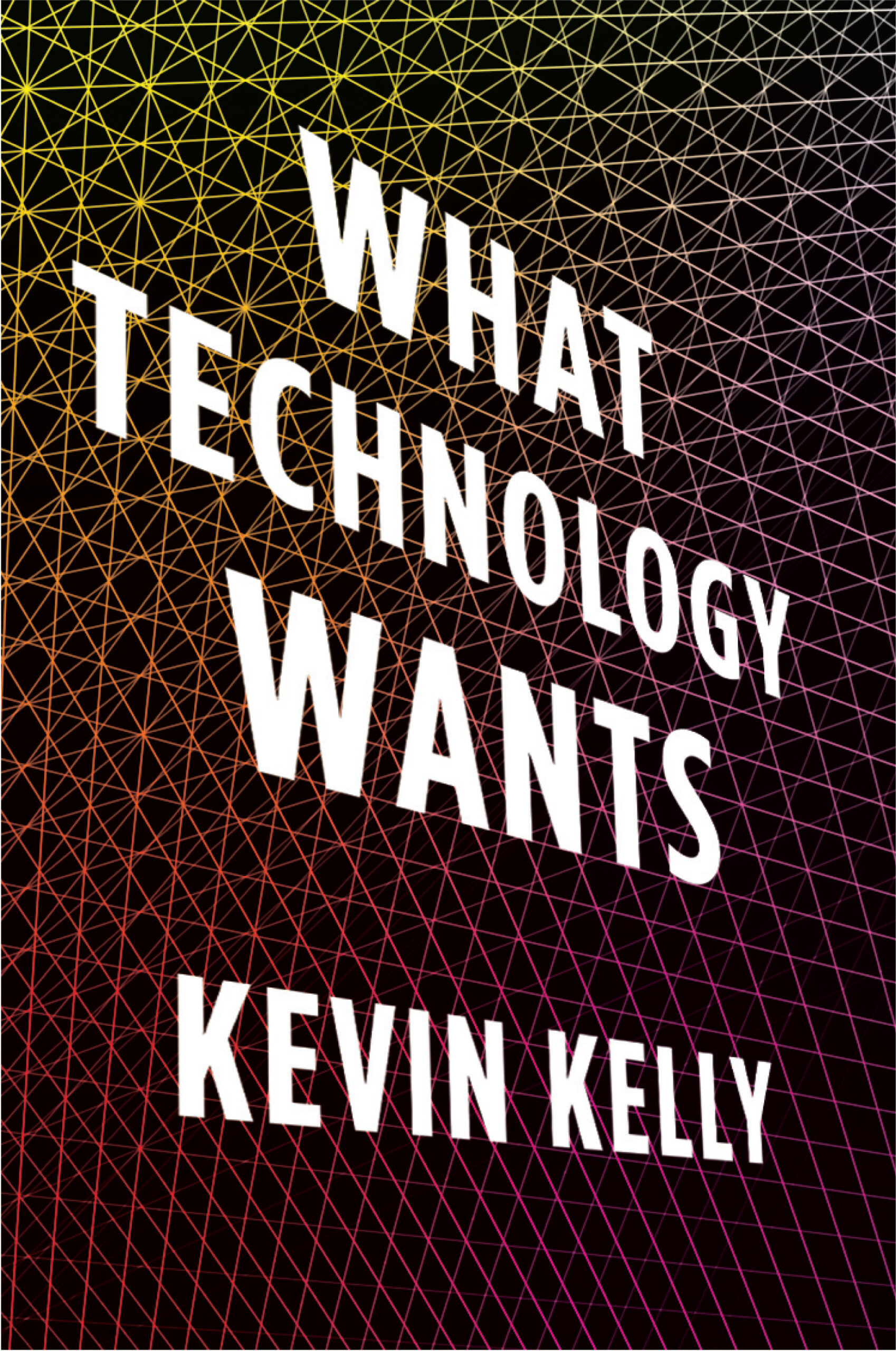
“What Technology Wants”: Could technology take over the world?

In his new book, Kevin Kelly examines the future of our relationship with machinery and ideas

What Technology Wants, by Kevin Kelly

It’s difficult to read the title of Kevin Kelly’s prophecy-cum-manifesto, “What Technology Wants,” without visions of Terminators dancing in one’s head. Surely this question belongs to some cratered and rust-dappled dystopian future? Surely technology still serves at our pleasure, whether it’s driving us to Dunkin Donuts, nuking our leftover Thai, or finding us “cobra versus mongoose” videos on YouTube?

Barnes & Noble ReviewBy “technology,” Kelly, a co-founder of “Wired,” doesn’t strictly mean machines or the Internet. He means the fruits of human creativity, everything from UNIX code to “Hamlet” to “philosophical concepts.” Though he claims to “dislike inventing words,” he proposes “technium” to denote “the greater, global, massively interconnected system of technology vibrating around us.” Forgive the obligatory Gladwellian neologism (hey, at least it condenses “fruits of human creativity” into eight letters), and one finds that Kelly delivers an absorbing, if occasionally credulous, account of the technium’s progress.

The good news: the technium isn’t self-aware in the Skynet sense. “Its mechanical wants,” Kelly writes, “are not carefully considered deliberations but rather tendencies.” The neither-good-nor-bad news: What the technium mainly wants is to evolve, expand, diversify, increase in complexity. Kelly argues that many of the ways in which it does so are, in a sense, predictable. He makes a parallel with biological evolution: Just as certain features, like the eye, evolved independently in genetically distant creatures, so do many technologies arise independently at roughly the same time (often leading, also predictably, to high-stakes patent disputes).

In other words, we’d most likely have had the light bulb with or without Edison, and the atomic bomb regardless of whose head that particular light bulb appeared above. Why? Mixing metaphors, as he often does, Kelly tells us that “the creative engine of evolution stands on three legs: the adaptive … plus the contingent and inevitable.” In technology as in biology, we think primarily of adaptation, but there are also the guiding pressures of historical reality and the physical laws of energy and matter. The impossible, by definition, will never be: Contingency says you can’t invent cars before you invent the wheel; inevitability says such cars as we may have will drive on roads, not clouds. The right conditions for cars or light bulbs or A-bombs will tend to lead to them.

As a framework for understanding the historical forward march of the technium, this is useful, but minus the bunting of buzzwords, anecdotes, trivia and illustrations (my favorites being “A Thousand Years of Helmet Evolution” and “Parallels in Blow Gun Culture”), it hardly strikes one as revelatory. That X, be it a biological organism or a component of the technium, cannot precede its predecessors, and that it can evolve only within the parameters that its predecessors define, is merely logical, not mind-blowing. Whatever comes to pass, we are guaranteed to find, looking back, that the conditions preceding it were somewhere on the continuum from sufficient to ideal to bring it about. In the same way, we marvel at our fine-tuned universe, forgetting for an intoxicating moment that it only looks that way to the self-aware, and rather self-satisfied, product of its laws. Technological progress can be similarly intoxicating. The iPad may seem as though it were preordained by the cosmos — but does that make it cool? Inevitability, real or imagined, shouldn’t exempt anything from critical scrutiny.

Having explained at length, in sometimes elegant but always buoyant and engaging prose, how technological evolution works, Kelly moves to a more significant question: What to do with this knowledge? When we identify a trend in technological development, like Moore’s Law, which “predicts that computing chips will shrink by half in size and cost every 18 to 24 months,” we must use this to our advantage, both by keeping pace and by preparing for the inevitable plateau.

We must also protect ourselves. Kelly begins a chapter provocatively titled “The Unabomber Was Right” by enumerating the many inventions expected, in their innocent infancies, to bring world peace: airplanes, submarines, dynamite, machine guns, to name only a few. (Marconi, the inventor of radio, claimed that it would “make war impossible, because it will make war ridiculous.” He was about half-right.) What the Unabomber was right about, in Kelly’s estimation, is “the self-aggrandizing nature of the technium,” its tendency to propagate and strengthen itself without taking humanity’s best interests into account.

But Kelly sees this as proof not of the technium’s evil but of its potent neutrality. It increases our freedom, multiplies our choices, but every new technology is a solution that creates new problems and unintended consequences. The best answer is not to regard the technium as a basically destructive juggernaut, but to evaluate its many offerings — as, believe it or not, the Amish do — piece by piece, taking only what is useful and fixing, repurposing or discarding what is not.

Kelly is too smitten with the idea that quantity begets quality. He measures scientific knowledge in terms of the number of journal articles published. He often seems to forget that his vaunted Internet, repository of our ever-increasing “information,” is mostly porn, ads for “The One Secret to Losing Weight,” and hilarious cat pictures. All the same, his conviction that creativity is a living force to be examined, harnessed and sanctified can be inspiring. Our participation in the technium’s development gives us a dignifying hand in our own evolution — and, at the risk of anthropocentrism, I’d say that makes us pretty damn special.

Continue Reading Close

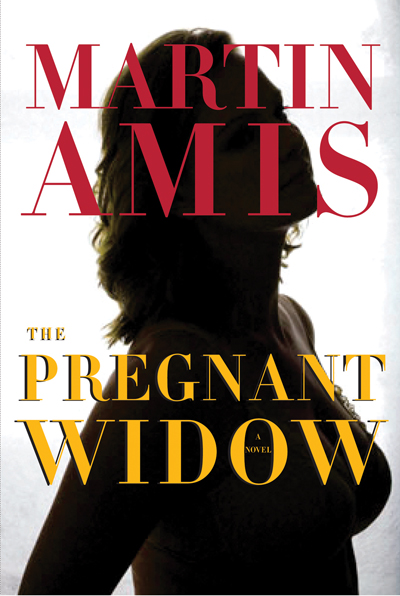
Martin Amis’ new novel: Why the haters are wrong

Critics haven't been kind to the literary icon's sex-filled "The Pregnant Widow" -- but it's a raucous, funny read

"The Pregnant Widow" by Martin Amis

Wouldn’t it be nice to inhabit a parallel universe in which Martin Amis’s effervescently smutty, hilarious debut, “The Rachel Papers,” enjoys the status of “The Catcher in the Rye”? Charles Highway, the twenty-four-year-old Amis’s horny, appalling, brilliant surrogate, couldn’t give a toss where the ducks go when that lagoon freezes over, and all he’d catch in the rye is the clap. He is, unlike Holden Caulfield, an unqualified joy to read.

Amis is sixty now, and his latest novel, “The Pregnant Widow,” revisits a Charles-like youth — which is to say, the youth of sex-crazed Amis himself. It’s 1970, and twenty-year-old Keith Nearing, a student of English, is weathering the sexual revolution in an Italian castle stocked like a pond with gorgeous girls. Young Keith can’t help suspecting that “history was arranging it … with Keith in mind.” Yet the book is narrated by Keith’s conscience, aged sixty, so we’re given to see the earthly delights of 1970 as “a sexual trauma,” the “opposite of torture,” yet responsible for lasting damage. The revolution was then well into its Reign of Terror phase.

Barnes & Noble ReviewThe “pregnant widow” of the title comes from Alexander Herzen: “[T]he departing world leaves behind it, not an heir, but a pregnant widow. Between the death of one and the birth of the other … a long night of chaos and desolation will pass.” Fear not: this is far funnier a book than its somber epigraph would have us believe, a greedily anticipated return to form, blending social comedy, farce, even height jokes. The latter are partly at Amis’s own expense — Keith dwells in “that much-disputed territory between five foot six and five foot seven” — but there is also Adriano, a muscular, daredevil, but tiny Italian count. “Adriano had many cars,” Amis writes, “including a racer that seated only one, like a canoe; at its wheel, in his goggles, he resembled a badger motoring its way through a children’s book.”

Isn’t this a bit cheap, playing a dwarf for laughs? Not really, because the novel takes place at a moment when physical beauty is the only currency being honored. There is almost-pretty Lily, Keith’s girlfriend, or former girlfriend, with whom he enjoys what we enlightened moderns might call a “friends with benefits” arrangement. Scheherazade is the significantly more desirable “monokini”-wearing blonde, whose ample embonpoint occupies Keith’s thoughts all day, all night. Then there is Gloria Beautyman (based, the critics inform us, on Tina Brown), the gigantic “A” to Scheherazade’s divine “T.”

“The feminine body,” Keith muses, little Oxford-bound shit that he is, “seemed to be made of pairs. … And men were the same, except for the central anomaly. Men had … this central question mark. A question mark that sometimes became an exclamation point; and then went back to being a question mark.”

The central question mark of this languid Italian summer is whether Keith will bed Scheherazade. As plots go, this is slighter than slight; it’s practically “The Very Hungry Caterpillar.”  Nevertheless, that old Amis magic — prismatic linguistic invention, honesty bordering on cruelty, hearty laughs, and sex divorced from either lyricism or titillation — ensures that the reader never notices, or complains. Amis is significantly warmer, more empathetic, toward his characters than he’s been in the past, but that doesn’t mean he describes them any less vividly or justly.

As a matter of fact, some of these characters behave in ways that younger American readers may find unintelligible as comic fodder. Keith attempts to drug his girlfriend (“he smoothly sprinkled the pre-atomised Azium into Lily’s prosecco“) so that he can indulge in a promised tryst with Scheherazade — isn’t that, like, not okay? We are also made to wonder whether Adriano, having offered a tragic explanation for his stature (prenatal malnutrition, in a Nazi camp), hasn’t in fact hired actors to lie on his behalf … So Amis’s characters, lest their be any disappointment, are rotten as ever.

The tryst doesn’t happen, because Keith drunkenly insults the unexpectedly religious Scheherazade with an atheistic rant. And Keith, while he still thinks he’s waiting for his rendezvous, watches time slow to a crawl. He speaks of the “crippled clock”; his watch stops “even trying to keep the time.” Later, the elder Keith, the superego Keith, speaks of “the bullet train of the fifties, where the minutes often dragged but the years tumbled over one another and disappeared.”

Yes, that’s relativity. When Lily determines that Keith has tried to drug her and to sleep with Scheherazade, Keith must face the consequences of his transgression without having committed it. It’s an amusing allegory for conscience, which will whip us soundly for what nobody else has even noticed.

The dialogue in “The Pregnant Widow” can certainly be pompous and grating; as Doug Johnstone of the Independent on Sunday put it, it’s “full of supposedly witty conversations … and endless narcissistic navel-gazing.” In the original “Decameron,” they tell stories; in this one, they only read them — Keith is working on a heroic stack of English novels, from Fielding on — and allude to them and obsess about their vanishingly slim sexual content. (Of Richardson’s Clarissa: “It’s not just fucks, Lily. One fuck in two thousand pages.”) Keith also has a trying habit of reciting etymologies.

These bright young things are insufferable, to be sure, but in precisely the way we’d imagine privileged, overeducated Brits in the 1970s to be. And there comes a point when Keith’s, and the narrator’s, fondness for allusion and quotation looks like something very different from trying too hard: it’s an illustration of what life is like for those who deal almost exclusively in words and stories and their meanings. Even in his romantic (or, at any rate, sexual) life, Keith speaks of his “[f]ear of the fatal misreading.”

Some of the more minor figures, like Keith’s hard-partying friend Kenrik, or Gloria and Scheherazade’s largely absent boyfriends, or boorish Rita, are not impressed deeply on the reader’s imagination. One who is — though not until the final quarter of the novel, a less-entertaining history of Keith’s life from 1970 to 2009 — is Violet, Keith’s sister. Keith is adopted, so they aren’t related by blood, but this doesn’t diminish his agony as he watches her become a casualty of the revolution’s chaos and desolation: Violet, based on Amis’s late sister, Sally, is done in by addiction and promiscuity.

Some critics are skeptical that the sexual revolution even deserves Amis’s animus. He has been pilloried, too, for trying to wrest universal truth from his individual experience. But his experience of Sally’s promiscuity, which was pursued first in “the spirit of the times” and ultimately in search of something like protection or love, is that it placed her at the mercy of men for whom sex had nothing to do with love and often plenty to do with violence. It’s hard to deny that “free love” can have this consequence.

Amis is not, in the end, opposed to “free love,” in the sense of sex exempt from the positive coercion of a hypersexualized culture or the negative, misogynistic coercion of radical Islam. “It was an important principle,” Keith notes, “and he assented to it: don’t do anything for the crowd. And not that, not that, especially not that: the intimate, the innermost. It worked both ways. With sex, don’t do it, and don’t don’t do it, for the crowd.”

Continue Reading Close

Page 1 of 2 in Stefan Beck