Susannah Gora

In defense of Ferris Bueller, car salesman

Even John Hughes -- a former ad-man -- would have enjoyed the buzzed-about Super Bowl ad loaded with film allusions

  • more
    • All Share Services

In defense of Ferris Bueller, car salesmanMatthew Broderick

Honda owes Matthew Broderick a great, big “Danke Schoen.”

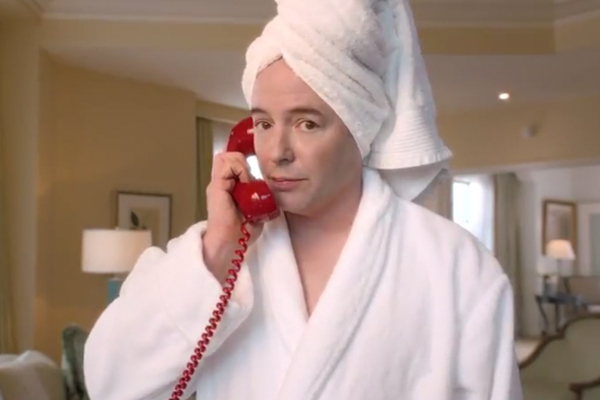
Thanks to him, the Japanese carmaker can boast that it’s got this year’s most buzzed-about Super Bowl ad: a commercial for the Honda CR-V featuring Broderick in an homage to his most well-loved character, Ferris Bueller.

This time around, Broderick isn’t portraying a charming teenage truant who feigns sickness and skips school to drive around Chicago in a Ferrari 250 GT with his best friend and girlfriend, and dance on a parade float while lip syncing Wayne Newton and the Beatles. Rather, Broderick plays a fictionalized version of his actual, off-screen self: a middle-aged guy feigning sickness to take a day off from shooting a movie so that he can tool around Los Angeles in an SUV. The ad, which was directed by Todd Phillips — of “The Hangover” and “Old School” fame — has been viewed over 3 million times on YouTube, is a top trending topic on Twitter — but has divided fans who aren’t sure whether to thrill to the nostalgia or be horrified that the free-spirited Bueller is shilling for an SUV.

The spot is, of course, chock-full of references to John Hughes’ 1986 teen comedy “Ferris Bueller’s Day Off,” with plenty of cinematic nods meant to delight the “righteous dude” in all of us. Whereas Ferris had to con Principal Rooney, Broderick’s agent is now the authority figure who must be duped in order for the day off to succeed. Ferris boogied on a float in a German parade; Broderick sings a Mandarin ditty while dancing in a Chinese parade. Best of all, perhaps, is the moment when a valet alerts Broderick that his Honda is ready with a monotonous “Broderick … Broderick …,” instantly calling to mind the line that made Ben Stein famous.

(True aficionados will thrill to the more obscure references: a guy in a Detroit Red Wings jersey, a la Ferris’ best friend Cameron, rides the roller coaster behind Broderick; the area code of the phone number Broderick calls using the CR-V’s phone system is that of the Chicago land area where Ferris had his fun; Broderick’s agent is named Walter Linder — which just happens to be the name written right above that of Abe Froman, the Sausage King of Chicago, in the reservation book at the snooty restaurant where Ferris, Cameron and Sloane have lunch. Really.)

So how did one of the most beloved pop-cultural moments of the 1980s become the subject of a Honda commercial, 25 years later? “The film embodies the theme of getting out and doing stuff,” Joe Baratelli of RPA, the agency behind the spot, told Adweek’s David Griner. The Honda CR-V is trying to position itself as a car that allows you to tackle, as Baratelli put it, the “list of things you want to do before the things you have to do,” which jives with the carpe diem worldview that Ferris espouses.

As for Broderick’s involvement, he thought about it for a while, ultimately deciding doing the ad “might be amusing,” as he told New York. “Todd Phillips was directing it, who’s a good director, and I thought it would be fun to send up Ferris Bueller a little bit.” Over the course of the shoot, Broderick said, he was “running around L.A … thinking, ‘I hope this is a good idea.’”

Some would say it isn’t.

While some people are griping about the lack of Alan Ruck and Mia Sara in the spot, and others are pointing out the obvious — a Honda ain’t a Ferrari — still others have qualms on a deeper level. “Remember when it was thought that a corporation couldn’t successfully manufacture a viral sensation?” asked the CBC’s Jian Ghomeshi on his program “Q.” “Remember how those discerning and democratic voices of the Internet would see through that kind of ruse? No more. Now it seems like we’re all just suckers for … an epic SUV commercial that plays on our nostalgia for a time gone by. What do we do in the face of these programmed and planned viral creations that are actually about selling products? We eat them up. But maybe it’s worth asking ourselves, what would the real Ferris Bueller do?”

Cleverly, the commercial sidesteps that sacrilege. That’s not Ferris Bueller in the SUV, it’s Matthew Broderick. Ferris Bueller remains ageless, and this ad is yet another testament to that. He lives on Blu-ray, while Matthew Broderick — though still adorable —  grows up, marries, has kids and goes gray at the temples. A better question — and one that many fans are surely asking themselves — is, what would John Hughes (who died in 2009) have thought of the commercial?

Maybe Hughes would have been annoyed that his beloved Ferris was being used to sell cars on TV. (He was quite peeved by the NBC 1990 sitcom version of “Ferris Bueller,” now only remembered because Jennifer Aniston played Jeannie.) On the other hand, he did live to see JC Penney’s 2008 back to school campaign, which distilled the essence of “The Breakfast Club” into a 60-second ad.

But in the movie, Ferris’ father, played by the wonderful actor Lyman Ward, worked in advertising in Chicago. And so too did Ferris’ true father, John Hughes. Indeed, before his extraordinarily successful career as a filmmaker, Hughes was something of an ad-world wunderkind. At just 21, he convinced execs at the ad agency Needham, Harper and Steers to hire him, and he later made the jump to Leo Burnett and Co., where he began working on accounts such as Edge shaving cream. (The well-known ad where a man scratches a credit card along his face to prove there’s no stubble? A Hughes brainchild.) He learned the art of using marketing as a means of telling — or more accurately, selling — a story. He attended monthly focus groups to discover what people wanted to get out of a product, an experience he would later say made him savvy when it came to the marketing of his own films.

Considering his understanding of the power of advertising, and his love of well-crafted humor (which the Honda ad, admittedly, contains plenty of), he probably would have gotten a kick out of the Super Bowl spot. It’s fair to say that, at the least, he would have loved the use of a vanity license plate (“SOCHOIC,” for Ferris’s oft-imitated line “so choice”) in the spot — a Hughes hallmark if ever there was one.

Hughes, one would like to believe, would have found it quite righteous indeed that his movie was still so beloved — 25 years after its release — that it was worthy of a lengthy homage in front of the biggest television audience of the year (and possibly of all time).

When Honda first released a short teaser of the commercial, many fans believed that what they were seeing was actually footage from an upcoming Ferris Bueller sequel. And they’re not the only ones to fantasize about such a thing: “Just for fun,” Alan Ruck told me when I interviewed him for my book about John Hughes’ films, “I used to think, why don’t they wait until Matthew and I are in our 70s, and do ‘Ferris Bueller Returns,’ and have Cameron be in a nursing home,” which Ferris would liberate him from.

Kidding aside, Broderick has said that there was “some talk” about a sequel, but that “John never really seemed absolutely thrilled about it.” Broderick didn’t want to say yes to the role until he saw a script, and Hughes, Broderick remembered, “said, ‘Well, I’m not gonna write a script if Ferris Bueller’s not saying yes.’ I look back on that and I think, of course I should have just said yes. That was just really ridiculous of me.”

At the end of the commercial, after chasing down the kinds of life-affirming adventures that would surely make Ferris proud, Broderick turns to the camera and speaks his most iconic character’s most iconic line: “I’ve said it before, and I’ll say it again: Life moves pretty fast. If you don’t stop and look around once in a while, you could miss it.” It doesn’t matter if hearing Broderick utter the line in this context has your eyes rolling or misting up — the wisdom of Ferris’ philosophy still rings true. Life does move pretty fast — whether you’re young or middle-aged; whether you’re doing the things you want to do or the things you have to do; whether you’re driving a Honda or a Ferrari.

Why would anyone remake “Footloose”?

Let's hear it for the boy, again? The Kevin Bacon movie gets a reboot, and aging Gen Xers groan

  • more
    • All Share Services

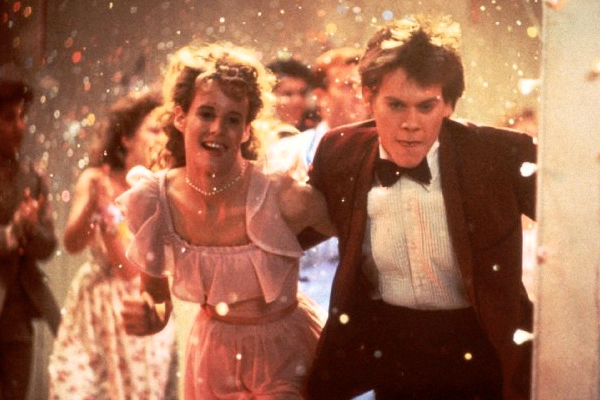
Why would anyone remake Kevin Bacon in "Footloose" (Credit: Paramount)

It was the year that Wendy’s ads popularized the phrase “Where’s the beef,” the Detroit Tigers were one of the hottest teams in baseball and a dance movie called “Footloose,” starring mostly unknown actors, was released.

The year: 2011.

Of course, all of those events happened for the first time in 1984. But while Clara Peller of the Wendy’s ads is long dead and these Tigers’ World Series dreams teeter precariously, the “Footloose” remake out today bares a comfortable resemblance to the Kevin Bacon near-classic released 27 years ago — the same year, incidentally, that its star Kenny Wormald, was born.

Wormald plays Ren MacCormack, the character created by Bacon. Ren is a big city boy (Chicago then, Boston now) who finds himself in a small town where dancing and loud music have been outlawed. In the original film, the merriment is prohibited because the town’s reverend (John Lithgow) is a religious fanatic who fears for the teenagers’ souls. He also doesn’t like his foxy daughter (Lori Singer) hanging around with Ren. In the 2011 edition, a tragic car crash in which five teens were killed coming home from a dance is the plot engine which leads to a teen rebellion and the eventual need for Ren to help everybody lose … their blues.

But why now? And why, at all? It’s not entirely uncommon for films to be remade, and even horror movies from the 1980s have been brought back from the undead to some success. But after the stunning popularity of last year’s “Karate Kid” remake (biggest difference: no karate), another hit from 1984, the barn door crashed open. If a movie was a hit once, why wouldn’t it be again?

“There’s a generation now that would find a whole new meaning in this story,” Craig Zadan, a producer on the “Footloose “remake who also produced the original, has said. But, of course, this whole new generation could easily watch the original “Footloose” by adding it to their Netflix queue, or checking out a few choice snippets on YouTube. Few teenagers in 1984 would be caught dead watching a youth film from the late 1950s – it pretty much was a different universe. But the same is not true of decades-old films today. But today’s teens are just as likely to have seen “Ferris Bueller’s Day Off” as ’80s kids were.

Jen Chaney, an entertainment reporter and Celebritology blogger for the Washington Post, says that when it comes to remaking certain ’80s movies, “I tend to have a knee-jerk reaction — oh, why are they doing that — and I certainly felt that way with ‘Footloose.’ ” When she recently listened to music from the new soundtrack (which includes Blake Shelton covering the classic Kenny Loggins title track), she found herself longing for the old days, when a “Footloose” soundtrack meant you’d be hearin’ it for the boy, needin’ a hero, and dancin’ in the sheets. “I was like, what’s going on here? Where’s the Shalamar?”

The real reason for the remake, of course, is probably this: Hollywood — like the rest of America — is nervous about its bottom line, and thus hesitant to take a chance on new ideas. In an era when there’s no longer such a thing as a sure thing in Hollywood (see “Eat, Pray, Love”), cashing in on nostalgia can provide nervous studio execs with a bit of comfort. Rebooting “Footloose” guarantees built-in brand recognition and an audience of both Gen-Xers who might want to check out how the remake compares to the original, and a younger audience who have at least a passing familiarity with the 1984 Herbert Ross film (the marketing pretty much presupposes knowledge of the original).

On the chance you need convincing that this remake might be at least as much about commerce as it is art, check out the “Footloose Collection” currently on sale on the Home Shopping Network. (Oh that I were kidding.)

Sometimes, an ’80s story can truly be retold in a fresh, original way, thanks to new advances in technology (like “Tron: Legacy”), or compelling developments in our society (“Wall Street: Money Never Sleeps”). But some remakes — like the recent “Karate Kid” reboot with Jaden Smith, seem more about milking nostalgia for all it’s worth, while we’re still wondering why anyone said yes to remakes of “Arthur” and “Fame.”

But now that the people who were kids in the ’80s are in decision-making roles at studios, the trend is likely here to stay: Remakes of ’80s films as diverse as “Robocop,” “Porky’s,” “Police Academy” and “Short Circuit” are said to be in the works. It used to be that you would replace your VHS tapes with DVDs, then those with BluRay. Now it seems, we have to replace our original versions of films with their remakes.

“I find this incredibly depressing,” wrote legendary English film critic Barry Norman, “What kind of an industry caters for people dumb enough to enjoy ‘Porky’s’ the first time round and are still dumb enough to want to see it all over again in a new version?”

Of course, Hollywood has always dined off sequels (Universal’s fourth theatrical helping of “American Pie” is being released next spring), and it’s not uncommon to see more than one filmed version of a novel or an American version of a foreign film. But remakes of still-popular Hollywood films is a more recent phenomenon. In the case of the new “Footloose,” says Chaney, “The mindset is that maybe today’s teenagers would like this movie but because it was made over 20 years ago, they’re not going to embrace it — so we should remake it. But I think that some kids are more sophisticated than that, and are willing to embrace older films.”

In fact, many of today’s teens consider ’80s pop culture the epitome of vintage cool. Think leggings, bangle bracelets and off-the-shoulder sweatshirts. One Houston teen, who I interviewed for my book “You Couldn’t Ignore Me If You Tried: The Brat Pack, John Hughes, and Their Impact on a Generation,” told me that “you haven’t lived, as an adolescent, until you’ve seen these movies.”

And although it boasts an undeniably modern look, feel, and sound, the new “Footloose” does contain plenty of nods to its original. Writer/director Craig Brewer filmed some scenes as almost shot-by-shot homage’s to original sequences, such as the moment in which Kevin Bacon dances his way through anger management in an empty warehouse. The new film also features Kenny Loggins’s original version of “Footloose” at the beginning — although he says he didn’t have any creative input over the remake. (“I even had to call and ask for tickets to the premiere,” he recently admitted on “Access Hollywood Live.”)

In defense of the remade “Footloose,” it does have a couple of things going for it that the original didn’t — in particular, its leads are professional dancers. (“I’m excited to shut up all the naysayers,” Wormald said to the New York Times), and it does come back to the big screen by way of a successful Broadway adaptation in the late-1990s that later toured across America.

But when it comes to remakes, says Chaney, “if you feel like you have a kinship with these characters or what that movie stood for, and you see somebody taking it in a direction that is counter to what that stood for to you, that automatically feels wrong and that’s what makes people upset.”

So maybe, just maybe … is it possible that those of us Gen-Xers who are getting annoyed over this remake have become the veritable John Lithgows of our time? Should we just back off and let these crazy kids have some fun? The scores of exuberant homemade dance videos submitted by young fans on the movie’s website does suggest that the remake is hitting a chord. And Julianne Hough does look pretty great in the 2011 version of those famous red cowboy boots.

“I remember the first night that I got called to ask if I would do the ‘Footloose’ remake,” Brewer said. “I had the first reaction that many people had, and that is, why should you remake something that’s a classic. But then all night, I couldn’t let it go. There’s a unique time to be young. And we forget about that when we’re older. We hold those times precious, and that’s why we don’t want them revisited. I knew that a younger audience needed to experience this story.”

Or, as Kenny Wormald says passionately in the film, channeling Kevin Bacon’s insouciance from 1984 but with an energy that is decidedly of the moment, “This is our time.”

Susannah Gora is the author of “You Couldn’t Ignore Me If You Tried: The Brat Pack, John Hughes, and Their Impact on a Generation.”

Continue Reading Close

Are comedians funnier when they're fat?

Can a comic actor lose weight without losing laughs? On Twitter, Jonah Hill's fans aren't so sure

  • more
    • All Share Services

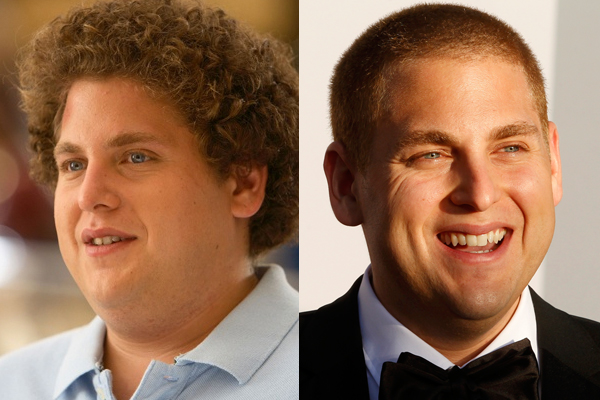
Are comedians funnier when they're fat?Jonah Hill in 2007's "Superbad" (left) and at a BAFTA event in Los Angeles in July, 2011.(Credit: Reuters/Fred Prouser)

When Jonah Hill appeared on “Live With Regis and Kelly” earlier this week, he probably thought he was there to promote his role in the new film “Moneyball.” As it turned out, what they really wanted to talk about was how good Hill looked in his skinny jeans.

In case you haven’t seen him looking svelte on the couches of Letterman, Fallon and Conan, Jonah Hill isn’t fat anymore. He’s trim, stylish — and almost completely unrecognizable from the portly schlub that audiences fell in love with in films like “Superbad.”

“I decided I wanted to be healthier, and I stuck with that decision,” Hill told Regis and Kelly, in a variation on the same talking points he’s used in interviews all week. Hill said he knew it was time to make some changes when his nutritionist “had me write down what my favorite foods were, and it was like, the menu of a 6-year-old’s birthday party.”

Certainly, this weight loss is good for Hill’s health, his self-esteem and the number of “Zoolander”-esque outfits he’s now able to pull off. But it’s killing him on Twitter.

The Twitterverse is already aflutter with comments questioning whether the new slimmed-down Hill will be as funny as the earlier, super-size version. Tom Arnold knows how even comics can be stung by the wisecracks.

“It’s the same mistake people make about when [comedians] quit drugs,” says Arnold, who fights to stay slim after many years of weight issues. “They think that when people lose weight, they won’t be funny.”

From Jackie Gleason to John Candy, from John Belushi to Kevin James, Falstaffian funnymen have long used their heft as a major part of their comedy arsenal (i.e., Chris Farley’s Chippendales routine on “Saturday Night Live”).

“I think it’s a combination of girth and boisterousness that creates the funny fat person,” suggests Glenn Kenny, a former editor at Premiere magazine, now the lead critic for MSN Movies and writer of the film blog Some Came Running. “Excess is considered funny, and the essential gluttony of a character like Falstaff is considered humorous. It’s a token of being larger than life.”

There’s a rich history here: “In cinema,” says Kenny, “and even in vaudeville before cinema, what really played was the fat person who could perform physical feats that you didn’t think fat people could perform. Fatty Arbuckle was huge, but also had this incredible physical agility. He could do things that you didn’t think he could do — like pirouettes.”

With fatness and funniness so closely linked in the public perception, audiences may feel that when a chubby comedian sheds weight, there’s just less of him to love.

“You probably all notice that I’m around 10 pounds less funny,” said Hill’s friend Seth Rogen after undergoing a similar physical transformation. Rogen, who has said that he wouldn’t have lost the weight if he’d known how much attention would have been made of it, felt some members of his fan base were actually disappointed in him when he slimmed down: “I think for chubby guys, I was their guy,” he told interviewers. “They were like, ‘I can be chubby — Seth Rogen’s chubby, so who cares.’ But now I’m not so chubby anymore … I’ve let them down.” Interestingly, Rogen has gained back much of the weight he’d lost a couple of years ago.

Some people associate keeping the flab with keeping it real: “There are people who think losing weight is selling out,” says Arnold. “And those are usually other fat people.”

For an overweight actor, heft can be an important part of their professional identity. “In Hollywood, there’s usually one fat guy at each agency,” says Arnold. “If John Goodman’s at an agency, it’s probably not a good place for me, because they are going to send him out first.” (Perhaps a slot will be opening up, now that Goodman has lost 100 pounds.)

Arnold, who can be seen these days on FX’s “Sons of Anarchy,” remembers preparing for his role in Don Roos’ film “Happy Endings,” in which he played Maggie Gyllenhaal’s love interest. “I wanted to lose weight because I knew there was a scene with my shirt off,” Arnold explains, but “the director thought it would add more pathos if I did not lose weight, and would make people feel more sorry for [Gyllenhaal’s character]. But when I did lose weight after that, Don was very happy for me as a human being.”

Of course, there’s a double standard when it comes to women. Melissa McCarthy’s recent Emmy win notwithstanding, thinness is almost always a prerequisite for female performers, and ladies who shed pounds invariably help their careers — see Valerie Bertinelli’s journey from D-list obscurity to “Hot in Cleveland” hotness. But their male counterparts can find themselves in a bit of a career conundrum.

“I can’t play the little, funny, fat guy anymore,” Ricky Gervais said after losing 20 pounds. “I might have to get myself a fat suit.” With his new V-shaped torso and flab-free frame, it’s hard to think of Gervais as an underdog anymore, and as such, his wickedly funny humor can seem, well, just plain wicked. When Gervais slammed Tim Allen while introducing him and Tom Hanks at this year’s Golden Globes, Hanks responded: “Like many of you, we recall back when Ricky Gervais was a slightly chubby but very kind comedian.” “Neither of which,” Allen added, “is he now.”

Indeed, Jonah Hill may find that his new image in Hollywood doesn’t fit as well as those skinny jeans: “Hill has emerged as kind of half-buff, neither a fully-fledged slob, or, as is technically known, a hottie,” wrote the U.K. paper the Observer. “In Hollywood, isn’t this tantamount to career suicide?”

Kenny doesn’t think so. “Jonah Hill has got a lot of things going for him,” he says. “He’s young, and he’s really talented, and now that he’s slimmer he’ll have a longer life and a longer career.” Kenny argues that audiences will “look at a guy like Jonah Hill, and they’ll think, ‘You know what, he was funny when he was fat, but good for him. And now I can watch him and enjoy it more — because I don’t have to worry about him.’ “

Tom Arnold recalls being worried about his friend Chris Farley’s weight and drug use. “We were very close,” he says, “and I remember telling him at one point, ‘Listen, you’ve gotta make a decision. You can either be a drug addict, or fat, but you can’t be both. That’s what killed him, was being both.”

Arnold believes that fatness can actually hinder an actor’s ability to perform. “I have been very big — I have been over 300 pounds, I’ve been under 200 pounds, and I certainly wasn’t at my funniest when I was over 300 pounds.” He remembers from his days working on his ex-wife’s TV show, “Roseanne,” “watching John [Goodman] on a daily basis, that when he got really big, it was a struggle for him then. I could see him panting and struggling, and it made it harder. He wasn’t as funny, he wasn’t as good. And it’s the same thing with myself.”

When Hill recently appeared on the MTV Video Music Awards, he poked fun at the flak he’s been getting for losing weight. He suggested to musician Nicki Minaj that perhaps the true answer to the timeless question of why did the chicken cross the road was this: “He did it for fitness.” When Minaj replied that that wasn’t a particularly funny response, Hill went on: “It’s not funny that the chicken wanted to change his lifestyle a little bit, become a little healthier? Is it funny that instead of getting a pat on the back, the chicken gets a bunch of jerks tweeting that he’s not funny anymore? Maybe the chicken should just drop dead at 40, so you can laugh a little bit, huh? He’s just healthier,” Hill cried, exasperated. “But he’s the same chicken!”

“People who really are Jonah Hill fans should be very relieved,” says Arnold. “Because he was getting dangerously fat. And to me that makes it less funny, when you’re worried about someone’s health … I heard him on the radio the other day. And he’s just as funny as ever.”

As for Arnold, staying fit is a top priority: “I’m working hard at it. I have to.” As he gets older, he says, being out of shape “is not so funny anymore.” 

Continue Reading Close

Cameron Crowe revisits “Say Anything”

The director releases new scenes from the '80s teen romance and countless John Cusack crushes are renewed

  • more
    • All Share Services

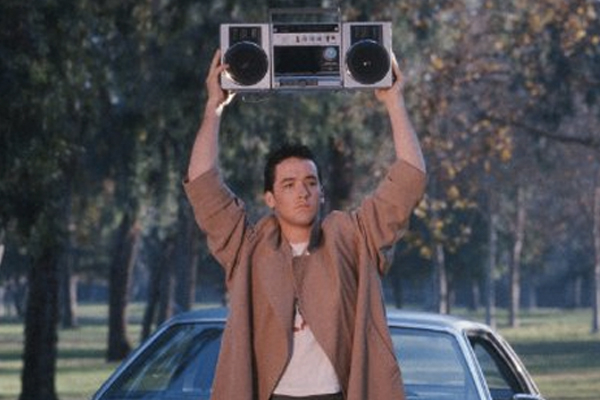
Cameron Crowe revisits John Cusack in "Say Anything"

For Gen-Xers still under the spell of Lloyd Dobler, the boombox-hoisting, trench coat-wearing antihero played by John Cusack in Cameron Crowe’s 1989 teen romance “Say Anything,” it’s been a pretty eventful summer.

While discussing his upcoming films “Pearl Jam Twenty” and “We Bought a Zoo” at the Television Critics Association press conference in July, Crowe said he’d consider a “Say Anything” sequel. But just as fans started getting excited about Dobler Part Deux, they suffered a collective buzz kill Monday when Crowe told IFC that while he thinks about what might have happened to the film’s characters, a sequel remains a pipe dream.

As proof that “Say Anything” is on his mind, Crowe has been posting a number of extended and deleted scenes from the movie all week on his website, theuncool.com. Granted, these aren’t actual filmed scenes — they’re just portions of the script, words on a page. But if there’s anybody who knows a thing or two about words on a page, it’s Cameron Crowe. And to the legions of “Say Anything” devotees, the ones who dress up like Lloyd for Halloween, the release of these new scenes is exciting enough that we’re forced to remember Lloyd’s famous directive: “You must chill!”

The newly unearthed scenes include one in which Ione Skye’s character, Diane Court, is hit on by one of her teachers but gracefully thwarts his advances, and an extended version of the graduation scene — Diane’s valedictorian speech originally included a rather ’80s-centric musing on her future: “Will I live in the suburbs, and drive a BMW?”

There’s also an extended version of the dinner party scene in which Lloyd gives his famous “I don’t want to sell anything bought or processed” speech. Turns out the longer version of the scene included a line in which Lloyd actually talks about wanting to marry Diane one day (pretty heady stuff), and the scene also provided a more detailed glimpse into the financial wrongdoings of Diane’s father, Jim Court (played brilliantly by veteran actor John Mahoney). I was particularly intrigued by a stage direction for Lloyd that Crowe had included in the script at the end of the scene: “He wipes his hand, offers it to [Jim] Court.”

Crowe had based the Lloyd character on a real-life man named Lowell Marchant, who was his neighbor in Santa Monica during the time he was working on this script. Marchant was an optimistic 19-year-old kickboxer from Alabama, who, as Crowe told me when I interviewed him for my book “You Couldn’t Ignore Me If You Tried,” “would knock on the doors of his neighbors to make friends. And you’d answer it, and he’d be like, ‘Good afternoon, I’m Lowell Marchant. And I would like to meet you. I’m your neighbor, and I’m a kickboxer. Do you know about kickboxing?’ And he would wipe off his palm on the side of his pant leg, and shake your hand. And it was just such a great thing.” Crowe told me that Marchant’s simple, thoughtful gesture of wiping his palm before going for the handshake “was the first little spark for the bonfire that would become getting the character right.”

But what struck me as perhaps the most interesting and most significant finding in all the newly released material was this: Originally, Lloyd had a line at the very beginning of the film in which he asks one of his friends, “Did [Diane] ever say anything about me?” The line was ultimately scrapped, which may seem insignificant if not for one thing: That was the only time that Cusack’s character ever uttered the phrase that was the title of the film. As it stands, that phrase, “say anything,” is spoken many times — but only by Diane and her father.

Whenever people wax nostalgic about “Say Anything” and the lessons it taught them, those lessons almost always have to do with romance, thanks to the startlingly honest and palpably powerful love shared between Lloyd Dobler and Diane Court. But there’s another essential thread to the film’s narrative as well — the complicated, strained but ultimately beautiful relationship between Diane and her dad, the morally challenged man who loves his daughter so blindly that he steals money from the residents of the nursing home he owns so that Diane never wants for anything. “He was willing to sacrifice anything and everybody to make sure that she got what she wanted,” Mahoney told me. “A lot of teenage films turn the parents into cartoons — this was a real flesh-and-blood person who turns out to be extremely flawed.”

Jim is proud of the close bond he shares with his daughter, and is fond of telling her often that she can “say anything” to him. But the movie’s title has within it, suggests Mahoney, the contrast between the way Jim Court loves Diane, and the way Lloyd Dobler loves her. In terms of Lloyd, ‘say anything,’ Mahoney reasoned, “means, ‘I will always understand you.’” As opposed to what it means to her father, who will listen to her, but still get her to do things his way.

The last time we hear the movie’s title used in the film’s dialogue, Diane Court is confronting her father after learning he’s been deceiving her for years: “I don’t want to leave something out, because I know I can say anything to you,” she tells him. “You’re a liar, and a thief.” Happily (spoiler alert), by movie’s end, Diane learns to forgive her father, and begins a new life with Lloyd, the man who truly loves her best.

Mahoney told me that when people come up to him and talk about his movies, they almost always want to talk about “Say Anything,” and how much it matters to them. “It hit a chord,” he said, “and it resonates still.”

According to Crowe’s site, more extended scenes — from the final shooting script dated Jan. 18, 1988 — may still be posted in upcoming days.

Continue Reading Close