Suzy Hansen
Destination: Jersey Shore
Bruce Springsteen may provide the soundtrack to your boardwalk stroll, but great novels by Richard Ford and Frederick Reiken should keep you company on the beach.
A passage of Frederick Reiken’s novel “The Lost Legends of New Jersey” so accurately re-creates the world’s perception of the Jersey Shore that a grumpy native could be forgiven for feeling betrayed by the author. “In July they woke one morning to find the beach covered in syringes,” he writes. “It made the news — hundreds of plastic little syringes without needles. Apparently, they’d been illegally dumped at sea. The syringes were reported from Sandy Hook all the way to Manasquan.”
Reiken’s fictional Rubin family was vacationing in the late ’70s, in Allenhurst, not far from poor, infested Manasquan, near where I grew up — a tiny town of tiny houses squished so close together that if a surfboard leaning up against one house fell, it could smack into the wood siding of another. Like many Shore towns — they’re all distinct, and yet they’re all “the Shore” — Manasquan is a sweet village populated by blondes and home to lively bars named Leggett’s, the Osprey, O’Neill’s. There, bachelorettes can do tequila shots to “Thunder Road,” “Living on a Prayer” and just about any song from the 1980s.
But — damn stupid syringes! Always getting in the way of the good stuff.
Of course, in Reiken’s bestselling, often mournful 2000 book, the Shore’s peculiarities aren’t limited to this particularly memorable ocean detritus. Reiken also memorializes the bacteria-laced water that almost prevents young boys from bodysurfing during their fleeting summers of freedom; the rickety bars called Tides where mothers get drunk and then later arrested for driving while intoxicated; the greasy cuisine glistening under fluorescent lights at take-out places like the Windmill in Long Branch (awesome hot dogs). And it all adds up to as dead-on a rendering of the nation’s armpit as any you’ll find. Overall, Reiken pays respects to the bad behavior that the Jersey Shore, with its unremarkable beach beauty and seedy boardwalks, salutes you for indulging in. “They all played Skee-Ball for a while, then walked the boards, acting like jerks, as they often did,” Reiken writes of his young boys, and nothing ever seemed as true, and weirdly wonderful, about the place.
Many people, those coming from Philadelphia or New York anyway, think of Ocean City or Wildwood or Long Beach Island when they hear the words “Jersey Shore.” Or they think of Springsteen, and therefore a mythic place that may or may not exist. But that region — the once syringe-infested landscape of “Lost Legends,” which includes Asbury, Belmar, Spring Lake, perhaps Point Pleasant — certainly still exists, in all its funnel cake and cotton candy glory. Down this shore, New Yorkers and Northern Jerseyites are called “Bennys,” and locals are branded “clamdiggers.” Million-dollar homes in Spring Lake border raucous, Benny-ville rentals in Belmar. Arcades dot Ocean Avenue, along with prissy beach and pool clubs. Jeeps, not always Camaros, cruise the highways and side streets, pretty girls’ long, straight hair whipping around the tanned faces of lean, jockish guys. They may or may not ever leave home.
When we think of New Jersey literature, however, it’s Philip Roth’s North Jersey, from “Portnoy’s Complaint” (1969) to “The Plot Against America” (2004), that first comes to mind. James Kaplan’s “Two Guys From Verona” (1998), with its hapless adult male characters fumbling around in the shadow of New York City, also depicts the kind of North Jersey suburbia made all the more miserable by its undeniable inferiority complex. It’s harder to identify why exactly the comedies of Tom Perrotta, “Bad Haircut” (1994) and “Joe College” (2000), seem so drenched in Jerseyness, but in “Bad Haircut,” when a bunch of kids head to a bleak mini-mall parking lot to meet a human hot dog, one is immediately convinced that their brand of middle-class adolescent excitement over meeting a supposed “celebrity” could only happen to the oddly isolated and easily charmed natives of the Garden State.
But as anyone from there will tell you, New Jersey is a bunch of states within a state, each special in its own twisted way. While Reiken discovers the Shore in the details, Richard Ford, in “The Sportswriter” (1986) and “Independence Day” (1995), reveals its soul, something admittedly harder to find amid the ridiculousness. But Ford’s Frank Bascombe is suffering through a Nowheresville of his own existence and Jersey is the perfect setting for such a crisis: “a plain, unprepossessing and unexpectant landscape,” he writes, with doom. After a description of the Shore’s “empty out-of-season vegetable stands, farmettes, putt-putts and cheerless Ditch Witch dealers,” he reassures us: “Vice implies virtue to me, even in landscape, and virtue value. An American would be crazy to reject such a place, since it is the most diverting and readable of landscapes, and the language is always American.”
When Frank’s friend confesses to being gay, after a day of fishing in Brielle with his Divorced Men’s group, he does it at “a barny old hiproofed fisherman’s roadhouse with a red BAR sign on top.” That dive may be fictional but it reminded me of what would now be Union Landing or Harpoon Willy’s, restaurants overlooking the Manasquan River where you can sit for hours, drink a lot, and watch the boats go by. They’re the kinds of local haunts that, when you pull into the parking lot, white gravel crunches beneath your car wheels — the sound of a hearty welcome and later a tipsy farewell. “It is a place where you’d be happy to consider yourself a regular,” Ford writes, “though when all is said and done you have nothing at all in common with anyone there except some speechless tenor of spirit only you know a damn thing about.”
Much of the Shore is more built up now, and even the humbler towns, blissfully shocked by the real estate boom, strive to mirror the moneyed splendor of Spring Lake rather than the folksiness of Ford’s old Brielle. New, super-fancy houses have sprung up on the oceanfront, wedged in between the old bungalows, all so one window can steal a paltry view of the sea. (That sea, by the way, is now always pretty clean.) But it still feels the same as home always does, or perhaps as the Jersey Shore, particularly, always will — pizza-and-fries combo meals in cardboard, babies happily munching on the sand, and freckled women lounging in rainbow-colored beach chairs, sunscreenless and squinting contentedly into the sun.
Why foreign aid doesn’t work
An economist says big ideas to "end poverty" have failed for decades -- and that the West needs to fight the war one village at a time.
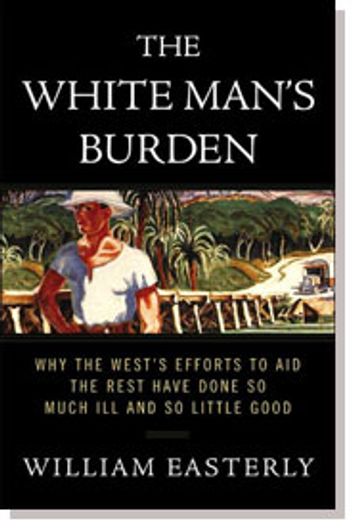
Last year, celebrity economist and United Nations special advisor Jeffrey D. Sachs published his opus, “The End of Poverty: Economic Possibilities for Our Time,” to much fanfare. Bono even (or not surprisingly) wrote the introduction. In the book, Sachs unveiled his crusading vision of how increased aid to poor countries could lift their most desperate citizens out of what he called a “poverty trap.” He advocated for a flood of funds from the West to transform beleaguered nations into functional societies. Yet, unlike so many tracts, Sachs’ book wasn’t merely a proposal, but a blueprint of grand actions currently in effect; Sachs is the director of the United Nations Millennium Project, an effort to eradicate poverty by 2015. According to Sachs, it will take very little money to accomplish this. The world’s poor simply need the will of the world’s rich.
Continue Reading CloseLaguna biatch
How a real-life mean girl has become TV's most improbable teen role model.
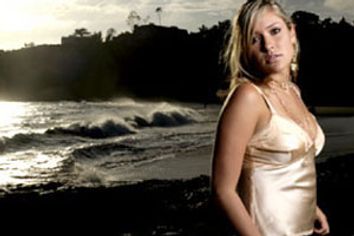
Last month, Kristin Cavalleri, the star of MTV’s pseudo reality show “Laguna Beach,” scored a visit to “Jimmy Kimmel Live,” an Us Weekly fashion spread and, most significantly, the cover of Seventeen magazine. (She’s even rumored to be dating pop star Aaron Carter.) Reality show stars have made great strides (Elizabeth Hasselbeck) and suffered dramatic falls (Richard Hatch), yet few have broken out into this level of glossy, real-life fame. Kristin is sort of plainly California pretty with perfectly layered blond hair, clear skin, good makeup and a penchant for making adorably expressive faces, as well as obnoxious ones. She’s curvy and short in the way high school boys prefer, and unsurprisingly, they worship her.
Continue Reading CloseConversations with mass murderers
In "Machete Season," 10 Hutu men recall how they enjoyed slaughtering their neighbors with machetes and clubs -- and six years after the Rwanda genocide, feel no guilt.
The 1994 Rwandan genocide was ignored by most of the world as it raged on. But in years since, the horrific event that claimed 800,000 deaths has garnered worldwide attention, thanks to numerous books and documentaries, and even a Hollywood film. Philip Gourevitch’s masterly “We Wish to Inform You That Tomorrow We Will Be Killed With Our Families,” based on his dispatches from Rwanda for the New Yorker, became an award-winning bestseller. Romeo Dallaire, the United Nations commander stationed in Rwanda at the time, recently participated in a documentary based on his own memoir “Shake Hands With the Devil.” And last year, the tragedy of the slaughter was brought to the big screen in the surprisingly good “Hotel Rwanda,” a film starring Don Cheadle that managed to grab three Oscar nominations.
Continue Reading CloseI married a bin Laden
Osama's former sister-in-law tells all: Secret Saudi lesbian trysts, a husband who ordered her to have abortions, and the magical power of the name bin Laden within the Saudi luxury class.
“Inside the Kingdom,” Carmen Bin Ladin’s new memoir about the bin Laden clan, contains only a few passages about Osama bin Laden, the world’s most feared terrorist and the author’s brother-in-law. (Carmen’s husband, Yeslam, is Osama’s half-brother; their father, Sheikh Mohamed, founder of the amazingly powerful Bin Laden Organization, had 22 wives. Western transliterations of Arabic names vary and “in accordance with convention,” bin Laden is used when referring to the family and Bin Ladin when referring to Carmen and Yeslam. To confuse matters further, the family company is known as the Saudi Binladin Group.)
Continue Reading CloseSex and drugs in hell
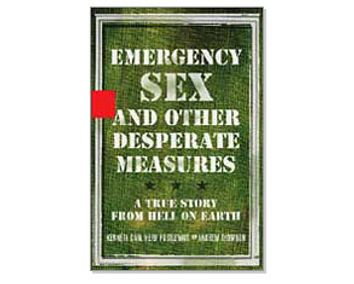
The authors of "Emergency Sex and Other Desperate Measures" talk about keeping body and soul together in the killing fields of Cambodia, Somalia and Haiti.J
It’s 1993, in Cambodia, and 300 United Nations civilian peacekeepers, journalists and diplomats are having a rooftop party. The young international crowd includes three U.N. workers: Kenneth Cain, a 25-year-old Harvard Law grad; Heidi Postlewait, a 30-year-old social worker who’s just left her marriage in New York; and Andrew Thomson, a doctor from New Zealand who has lived in Cambodia for some time. It’s not long until the much-heralded free elections, the event that’s drawn all three of these aid workers together. But the Khmer Rouge still terrorizes Cambodia, and the optimistic, wide-eyed U.N. workers who volunteered to bring peace know that they’re enjoying what might be one last good time. There’s lots of drinking, impressive dancing, romantic tension, the possibility of falling into strange beds by morning.
Continue Reading ClosePage 1 of 23 in Suzy Hansen