
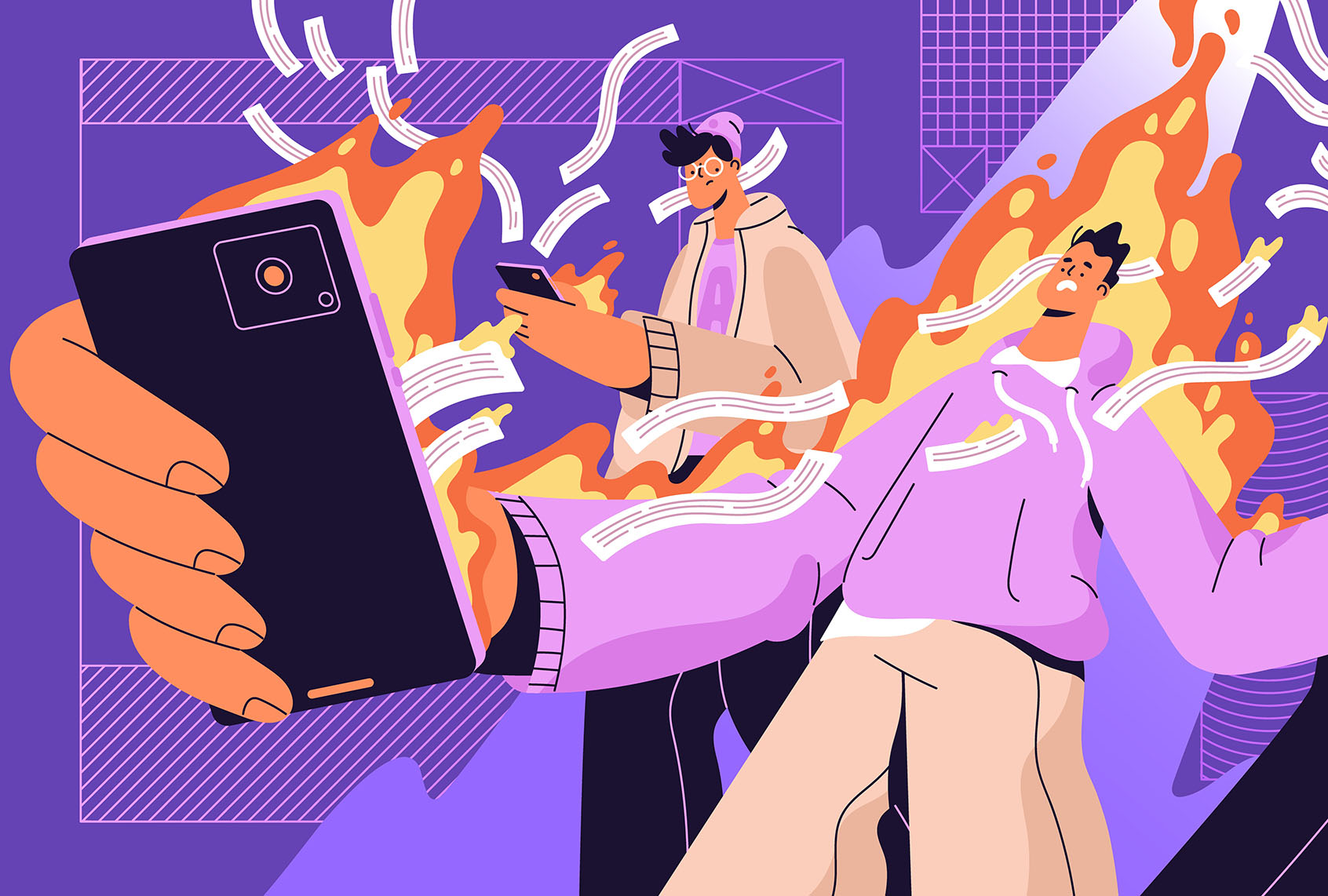

If you’re here, you’re a junkie.
I know that’s hard to hear, but the first step toward kicking any habit is admitting it. Almost anything that lights up the dopamine receptors in your brain can become addictive. And there’s no denying that you’re hooked on the steady drip of outrage and incredulousness that marks the second term of President Donald Trump.
If you’re anything like me, and – as we’ve established, you are – shortly after you wake up, you find yourself reading the latest news from another day of the bigoted and boorish Trump administration.
The headlines, coupled with what we journalists call a “hero image” of our frequently smirking president, dole out a little hit of righteous anger. It feels good to let the outrage build as you run through a litany of transgressions against the Constitution and good taste. They’re carrying out extrajudicial killings in the Caribbean. They’re sharing outright white nationalist memes from official government accounts. They’re slashing the federal government to the bone with the go-ahead of the Supreme Court. But that rush will inevitably fade, a revelation coming on like dope sickness: There’s almost nothing you can do about it.
While it won’t kill you like some other vices, trying to quit this spiritually corrosive habit cold turkey is inadvisable. Start by trying to filter out the truly harmful stuff: stepped-on outrage bait from less-reputable outlets, freebased engagement farming from bots pretending to be American citizens, gas-station pill politics from flyover state Republicans with names like Cornstarch van Pelt. The strongest urges for quick fixes will die down within a few days, leaving only the desire for sharp analysis and commentary (*ahem*) and a need to know what’s going on around you.
That leads us to the proverbial toothpick for recovering pack-a-day newshounds, the substitute ritual that makes sure we don’t go back. Your city’s newspapers, alt-weeklies and TV stations could use your eyeballs. The U.S. has lost nearly 3,500 newspapers and 270,000 journalism jobs in the last two decades, per a Northwestern University report. Over 130 of those closures have come in the last year. The alt-weeklies and locals that are still surviving have learned to live with less, hyper-focusing their diminished staff on news their readers need and want.
A scan of your local news may still spike your cortisol, but at least it’s far more actionable than your “For You” page, where a host of accounts that may not even belong to real people compete for your outrage. The local daily will still hit you with a host of problems and outrages on a smaller scale – “everything’s fine” has never once been headline news – but at least some of those are problems you can do something about.
We need your help to stay independent
The rise of social media has twisted the word “engagement” into new, previously unimaginable forms. When some blue-checked crackpot barges onto your phone to say the 19th Amendment should be repealed, it feels good to yell back at them. But that action is hollow and exacerbates the problem. The algorithms will see the reaction and feed you more of the same. They’re built to keep you on the app and out of the real world, where you might actually point your anger toward something worthwhile.
My city might be unable to pay its bills, but local officials have easy-to-find phone numbers and someone on the other end whose job it is to hear me out. Your town has meetings you can attend in person, where local cranks will help explain the agenda to you. You can look the people who help make the important decisions in the eye and tell them where they’re going wrong. It’s possible to be an engaged citizen without providing engagement for the worst companies on Earth. A developer is probably trying to get away with something within five miles of your home right now. Go out, meet like-minded people, cause headaches for your local officials. It’s your right.
Start your day with essential news from Salon.
Sign up for our free morning newsletter, Crash Course.
Anyone who has spent time organizing locally knows that it can be disappointing. Hundreds of people can get loud over an industrial corridor being added alongside a neighborhood or the sale of public goods to private companies. Sometimes even the mob can’t push an elected official away from the decision they’d already made.
Still, you meet the people working toward the same goals as you. Real folks, not content creators monetizing your phone addiction. And even if you can’t make the meetings, you’ll come to know your local paper’s masthead. Who can you trust and who’s a hack? Who does important work and who cashes a check? Who can you turn to when you need to understand something complex?
It might not change anything on a global scale, but it’s better than sitting and stewing before a glowing screen, chasing the dragon of a solid dunk on a stranger. That stuff will kill you.
Read more
about this topic
