
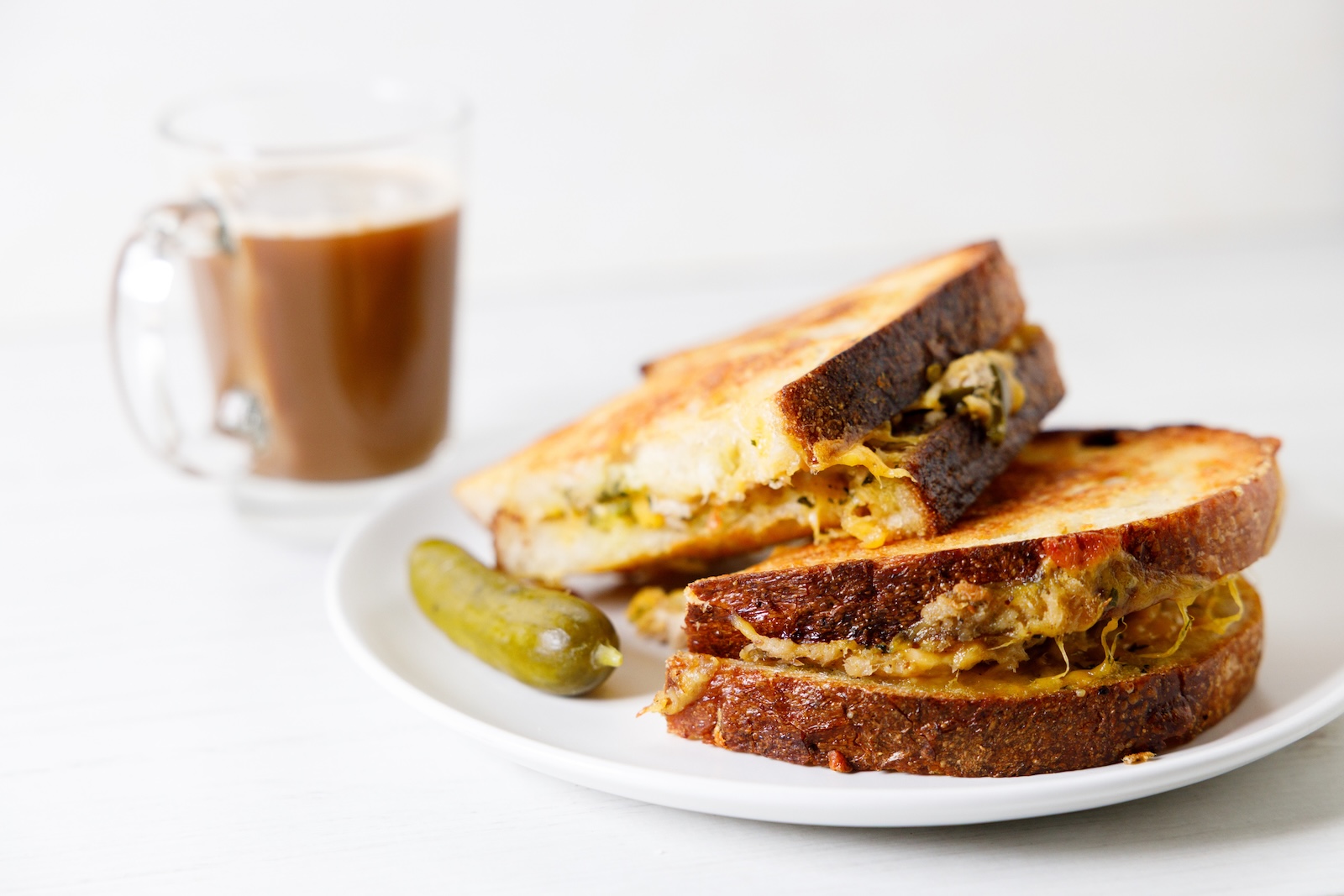

I have this diner meal that calls to me every few months, and when it does, I essentially stop functioning like a normal adult until I’ve tracked down some facsimile of the thing: a tuna melt on rye, a pickle spear with that briny snap, a heap of home fries glossed with diner grease, and the holy trinity of beverages — bad coffee, orange juice and a glass of ice water sweating through its beaded plastic cup.
It’s also a meal I’d never dream of ordering in front of someone I don’t know particularly well. People have opinions: about the supposed blasphemy of mixing dairy and fish; about the moral character of diner coffee; about how many drinks a person can reasonably justify at a single sitting (for me, it is three, and I’ve stopped explaining myself).
What’s funny is that if you tell someone you’re honing the perfect sourdough or carbonara or cacio e pepe or dumpling fold, they’ll clutch their pearls in shared devotion. Confess that you’re perfecting the tuna melt, however, and — unless you’re in the presence of a fellow believer — you get the polite nod, the quick pivot, the subtle retreat reserved for the harmlessly obsessed.
But, I reason, if tinned fish has enjoyed its ascension into hot-girl lore, why shouldn’t the humble melt have its own renaissance? The diner version exists in that liminal space between guilty pleasure and platonic ideal: the mayo-heavy tuna salad with its flecks of celery, the slice of American (or the vaguely elastic cheddar), the whole thing griddled until it surrenders. It’s comforting precisely because it expects so little of you.
Want more great food writing and recipes? Sign up for Salon’s free food newsletter, The Bite.
What I want now isn’t to reinvent it so much as give it permission to evolve. Not a wholly new sandwich — that would defeat the purpose — but a melt that feels attuned to the way many of us cook these days: a little spicier, a little funkier, a little more acidic. A sandwich with some swagger. A melt that knows it deserves its moment.
Here’s how to make one at home:
The tuna salad
The melt lives or dies by its tuna salad. You can futz with the bread, you can gild the cheese, but if the core is bland or watery or vaguely funereal, the whole enterprise collapses. (It’s a bit like that line you hear whispered in gym locker rooms — you can’t outrun a bad diet — except here it’s you can’t out-griddle a bad tuna salad.) The filling has to carry its weight.
My rules are simple. Start with good mayo, and use just enough to bind; we’re not spackling a wall. Then: good tuna. It doesn’t need to be fresh or precious — some of the best versions come from tins with quietly excellent provenance. From there, follow a basic formula: mayo plus spice, acid and funk. That’s the holy quartet. It can look like Calabrian chili mayo with caramelized shallots and lemon zest; or Kewpie with a splash of rice vinegar, red pepper flakes and a smudge of miso; or a gochujang-mayo hybrid brightened with lime.
And don’t be shy about texture. The best salads mix the cooked — a little caramelized onion, roasted red pepper, maybe a chopped artichoke heart — with the crisp rawness of shaved fennel, scallions or celery. Finally, season with generosity: salt and pepper, of course, but also the quiet heroes of the American pantry, garlic powder and onion powder. They provide the warm hum underneath everything, the thing your palate may not name but immediately trusts.
The cheese
Then there’s the cheese, the quiet diplomat that bridges the tuna with the toast. Cheddar is the classic choice, of course — bright, familiar, endlessly obliging — but there’s a whole constellation of cheeses that melt with equal charisma. Fontina goes all satin and swoon; Havarti brings a gentle, buttery slide; provolone adds a faintly smoky depth; Muenster gives you stretch and softness; asiago offers a nutty edge that makes the whole thing feel a touch more grown-up.
Still, as with mayo, restraint is an underrated virtue. You want enough cheese to create that molten seal, but not so much that it overwhelms the tuna.
The bread
And then, of course, the bread — the stage upon which all this drama plays out. It needs to hold its own against a moist, lively interior and survive a hard sear, which means basic white isn’t going to cut it. Rye is the old-school classic, its slight tang and caraway whisper built for diner lore. Sourdough is nearly always a perfect choice, sturdy but gracious. Even griddled Texas toast, with its squared-off heft, can be unexpectedly perfect.
I like to treat the exterior as its own small canvas: a swipe of mayo for crispness, a drizzle of olive oil for flavor, the combination giving you that golden, freckled crust that shatters just a little when you bite in. My panini press — a hulking little beast that has formally replaced my air fryer because I love a griddled sandwich that much — handles the job beautifully. But a very hot cast-iron skillet with a bit of weight on top (a bacon press, a smaller heavy pan, whatever’s around) will deliver the same satisfying, restaurant-adjacent sizzle.
Lately, this is the tuna melt I can’t stop making, the one that feels like it understands me on a cellular level. It’s a little fussier than the diner original — with a bright, spicy tuna salad made with Calabrian chili mayo and caramelized shallots, plus gooey Fontina — but the payoff is pure, molten bliss.
Ingredients
- 1/2 can (about 3–4 oz) good-quality tuna, drained
- 1 tbsp mayonnaise
- 1 tsp Calabrian chili paste (adjust to taste)
- 1 tbsp caramelized shallots, cooled (I make these in a big batch at the beginning of the week and use them across multiple recipes, including this one).
- 1 tsp lemon zest
- 1 tbsp chopped artichoke heart
- Pinch of dried oregano
- 2 slices sourdough bread
- 1 tsp mayonnaise + 1 tsp olive oil (for brushing)
- 2–3 thin slices Fontina cheese
- Optional: pickle spear, for serving
Directions
- Make the tuna salad: In a small bowl, combine the tuna, mayonnaise, Calabrian chili paste, caramelized shallots, lemon zest, artichoke and oregano. Mix until well combined. Taste and adjust seasoning if needed.
- Prepare the bread: Brush one side of each slice of sourdough with a mix of mayo and olive oil.
- Assemble the sandwich: Spread the tuna salad evenly on the unbrushed side of one slice of bread. Top with Fontina slices, then the second slice of bread, brushed side up.
- Cook: Heat a panini press or a skillet over medium heat. Grill the sandwich until the bread is golden and crispy and the cheese has melted, about 4–5 minutes per side in a skillet (or 6–8 minutes total in a press). Press gently with a spatula or weight if using a skillet.
- Serve: Cut in half and serve immediately, optionally with a pickle spear.
Read more
recipes
