
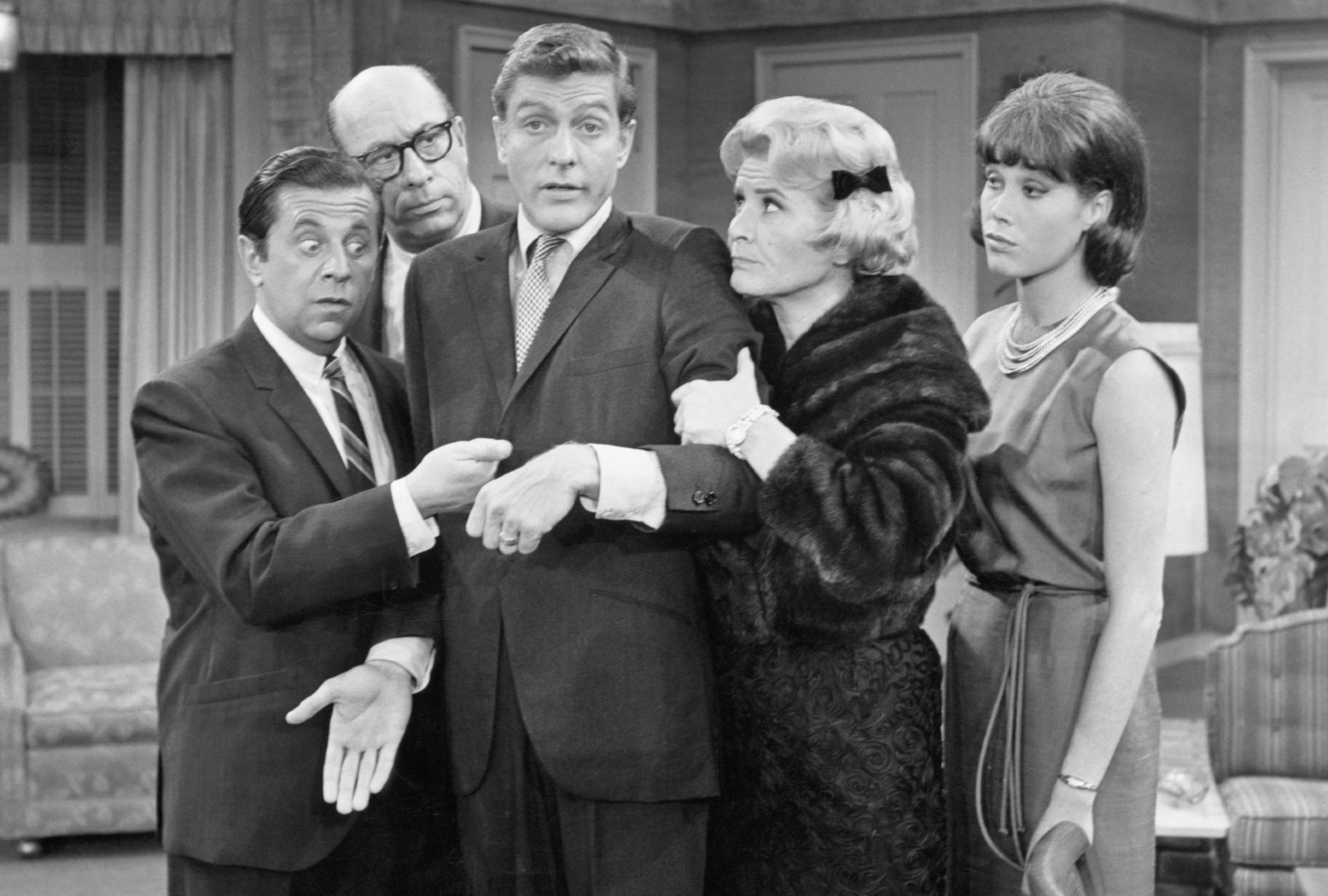

For a moment, imagine a world in which “The Dick Van Dyke Show” only existed for one season. How would popular culture be different?
Well, first of all, the version of “Mary Poppins” that babysat millions of us wouldn’t exist. The film’s producers certainly would have found someone else to play Bert the chimney sweep. But would his performance match Van Dyke’s soaring merriment and nimble footwork, those grace notes cementing the film’s status as an intergenerational classic? Doubtful.
Without “The Dick Van Dyke Show,” Sheldon Cooper and Leonard Hofstadter of “The Big Bang Theory” would have different monikers, since they were named after Van Dyke’s executive producer Sheldon Leonard. Paul Reiser might not have been inspired to make “Mad About You.” Neither Conan O’Brien nor Jim Carrey would have deployed their rubbery physical comedy as impressively as they do.
We would also lose one of TV’s most unforgettable opening sequences highlighted by Van Dyke’s Rob Petrie tumbling over an ottoman, then springing to his feet with a grin. That famous title scene began appearing in the second season, whereas the first merely displayed the cast’s photos.
“As soon as I saw Dick Van Dyke tripping over the ottoman and getting up with a smile on his face, I was hooked, because I felt like that’s what Dick is here to say,” Carrey observes in PBS’ “American Masters – Starring Dick Van Dyke.” “It’s not a pratfall, it’s a metaphor. If you tumble, you’ve got to pop right up and laugh at yourself, because you’re ridiculous. We’re all ridiculous, and life is an absurd obstacle course of unforeseen ottomans.”
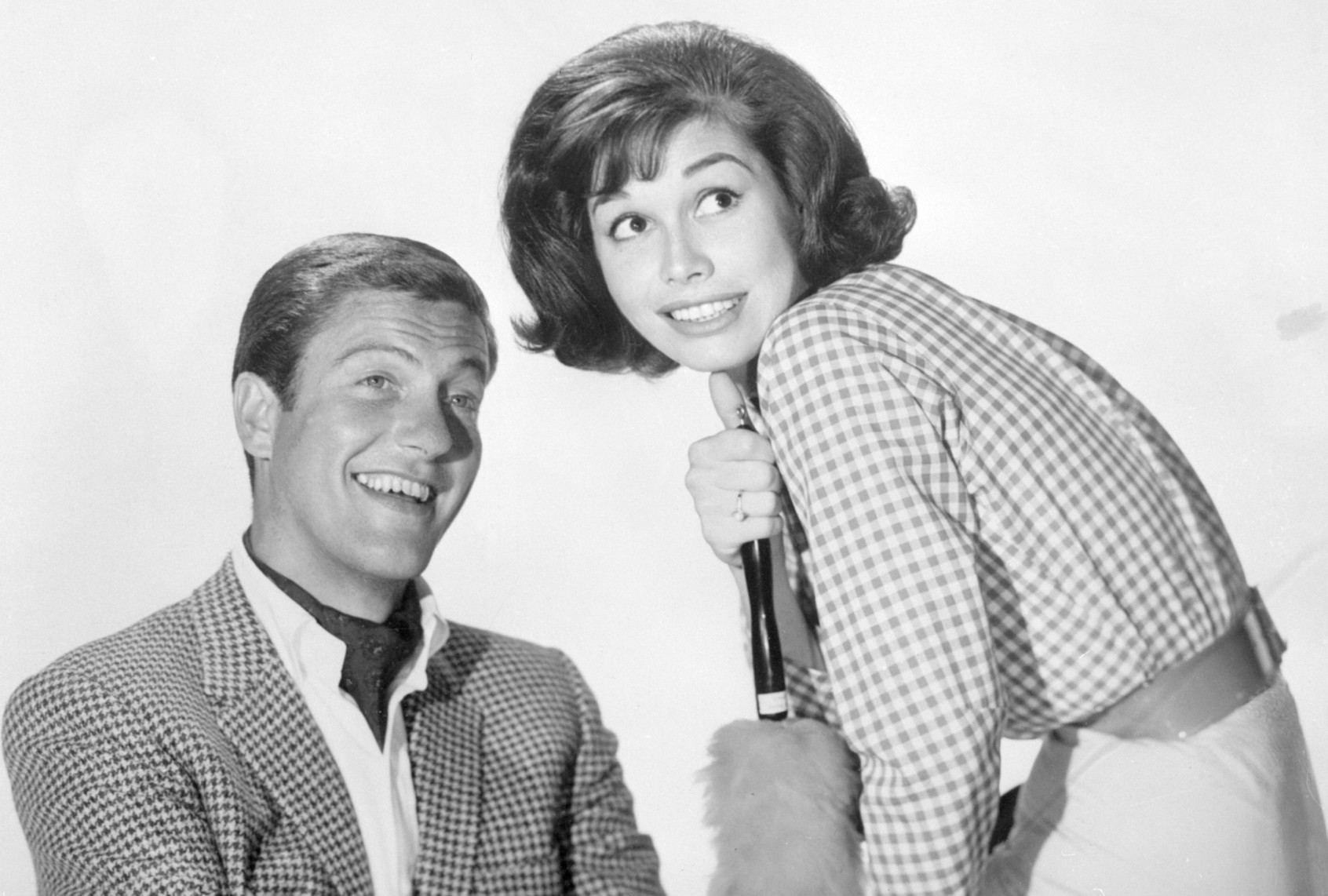
(Bettman/Contributor/Getty Images) Dick Van Dyke and Mary Tyler Moore in a promotional image for “The Dick Van Dyke Show”
Van Dyke turns 100 on Saturday, Dec. 13, and has already marked the occasion with the November release of his sixth book, and his second one on longevity, titled “100 Rules for Living to 100: An Optimist’s Guide to a Happy Life.”
The actor himself is inspirationally durable. So is “The Dick Van Dyke Show,” which ran between 1961 and 1966 but has graced our televisions ever since, whether in syndication or via video on demand. The late Carl Reiner, who created the series and based Van Dyke’s TV writer on himself, called his star the single most talented man in situation comedy.
But as “Starring Dick Van Dyke” establishes, the agile song-and-dance man with a perpetual twinkle in his eye is much more than that. He’s one of modern television’s foundational influences.
The two-hour documentary includes interviews with Carrey and O’Brien, as well as “Only Murders in the Building” stars Steve Martin and Martin Short, a duo deeply influenced by Van Dyke’s blend of eloquence and acrobatics. But Van Dyke also created a pattern for fellow interviewee Ted Danson to follow. Watch a few old episodes of “Cheers,” and you’ll see shades of Rob Petrie’s lissome movement in Danson’s smooth-talking Sam Malone.
Want more from culture than just the latest trend? The Swell highlights art made to last.
Sign up here
For ardent fans and casual appreciators alike, “Starring Dick Van Dyke” is a must-see. However, it doesn’t fully investigate the show’s lasting impact.
In fairness, the “American Masters” installment is a tribute, not a term paper — and it’s a splendid homage at that. But understanding how the show’s deft, crisp writing and Van Dyke’s incomparable chemistry with his co-star Mary Tyler Moore serve as a blueprint for the modern family sitcom (including “Modern Family”) requires going back to the source.
Fortunately, “The Dick Van Dyke Show” is always available to watch somewhere, because it’s one of the rare midcentury comedies that still holds up more than six decades later. If you doubt that, check out some of the show’s contemporaries, including other Sheldon Leonard productions like “The Andy Griffith Show” and “The Danny Thomas Show.” It doesn’t take much to notice how distinct Van Dyke’s Rob Petrie is from other post-war TV dads.
That’s why his character’s DNA shows up in a range of TV dads kids dreamed were their fathers, including Michael Gross’ Steven Keaton on “Family Ties,” Alan Thicke’s Jason Seaver, the patriarch on “Growing Pains,” and Bob Saget’s Danny Tanner on “Full House.”
We need your help to stay independent
Simply put, Rob is a great guy. He balances his career as a TV writer with being a devoted husband to Moore’s Laura Petrie and a caring, involved parent to their son Ritchie (played by Larry Mathews, also featured in the documentary). But Rob was more than just a good father. Van Dyke and Moore’s portrayal of Rob and Laura as an overtly loving couple was revolutionary in its time. In an archival interview featured in “Starring Dick Van Dyke,” Reiner says he envisioned Rob and Laura’s marriage as “two against the world, versus two against each other.”
That matters because, unlike other half-hours that cast famous performers as family men while leaving their TV wives nothing to do (that is, if the men aren’t widowers to begin with), “The Dick Van Dyke Show” placed Rob and Laura on equal footing and made Moore a star in her own right.
Not only did Moore go on to headline her own sitcom – a direct result of Van Dyke reteaming with her for a 1969 prime-time special, “Dick Van Dyke and the Other Woman” – she formed MTM Enterprises with Grant Tinker, her husband at the time, who eventually became a broadcast industry giant.
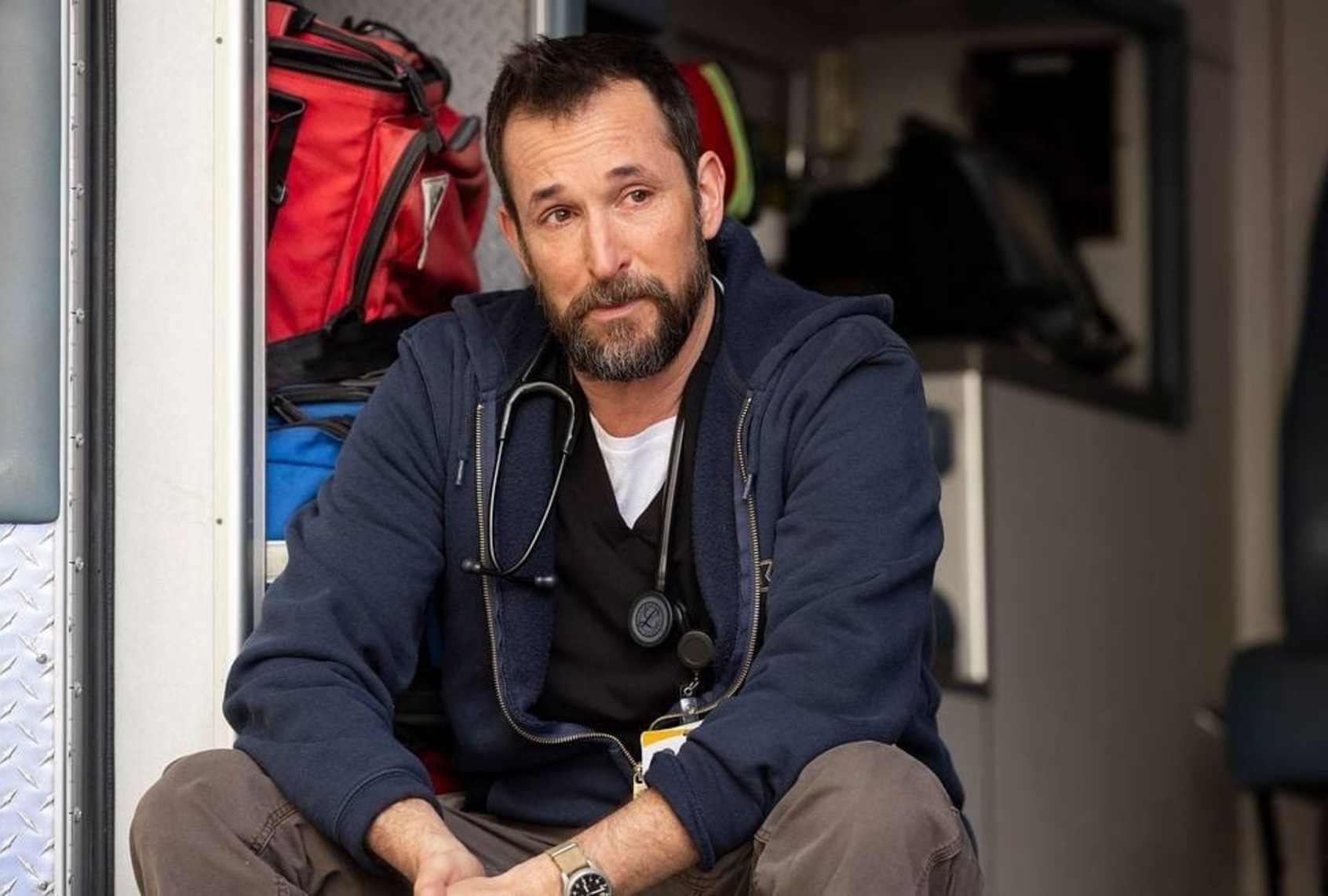
(John Johnson/HBO Max) Noah Wyle in “The Pitt”
Without MTM, we may never have seen “The Bob Newhart Show,” “Newhart,” “Lou Grant,” or “WKRP in Cincinnati.” Furthermore, if MTM had never produced shows like “Hill Street Blues” and “St. Elsewhere,” our recent Golden Age of Television would have manifested very differently, if it did at all.
By itself, “St. Elsewhere” is the spiritual predecessor to “ER,” “Grey’s Anatomy,” and a long line of medical dramas that leads to “The Pitt.” “St. Elsewhere” also gave “Homicide: Life on the Street” showrunner and “Oz” creator Tom Fontana his first TV writing job. Similarly, “Hill Street Blues” is the first staff writing credit on “Law & Order” mogul Dick Wolf’s resume.
Whether directly or in a roundabout way, it all circles back to “The Dick Van Dyke Show,” which was nearly a single-season wonder. It’s true – as “Starring Dick Van Dyke” explains at the top of its two hours, that speculative scenario launching all this almost became reality.
At the end of its freshman run, “The Dick Van Dyke Show” ranked 80th out of 117 broadcast shows in the ratings. Its sponsor, Procter & Gamble, withdrew its support, and CBS canceled it. Had Leonard, its executive producer, failed to persuade Procter & Gamble to resume its sponsorship alongside Kent Cigarettes, the show that raised multiple generations of TV writers, performers and smitten hams might have been lost to the static of history.
As Short says in “Starring Dick Van Dyke,” being in a hit TV show is a fluke. “There’s no guarantees. It’s just when the stars line up,” he said. “That’s why I wish he’d done the show longer.” We’ll have to settle for five close-to-perfect seasons we can appreciate forever, whether in one form or many others.
“American Masters – Starring Dick Van Dyke” premieres Friday, Dec. 12 at 9 p.m. on PBS member stations and will stream for free at pbs.org/americanmasters and the PBS App. “The Dick Van Dyke Show” is available to stream on Peacock.
Read more
about TV shows made to last
