

I WILL SUCCEED BECAUSE I AM INSANE. I see the affirmation online, painted on mugs, dishes and magnets. A writer friend tells me she keeps it pinned above her to-do list. “I think of the need to make things as a kind of affliction,” she says. “The odds aren’t great, the failure and rejection are abundant, and the vulnerability required is extensive. Sometimes I wonder if someone truly sane would choose to face all of that as a daily practice.”
The sentiment feels entirely at home in “I Love LA,” Rachel Sennott’s HBO Max comedy about a group of college friends trying to break into L.A.’s creative scene. Episode 7, “Divas Down,” opens with Sennott’s character, junior talent manager Maia Simsbury, giving herself a bathroom-mirror pep talk. (Welcome back, “Insecure.”) “You gotta hustle until your idols become your rivals,” she says. “Pain is just weakness leaving the body.”
Moments later, Maia stabs herself in the foot while slicing open a stack of PR packages for Tallulah (Odessa A’zion), her friend-turned-client. They’re mid-argument over their Ritz Crackers ad campaign (“Ritz was a flop, Maia”) when Tallulah coolly suggests they “do due diligence” on her next project. “I do do a lot of fu*king diligence,” Maia fires back, just before the steak knife slips and drops squarely into her ballet flat. She can’t miss her work meeting — the one her boss, Alyssa (Leighton Meester), is already trying to hijack — so she does what any self-respecting twenty-something with a hemorrhaging foot might do: she yanks out the knife, climbs into Tallulah’s girlfriend’s truck, and calls her friends to drop off clean clothes for her meeting.
Maia, a Zillennial on the cusp of Millennial and Gen Z sensibilities, is attuned to girlbossery’s pitfalls. She has seen this typically white, straight, cis and wealthy figure rise as an aspirational ideal and then fall for upholding the very systems she claimed to challenge.
At Good Samaritan, Maia limps into the ER, cons her way into priority triage, gets stitched up, and limps back out against the doctor’s orders. “You absolutely cannot walk on that injury,” he warns. “You could lose the toe.” “Fu*k the toe,” Maia says. Then she slow-motion struts down an L.A. sidewalk in heels, barges into the meeting, props her bloody, bandaged foot on the table, and somehow still closes the deal with the celebrity stylist. “Your little nesting doll is insane,” the stylist tells Alyssa. “And I love it.”
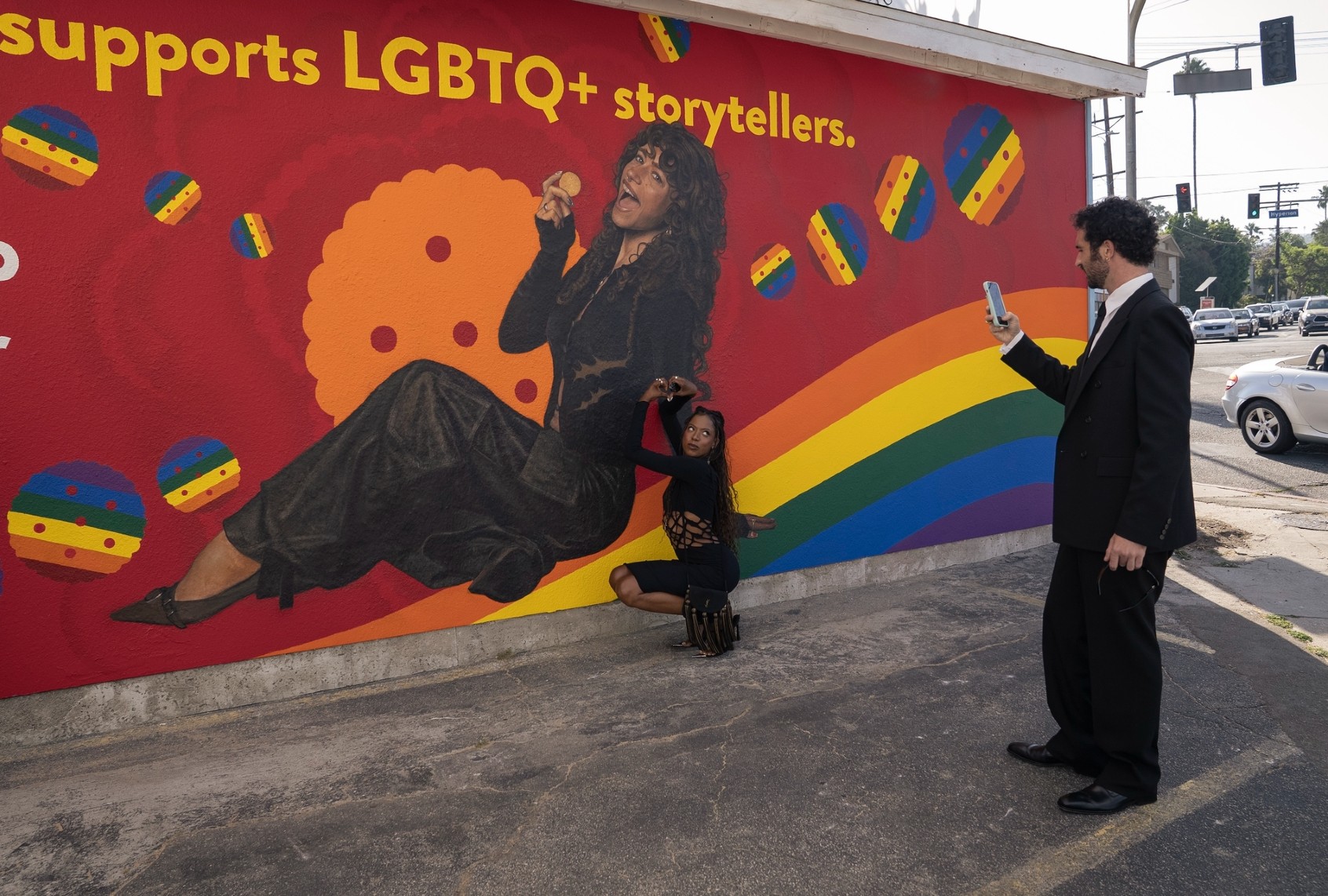
(Kenny Laubbacher/HBO) True Whitaker and Jordan Firstman in “I Love LA”
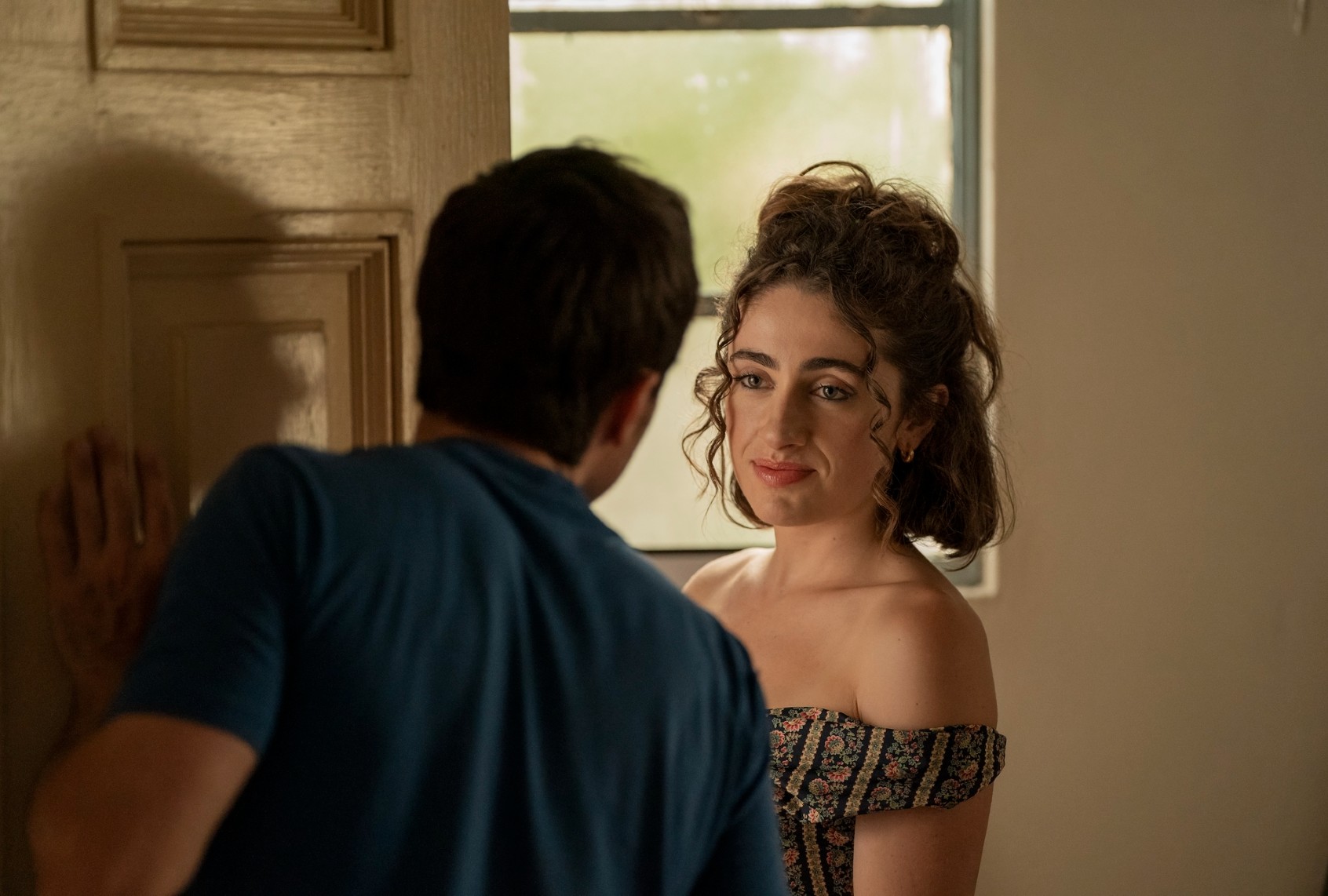
At first glance, Maia seems like a girlboss-in-training, a “nesting doll” of Alyssa, the archetypal Millennial girlboss. In the pilot, she is insecure and self-effacing; when a car almost runs her over, she apologizes to the driver. By Episode 7, she has settled into a new confidence, mimicking her mentor down to her wardrobe. (“Divas Down” even stages a visual gag of Maia and Alyssa arriving at the office in the same top.)
Maia, a Zillennial on the cusp of Millennial and Gen Z sensibilities, is attuned to girlbossery’s pitfalls. She has seen this typically white, straight, cis and wealthy figure rise as an aspirational ideal and then fall for upholding the very systems she claimed to challenge. “I Love LA” never lets Maia fully inhabit that archetype, nor does it have her reject hustle culture. Her ambition is afflictive, more intense than that of her peers, but the alternative — Gen Z’s turn toward work-life balance, “quiet quitting,” the so-called “lazy girl job” — falls instead to her normie teacher boyfriend, Dylan (Josh Hutcherson). “We work to live. They live to work,” he says of Alyssa and her kind. “It’s pathetic.”
Want more from culture than just the latest trend? The Swell highlights art made to last.
Sign up here
Who, then, is the Zillennial career woman in a post-Girlboss era? “I Love LA” doesn’t offer a clear answer. “There are two types of people,” Maia’s former boss tells her in Episode 6, “Game Night.” “Those who step into the hurricane, and those who run the other way. Which are you?” Maia replies, “I totally want to be in the hurricane. I just don’t want, like, to get wet.” More than hesitation or naïveté, the line suggests possibility: Maia is figuring out a new way to “make it,” and building a career on her own terms.
By the end of Episode 7, Maia quits her job at Alyssa180. “You are so impatient,” Alyssa scolds her. “And ungrateful. You’re in such a hurry for more, you don’t even realize how much you have in front of you.” Alyssa may have a point, but her critique is also tinged with the fear of being outpaced by her protégé. Is this the out-of-touch old guard asserting authority, or a young person’s reckless, impulsive mistake? “I Love LA” doesn’t adjudicate. Maia is following her instincts, and the uncertainty of where they’ll take her is partly what makes this show so compelling.
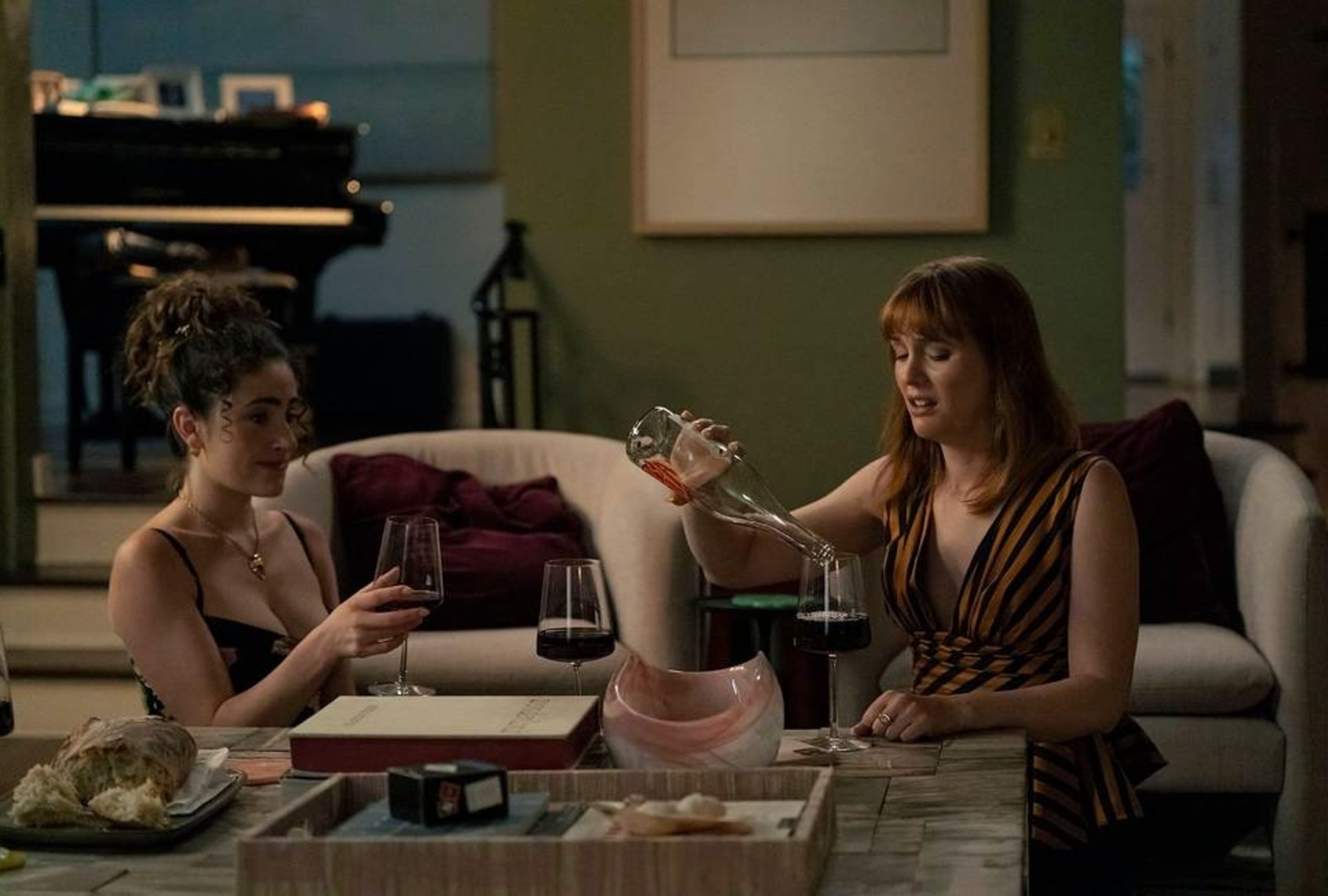
(Kenny Laubbacher/HBO) Rachel Sennott and Leighton Meester in “I Love LA”
At a screening of “I Love LA” last month at the NYU Cantor Film Center, Sennott, herself a young creator whose career was propelled in part by her internet output, addressed an audience of students. “Be delusional,” she told them. “You need to, in your mind, be like: I’m it. Because you are. Every person here has an interesting, valuable perspective. Hollywood wants to make stuff for young people — then they hire a 55-year-old who’s making a series and is like, ‘Slay, mama cu*t!’ Hire them,” she said, pointing at the students. “They’re right here. They’ll make that sound normal!”
Sennott’s advice reflects the same audacious energy she instills in Maia. Perhaps it’s a generational manifesto: to succeed in a system built for someone else, you have to be audacious, relentless and insane. Whether Maia or Sennott will get there is anyone’s guess. But there’s a thrill in watching them leap.
Read more
about girlbossery
