

On Nov. 26, in a quiet northern suburb of Hong Kong, an aggressive fire broke out in the middle of the day. The blaze was unusual in its intensity and duration, consuming seven of eight high rise towers in a residential complex. Despite the quick response of well-equipped fire trucks, the blaze spread quickly and burned for more than 43 hours. Although the death toll is still not final, at least 160 people suffered the most horrific fates imaginable, with dozens so charred they may never be identified.
The ferocity of the fire has been blamed on a private contractor’s use of highly-flammable materials including polystyrene foam boards placed over windows and substandard scaffolding netting that failed to meet fire-retardant codes. The buildings were undergoing renovations when the fire hit, and numerous fire alarms also failed to warn.
A tragedy like this gives pause, in part because it should have been prevented. Fire analysts say that more rigorous inspections, including thorough sample testing of materials used on higher floors — and not just of easily accessible ground level floors — would have identified the use of non-code-compliant, cheaper materials before the blaze started.
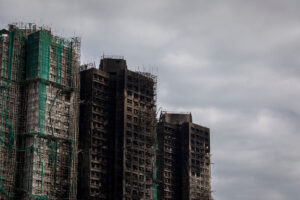
(Alex Chan Tsz Yuk/SOPA Images/LightRocket via Getty Images) Exterior view of the Wang Fuk Court residential estate after one of Hong Kong’s deadliest residential fires broke out and killed at least 160 people on Nov. 26, 2025.
Although the Chinese government will never admit any fault for the inadequate inspections and has instead jailed people for asking, it’s already clear that standard building inspections would have prevented the loss of life. Lapsed and loose inspections, and possible corruption, meant officials did not detect that flammable materials were used where they should not have been or that fire safety systems were not functioning, despite residents alerting officials of these problems at least a year prior to the fire.
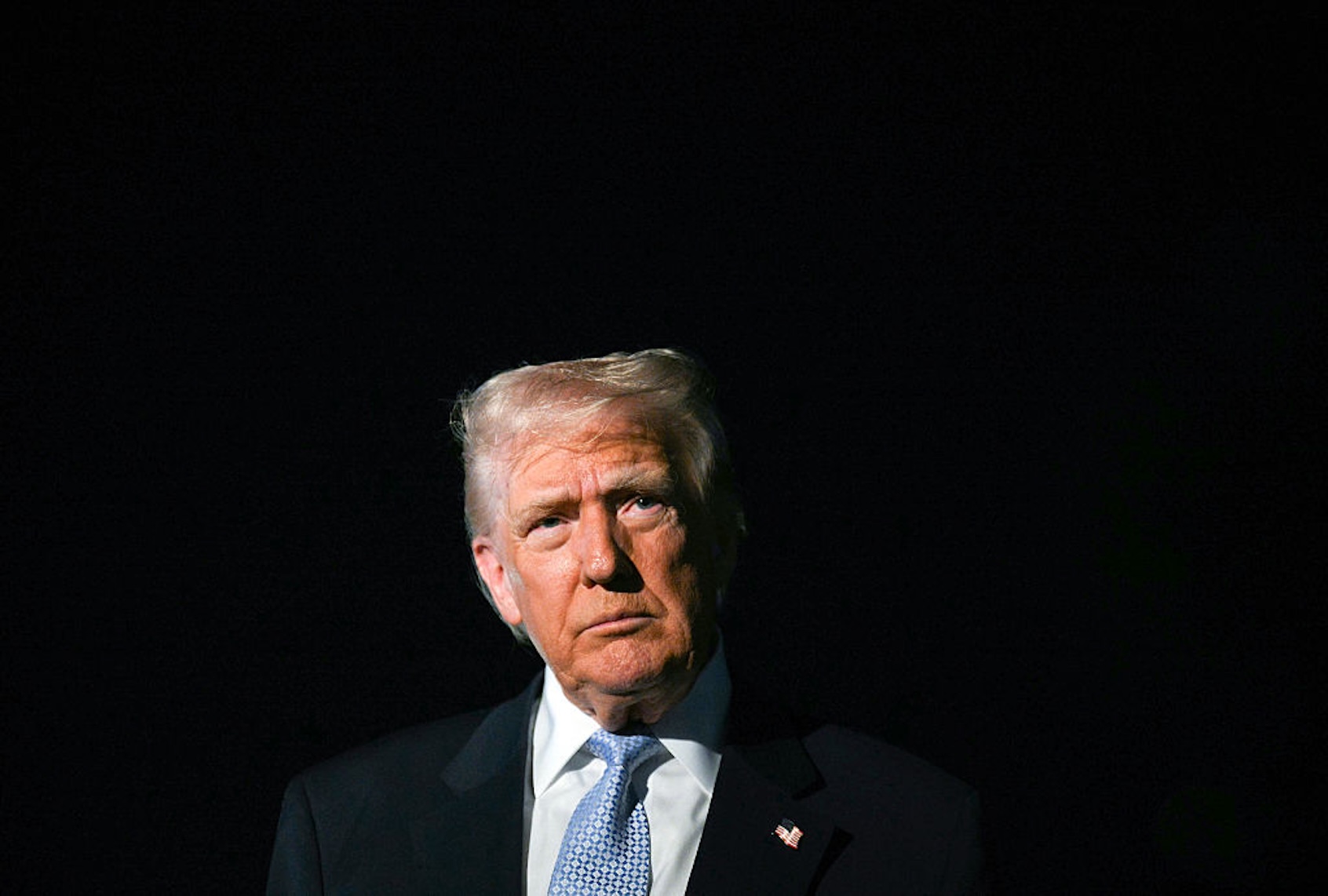
It’s also the kind of tragedy lying in wait in the U.S., ready to strike after Donald Trump‘s all-out war on safety standards and regulations meant to protect the public.
Since his re-election, Trump has rewarded his corporate donors by dismantling costly regulations they dislike. Agencies like the Occupational Safety Health Administration (OSHA), which is heavily involved in fire hazard inspections, now lack the staff needed for effective oversight. Time-honored regulations and safety standards that quietly protected life have been gutted, setting us up for a Hong Kong-style tragedy of our own.
Federal government regulations designed to protect health and lives include, in the broadest sense, workplace, transportation, and food and drug safety, as well as environmental protections. Under Trump 2.0, each of these categories of protection have been gutted outright or are now so attenuated due to funding cuts they barely function.
Each federal agency with regulatory authority — including OSHA, the Food and Drug Administration, the Environmental Protection Agency and the Department of Transportation, among others — has been significantly weakened with reduced investigations into wrongdoing and corruption, and fewer cases for failing to comply with safety and environmental standards. Trump has also imposed across the board budget cuts for regulatory enforcement, including inspector staffing across a wide spectrum of industries.
None of these changes will continue in a vacuum; other than ignoring climate change, which is already wreaking havoc, we won’t know what other unenforced regulation will lead to tragedy until it strikes.
Under Trump’s profits-first-people-last strategy, the EPA has launched the largest deregulatory action in U.S. history. Trump dismantled EPA regulations protecting air, water and soil; relaxed emissions standards for power plants; increased toxic vehicle emissions; weakened water protections; limited scientific research; and rolled back greenhouse gas reporting and soot standards — all to boost industry profits at the expense of citizens who live and work in those communities.
Want more sharp takes on politics? Sign up for our free newsletter, Standing Room Only, written by Amanda Marcotte, now also a weekly show on YouTube or wherever you get your podcasts.
Trump also shuttered 11 OSHA offices in states reporting unusually high workplace fatalities, most of them Republican-controlled. Louisiana, for example, ranks as the sixth most dangerous state for workers. It’s also home to more than 200 chemical plants and refineries dotting an 85-mile stretch of the Mississippi River dubbed “Cancer Alley” because of the high rates of cancer and birth defects linked to petrochemicals.
Former OSHA Director David Michaels said that with these closures, “enormous oil and petrochemical facilities with significant safety and health hazards will be inspected even less frequently than they are now.”
According to Department of Government Efficiency (DOGE), the government will save a paltry $109,346 from the closures.
We need your help to stay independent
If a Hong Kong-type tragedy were to strike, it’s easy to imagine the administration and MAGA media’s response. Trump would likely first block information about it. White House press secretary Karoline Leavitt would call it fake news, and Fox News would simply refuse to report it. Then, after the tragedy dominates mainstream media headlines, the whole administration would pivot to blaming Biden.
But the danger is real — and it is not about politics.
For generations, Americans have lived with barely-there inspections. These have helped contribute to Cancer Alleys, occupational disease, dangerous products and collapsing infrastructure. But now Trump has expelled almost all regulatory watchdogs in service to his corporate donors. Because less regulation means higher profits, corporate America is rewarding Trump handsomely in what amounts to a brazen and public quid pro quo.
In a functioning democracy, this would amount to criminal recklessness. In a rule of law republic, the resulting tragedies, when they strike, would lead to charges of foreseeable homicide.
Read more
about this topic
