
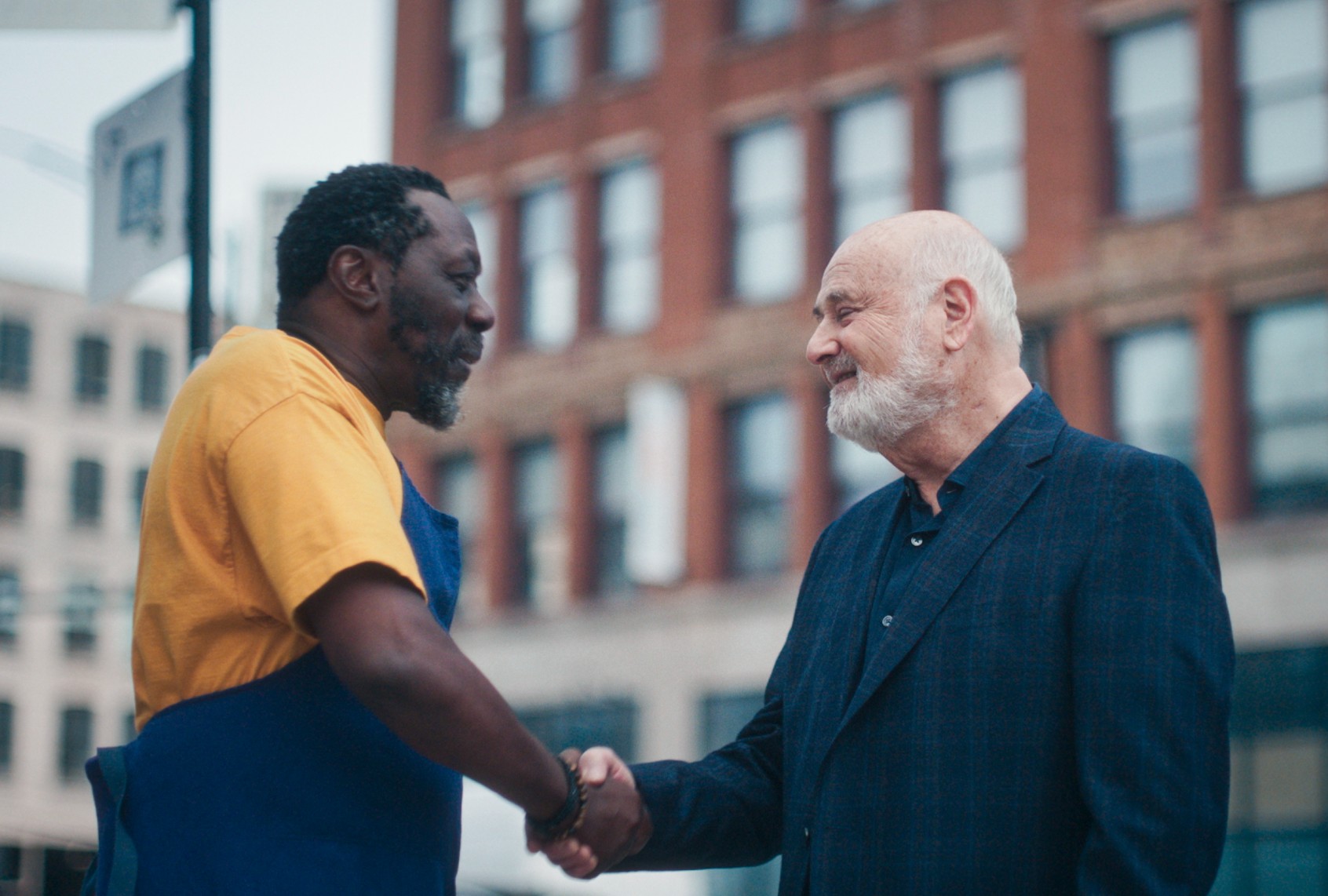

Our initial impression of Albert Schnur, Rob Reiner’s straight-talking restaurant consultant on “The Bear,” is that he seems too good to be true. Albert’s first appearance in the fourth season’s third episode, “Scallop,” positions him as a mentor to Ebraheim (Edwin Lee Gibson), the namesake restaurant’s devoted line cook. Ebra is the only member of the bistro’s family who lacks formal training required for the kind of high-end establishment The Bear aspires to be; he washed out of culinary school and returned to making the Italian beef heroes that defined what the joint once was.
So when Ebra decides to “create opportunity,” as he says, he reaches out to Albert, who sits down and tells him matter-of-factly that if he shadows him for three weeks, Ebra will know his secrets to success. This is precisely what a con man would say to a mark.
This goes against all our instincts about Reiner, the director and actor who died Dec. 14 at the age of 78. His guest star spot on “The Bear” may have been late in a show known for packing a solar system of TV and film luminaries into its episodes, but it stands out even so because of the way Reiner tests what we know or presume to know about him.
An A-lister’s TV guest appearance can serve a variety of roles. When sweeps mattered enough for network executives to goose primetime lineups with miniature events, luring in movie stars to slum it on the small screen was thought to be either a flex or an act of desperation. Some of those very special appearances were designed to crack the fourth wall, as when the star’s very famous love or spouse drops by to play against type. Perhaps the most famous of these was Brad Pitt’s pop-up on “Friends,” as the adult version of a high school classmate who used to hate Rachel Green, played by then-wife Jennifer Aniston.
Reiner was a unique blend of ace entertainer and director, playing to a personality type that comported with who he was when he wasn’t in front of or behind a camera.
That stunt is also one of TV’s grandest examples of why such ploys can backfire. When the star is too big, their appearance overwhelms everything else. (The “Friends” writers likely knew that, which is why the Pittstravaganza happened on one of the show’s traditional Thanksgiving episodes.) And when the star is a legend on the level of Reiner, the contrivance can be even riskier. Most top directors can’t act to save their lives, which is why they tend to appear as themselves and stick out like splinters.
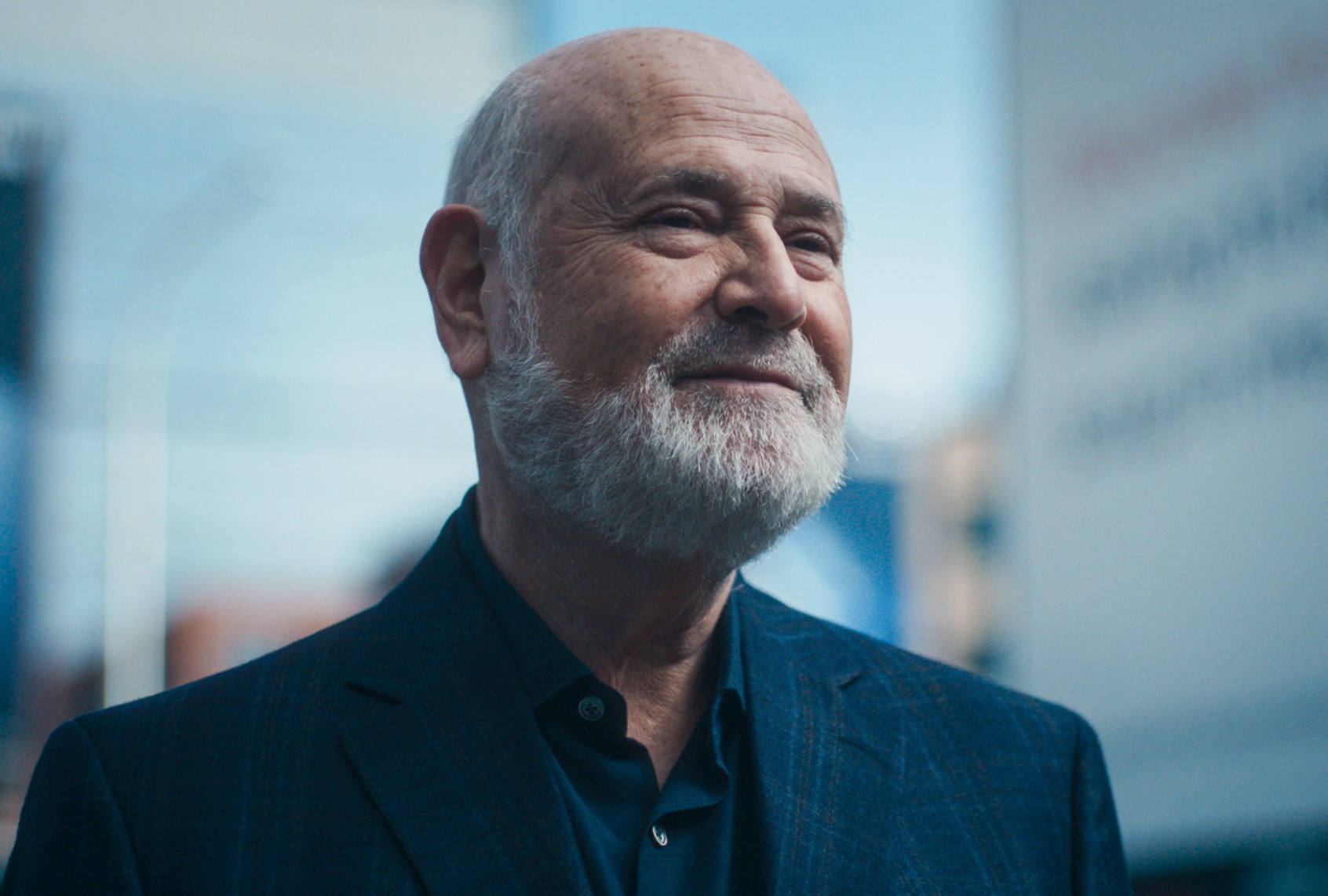
(FX) Rob Reiner as Albert Schnur in “The Bear”
Reiner, though, was a unique blend of ace entertainer and director, playing to a personality type that comported with who he was when he wasn’t in front of or behind a camera. Some of that may have been intrinsic to how he grew up; one can’t imagine being raised by Carl Reiner, one of Hollywood’s comedy demigods, without picking up plenty of lessons concerning the best way to win over the audience without overplaying one’s hand. Having Albert Brooks as a best friend likely molded his style too; both were forerunners of a school of comedy that merged a naturalistic, conversational delivery with an absurdist sensibility.
Whatever the case may be, the director of generationally defining films such as “Stand By Me,” “When Harry Met Sally” and “The Princess Bride,” as well as acclaimed dramas including “Misery” and the Oscar-nominated “A Few Good Men,” was known as a natural sweetheart – a mensch, to invoke the Yiddish endorsement for a good person. There’s a reason that his best-loved films are steeped in nostalgia, romance or, in the case of “The American President,” optimism. Reiner’s career was an unmoving gaze toward and a search for the light in others.
That reputation made him an easy casting choice in movies like 1993’s “Sleepless in Seattle,” where the late Nora Ephron directed him as Jay Mathews, the brazenly honest best friend gently advising Tom Hanks’ widower Sam Baldwin on how to start dating again over beers and steamed clams. “First, you have to be friends. You have to like each other. Then, you neck. This could go on for years . . . The good news is, you split the check.”
“I don’t think I could let a woman pay for dinner,” Sam replies uncertainly.
“Great!” Jay crows. “They’ll throw a parade in your honor. You’ll be Man of the Year in Seattle Magazine.”
We need your help to stay independent
Much later, on “30 Rock,” Reiner poked at his left-leaning politics by playing a fictionalized version of himself as a congressman easily impressed by corporate platitudes that Alec Baldwin’s Jack Donaghy sprays during a committee hearing.
Just as often, he stepped into roles that embodied facets of his closely held values. In “The Good Fight,” where he recurred as the no-nonsense Judge Brickner, Reiner balances his magistrate’s stolid impatience for courtroom grandstanding with an ability to wordlessly express disdain, even agony, in moments when the letter of the law requires him to uphold an injustice.
As Bob Day, Jess Day’s (Zooey Deschanel) overprotective father in “New Girl,” Reiner is nearly bearlike in his gruff sweetness, disapproving of his daughter’s relationship with her roommate Nick (Jake Johnson) because Nick was too much like he was when he was a young man. Where other shows would have flattened the tension between the men into a simplistic equation of a suitor terrified of his girlfriend’s father, the writers developed a different relationship for Reiner and Johnson. Bob is the standard for Nick to somehow meet in his own way — falling short in the process, but trying.
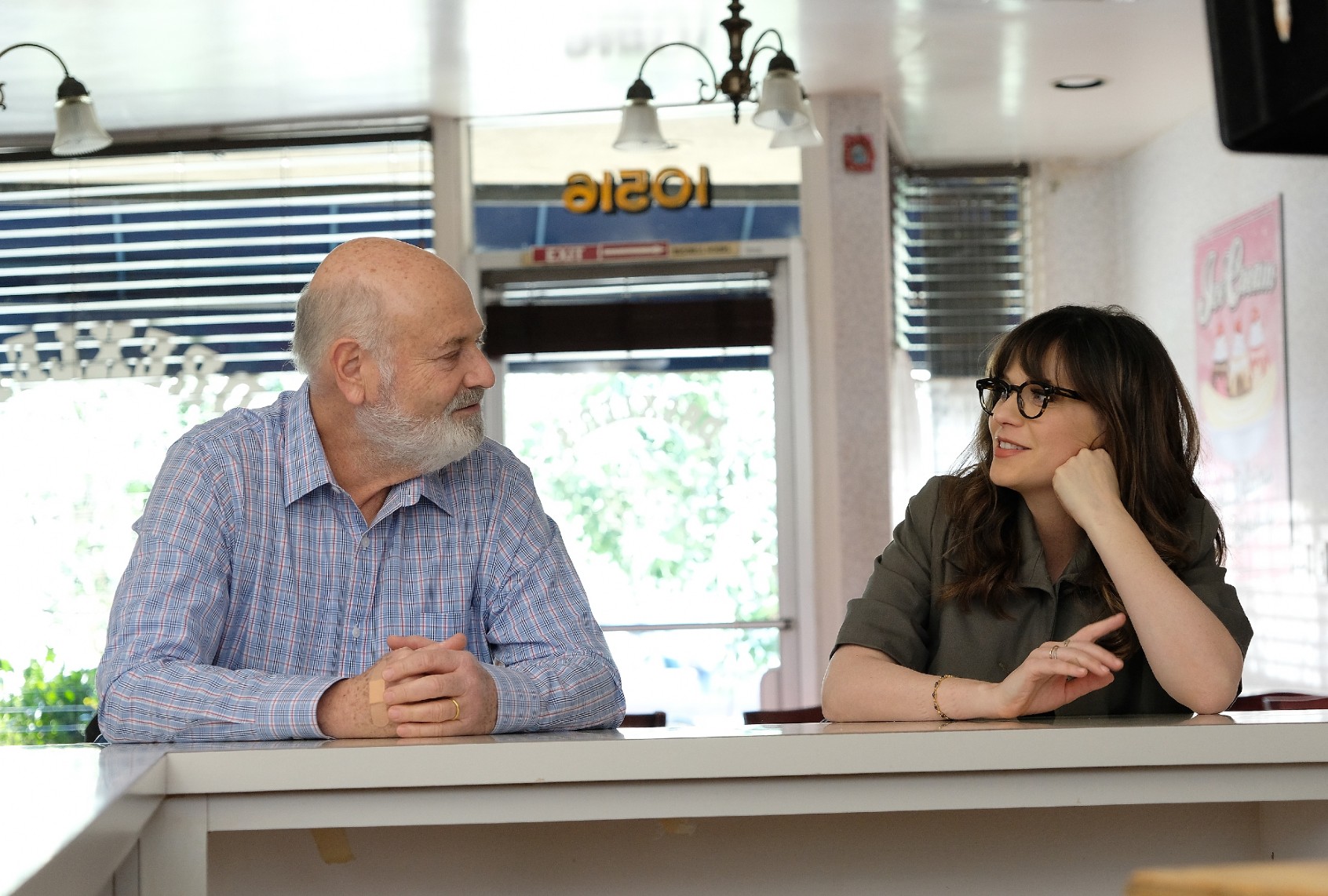
(FOX Image Collection via Getty Images) Rob Reiner and Zooey Deschanel in a scene from “New Girl”
This isn’t quite an echo of the role that made Reiner a household name, but it is a nod over the shoulder. From 1971 to 1978,” Reiner played Michael “Meathead” Stivic, the progressive foil and son-in-law to Carol O’Connor’s proudly closed-minded conservative Archie Bunker in Norman Lear’s “All in the Family.”
Lear nicknamed Reiner’s character after what his own father used to call him when he was a rebellious kid. Michael, a long-haired Vietnam-era peacenik who acted as the informed and occasionally smug voice of logic, earned that brand from Archie simply by being.
Reiner stepped into roles that embodied facets of his closely held values.
In contradicting Archie’s combustible ignorance with facts and understanding, Meathead was often the wet blanket spoiling Archie’s good time in the tight Queens palace that the Bunkers and Stivics shared. And Reiner’s ability to translate his frustrations into scene-stealing physical comedy made him a stalwart match for O’Connor, a two-decade TV veteran by that point.
Many remembrances circulating since Reiner’s shocking murder cite the significance of Meathead and Archie Bunker’s commitment to coexist, however uncomfortable that was in such close quarters. Some observe that through Meathead, Reiner showed the liberal Americans in his audience how to push back against prejudice, an ethos he carried into his political and social activism well after he left “All in the Family.”
Indeed, as he told Emmy magazine in 2006, “I could win the Nobel Prize, and the headline would read, ‘Meathead wins Nobel.’ I wear it as a badge of honor.”
Want more from culture than just the latest trend? The Swell highlights art made to last.
Sign up here
Looking back at Reiner’s more recent screen appearances, though, whatever parts he played had a foundation in strong principles that in some way aligned with his own. That held whether those principles formed the foundation of an altruistic vision or rougher fuel for figures like his foul-mouthed, short-tempered Max Belfort in “The Wolf of Wall Street,” an accountant who simultaneously enables his son’s mania and rages at his excesses.
On “The Bear,” his last guest star role, Albert Schnur knocks our trust off balance by swooping into Ebra’s life, expecting to find disorganization, and enthusiastically respecting that Ebra has his act together. By the fourth season’s close, it’s clear that Ebra’s ingenuity and efficiency in running The Bear’s lunch window may be what saves the restaurant, along with the collective dream of everyone who worked themselves to a nub to make it possible.
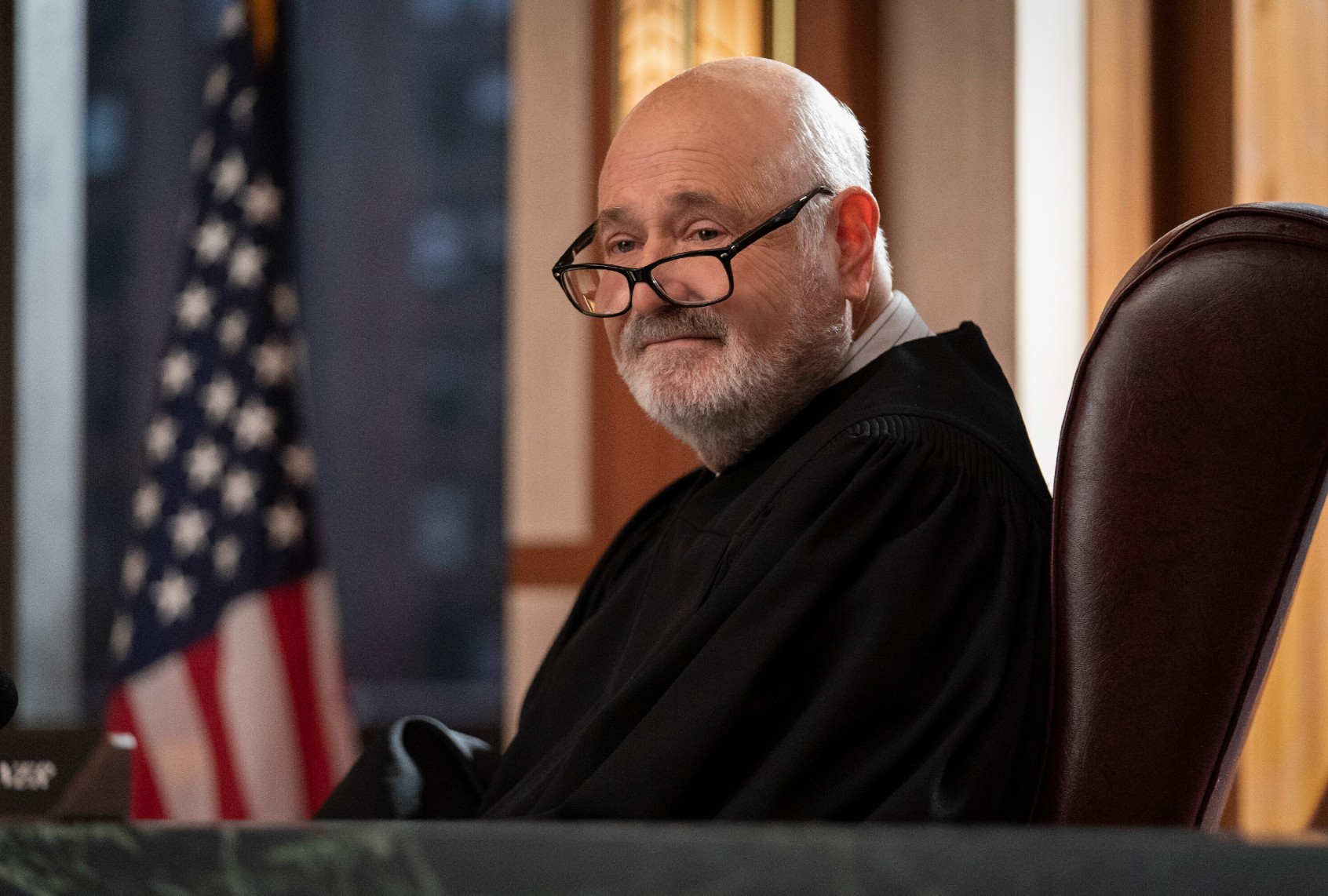
(Patrick Harbron/CBS) Rob Reiner as Judge Brickner in “The Good Fight”
“Most problems are not solved by using an icon,” Albert counsels The Computer (Brian Koppelman), the restaurant’s financial minder, explaining that the sandwich is the icon, not the star chef everyone frantically orbits. It’s a triumphant exchange written to buoy our hope that the next season of “The Bear” will be about its ascent instead of its demise.
In retrospect, that scene is bittersweet, too, reminding us of another small blessing that’s gone. But there’s a true loveliness in the way Reiner designs his performance to win Ebra’s trust, along with that of the audience, like he always did. Knowing we won’t benefit from Reiner’s or Albert’s further wisdom is heartbreaking. But at least he left us on a steady footing, relieved that we weren’t wrong about him after all. Sometimes the folks who seem too good to be true end up proving they are truly good.
“The Bear” and “New Girl” are streaming on Hulu. “The Good Fight” streams on Paramount+.
Read more
about Rob Reiner
